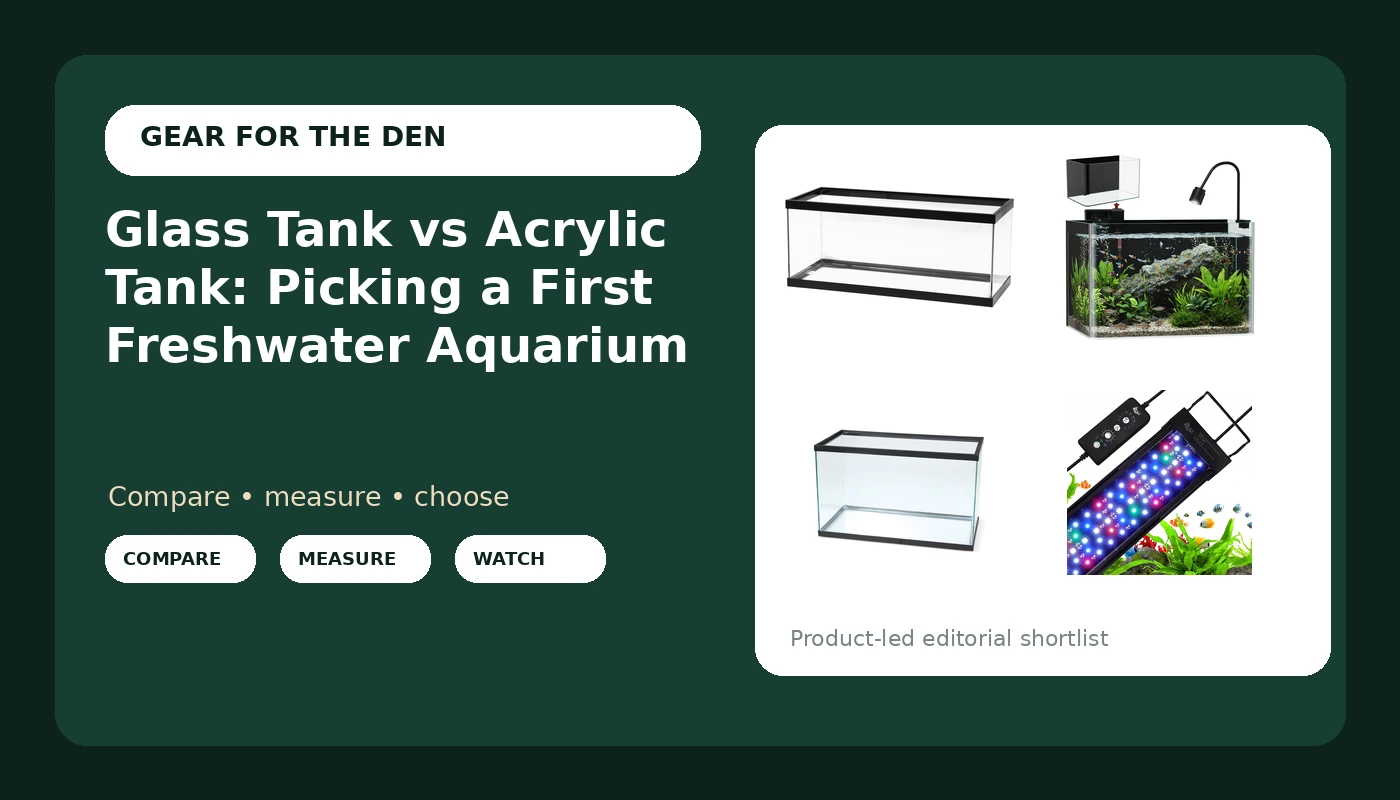
The glass tank vs acrylic tank question gets answered badly on most hobby forums, usually by someone who owned one of each and generalizes from a single bad scratch. The honest version is narrower. Both materials hold water and fish, and the choice comes down to weight, scratch resistance, clarity, price, and how much of a project you want your first setup to be. For most freshwater beginners the answer is glass, and the four picks below are the ones worth putting on a shortlist, including the light that finishes the build.
The best pick for most freshwater setups is the Aqueon Glass 20 Gallon Long Tank, because the long footprint leaves room for a heater, a filter, and a real equipment list without crowding the fish, and glass keeps the price down. The catch is weight. A filled 20 gallon tank is heavy, it belongs on a stand rated for the load, and that stand often costs more than the tank itself.
| Product | Price | Why it won | Why it lost |
|---|---|---|---|
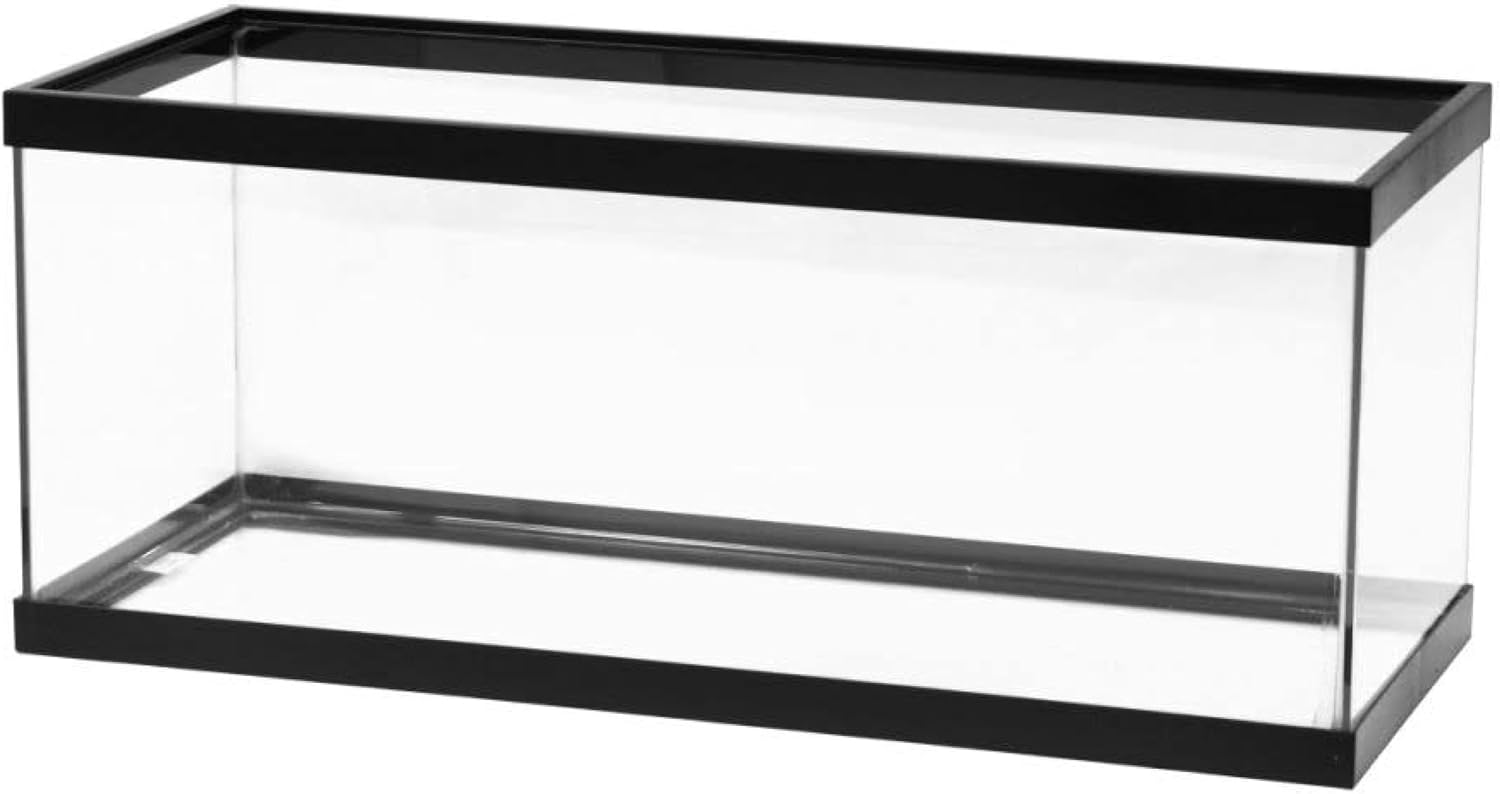 Aqueon Glass 20 Gallon Long Tank for Aquariums & Terrariums | Check current Amazon price | Long footprint gives real swimming room and separates the heater from the filter intake | Heavy when filled, and it needs a stand rated for the load |
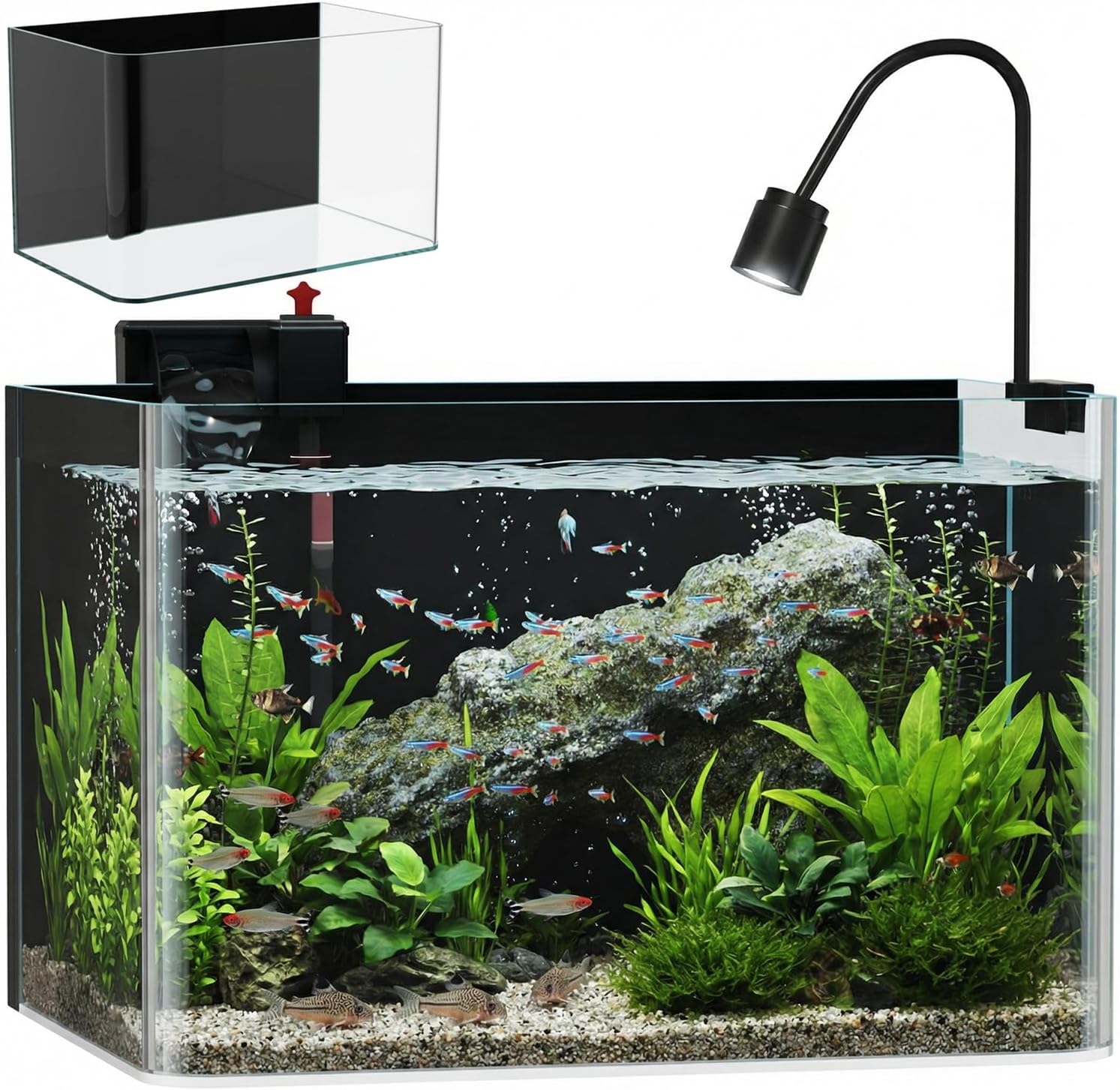 10 Gallon Hot-Bent Black-Back Fish Tank, Aquarium Fish Tank,Easy to Maintain Small Aquarium for Betta/Goldfish/Snails/Shrimp and Aquatic Planting, Perfect for Home, Office, and Decor | Check current Amazon price | Seamless bent front and a black back that hides the filter and cords | 10 gallons limits stocking, and curved glass scratches if you clean it with a blade |
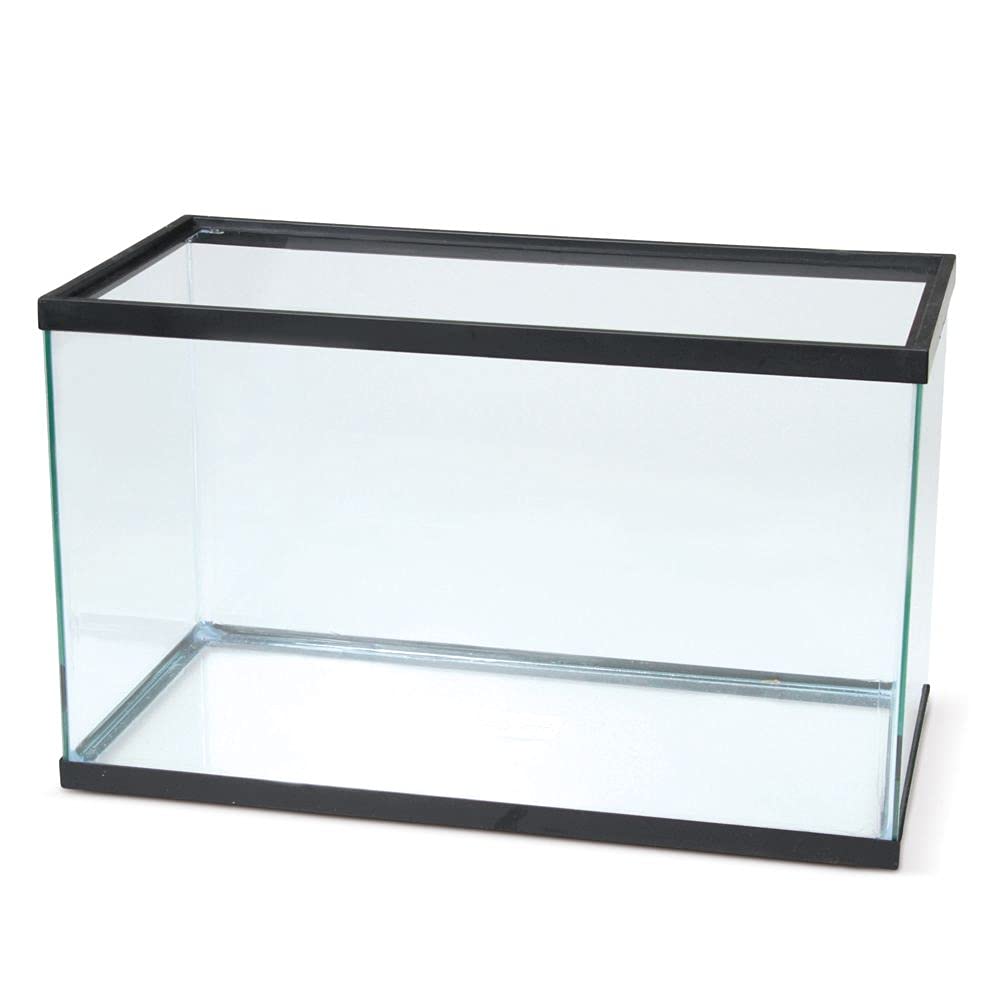 Aquarium Tank, Glass, 10 Gal | Check current Amazon price | Simple, cheap, and takes whatever filter and light you choose | No lid, no light, no filter, so the equipment list is entirely on you |
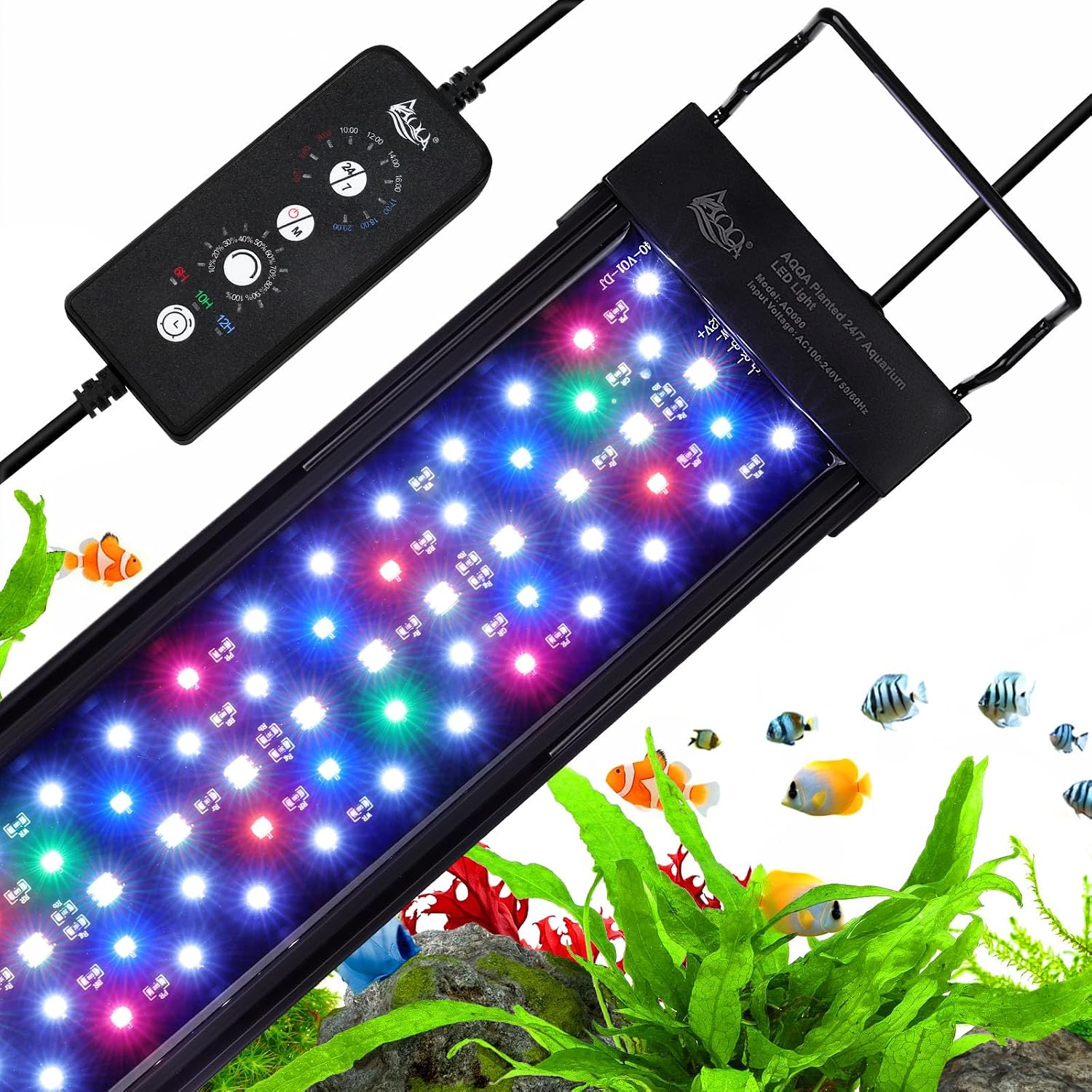 AQQA LED Aquarium Light, 24/7 & DIY Mode Full Spectrum Fish Tank Light | Check current Amazon price | Programmed 24/7 ramp and a DIY mode for planted tanks | Not a tank, and it will not fit under every stock hood |
What glass tank vs acrylic tank changes in a real build
Glass tanks are panes bonded with silicone. That construction matters for two reasons. A glass tank can be resealed at the seam if something goes wrong, and the surface shrugs off the kind of scratching that happens when a gravel siphon drags along the bottom. The cost is weight. Glass is heavier than acrylic at the same tank volume, and a filled tank is heavier still, which is why stand load is the first number to check before you buy anything.
The acrylic tank vs glass tank argument usually starts with clarity, and acrylic does have an edge there. A seamless bent front with no visible corners looks cleaner than a silicone-joined box, and acrylic can be buffed back to clear if it hazes over time. The trade is that acrylic scratches easily, and those scratches are permanent enough that most owners learn to live with them rather than fix them.
The practical difference between glass tank and acrylic tank comes down to three things: weight, price, and the cost of a stand that carries the weight. Acrylic costs more up front for the same volume and weighs a fraction of what glass does, so a large acrylic tank can sit on furniture that would sag under glass. At 10 or 20 gallons that advantage mostly disappears. Small glass tanks are cheap enough that the price gap buys you a filter, a heater, and a light, and 10 to 20 gallons is not enough water to turn the weight difference into a structural problem.
There is also a maintenance angle. Acrylic is softer, so algae scrapers and magnetic cleaners have to be acrylic-safe, and one grain of sand trapped under a cleaning pad leaves a mark. Glass lets you use a blade on stubborn spots without worrying. If you are the kind of person who cleans a tank properly every week, glass forgives more mistakes.
How we judge the tanks on this list
For this comparison we looked at what a beginner actually has to live with. First, footprint: does the tank fit the spot on the floor, with clearance behind it for a filter and a cord? Second, hood fit: is there a lid, hood, or light that mounts cleanly on this rim, because an open top means evaporation, jumping fish, and a fixture that has to be suspended. Third, access: can you reach the bottom corners with a siphon and a scraper without dismantling the aquascape? Fourth, budget headroom: how much of the setup cost is left after the tank, because the tank is rarely the expensive part.
Tank volume gets the headlines, but footprint and hood fit decide whether the setup is pleasant or annoying at month six. A 10 gallon tank with a bad lid is more work than a 20 gallon with a good one.
The 20 gallon long: the most room for a real equipment list
The Aqueon Glass 20 Gallon Long Tank for Aquariums & Terrariums is the tank I would point most beginners toward, and it is the straightforward glass option in this group. The long footprint gives you floor area rather than height, and floor area is what you actually use. More bottom space means you can plant the back, leave a swimming lane through the middle, and keep the heater far enough from the filter intake that the heater is not fighting the current all day.
Surface area matters as much as volume. A long tank exposes more water to air, which helps gas exchange, supports a deeper filter media stack, and makes the first few weeks of cycle time a little less fragile. It is also sold for terrariums, so if the fish phase ends in two years the tank still has a job.
The trade-offs are honest ones. A 20 gallon long is heavy when filled, so it needs a stand rated for the load rather than a decorative cabinet that only looks sturdy. The long footprint also demands more light to cover evenly, which is where the AQQA fixture later in this list earns its place. And because the tank is glass, the corners are silicone seams you will see from the side. That is normal construction, not a defect.
The 10 gallon hot-bent tank: the display pick
The 10 Gallon Hot-Bent Black-Back Fish Tank is the best-looking option here. Hot-bent glass means the front corners are curved rather than joined with silicone, so you get a seamless viewing pane with no seams at eye level. The black back does quiet work too: it hides the filter intake, the heater, and the cord clutter that makes most beginner tanks look busy, and it gives the tank a finished look against a wall.
The listing suggests bettas, goldfish, snails, shrimp, and planted setups. Read that as a range, not a stocking plan. A 10 gallon is a good betta tank, an excellent shrimp and snail tank, and not a goldfish tank at any point in the fish's life, because goldfish grow large and produce far more waste than 10 gallons can dilute. If you want goldfish, the 20 gallon long above is the larger of the two options, and even that is a starting point rather than a forever home.
Two practical notes on the curved front. First, cleaning: use a soft pad on the bent section, because a scraper blade on curved glass is a scratch waiting to happen. Second, evaporation: an open or partly open top loses water quickly in a small tank, so a lid matters, and hood fit is worth checking before you commit to a light.
The plain 10 gallon glass tank: the blank slate
The Aquarium Tank, Glass, 10 Gal is exactly what the name says: a glass box with no filter, no light, and no lid. Whether that is a feature depends on how you shop. If you already know which filter media and heater you want, buying the tank on its own keeps you from paying for a kit's weakest parts and replacing them within a month. If you do not know yet, a bare tank means assembling the whole equipment list yourself, and the total climbs faster than most people expect once you price a lid, a light, a heater, a thermometer, and a test kit.
A bare 10 gallon is also the most flexible option here. It takes a sponge filter and a betta, or a small canister and a shrimp colony, or a planted setup with a light and no fish at all. The downside is that nothing is decided for you, and a beginner tank with the wrong heater wattage or no lid at all is a worse experience than a slightly more expensive tank that came with the pieces sorted out.
The AQQA LED light: what makes the tank worth looking at
A tank holds water. The AQQA LED Aquarium Light, 24/7 & DIY Mode Full Spectrum Fish Tank Light is what makes it look like something you want to sit next to in the evening. The 24/7 mode runs a programmed ramp through the day instead of snapping on at full brightness, which is easier on fish and easier on you. The DIY mode lets you set your own schedule and mix if you want more control than a preset gives you.
Full spectrum matters if you keep live plants. If you keep plastic plants and a betta, the light is mostly about color and presentation, and a simpler fixture would do the same job for less. Either way, two things to check before buying.
Hood fit comes first. This is a light for an open-top or rimless tank, and it will not fit under every stock hood, so measure the tank opening and confirm the mount before you order. Second, light drives algae. Start with a shorter photoperiod and lengthen it as the plants respond, rather than running the full schedule at full intensity from day one. Visit on Amazon to see the current mounting options and modes.
Stand load, volume, and the rest of the shopping list
Once the tank is chosen, the equipment list is where the setup succeeds or fails. In rough order of what to buy: a stand rated for the filled weight, a lid or a light plus a lid for the gaps, a filter sized to the tank volume, a heater whose wattage is matched to both the tank and the coldest the room gets, a thermometer, a test kit for ammonia and nitrite, substrate deep enough to root plants without eating the swimming space, and a siphon for water changes.
Filter media deserves more thought than it gets. Sponges and ceramic rings last for years and only need rinsing in old tank water, while cartridge systems are convenient and keep you buying replacements on a schedule. Neither approach is wrong, but the cost difference over two years is real.
Heater wattage is the number people get wrong in both directions. Too small and the heater runs constantly in a cold room without holding temperature. Too large and a stuck thermostat has more power to cook the tank. Match the heater to the tank volume and the room, and put a thermometer in the tank so you find out before the fish do.
Cycle time is the part no product fixes. A new tank needs weeks, not days, for the bacteria that process ammonia to establish, and bottled starters only speed that up rather than skip it. Substrate depth, filter media volume, and how heavily you stock all affect how stable that cycle is. Plan on testing daily for the first couple of weeks and changing water as needed.
Glass tank or acrylic tank for a first build?
For a first freshwater tank between 10 and 20 gallons, glass is the better buy, and the glass tank vs acrylic tank decision at this size is less dramatic than the forums suggest. The acrylic advantages, which are lighter weight, seamless curves, and better clarity, are real but small at this scale, and the acrylic disadvantages, which are scratches, a higher price, and a surface that marks if you clean it carelessly, show up in a tank you will clean every week. Acrylic starts to make more sense as the tank gets large, where the weight of a big glass panel and the stand required to hold it become the dominant costs.
There is one more case for acrylic: a custom shape. Acrylic can be formed into footprints that glass cannot, and the hot-bent front on the 10 gallon above is the glass world's answer to the same idea, a curved viewing pane without the soft surface. If you want a shape nobody sells, acrylic is the material that gets you there. If you want a 10 or 20 gallon rectangle that will still look decent after a decade of water changes, glass is the safer answer.
What to check before you order
Three checks before you click. Confirm the stand rating for the filled tank, not the empty one, because water is the heavy part. Confirm the footprint against the actual spot on the floor, including clearance behind the tank for the filter, the heater cord, and the light mount. Confirm that a lid, hood, or light will fit the rim you are buying, since hood fit is the most common surprise in this hobby.
Do those three and the glass tank vs acrylic tank question mostly resolves itself, because the tank that fits your room, your stand, and your maintenance habits is the one you will still be running in five years.