Most people who start searching for a gps dog collar vs dog booties comparison are not actually torn between two similar products. They are trying to solve one problem with two very different tools. Usually that problem is a dog that slips out an open door, or a dog that limps on salted sidewalks, or a dog that plants all four feet on hot asphalt in July and refuses to move another step. Both products show up in the same search results, both get marketed as safety gear, and both cost about what a decent dinner costs, which is exactly why the choice feels harder than it is.
The short answer: a GPS collar answers "where is my dog," and dog booties answer "can my dog's paws handle this ground." If your walks happen on ice, road salt, or scorching pavement, booties solve the problem you are actually having. If your dog has a decent recall and you want a safety net for the day it fails, the collar comes first.
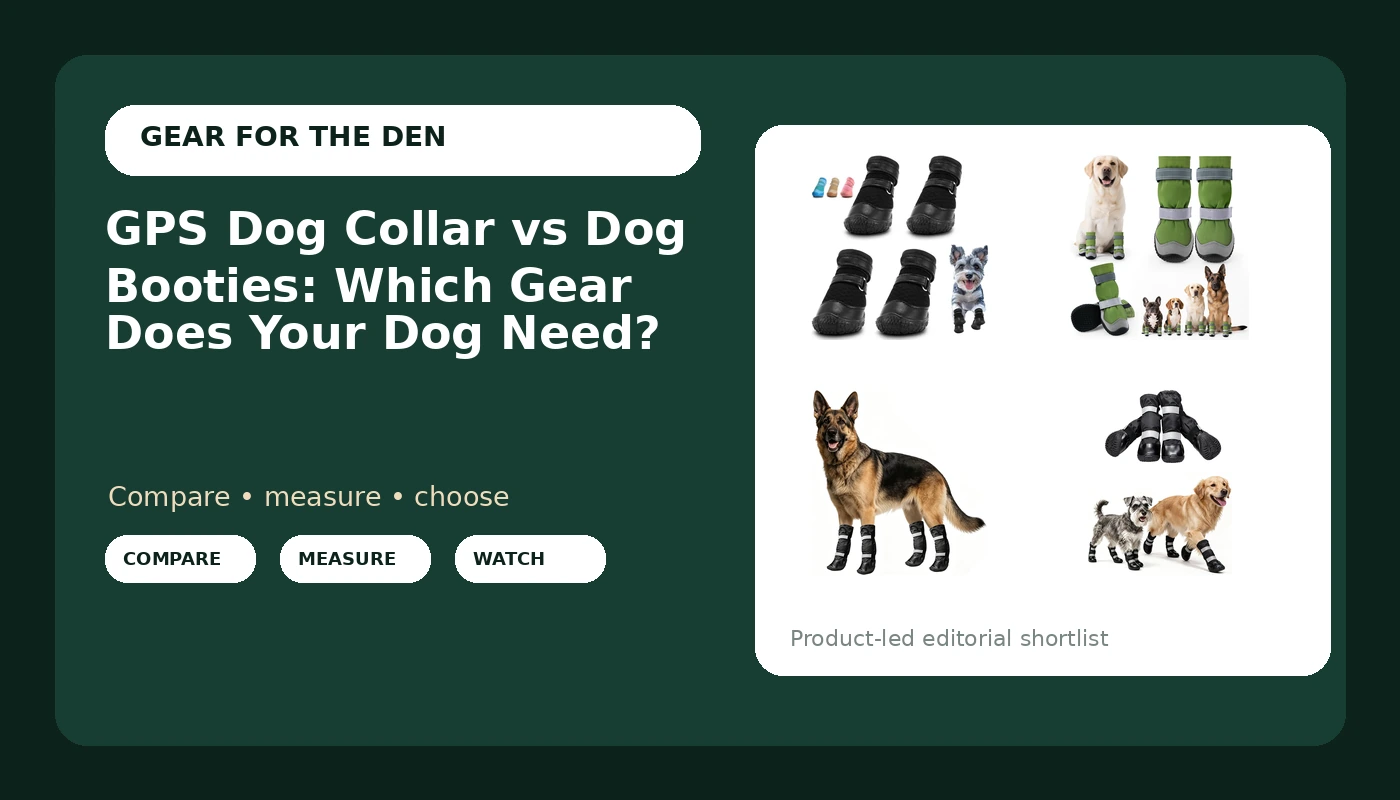
Here is how the four pairs in this category stack up. Every price cell points you to the current listing rather than a number that will be stale by the time you read this.
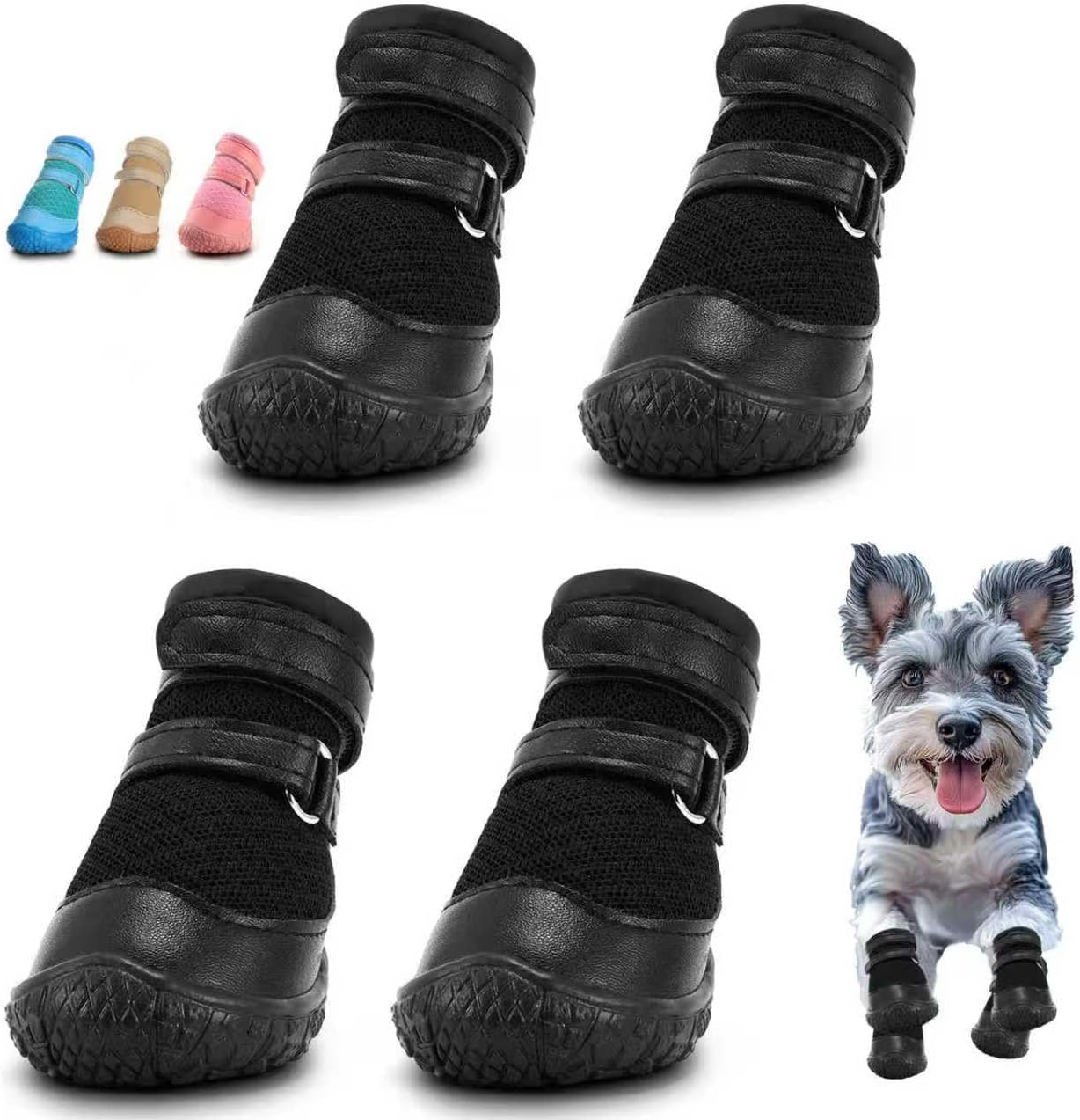
Dog Shoes for Small Dogs (Black, Size 1)
The only pair here built around small paws, with an anti-slip sole that works on hardwood as well as pavement
Size range stops early, so medium and large dogs need one of the other three
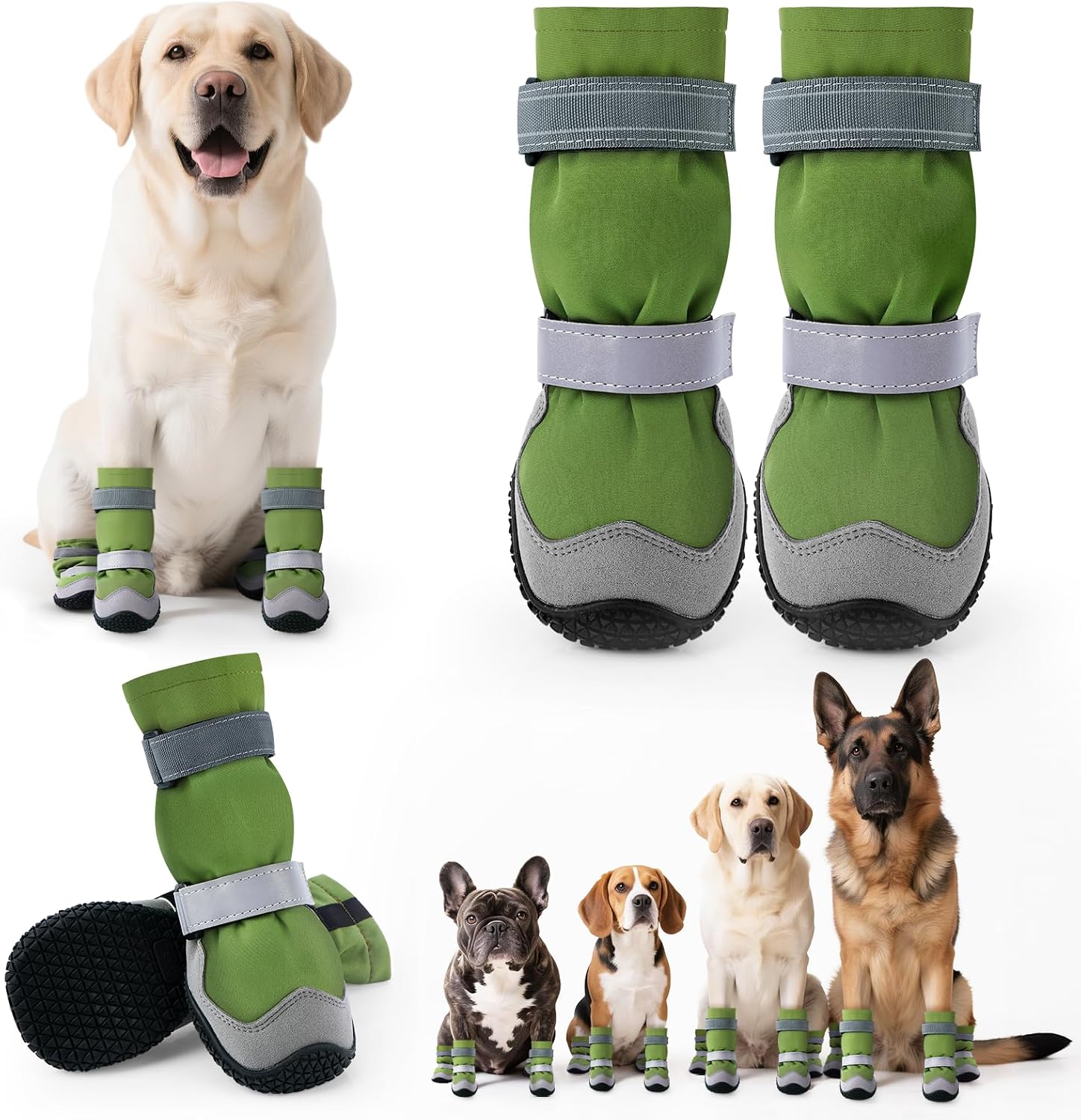
Winter Dog Snow Boots with Fleece Lining (Green, Size 6)
Fleece lining plus a waterproof shell for medium and large dogs, with reflective trim for dark walks
The lighter colorway shows road salt and mud faster than black
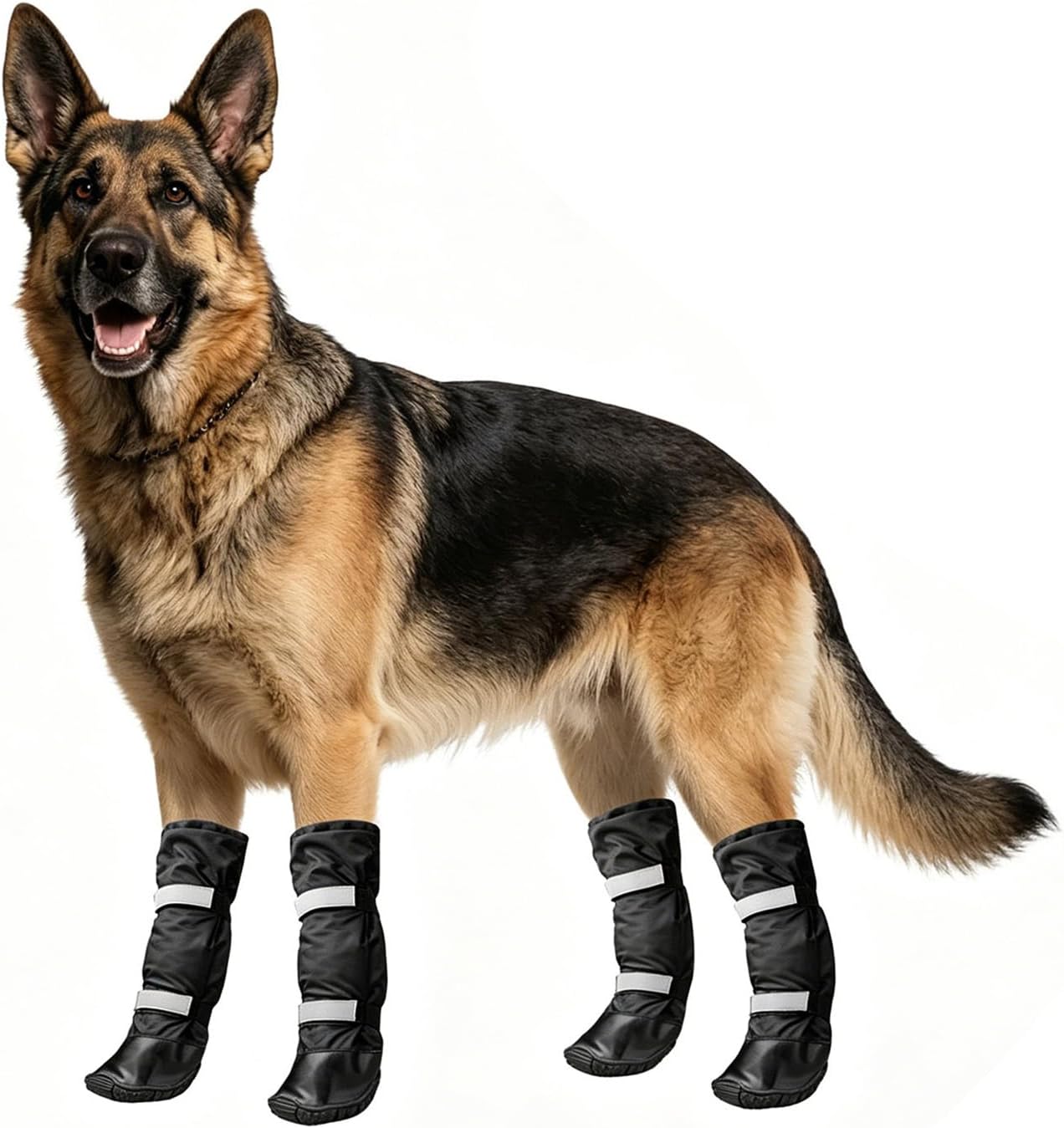
NAMSAN Winter Dog Boots, Long Legged (Black, Size XL)
Long leg covers more of the pastern, and the reflective magic strips go on fast
Longer boots are less forgiving when the sizing is a half step off
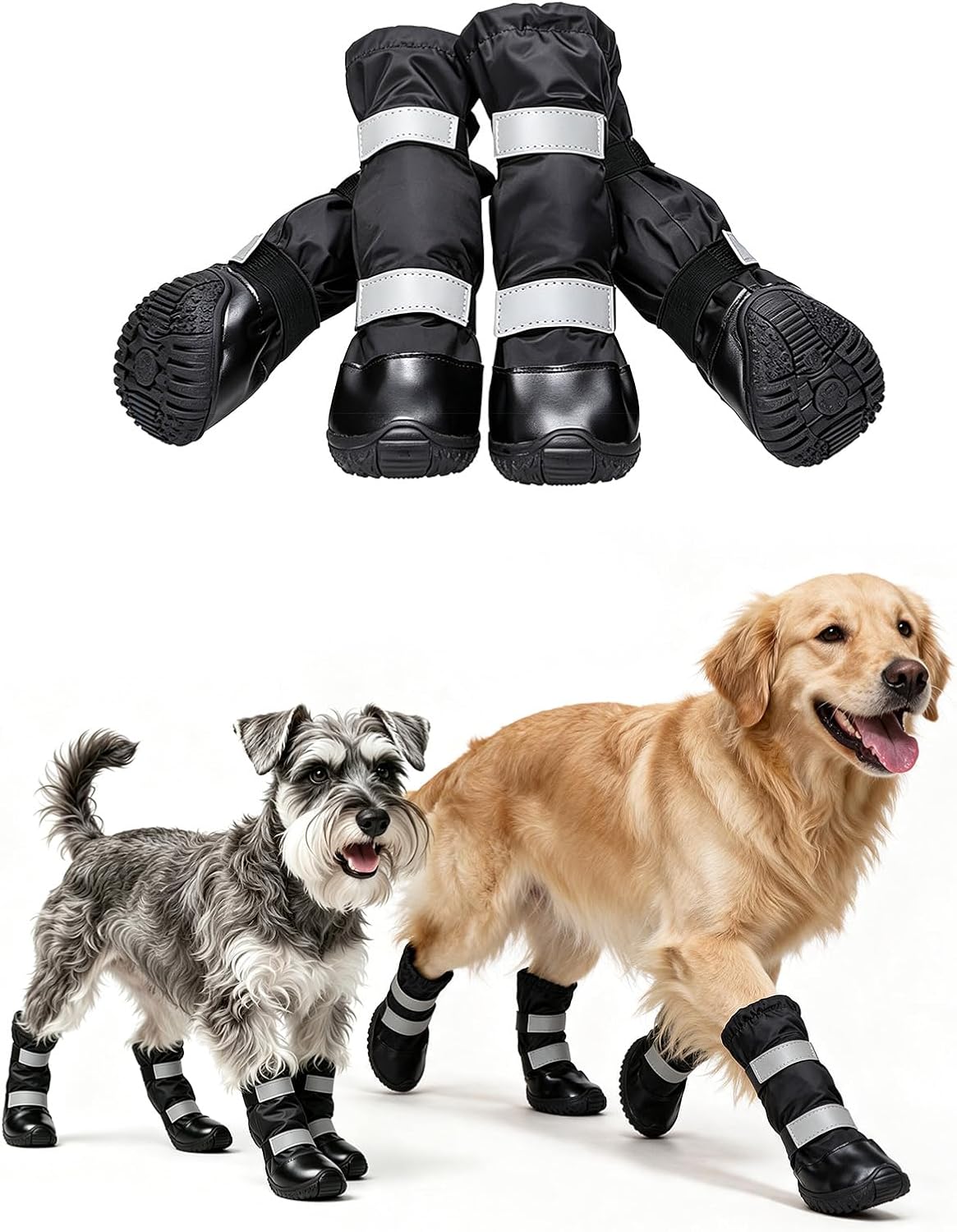
PETLESO Tall Winter Dog Boots (Black, XL)
One set for snow, rain, and mud, with a tall shaft and reflective strips
Tall boots take the longest to fit and the longest to dry
Prices and availability may change.
The real difference: gps dog collar vs dog booties
Put the two side by side and the comparison falls apart fast, because they are not competing for the same job. A GPS collar is a location device. It reports coordinates, usually over cellular or radio, and it rides on your dog's neck. A bootie is footwear. It covers the paw, grips the ground, and keeps salt, ice, mud, and hot asphalt away from skin.
That means the difference between gps dog collar and dog booties is not a quality tier or a price bracket. It is information versus protection. One tells you something you did not know before you needed to know it. The other changes what your dog can physically walk on, which is a narrower and much more immediate kind of help.
There is one small overlap, and it explains most bad purchases in this category. Both products fail for the same reason: fit. A collar that slides down toward the shoulders reads position poorly and can rub the throat. A boot that spins on the paw comes off in the first hundred yards and ends up in a snowbank. Neither purchase can be judged from a product photo, and neither one is fixed by spending more.
What a GPS collar actually solves
For a dog with a strong prey drive or a history of door darting, a collar is the difference between a stressful walk and a manageable one. The two specs that matter are gps range and battery life, and both are quoted generously by manufacturers and then tested by reality. A unit rated for long range still struggles in dense woods and deep ravines, where signal bounces and drops. A battery rated for days still drains faster in cold weather, which is exactly the season when a lost dog is in the most danger.
The practical questions worth asking before you buy:
- How does it connect? Cellular collars need coverage and a subscription. Radio collars need you to carry a handheld and stay within range.
- What does it weigh? A heavy unit on a small dog's neck is a comfort problem, and comfort problems turn into refusal problems on the trail.
- How does it charge? A collar that needs a proprietary cradle every night is a collar you will forget to charge.
- Does it track live or log? Live tracking is what you want for a bolter. Activity logging is a bonus, not the point.
A GPS collar does not stop a dog from running. It shortens the search. That is a genuine benefit and also a limited one, which is why most experienced owners pair a tracker with recall work rather than treating the collar as the fix.
What dog booties actually solve
Booties solve a physical problem, and there are four versions of it worth naming.
Road salt and ice. Winter salt is caustic on paw pads, and ice cuts. A waterproof boot with a fleece lining keeps the pad dry and the salt off, which is why most winter pairs are lined.
Hot pavement. Asphalt in direct summer sun gets hot enough to burn a pad in minutes. A boot with a thin sole and a cooling fabric upper is a summer tool, not a winter one, and it should not be the same pair you use in January.
Grip indoors. Senior dogs slip on hardwood, and a rubber traction sole on the back feet is a common, cheap fix. This is where a small-dog boot earns its keep, especially in a house with stairs.
Injuries and bandages. A boot keeps a wrapped paw clean on the way to the vet and keeps mud out of a healing cut on the way back.
Notice what is not on that list: location. Booties tell you nothing about where your dog is. If your dog gets out of the yard, four boots will not help you find it, and once the dog is gone, the collar is the only one of the two that does anything at all.
How to judge a pair of dog booties
Boot sizing is the part people get wrong, and it is worth slowing down for. Measure the paw while the dog is standing, because a paw spreads under load, and measure front and back separately, because they are often different sizes. Width matters more than length. A boot that is too long trips the dog on stairs. A boot that is too narrow will not go on without a fight, and a boot that is too wide spins and falls off.
Coverage height is the next decision. A short boot that sits below the ankle is easy to put on and easy to lose in deep snow. A tall boot with a long leg covers more of the pastern and stays put in drifts, but it takes longer to fit and it is less forgiving when the sizing is a half step off. For a dog that mostly walks plowed sidewalks, the short cut is fine. For a dog that breaks trail in a field, the tall cut earns the extra fuss.
The traction sole is where cheap pairs give themselves away. Look for a rubber or silicone tread with an actual pattern, not a smooth patch. A smooth sole is fine on a hallway and useless on a slope.
Closure systems matter more than most buyers expect. Magic strips and hook-and-loop straps are standard because they are fast, and speed matters when you are crouched in the cold with a dog that wants to leave. Laces hold better and take longer. Whatever the closure, it should sit above the paw, not across the toes, and it should be tight enough that a determined shake cannot remove it.
Then the details that separate a pair you use from a pair you keep in a drawer: a waterproof shell for wet seasons, a fleece lining for real cold, a cooling fabric upper for summer, and reflective strips for the dark half of the year. Reflective trim is not decoration. If you walk before work in winter, it is the difference between being seen and not.
Reading the table: four pairs, four jobs
The four pairs above are not four attempts at the same product. They split by paw size and by coverage, and picking the wrong one is more common than picking a bad brand.
- The small-dog pair is the only one here built around tiny paws, with anti-slip soles that make sense on hardwood, pavement, and light snow. If you have a ten-pound dog, everything else in the table is the wrong shape.
- The fleece-lined green pair is aimed at medium and large dogs and leans into cold-weather comfort, with a waterproof shell and reflective trim. It is the most straightforward winter pick of the group.
- The long-legged pair for large dogs covers more of the leg than a standard boot, uses magic strips for fast on and off, and suits rain and packed snow where a low boot would fill up.
- The tall pair for large dogs handles snow, rain, and mud in one set, with reflective strips and a shaft tall enough to stay above slush.
None of them track anything. That is the whole point of the section above.
Cold weather, hot pavement: two different bootie problems
A pair of winter boots and a pair of summer boots are not interchangeable, even though both get called dog booties. Winter pairs are built around insulation and waterproofing: a fleece lining, a rubberized shell, a sole with deep tread for snow. Summer pairs are built around heat: a thinner sole, a lighter upper, and sometimes a cooling fabric that wicks rather than traps.
Mixing them up causes real problems. A fleece-lined boot on hot asphalt holds heat against the pad, which is the opposite of what you want. A thin summer boot in a snowbank fills with slush in about thirty seconds and then freezes.
If you live somewhere with all four seasons, that means two pairs, or one compromise pair that does neither job well. The honest approach is to buy for the season you are actually walking in and accept that the other season needs its own purchase. Reflective strips are the one feature worth having on both, because winter mornings and summer evenings are both dark.
One maintenance note: rinse boots after a walk in a salted neighborhood, or the salt you kept off the paw ends up dried on the boot and back on the pad the next day.
The rest of the walk kit
Booties and a collar are two parts of a system, and the rest of the system decides whether either one works.
Start at the front. A harness with a chest strap and a front clip discourages pulling, which keeps a dog from dragging you toward the road. A front clip also takes pressure off the throat, which matters if your dog wears a tracker on its collar, because a tight lead on a tracking collar is a bad combination for both comfort and signal. Leash length is the other lever. A six-foot lead gives you control on ice, and a long line gives a dog room to sniff on a trail where the footing is safe and the recall is solid.
Charging is the quiet chore nobody plans for. If the collar and your phone both need power before a walk, put them on the same routine so that battery life stops being a morning surprise. And if you walk in summer heat, a cooling fabric bandana or vest does more for a flat-faced dog than any gadget in this article.
If you want to go deeper on the tracking half of the kit, GPS trackers for dogs that hold a charge covers what actually survives a winter.
Trade-offs: what each option costs you
A collar adds a nightly charge, an app, and usually a monthly fee. It also adds hardware to a dog's neck, which some dogs tolerate and some do not. The upside is real: if your dog ever gets out, you know which direction it went and roughly how far.
Booties add a fitting project and four small objects that can be lost one at a time. Expect an adjustment period, because most dogs high-step for the first few walks as if they are wearing swim fins. Most settle within a week. A few never do, and for those dogs paw wax or traction stickers are the honest answer rather than a fourth attempt at sizing.
The gps dog collar vs dog booties question gets easier once you stop comparing spec sheets and start comparing failure modes. A dog that refuses boots will not suddenly accept them because you also bought a collar, and a collar will not keep a dog off hot pavement. Buying both does not double the benefit. It covers two different problems, and that is a reasonable thing to pay for if you walk in real weather.
Should you buy a gps dog collar or dog booties first?
Answer with a question: what went wrong on the last walk?
If the answer is "the dog got loose" or "the dog did not come back," the collar is the priority and booties can wait. If the answer is "the dog stopped walking," "the dog was limping," or "the dog slipped on the kitchen floor," booties come first and the collar is a later purchase.
There is a seasonal shortcut too. In a hard winter with salt on every sidewalk, booties pay off daily while a collar sits in a drawer. In open country with a dog that likes to explore ridgelines, the collar earns its subscription every time the dog disappears for ninety seconds.
If you are framing this as dog booties vs gps dog collar, you are really framing it as protection versus location, and the tiebreaker is which failure you can live with. A lost dog is a crisis. A burned or cut paw is an injury. Both are worth preventing, and neither product prevents the other one's problem.
Bottom line
If you are still weighing gps dog collar vs dog booties after all of that, buy the one that matches the failure you have already seen. Boots are the better first purchase for most people who walk in winter or on hot pavement, because the problem is visible, the fix is cheap, and the payoff starts on the first walk. A collar is the better first purchase for the owner of a dog that has already gone over a fence, because no amount of paw protection answers the question of where the dog went.
Buy the fit you can measure, not the feature list you can read. And when in doubt, start with the pair that has a real traction sole and reflective strips, then spend a week getting the sizing right before you judge the product.