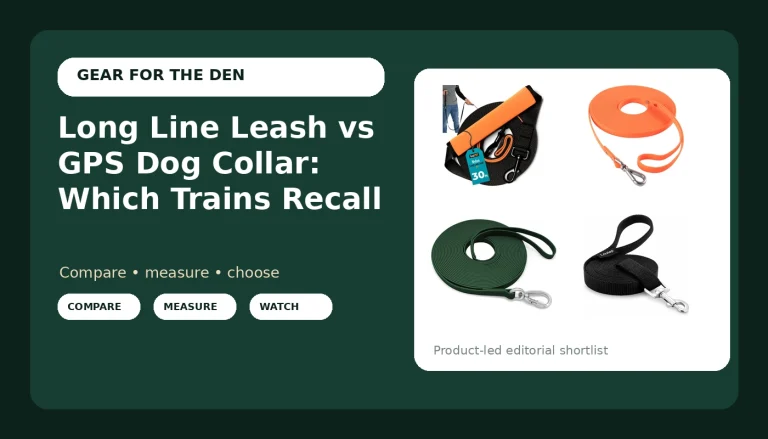
There is a moment in every recall plan when the question stops being about treats and starts being about gear. You have a large dog, an open field or a quiet trail, and a choice to make: keep them on a line, or let a tracker do the watching. Search long line leash vs gps dog collar for large dogs and you mostly get product listings with no plain talk about what each tool can and cannot do. This comparison is the plain talk.
For most large dogs in the middle of recall training, a 30-foot long line is the better first purchase, because it teaches the behavior instead of just reporting on it. A GPS collar answers a different question, and the sections below cover exactly when it earns its price. The four lines in the table are all long lines, since that is the half of this comparison you can actually buy today.
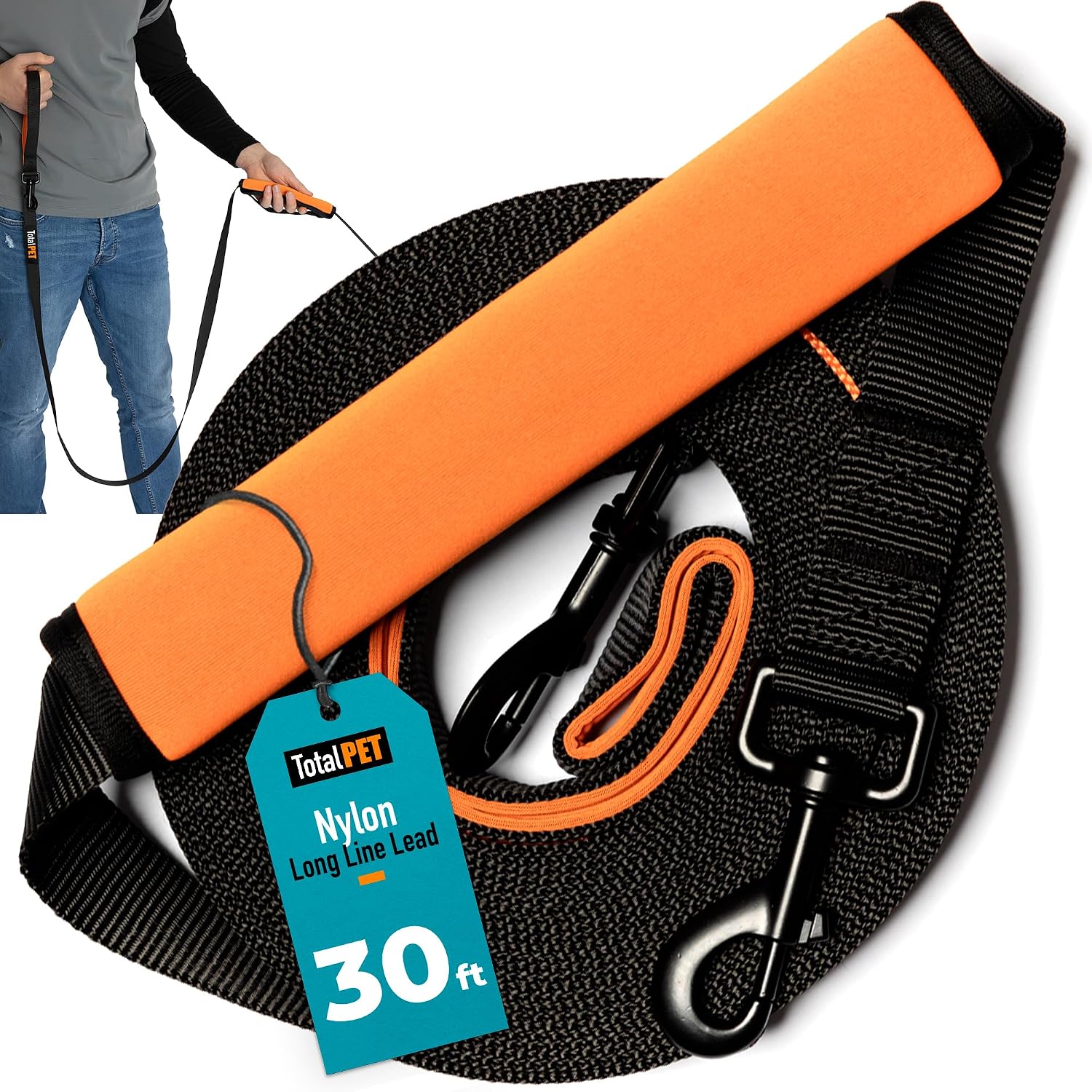
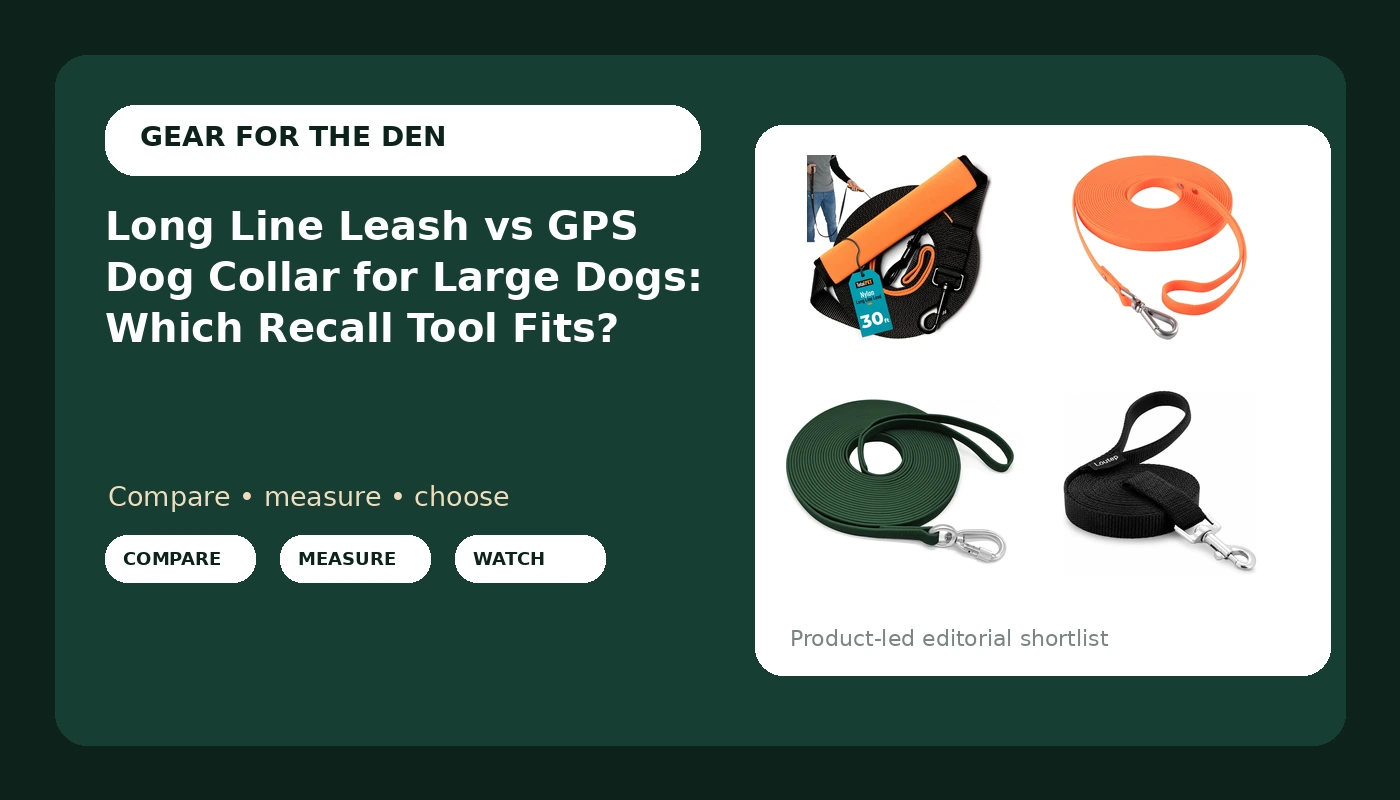
30ft Long Leash for Dogs
30 feet of heavy duty nylon gives a large dog room to drift and decide
No waterproof or odor-resistant coating claimed, and no padded handle
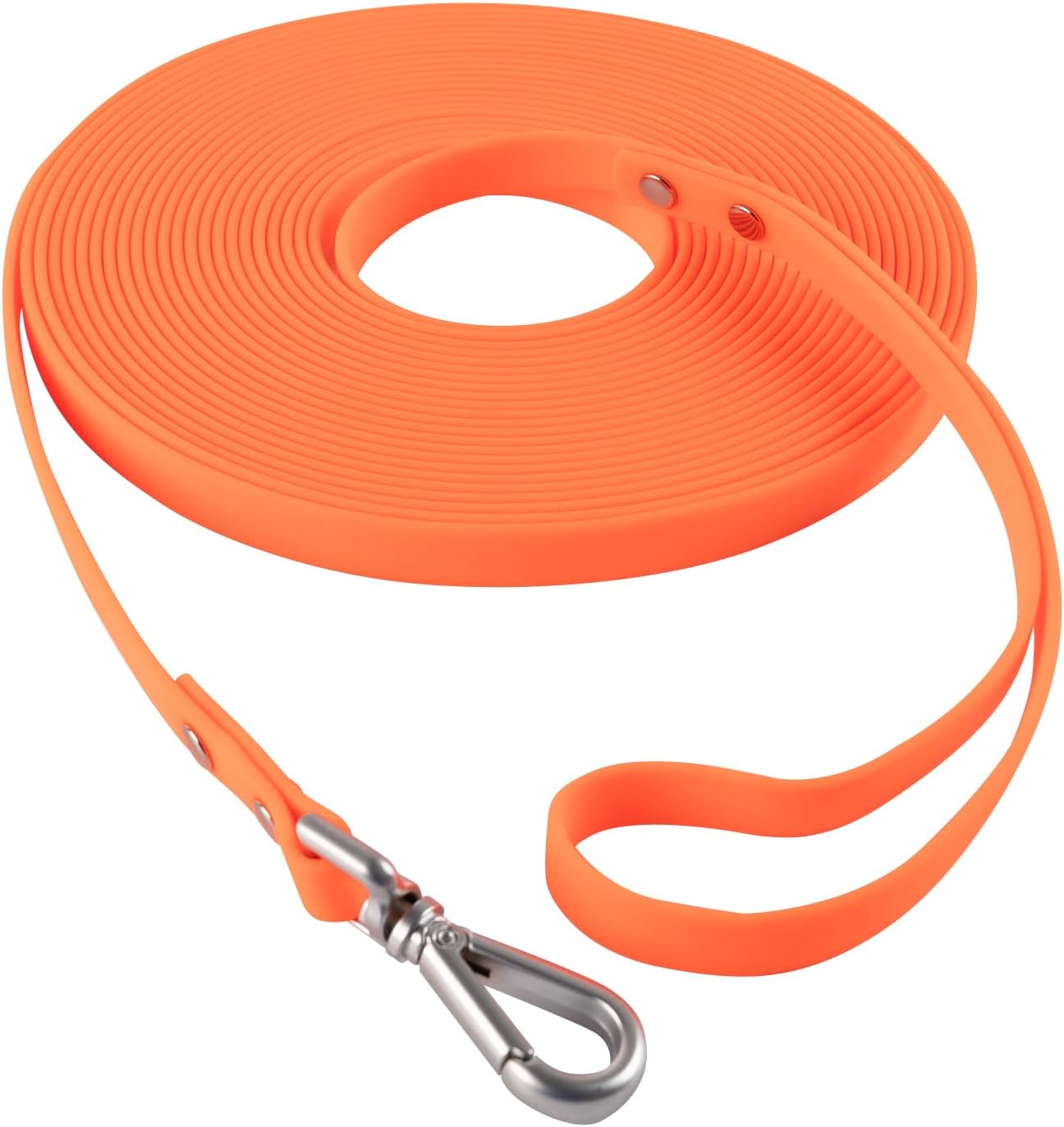
AUMAILI Dog Training Long Leash
Waterproof webbing and a bright orange color that is easy to spot in grass
The 10 ft length is a street tool, not a field tool
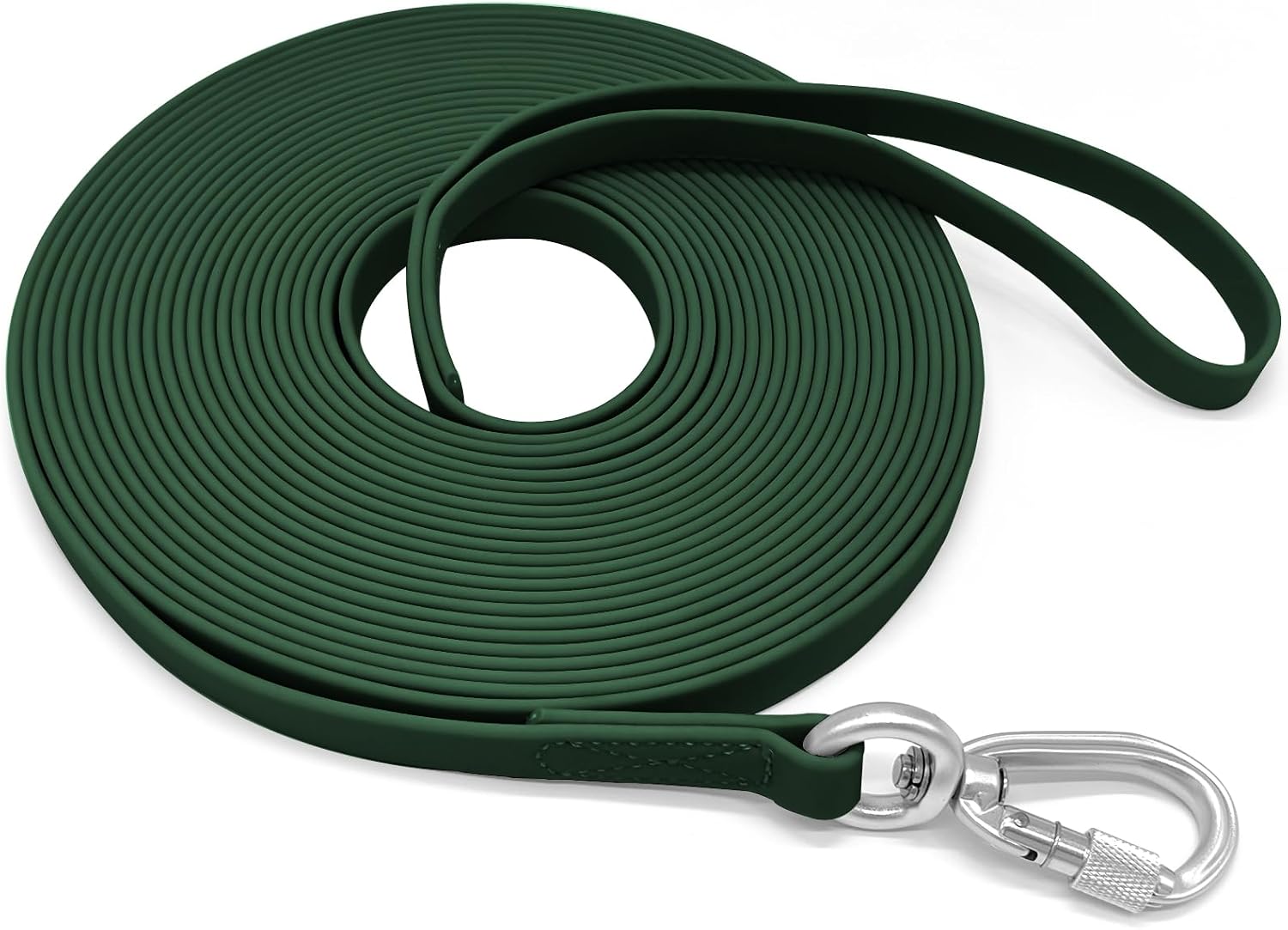
ZALER Long Dog Leash
Waterproof and odor proof webbing with an aviation aluminum carabiner clip
Forest green disappears in shade and undergrowth
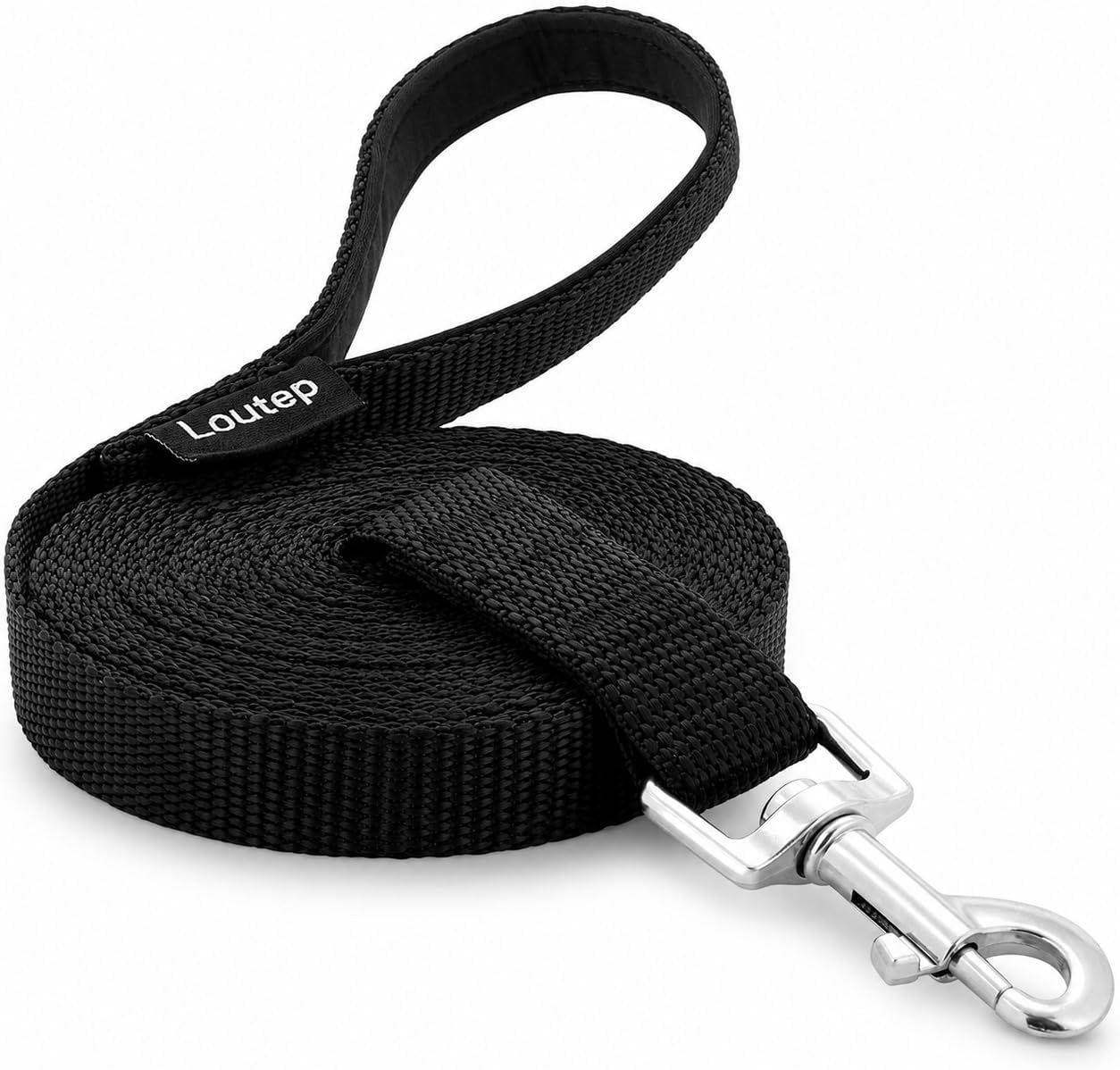
Loutep Long Line Dog Training Leash
A padded handle is the comfort feature that matters on a 30 ft line
No waterproof claim in the name, and black is hard to see at dusk
Prices and availability may change.
How I evaluate long lines
A long line is one of the few pieces of dog gear where the spec sheet is short and the consequences are long. There is no firmware, no app, and no charging dock, so the whole comparison comes down to a handful of things: leash length, the webbing itself, the clip, the handle, and how visible the color is when the line is lying flat in grass.
Leash length sets the job. A 10-foot line is a sidewalk and parking lot tool. A 30-foot line is the training workhorse for parks and fields. Anything past 30 feet starts to demand real line-handling skill, because you are managing a loop of webbing while also watching your dog.
The webbing decides how the line behaves after the tenth wet morning. Plain nylon is tough and inexpensive but soaks up water and holds odor. Waterproof coated webbing wipes down and stays lighter in the hand, which matters when you are hauling 30 feet of it back in.
The clip is the failure point people forget. A standard snap hook is fine on a 10-foot line. On a 30-foot line with a large dog at the end of it, a carabiner is a genuine upgrade, and aviation aluminum keeps the weight down so the line does not drag a harness sideways.
The handle is where a long line earns or loses your hand. Thirty feet of webbing under load is not comfortable to grip bare, and a padded handle is the difference between a good session and a rope burn.
Finally, visibility. Orange shows up in tall grass and at dusk. Black and forest green do not.
That checklist is what the table above is built on. There is nothing exotic in it, which is exactly why long lines are easy to compare honestly.
Long line leash vs gps dog collar for large dogs: two different jobs
These two tools get compared as if one replaces the other, and they do not. A long line is a teaching tool. It keeps a physical connection between you and the dog, so a recall that fails ends with the dog reaching the end of the line instead of reaching the road. Every rep on a long line is a rep where you can reward the dog for coming back, because the dog physically came back.
A GPS collar is an information tool. It tells you where the dog is, and on some models it can send a tone or a vibration. It does not stop the dog and it does not bring the dog back. What it does is let a dog you already trust have more freedom in terrain where a line is impractical, and let you find a dog that has gone quiet in thick cover.
The difference between long line leash and gps dog collar for large dogs comes down to control versus information. Control is what builds a recall. Information is what protects a recall you have already built.
Framed that way, long line leash vs gps dog collar for large dogs stops being a competition between old gear and new gear. It becomes a question of which stage your dog is in.
The practical consequences follow. A long line has no battery life to manage, no subscription, and no signal to lose. It also caps your dog at leash length, which is 10 to 50 feet depending on the line. A GPS collar has a gps range measured in hundreds of yards and a battery life measured in hours or days, and it works in places where dragging 30 feet of wet webbing through brush is miserable. It also fails in ways a line cannot: a dead battery, no coverage, or a collar that slides off in mud.
Leash length: 10 feet, 30 feet, or 50 feet
The single most useful decision you make is length, and it should be driven by where you train rather than by what looks impressive online.
A 10-foot line is the right tool for tight spaces: sidewalks, parking lots, clinic parking, the front yard. It gives your dog room to move and make a choice without handing you a rope to manage. The AUMAILI line in the table is listed here in its 10-foot version, and that is a sensible length for a dog still learning what the words mean.
A 30-foot line is the workhorse. It is long enough that a dog can drift, sniff, and decide, and short enough that you can gather it into two hands when a distraction appears. Three of the four lines in this comparison are 30-foot lines, which says something about where the demand sits.
A 50-foot line is for open ground and for handlers who have already practiced their line handling. It buys distance and costs control. If you have never managed a long line before, start at 30 feet and move up once your gather is clean.
There is a case for owning two lengths rather than one. Most handlers who train seriously end up with a short line for the street and a long line for the field, because a 30-foot line on a narrow sidewalk is a hazard to you, your dog, and everyone walking past you.
Handles, clips, and the hardware that decides a session
Long lines are simple gear, so the small parts do most of the work.
Start with the handle. The Loutep line in the table is the only one of the four that advertises a padded handle, and on a 30-foot line that is not a luxury. When your dog hits the end of 30 feet at speed, all of that energy arrives in your palm. A padded handle spreads it out. If your line has a plain webbing loop, gloves are the fix.
Then the clip. The ZALER line uses an aviation aluminum carabiner, which makes it the most hardware-focused option here. A carabiner is easier to open with cold hands and less likely to catch a finger than a spring snap, and aluminum keeps the weight down. Standard snap hooks work fine, but they are the part most likely to corrode if you leave the line wet.
Then the webbing. Two of the four lines here, the AUMAILI and the ZALER, are described as waterproof, and the ZALER also claims odor proofing. If you train in dew, mud, or anywhere near water, coated webbing is worth the difference. Plain nylon, which is what the 30-foot heavy duty line in the table uses, is stronger than it needs to be for a large dog, but it holds water and smell.
Finally, how the line connects to the dog. A long line belongs on a harness, not a flat collar. A harness with a chest strap and a front clip spreads load across the chest and shoulders, so a hard stop at the end of the line does not land on the throat. That is a fit question more than a gear question, and it matters more with a large dog than a small one.
The four long lines, one at a time
30ft Long Leash for Dogs (nylon, heavy duty). This is the plainest option in the group and the one that behaves like a classic training line: 30 feet of heavy duty nylon webbing, no coating claimed, no padded handle advertised, just length and strength. For a large dog on dry ground it does the job. Its weakness is weather. Nylon takes on water, gets heavier, and holds onto that wet-dog smell, so this is a line for handlers who train in fair conditions and do not mind hanging it up to dry.
AUMAILI Dog Training Long Leash (waterproof, orange, 10 ft). The short-line specialist. Waterproof webbing wipes clean, and orange is the color you want when the line is lying in tall grass or in the shadow of a hedge. At 10 feet it is a street and parking lot tool rather than a field tool. If you want distance from this line, you need a longer version of it, because 10 feet will not let a large dog make a real decision.
ZALER Long Dog Leash (waterproof, odor proof, 30 ft, forest green). The hardware pick. A 30-foot line with waterproof and odor-proof webbing and an aviation aluminum carabiner clip is the closest thing here to a purpose-built field line. The trade-off is visibility. Forest green is a quiet color, and quiet is the opposite of what you want when a 30-foot line disappears into undergrowth at dusk.
Loutep Long Line Dog Training Leash (padded handle, 30 ft, black). The comfort pick. A padded handle on a 30-foot line is the feature that shows up in your hand at the end of every session, and this is the only line in the table that calls it out. Black is the compromise, and there is no waterproof claim in the name, so treat it as a dry-weather line unless you confirm otherwise.
If the padded handle is the detail that sold you, the Loutep line is here: Visit on Amazon.
When a GPS collar is the better tool
The gps dog collar for large dogs vs long line leash debate usually gets framed as old school against new tech, and that framing is wrong. They are not competitors. They are stages.
A GPS collar makes sense in three situations. First, when your dog already has a reliable recall and you want to give them real distance in terrain where a line would snag: woods, hills, large open fields. Second, when your dog is a flight risk, a scent hound that goes deaf to the world, or a dog that has slipped a collar before. Third, when you are working in the dark or in cover where you simply cannot see a dog at 40 yards.
In those cases the numbers that matter are gps range and battery life. A collar that reaches half a mile is useless if your dog works a quarter mile past that, and a collar that lasts 12 hours is a problem if you hike all day. Add the cost of a subscription if the model you are considering needs one for live tracking, and add the discipline of charging it every night.
What a GPS collar cannot do is teach. A dog that has never been rewarded for coming back will not learn to come back because a collar beeps. That is why the standard path runs long line first, GPS second: build the behavior inside the radius of a line, then use the collar to extend the radius once the behavior holds.
Once you have run those numbers, the long line leash vs gps dog collar for large dogs choice usually comes down to terrain. Suburbs and training fields favor the line. Big country and working breeds favor the collar.
There is also a middle path worth knowing about. Some handlers run a long line and a GPS collar together, using the line for training reps and the collar as a backstop, so a broken recall ends with a location ping instead of a search.
Safety, weather, and the parts nobody warns you about
A long line is a piece of rope, and rope has opinions. The first is that it tangles around legs, bushes, and other dogs. Keep the slack gathered rather than trailing, and never wrap a line around your hand or wrist, because a large dog hitting the end of a wrapped line is how hands get broken. If tangling is a constant problem for you, this breakdown of long line tangle fixes is worth five minutes.
The second is that lines and hot pavement do not mix. If you train in summer, do it early, bring water, and consider a cooling fabric bandana or harness pad for a dog that runs hot. Pavement heat is a paw problem, which is where dog boots come in: a boot with a real traction sole protects pads on hot asphalt and on ice, and boot sizing matters more than brand, because a boot that spins or slips off is worse than no boot at all.
Third, waterproof webbing is not just a marketing line. A coated line dries faster, weighs less when wet, and does not carry odor into your car. If you train near water or in morning dew, that is the difference between a line you keep in the trunk and a line you stop using.
Fourth, visibility. A line you cannot see is a line you cannot manage. Orange wins in grass and at dusk, and it is the reason the AUMAILI line is easy to recommend in its color even where its length is not the right fit.
Finally, storage. Rinse and dry any line before it goes back in the bag, whatever the webbing claims, and check the clip for corrosion once a month.
Which should you buy first?
For most large dogs, buy the long line first. It is the cheaper tool, it is the tool that builds the behavior, and it is the tool that keeps working when a battery dies or a signal drops. A 30-foot line is the right starting length for most handlers, and the Loutep padded handle line and the ZALER carabiner line are the two most comfortable 30-foot options in this comparison.
Buy the GPS collar second, when you have a recall that works at 30 feet and terrain that needs more. At that point you are not buying training gear, you are buying freedom and a safety net, and the specs that matter change completely: gps range, battery life, subscription cost, and how the collar fits a large neck.
So whether you choose a long line leash or gps dog collar for large dogs, the training plan underneath is identical. Reward the check-in. Never punish a dog for coming back late. Keep sessions short. The tool is only the container.
The long line leash vs gps dog collar for large dogs question has a boring answer, and the boring answer is usually right: the line teaches, the collar confirms. Start with the line, graduate to the collar, and keep both in the car.