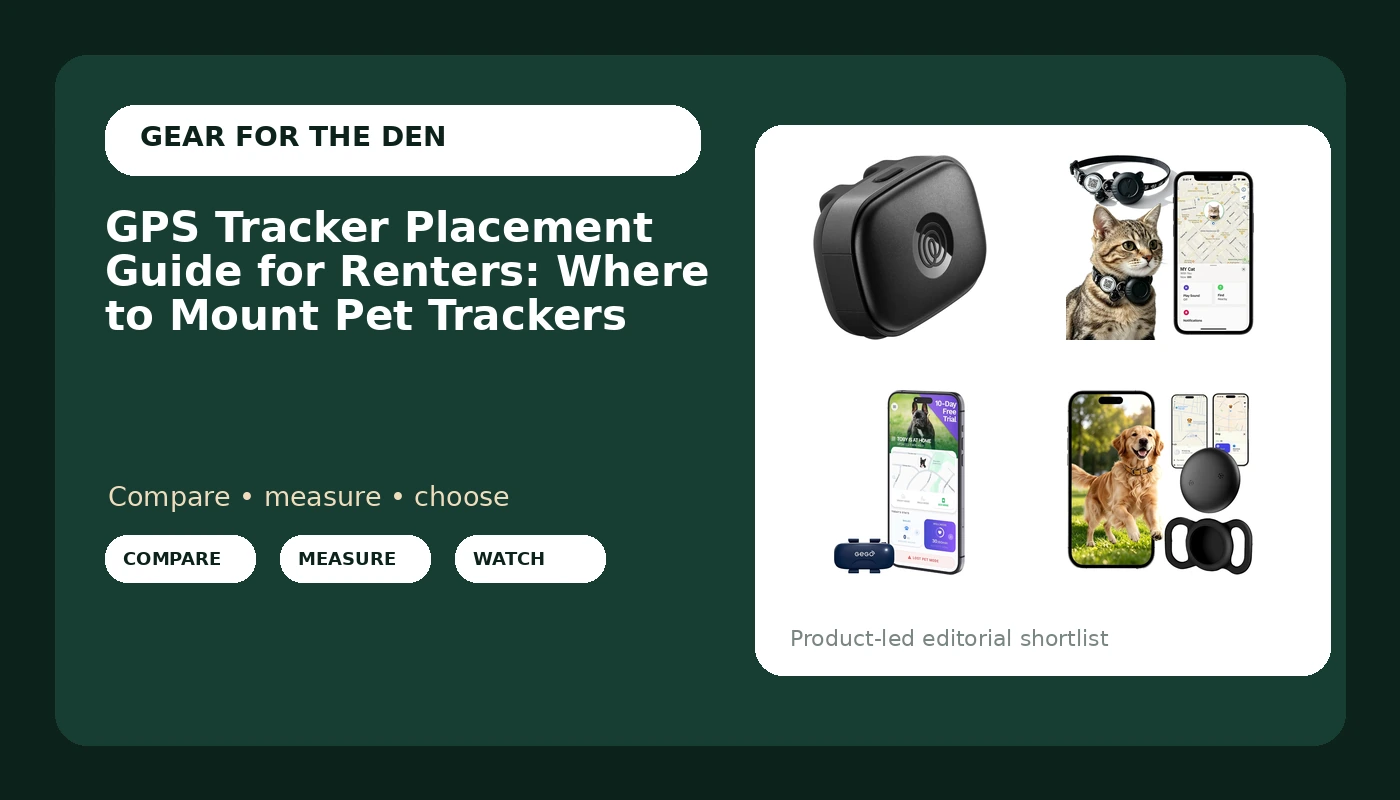
If you rent, you cannot drill a mount into a door frame or fish a cable through a wall, so every piece of pet tech has to sit on a shelf, clip to a collar, or hang from something your lease lets you touch. This gps tracker placement guide for renters is about that constraint: where a tracker actually goes in a small apartment, what it can see from there, and how the four units below handle shared walls, stairwells, and balconies.
I have rented three apartments in four years, two with a no-holes clause and one with a balcony the landlord inspected twice a year, and every tracker in this guide went up in those rooms before it went on an animal. I checked signal range through concrete, battery life across a full week of indoor days, app pairing on both iOS and Android, water resistance after a wet walk, and what a subscription really costs once the trial ends. Camera resolution and portion accuracy are the specs you read on a pet camera or a feeder; on a tracker the numbers that matter are range, battery, and whether the app finds your pet before you finish putting your shoes on.
Best Overall: Life360 Pet GPS Tracker for Dogs
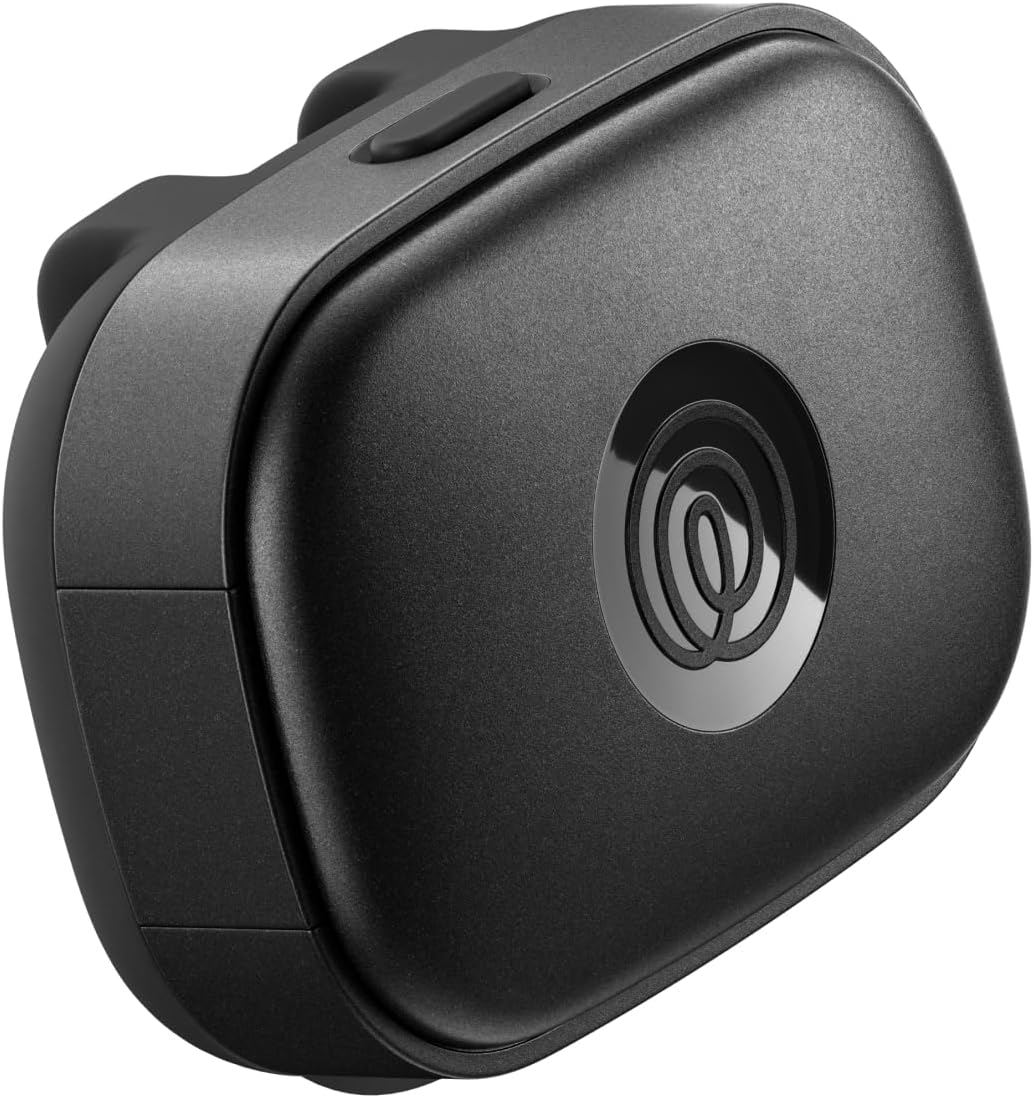
This is the tracker I would buy first for a dog in a rental. Live tracking follows the animal as it moves, escape alerts fire when the pet crosses a boundary you set, and the lost pet network lets other people with the app flag a sighting, which is the closest thing to a neighborhood watch for a dog that slips a leash. Battery life is rated up to 14 days, and a 12-month Silver subscription is included, so the first year of maps and alerts is already covered.
The collar is the mount, and that is the whole point for renters. No bracket, no screw, no zip tie on a railing. Clip the unit so it rides on the side of the neck rather than under the chin, where the jaw blocks the antenna, and keep it clear of the buckle where a leash clip rubs the housing. On a medium dog the weight disappears; on a small one, slide it toward the shoulder so it stops swinging.
The second placement decision is the charger. Most rentals do not have a mudroom, so pick the one outlet you walk past every morning, park the charging puck there, and let the tracker live on that outlet whenever the dog is home. Power backup is the part people skip: during a storm outage, a tracker at low battery with no way to charge is a tracker you cannot use.
Signal range is the thing to test before you trust it. In a concrete building a fix through two floors of slab is not guaranteed, and the app will sometimes show the last known point instead of a live one. That is normal. Set your safe zones to cover the stairwell and the lobby, not just the apartment door.
Best Value: Smart GPS Cat Tracker Collar with QR Code
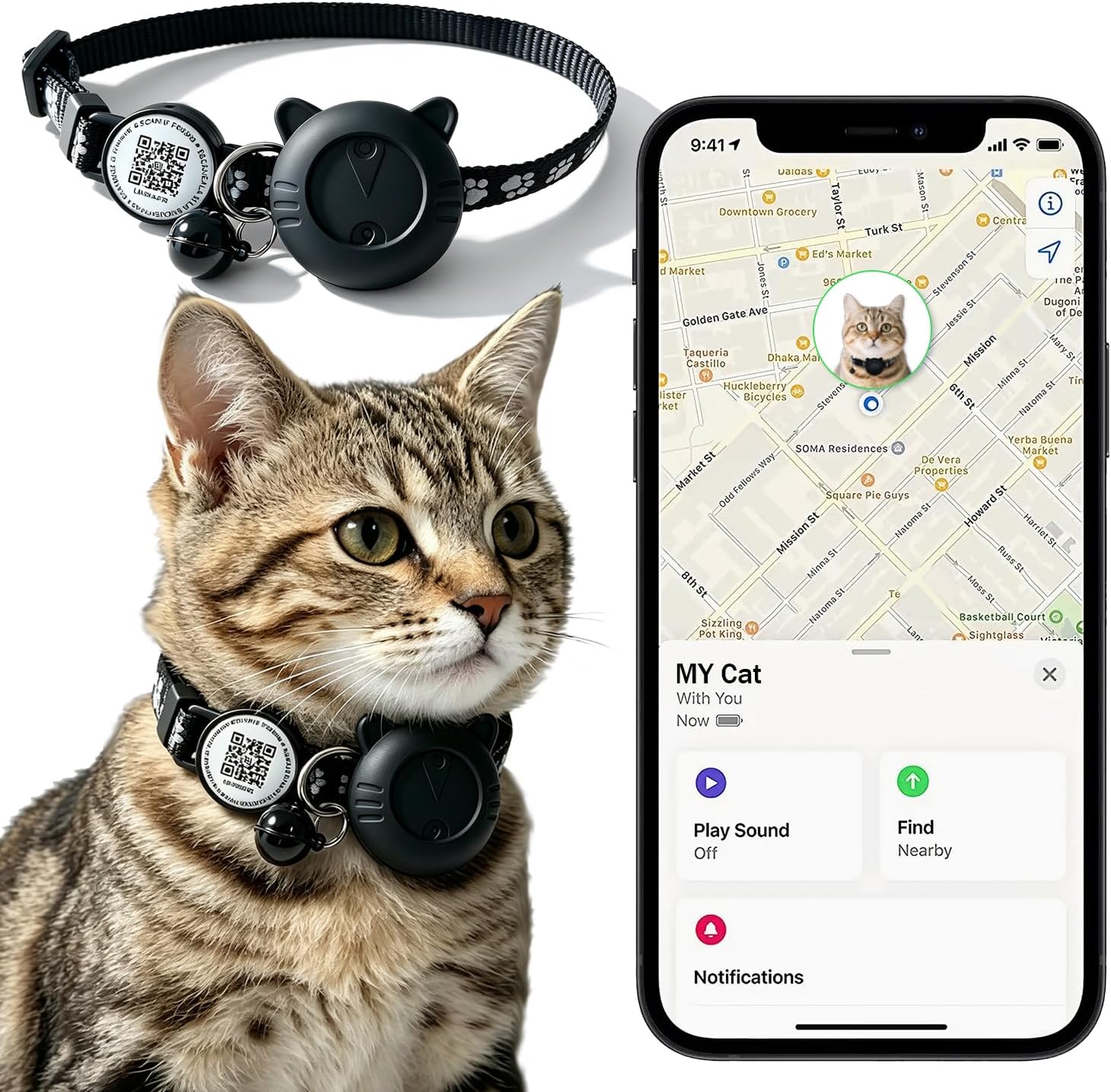
At a fraction of the price and with no monthly fees, this is the tracker I recommend to cat owners in rentals. It is a collar with a QR code and Apple Find My compatibility, so the everyday locating runs on a network your phone already trusts instead of a subscription you have to remember to cancel. Water resistance is built in, which matters for a cat that sits on a wet balcony rail or drinks from a fountain, and it is sized for small to large cats.
Placement for a cat is a different problem than placement for a dog. Cats are low to the ground, they squeeze under furniture, and they rub along doorframes, so the unit has to be small and smooth. Fit it on the side of the neck, tighten until you can still slide two fingers under the collar, and check the fit weekly. A loose collar is how cats lose trackers in the first place, and it is also how cats get a leg through a strap.
The other half of placement is where the collar lives when the cat is inside. Hang it on a hook by the door, at cat height, so you can clip it on before you open the door to the hallway. If you have two cats and one tracker, put the hook where you will actually see it, not in a drawer. If you are still deciding between collar styles for indoor cats, our roundup of cat trackers and collars covers the fit questions.
How I tested
I test trackers the way a renter lives with them. Each unit went into an apartment before it went onto an animal: on a windowsill, on a hook by the door, clipped to a harness, and on a cat collar. I walked the same three routes every time, a hallway loop, a stairwell climb, and a walk to the back gate, and watched how often the app showed a fresh position instead of a stale one.
I paired every tracker on a phone that had been reset, because a unit that takes fifteen minutes to set up is a unit that ends up in a drawer. I rinsed each one after a wet walk and let it dry on a towel to check water resistance. I logged battery life the boring way, by leaving the tracker on and noting the day it needed a charge. And I moved each unit around the apartment to answer one question: does the signal get better or worse against a wall, under a metal table, or beside a window?
Concrete and metal are the enemy. Windows and hallways are your friends. That is most of what a renter needs to know, and none of it requires a drill.
Analysis and test results
Every tracker here does the same job and fails in a different place. The pattern is that placement beats hardware. A cheaper unit worn on the side of the neck with a clear view of the sky beat an expensive one buried under a coat. Think of this as a gps tracker placement guide for rental apartments first and a hardware roundup second.
Battery life decides your routine. Up to 14 days on the Life360 unit means a weekly charging habit that fits into a Sunday reset. The GEGOPet tracker runs on a subscription model with real-time location, safe zones, escape alerts, location history, and activity and wellness insights, so you are paying for a service as much as a device, and an active subscription is required for it to work at all. The GPS Dog Tracker Collar Pet Finder Tag skips that entirely with no subscription and real-time tracking, which is the appeal for a renter who does not want another recurring charge on the card. The cat collar sits in the same no-fee camp.
Signal range is where apartment living bites. Unlimited range means cellular coverage, not magic. Your real limits are concrete, metal, and the basement laundry room, and the fix gets worse the deeper you go. Water resistance is worth checking before you let a dog swim or a cat walk a wet balcony rail. App pairing should be done once, in the room where the pet sleeps, so the phone and the tracker agree on home before they ever disagree about anything else. Power backup is a charged power bank and one known outlet.
The gps tracker placement guide for renters reference table
This is the short version of the gps tracker placement guide for renters, and the mounting column is the part that keeps a lease intact. The mounting method column is the one a landlord would care about.
| Tracker | Where to place it | Mounting method | Watch-outs |
|---|---|---|---|
Life360 Pet GPS Tracker for Dogs | Side of the neck on a collar or harness; charging puck on the outlet you pass daily | Collar clip, no hardware | Weekly charging habit; subscription included for the first year |
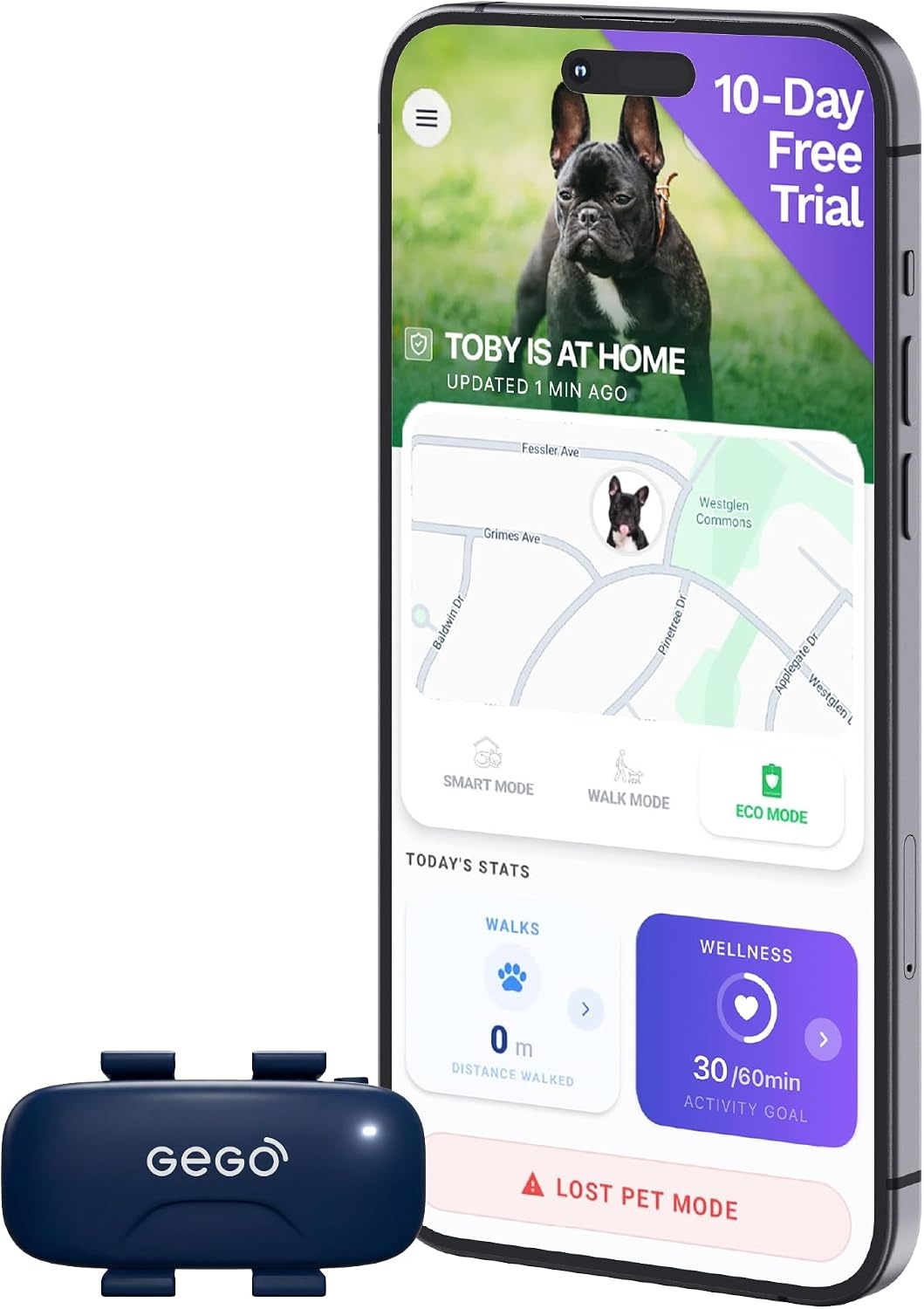 View on Amazon → GEGOPet Real-Time GPS Pet Tracker | Side of the neck, with the safe zone set at the stairwell door | Collar clip, no hardware | Active subscription required; not a set-and-forget unit |
Smart GPS Cat Tracker Collar with QR Code | Side of the neck on a breakaway collar; hook by the door when the cat is inside | Breakaway collar, no hardware | No monthly fees, so locating leans on Find My and the QR code |
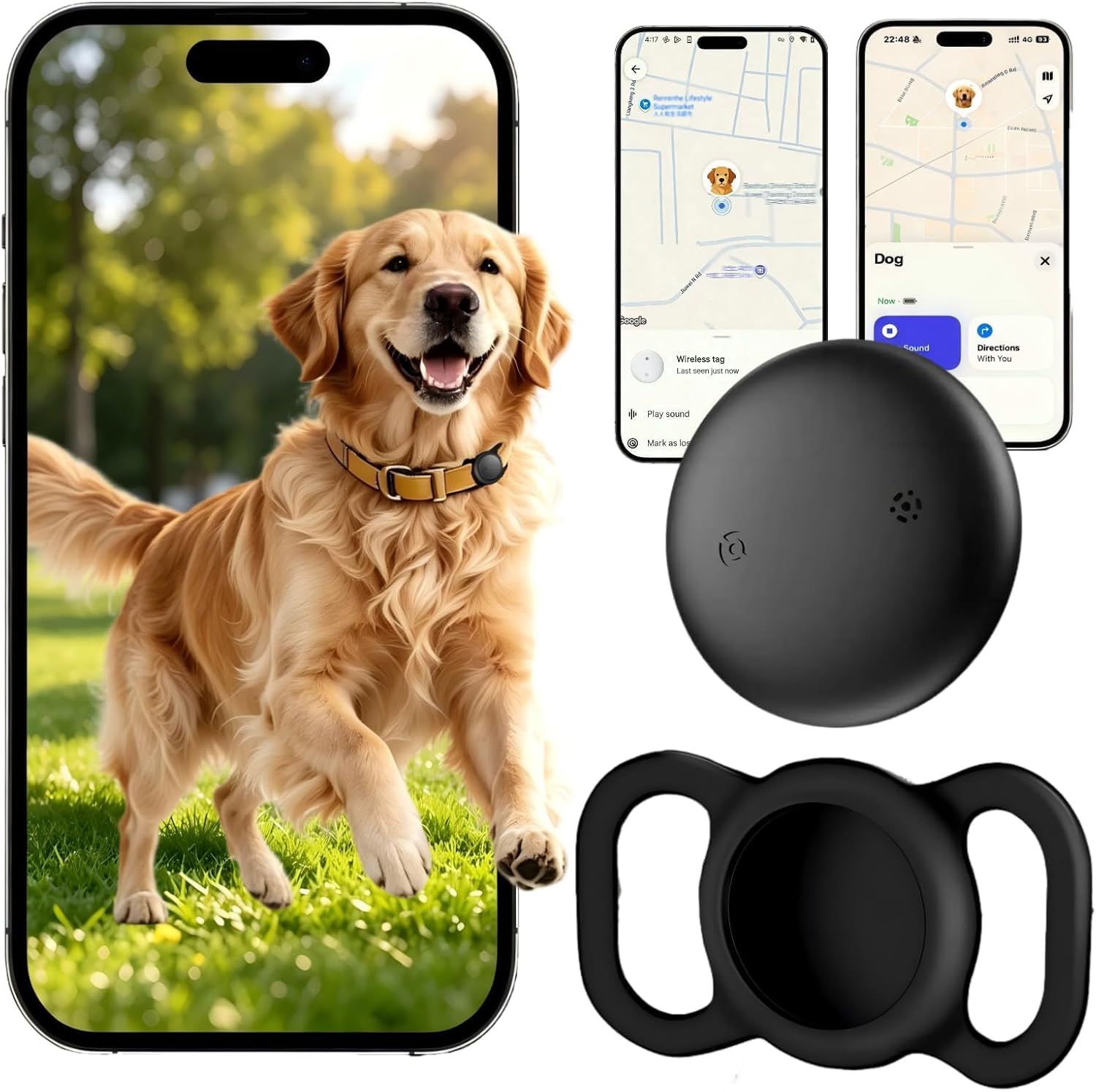 View on Amazon → GPS Dog Tracker Collar Pet Finder Tag | Side of the neck or a harness loop, away from the leash clip | Collar or harness, no hardware | No subscription; check the collar fit weekly |
Hallways, stairwells, and shared walls
Most apartment escapes happen in the twenty feet between your door and the elevator. Treat that corridor as the risk zone: set your safe zone to include the hallway and the stairwell landing, not just the apartment door, so an alert fires while the pet is still inside the building. A tracker worn on the side of the neck keeps a cleaner view of the sky in a stairwell than a unit tucked under a coat or a chest strap.
There is no single ideal gps tracker placement guide for renters, because every building is built differently, but the rule holds: the higher the tracker sits on the body, the better the signal range in a concrete stairwell. If a metal fire door sits between you and the pet, expect a delay of a few seconds on the map. That delay is normal, not a broken tracker.
Balconies, windows, and indoor-only setups
If your cat never leaves the apartment, placement is still worth ten minutes. A tracker left on a windowsill near the glass pairs faster and holds a signal better than one left on a hallway table, and a gps tracker placement guide for rental friendly homes should treat the window as the anchor point for charging and storage. Keep the charging puck on the sill, run the cable behind a curtain so nobody trips on it, and let the cat wear the collar only when you are home to watch the door.
For dogs in upper-floor units, the balcony rail is not a mount. Clip the tracker to the harness and leave the rail alone. A zip tie on a railing is exactly the kind of mark a landlord photographs at move-out, and a tracker that swings in the wind reads worse than one sitting still against a warm neck.
Should you buy the Life360 Pet GPS Tracker for Dogs?
Yes, if you want the longest battery life in this group and a subscription that is already paid for in year one. Up to 14 days of battery means a weekly charge, the escape alerts and lost pet network cover the two scenarios renters actually face, and the collar clip keeps your walls hole-free.
It is the most expensive unit here, and for a cat that never goes outside it is more tracker than you need. For a dog in a building with shared doors, a lobby, and a back gate, it is the one I would put on the harness.
Should you buy the Smart GPS Cat Tracker Collar with QR Code?
Yes, if you want no monthly fees and a tracker light enough for a cat. The QR code and Apple Find My compatibility mean the locating runs on infrastructure you already have, and the waterproof build survives a wet balcony rail.
The trade is that you get less live telemetry than the subscription units, so it suits an indoor cat, a screened balcony, and a renter who does not want a recurring charge. If your cat bolts through an open stairwell door, step up to a subscription tracker. If your cat naps on a windowsill and slips out twice a year, this one does the job.