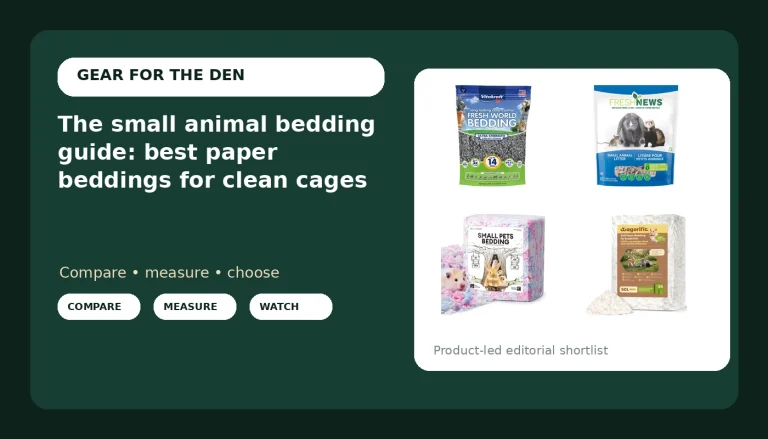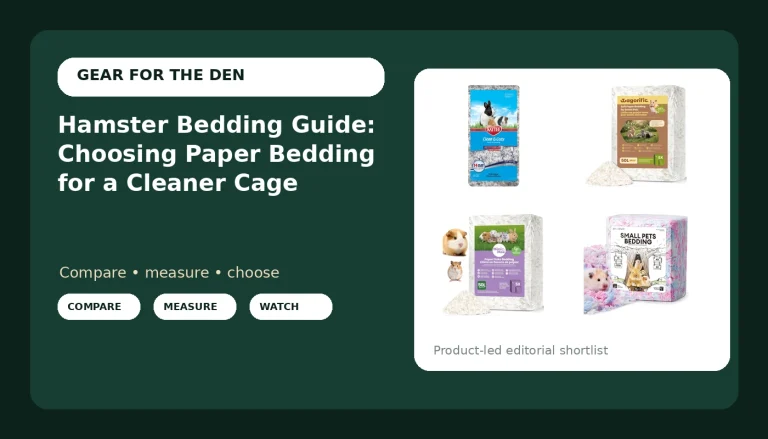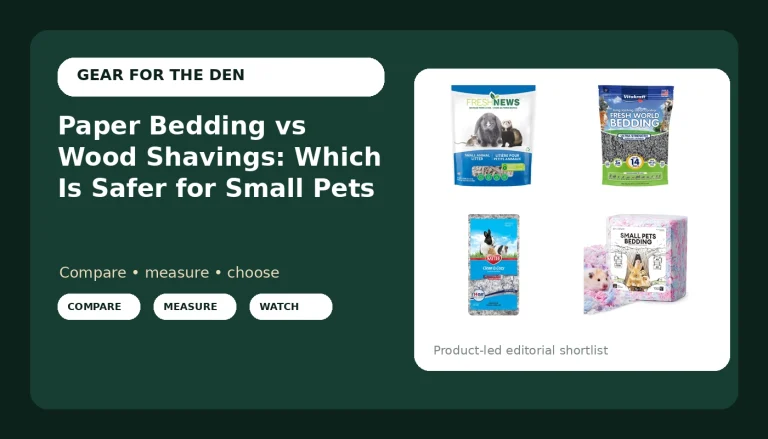
Choosing guinea pig bedding looks like the simplest decision in small pet keeping, and it is also the question I get asked about most. The wrong bag turns a clean cage into a dust cloud and a weekly chore into a daily one. This guinea pig bedding guide walks through four paper beddings I keep coming back to, what each one is actually good at, and how to match the bag to the cage you already own.
Paper bedding has quietly become the default for most guinea pig owners, and for good reason. It is soft enough for a pig to burrow into, it does not splinter, and it breaks down. But "paper bedding" covers everything from a fluffy white bale to a bag of near-dust, and the difference between them shows up in your nose, your floor, and your pig's feet. The four bags below are the ones I would actually put in a cage, and each one solves a slightly different problem. If you are still deciding on the cage itself, start with how to pick a guinea pig cage and come back here for the bedding.
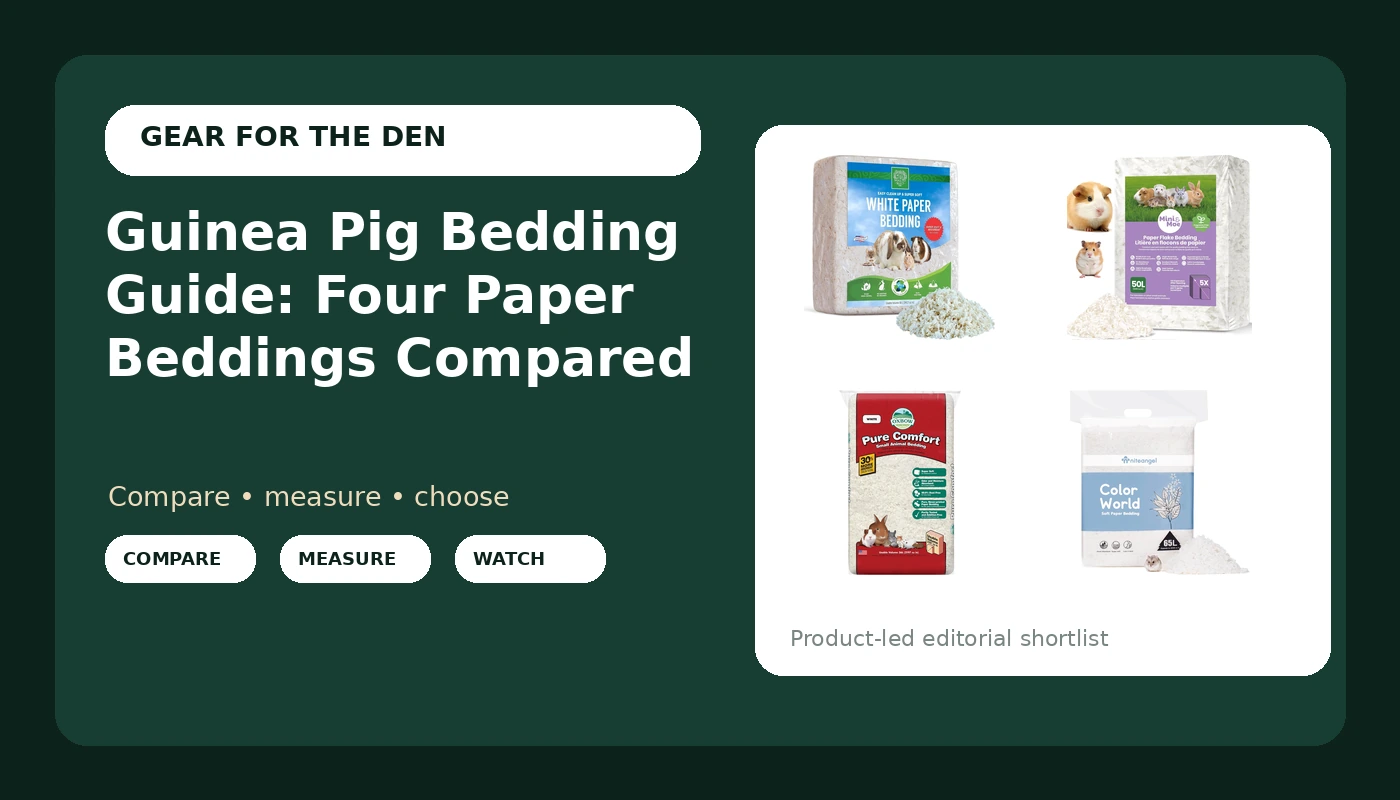
Best Overall: Small Pet Select White Paper Bedding, Guinea Pig, Odor Control, 56 L
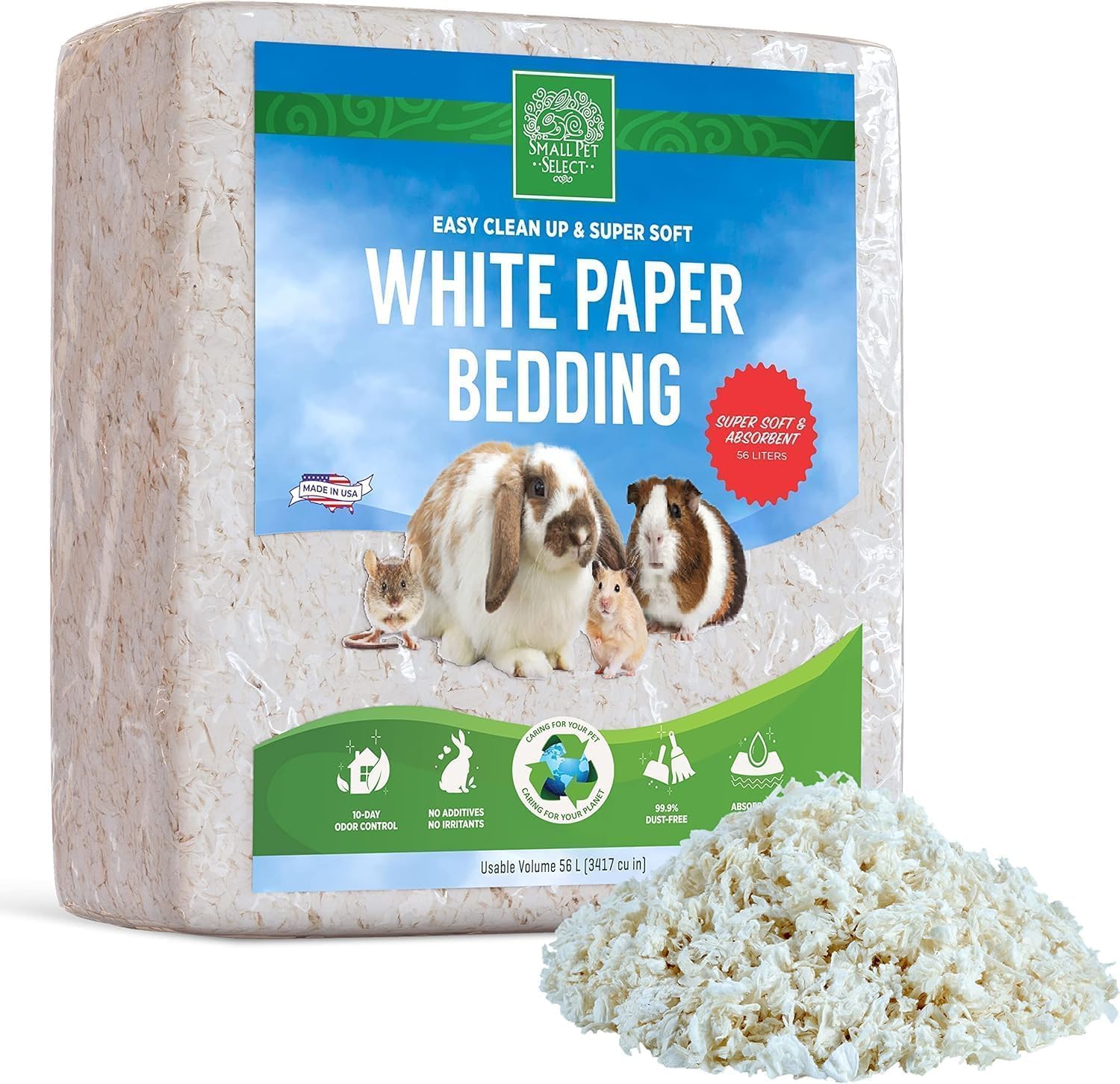
This is the bag I reach for first, and it is the one I recommend when someone wants to stop thinking about bedding. Small Pet Select's white paper bedding is soft, flaky, and bright white, which makes it easy to spot soiled patches during a spot clean instead of pulling the whole cage apart to find them.
The flakes are long enough to knit together, so a guinea pig can push a tunnel through it and the tunnel stays open. That matters more than it sounds. A bedding that collapses the moment your pig turns around means a pig that gives up on burrowing and sits out in the open, and open-floor sitting is how you get a nervous animal.
Odor control is the other half of the job, and this is the bag where I notice the difference on day four or five rather than day one. It does not perfume the cage. It just keeps the ammonia smell from building up in the corner nearest the bottle.
Cage size decides how far a bag goes, and at 56 L this one goes far. In a mid-size cage it gives you a deep layer with enough left over for a full cleanout and a top-up, and in a smaller cage it lasts through several weeks of weekly changes.
The trade-offs are honest ones. It costs more than the budget bags in this group, and the flakes are light enough that a pig with a serious digging habit can kick a fair amount through wide bar spacing. If your cage has wide bars, a low-sided litter box in the corner helps.
Best Value: Hamster Bedding 50L Guinea Pig Paper Bedding Odor Control 99% Dust-Free
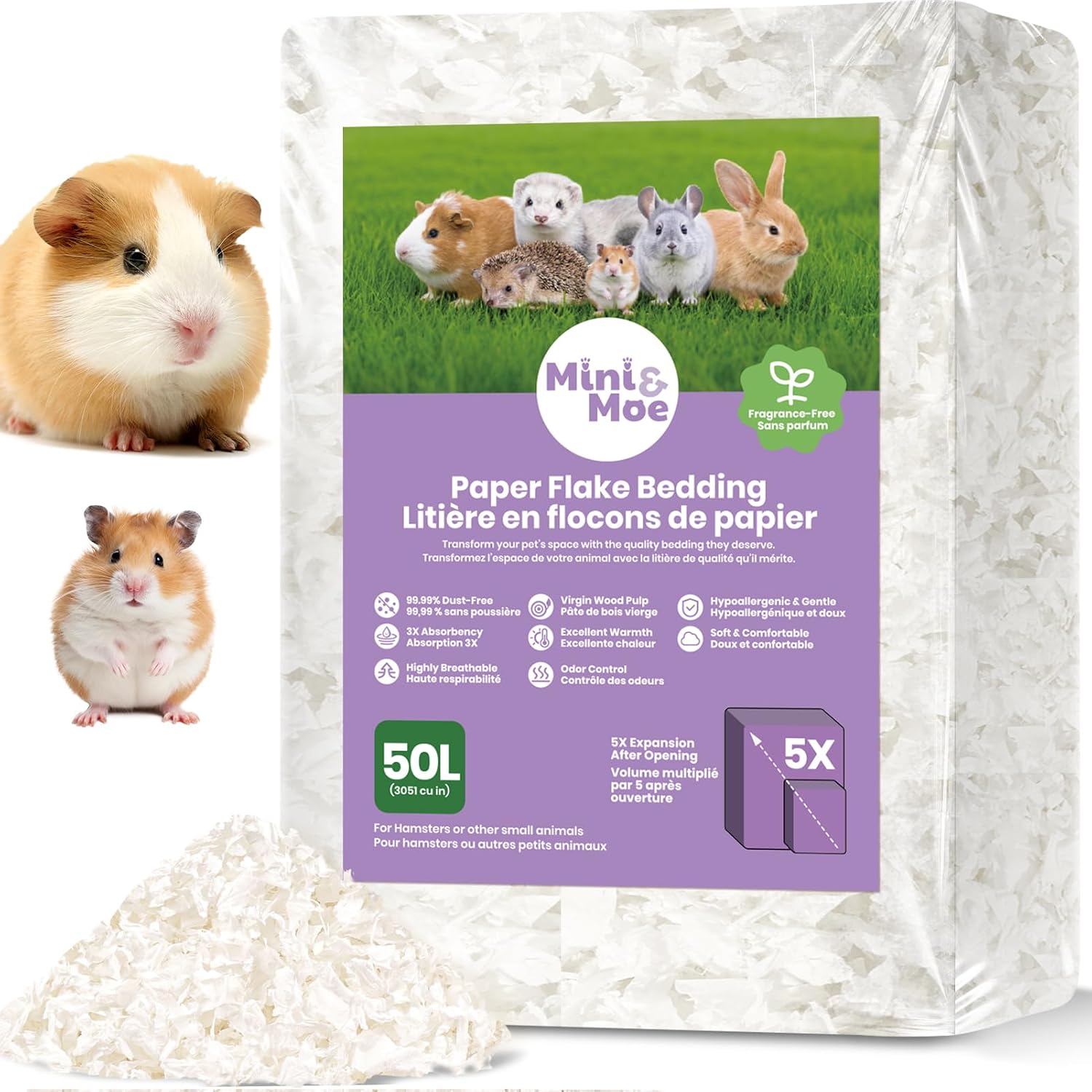
Ignore the hamster in the product name. This is paper bedding, and it is the bag I would hand to anyone with a guinea pig that sneezes, or to anyone who keeps the cage in a bedroom. The 99% dust-free claim is the whole pitch, and it is the reason this bag exists at all.
The flake here is finer and denser than the Small Pet Select bedding. That has two effects. The first is that it packs down into a firmer surface, which is good under a hideout and good in a cage where the pig mostly walks rather than digs. The second is that it holds urine in a tighter patch, so the wet spot stays a wet spot instead of spreading across the whole floor area.
Fifty liters is a sensible middle size. It is enough for a deep layer in a standard cage, and it is the bag I would buy if I were cleaning weekly and wanted a month of bedding without a second trip to the store.
The compromise is loft. Fine flakes do not hold a tunnel the way long flakes do, so if your pig is a dedicated burrower you will want to mix this with something fluffier or give it a fleece tunnel to sleep in. It is also the bag most likely to compact into a hard mat if you skip a spot clean, so keep an eye on the corner under the hay rack.
How I tested
I run every bag through the same questions before it earns a place in a cage, and the questions do not change based on what the label claims.
Dust is first. I pour a few handfuls from height into an empty bin and watch what happens in the air. Bedding dust is one of the most common causes of a guinea pig with a runny nose, and it is the hardest thing to judge from a product photo.
Absorbency is second. I look at how far a wet patch spreads from a corner, because a bedding that wicks sideways soaks the whole cage while a bedding that holds tight keeps the mess local.
Then odor. Not on day one, when everything smells like paper, but on day four and five, which is when a cage either still smells neutral or announces itself from the doorway.
Structure comes next. Does a tunnel stay open? Does the bedding hold its shape under a hideout, or flatten into a mat the pig avoids? Does it stay put, or does it travel across the room?
Finally, coverage. A big bag is only a bargain if the flakes go far. I look at how deep a layer a full bag gives in a cage of a given floor area, and how much is left after a cleanout.
Analysis and test results
What an ideal guinea pig bedding does is simple to state and surprisingly hard to find: it absorbs, it holds a burrow, and it does not put dust in the air.
The first thing to settle is material. All four bags here are paper, and paper is the right default for most guinea pigs. It is soft underfoot, it does not splinter, and a pig that nibbles a strand is not in trouble. Aspen shavings are the other common choice, and they are fine for some animals, but they are heavier, they do not hold a burrow as well, and they are harder on a pig with sensitive feet.
Volume is where most people get this wrong. The correct guinea pig bedding is not the biggest bag, it is the bag that lets you lay down a genuinely deep layer across the whole floor area. A thin scattering of bedding is worse than no bedding at all, because it does not cushion, it does not absorb, and it does not let the pig do the one thing guinea pigs actually want to do, which is disappear into it.
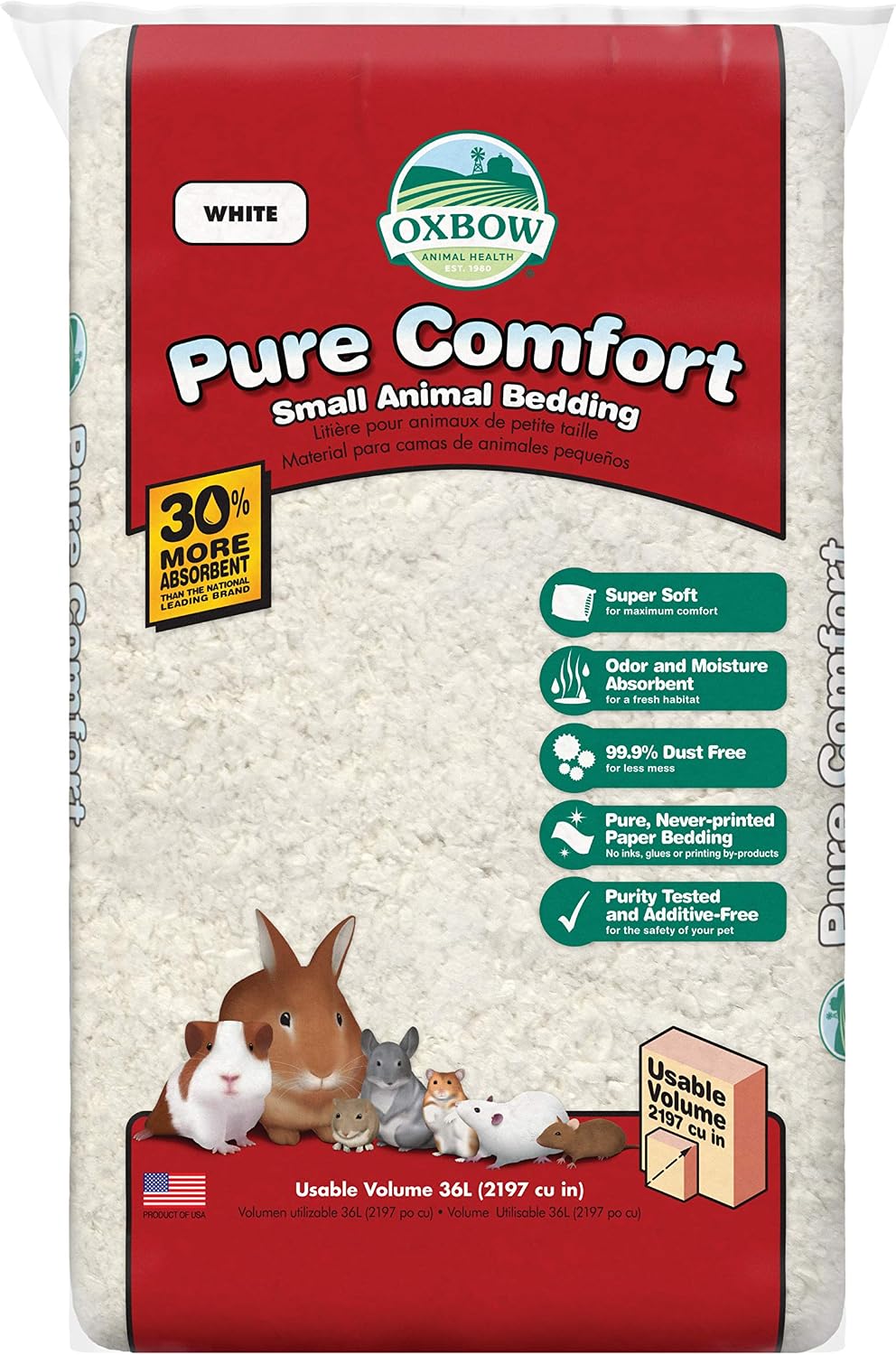
That is where the 36 L Oxbow bag fits. It is the smallest bag in this group, it is made in the USA, and it is a clean white paper bedding with a fine, soft texture. In a single-pig cage with a modest floor area it gives you a proper layer without leftovers going stale in the garage. It is the bag I would buy for a first setup or for a quarantine cage.
The 65 L Niteangel bag sits at the other end, and it is worth reading its listing carefully: the product name says aspen shaving, but the variant is white paper bedding. Those are two different products with two different behaviors, so make sure the variant you add to the cart is the paper one.
Dust separates this group more than anything else. The dust-free bag is the one I would choose for a pig that sneezes, for a household with allergies, or for a cage in a bedroom. The fluffier bags are not dusty in a dramatic way, but they release more fine particles when you pour them, and that is worth knowing before you shake a bag out over an open cage.
Bar spacing matters here too. Bedding that gets kicked out of the cage is bedding you paid for and then swept up. Wide bar spacing plus a light, fluffy flake equals a daily sweep. If your cage has wide bars, either choose a denser bedding or add a solid panel along the bottom few inches.
Two placement decisions make more difference than the brand of bedding. Put the hay rack over a litter box or a hard tray rather than over the main bedding, so wet hay does not sour the layer your pig sleeps in. And check where the bottle drips. A bottle that dribbles onto bedding creates a permanent damp patch, and a damp patch is where odor starts. A bottle with a low bottle capacity means more refills and more chances to spill, so it is worth checking that the capacity matches how much your pig drinks in a day.
The guinea pig bedding comparison table
| Bedding | Material | Volume | Best for |
|---|---|---|---|
| Small Pet Select White Paper Bedding | Paper | 56 L | Odor control and burrowing in a mid-size cage |
| Hamster Bedding 50L Guinea Pig Paper Bedding | Paper | 50 L | Dust-sensitive pigs and bedroom cages |
| Oxbow Small Animal Bedding | Paper | 36 L | Single pigs, small cages, first setups |
| Niteangel White Paper Bedding | Paper | 65 L | Deep bedding across a large floor area |
Read the table by column, not by row. If odor is your complaint, start at the top. If your pig sneezes, start at the second row. If you are setting up a small cage for one pig, the third row is plenty. And if you are bedding down a large cage with two or three pigs, the 65 L bag is the one that will not leave you short halfway through.
The 65 L bag and deep bedding
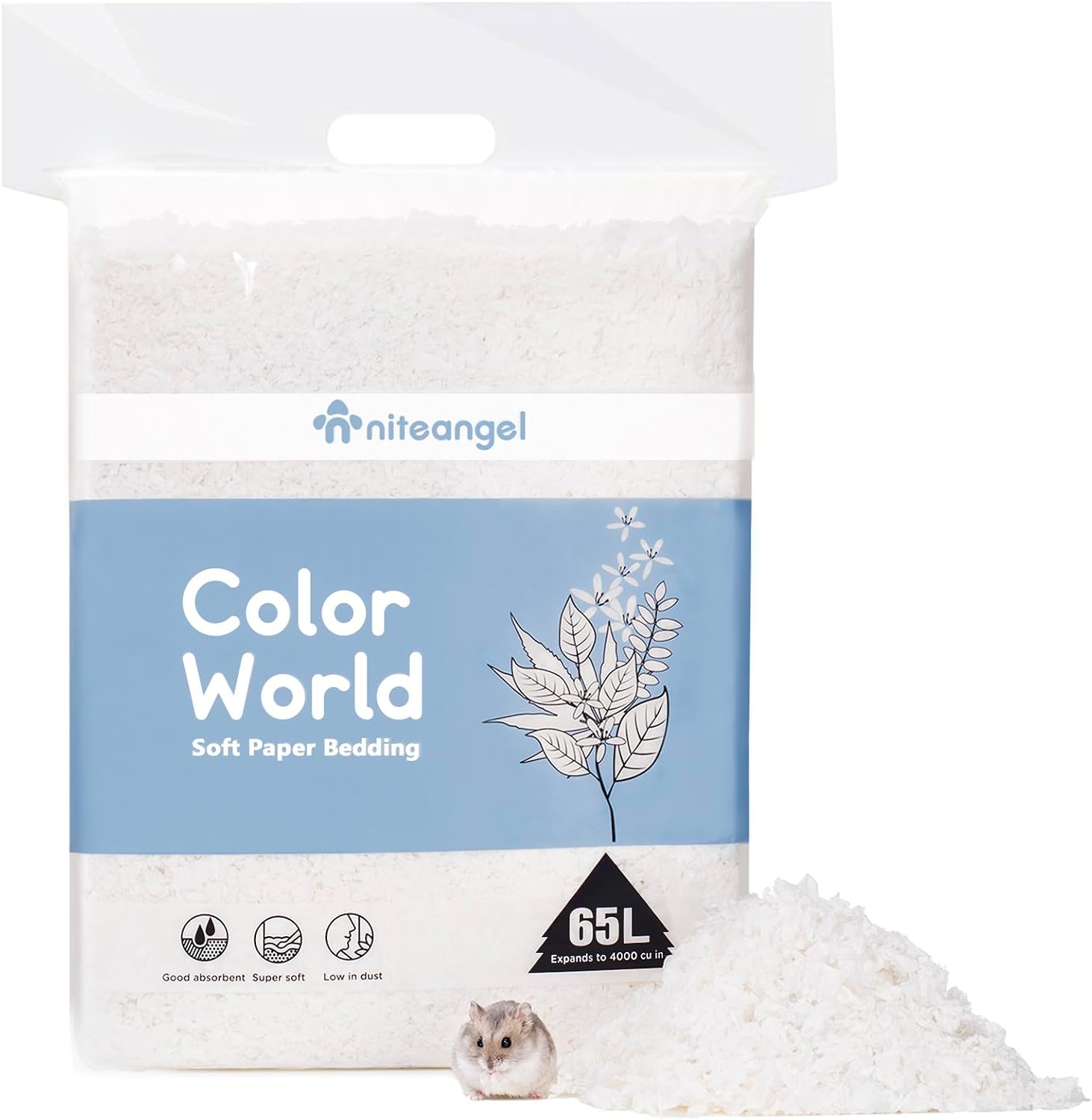
Volume is not vanity. The larger the floor area, the more bedding you need to hit a depth that actually cushions, and a big cage with a shallow layer is a big cage with a hard floor. The 65 L bag is the one that makes a deep layer workable across a wide cage, and a deep layer is what lets you scoop the soiled patches and leave the rest, instead of tearing the whole cage down every week.
This is also the bag that suits a large hideout. Hideout size determines how much bedding gets pushed aside when the pig goes in and out, and a big hideout in a shallow layer ends up sitting on bare floor. Give it enough depth and the hideout stays surrounded.
The catch is storage. Sixty-five liters is a lot of bag, and paper bedding wants to stay dry. If you do not have a sealed bin, the bottom of the bag will pick up garage damp and you will be throwing away the last few liters.
Dust, bar spacing, and keeping bedding where it belongs
Bedding dust is the variable nobody thinks about until a pig starts sneezing, and it is the reason a dust-free bag is worth paying attention to even if nobody in the house has allergies.
The rest is setup geometry. Bar spacing decides whether bedding stays in the cage. Tunnel diameter decides whether your pig can actually use the tunnel you buried, because a tunnel that is too narrow is a tunnel the pig will not push through. And a hay rack mounted over open bedding is a slow-motion mess, because hay plus urine plus paper is exactly the combination that smells.
Fix the layout first, then buy the bedding. Most people do it the other way around and then blame the bag.
Should you buy Small Pet Select White Paper Bedding, Guinea Pig, Odor Control, 56 L?
Yes, if you want one bag you do not have to think about. It is soft, it holds a burrow, and the odor control is the kind you notice by the end of the week rather than in the first hour. The 56 L size covers a mid-size cage properly and still leaves you a top-up for the next cleanout.
It is not the cheapest bag here and it is not the dust-free one. If your pig sneezes, buy the dust-free bag instead. If you have a small cage for a single pig, the Oxbow bag is enough. But for the average guinea pig in an average cage, this is the one I would buy again, and it is the bag I would suggest to anyone who is tired of experimenting.
Should you buy Hamster Bedding 50L Guinea Pig Paper Bedding Odor Control 99% Dust-Free?
Yes, if dust is your problem. It is the bag I would choose for a pig with a sensitive nose, for a bedroom cage, and for anyone who has watched a cloud rise off a fresh bag of bedding and winced. The finer flake also keeps a wet patch from spreading, which makes spot cleaning easier and keeps the cage looking tidier between full changes.
The trade-off is loft. It does not hold a tunnel as well as a fluffier bedding, so a dedicated burrower will want something else mixed in, or a fleece tunnel to sleep in. If your priority is dust and tidiness over fluff, this is the better buy. If your priority is a pig that vanishes into a pile of bedding, go with the Small Pet Select bag.