Dander is easy to blame on the dog and hard to see until it is airborne. It is a mix of dead skin cells, dried saliva, and fine debris that settles deep in a coat, and the moment a strong stream of air hits a dry, loose undercoat, it lifts into the room and lands on everything. That is why the tool you use to dry your dog after a bath matters as much as the shampoo you used in the tub. A dog dryer for dander has to move enough air to push that debris out of the coat without launching it across the living room, and it has to do that without heat that dries the skin and starts the cycle over. This guide covers what the airflow is actually doing, which features change the result, and four grooming tools that approach the job in genuinely different ways.
Quick answer
No dryer removes dander, and no dryer treats allergies. What a dryer can do is carry loose skin cells, shed hair, and dried debris out of the coat and into a towel, a filter, or an outdoor space instead of letting them settle into your carpet and your sofa. The features that change how well that works are airflow volume, heat control, and whether the tool reaches the undercoat rather than skating over the top layer of fur. Coat type drives the decision more than brand does. A dense double coat needs volume and patience, while a thin single coat needs lower force and closer temperature control.
Four useful options
| Model | Best fit | What stands out |
|---|---|---|
| My Pet Command Professional 4.5HP Dog Dryer Blower High Velocity, 110V | Thick double coats that hold water | 4.5HP high-velocity blower built for 110V outlets |
| Jellyfish Handheld Dog Dryer – 1.21lb Lightweight, 2 Speeds, 4 Temp, Portable High Velocity Blow Dryer for Travel & Home | Small dogs, faces, feet, and travel | 1.21 lb handheld body with 2 speeds and 4 temperature settings |
| PETGUGU 11-in-1 Dog Grooming Vacuum & Dryer for Shedding/Grooming/Trimming | Capturing hair and debris at the source | 11-in-1 kit combining vacuum, dryer, and trimming tools |
| Buenkee Dog Grooming Vacuum & Blow Dryer Kit, Pet Clipper, 15000Pa Suction | Suction-led grooming with drying on top | 15000Pa suction with a blow dryer and a pet clipper in the kit |
For thick double coats: My Pet Command Professional 4.5HP Dog Dryer Blower High Velocity, 110V
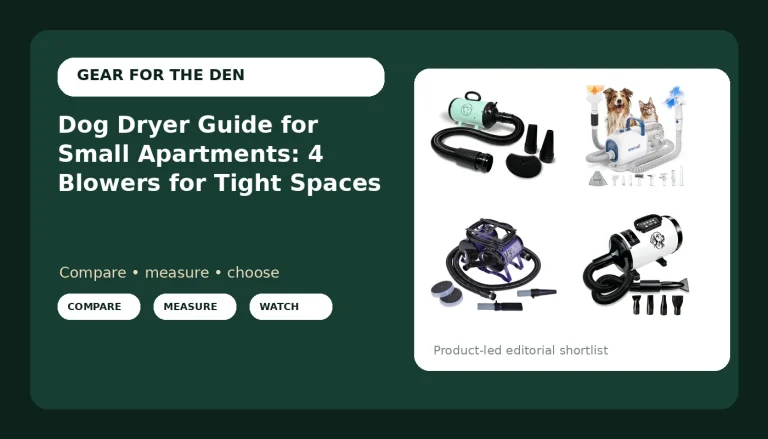
Where this one earns its place is the coat that stays damp for an hour after a bath. High velocity moves water off the skin instead of just warming the surface, and for a thick undercoat that is the difference between a short session and a very long one. The trade-off is honest: a blower this size is loud in a small room, it is not a handheld, and it does nothing about the hair that has already left the dog. If you want the drying finished quickly and you have a garage, a yard, or a bathroom you can close off, this is the shape of tool that gets there. If your dog is small, nervous, or a puppy, the force works against you.
For small dogs and travel: Jellyfish Handheld Dog Dryer – 1.21lb Lightweight, 2 Speeds, 4 Temp, Portable High Velocity Blow Dryer for Travel & Home
The case for a handheld is control and reach, not raw power. Two speeds let you start a nervous dog on the low setting and step up once they settle, and four temperature settings mean you can dry close to the skin without cooking it. The 1.21 lb body matters more than it sounds, because drying a dog is an overhead job and a tool you can hold in one hand while you aim with the other keeps the session short. What it will not do is clear a heavy undercoat on a large dog in one pass. Treat it as the tool for small and medium coats, for feet, faces, and sanitary areas, and for the dog who will not stand still for a full blower.
For shedding and trimming: PETGUGU 11-in-1 Dog Grooming Vacuum & Dryer for Shedding/Grooming/Trimming
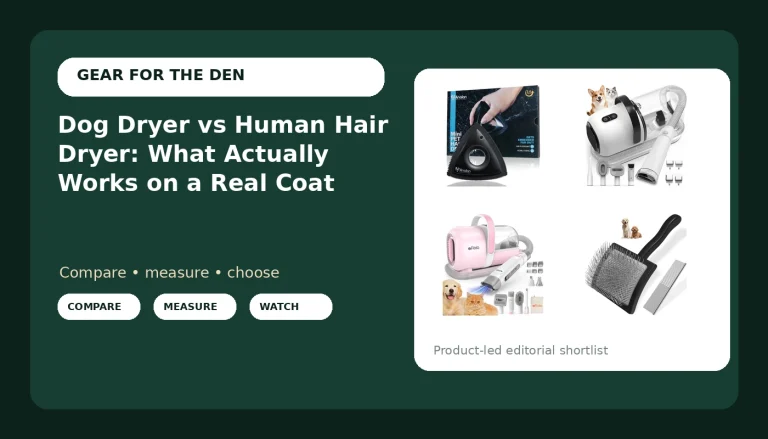
The appeal here is containment. A vacuum pulls loose hair and debris into a canister while you work, which means less of it becomes airborne in the first place, and the dryer function finishes the coat afterward. That combination fits a shedding-season routine well: vacuum first to lift the dead undercoat out, then dry to push the remaining debris off the skin. The trade-off is that a multi-purpose unit rarely matches a dedicated blower for raw airflow, and you have more parts to store, clean, and keep track of. Check that the attachment set includes a brush with a bristle type that suits your dog's coat, and a blade guard if you plan to use the clipper head.
For vacuuming before drying: Buenkee Dog Grooming Vacuum & Blow Dryer Kit, Pet Clipper, 15000Pa Suction
This one is a close cousin of the PETGUGU kit, and the difference is emphasis. Suction is the headline figure here, so the design leans toward collection rather than pure drying force. If your main complaint is the cloud of hair and dander that appears every time you brush or bathe the dog, a suction-led kit addresses that directly. If your main complaint is that your dog takes forever to dry, a dedicated high-velocity blower will finish faster. Plenty of owners end up wanting both, and there is nothing wrong with starting on the side that bothers you more.
Prices and availability may change. Product images, names, and retailer links are matched to verified listings. No current price, rating, stock status, or measured result is stated here without current evidence.
Dog dryer for dander explained: what airflow is really doing
Search for dog dryer for dander explained and you mostly get product lists. The mechanics are worth two minutes first, because they tell you which features to pay for.
Airflow does three separate jobs, and it helps to keep them apart. The first is mechanical: moving air pushes between hairs, lifts loose skin cells and shed hair off the skin, and carries them out of the coat. The second is evaporative: air moving across a wet coat carries moisture away far faster than still air, which is why a blower dries a dog that a towel cannot. The third is direction, and it is the one people forget. Blow a coat from the wrong angle and you drive debris deeper into the undercoat and into the air around you. Work with the lay of the coat, from the skin outward, and the same airflow carries it away instead.
None of that changes the biology. Dander production is driven by the dog's skin, diet, allergies, and how often the coat is washed, and a dryer only manages where the debris ends up. A dog with irritated, flaky skin needs a gentler bathing routine and a veterinarian's opinion long before it needs a new appliance. There is no single ideal dog dryer for dander, because the right answer depends on coat type, tolerance for noise, and how much space you have to work in. The correct dog dryer for dander for a shedding husky is not the same tool as the one for a short-coated terrier who hates being handled.
Matching the tool to coat type, skin, and routine
Coat type is the first filter and it is not negotiable. A double coat with a dense undercoat traps moisture near the skin, and only real airflow volume reaches it. A single coat, a curly coat, or a coat that has been clipped short dries quickly and mainly needs controlled heat and a hand you can aim. If you are unsure which you have, part the fur down the spine and look: if you see a soft, woolly layer under the guard hairs, you are dealing with an undercoat.
Heat is the second filter, and the rule is simple. Warm air speeds drying; hot air damages skin, and damaged skin produces more dander. Motor noise is the third. It does not change the drying result, but it decides whether your dog tolerates the session at all, which in practice changes everything.
- Identify the coat type before you shop, since undercoat depth decides whether you need volume or control.
- Decide whether your bigger problem is collection or drying speed, and start with the tool that solves that one.
- Match the heat setting to the skin rather than the coat, and stay on the lowest setting that still dries.
- Introduce motor noise before the first real session, running the tool in the same room while you feed treats.
- Check the accessories: bristle type for the brush head, a blade guard for clipper work, and a grip handle that stays comfortable when your hands are wet.
Practical routine that keeps dander down
A dryer is one step in a routine, and the routine is what actually reduces the debris in your home. These habits matter more than any single feature on the box.
- Bathe less often than you think, and use a shampoo formulated for skin rather than one chosen for scent.
- Towel the coat first to pull off surface water, then finish with airflow, which shortens the session and the noise.
- Dry outdoors, in a garage, or in a closed bathroom so the debris you lift has somewhere to land other than your living room.
- Work section by section with the airflow pointing away from the dog's face, and keep one hand on the coat to feel where it is still damp.
- Clean or replace the filter on a vacuum-style kit after heavy shedding sessions, because a clogged filter stops collecting and starts recirculating.
If your dog has a thick coat that takes forever to dry, drying a double coat after a bath covers the order of operations in more detail.
Which option should you choose?
Choose the My Pet Command Professional 4.5HP Dog Dryer Blower High Velocity, 110V when your dog has a dense coat that holds water and your priority is finishing the job quickly in a space where noise is not a problem. Choose the Jellyfish Handheld Dog Dryer – 1.21lb Lightweight, 2 Speeds, 4 Temp, Portable High Velocity Blow Dryer for Travel & Home when you have a small or medium dog, you groom on the road, or you need something light enough to aim at feet and faces without a second pair of hands. Choose the PETGUGU 11-in-1 Dog Grooming Vacuum & Dryer for Shedding/Grooming/Trimming when you want one unit that vacuums, dries, and trims so the hair you lift ends up in a canister. Choose the Buenkee Dog Grooming Vacuum & Blow Dryer Kit, Pet Clipper, 15000Pa Suction when capturing loose hair and dander is the main goal and drying is the follow-up step.
One caveat applies to all four: none of these listings states a decibel rating, a drying time, or a filtration specification here, so claims about quietness or allergy performance are not something this page can support. Compare the features each listing actually documents against your dog's coat, and treat the choice as a fit question rather than a ranking.
The bottom line
A dog dryer for dander is a debris management tool, not a medical one. It works when it moves enough air to lift loose skin cells and shed hair out of the coat, at a temperature that does not dry the skin further, in a direction that pushes everything away from the dog rather than deeper into the undercoat. Get the coat type right first, then decide whether you need raw airflow or a vacuum that captures what it loosens. The blower, the handheld, and the two vacuum-and-dryer kits here each solve a different version of that problem, and the one that fits your dog's coat and your tolerance for noise will do more for your floors than any feature list.