Every dog I have lived with has taught me the same lesson: the shedding problem starts in the coat, not in the drawer of brushes. People ask me how to choose a dog shedding tool and expect a one-word answer. The honest answer takes longer, because the tool is maybe a third of the job. Coat type, skin condition, diet, and how often you actually run the tool over the dog do the rest of the work.
I have been the person in the family who gets handed the dog with the matted tail. There is a plastic bin of grooming gear in my laundry room, and over the years it has outlived more products than any dog I have owned: blades that dulled after a month, rakes that pulled skin instead of undercoat, a rubber curry comb that did nothing on a husky and everything on a lab. The winners are boring and specific.
This is the guide I wish I had the first time I bought a deshedding rake for a dog with a single coat. Below is the support gear I would keep in the same bin, then the eight-step workflow that decides which tool you actually buy.
Why you should trust me
I have lived with double-coated dogs, a curly-coated poodle mix, and one very sheddy short-haired terrier, and I have fostered enough shelter dogs to know that the same tool can be perfect on one coat and useless on the next. My bin is the graveyard of gear I bought on impulse: three rakes with teeth too wide for the job, a blade that dulled after two sessions, and a slicker I still use every week.
What I do now is slower and cheaper. I read the ingredient list on anything I feed or spray on a dog, I check bottle size and chew count against how fast my house actually goes through a container, and I try a new tool on the least tolerant dog in the house first. If the tool pulls, or the dog flinches, it goes back.
How I picked and how I tested
For the support gear in this article I looked at three things: what is actually in the product, how long one container lasts, and whether it is safe for a dog that licks its own coat all day. Coat products sit on the skin, so "lick safe" is not a marketing word to me. Anything with a long ingredient list gets read twice, and anything aimed at a sensitive dog gets checked for a limited ingredient approach.
For tools, I worked through coat type first, then undercoat density, then handle feel. A rake with sharp stamped teeth loses to a rounded-tip rake every time, even when the sharp one is cheaper. I also timed sessions: a tool that turns a fifteen-minute job into a forty-minute fight does not stay in the bin.
If you want the brush side of this in more detail, I keep a separate breakdown of brush types by coat, and the same coat-first logic applies to shedding tools.
Skin and coat support to consider when you choose a dog shedding tool
Here is the part most shedding guides skip. A tool removes hair that has already left the follicle. It does nothing about the skin the hair is leaving. If the skin is dry, flaky, or inflamed, the coat releases more dead hair, the tool pulls harder, and the dog learns to hate the whole process. Fix the skin and the diet, and the same rake suddenly works twice as well.
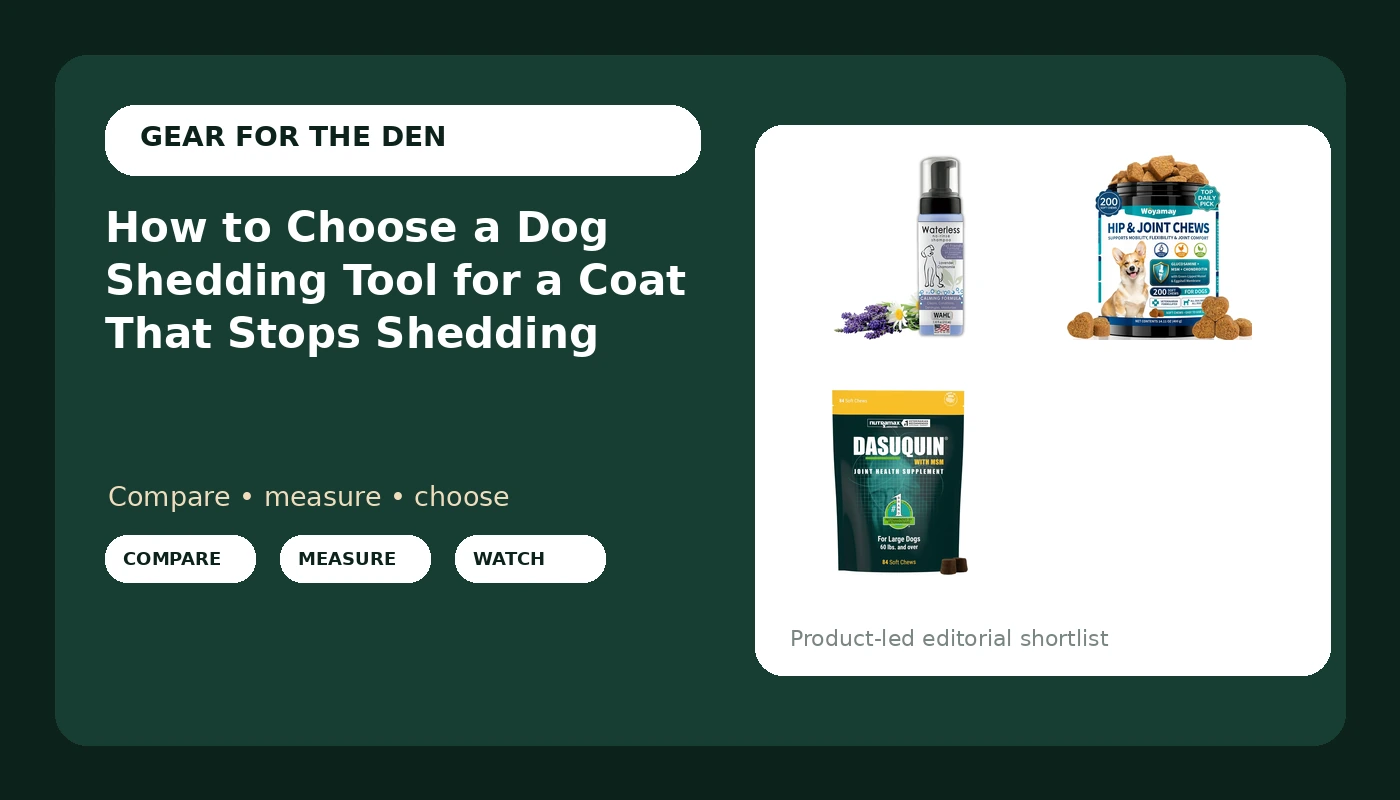
So when you choose a dog shedding tool, buy the tool second. Buy the skin and coat support first. The three products below are what I would keep next to the tools. Two are joint chews, which sounds off-topic until you have tried to deshed a stiff senior dog that cannot stand comfortably for ten minutes. One is a no-rinse coat cleaner for the days between baths.
Coat-conditioning pick: Wahl Waterless No Rinse Shampoo for Animals, Lavender Chamomile, 7.1 oz
Coat-conditioning pick
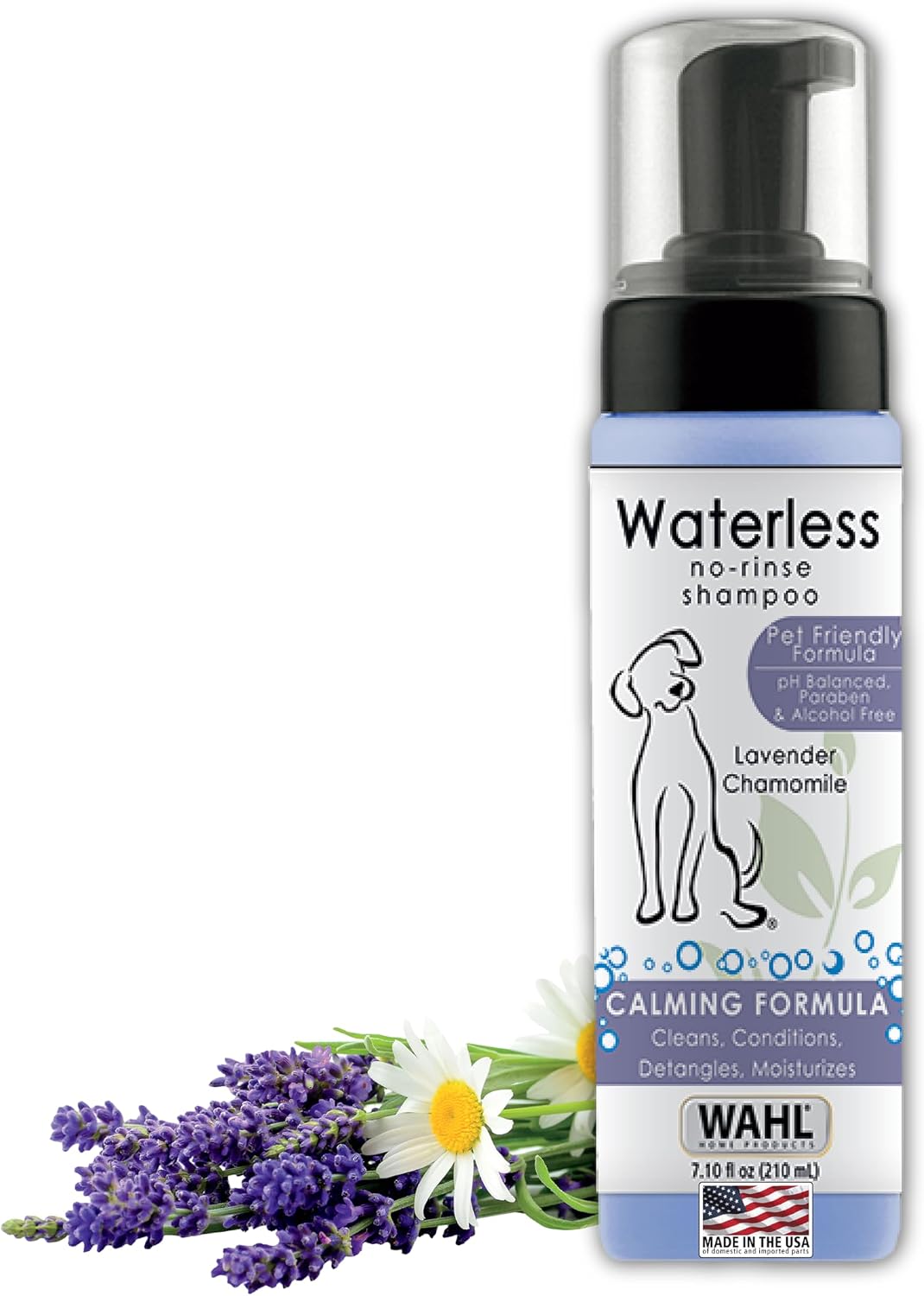
Wahl Waterless No Rinse Shampoo for Animals, Lavender Chamomile, 7.1 oz
This is the bottle that lives in the bin, not the tub. Check current Amazon price. A waterless no-rinse shampoo is for the days between real baths, when the coat smells like dog and the dander is making the shedding look worse than it is. You work a small amount into the coat, then brush it out, and the loose hair comes with it because the coat is finally clean enough to let go.
The lavender chamomile scent is mild and fades, which matters when your dog shares a couch with you. Read the ingredient list if your dog has known sensitivities, and go light on the application. No-rinse formulas leave residue when you overdo them, and residue plus a shedding rake equals a sticky mess.
Flaws but not dealbreakers: The bottle size is small. On a large double coat, 7.1 oz is a couple of sessions, not a season. Buy it as a between-bath tool and keep a real shampoo for wash day.
Anyone with a dog that hates the tub but still needs a clean coat before a brushing session should start here.
Budget pick: Woyamay Joint Supplement for Dogs, Glucosamine for Dogs,200 Soft Chews
Budget pick
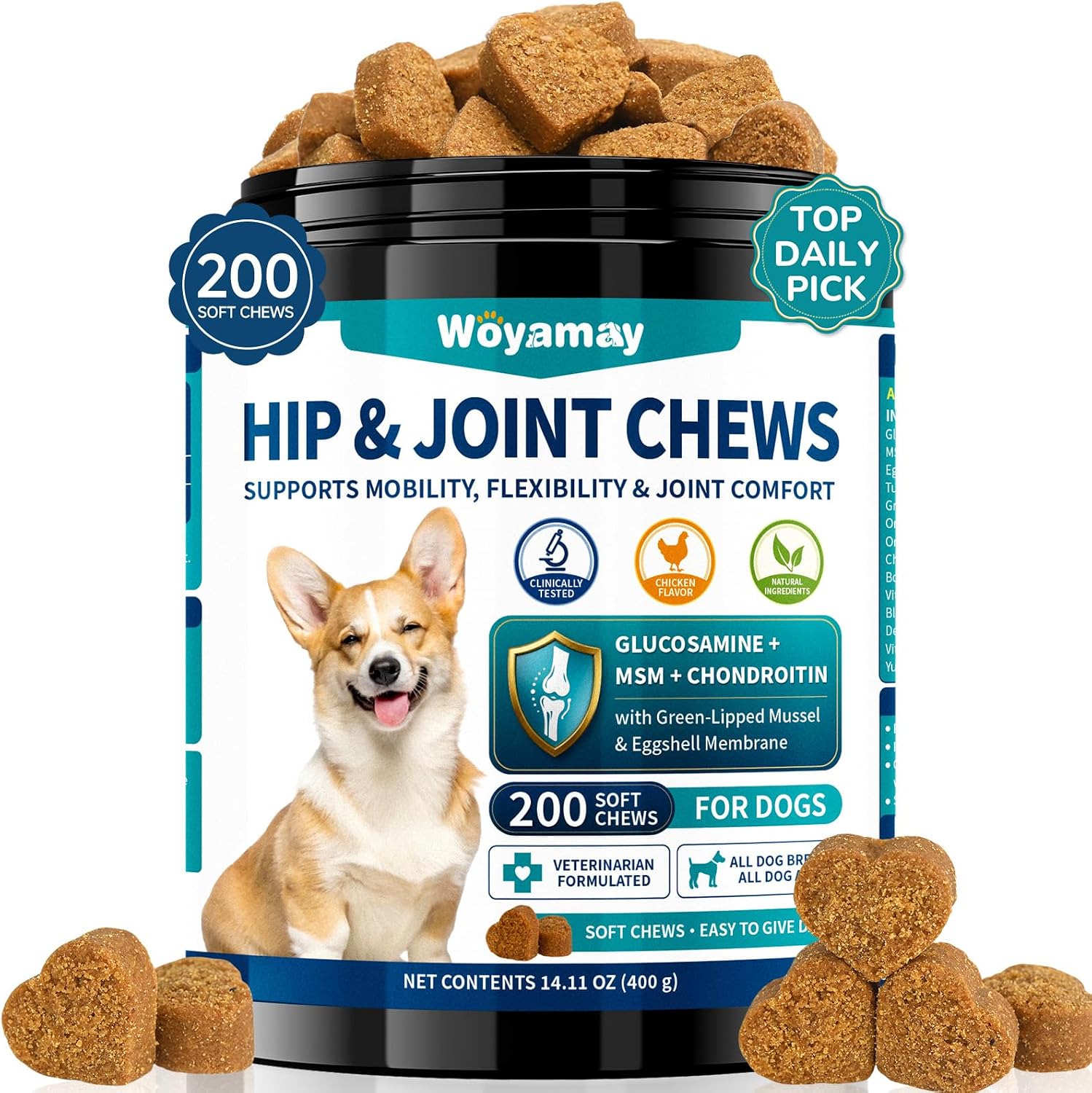
Woyamay Joint Supplement for Dogs, Glucosamine for Dogs,200 Soft Chews
A stiff dog is a shedding problem you did not plan for. Check current Amazon price. When a large dog cannot stand comfortably for ten minutes, the deshedding session gets short, the undercoat builds up, and the matting starts. Joint support is not coat support, but it is grooming support, and this is the budget way to cover it.
The soft chews are easy to hand over, and the 200-count container is the reason this is the budget pick: you are buying time, not a fancy label. Read the ingredient list before you commit, especially if your dog has a sensitive stomach, and ask your vet whether a limited ingredient joint chew makes more sense for your dog than a broad formula.
Flaws but not dealbreakers: The chews are sized for medium and large dogs, so a small dog may need them broken up. The count is generous, but a large dog at the label rate still goes through the container faster than you expect.
Anyone with a big dog that has started slowing down on the grooming table should look here first.
Upgrade pick: Nutramax Dasuquin MSM Joint Supplement for Large Dogs, Soft Chews, 84ct
Upgrade pick
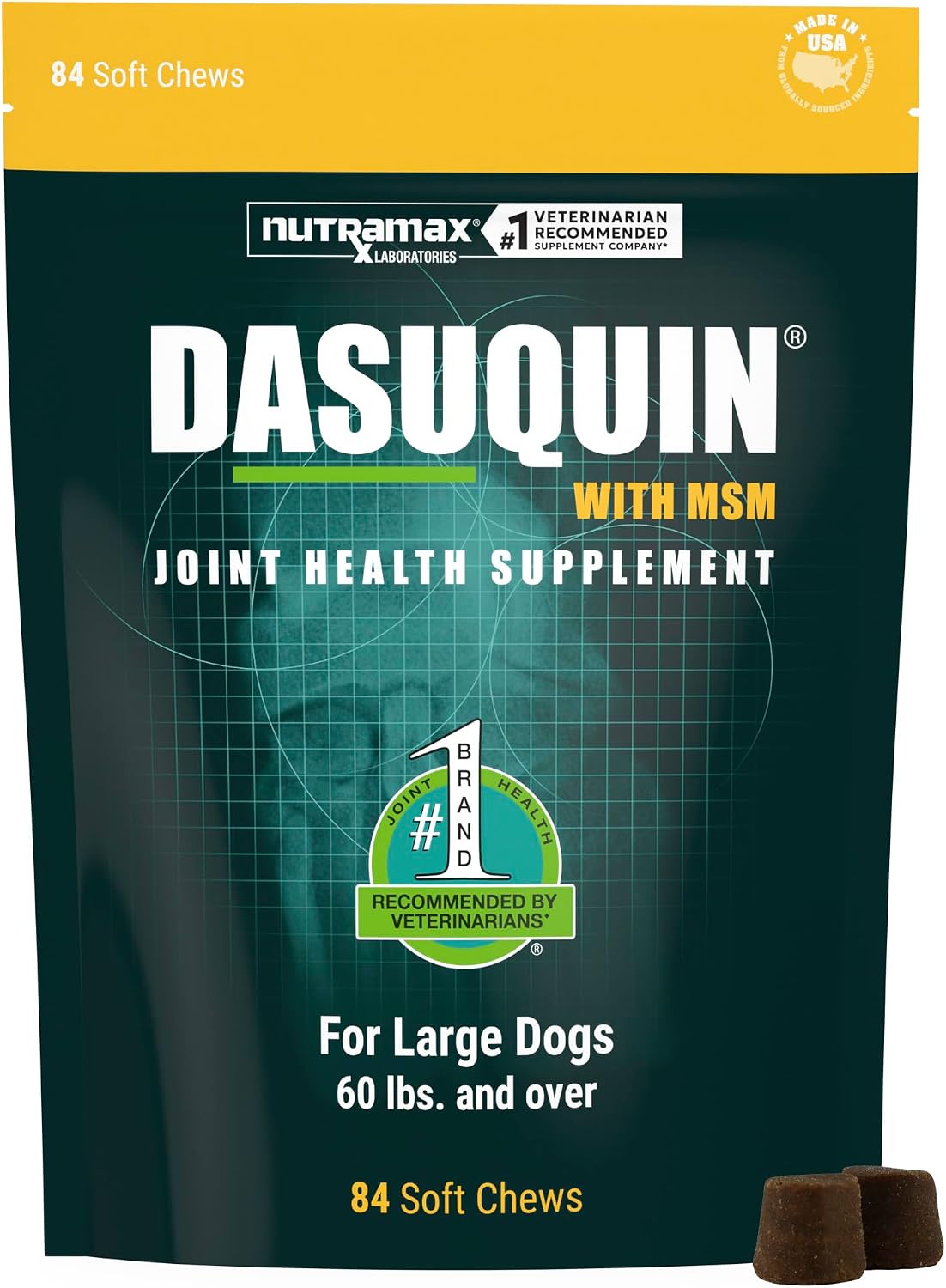
Nutramax Dasuquin MSM Joint Supplement for Large Dogs, Soft Chews, 84ct
This is the premium end of the same idea: a large-dog joint chew with MSM in the formula, from a brand that has been in the veterinary channel long enough that most vets recognize the label. Check current Amazon price. If your older dog is the one who needs the long deshedding session, this is where I would spend the money.
The container is 84 soft chews, sized for large dogs, so the math is simple. Bigger dog, fewer days per container, higher cost per day. That is the trade. What you get for it is a formula built specifically for the large-dog weight class instead of a one-size scoop.
Flaws but not dealbreakers: Highest cost per chew of the three products here, and the 84-count container runs out quickly on a dog at the top of the large-dog range. It is also a joint product, not a coat product, so do not expect it to change shedding on its own.
Anyone with a large senior dog who still needs regular grooming should treat this as the long-term buy.
The actual deshedding workflow
Now the part you came for. Eight steps, in order. Skip step one and the rest of it falls apart.
Step one: Identify the coat type. Double coat, single coat, curly, wire, or short and smooth. A husky or a shepherd blows its undercoat twice a year in dramatic fashion. A poodle mix sheds continuously at a low rate and tangles instead of blowing. A lab sheds year-round and the hair weaves into fabric. Coat type decides whether you need an undercoat rake, a slicker, or a rubber curry, and it decides how often you will use it. Write the answer down before you shop, because the shelf will try to change your mind.
Step two: Test the undercoat by hand. Run your fingers against the grain along the flank and the hindquarters. If you come away with a full hand of loose undercoat, you have a blowing coat and a rake earns its place. If you come away with a few hairs and a lot of flaking skin, stop shopping for tools and start treating the skin. This is also the moment to look at the skin itself. Redness, scabs, or a greasy feel means a vet visit, not a new brush.
Step three: Match the tool to the coat, not the shelf. This is how to pick a dog shedding tool that lasts more than a season. Dense double coats get an undercoat rake with rounded teeth. Medium and long single coats get a slicker. Short coats get a rubber curry or a grooming mitt. Deshedding blades only belong on thick, healthy double coats that are already clean and mat-free. If you are not sure which side of that line your dog sits on, start with the gentlest tool that removes hair and work up from there.
Step four: Check the build before you pay. Teeth spacing, rounded tips, a handle you can grip with wet hands, and a head that releases hair without a fight. Stamped sheet metal bends the first time it meets a mat. When you pick a dog shedding tool, the head and the edge are the product. The color on the package is not. Hold it in your hand if you can, and if you are buying online, read what verified buyers say about the teeth and the handle rather than the marketing copy.
Step five: Fix the skin before you attack the coat. A dry, flaky coat holds dead hair. Bathe with an oatmeal shampoo and check the oatmeal concentration on the label, because a trace amount is a scent claim and not a treatment. Between baths, a waterless no-rinse shampoo cleans the coat enough for a rake to work. Whatever you put on the coat has to be lick safe, since the dog will groom itself within the hour. Read the ingredient list, and patch test anything new on a small area first.
Step six: Feed the coat from the inside. Omega 3 and EPA DHA from fish oil do more for a dull coat than any brush. If you add a chew or a capsule, read the ingredient list and check whether the dose matches your dog's weight. For a dog with a sensitive stomach, a limited ingredient formula is worth the extra search. Coat condition shows up about six to eight weeks after a diet change, so give it time before you blame the tool.
Step seven: Size the bottle and the container to your routine. Bottle size and chew count decide whether you actually finish what you buy. A 7.1 oz waterless shampoo is a between-bath tool, not a season's supply for a large double coat. An 84-count chew container is a different commitment than a 200-count one when your dog sits at the top of the large-dog weight range. Match the container to the dog in front of you.
Step eight: Work on a schedule, and stop when the skin says stop. Ten to fifteen minutes, three times a week during blow season, once a week the rest of the year. Short sessions beat one long fight. Stop if the skin goes pink, if the dog starts pulling away, or if you are dragging the tool instead of gliding it. A coat you maintain weekly never turns into the mat you have to cut out.
The competition and why it lost
Everything in this article is support gear. The actual shedding tools did not get product sections because no single tool wins across coat types, and a single pick would be wrong for half the readers. Here is what I left out and why.
Undercoat rakes are the right answer for a blowing double coat and the wrong answer for a poodle mix. Deshedding blades remove a shocking amount of hair in one pass, which is exactly why they get overused, and on a dry coat they scrape skin. Slicker brushes are the workhorse for medium and long coats, but they glide over a dense undercoat without ever touching it.
Rubber curry combs and grooming mitts are cheap and gentle and do almost nothing on a husky in April. Grooming vacuums work, and they are loud enough that a nervous dog will never tolerate one. Salmon oil capsules are a fine omega 3 source, but the dose depends on the dog and the label, so I would rather you read the bottle than take my word for a specific one.
For joint support, there are cheaper chews and fancier chews than the two above, and the ones I skipped were skipped for container size, not for quality.
What this all costs
The three products here are consumables, and that changes the math. A waterless shampoo is the cheapest entry point and the one you will replace most often. A budget joint chew container is a middle-tier purchase that lasts longer than you expect. A large-dog premium joint chew is the biggest single line item and the shortest container life at the top of the weight range.
Tools are the opposite. A good rake or slicker is a one-time buy that outlives three bottles of shampoo, which is the argument for spending on the tool and treating the coat products as the consumable side of the routine. Check current Amazon price on each of the three before you build a cart, because these are the items that get reordered, and the reorder price is the one that matters.
If you spend nothing else this month, spend it on the right tool for your dog's coat type, then feed and bathe the coat that tool has to work on. That is the whole job.