Learning how to groom a dog in a small apartment is less about buying gear than about getting the order of operations right. You have one sink, no yard hose, a neighbor on the other side of the wall, and a dog that would rather be anywhere else. The upside of a small space is that it forces a better routine: less water, less mess, fewer tools, and a session short enough that your dog actually tolerates it from start to finish.
A 600-square-foot apartment with a double-coated dog is a hair management problem before it is a grooming problem. Loose undercoat lands on the couch, works into the rug fibers, and reappears on your socks three days later. Washing a shedding dog before you strip that loose coat just packs the hair down against the skin and turns your drain into a filter. Every groomer I have ever talked to says the same thing: the brush does more work than the shampoo.
The routine below is what I would hand to anyone asking how to groom a dog in a small apartment: brush first, bathe second, dry in a contained space, and reset the room in under two minutes. Three tools do most of the work, and none of them need a garage, a utility sink, or a second pair of hands.
Frequency matters more than intensity here. A short daily brush plus one deeper session a week keeps a double coat under control in an apartment, and a bath every four to six weeks is plenty for most dogs. More shampoo than that strips oils, and dry skin sheds just as enthusiastically as a neglected coat.
Why you should trust me
I write the skin and coat coverage for Gear for the Den, so most of my week goes to reading ingredient lists, comparing brush heads and blade widths, and sorting through reader mail from people who live in walk-ups with dogs that shed twelve months a year.
I am not a groomer and I do not pretend to be one. What I bring is a filter: manufacturer specs, the pattern that repeats across aggregated buyer feedback, and a bias toward tools that are small, quiet, and easy to clean, because those are the ones that actually get used in a small apartment instead of ending up in a closet by February. The three picks below are the ones I would buy again for a one-bedroom with no yard.
How I picked and how I tested
For this guide I looked at tools through an apartment lens rather than a show-ring lens. Three things mattered more than anything else: footprint, mess containment, and whether the tool matches the coat type in front of you. A slicker brush does almost nothing for a dense undercoat, and an undercoat blade is the wrong tool for a short single coat, so the pairing matters as much as the brand name on the handle.
Noise came next. A grooming session that spooks your dog in a hallway-sized room is a session you will stop doing by week three, which is why I favor tools that run quiet, fit in a drawer, and can be cleaned in a sink you also use for dishes.
For the supplement pick I read the ingredient list the way I read a food label: what is the active ingredient, what is the bottle size, how many chews per day, and does the label support what the front of the jar promises. The same discipline applies to shampoos. Look for an oatmeal concentration that is listed as a percentage rather than a word in the product name, and prefer a limited ingredient formula if your dog has reacted to a bath before. For the wider field, my dog grooming tools for small spaces roundup covers more of it.
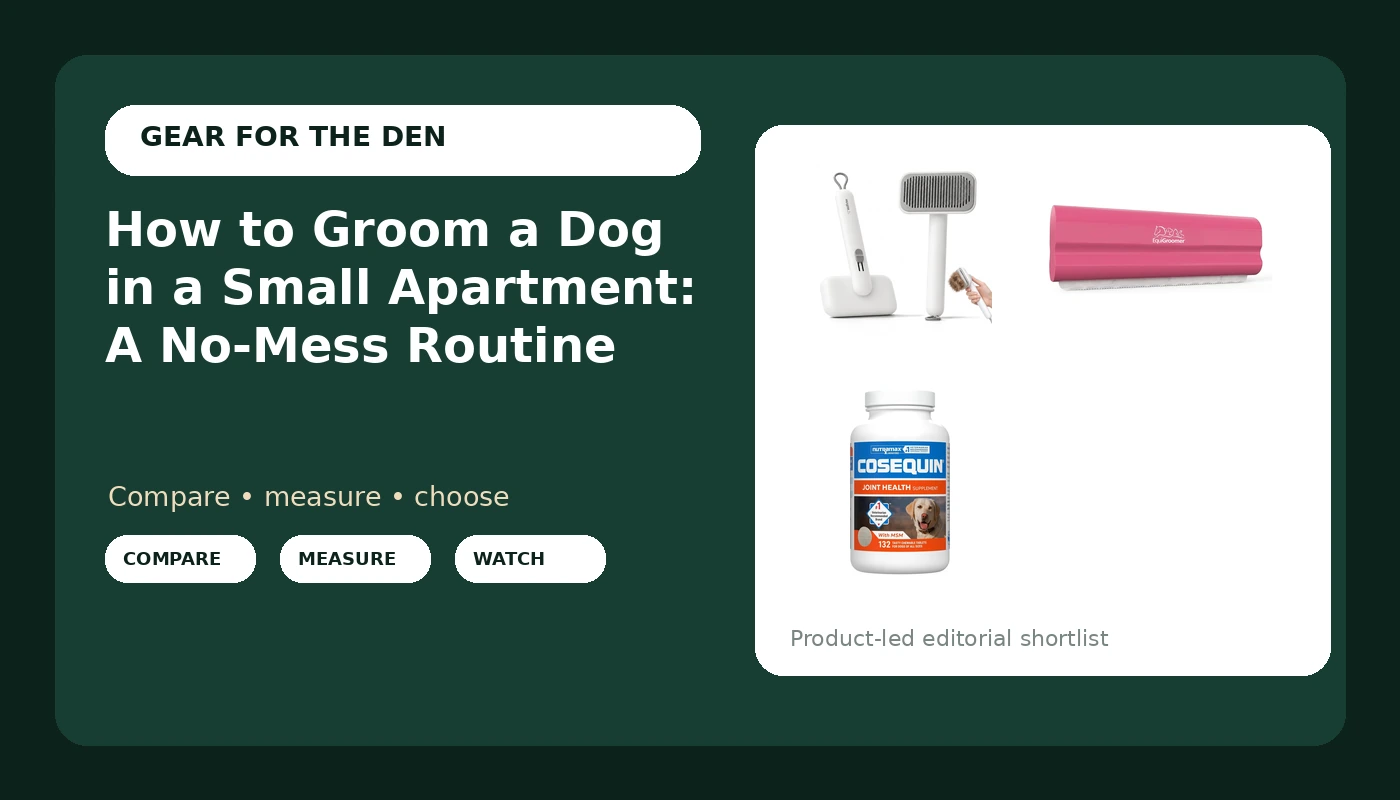
Budget pick: Wolfster Dog Brush for Shedding, Self Cleaning Slicker Brush, White
Budget pick
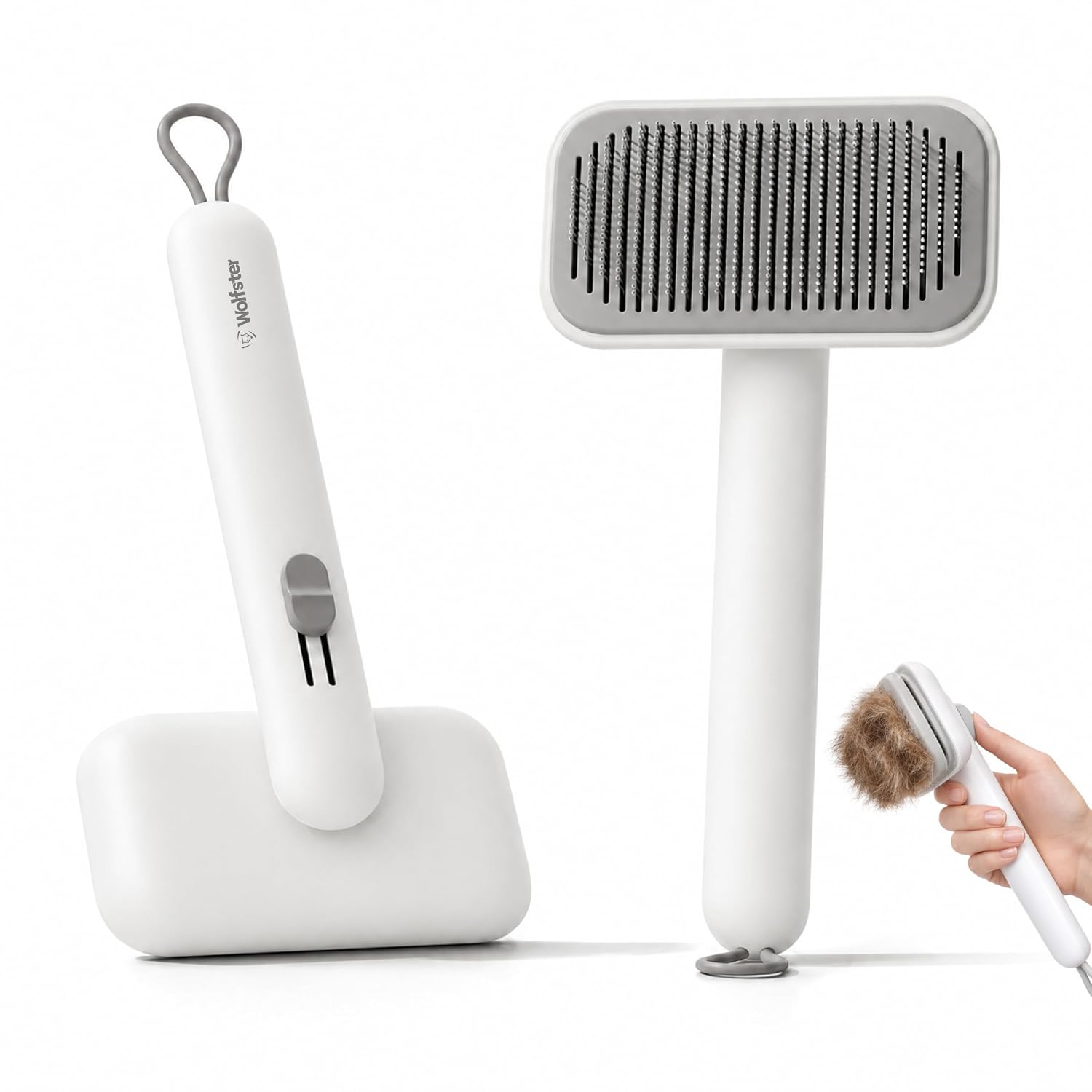
Wolfster Dog Brush for Shedding, Self Cleaning Slicker Brush, White
This is the brush that lives in the drawer next to the bathroom sink, and for most apartment dogs it is the one you reach for daily. The slicker head catches loose topcoat and the surface hair that would otherwise end up on your duvet, and the self-cleaning mechanism means you press a button, the bristles retract, and the hair pad lifts off in one piece. No picking hair out of bristles over the trash can, no combing the brush with a fork.
Check current Amazon price.
Flaws but not dealbreakers: A slicker does not reach the undercoat on a husky or a shepherd, so this is a maintenance tool, not a blowout tool. The retract mechanism can also jam if you press it while the head is packed with fine hair, so empty it twice per session instead of once.
Anyone with a short or medium coat, a small bathroom, and a dog that tolerates about five minutes of brushing will get the most out of this one.
Our pick: EquiGroomer 5-Inch Undercoat Deshedding Brush for Dogs & Cats, Pink
Our pick
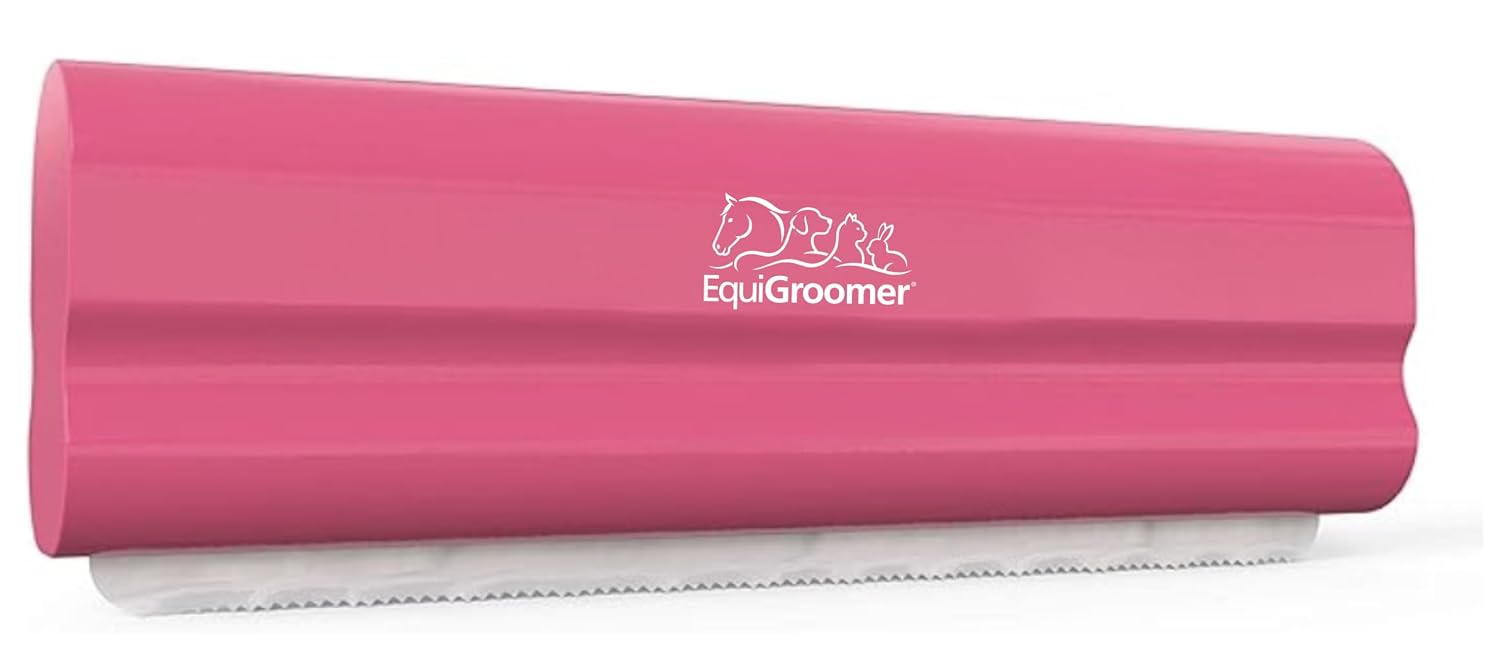
EquiGroomer 5-Inch Undercoat Deshedding Brush for Dogs & Cats, Pink
This is the tool that handles the coat blow, the two or three weeks a year when your dog seems determined to shed an entire second dog onto your floor. The five-inch head is a blade-style deshedder rather than a rake with a fan of teeth, which means fewer passes over the same strip of coat and less yanking on skin that has never been brushed this hard before. The maker lists it as safe for dogs and cats, and the short handle is easy to control in a tight bathroom where you cannot take a full arm swing.
Check current Amazon price.
Flaws but not dealbreakers: It is easy to overdo. Use light pressure and short strokes, and stop when the hair stops coming, or you will scrape skin that does not need scraping. It is also the wrong tool for a short single coat, where it has nothing to grab. And it comes in pink, which matters to exactly nobody who lives with a shedding dog.
Anyone with a double-coated dog, from a corgi to a golden retriever, should own one of these before the first cold snap sets off the seasonal shed.
Support pick: Nutramax Cosequin Joint Supplement for Dogs, Chewable Tablets, 132ct
Support pick

Nutramax Cosequin Joint Supplement for Dogs, Chewable Tablets, 132ct
Here is the honest version: this is a joint supplement, not a coat supplement, and it earns a place in this guide for a practical reason. Apartment dogs log fewer miles than yard dogs and spend more time on hard floors and stairs, and a fifteen-minute standing brush session is a lot easier on a dog whose hips are comfortable. If your dog will not stand still for the undercoat blade, the problem is sometimes comfort rather than patience.
The format is what makes it work in a small space. Chewable tablets mean no pill pockets, no peanut butter, and no wrestling a suspicious dog on a bathroom floor. The 132-count bottle size means one jar lasts a while, and the ingredient list is short enough to read in a minute, which is more than I can say for most of the supplement aisle.
One vocabulary note, because the labels blur together on the shelf: omega 3 and EPA DHA belong to skin and coat products, while glucosamine and chondroitin are the joint side of the aisle. Buy the one that matches the problem in front of you, and do not expect a joint chew to fix a dull coat.
Check current Amazon price.
Flaws but not dealbreakers: The chews are large, and some dogs need them broken in half. The label is the authority on how long results take, not a blog post, so read it before you decide the jar is not working.
Anyone with an older dog, a large breed, or a dog that has started hesitating on the stairs will get the most from this.
The actual workflow: how to groom a dog in a small apartment
This is the order that keeps hair out of your drain and off your walls. It fits in a 5-by-8 bathroom and takes about twenty minutes end to end, plus drying time.
Step one: Pick the room and stage it before the dog comes in. Bathroom, door closed, non-slip mat in the tub, an old towel on the floor, a trash bag within reach, and every tool laid out on the counter. Chasing a brush across a wet floor while your dog watches is how sessions go wrong.
Step two: Brush before water, every single time. A dry coat releases loose hair; a wet coat mats it down against the skin. Ten minutes with the slicker, then five with the undercoat blade if your dog has a double coat. If you only have time for one thing on a busy weeknight, this is the one that matters.
Step three: Match the tool to the coat type. Slicker for surface hair on every coat, undercoat blade for the dense layer underneath, rubber curry for short single coats that mostly need a massage and a wipe. Using the undercoat blade on a dog with no undercoat is how you end up with a sore dog and a tool that never gets used again.
Step four: Work in lines, not circles. Part the coat down to the skin with one hand, brush in the direction the hair grows, then move an inch and do it again. Circles polish the topcoat and skip the layer where the shedding hair actually lives, which is why a ten-minute circular brush feels like it did nothing.
Step five: Contain the hair as you go. Brush onto the towel, fold it over as you finish a section, and drop the bundle in the bag. Do not vacuum mid-session, because the noise ends the session for most dogs. Lint roll the couch before your dog beats you back to it.
Step six: Bathe with a plan for one sink. Lukewarm water, a cup or pitcher instead of a shower head, wet down to the skin, dilute the shampoo in your hand, work it in, then rinse until the water runs clear. Oatmeal concentration matters more than the word oatmeal on the front of the bottle, a limited ingredient list matters if your dog has itchy skin, and a formula that is lick safe matters because your dog will lick itself dry the second you turn your back. The correct groom a dog in a small apartment bath is five minutes, not twenty, and it ends before your dog decides it has had enough.
Step seven: Dry in a contained space. Towel first, then a crate or a closed bathroom with a towel on the floor and the door shut. A wet dog on the couch is how a bath turns into a whole-apartment cleaning job. If your dog hates the sound of a dryer, skip it. A towel and twenty contained minutes will do the same work with none of the drama.
Step eight: Reset the room and pay the dog. Hair in the outside bin, counter wiped, tub rinsed, one treat, done. Ending every session with something good is what makes the next session possible, and it is the cheapest training you will ever do.
The competition and why it lost
Several things I looked at did not make the cut, and the reasons are worth knowing before you spend money on the wrong tool.
A full-size grooming table with a noose and an arm is, on paper, the ideal groom a dog in a small apartment owners dream about: a raised surface, a place to tie off, and a drain nearby. In practice it eats floor space you do not have, it lives in a closet the rest of the year, and it does nothing about hair in the air.
High-velocity dryers and grooming vacuums are the other big temptation. They work, and they are also loud enough that your downstairs neighbor will learn your schedule. In a house with a basement, they are worth it. In an apartment, they turn a calm routine into a stressful one, and a stressed dog sheds more.
Rake-style deshedding tools with a wide fan of teeth lost to the blade-style undercoat tool for one reason: they need longer strokes, and a longer stroke needs more room than a 5-by-8 bathroom allows.
Waterless dry shampoos and pet wipes are fine for a between-bath freshen-up, but they do not remove a single loose hair, and loose hair is the problem you actually have. A deshedding conditioner is a decent add-on to step six, never a replacement for step two.
Mobile groomers solve everything except the part you care about. The van handles the bath and the nails, but it does not stop the daily tumbleweed, and you pay for it every visit. A good add-on, not a system.
None of this is bad gear. It is gear for a house with a yard, a basement, and a utility sink, which is not the apartment you are standing in.
What this all costs
Three items, one routine. A slicker brush for daily work, an undercoat tool for the seasonal blow, and a supplement if your dog needs it. All three together generally come in under the cost of a single professional grooming appointment in a city, though you should check current Amazon price on each rather than trust a number printed in an article.
The math that matters is cost per use. The two brushes are one-time buys that last years, and they replace the daily lint roller habit that never quite works. The supplement is the only recurring line item, which is why bottle size matters more than the sticker: compare cost per chew, not cost per jar.
Set that against a professional groom every six to eight weeks, plus the couch you eventually replace, and the tools pay for themselves inside a season. The brushing itself is free. It costs ten minutes and one old towel.
That is the job. Ten minutes with a brush beats an hour scrubbing hair out of a rug, and a dog that gets brushed weekly smells like a dog instead of a kennel. Keep the tools where you can see them, not in a drawer you forget about, and the routine holds.