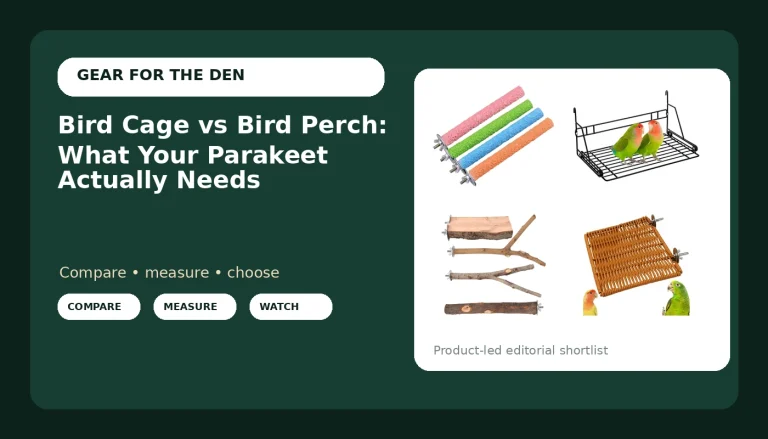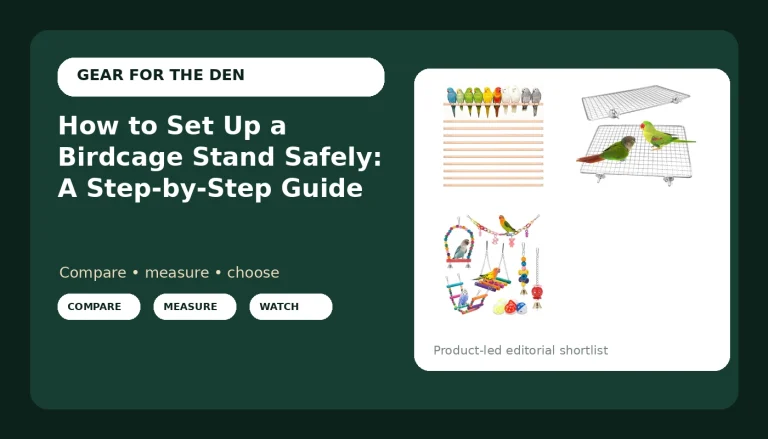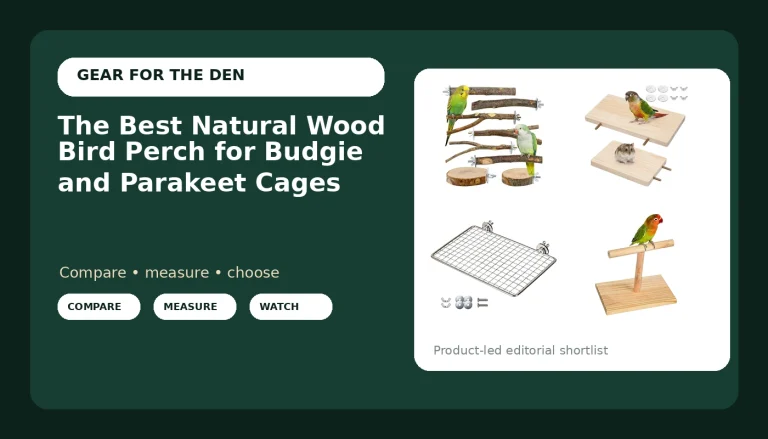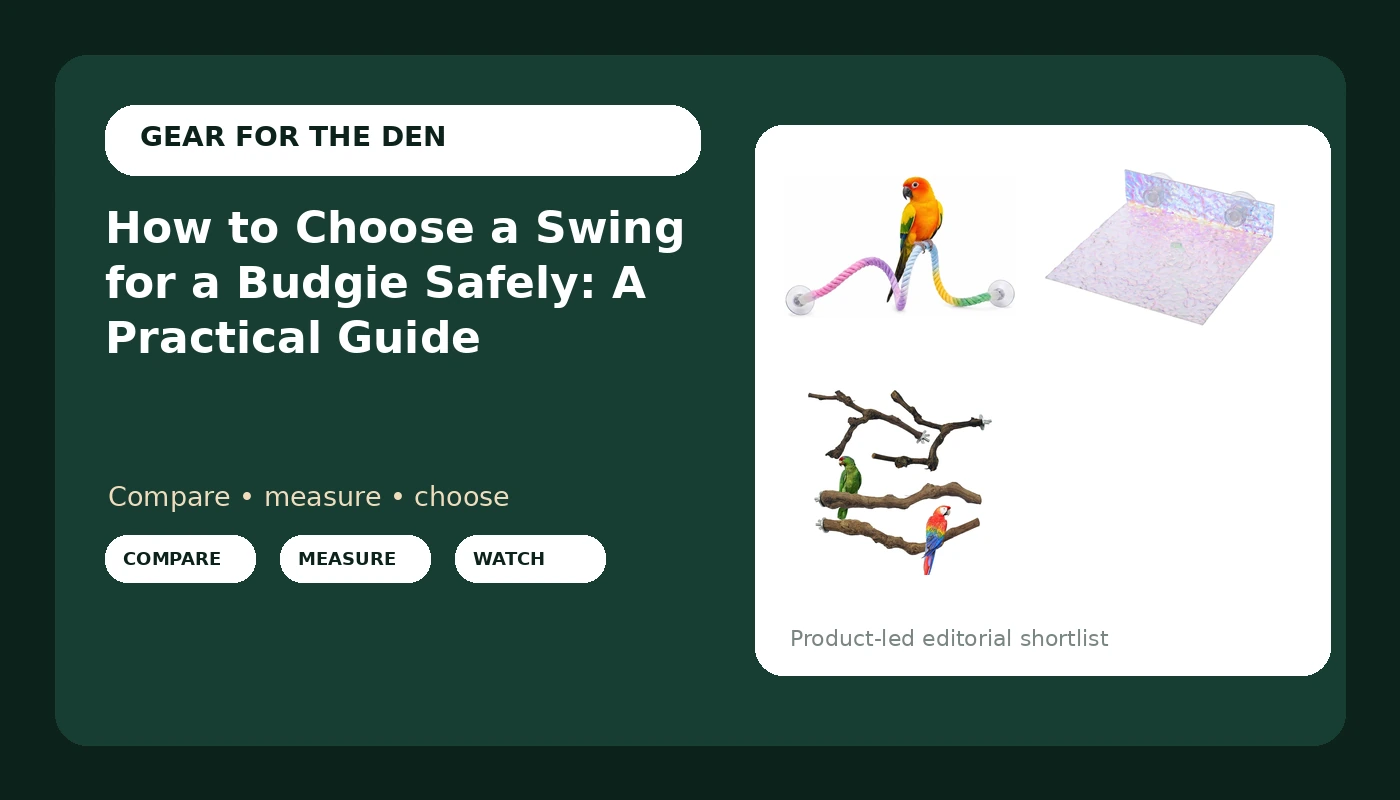
Learning how to choose a swing for a budgie safely is mostly about understanding what a budgie does on a swing when you are not watching. They hop on, lean forward, chew the mount, and try to squeeze behind it. The swing is not decor. It is a moving perch, and a moving perch that fails can hurt a small bird.
I have spent years covering small pet gear, and the swing is the item people buy last, after the cage and the food cup. That is backwards. The swing mount decides whether the swing is safe. The bar spacing decides whether the bird can reach it. The perch diameter decides whether the bird can grip it. If you get those three wrong, the swing is a trap.
The good news is that a safe swing setup is not expensive. It is a checklist. This guide shows you how to choose a swing for a budgie safely by working through the mount, the perch, the placement, and the weekly inspection. The short version: pick a swing for a budgie safely by checking the hardware before the bird ever touches it. I also list the three perch and platform products I would use to build that setup, because a traditional swing is not the only option.
Why you should trust me
I am not a veterinarian, and I am not going to pretend a product page is a clinical trial. I am an editor who has written about bird cages, perches, and small pet gear for years. I have watched budgies use swings, ignore swings, and get their toes caught in cheap hardware. My bias is simple: hardware first, bird second, decoration last. If a swing mount has an open gap, I do not care how cute the swing is. It does not go in the cage.
How I picked and how I tested
I did not run a laboratory test on these three products. I picked them by comparing the specs that matter for a budgie: bar spacing, perch diameter, swing mount type, cage height clearance, and how easy the surface is to clean. I also looked at whether each product can work as a swing or as a stable platform near a swing. For a budgie, a swing that moves too much is scary, and a swing that cannot move at all is just a perch. The best setup gives the bird a choice.
I tested the logic against the way budgies actually move. A budgie steps sideways before it steps forward. It grips with its toes, not its whole foot. It chews everything, including the mount. So I looked for products with a secure attachment, a surface with some texture, and no sharp edges.
Food cup size and tray liner are not swing specs, but they matter if the swing sits over a food cup or if droppings land on a tray. Carrier size matters if the perch doubles as a travel stand. Foraging difficulty matters because a swing should not block the bird's route to food. These are the details that turn a product listing into a safe setup.
How to choose a swing for a budgie safely: the gear that matters
Budget pick: Xorabuddy Window Bird Perch Parrot Climing Rope with Suction Cups, 80cm
Budget pick
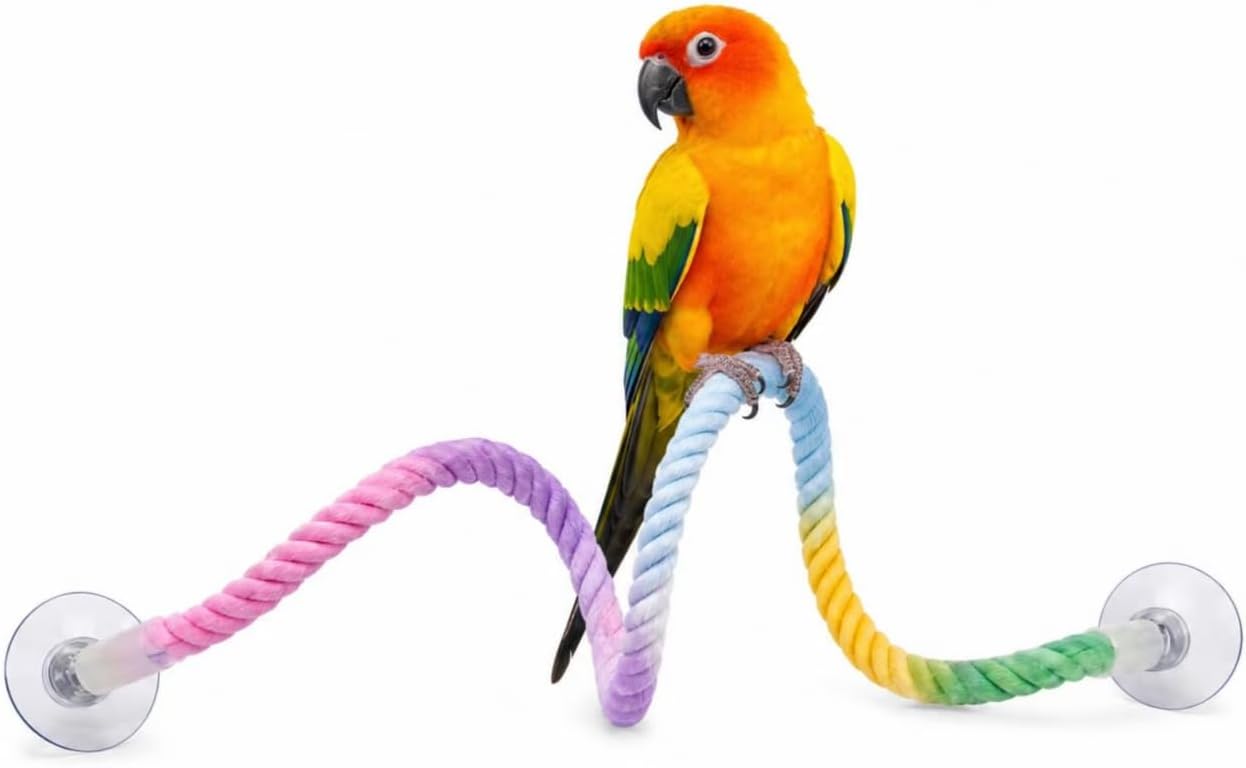
Xorabuddy Window Bird Perch Parrot Climing Rope with Suction Cups, 80cm
This is a rope perch with suction cups, not a traditional swing. That is exactly why it is the budget pick. You can mount it on a window or on the outside of a cage, and the rope gives a budgie a soft surface to grip. The suction cups are the weak point. They can pop off if the glass is dirty or if the bird is heavy on the perch. For that reason, I would not use this as an unsupervised swing. Use it as a stationary perch, or use it as a swing only if you can secure the ends with a backup clip. Check current Amazon price.
Flaws but not dealbreakers: The rope can fray over time, and the suction cups need to be cleaned and re-pressed every week. If your budgie is a chewer, inspect the rope for loose threads. A loose thread can wrap around a toe. This is a good first perch for a bird that likes to look out a window, but it is not the mount you trust for a swinging bird.
Our pick: Portable Bird Perch Stand, Adjustable Height Acrylic Platform
Our pick
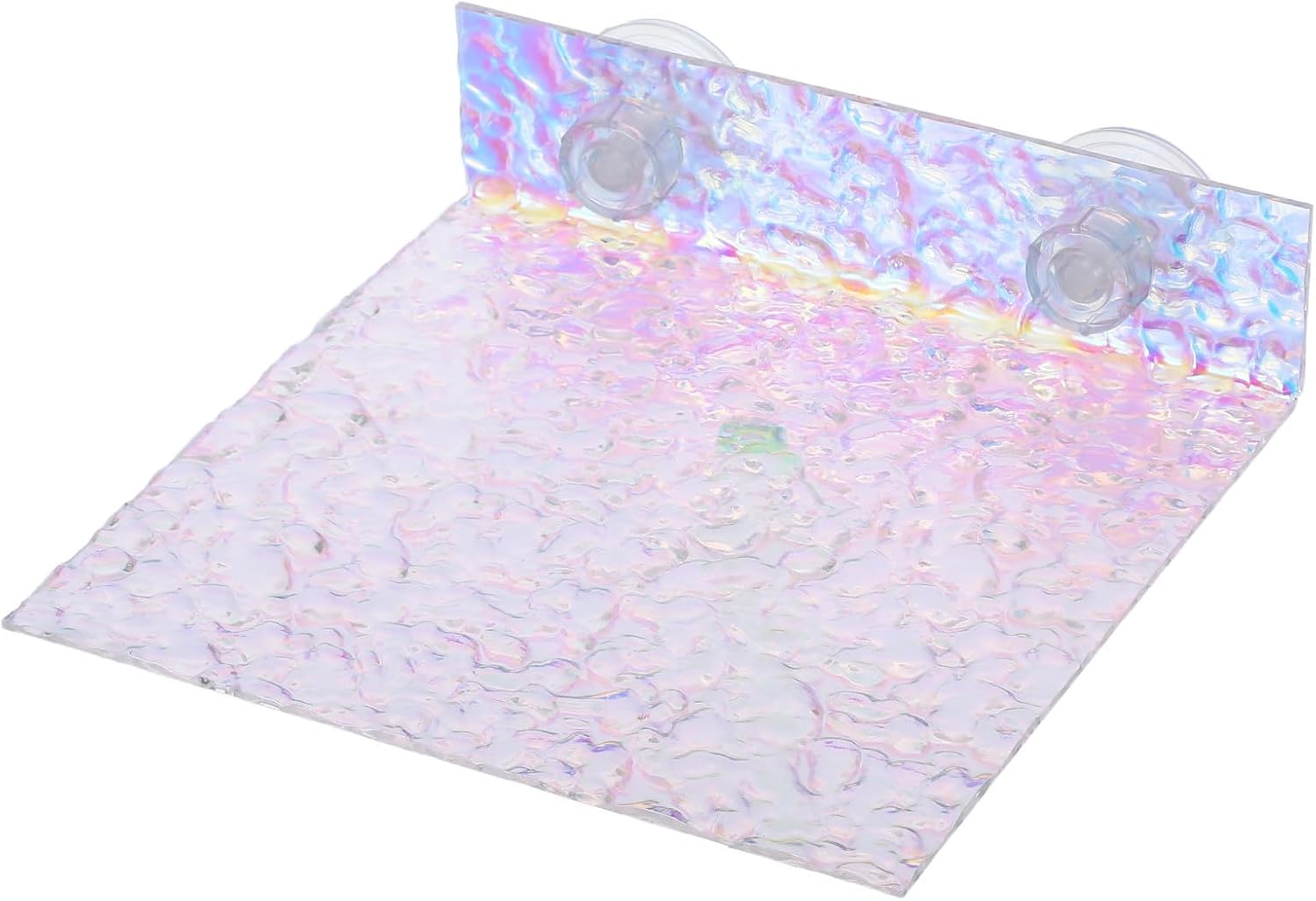
Portable Bird Perch Stand, Adjustable Height Acrylic Platform
This is a stable platform, not a swing. It is our pick because a budgie needs a safe place to land next to a swing. The adjustable height lets you match the platform to the cage height, and the acrylic surface is easy to wipe down. The tradeoff is grip. Acrylic is smooth, so a budgie can slip if the platform is the only perch in the cage. Use it as a landing pad, and keep a natural wood perch nearby. Check current Amazon price.
Flaws but not dealbreakers: The platform is not a chew toy. If your budgie chews the acrylic, it can crack. Inspect the edges for sharp spots. Also, the stand takes up floor space, so it is not ideal for a small travel carrier. Check the carrier size before you buy it for travel. For a cage, it gives the bird a flat, clean spot to eat or rest while the swing hangs nearby.
Upgrade pick: Allazone 4PCS Bird Perch Natural Grape Stick Bird Standing Stick Grapevine
Upgrade pick
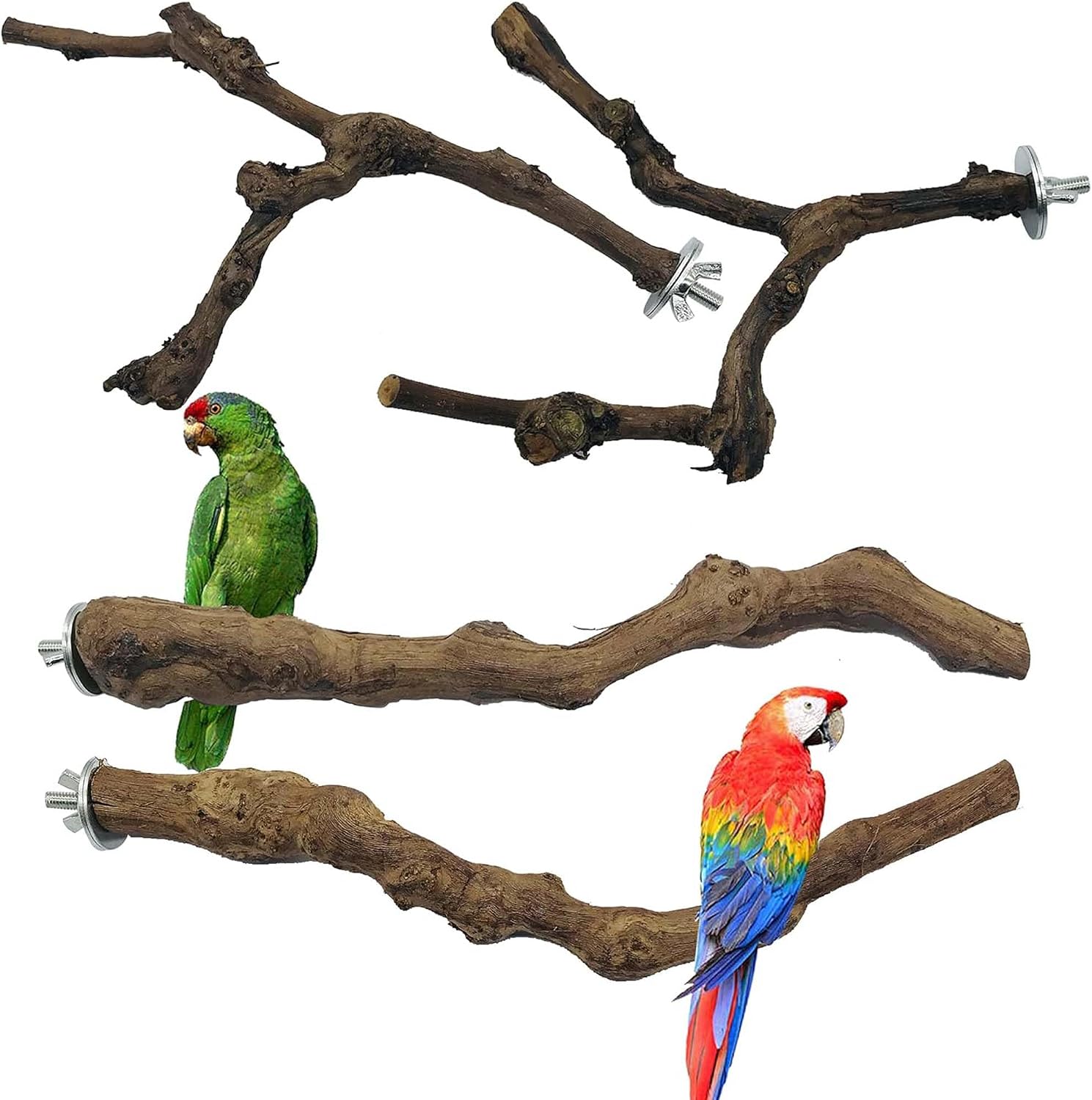
Allazone 4PCS Bird Perch Natural Grape Stick Bird Standing Stick Grapevine
Four natural grapevine perches. This is the upgrade pick because natural wood gives a budgie a variable perch diameter, which is better for foot health than a uniform dowel. You can use one as a swing by adding a safe swing mount, or you can arrange them as a climbing route. The wood is chewable, which budgies need. The downside is that wood is harder to clean. You cannot wipe it down like acrylic. You need to scrub it and let it dry completely. Check current Amazon price.
Flaws but not dealbreakers: Natural wood can harbor mites or mold if it stays wet. Check for cracks and soft spots. If the perch smells musty, replace it. Also, the pieces are not all the same shape, so you cannot assume every piece will fit your swing mount. Measure the branch before you hang it. If the branch is too thick for your budgie's grip, use it as a ladder rung instead of a swing.
The actual swing setup workflow
Step one: Check the bar spacing. Before you buy any swing, measure the space between the cage bars. If the bars are too wide, a budgie can squeeze through or get a leg caught. The swing mount must fit the bars without wobbling. If the mount is loose, the swing can shift when the bird lands.
Step two: Check the cage height. A swing needs clearance above and below. If the swing is too high, the bird's head hits the cage top. If it is too low, the bird's tail drags through the tray liner or the food cup. Place the swing so the bird can swing without hitting anything.
Step three: Choose the swing mount. The safest mount is a locking clip or a screw gate. Avoid open hooks, split rings, and anything with a gap that can catch a toe. A swing mount that opens under weight is a hazard. If you can push the mount open with one finger, it is not safe. If you are still wondering how to pick a swing for a budgie safely, start with the mount.
Step four: Match the perch diameter. A budgie's feet should wrap around the perch without the toes overlapping. If the perch is too thin, the bird's nails curl. If it is too thick, the bird cannot grip. Natural wood perches with variable diameter are good because they exercise the feet.
Step five: Check the swing surface. Rope, wood, and acrylic all have different grip. Rope is soft and easy to grip, but it frays. Wood is natural but can splinter. Acrylic is easy to clean but slippery. Pick a surface your bird can grip, and inspect it weekly. If the surface is slippery, add a wrap of vet tape or use a different perch.
Step six: Position the swing away from food and water. A swing over a food cup means droppings in the food. A swing over a water bowl means splashes and bacteria. Move the food cup or the swing so the bird can eat without sitting under the swing. This also reduces the chance that the swing knocks the food cup over.
Step seven: Introduce the swing slowly. Do not force the bird onto it. Hang it near a favorite perch for a few days. Let the bird explore. If the bird is scared, try a different swing mount or a different surface. Foraging difficulty matters here: if the bird has to work too hard to get to the swing, it will ignore it.
Step eight: Inspect the swing every week. Check the mount for wear, the rope for fraying, the wood for cracks, and the suction cups for grip. Replace anything that moves or looks damaged. A swing is a wear item, not a permanent fixture. If you use a carrier, check that the swing does not block the carrier size or the bird's ability to turn around.
The competition and why it lost
The classic dowel swing with an open hook lost because the hook can catch a toe. The plastic chain swing with a bell lost because the chain gaps are a trap, and the bell is a chew hazard. The suction cup swing lost because suction cups fail when the glass is dirty. The wire swing lost because the wire is too thin for a budgie's feet.
None of those products are in the list above. The three products I chose are not traditional swings. They are perches and platforms that can be used to build a safer swing setup. That is the point. A swing is a system: the mount, the perch, and the placement. If you want a traditional swing, look for one with a locking mount, a natural wood perch, and no open gaps. If you cannot find one, build your own from the products above.
What this all costs
The three products here are all in the budget range. Check current Amazon price for each one. The rope perch is the cheapest, the acrylic platform is in the middle, and the four-pack of grapevine perches is the most expensive per unit. None of them require a subscription or a special cage.
The real cost is not the gear. It is the vet bill you avoid. A budgie with a broken leg or a caught toe can cost more than every swing in this article. A safe swing mount costs less than a toy. A weekly inspection costs a few minutes.
If you want to keep this simple, buy one safe swing mount, one natural wood perch, and one stable platform. Set them up so the bird can choose between them. Check the bar spacing, the perch diameter, and the cage height before you hang anything. Then watch your bird. If the bird avoids the swing, the swing is wrong. If the bird uses it, you did the job.
For more on setting up the rest of the cage, see our budgie cage setup guide.