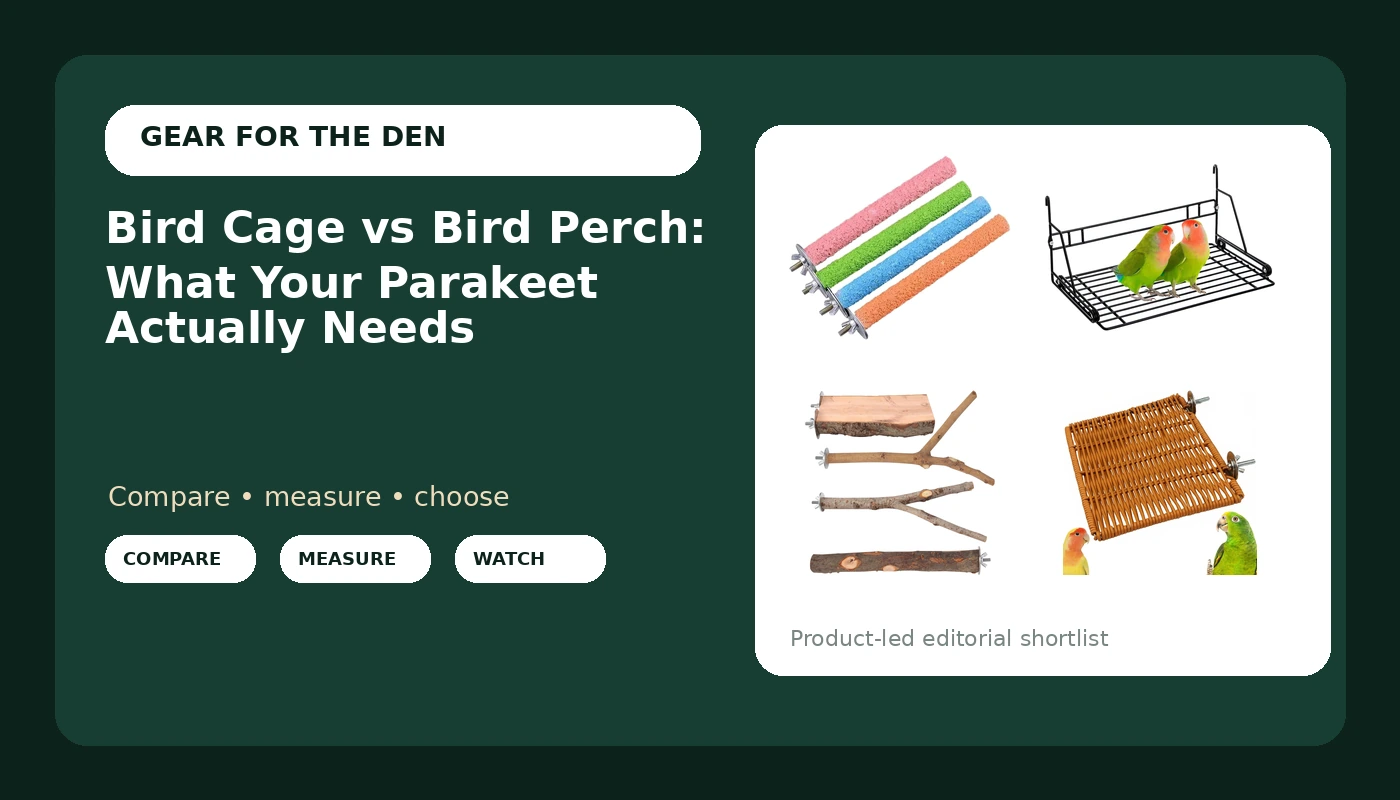
Most new bird owners frame the first purchase as bird cage vs bird perch, as if the two were rivals competing for the same patch of floor. They are not. A cage is the bird's home base: sleep, food, water, and a safe place to be shut in when nobody is watching. A perch is furniture that lives inside that home, and it decides how the bird's feet, beak, and legs hold up over years of standing in the same few spots. The four options below are all perches rather than cages, which makes this a fair comparison: thin wooden dowels, wire platforms, and flat rectangular stands. Pick the shape that matches your bird's size and the interior of the cage you already own, then let the cage work around that choice rather than the other way around.
The short answer: a platform perch is the better first buy for most small birds, because it gives the feet a flat surface to rest on and doubles as a landing pad near the food cup. The 12 inch wire sundeck and the 4 pack of large natural wood platforms below are the two strongest picks, with a bundle of thin wooden dowels as the cheap way to fill the leftover airspace.
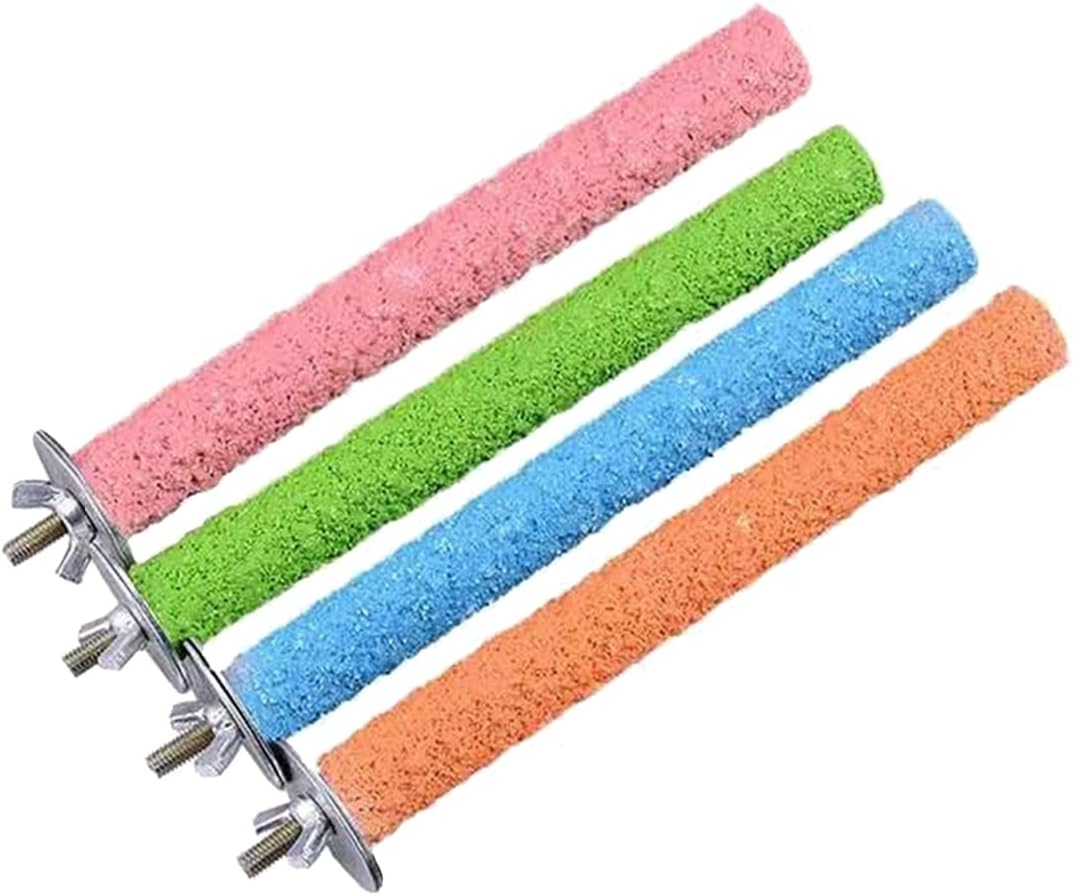
4PCS Wooden Bird Perch Stand Toys 7.9×0.8in for Parakeet Cage Accessories
Four perches for the price of one, natural wood, easy to vary position and height
Thin 0.8 inch dowels and no platform, so foot rest is limited
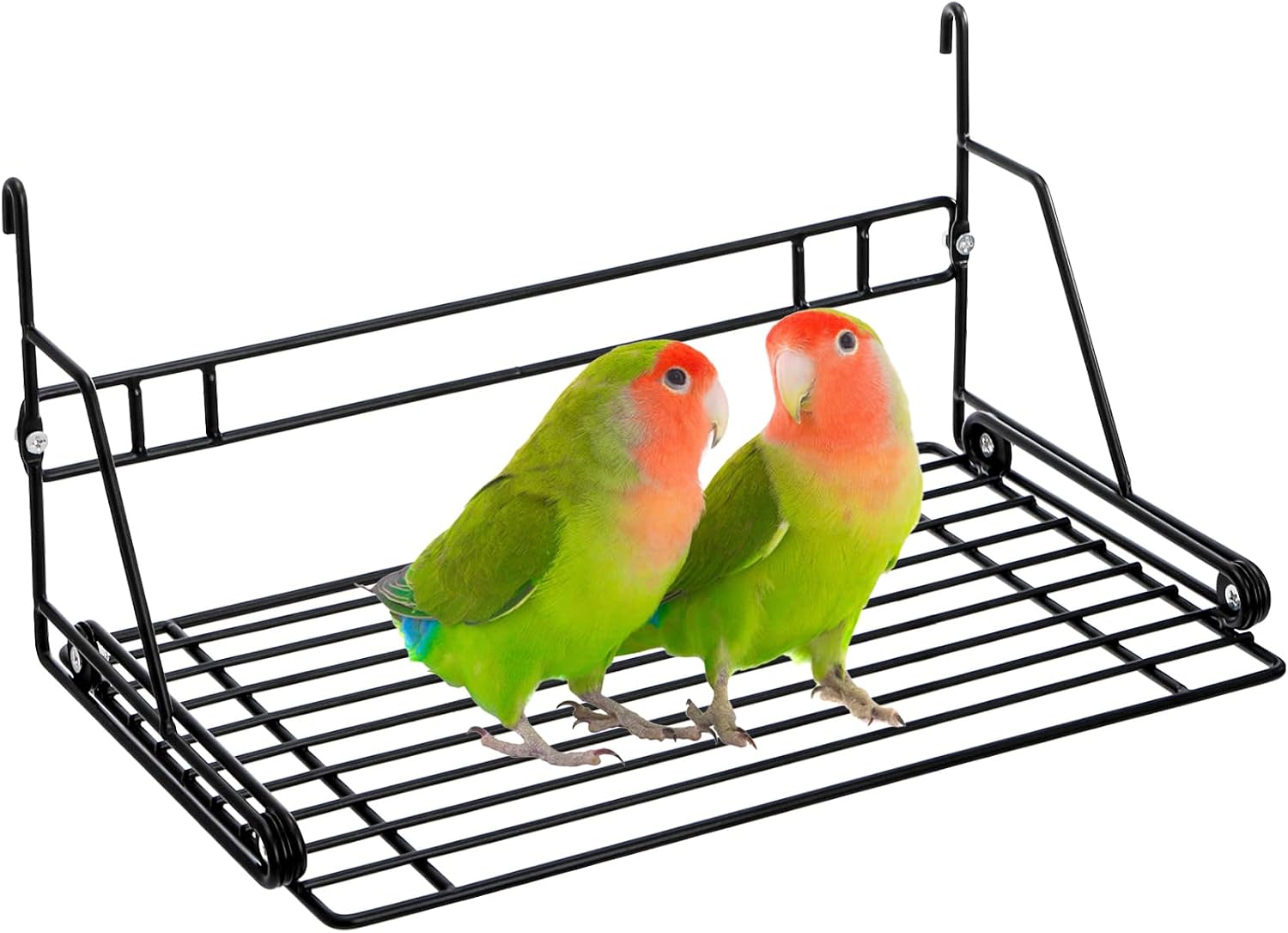
Okllen Bird Perch Stand, Bird Cage Platform Wire Patio Sundeck Playground for Parrots Cockatiels and Small Birds, 12" Lx8 W
Largest flat surface here, wire deck is easy to grip, generous 12 by 8 inch footprint
Big footprint needs a wide cage, and wire holds droppings until scrubbed
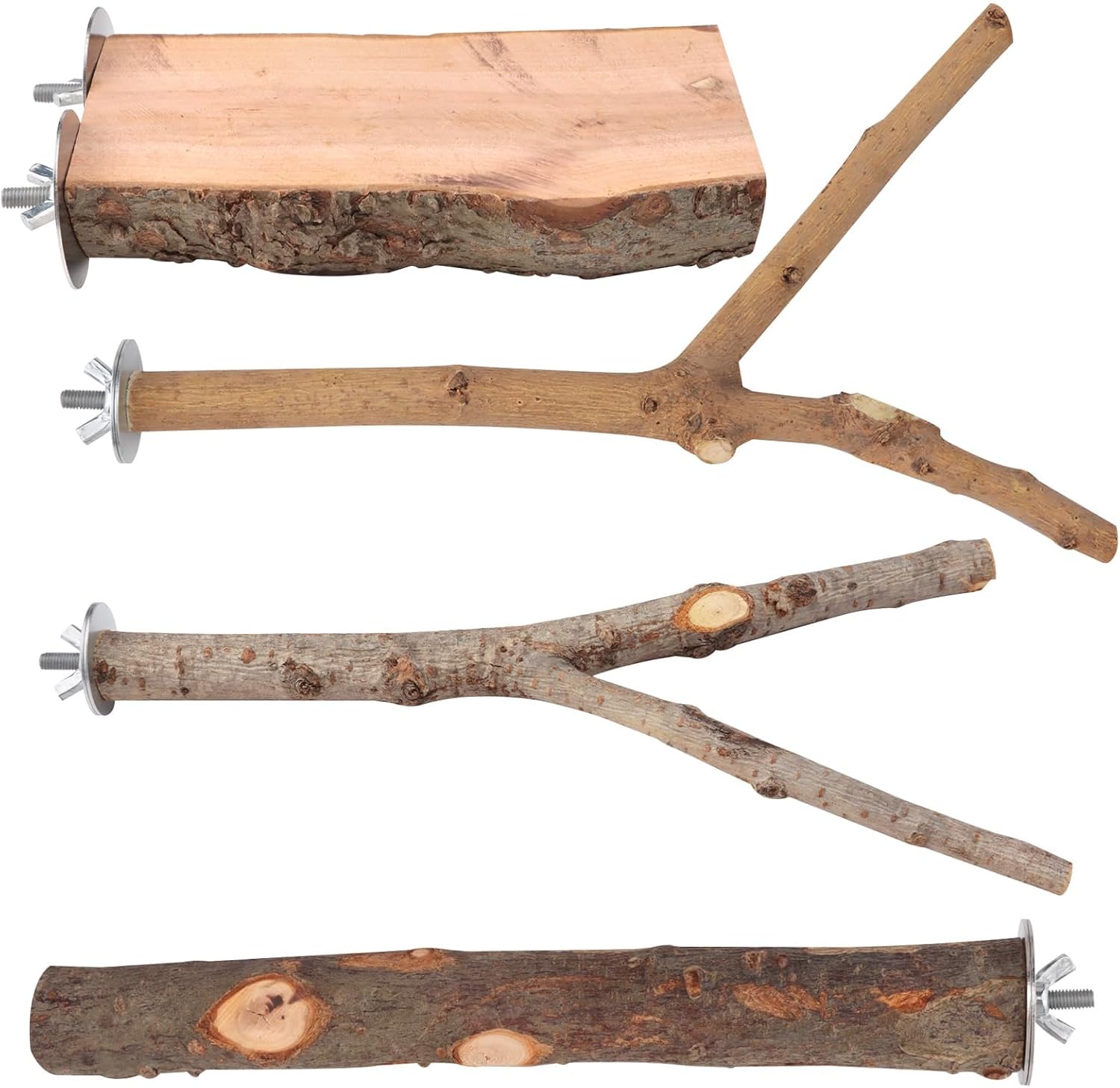
4 Pack Large Natural Wood Bird Perch Stand with Platform for Cage
Wood platform plus perch in one unit, four of them, natural grip surface
Wood absorbs moisture, so it needs drying and eventual replacing
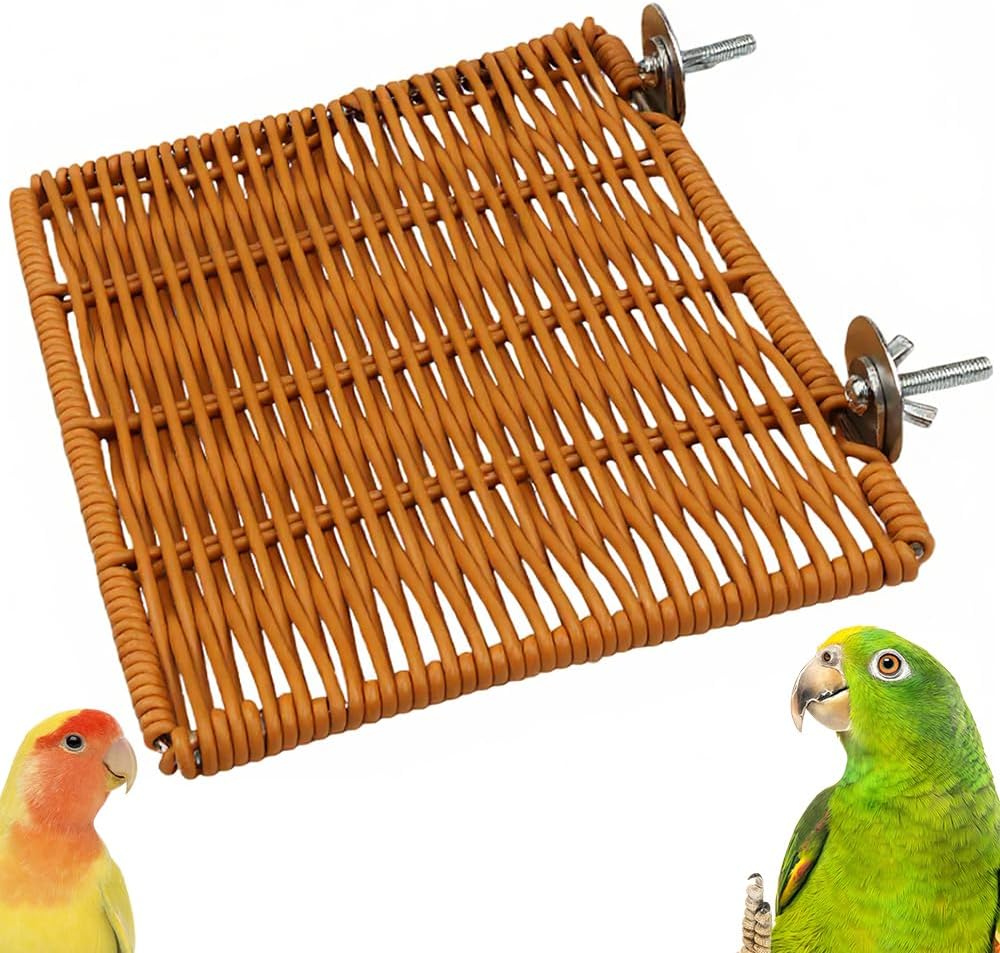
Bird Perch Platform Small Animals Perch Stand Rectangle Cage Accessory for Cockatiel Parrot (Brown)
Single tidy rectangle, neutral brown finish, simple to wipe
One platform only, and the flat shape suits standing more than gripping
Prices and availability may change.
Bird cage vs bird perch: what actually changes for the bird
The difference shows up in posture, not in square footage. A cage provides an enclosed volume, a door, a tray liner to catch droppings, and a food cup mounted at whatever height the manufacturer decided on. A perch provides a standing surface, and the shape of that surface is what a bird's feet, tendons, and leg joints deal with for the rest of its life.
Wild parakeets and cockatiels spend their days on branches of wildly different thickness, gripping, hopping, and leaning sideways to reach the next twig. Cage life flattens that variety into two or three dowels of identical diameter. Over a few years, that sameness is what produces pressure sores on the foot pads and the chronic stiffness avian vets see in older birds.
So when people ask about bird cage vs bird perch, the useful answer is that the cage sets the limits and the perch sets the daily load. You cannot fix a cramped cage by adding a platform, and you cannot fix a bored bird by buying a bigger cage and hanging the same two dowels inside it. The two purchases solve different problems, and a good setup needs both.
Cage height deserves its own mention. Birds want the highest point in the enclosure, because height reads as safety. A tall cage with perches clustered near the floor wastes the space that matters most, while a shorter, wider cage with one platform mounted high often works better than a tall cage with the same perch layout.
Bar spacing is the other number to check early. Too wide for a parakeet and the bird can work its head through the gap. Too narrow and most platform hardware, clips, and swing mounts will not fit at all. Measure the gap before you fall in love with a wire sundeck, because a platform that does not fit is a platform you return.
What to measure before you buy
Five numbers decide whether a perch actually gets used.
Perch diameter comes first. A 0.8 inch dowel suits a parakeet and feels thin under a cockatiel's grip during long standing sessions. Aim for at least two thicknesses in one cage so the toes flex differently through the day.
Cage height and mounting height come next. Measure from the top of the cage down, not from the floor up, and plan the main platform so the bird's head clears the roof when it stands tall.
Bar spacing sets what hardware will attach. Wire decks usually need a clip or hook that wraps a bar, so confirm the gap before ordering.
Food cup size matters more than it sounds. A platform placed beside the cup turns a boring meal into a station, and birds eat more willingly when they can stand comfortably instead of balancing on a dowel while leaning into a bowl.
Tray liner depth is the last check. A platform perch drops debris straight down in one concentrated column, so a shallow tray liner shows the mess faster than a deep one. If you keep a carrier size cage for travel, plan a smaller platform for it rather than moving the main one back and forth.
Dowel perches: the cheap variety play
The 4PCS Wooden Bird Perch Stand Toys 7.9×0.8in for Parakeet Cage Accessories is the simplest answer to an empty cage. Four natural wood perches at 7.9 inches long and 0.8 inches thick give you enough pieces to fill a parakeet cage at different heights and angles without spending much. Because you get four, you can run one high near the sleeping corner, one low near the food cup, and keep two in reserve for the day one gets chewed or soiled.
The limits are honest ones. A dowel of uniform thickness is exactly the sameness that foot problems come from, so these work best as a supplement to a platform rather than the whole plan. They also offer no flat surface, which means a bird that wants to rest its feet fully flat has nowhere to do it. For a parakeet, that is a minor gap. For a cockatiel or a small parrot, it is the difference between a perch and a bed.
Where dowels win is flexibility. Threading them through cage bars at slightly different heights changes the bird's whole route through the cage for almost nothing, and rotating them as they wear keeps the surface fresh. If you are starting from nothing, buy these first and add a platform second.
Platform perches: foot health and real estate
A platform gives a bird something no dowel can: a flat place to stand with the toes uncurled. That matters for older birds, for birds recovering from a foot injury, and for any bird that spends hours in one spot.
The Okllen Bird Perch Stand, Bird Cage Platform Wire Patio Sundeck Playground for Parrots Cockatiels and Small Birds, 12" Lx8 W is the biggest surface in this group. The wire deck gives toes something to wrap around while the overall footprint stays flat, and a 12 by 8 inch deck works as a feeding patio, a bathing station, or a landing zone under a hanging toy. It needs a wide cage to make sense, and the wire pattern collects droppings between the strands, so it earns a weekly scrub rather than a quick wipe.
The 4 Pack Large Natural Wood Bird Perch Stand with Platform for Cage splits the difference between dowel and deck. Each unit pairs a wooden platform with a perch, so the bird can grip on one end and stand flat on the other. Four of them means you can place one near the food cup, one high for sleeping, and still have spares. Wood absorbs moisture, so these need drying after a wash and eventual replacement, which is the trade for a warmer, more natural surface.
The Bird Perch Platform Small Animals Perch Stand Rectangle Cage Accessory for Cockatiel Parrot (Brown) is the single-platform option, and it is the easiest of the four to clean because there are no corners, clips, or wire channels to work around. One platform is also the catch: a single flat rectangle gives a bird one resting spot and no variety, so it makes the most sense as an addition to dowels you already own rather than a standalone answer.
Why a perch never replaces a cage
Framing the purchase as bird perch vs bird cage misses the point that the two are not interchangeable in either direction. A perch cannot confine a bird, cannot hold a water bottle, and cannot protect it from a cat, a curious dog, or an open window. A cage cannot give a bird the varied footing its feet need, no matter how expensive the cage is.
There is also a hardware question. If you travel with your bird, carrier size determines what fits inside the carrier, and most of these platforms are too large for a standard travel box. A smaller perch for the carrier is a separate purchase, not a swap. The same goes for a swing mount: a bird that sleeps on a swing at night still needs a flat platform for daytime standing, because a swing moves underfoot every time it shifts weight.
Foraging difficulty rounds out the picture. A platform is the best surface for scatter feeding or for a bowl of chopped vegetables, because food stays in one place instead of falling through bars. A dowel is the worst, for the same reason. If your bird's enrichment plan depends on foraging, the platform does more work than the cage upgrade you were considering.
What the specs actually tell you
The difference between bird cage and bird perch comes down to enclosure versus posture, and the specifications on a perch listing describe posture almost entirely. Length tells you how much linear space the bird gets. Diameter tells you how far the toes wrap. Platform area tells you whether the bird can lie flat. Mounting hardware tells you whether it will attach to your specific bar spacing without a trip to the hardware store.
Ignore the word "large" in a product name until you compare it to your cage. A 12 inch deck is large for a parakeet cage and merely adequate in a flight cage built for cockatiels. Likewise, ignore the word "natural" as a durability claim. Natural wood is a texture, not a lifespan, and any wood perch in a humid room will need replacing eventually.
What you should trust is the count. A four pack of anything gives you room to experiment and rotate, which is the single most useful thing you can do for a bird's feet. A single item forces you to get the placement right the first time. For a first setup, buy the pack and adjust over a month.
Should you buy a perch before a bigger cage?
If you have a cage that is merely adequate and a budget that only covers one purchase this month, buy the perch. Foot health, boredom, and enrichment respond faster to better footing than to extra floor space, and a bird standing comfortably on a platform will use the rest of the cage more actively.
If you are deciding between bird cage or bird perch for a bird that is currently living in something genuinely too small, the cage comes first. No platform fixes a cage where the tail drags on the tray liner or the bird cannot fully open its wings. Buy the enclosure that meets the minimum, then spend the next month's budget on footing.
The middle path is what most owners actually do: one wire or wood platform for the high sleeping spot, one pack of dowels for the travel routes between food, water, and the door, and a spare platform in a drawer for when the first one is drying after a wash. That combination costs less than a mid range cage upgrade and changes more of the bird's day.
What to consider next
Two things are worth watching as this category fills out. First, more platforms are arriving with built-in food cup mounts, which would simplify the food cup size question by putting the bowl on the platform itself instead of on the cage door. Second, clip systems are slowly getting better, and a platform that attaches to a range of bar spacing without wobbling would solve the most common complaint in this space.
Until then, the practical advice stays the same. Measure your bar spacing, buy a platform that fits, add thin dowels for variety, and clean whatever you buy more often than you think you need to. The bird will spend years standing on it, so the surface deserves the same attention you give the cage itself.