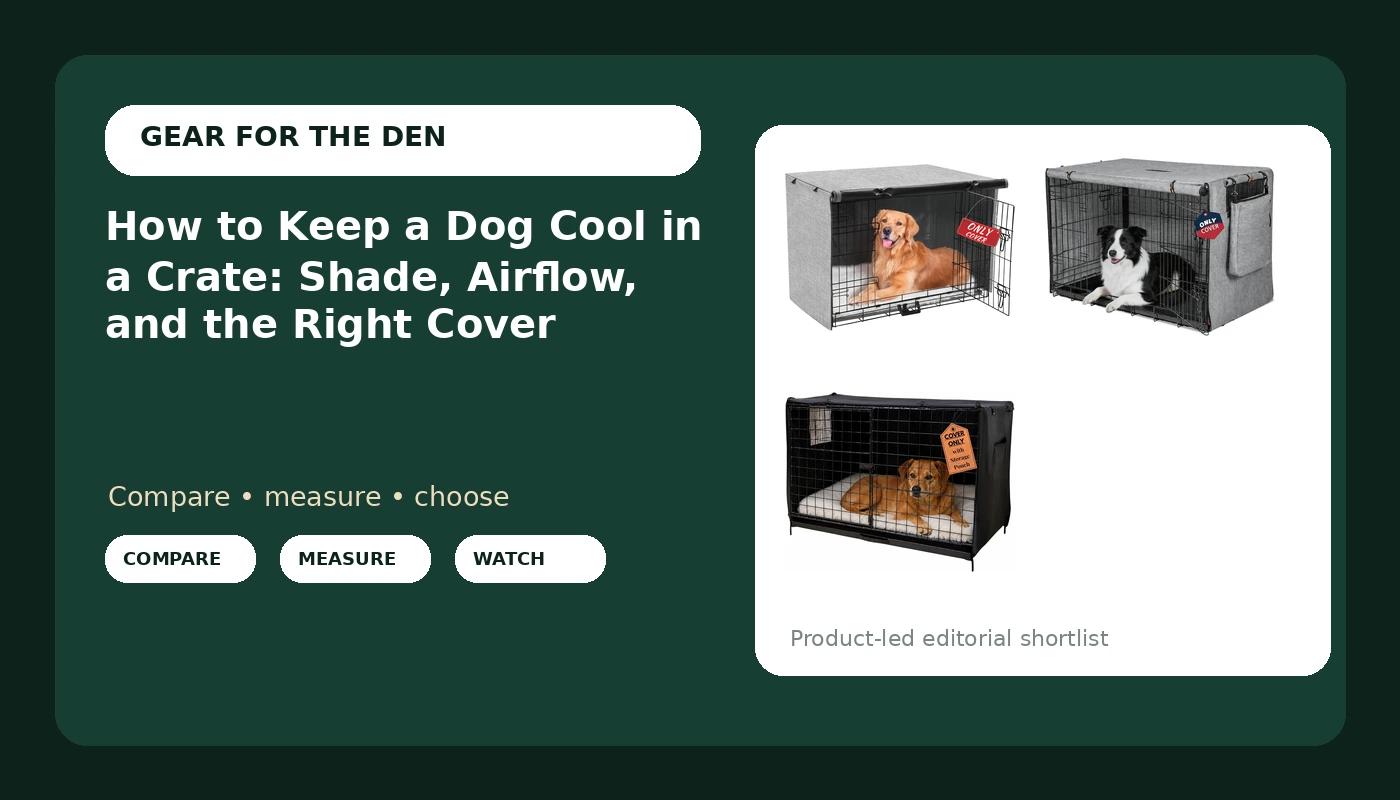
Most dogs do not overheat in a crate because the crate is small. They overheat because the crate turns into a greenhouse: a lid overhead, fabric or a wall on three sides, and a dog inside producing heat with nowhere to push it. Learning how to keep a dog cool in a crate is mostly a lesson in shade and airflow, and those two goals fight each other the second you zip a cover shut.
The covers in this guide sound like the wrong gear for a hot day. A cover over a crate in July sounds like a mistake, and used the wrong way it is one. Used the right way, a cover is the only tool that lets you decide where the shade lands and where the air moves. Close the top and the sun-facing wall, leave the opposite wall and the door open, and the crate becomes a shaded, cross-ventilated box instead of a dark oven.
Below are three covers cut for a 36 inch crate, the reasons each one made the list, and the eight-step routine I use to set one up. If you are still choosing the crate itself, start with how crate size and bar spacing change everything and come back.
Why you should trust me
I write the dog gear coverage here, which means my weeks are spent reading spec sheets for crates, covers, mats, bowls, and cooling gear, and my summers are spent watching people get this exact problem wrong in group chats. I have set up wire crates in apartments with no central air, in garages, in a van at a trial ground, and in a second-floor bedroom where the afternoon sun hits the crate at four o'clock like a spotlight.
I am not a veterinarian and I do not run a climate lab. What I have is a bias toward the boring answer: shade, moving air, water, and a dog that is not shut in a box during the worst hour of the day. Every pick below comes from the specs a cover actually lists and from the patterns in owner feedback, not from a brand paying for placement.
How I picked and how I tested
A crate cover is a fabric box, so the test I run is really four questions.
Does it vent? Cover ventilation is the whole ballgame. A cover that closes every panel is a sleep aid in January and a heat trap in July. I looked for covers with a panel count that lets you close the top and one wall and leave the rest open, plus door flaps that roll up and stay up instead of sagging across the opening.
Does it fit? Crate size is the first number to match, and 36 inch crates vary in height and depth between brands. Gate height decides whether the door flap clears the latch and the dog's head. Bar spacing decides how much air moves through the wire before fabric even enters the conversation.
What is it made of? A waterproof layer blocks sun and rain, and it also blocks vapor, which is why a waterproof cover needs at least two open sides to be safe in summer. Washable fabric matters more than people expect, because a cover that cannot go in the machine collects dander and smell and ends up in a closet.
What goes inside? Mat thickness is the last variable. A thick memory foam bed holds heat and radiates it back. A thin cotton pad, or a towel wrapped around a frozen bottle, gives the dog something cool to lie on.
I also checked how each cover behaves when a dog leans on it. A cover that droops into the crate is a cover the dog chews, and a chewed cover is a cover with a hole in the shade.
Covers that help you keep a dog cool in a crate
Three covers, three jobs, all cut for a 36 inch crate. None of them is a cooling device by itself. Each one is a way to control shade and airflow around a dog that is already in a well-placed crate.
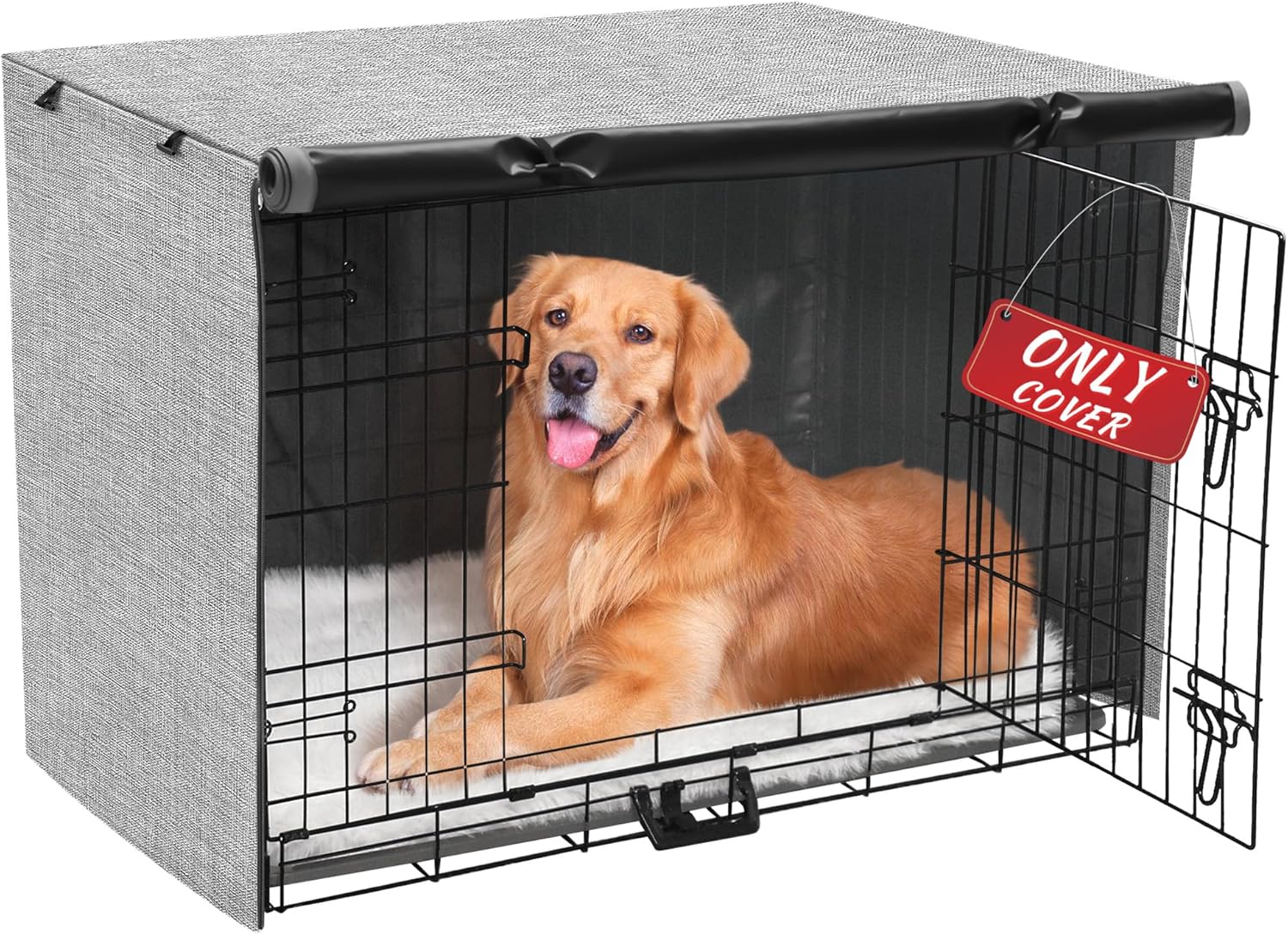
Budget pick: Akinerri Dog Crate Cover, Double Door Waterproof Kennel Cover, 36 in Grey
Budget pick
Akinerri Dog Crate Cover, Double Door Waterproof Kennel Cover, 36 in Grey
Check current Amazon price
The reason this one leads the list is in the name: double door. Two openings mean you can unzip the front and the side and get air moving across the crate while the top stays shaded. That is the correct keep a dog cool in a crate geometry, shade above, flow through, and very few covers at this level give you two openings to work with.
The grey fabric is the other point in its favor. Light grey reflects more sun than black, so if the crate sits near a window or on a covered porch, this shell stays cooler to the touch than a dark one. The waterproof layer handles rain and sprinkler overspray on a patio, and it also means the fabric will not soak up a spilled water bowl.
The trade is that waterproof cuts both ways. Seal both doors on an 85 degree afternoon and you have built a small humid room. Roll the door flaps up, leave one wall open, and the same cover does exactly what you want it to do.
A 36 inch cut fits the standard 36 inch wire crate, but check your gate height before you order, because crates from different brands put the latch at different heights and a cover that hangs low enough to catch the latch is a daily annoyance.
For a dog that is crated on a porch, in a garage, or in a room where you can keep one side open, this is the value pick. It is also the easiest of the three to talk yourself into if you have never used a cover before, because at this price you can test the whole shade-and-airflow idea for a season.
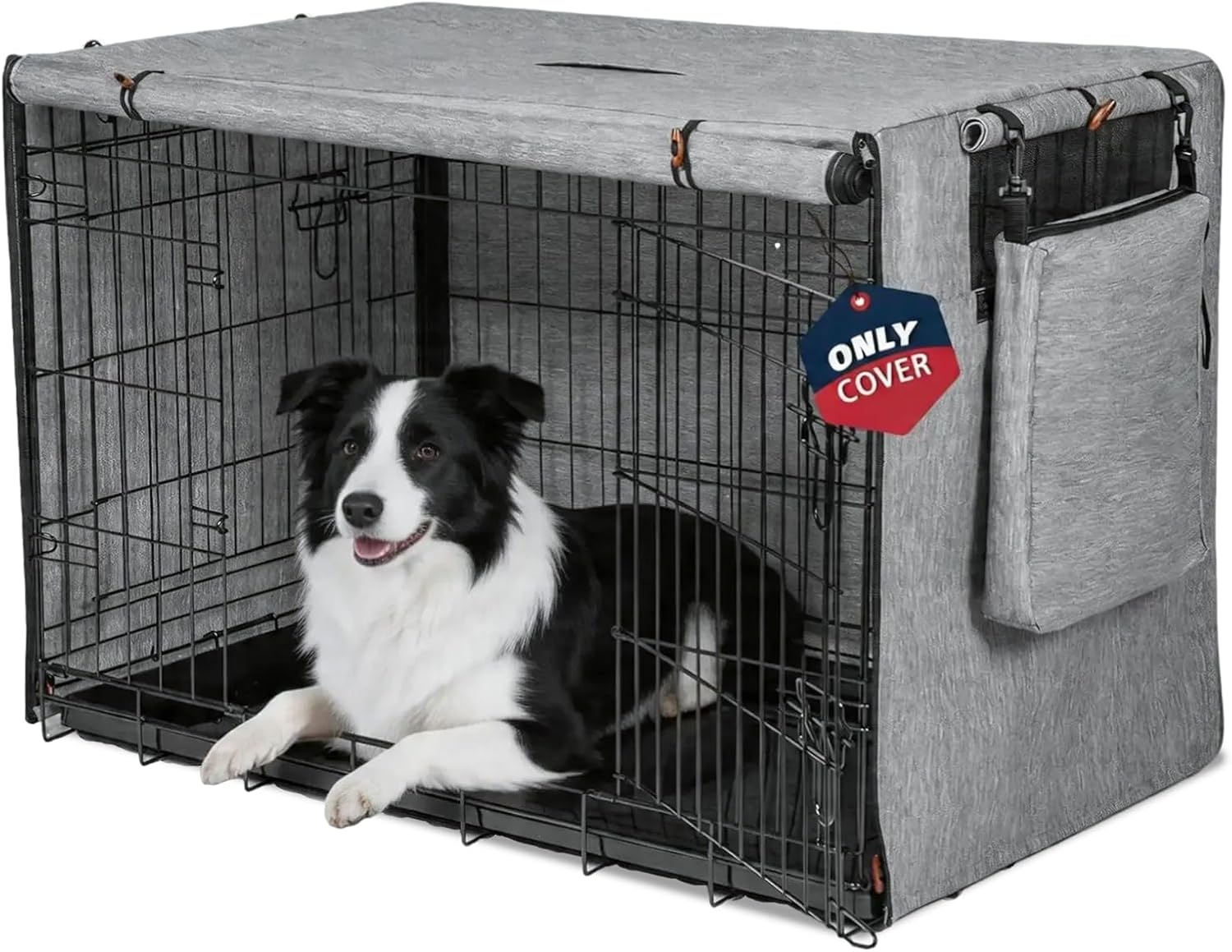
Our pick: Dog Crate Cover 36 in,Waterproof 600D Oxford Gray,Calming Anxiety Privacy
Our pick
Dog Crate Cover 36 in,Waterproof 600D Oxford Gray,Calming Anxiety Privacy
Check current Amazon price
The 600D Oxford shell is the stoutest fabric in this group, and that matters for a reason that has nothing to do with durability. A heavier fabric holds its shape, which means it hangs flat and stays where you put it instead of draping into the crate and blocking the very airflow you are trying to create. It also means the cover does not flap when a fan or an air conditioner vent pushes air past it.
The privacy part of the name is the part to think about. A dark, enclosed crate is a genuine calming tool for an anxious dog, and it is also the fastest way to overheat one. Those two facts do not cancel out. They just mean this cover earns its place in a room you already control, an air-conditioned living room, a basement, a bedroom with a window unit, where the darkness helps the dog settle and the room temperature does the cooling.
Put this same cover on a crate in direct sun and you have built a sauna with a lid. If your crate lives in a sunny spot, use the budget pick or run this one with two panels open and the top flipped back.
Grey is the right color choice here. It reflects enough light to stay cooler than a black shell in the same spot, and it does not show dust the way a dark cover does.
The fit is a true 36 inch cut, and the fabric is the kind that takes a machine wash, which is the maintenance detail people forget until the cover starts to smell like a kennel.
For a dog that settles faster in the dark, in a room with real air conditioning, this is the pick.
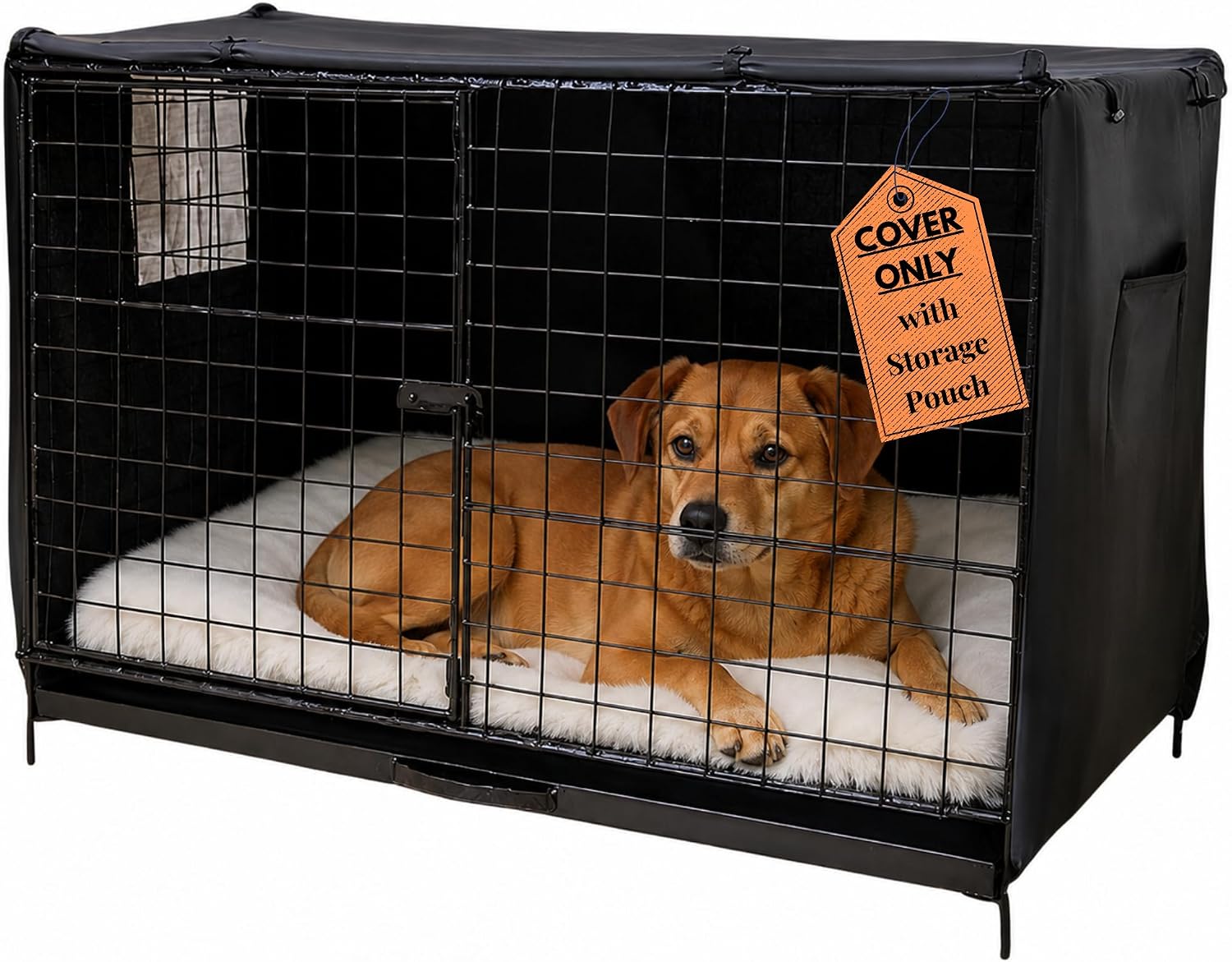
Upgrade pick: Dog Crate Cover 36 inch – with Storage Pouch, & Protection Clips (Black)
Upgrade pick
Dog Crate Cover 36 inch – with Storage Pouch, & Protection Clips (Black)
Check current Amazon price
The upgrade here is hardware, not fabric. The protection clips anchor the cover to the crate frame, which solves the two most common failure modes in summer. A cover that is not clipped slides down over the door opening and cuts the breeze. A cover that is not clipped flaps in the airflow from a fan and turns a calm crate into a noisy one.
The storage pouch is the piece that makes this a summer cover rather than a year-round one. The best hot-weather habit is to take the cover off during the middle of the day and put it back at night, and a pouch gives the thing a home instead of a pile on the floor.
The black color is the trade. Black fabric in direct sun gets hot, hot enough that you would not want to touch it, and it holds that heat longer into the afternoon. In a shaded spot or an air-conditioned room, black is fine and it hides the dirt a porch crate collects. In a south-facing window, it is the wrong cover.
Clipped down with the top covered and one wall open, though, this is the most controllable of the three. If your dog pushes at the cover, or if your crate sits under a ceiling fan, the clips are worth more than any spec on the label.
The eight-step workflow to keep a dog cool in a crate
Now the part you came for. None of it requires a special crate, and most of it is free.
Step one: Get the crate size and bar spacing right. A dog that cannot stand, turn, and lie flat cannot dump heat into the surrounding air, and a crate that is too small concentrates everything the dog radiates into a tiny volume. Bar spacing matters too: wider spacing moves more air, but small dogs need narrow enough spacing that they cannot push a muzzle through. Wire crates beat solid-walled crates in summer for the same reason a screen door beats a window.
Step two: Move the crate before you buy anything. Out of direct sun, off hot concrete, away from the dryer vent and the oven, and not jammed against a wall on both sides. If you have an air-conditioned room, the crate belongs in it during the day. This step costs nothing and does more than any accessory.
Step three: Set the cover for shade, not enclosure. Cover the top and the wall the sun hits. Leave the opposite wall and the door open. That gives you a shaded roof and a cross-breeze, which is the ideal keep a dog cool in a crate setup in almost any room. If you can only cover one surface, cover the top.
Step four: Run the hand test. Kneel down and put your hand inside the crate at dog height. If the air in there feels warmer and heavier than the air in the room, you have a panel closed that should be open. Repeat with the door flap rolled and a second side open until the crate feels like the room. A cheap thermometer sitting in the crate tells you the same thing without guesswork.
Step five: Rethink the mat thickness. Thick memory foam holds body heat and gives it back. A thin cotton pad, a towel, or a raised cot sleeps cooler, and a towel wrapped around a frozen water bottle gives the dog a spot to sprawl against. Keep the frozen bottle wrapped, never bare, so it does not stick to a tongue or a flank.
Step six: Fix the water situation. A shallow bowl that clips to the crate bars beats a bowl on the floor that gets flipped. Ice cubes in the water are fine for most dogs and pointless for a few, and either way the bowl needs a refill at midday. A wet crate floor makes the humidity problem worse, which is another argument for the clip-on bowl.
Step seven: Time the crate to the day. The crate should be a cool-hours tool in summer. Early morning, evening, overnight. If your dog is crated during the workday, that crate needs to be in the coolest room in the house with the cover open, and a midday walk should move to before seven or after eight at night. Hot pavement is its own problem.
Step eight: Know the exit signs. Heavy panting that does not slow down, thick drool, gums that look brick red instead of pink, a dog that is glassy or unsteady: those are heat emergencies, and the answer is out of the crate, cool water, shade, and a call to a vet. A crate is a management tool, not a place to leave a dog while you decide whether it is too hot.
The competition and why it lost
There is a whole aisle of products that promise to solve a hot crate, and most of them solve a different problem.
The quilted full-wrap covers that close every side are the worst offenders in summer. They are excellent winter covers, and they are the exact shape of a heat trap: no panel count to open, no ventilation to speak of, and a dog inside a padded box. They lost because the whole point of a cover in July is selective shade, and a full wrap cannot be selective.
Mesh covers go the other direction. They vent beautifully and they shade almost nothing, so the crate still sits in the sun and the dog still cooks. A mesh panel is a good thing to have as part of a cover, not as the entire cover.
Clip-on crate fans are genuinely useful, and they are also a power cord, a set of batteries, and a moving part that can fail at the worst time. I would rather fix the airflow with an open panel and a ceiling fan than depend on a gadget.
Gel cooling mats cool the contact patch and warm up within an hour, and they need a freezer rotation to stay useful. Aluminum trays hold cold longer and are the better buy of the two, but they are a separate guide.
None of this is a knock on those products. It is a knock on buying one of them instead of learning how to keep a dog cool in a crate properly. Shade and airflow first, accessories second.
What this all costs
The three covers in this guide all sit in the budget tier, and each listing shows the live number, so check current Amazon price before you commit. The real cost breakdown is not the cover. It is this:
- A cover, one time, and it lasts several summers.
- A clip-on bowl, one time.
- A thermometer for the crate, one time.
- A frozen water bottle, free, rotated daily.
Against that, the cost of getting it wrong is a vet visit for heatstroke, which runs into the hundreds before anyone has run a blood panel, and can end worse than that. The math is not close.
If you want the cheapest possible version of this, skip the cover entirely. A light towel draped over the top and one side of the crate, secured so the dog cannot pull it in, does most of the shade work for nothing. The covers above exist because a towel sags, slides, and looks like laundry, and because clips and a real fit mean you will actually keep using it.
Start with where the crate sits. Add shade on the sun side. Leave the other side open. Put water in reach. Then decide whether the dog needs the cover at all. That order is the whole job, and it is the same order whether your crate is in a bedroom, a garage, or the back of a van at a show.
If your dog's crate anxiety is the reason the cover is on in the first place, the crate training basics piece is the better next read, because a calmer dog in a smaller space is a cooler dog, and no fabric fixes a dog that is panicking.