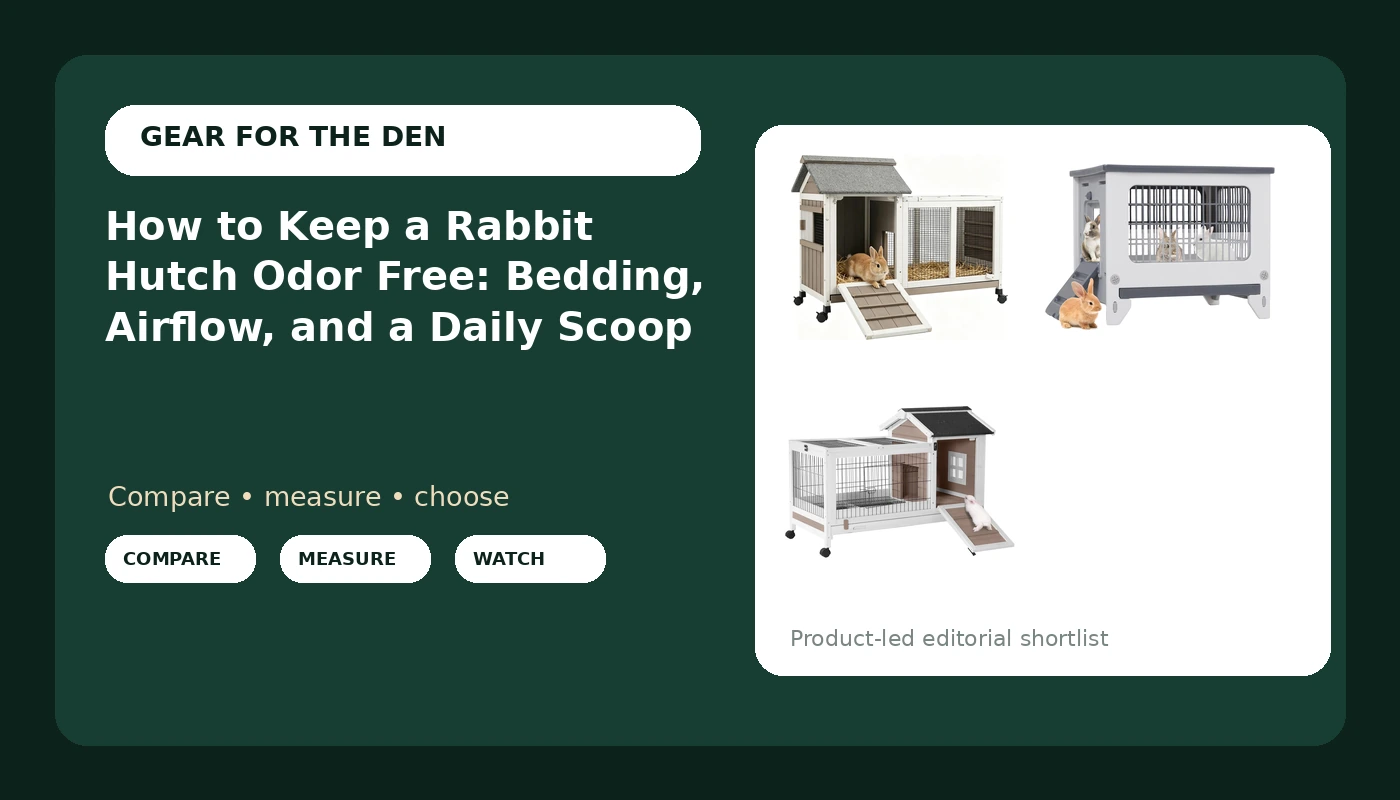
A rabbit hutch does not smell because rabbits are dirty. It smells because urine stays wet, bedding stops absorbing, and ammonia builds up in the same air the rabbit breathes all night. Learning how to keep a rabbit hutch odor free is really about breaking that cycle: catch the urine somewhere you can empty, keep the air moving, and pull the wet material out before bacteria settle into it.
The mistake I see most often is a heroic deep clean every second weekend and nothing in between. A hutch cleaned that way smells worse on day ten than one that gets spot-checked every morning, because the ammonia load peaks days before the scrub day arrives. Frequency beats scrubbing power, and it beats every deodorizing spray on the shelf.
What follows is the short list of hutches I would buy for a low-odor setup, and then the eight-step routine I use to keep a rabbit hutch odor free once the box is in place. Nothing here needs a special product, and none of it takes more than a few minutes a day.
Why you should trust me
I have kept rabbits indoors and out, and I have cleaned hutches in every season: in August, when the smell reaches you before you reach the door, and in January, when the bottle freezes and the bedding turns to mush. Most of what I know came from fixing my own mistakes, plus a long stretch of helping at a small-animal rescue where the intake hutches were the smelliest part of the building.
What I care about is not the paint job or how the design photographs. It is whether the box can be cleaned in five minutes, whether urine lands in a tray instead of soaking into wood, and whether air can move through the sleeping area without turning it into a wind tunnel. Those three things decide whether a hutch smells. Everything else is decoration.
How I picked and how I tested
I did not run a lab. I ran the same checklist against the three hutches below, using the details the makers publish and the questions I ask before I recommend any hutch to anyone.
Floor area and cage size come first. A small footprint concentrates urine into a small patch of bedding, and that patch saturates in a day no matter how good the bedding is. Bar spacing comes second, because bars that are too tight kill airflow and bars that are too wide let bedding and hay spill onto the ground, where it stays wet and smells. Bedding dust matters more than people expect: fine, dusty shavings hang in the air and carry the ammonia smell into the room, and they irritate a rabbit's eyes and nose.
Then the details that decide how much work the hutch is. Hideout size, because a cavernous hideout gives the rabbit too many corners to choose from and one of them becomes a latrine. Bottle capacity, because a bottle that runs dry by mid-afternoon means a thirsty rabbit floods the bedding when you refill it. Hay rack placement, because hay that sits on the floor is urinated on within hours. And if a hutch ships with a run or a tunnel, tunnel diameter, because a tunnel a rabbit cannot turn around inside simply does not get used.
Every hutch here got the same practical questions: can I reach the back corner with one hand, does the tray come out without moving the rabbit, and is there a solid place for the rabbit to rest its feet? I also looked at the complaints that surface after a month of ownership: screws that strip, panels that do not line up, and trays that are barely deep enough to hold a day of urine.
There is no single ideal keep a rabbit hutch odor free setup, because a hutch that works in a garage in Phoenix is wrong for a covered porch in Seattle. The checklist stays the same; the answer changes with your climate. If you are still deciding what goes inside the box, my notes on rabbit-safe bedding for small pets cover dust and absorbency in more detail.
The hutches I would put bedding in
Budget pick: Gowoodhut Outdoor Rabbit Hutch 2-Story Indoor Bunny Cage with Run
Budget pick
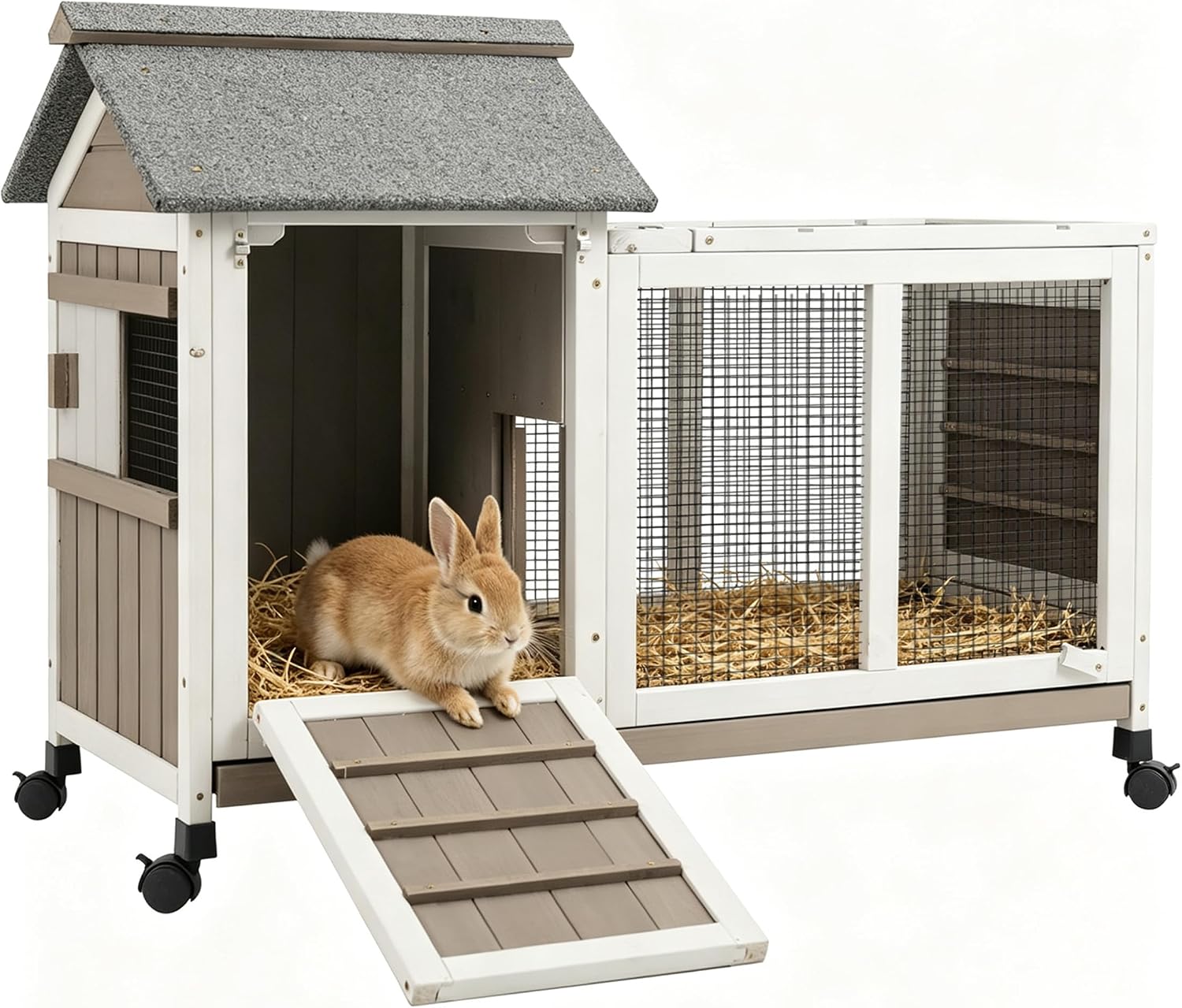
Gowoodhut Outdoor Rabbit Hutch 2-Story Indoor Bunny Cage with Run
Check current Amazon price.
Two levels and an attached run, and for odor control the run is the interesting part. More floor area means urine is spread over a larger surface instead of pooling in one corner of a sleeping box, and bedding in a lightly used area gets a chance to dry between visits. The upper level also lets you keep the sleeping quarters separate from the traffic, which is the difference between a hutch that smells like hay and one that smells like a litter tray.
The trade-off is cleaning time. Every extra level and every extra panel is another surface to wipe, and the run floor gets dirtiest fastest, so plan on a daily pass with a scoop and a weekly rinse. Two-story hutches also need to sit where you can reach the top level without a ladder.
Flaws but not dealbreakers: More nooks than a single-level box, and the ramp area collects droppings. If you want the fastest possible cleaning routine, a flat hutch wins.
Best for someone with limited floor space who wants the rabbit to have room to move, which is what keeps a small cage from turning into a saturated one.
Our pick: Rabbit Hutch Outdoor Indoor Plastic Waterproof Bunny Cage Enclosure
Our pick
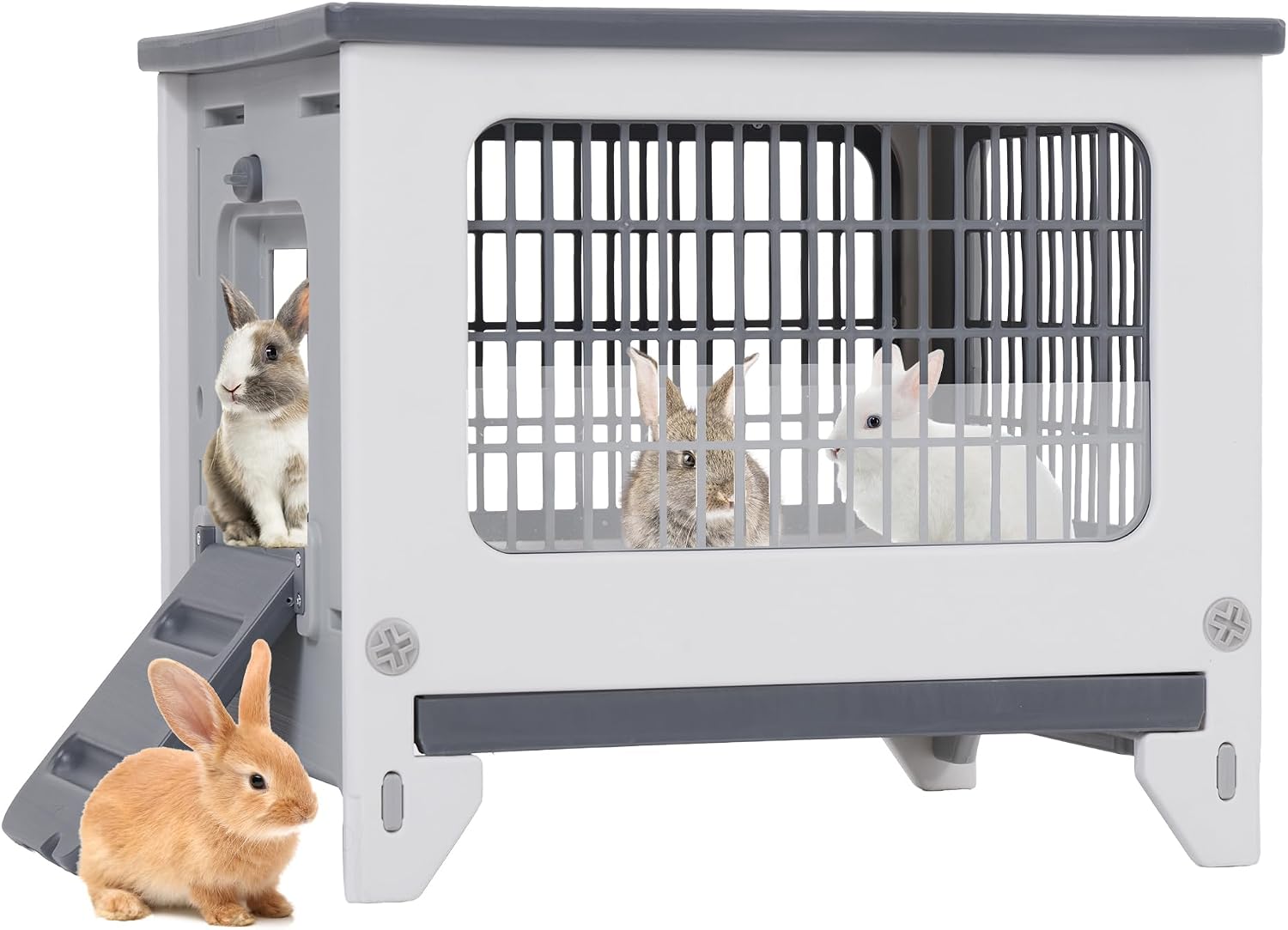
Rabbit Hutch Outdoor Indoor Plastic Waterproof Bunny Cage Enclosure
Check current Amazon price.
Plastic is the material that makes the biggest difference to smell, and it is the reason this one is my pick. Wood soaks urine into the grain, and once it is in there no amount of scrubbing gets it out. A plastic panel wipes clean and dries in minutes. A waterproof shell also means you can hose the whole thing down on a warm afternoon and let the sun finish the job, which is the fastest full clean available.
The things to watch are heat and airflow. A plastic enclosure holds warmth, so it needs shade in summer and a spot where air moves past it rather than through it. Check the bar spacing on the mesh panels before you buy: wide enough for real ventilation, tight enough that bedding and pellets stay inside.
Flaws but not dealbreakers: Plastic gets hot in direct sun, and the panels can feel closed in compared with an open wire hutch. Both are placement problems you can solve with shade and a fan moving air in the room.
Best for anyone who wants the daily routine to be a wipe and a scoop rather than a scrub, and for indoor setups where a damp wooden hutch would be a real problem.
Upgrade pick: Aivituvin Rabbit Hutch Indoor Bunny Cage Outdoor Bunny House with Wire Floor Leakproof Plastic Tray, Brown
Upgrade pick
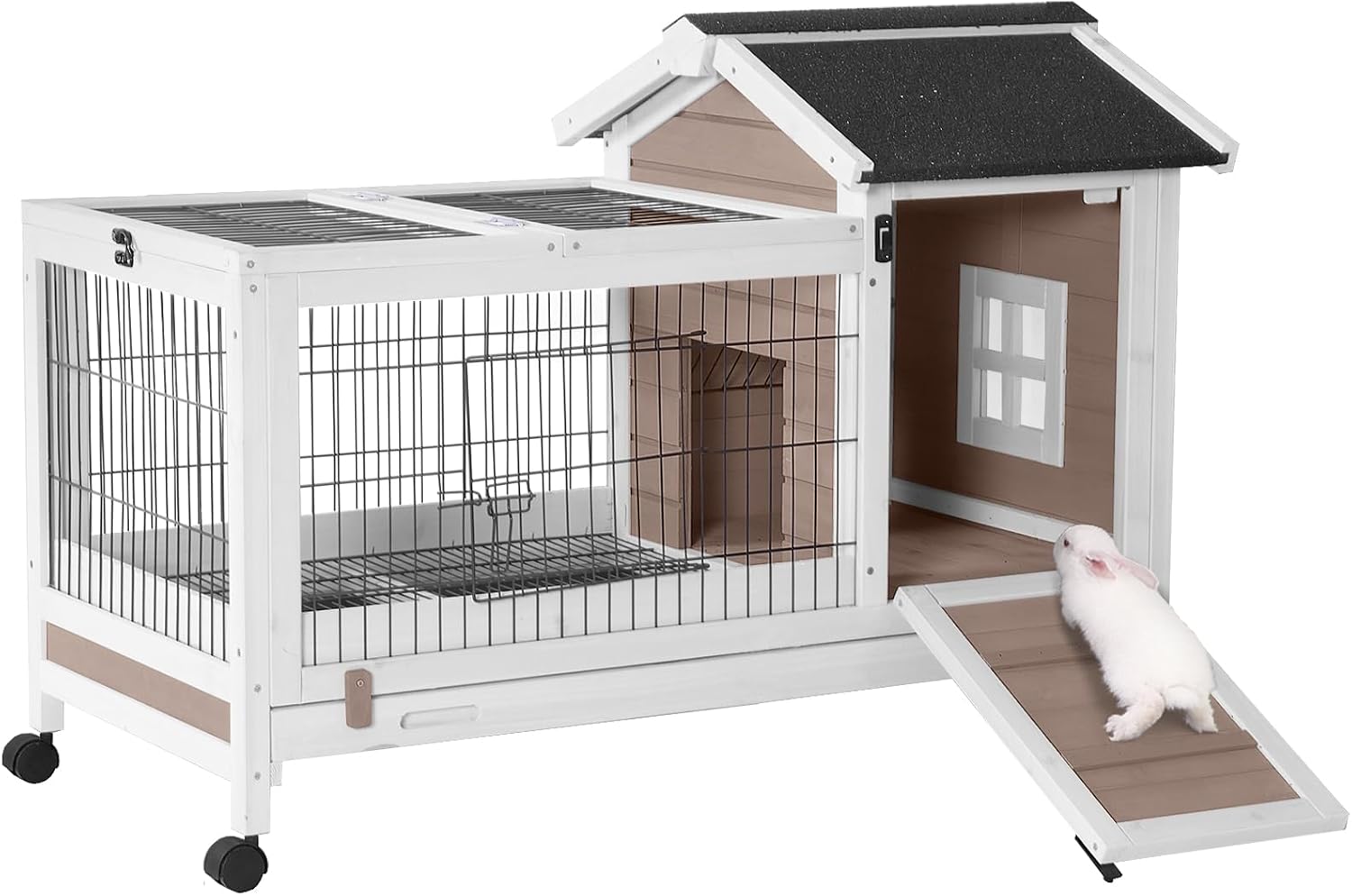
Aivituvin Rabbit Hutch Indoor Bunny Cage Outdoor Bunny House with Wire Floor Leakproof Plastic Tray, Brown
Check current Amazon price.
The feature that earns the upgrade is right there in the design: a wire floor over a leakproof plastic tray. Urine drops through the wire into the tray instead of sitting in the bedding, so the bedding stays dry and ammonia never gets a chance to build in the sleeping area. The tray is plastic, so it rinses instead of soaking, and the hutch is built for indoor or outdoor use.
A wire floor comes with a responsibility. Rabbits need a solid, dry place to rest their feet, so offer a mat or a solid shelf, especially for a larger rabbit or an older one. The tray also has to be emptied before it fills, which in warm weather means every day rather than every other day. Do those two things and this is the easiest of the three to keep fresh.
Flaws but not dealbreakers: Wire flooring is unforgiving if you skip the resting pad, and the tray needs a daily check. It is also the largest of the three, so measure your space before you commit.
Best for a rabbit that spends most of its time in the hutch and for owners who want the bedding to stay dry between full changes.
How to keep a rabbit hutch odor free: the eight-step routine
Step one: Strip the litter corner every morning. Two minutes with a scoop. Take out the wet bedding and droppings from the corner your rabbit uses as a latrine, plus the patch under the water bottle. This is the highest-value task in the whole routine, because urine that is already in the bucket cannot turn into ammonia inside the hutch.
Step two: Check the water supply. A rabbit that runs dry drinks a day's worth in ten minutes when you refill, and that floods the bedding. Match bottle capacity to the size of the rabbit and the season, check the spout for clogs, and in freezing weather check twice a day so the bottle never stays solid for long.
Step three: Keep hay in a rack, not on the floor. Hay on the floor is urinated on within hours, and wet hay is the smell most people blame on the rabbit. A rack above or beside the litter corner also encourages the rabbit to eat where it already pees, which keeps the rest of the floor cleaner and wastes less hay.
Step four: Change bedding on a schedule, not on a smell. Pick an interval and stick to it, then shorten it in summer or when a second rabbit shares the hutch. If the bedding is damp to the touch, it is done, even if it still looks clean. Watch bedding dust as well: dusty shavings leave fine particles in the air that hold odor and irritate eyes.
Step five: Pull and rinse the tray. Empty the tray, rinse it, and let it dry in the sun if you can. A tray that goes back in wet starts the whole cycle over. Never put fresh bedding on a damp tray.
Step six: Dry the hutch before you refill it. On a full clean, wipe or hose the interior and then wait. Wood that stays damp keeps smelling no matter how much bedding you add on top of it. Direct sun and moving air do more in an hour than a towel does in five minutes.
Step seven: Fix the airflow. Odor is a ventilation problem as much as a cleaning problem. Move the hutch so two sides can breathe, keep the sleeping area out of the prevailing wind, and check that bar spacing lets air through without letting bedding escape. Indoors, a small fan moving air past the hutch, not blowing into it, beats any deodorizer.
Step eight: Give the rabbit somewhere else to go. A bored rabbit in a small cage sits in one spot and saturates it. Add a play tunnel with a diameter wide enough to turn around inside, a hideout that is snug rather than cavernous, and time in a run or out of the hutch. Movement spreads the urine and gives the bedding time to dry, which is the quiet half of odor control.
None of these steps requires a product beyond the hutch itself, and the whole list takes about five minutes a day. The sprays and powders sold for hutches mask a problem that a scoop and a dry tray solve outright.
The competition and why it lost
The all-wood hutch with a wooden pull-out tray is the classic design, and it is the one I would avoid for odor control. A wooden tray soaks urine into the grain, and after a few weeks it smells even when it looks clean, because the ammonia is inside the wood rather than on it.
Open-bottom pens and wire cages with no tray at all are worse. Urine goes straight onto the floor or into the grass, and the smell comes back up through the bedding. They are fine as a supervised play area for an hour, not as a permanent home.
Indoor cages that are small enough to sit on a desk are a separate category. They work as a hospital pen or a travel box, but the floor area is too small for a rabbit to keep a clean corner and a sleeping corner apart, which is exactly what a rabbit wants to do.
Deodorizing sprays, bedding additives, and scented litter deserve their own mention, because they are what people buy when the routine is not working. They cover a smell for a few hours and then it comes back stronger. No spray keeps a rabbit hutch odor free on its own. The correct keep a rabbit hutch odor free habit is unglamorous and cheap: empty the tray, dry the hutch, refill the hay rack, and do it again tomorrow.
What this all costs
All three hutches are linked above, and each one lists its own current price on Amazon. What separates them at the register is mostly material and design: a two-story wood hutch with a run, a plastic enclosure that hoses down, and a tray-based hutch with a wire floor.
The ongoing cost is bedding and hay, and that is the line item where a low-odor setup pays for itself. A hay rack means less hay ends up on the floor and in the trash, a leakproof tray means you change bedding less often because it stays dry, and a hutch that dries quickly means fewer full teardowns. Over a year, the difference between a hutch you strip twice a week and one you strip once is measured in bags of bedding.
The other cost is time, and it is smaller than people expect. Five minutes a day for the litter corner and the water bottle, one longer clean each week, and a full dry-out once a month in warm weather. The routine is boring, which is the point. A hutch stays fresh because of what you do every morning, not because of what you bought.