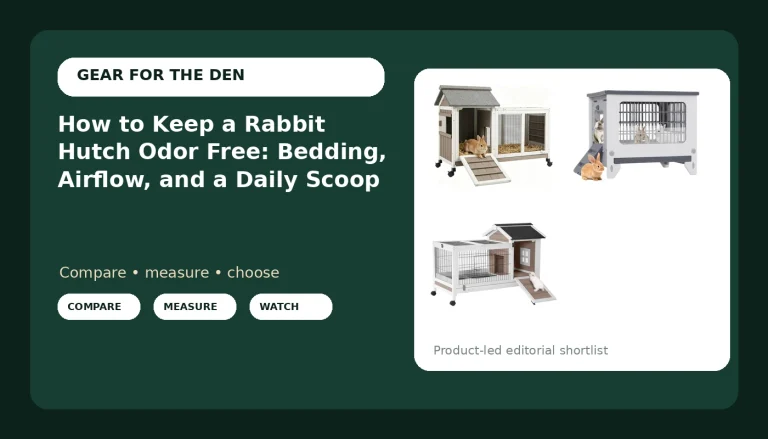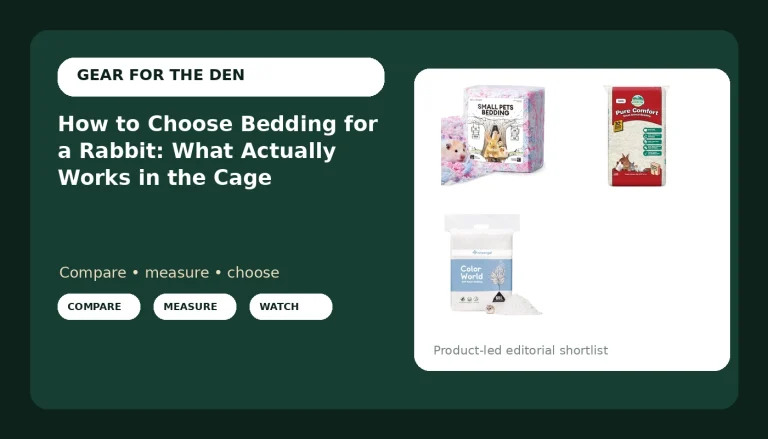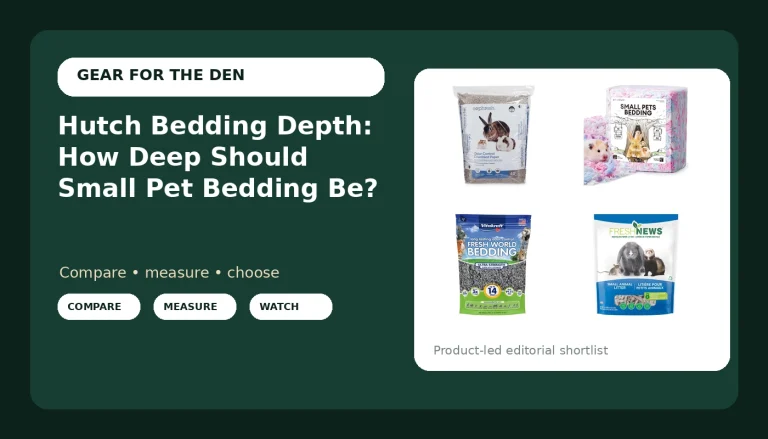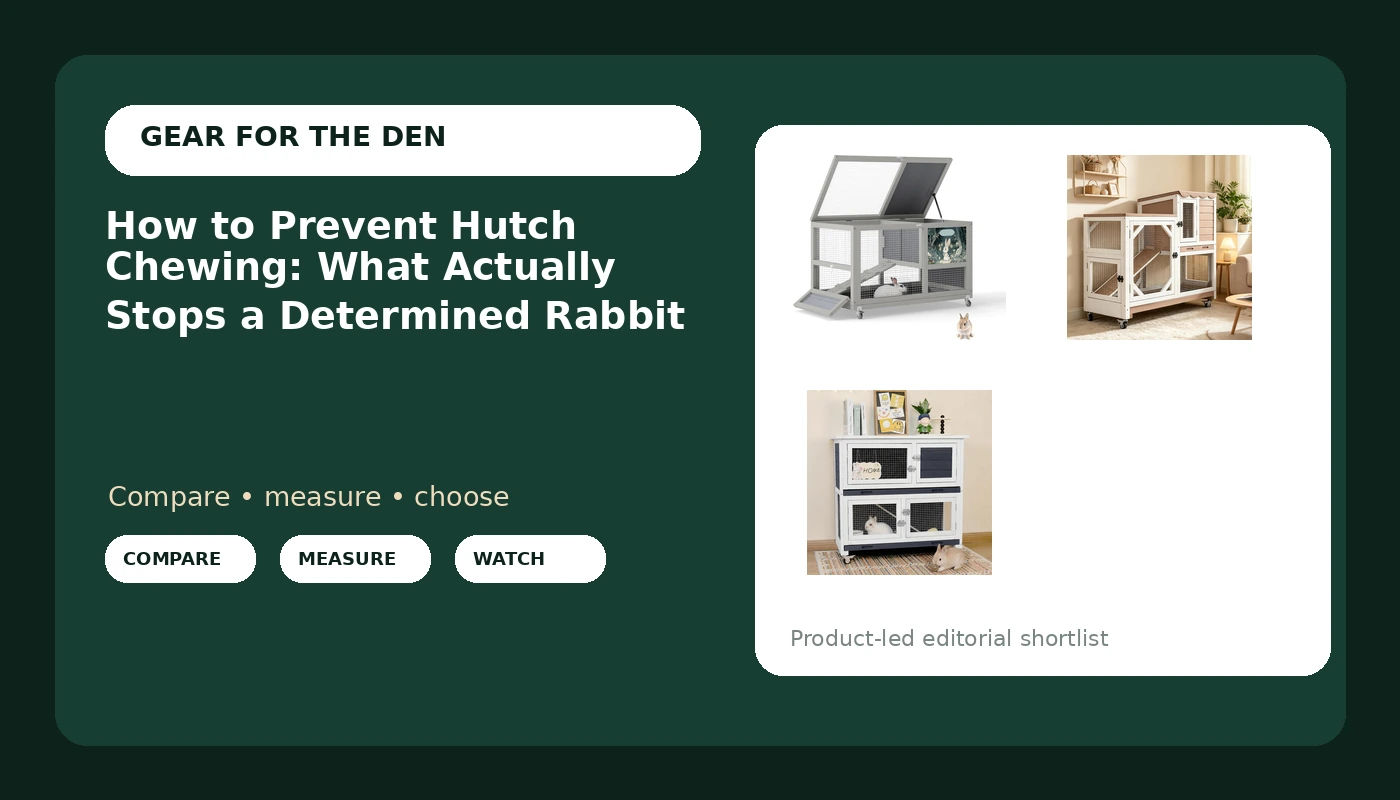
Rabbits do not chew a hutch out of spite. They chew because wood is soft, their teeth grow for life, and a bored rabbit with nothing better to do will remodel the walls one corner at a time. If you want to prevent hutch chewing for good, you have to fix the reasons behind the behavior instead of painting the frame with something bitter and hoping the taste does the work.
I have kept rabbits indoors in wooden hutches, outdoors in a covered run, and in a converted dog crate, and the chewing always starts in the same three places: the door frame, the inside corners, and the lip of the pull-out tray. That is the short version of how to prevent hutch chewing. Give the rabbit room, give it something legal to destroy, and take away the bare edges that invite the habit.
The good news is that most of the fix is free. It is layout, hay, and a rotation of chewable things. The hutch matters because it sets the floor area you have to work with, and the three hutches below are the ones I would start from.
Why you should trust me
Small pets are the category I cover for Gear for the Den, and rabbits have been in my house for years, first in a store-bought hutch and later in a setup I rebuilt around what the first rabbit actually chewed. I have replaced chewed tray lips, patched door frames, and learned that a rabbit will ignore an expensive chew toy in favor of a hutch panel every single time. I also keep guinea pigs, which chew for slightly different reasons and taught me to separate "this animal is bored" from "this animal needs more fiber."
What that experience buys you is a filter. Half the advice online is about deterrent sprays, and sprays are the last step. The correct prevent hutch chewing order is room, hay, enrichment, and only then a taste deterrent on the two or three spots the rabbit keeps returning to.
How I picked and how I tested
I compared the three hutches below on the things that decide whether chewing starts at all: floor area on each level, tray depth and how easily the tray pulls out for cleaning, whether the wood is left bare or finished, how the roof handles weather if the hutch goes outside, and whether the casters roll on carpet or catch on every seam.
I did not run these through a lab. I checked each one against the same list I use on any hutch: is there enough floor area for a rabbit to stretch out and lie flat, is the hideout size large enough that the rabbit is not wedged in, does the hay rack sit where the rabbit eats, what is the bottle capacity, and are there exposed edges at rabbit height. Bedding dust and bar spacing matter too, because a hutch that is easy to keep dry and easy to ventilate is a hutch a rabbit is less likely to attack.
The ideal prevent hutch chewing setup is boringly simple: more floor area than you think you need, unlimited hay, a hideout that fits, and a tray you can pull out in ten seconds. Everything below is judged against that.
Hutches that help prevent hutch chewing
You cannot enrich a hutch that is too small. All three of these give you a second level and a tray you can actually remove, which is where the fight is won.
Budget pick: COZIWOW 36.5" Two-Level Wooden Rabbit Hutch with Casters & Ramp
Budget pick
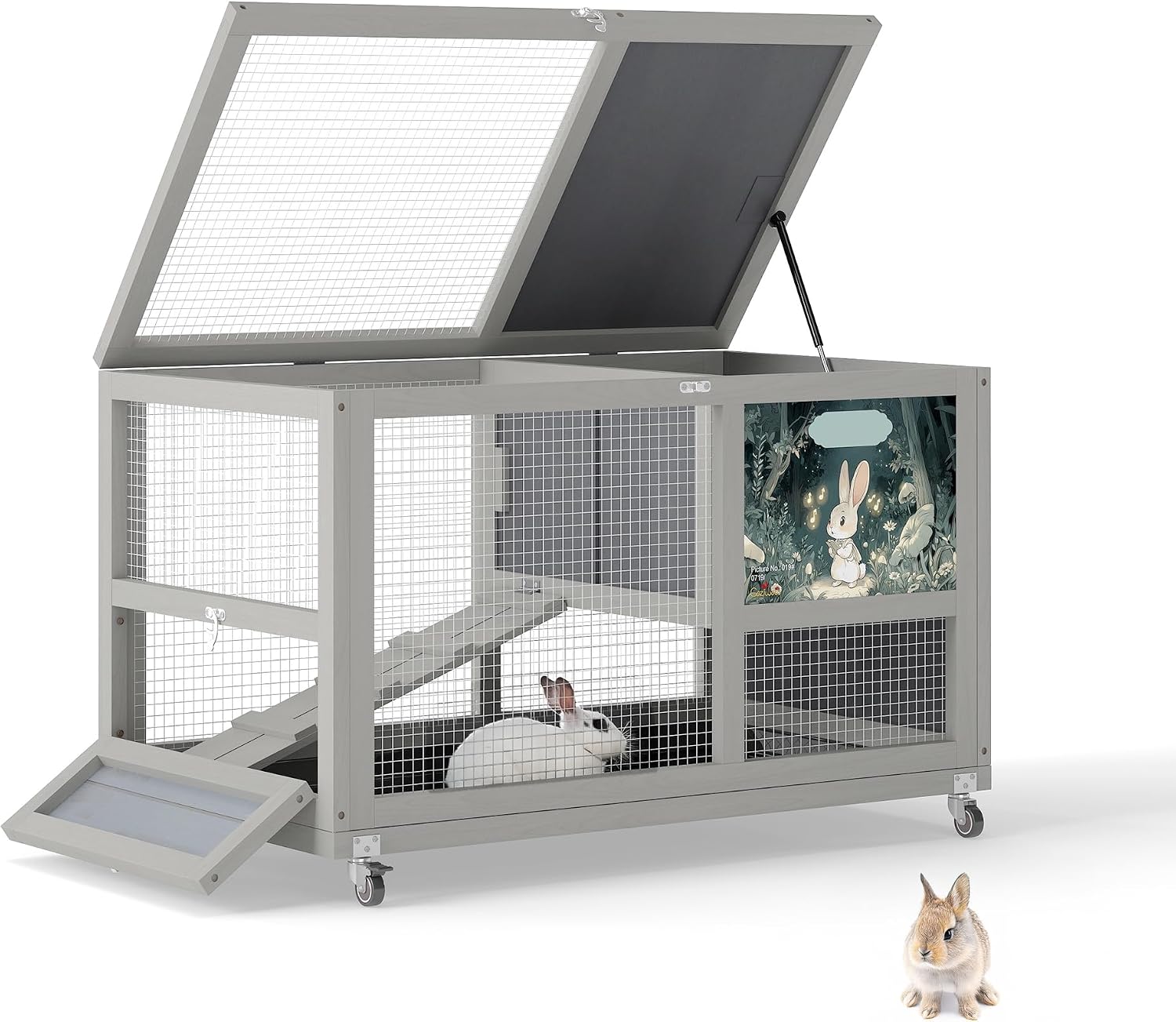
COZIWOW 36.5" Two-Level Wooden Rabbit Hutch with Casters & Ramp
Check current Amazon price. This is the hutch I point people to when the budget is tight and the rabbit is small. The two-level layout gives you a ramp and an upper deck, and the casters mean you can roll the whole thing out to hose down the tray instead of scrubbing it in place. That matters more than it sounds like it does, because a tray that is annoying to clean stays dirty, and a dirty hutch is a chewed hutch.
For chewing specifically, the ramp and the upper deck are the useful parts. A rabbit with a ramp to run and a second floor to patrol spends less time working on the door frame. The wood is light, so if your rabbit is a serious chewer, plan on adding corner guards or untreated applewood blocks along the frame.
Flaws but not dealbreakers: The build is light, and the panels are thin enough that a large, determined rabbit could work through a corner over time. This is a hutch for a small to medium rabbit, not for a chewer with a grudge.
Anyone with one small rabbit, a spare corner, and a tight budget will get the most out of this one.
Our pick: Aivituvin Rabbit Hutch Indoor Outdoor Bunny Hutch on Wheels, 2 Story Wood Guinea Pig Cages with 2 Deeper Pull Out Trays (Brown)
Our pick
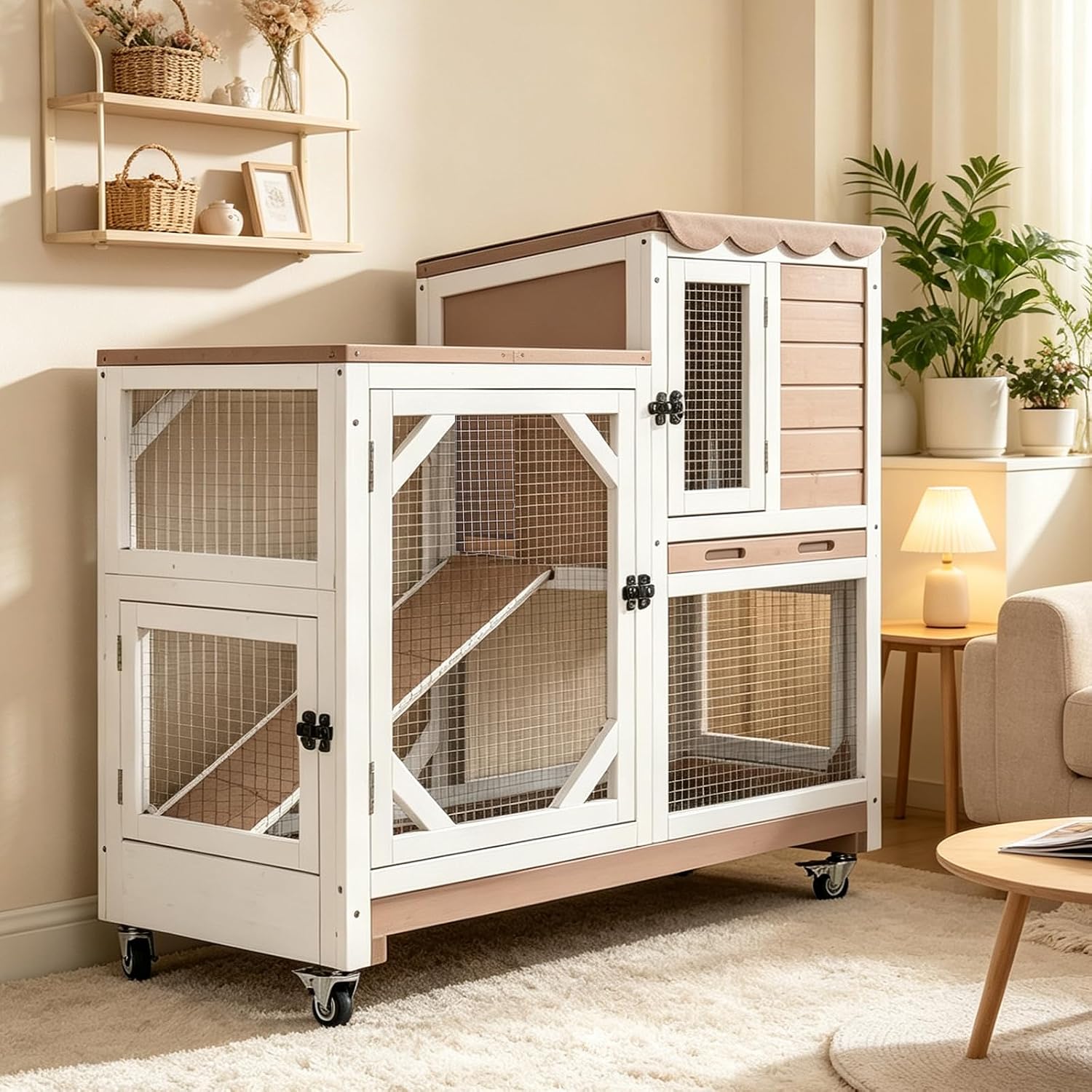
Aivituvin Rabbit Hutch Indoor Outdoor Bunny Hutch on Wheels, 2 Story Wood Guinea Pig Cages with 2 Deeper Pull Out Trays (Brown)
Check current Amazon price. The deeper pull-out trays are the reason this is the one I would buy. Deep trays hold more bedding, which keeps bedding dust down in the room, and they slide out far enough that you are not scraping corners with a putty knife. Two trays, one per level, means the upper deck is not dripping onto the lower one.
This is also the hutch that gives you the most usable floor area for the money, and floor area is the single biggest lever you have against chewing. The wheels are a genuine convenience indoors, and it can live outside in a covered spot, though I would watch the finish if it sits in the rain. If you want the fuller walkthrough of turning one of these into a real setup, my indoor rabbit hutch setup guide covers the layout.
Flaws but not dealbreakers: Assembly takes patience and the instructions are thin, so two people make it much faster. Check the wood for rough edges on arrival and give it five minutes with sandpaper before the rabbit moves in.
Anyone housing a rabbit or a pair of guinea pigs indoors who wants a hutch that is genuinely easy to clean should start here.
Upgrade pick: 2-Story Indoor Rabbit Hutch with Flat-Top Metal Roof, Wheels & Dual Trays
Upgrade pick
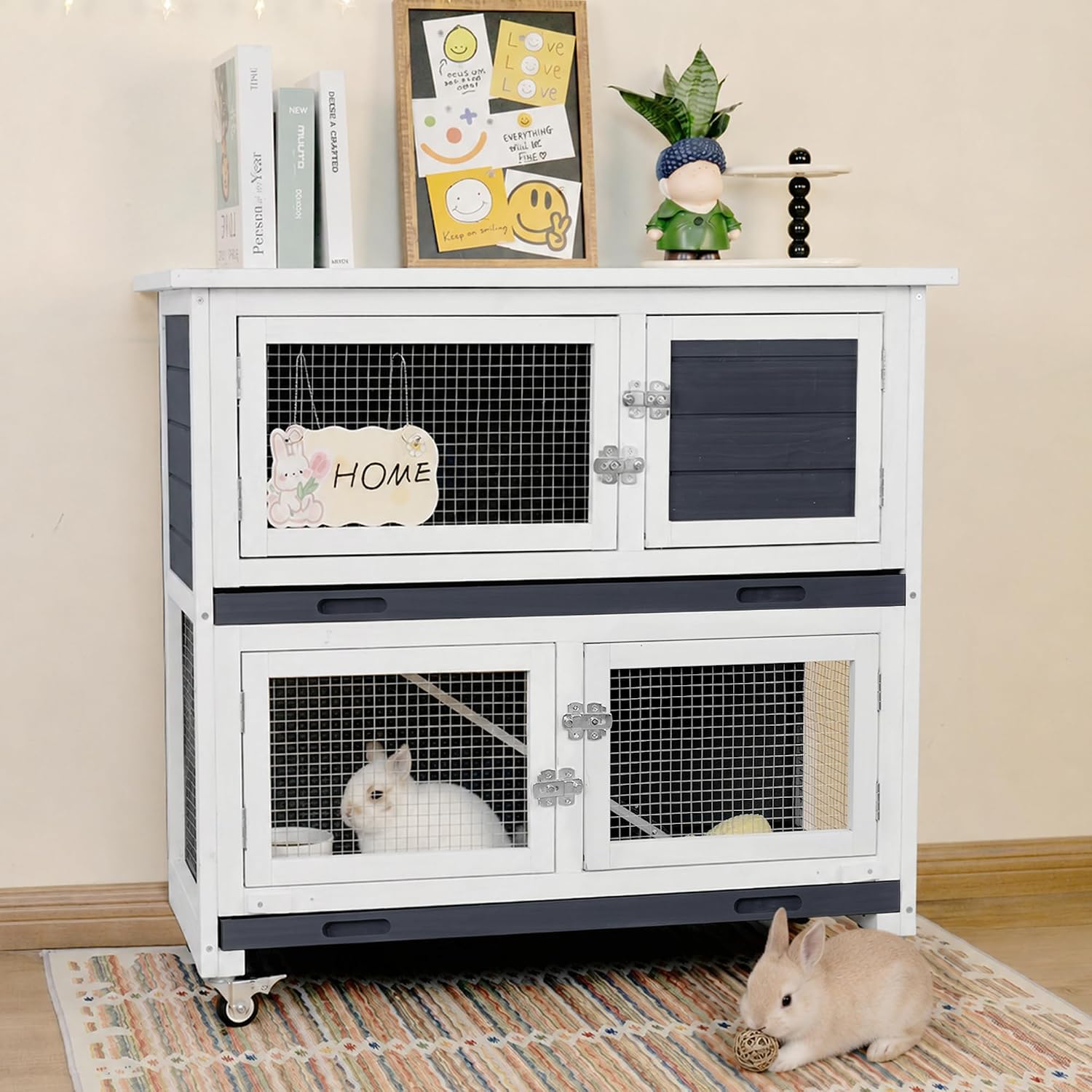
2-Story Indoor Rabbit Hutch with Flat-Top Metal Roof, Wheels & Dual Trays
Check current Amazon price. The flat metal roof is the upgrade that matters if the hutch goes outside or sits near a window. A flat top sheds water, gives you a shelf for the hay, and removes the soft felt roof that rabbits love to tear at from underneath. Dual trays again, and the wheels make it movable when you want to vacuum under it.
If your rabbit has already chewed through one hutch, this is the one to replace it with. The metal roof takes the most tempting chew target off the table, and the two levels give you room for a hay rack, a hideout, and a litter corner without crowding the rabbit into the door frame.
Flaws but not dealbreakers: It is heavier than the other two, so moving it up stairs is a two-person job, and a flat roof collects leaves and standing water if you park it under a tree.
Anyone who wants one hutch that can live indoors in winter and on a covered patio in summer should look here.
The actual workflow to prevent hutch chewing
Now the part you came for. This works with any hutch, but it works better with the three above because they give you the floor area and the trays to support it.
Step one: Rule out a health problem. A rabbit that suddenly chews wood may be short on fiber or dealing with a tooth issue. Put out free-choice hay, watch how much is actually eaten, and get a vet check if the chewing is new. A behavior change that follows a diet change is usually not behavior at all.
Step two: Measure the hutch against cage size. Stretch the rabbit out on the floor and measure. A hutch with two cramped levels is worse than one with a single large one. You want enough floor area to hop two steps in a straight line, lie flat, and turn around without touching a wall.
Step three: Make the hay rack the best thing in the hutch. Rabbits chew wood when the hay runs out, and they run out fast. Keep the hay rack full, mount it near the litter corner, and refill it twice a day if that is what it takes. Hay is the cheapest chew deterrent you will ever buy.
Step four: Get the hideout size right. A hideout should be snug enough to feel like a burrow and big enough that the rabbit is not wedged. A rabbit squeezed into a box that is too small will chew its way out of the box.
Step five: Fix the water and the bottle capacity. Check that the bottle still flows when it is three-quarters full, and mount it high enough that the rabbit drinks without craning. A bottle that runs dry overnight produces a thirsty, frustrated rabbit, and a frustrated rabbit chews.
Step six: Block the chew points before they become habits. Wrap the door frame, the tray lip, and the inside corners with untreated applewood, willow, or plain cardboard. Skip treated lumber and any wood painted with a finish you cannot identify. Deterrent sprays belong here, on the two or three spots the rabbit keeps returning to, not across the whole hutch.
Step seven: Rotate enrichment and give real run time. Chew toys go stale in about a week, so swap them and keep a few in a drawer. A rabbit that gets supervised time in a rabbit-proofed room comes back to the hutch tired, and a tired rabbit sleeps instead of chewing. If you add a tunnel, check the tunnel diameter first. A rabbit that gets stuck in a tunnel panics, and panic chewing is worse than bored chewing.
Step eight: Control bedding dust and re-check weekly. Bedding dust irritates eyes and noses, and a rabbit with an irritated nose rubs and chews at anything nearby. Once a week, walk the hutch at rabbit height and check bar spacing on any wire panel, look for new chew marks, and tighten anything that has worked loose.
The competition and why it lost
Wire-floor hutches are sold as self-cleaning, and they are, but the wire does the same thing to a rabbit's feet that a chewed floor does to a hutch, and a rabbit standing on sore hocks chews more, not less. They lost on comfort.
The plastic starter cages from big-box pet aisles are cheap and easy to clean, and they are also too small for anything but a temporary hospital setup. Rabbits chew the plastic rims on those cages within weeks.
Untreated pine chicken coops look like a bargain until you handle one. The wood is soft, the panels are stapled rather than screwed, and the gaps are sized for chickens, not rabbits. A rabbit can turn a coop panel into splinters in a season.
DIY grid cages get the floor area right, and they are genuinely good for guinea pigs. A determined rabbit, though, will chew the coroplast base and the zip ties, so they lost on durability.
Standard dog crates work as a base if you add a solid floor pan and a hideout, but the bar spacing on some crates is wide enough for a small rabbit to push a nose through, and the tray lip is a chew target. Fine for supervised time, not a hutch replacement.
Outdoor runs with no hideout at all are the worst offender. A rabbit with no burrow to retreat to chews the run itself out of stress.
What this all costs
The hutch is the one-time cost, and you should check current Amazon price on each of the three above rather than trusting a number you saw last month. What actually costs money over a year is everything you put inside it: hay, bedding, chew blocks, corner guards, and the occasional replacement tray or latch.
Hay is the big recurring line, and it is also the anti-chewing tool you will use most. Bedding is the second, and if bedding dust is bothering anyone in the house, a deeper tray and a coarser bedding cut that cost rather than adding to it. Chew blocks are cheap and replaceable, which is exactly the point. If you want to compare hay options before you stock up, my best hay for small pets guide breaks down the cuts.
Spread over a year, a hutch that costs less than a month of takeout becomes a rounding error per day, and the hay that keeps it intact costs less than that. The math is the easy part.
The hard part is twenty minutes of setup: filling the hay rack, fixing the hideout size, and wrapping the two corners your rabbit already likes. Do that once and the hutch stops being a chew toy and goes back to being a house.