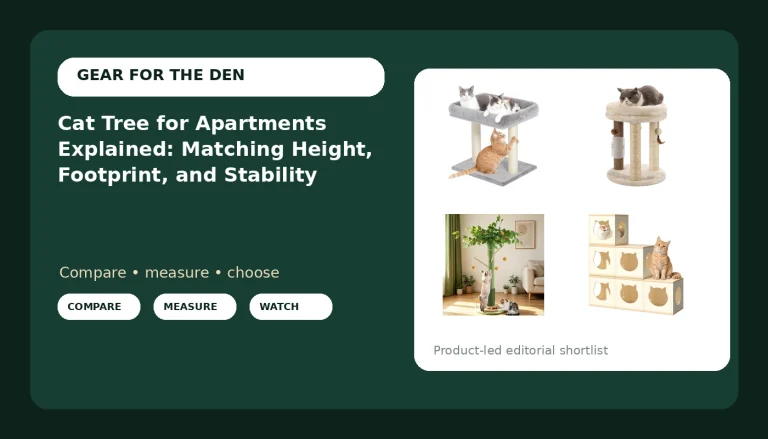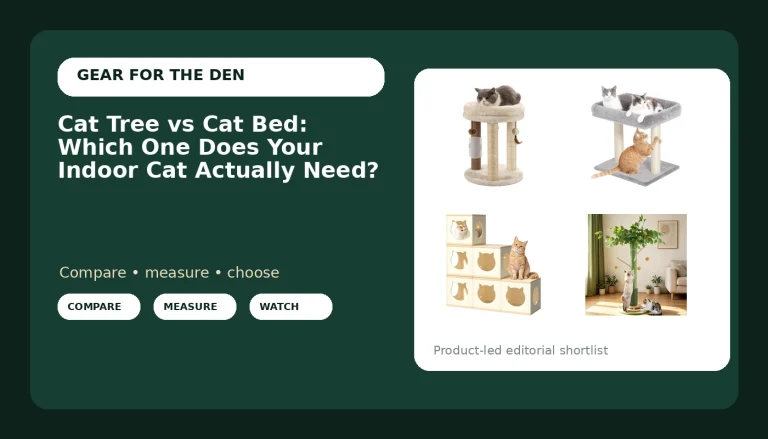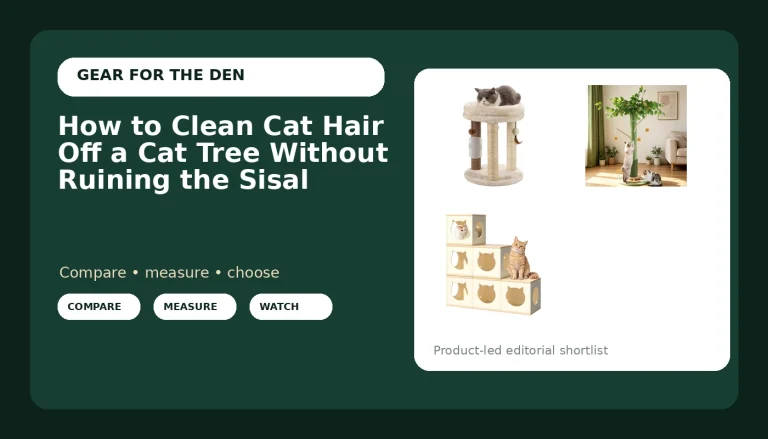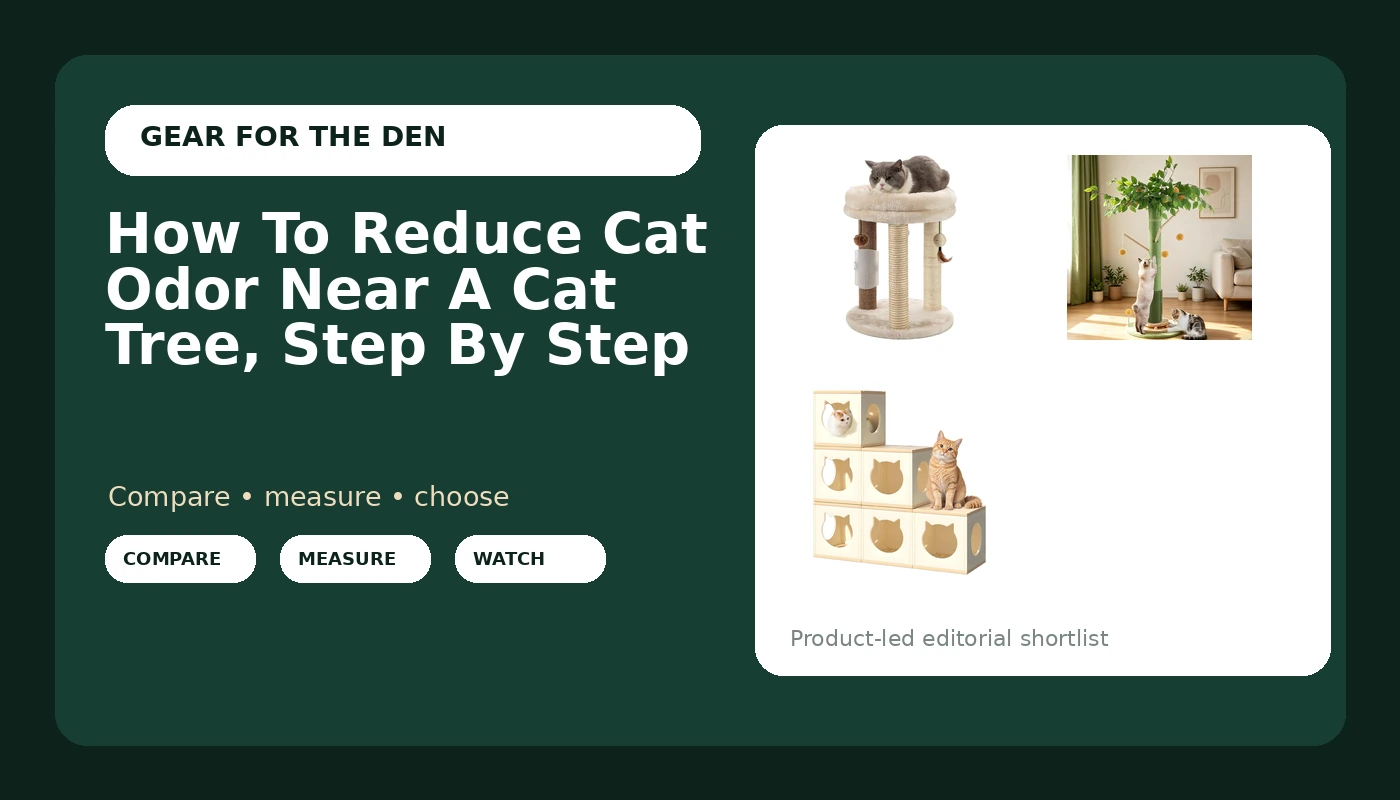
Cat odor near a cat tree almost never starts at the tree's spot in the room. It starts in the tree. Sisal rope, jute, carpeted platforms, and the soft bed on top all work like a sponge for urine, saliva, and the oily dander cats leave behind every time they scratch, rub, and sleep. If you want to reduce cat odor near a cat tree, stop treating the tree as furniture and start treating it as part of the litter system.
That is what this guide covers: how to reduce cat odor near a cat tree without replacing the cat, the box, or the house.
The routine below takes about 20 minutes a week and one deeper session a month. It works the same way on a starter tree and on a floor-to-ceiling tower, because the steps are about surfaces, airflow, and absorbency.
Why you should trust me
I have lived with two to four cats in a small house for the better part of a decade, including a senior who leaked on every soft surface she could reach and a foster pair that marked a carpeted tree before their neuter appointment. I write the cat home and multi-cat guides for Gear for the Den, which means my week is spent reading listings for post diameter, platform height, and hammock fabric, and my weekends are spent cleaning the gear I recommend.
I am not a veterinarian, and I will not pretend a cleaning schedule fixes a medical problem. If a cat is urinating outside the box, a vet visit comes before any product on this page. What I can tell you is which surfaces hold odor, which ones release it, and which gear makes the weekly job shorter.
How I picked and how I tested
This is not a list of the best cat trees on the market. It is a short list of trees that make odor control easier, plus the workflow I run on my own trees. I compared the three picks on the numbers that decide how much smell a tree holds: platform height, post diameter, shelf depth, weight limit, anchor type, perch width, and hammock fabric, along with how easily each surface can be wiped, vacuumed, or washed.
Here is why those numbers matter. Platform height keeps cats up and off the sofa and the bed, which stops the smell from spreading into the rooms you actually sit in. Post diameter decides whether a cat gets a full stretch on the post or scratches at an angle and flings dander across the floor. Shelf depth and perch width decide whether a cat sleeps on the tree or perches on the edge of your bookshelf. Anchor type decides whether the tree wobbles when a cat lands on it, and a wobbling tree is a tree that gets sprayed. Weight limit is the number people skip, and so is carrier size, which matters on the day the tree goes to the curb and the cats have to go in another room.
Fabric is where the smell lives, so hammock fabric and removable bed covers carry the most weight in my scoring. I ran the eight-step workflow below on the trees in my house, alongside the litter box setup I use in a multi-cat home, because the two systems fail together. Box odor drifts up, tree fabric traps it, and by week three you blame the litter when the tree is the real problem. The workflow is the same one I use to reduce cat odor near a cat tree at home.
I do not publish star ratings or buyer quotes here. What I describe is how each tree's construction changes the cleaning job, and that is how the picks are sorted.
The gear that helps reduce cat odor near a cat tree
You can reduce cat odor near a cat tree you already own, but the tree itself decides how hard that job is. These three cover the three jobs a tree does: a small starter tree for one cat in a small room, a tall single post for a cat that scratches more than it sleeps, and a stackable tower for a multi-cat house where the tree is also the climbing route.
Budget pick: MECOOL 4in1 Small Cat Tree,Scratching Post with Tower Soft Bed, Sisal Carpet Jute Posts with Three Hanging Ball Toys and Massage Brush for Indoor Cats
Budget pick
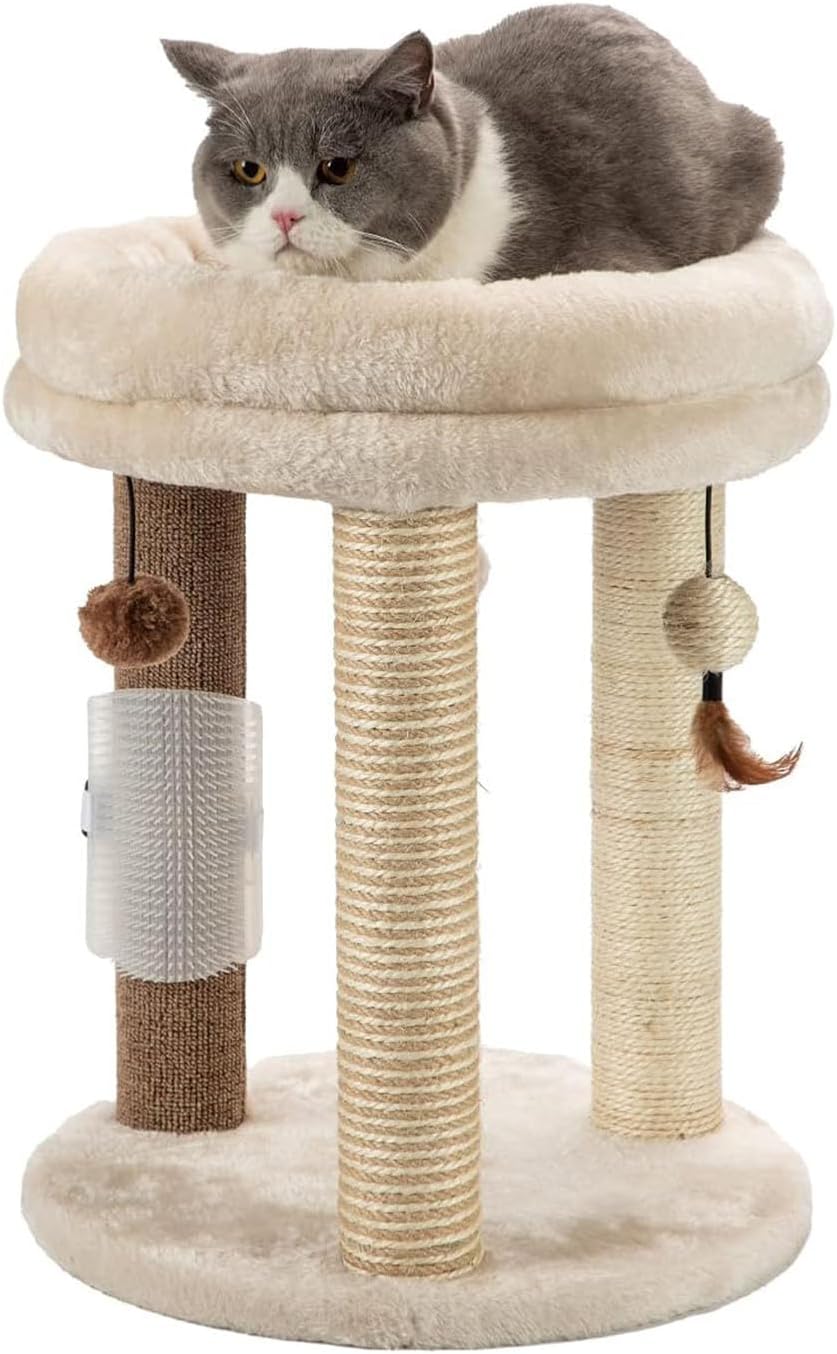
MECOOL 4in1 Small Cat Tree,Scratching Post with Tower Soft Bed, Sisal Carpet Jute Posts with Three Hanging Ball Toys and Massage Brush for Indoor Cats
Check current Amazon price. The 4-in-1 build is why this one makes the list: a small tower with a soft bed, jute and sisal posts, three hanging toys, and a massage brush in one footprint. Footprint size matters for odor, because smell concentrates in a closed room, and a small tree you can pull away from the wall is a tree you will actually vacuum behind.
The bed is the piece to think about. Deep soft beds hold the most dander, and they hold urine if a cat ever marks one, so a bed you can lift off, shake out, and wash is worth more than a fancier bed you cannot. Look at the listing photos to see how the bed attaches, and plan on washing it every two weeks if you have a marker in the house.
Flaws but not dealbreakers: Small trees are small. A large adult cat will hang off the top platform and choose the floor instead. Jute and sisal also trap hair in a way plastic never will, so keep a stiff brush next to it.
One cat, one small room, or a kitten still learning what to scratch.
Our pick: 46" Tall Cat Scratching Post, Natural Sisal Cat Tree for Indoor Adult Cats
Our pick
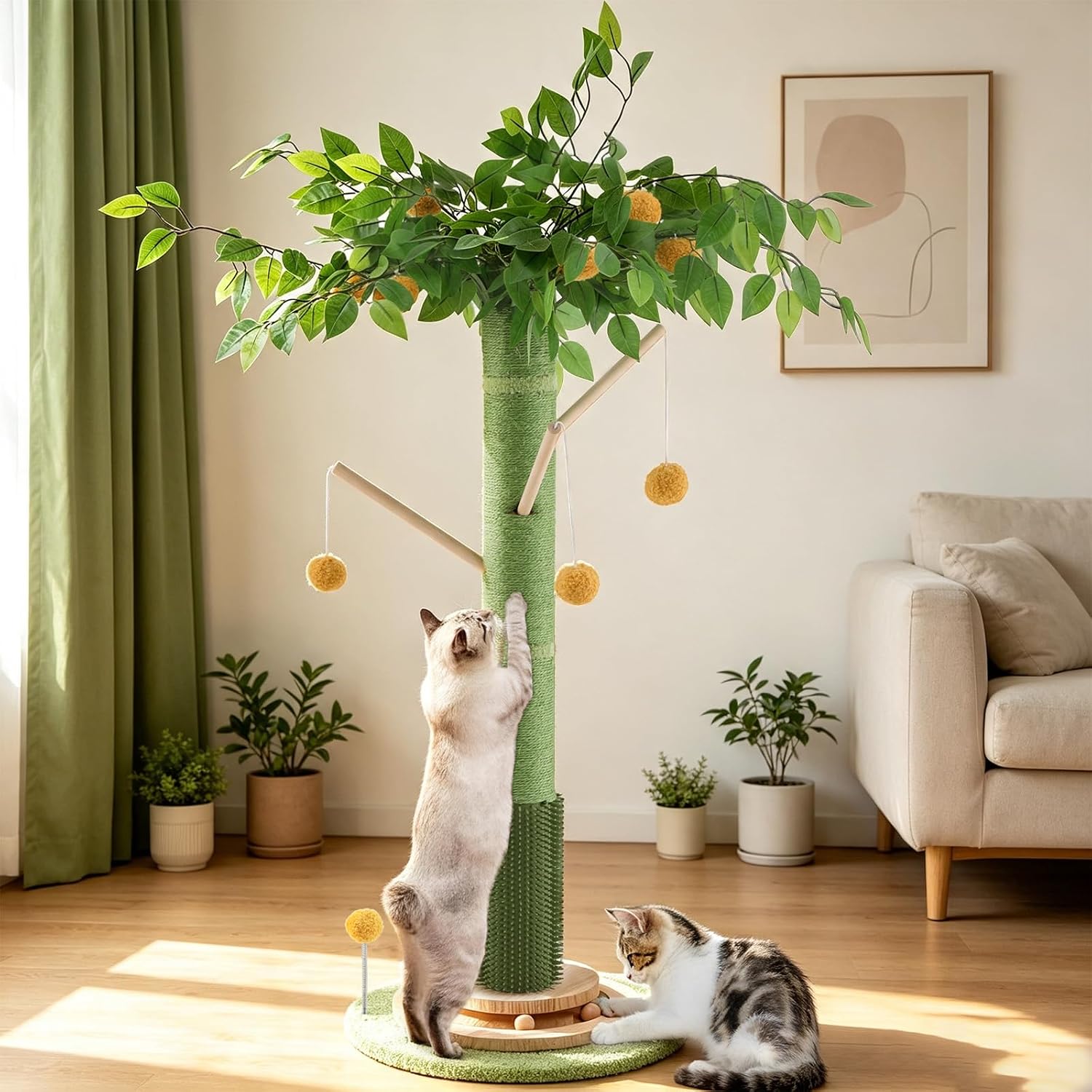
46" Tall Cat Scratching Post, Natural Sisal Cat Tree for Indoor Adult Cats
Check current Amazon price. Forty-six inches of natural sisal is the simplest odor control tool in the category. One post, one base, almost no fabric, and almost nowhere for urine and dander to soak in. Sisal rope is also the surface most cats prefer for a full stretch, and a cat that stretches on a post is a cat that is not stretching on your sofa cushions.
Height is the whole point. A post has to be tall enough that a cat can reach up with its front paws over its head and pull, which is what the 46 inches buys you. A post that is too short gets ignored at the top and shredded at the base.
Flaws but not dealbreakers: No perch and no bed, so this does not replace a sleeping spot. If your cat sleeps on top of the tree, this is a second purchase rather than a replacement.
Adult cats that treat the sofa as a scratching post should start here.
Upgrade pick: 6-Cube Stackable Cat Tree Tower, Plastic Cat Tunnel for Indoor Cats
Upgrade pick
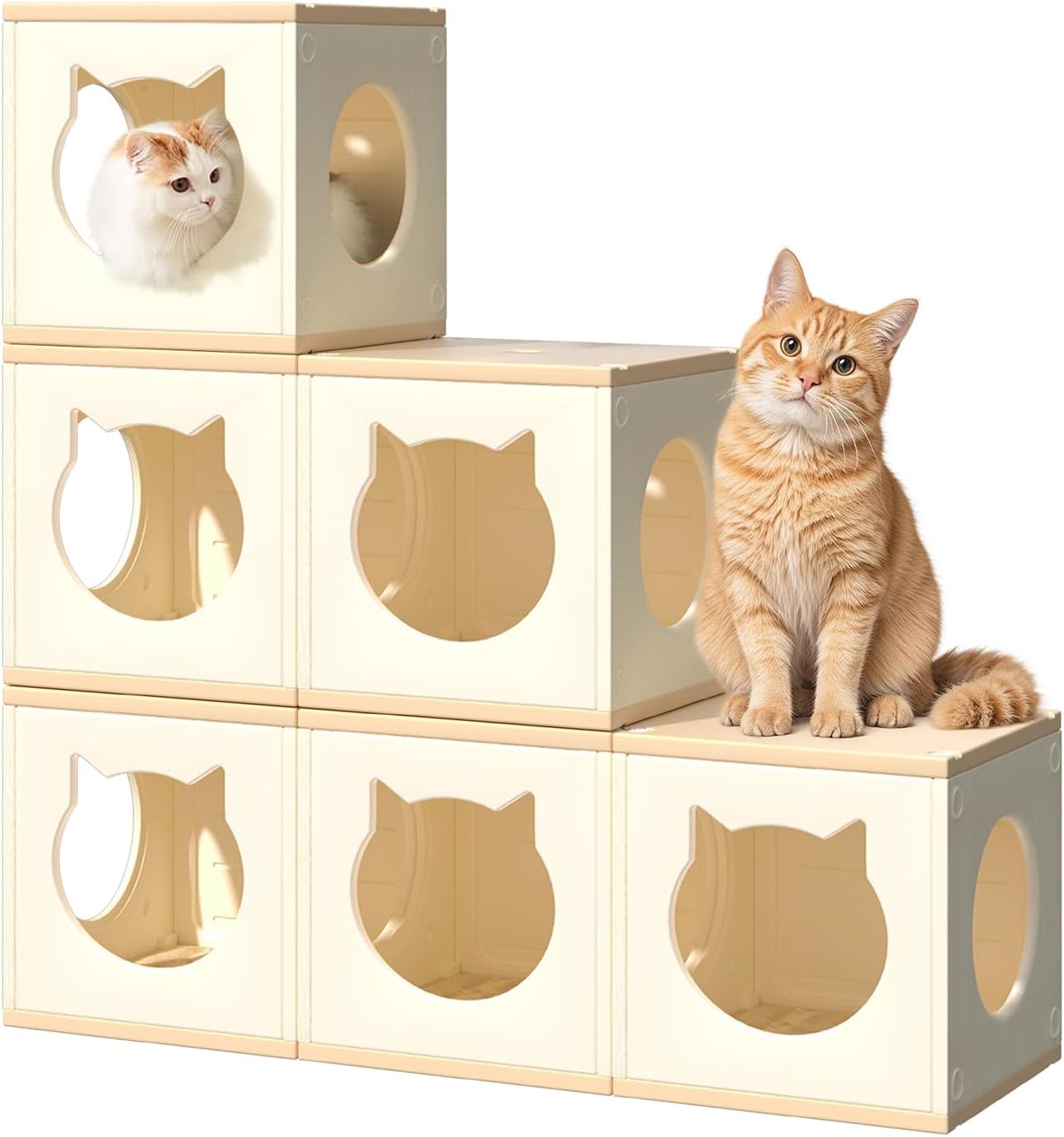
6-Cube Stackable Cat Tree Tower, Plastic Cat Tunnel for Indoor Cats
Check current Amazon price. This is the pick for a multi-cat house, and the plastic tunnel is the reason. Plastic is the one surface on a cat tree that wipes clean in seconds with an enzyme spray, which makes it the easiest thing here to keep neutral. The six cubes stack, so you can rebuild the tower into a lower, wider shape you can reach with a vacuum instead of a shape that hides a corner behind the sofa.
Stackable construction also means the tree can change with the household. Adding a cat usually means adding vertical space, and a tower that goes up without new holes in the wall is worth the extra money.
Flaws but not dealbreakers: Six cubes of fabric panels means six cubes of surface area. Skip the weekly vacuum and this tree will smell worse than a single sisal post, because there is simply more of it to hold odor.
Three or more cats, or two cats in a small apartment, get the most out of the cube layout.
The workflow: how to lower cat odor near a cat tree
Here is how to lower cat odor near a cat tree in eight steps, starting with the least glamorous one. You can lower cat odor near a cat tree in one afternoon the first time, then in 20 minutes a week after that. Work in this order, because cleaning a surface that is still shedding hair just pushes the smell around the room.
Step one: Find the source before you clean anything. Take the toys off, pull the bed off, and smell the tree in three places: the base, the middle of the tallest post, and the platform the cat sleeps on. Most of the time the smell is concentrated at the top platform and the base of the post, because that is where cats rub their cheeks and spray. Mark those spots with a piece of tape so you know where to spend your time.
Step two: Vacuum dry first. Hair holds the oils that hold the smell, so a wet cleaner on a hairy tree just moves the problem around. Use a brush attachment on the sisal and a crevice tool in the corners of every platform. Go over the whole tree twice, and empty the vacuum canister outside so you are not blowing dander back into the room.
Step three: Use an enzyme cleaner, not a scented spray. Enzyme cleaners break down the uric acid crystals that produce the smell; scented sprays cover them until the humidity rises. Mix a concentrate, soak the marked spots, and let it sit for the full dwell time on the bottle. Do not soak sisal rope. Mist it, let it dwell, and blot it dry.
Step four: Wash every removable fabric piece. Bed covers, hammock fabric, and any pad that zips off go into the washing machine on a warm cycle with unscented detergent and a scoop of enzyme booster. Skip the fabric softener, because it leaves a waxy film that holds odor and makes the fabric less appealing to a cat. Air dry.
Step five: Give the tree air and sun. If the tree is small enough to carry, put it outside on a sunny, breezy day for two hours. UV light and moving air do more for a sisal post than any spray. If it cannot move, open two windows on opposite sides of the room and point a box fan out of one of them to pull air across the tree.
Step six: Fix the box, because half the smell is the box. Scoop twice a day, do a full litter change weekly, and keep the box at least three feet from the tree. Add a second box if you have two or more cats. A covered box concentrates ammonia, and when a cat steps out, that air drifts straight into the fabric.
Step seven: Run air, not perfume. A HEPA air cleaner near the tree, on low, running all day, does more than any plug-in. Skip ozone generators and scented candles. Cats groom their paws, and anything that lands on the tree or the floor ends up in the cat.
Step eight: Rebuild and recheck in a week. Put the washed bed and hammock back, rehang the toys, and check the anchor type and the hardware while you are there. Tighten anything loose. Then smell the tree again in seven days. If it still smells, the odor is in the padding under the fabric, and it is time to price a replacement rather than another bottle of cleaner.
The competition and why it lost
Not everything sold as a cat odor fix belongs in this guide, and a few popular answers are the reason people keep losing the fight.
Covered litter boxes and self-cleaning boxes promise containment, and containment is real, but a hood traps ammonia in a small space and releases it every time a cat leaves. The smell has to go somewhere, and it usually goes to the nearest fabric, which is the tree.
Scented litter and plug-in air fresheners are masking agents. They do not break down uric acid, and a strongly scented box is one of the most common reasons a cat stops using the box and starts using the tree.
Ozone generators are a real tool for smoke damage in an empty house. They are not a bedroom appliance and not something to run with a cat in the room.
Cardboard scratchers and wall-mounted shelves each solve half the problem. Cardboard is disposable, which is excellent for odor, but it sheds and gives a cat nowhere to sleep. Wall shelves add vertical space and no washable surface.
Cedar chips and carpet fresheners smell like a clean barn and add dust a cat then licks off its paws. Fine in a garage, wrong in a living room.
None of those are bad products. They are answers to different questions, and none of them reduce cat odor near a cat tree the way a vacuum and an enzyme cleaner do.
What this all costs
The money here splits into three buckets: the tree, the consumables, and the time.
The tree is the one-time cost, and the three picks sit in three tiers: a small starter tree for one cat, a single tall post for a cat that scratches more than it sleeps, and a stackable cube tower for a multi-cat house. Check current Amazon price on each and buy the one that matches your cat count, not the largest one that fits the room.
Consumables are the ongoing cost, and they are small: a bottle of enzyme concentrate, unscented detergent, and a spare filter for whatever air cleaner you already own. Buy the concentrate and mix it yourself, because ready-to-use bottles are mostly water and you will go through them fast during a deep clean.
The time is the real cost. Twenty minutes a week of vacuuming and scooping prevents the two-hour deep clean, and the two-hour deep clean prevents replacing a tree every year. If you have ever thrown out a tree because it smelled, that was a tree a schedule could have saved.
The order I would spend: cleaner first, a vacuum brush attachment second, an air filter third, a new tree last. Your cats do not care what the tree cost. They care that it does not smell like the last cat who marked it.