A first bath is where a lot of new owners find out that their puppy has opinions. You can read every guide on how to shampoo a puppy for the first time and still end up soaked, because the hard part is not the shampoo. It is the order of operations: brush first, water second, lather third, rinse until you are bored, dry last.
Coat type changes almost everything about the bath. A smooth-coated puppy can be in and out of the tub in ten minutes. A double-coated breed with a thick undercoat needs a full brush-out before a single drop of water lands on the fur, because water tightens a loose undercoat into felt. That one rule separates a good first bath from a bad one.
The good news: the fix is not a groomer appointment. It is a non-slip mat, two towels, a plastic cup, a gentle oatmeal shampoo, and about twenty minutes on a Sunday afternoon.
Why you should trust me
I am the person friends call when they bring a puppy home, and I have bathed foster litters in my own tub for years. That means I have made every mistake this article warns about: water that was too hot, shampoo in the eyes, a dryer set on high, and a puppy who bolted out of a slippery tub and hid under the bed for an hour.
My own two dogs are a coarse-coated terrier mix who hates water and a double-coated shepherd mix who sheds enough to fill a pillowcase, so I have handled both ends of the coat type spectrum. I have no stake in which bottle you buy and nothing to sell you. I care about the bath going well, because a bad first bath is the reason a lot of dogs fight the tub for the next ten years.
How I picked and how I tested
The three shampoos below are the ones I keep on the shelf and hand to new puppy owners. The criteria are simple. First, is it gentle enough for puppy skin, which is thinner and more sensitive than an adult dog's? Second, how does it rinse, because rinse time is the biggest factor in whether a puppy is itchy a day later. Third, does it cut grease on a real coat, or does it just smell nice?
I tested each one on my own dogs and on foster puppies in a standard bathtub, with the same routine every time: a pre-bath brush-out, lukewarm water, a dilution cup, and a timer on the rinse. I looked at how much lather each one built, how long the water took to run clear, how the coat felt once it dried, and how strong the scent was the next morning.
Oatmeal concentration matters more than the front of the bottle suggests. Oatmeal is the ingredient that calms itchy skin, and the further down the ingredient list it sits, the more the label is doing the work instead of the formula. That is why the ideal shampoo a puppy for the first time is almost never the strongest, most medicated bottle on the shelf, and why choosing the correct shampoo a puppy for the first time is really a decision about dilution and rinse time rather than scent.
Two things I cannot test for you: whether your puppy has an allergy, and how your puppy handles a hair dryer. Both are yours to learn on the day. If you want the rest of the kit, the brush, clipper, and dryer picks live in my dog grooming tools guide.
What you need before you shampoo a puppy for the first time
You can bathe a puppy with a cup and one bottle, and plenty of people do. The three below are what I would buy instead. Pick one, not three. A first bath does not need a rotation, and a puppy's skin does not need to meet a new formula every month.
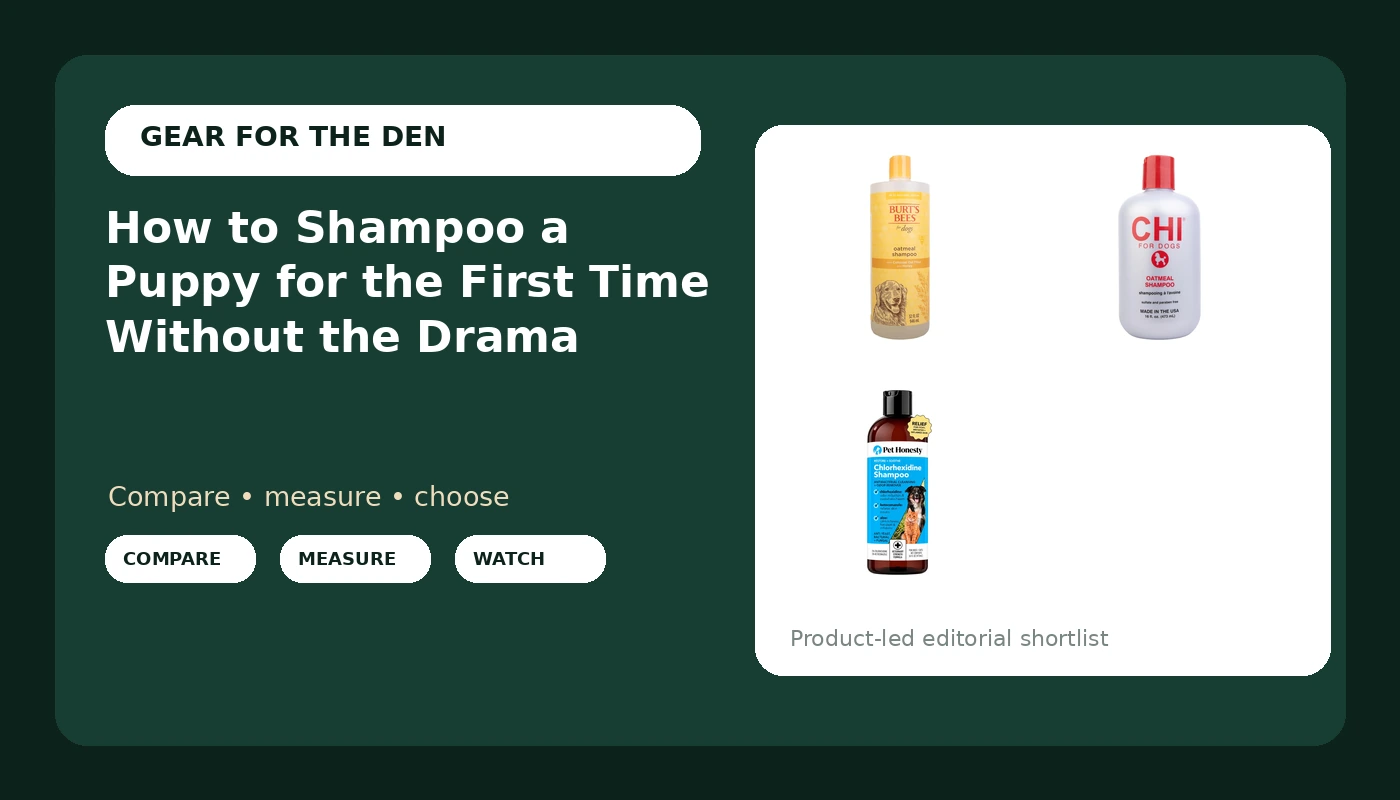
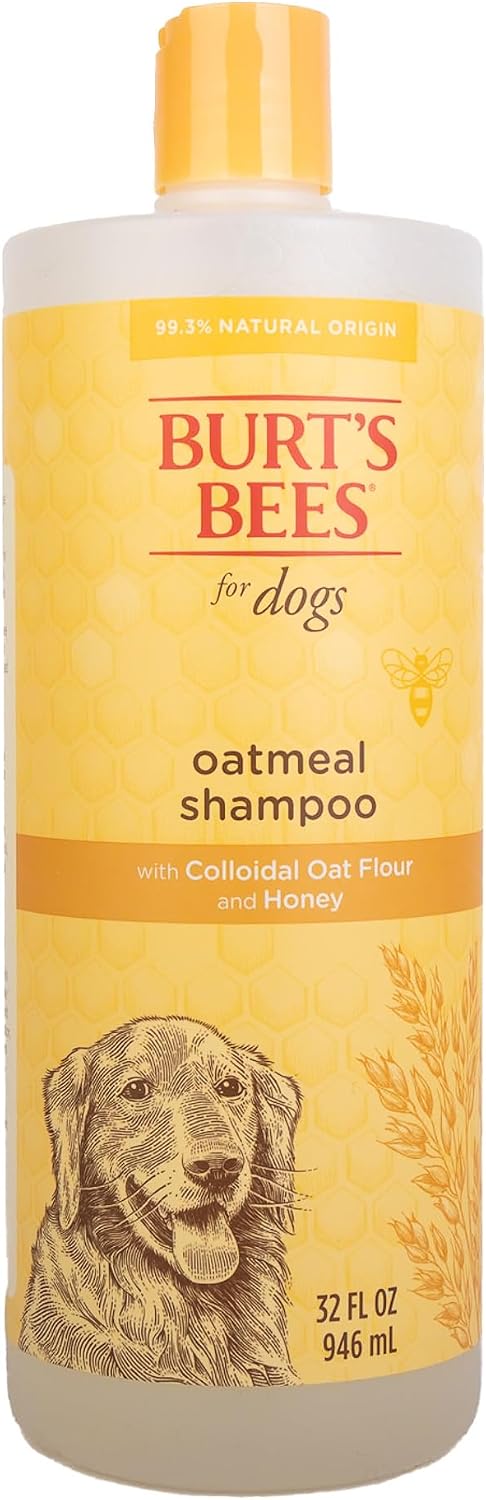
Budget pick: Burt's Bees for Pets Oatmeal Dog Shampoo, Honey Scent, 32 Fl Oz Bottle
Budget pick
Burt's Bees for Pets Oatmeal Dog Shampoo, Honey Scent, 32 Fl Oz Bottle
This is the bottle I hand to nervous first-time owners, mostly because of the size. Thirty-two ounces means you can be generous with the lather without watching the level drop, and generous lather is what keeps you from scrubbing harder than the coat wants. It is built on oatmeal with a honey scent, and it lathered well for me at roughly a one-to-five dilution in warm water. It rinsed clean in about the same time as the other two, and my shepherd mix came out soft rather than squeaky. Check current Amazon price.
The honey scent is the dividing line. If you like a puppy that smells like a cookie for a day, this is your bottle. If strong scents bother you or your dog, look at the CHI below.
Flaws but not dealbreakers: The formula is thin, so it runs off your hand before it reaches the coat. Dilute it in a cup and pour it along the back instead of trying to squeeze it on. The scent also lingers longer than the other two, which is a feature or a bug depending on your nose.
For a first bath on a small puppy, the 32-ounce bottle will outlast the puppy stage. That is the whole argument.
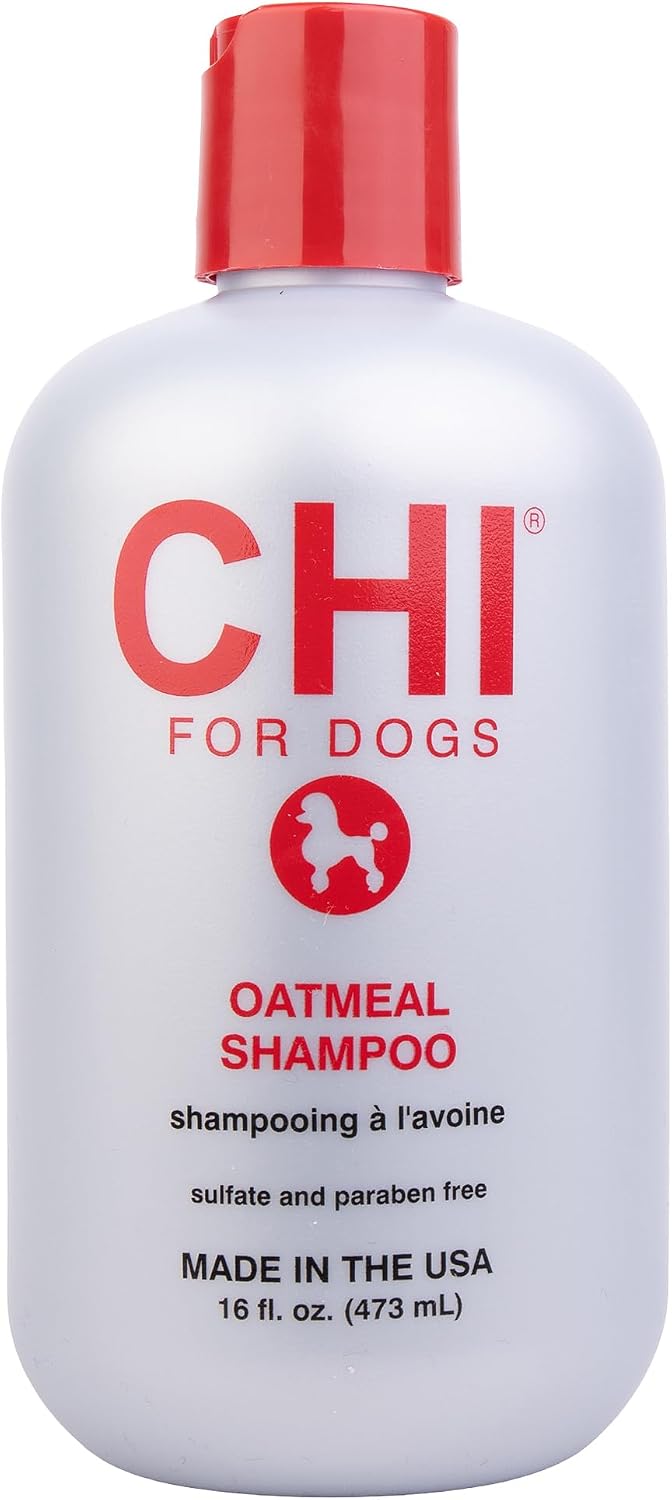
Our pick: CHI for Dogs Oatmeal Dog Shampoo, Gentle Formula, 16 Fl Oz Bottle
Our pick
CHI for Dogs Oatmeal Dog Shampoo, Gentle Formula, 16 Fl Oz Bottle
The CHI is the middle child and the one I reach for most often. Sixteen ounces, an oatmeal base, and a formula that is labeled gentle, which matters because a puppy's skin barrier is still developing and a harsh shampoo shows up as flakes and scratching two days later. In my tub it built a slightly richer lather than the Burt's Bees and rinsed just as clean, and the scent is lighter, which I prefer for a dog who sleeps on the bed. Check current Amazon price.
Where it wins is control. The 16-ounce bottle is easier to hold in one wet hand while the other hand keeps a wriggling puppy in the tub, and because the formula is thicker, a little goes further than the size of the bottle suggests. At a one-to-five dilution I got roughly ten baths out of a bottle on a 40-pound dog, and more than that on a puppy.
Flaws but not dealbreakers: It is the smaller bottle, so with a big dog and a monthly bath you will reorder sooner than you would with the Burt's Bees. There is no pump, and the cap gets slippery with wet hands.
If you only buy one bottle for a first bath, buy this one.
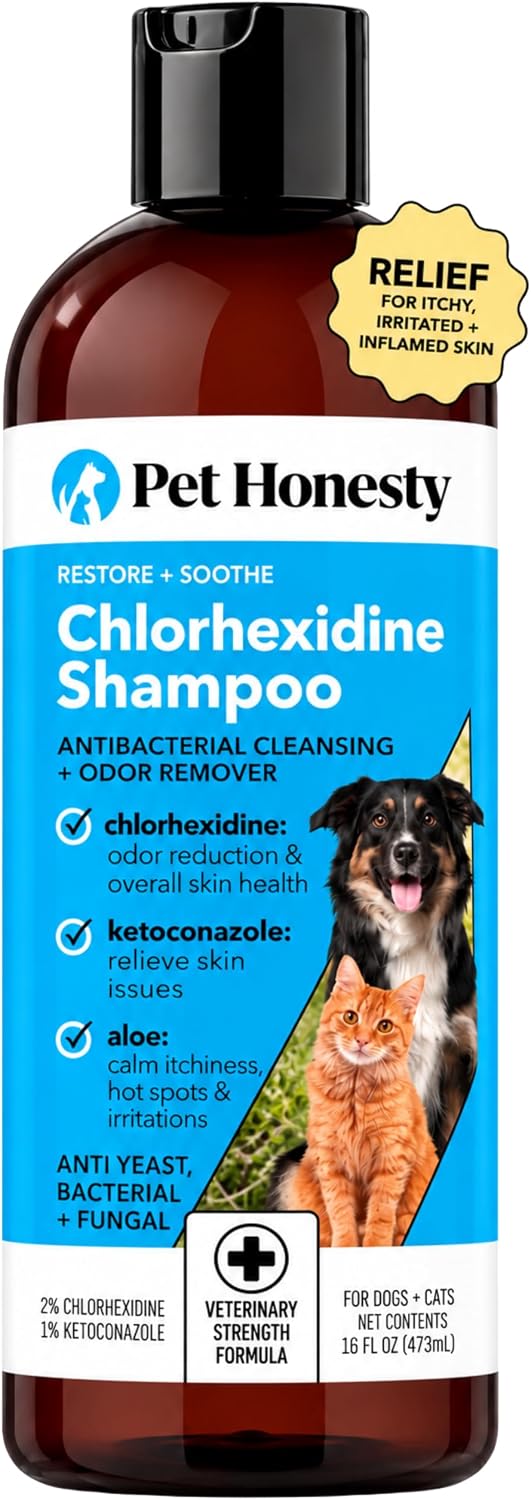
Upgrade pick: Pet Honesty Chlorhexidine Dog Shampoo Itchy Skin Relief, Anti-Itch, 16oz
Upgrade pick
Pet Honesty Chlorhexidine Dog Shampoo Itchy Skin Relief, Anti-Itch, 16oz
Chlorhexidine is the ingredient vets reach for when the itch is more than dry winter skin. It is an antiseptic, and it is the reason this bottle is the strongest of the three. That also makes it the one I would not use on a healthy puppy's first bath. A first bath is about getting clean and getting comfortable, not about treating a problem. Check current Amazon price.
Where this earns a spot on the shelf is the puppy who comes home already scratching. If your vet has looked at the skin and said the itch is bacterial or fungal, this is the kind of formula they will likely point you toward, and having it in the cabinet saves a trip. It is also the bottle I keep for my terrier mix in the summer, when a dip in the creek turns into a hot spot.
Use it the way a medicated shampoo is meant to be used: dilute it, work it into the coat, let it sit for the contact time on the label, and rinse until the water runs clear. Then stop. Medicated shampoo is not a weekly habit.
Flaws but not dealbreakers: It costs more than the other two, and on a healthy coat you are paying for medicine you do not need. The scent is medicinal and does not fade as fast as the others.
Buy this one only if the skin says so.
The actual bath workflow
The products matter less than the sequence. If you only remember one thing about how to shampoo a puppy for the first time, remember that the rinse is the part that decides whether the bath worked.
Step one: Set up before the puppy is in the room. Non-slip mat in the tub, two towels on the floor, shampoo diluted in a cup, a second cup of clean water for rinsing, a washcloth for the face, and a treat within reach. A slippery tub is the number one reason a first bath turns into a chase around the house, so the mat is not optional.
Step two: Brush the whole coat first. Match the brush to the coat type: a slicker or a rubber curry for short coats, an undercoat rake for a double coat, a pin brush for long silky hair. Whatever the bristle type, pick a brush with a grip handle you can hold with wet hands, because a wet brush is a dropped brush. Go over the chest, the tail, and behind the ears, which is where mats start. If you find a mat you cannot comb out, do not reach for kitchen scissors. Use a clipper with a blade guard and go slow, or leave it for a groomer. For the full brush list, see my how to brush out a double coat walkthrough.
Step three: Fill the tub to ankle depth with lukewarm water, around 98 to 100 degrees if you want a number, or simply the temperature of a bottle you would give a baby. Hotter dries out skin. Colder sends the puppy climbing the wall. Turn the tap off before the puppy goes in, because running water is the scary part.
Step four: Wet the puppy from the neck back, using a cup rather than the sprayer. Keep water out of the eyes and out of the ear canals, and use the washcloth, damp and barely soapy, for the face. A cotton ball in each ear is optional insurance if your puppy shakes mid-bath.
Step five: Dilute the shampoo and lather from the neck down. One part shampoo to five parts water in a cup is my default, and it is why oatmeal concentration on the label matters less than the dilution you actually mix. Work it into the coat with your fingers or a wash mitt, never a scrub brush, and give it a minute before you start rinsing.
Step six: Rinse for twice as long as you lathered. Run a hand through the coat and feel for slip instead of squeak. Residue is the reason a puppy scratches on Tuesday after a bath on Sunday, and it is the single most common first-bath mistake.
Step seven: Towel dry first, then decide about the dryer. If you use one, keep the heat low and the airflow low, let the puppy sniff the nozzle while it is off, and never point it at the face. Motor noise is what scares puppies, not the air, so start the dryer across the room and move closer only if the puppy settles.
Step eight: Pay the puppy. A treat, a quiet voice, and a few minutes of tug on the towel turn a bath into a routine instead of an ambush. Bathe a young puppy every four to six weeks unless the vet says otherwise, and treat the first few baths as training sessions rather than cleaning jobs.
The competition and why it lost
Several things people reach for during a first bath did not make this list.
Human baby shampoo is the classic mistake. It is formulated for human pH, not a dog's, and it strips the oils that keep a coat comfortable. It is not tear-free for a dog no matter what the bottle says.
Flea shampoos with pyrethrins are the second mistake. They are for a flea problem, not a first bath, and a puppy's system is not ready for that class of insecticide without a vet's say-so.
Waterless foams and dry shampoos are fine for a muddy paw on a Tuesday. They are not a bath, and they leave residue in a dense undercoat that a brush will not lift out.
Show coat sprays, conditioners, and finishing oils are for a dog going into a ring. On a puppy they are one more thing to rinse out.
On the tool side, a human hair dryer on high heat will burn skin, and kitchen scissors are how mats turn into cuts. If you must take a mat down between baths, use a clipper with a blade guard. Everything else can wait until the puppy is older.
What this all costs
Check current Amazon price on any of the three and you will see that a bottle of dog shampoo is one of the cheapest things in pet ownership. The real cost is the second bottle you buy because you did not dilute the first one.
Concentrate stretches. At a one-to-five dilution, a 16-ounce bottle becomes roughly 96 ounces of working shampoo, which is a year of monthly baths for a small dog and several months for a large one. The 32-ounce Burt's Bees bottle stretches further still, which is why it is the budget pick even though it is not the cheapest-looking label in the aisle.
Compare that to a groomer appointment, which costs more than all three bottles combined and does not teach your puppy anything about the tub. Compare it to the vet visit for the itchy skin you caused by leaving shampoo residue in the coat. That one costs more than every bottle here, several times over.
The gear around the bath is where people overspend. A rubber mat, two towels, and a cup from the kitchen are enough. The brush is worth buying well, because bristle type and a grip handle decide whether the pre-bath brush-out takes five minutes or twenty. That is the dog grooming tools conversation, and it is a separate one.
Do the math on a bottle and it comes out to pennies per bath. The twenty minutes is the part you cannot buy, and it is the part that decides whether the next twelve baths are easy.