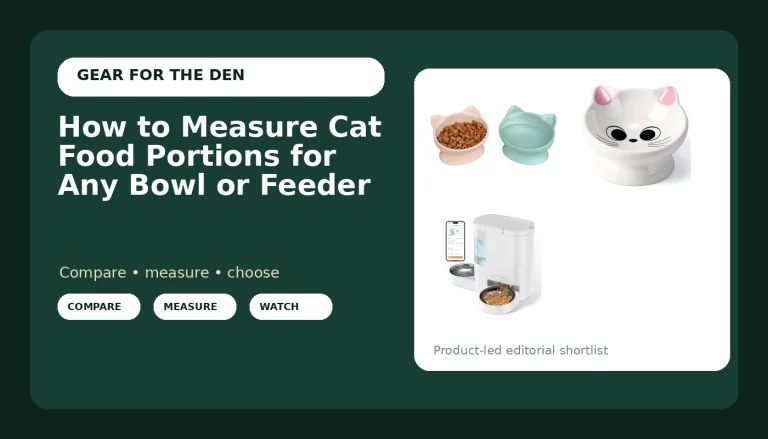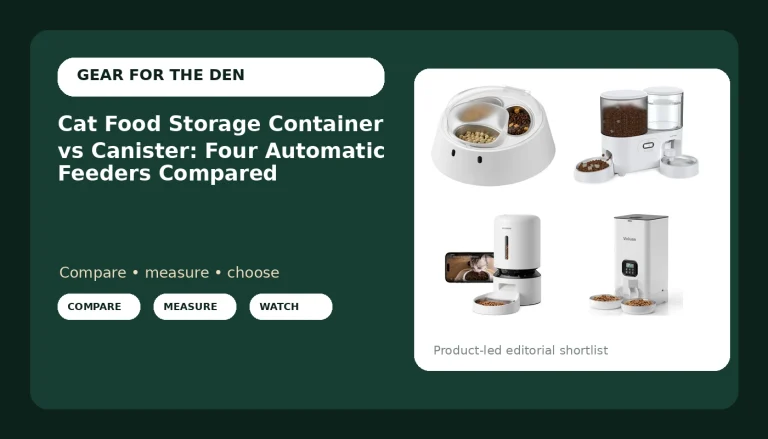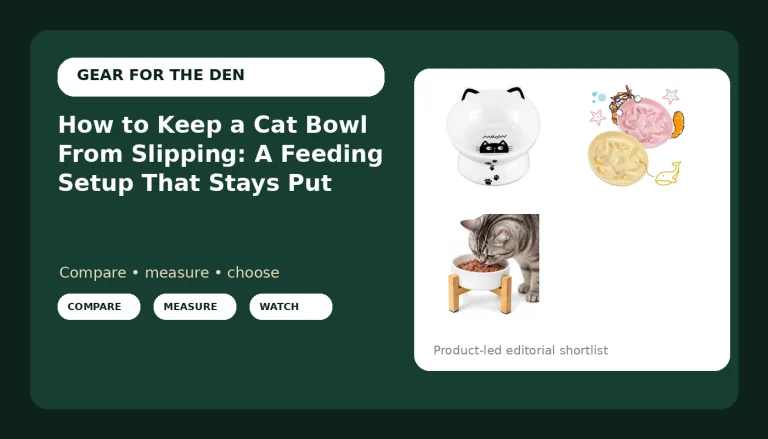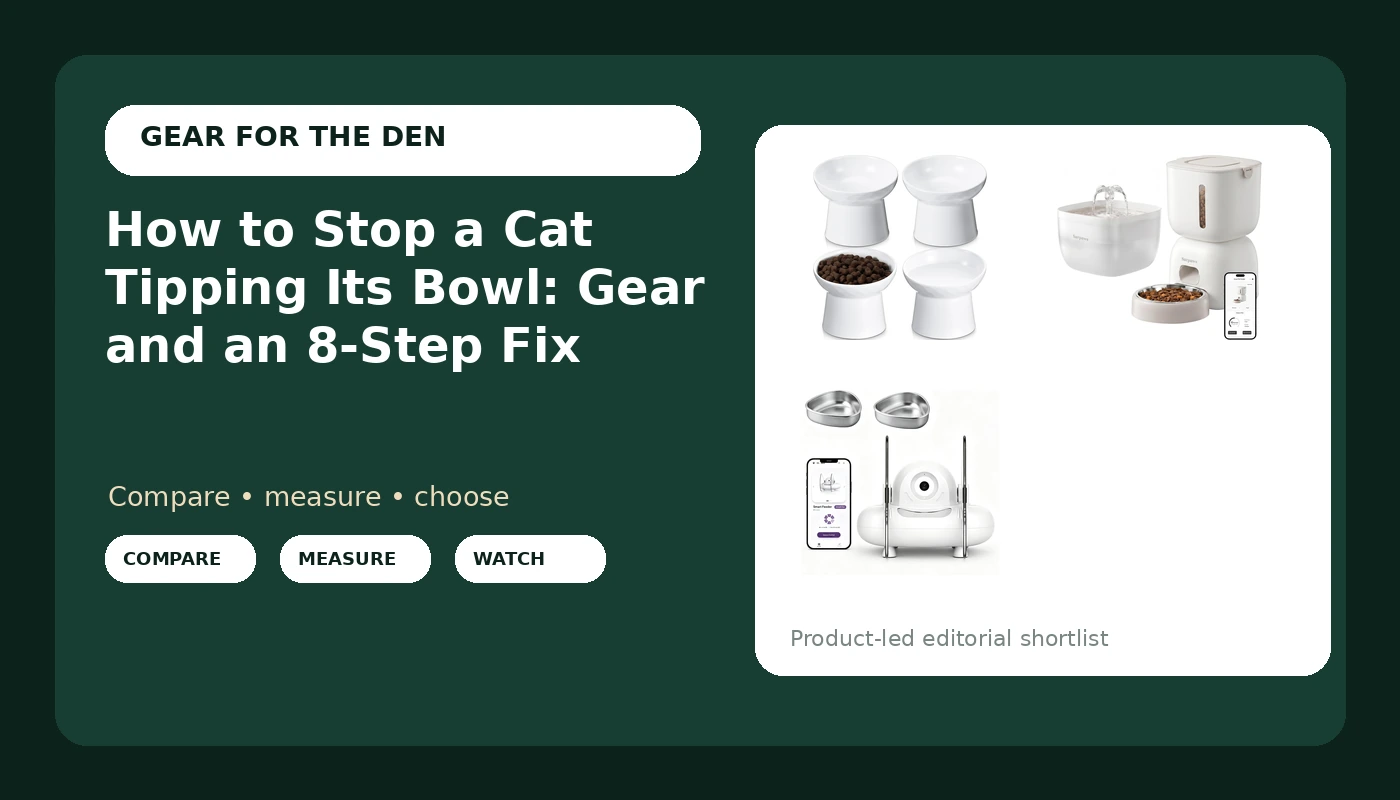
If you want to know how to stop a cat tipping its bowl, start by accepting that the bowl is losing a physics fight, not a discipline contest. A cat that hooks a paw over the rim, drags a dish across the kitchen, or flips the water across the floor is usually reacting to the dish itself. It slides. It wobbles. It is too narrow at the whiskers. Or the water level has dropped so low that the cat has to press down on the rim to reach the last inch.
The pattern is boringly consistent. A tipped bowl is a bowl problem far more often than it is a cat problem, and the fix is almost always hardware, placement, or both.
This is how to stop a cat tipping its bowl in about a week: three pieces of gear, eight steps, and no yelling.
Why you should trust me
I write about cat feeding and water gear for this site, and a tipped bowl is the complaint I get most often from readers who want to stop a cat tipping its bowl. I have spent years comparing dishes, fountains, and automatic feeders by the things that decide whether they stay upright: weight, base diameter, surface grip, and how the food or water actually reaches the cat. I have watched cats eat out of shallow saucers, deep ceramic crocks, plastic gravity feeders, tilted elevated stands, and app-controlled dispensers, and the pattern never changes. A cat tips a bowl when the bowl is too light, too narrow, too shallow, or too easy to drag.
What I will not do is pretend a dish is a behavior fix. If your cat is knocking over a full bowl out of boredom, the answer is a puzzle feeder and more play, and I say so below. Everything here is about hardware and setup, which is where most of these cases live.
How I picked and how I tested
I did not run a lab test with a force gauge. I compared the three products below against the criteria that decide whether a bowl or a fountain survives a determined cat, then matched each one to the household it actually suits.
The first check is base geometry. A bowl stays put when the weight sits low and the footprint is wide relative to the height. A tall bowl on a narrow base is a lever, and cats are excellent with levers. I looked at the shape of the base, whether there is a rubber or silicone ring, and how much the dish weighs empty.
The second check is bowl width and whisker clearance. A dish that is barely wider than the cat's muzzle forces the whiskers to drag on the rim, and that is why some cats scoop food onto the floor or hook a paw over the edge. Shallow and wide beats deep and narrow for almost every cat.
The third check is elevation angle. Tilted raised bowls genuinely help older cats, cats with arthritis, and cats that vomit after eating, but the steeper the tilt, the more the cat pushes sideways against the dish. A tilted bowl needs a heavier base than a flat one, not a lighter one.
For the two automatic units I looked at water capacity, pump noise, filter type, and portion size, because those four things decide whether the machine earns its counter space. Pump noise is underrated. A fountain that hums at night gets bumped, shoved, and eventually knocked over. Water capacity matters because a cat will paw at a dish once the level drops into the awkward last inch. Filter type decides whether the water still tastes fresh on day three. Portion size control decides whether two cats get the right amount at the right time.
I also checked how each feeder identifies cats, because a multi-cat house needs either a camera or a collar tag within a workable microchip range, and getting that wrong is how one cat ends up eating everyone's dinner.
I did not measure these units myself. I worked from the manufacturer specifications and the design of each product, and I picked three that solve the problem in three different ways.
The gear that keeps a bowl upright
Three products, three budgets, one job: stay where you put them. If you have been searching for how to prevent a cat tipping its bowl, these are the three routes.
Budget pick: Tanlade 4 Pcs Ceramic Raised Cat Bowls, Elevated Tilted Cat Bowl for Food Water, Stress Free, Backflow Prevention, Dishwasher Microwave Safe, Feeder Dish for Indoor Kitten, Small Dogs(White)
Budget pick
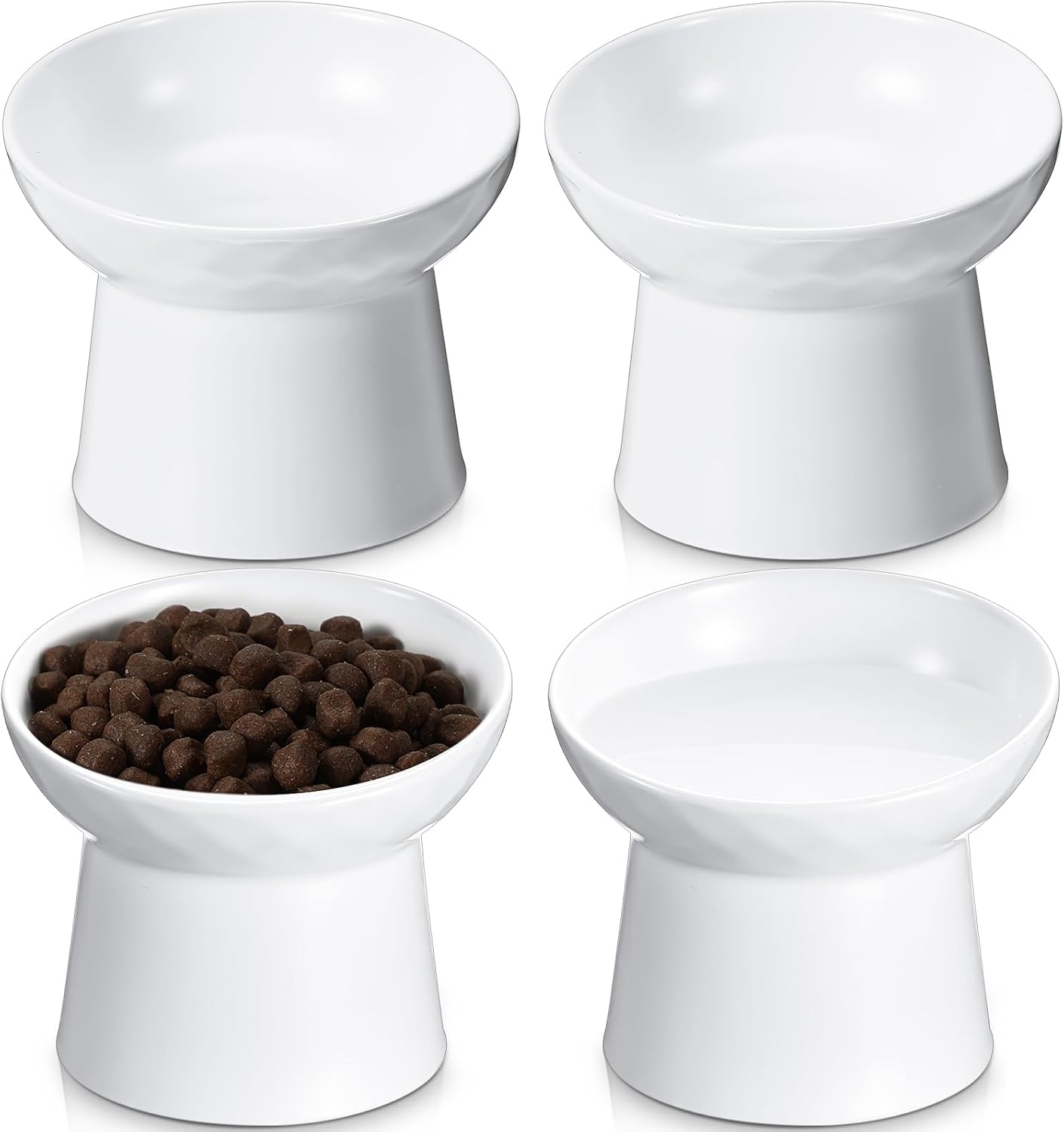
Tanlade 4 Pcs Ceramic Raised Cat Bowls, Elevated Tilted Cat Bowl for Food Water, Stress Free, Backflow Prevention, Dishwasher Microwave Safe, Feeder Dish for Indoor Kitten, Small Dogs(White)
Ceramic is the oldest anti-tip technology there is, and it still works. This set is four pieces: raised, tilted dishes with a stand, so the food and water sit above the floor instead of sliding around on it. The material does most of the work here. Ceramic has real mass, which means a cat has to work to move it, and the raised stand gives the dish a wider footprint than a bowl sitting directly on tile.
The tilt is the part worth thinking about. A tilted dish changes the elevation angle so the cat's neck and shoulders are not bent down to floor level, which is the reason a lot of older cats start pawing at their food in the first place. The shallow, wide mouth also gives decent whisker clearance, so the whiskers are not pressed against the sides while the cat eats.
Four pieces means you can rotate: one dish in use, one clean, one for water, one spare. They are dishwasher and microwave safe, which matters more than it sounds, because a bowl that is annoying to clean is a bowl that gets left dirty.
Flaws but not dealbreakers: Ceramic chips when it is dropped, and a chipped rim is a cut waiting to happen. If your cat launches dishes off a counter, ceramic is not the answer. The set also takes up more floor space than a single bowl.
Check current Amazon price.
Our pick: SARPAWS WiFi Automatic Cat Feeder and Water Fountain Set, App Control Smart Pet Food Dispenser with 304 Stainless Steel Bowl, 3L Feeder & 2L Quiet Waterer, 10s Voice Recorder, Dual Power, Secure Lock
Our pick
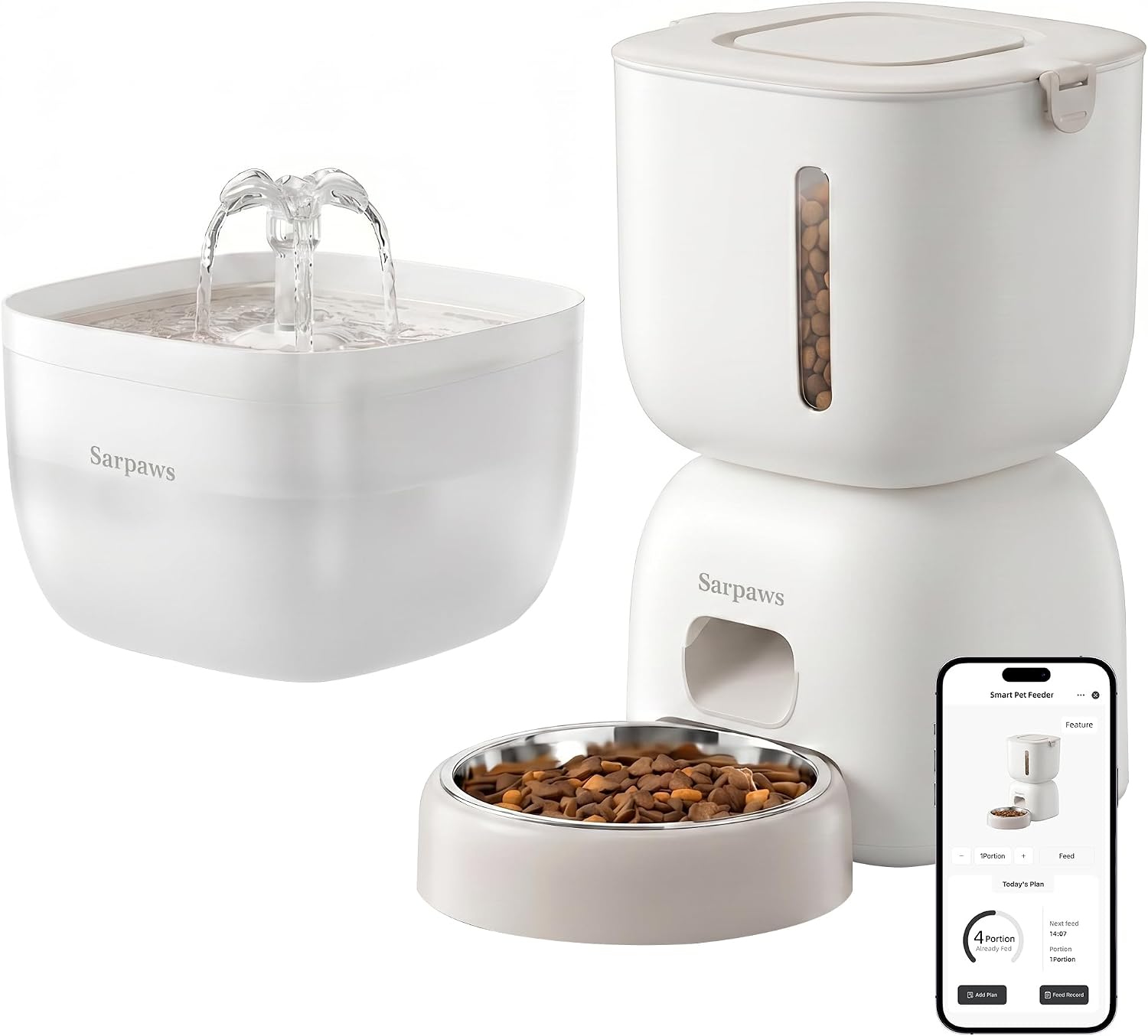
SARPAWS WiFi Automatic Cat Feeder and Water Fountain Set, App Control Smart Pet Food Dispenser with 304 Stainless Steel Bowl, 3L Feeder & 2L Quiet Waterer, 10s Voice Recorder, Dual Power, Secure Lock
Automatic is not automatically anti-tip, so it is worth being precise about why this set works. The feeder and the fountain are separate units, each with its own base, which means a cat that shoves one does not take the other down with it. The feeder's bowl is 304 stainless steel, and stainless has two advantages over plastic: it is heavier, and it does not hold onto oils and odors the way plastic does.
The 3L feeder and 2L waterer are the numbers that matter for tipping. Water capacity is the one people underestimate. A shallow bowl with an inch of water left in it is a bowl a cat will paw at, because reaching the bottom is awkward, and pawing is the first move before a flip. Two liters of moving water keeps the level high and the surface moving, which is what most cats prefer to drink from.
Pump noise is the other thing I care about. A quiet waterer does not wake you up, and it does not get shoved across the floor at 3 a.m. by a cat investigating the hum. Filter type matters too, since a replaceable filter is what keeps the water from tasting flat by day three, and a cat that dislikes the water is a cat that plays with the bowl.
The app handles portion size and scheduling, the 10-second voice recorder calls the cat to the dish, and dual power keeps the schedule running if the outlet dies. The secure lock is the piece that ties it together for a cat that has learned to nudge a lid open.
Flaws but not dealbreakers: It needs Wi-Fi to do the smart half of its job, and the fountain needs regular filter changes and a hand wash. The pump is quiet, but it is not silent.
Check current Amazon price.
Upgrade pick: Papapaw Automatic Cat Feeder with AI Facial Recognition for Up to 10 Cats, Smart Cat Food Dispenser App Remote Control, Night Vision, Stainless Steel Bowl Timed Portion Feeder Supports Wet Dry Food
Upgrade pick
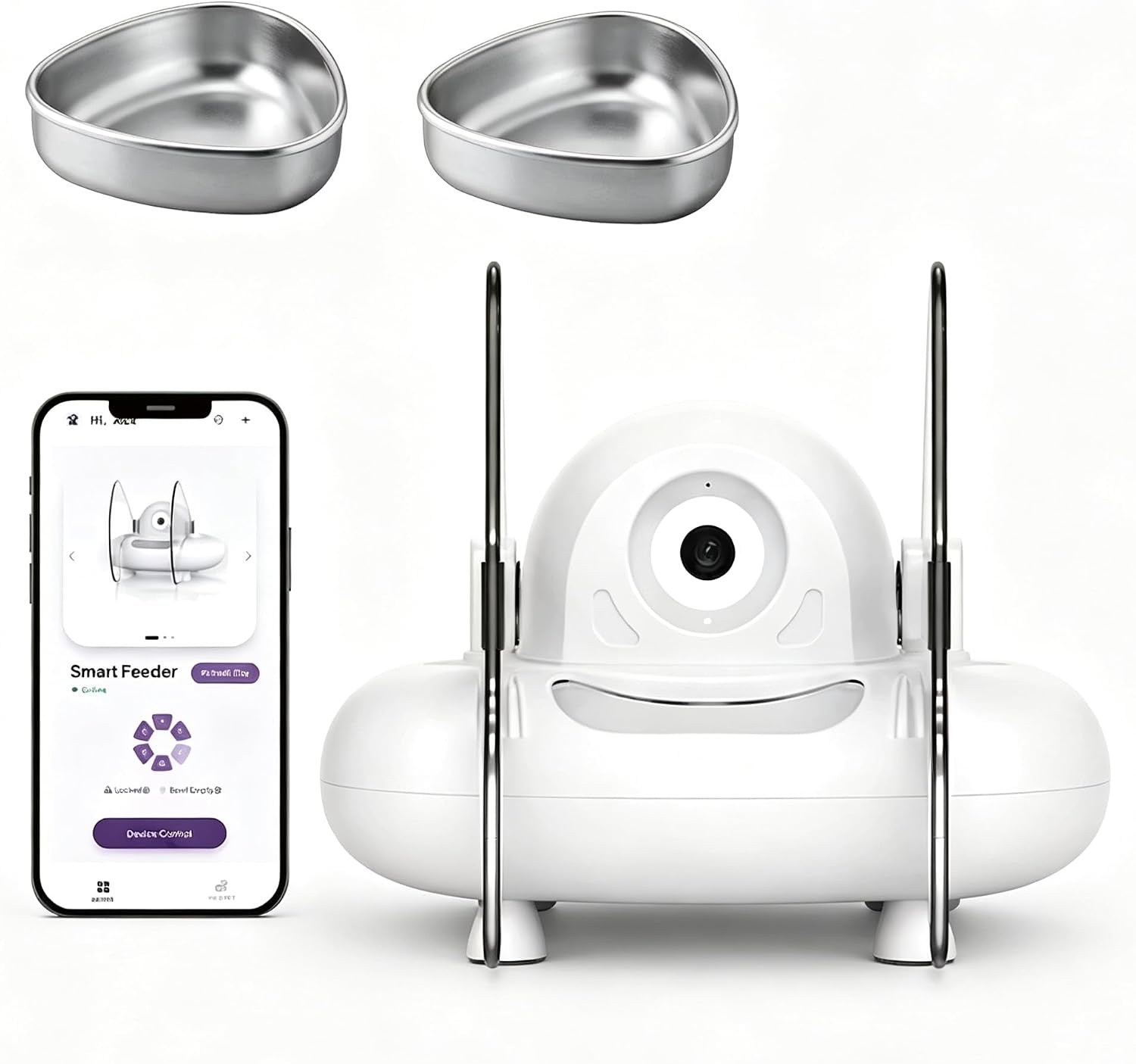
Papapaw Automatic Cat Feeder with AI Facial Recognition for Up to 10 Cats, Smart Cat Food Dispenser App Remote Control, Night Vision, Stainless Steel Bowl Timed Portion Feeder Supports Wet Dry Food
This is the one for a house with more than one cat, and it is the one that solves the actual cause of most flying bowls in a multi-cat home: competition. A cat that is being stalked while it eats will eat fast, guard the dish, and shove it around. The Papapaw identifies cats by camera, up to ten of them, so the machine only opens for the cat that is supposed to be there. No collar tag required, which is the advantage over a feeder that reads a tag at a set microchip range. Nothing to lose, nothing to fall off.
The night vision matters more than it sounds. Cats eat at 4 a.m., and a camera that cannot see in the dark is a feeder that opens for nobody. Remote app control lets you adjust the schedule and portion size from the couch, and the stainless steel bowl is the same easy-to-clean, heavier material as the set above. It handles both wet and dry food, which most timed feeders do not.
For a single-cat household, this is more machine than you need. For a household where one cat inhales everyone's dinner, it is the difference between feeding and refereeing.
Flaws but not dealbreakers: It is the most expensive of the three by a wide margin, it needs power and Wi-Fi, and the camera has to be able to see the cat's face. A cat that eats facing the wall is a cat the camera may miss.
Check current Amazon price.
The eight steps to stop a cat tipping its bowl
The gear helps. The setup does the rest. Work through these in order.
Step one: Diagnose before you spend. Watch one meal from start to finish. Pawing at water points to a low level or stale water. Hooking the rim points to tight whisker clearance. Dragging the dish points to a slick surface. Standing on the rim is a stability problem.
Step two: Fix the surface first. Most tipping starts as sliding. A rubber-backed mat, a silicone ring, or a shallow tray under the dish kills the slide for a few dollars, and a bowl that does not move is much harder to flip.
Step three: Lower the center of gravity. Swap plastic for ceramic or stainless steel, or set a light dish inside a heavier one. The cheapest way to prevent a cat tipping its bowl is a heavier dish plus a non-slip mat, and if you cannot change the dish, push it into a corner where a paw swipe has nowhere to send it.
Step four: Check bowl width and whisker clearance. If the whiskers bend against the sides while the cat eats, go wider and shallower. A wide shallow dish is also harder to tip than a deep narrow one, because the weight sits lower and the footprint is larger.
Step five: Set the elevation angle on purpose. Tilted raised bowls help older cats and cats that vomit after meals, but pair the tilt with a heavier base. If your cat is young, healthy, and still flipping a tilted dish, drop it back to floor level and see whether the behavior stops.
Step six: Rethink the water. Cats play with water when the level drops or the taste goes off. A fountain with a replaceable filter and enough water capacity keeps the surface moving and the level steady, and a quieter pump means fewer night-time investigations. Our guide to cat water fountains covers what to compare.
Step seven: Separate the stations in a multi-cat home. Two bowls side by side is an invitation to guard and shove. Put them in different rooms, or at opposite ends of one room out of each other's sight line, and feed the anxious cat first. If your space will not allow that, a feeder that identifies each cat is the real fix.
Step eight: Give the cat something else to do. If the bowl is heavy, wide, non-slip, and still ends up on the floor, the cat is bored or hunting. A puzzle feeder, a few minutes of wand play before meals, and a consistent schedule channel that energy somewhere other than the dish. This is also the point where a vet check is worth it, because a cat that suddenly starts flipping bowls can be signaling pain or a thyroid problem.
The competition and why it lost
The gear that did not make the list is worth a paragraph, because you will see all of it while shopping.
Plastic gravity feeders are the classic tipping victim. The reservoir sits on top, which raises the center of gravity, and the whole tower is light. When a cat noses the spout for the last of the kibble, the thing goes over. Cheap, and fine until it is not.
Suction-cup bowls look clever and fail on anything but glass or smooth tile. Once the cup loses grip, and it does, you have a bowl with no base at all.
Microchip feeders are a genuine solution for multi-cat homes, and if you already own one that works, keep it. But they depend on a collar tag or a reader with a reliable microchip range, and a cat that loses its collar loses its dinner. The camera-based feeder in this guide does the same job without the tag.
Plain double diners, the plastic kind with two stainless inserts, are the most common bowl in American kitchens and one of the easiest to flip: light plastic, tall rim, slick base. If your cat tips bowls and that is what you own, you already know.
A wide ceramic baking dish or a heavy stoneware ramekin is the free version of the same fix and works fine for food. It is just hard to keep clean and impossible to schedule.
What this all costs
Three tiers, three jobs. The ceramic set is the least expensive fix and the one that solves the problem for most single-cat households. The automatic feeder and fountain set costs more because you are buying a pump, a timer, an app, and enough water capacity to keep the level steady all day. The camera feeder is the premium option, and it earns that price only in a multi-cat house where competition is the real cause.
Check current Amazon price on each before you decide, since these move around.
The accessories are the part people skip. A non-slip mat or a silicone ring costs less than a sandwich and does half the work of a heavier bowl. Fountain filters are a recurring cost, so factor them in. A puzzle feeder for step eight is another small purchase that pays for itself the first time it saves a full bowl of food.
Over a year, the math favors starting cheap. Buy the heavy dish and the mat first, give it a week, and see whether the behavior stops. If it does, you are done for the price of a couple of coffees. If it does not, you have learned something useful: your cat is not fighting the bowl, it is bored or competing, and that is a different problem with a different answer.
A bowl that does not move is a bowl a cat stops bothering with, and the fix is usually cheaper than the food you have been mopping up.