Somewhere around the third swallow you stop hearing chewing. If you want to stop a dog bolting its food at home, the first thing to accept is that this is a speed problem rather than a hunger problem. Most fast eaters are not starving. They eat the way they have always eaten, and every meal that ends in twenty seconds confirms that gulping works.
The stakes are not cosmetic. A dog that bolts swallows air along with kibble, which is a well known trigger for vomiting and reflux, and in deep chested breeds fast eating is one of the risk factors vets bring up when they bring up bloat. A bolter also finishes first and starts hovering over the other dog's bowl, which turns every meal into a small standoff.
The fix is not a new dog and it is not a bigger bowl. It is a bowl that makes eating physically awkward, plus a routine that stretches a meal past the point where gulping pays off.
Why you should trust me
I write the feeding gear coverage here at Gear for the Den, which means most of my week goes into spec sheets for bowls, hoppers, and fountains rather than into guessing. What that buys you is a short list built around the details that actually change how fast a dog eats: the depth and spacing of the slow feed ridges, the bowl capacity against a real portion, the width of the mouth, and whether the base will hold on tile.
I am also the person who once bought a slow feeder so wide that my dog could still take a full mouthful out of the middle of it, so the failure modes below are ones I recognise. If you are working out how to prevent a dog bolting its food at home for the first time, the honest answer is that the bowl does maybe half the work and the routine does the rest.
The advice on this page is the advice I would give a friend. Change the bowl first because it is cheap, change the routine second because it is free, and if you live with a deep chested breed, ask your vet about the plan before you change anything at all.
How I picked and how I tested
I did not run a laboratory here, and I am not going to pretend otherwise. There is no instrument that measures how fast a dog eats except a stopwatch and the dog in front of you, so what I did was narrower: I compared these products on the handful of things that decide whether a slow feeder works at all, then wrote down what each one is actually for.
The checks that mattered:
- Bowl capacity against a real portion. A bowl that is too large gives the dog room to take a normal bite from the open middle, which defeats the design.
- The slow feed ridges. Shallow, widely spaced ridges are decoration. Deep ridges that force the muzzle to work around them are the mechanism.
- The base. A non slip base is not a luxury. A bowl that slides across hardwood gets chased, flipped, and eaten off the floor.
- Material and cleanup. Dishwasher safe is the difference between a habit and a chore.
- Feeding height. A bowl set too high or too low changes how the neck and throat work while swallowing.
Two of the three products below are slow feeders. The third is not, and I say so in its own section rather than pretending it belongs in the same category. If you want the wider picture on height and station setup, our guide to raised feeders and feeding height covers the parts that are not about speed.
That is also how to stop a dog bolting its food at home in one sentence: slow the bowl, then slow the routine.
The gear that slows a meal down
Three products, two jobs. Two of them slow a dog down at the bowl. The third keeps the rest of the household running while you fix the routine.
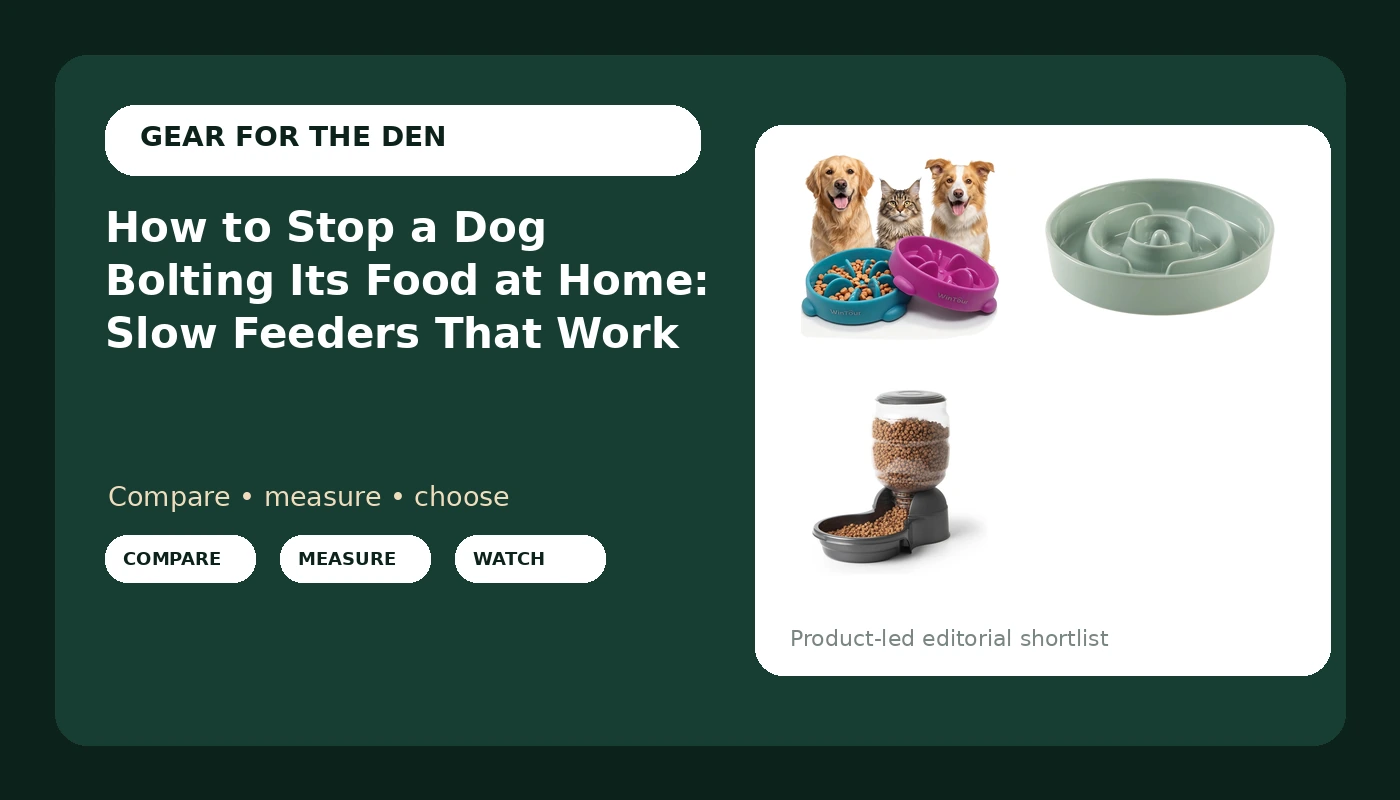
Budget pick: WinTour 2 Pack Slow Feeder Dog Bowls, BPA Free, Medium & Small Dog Bowls
Budget pick
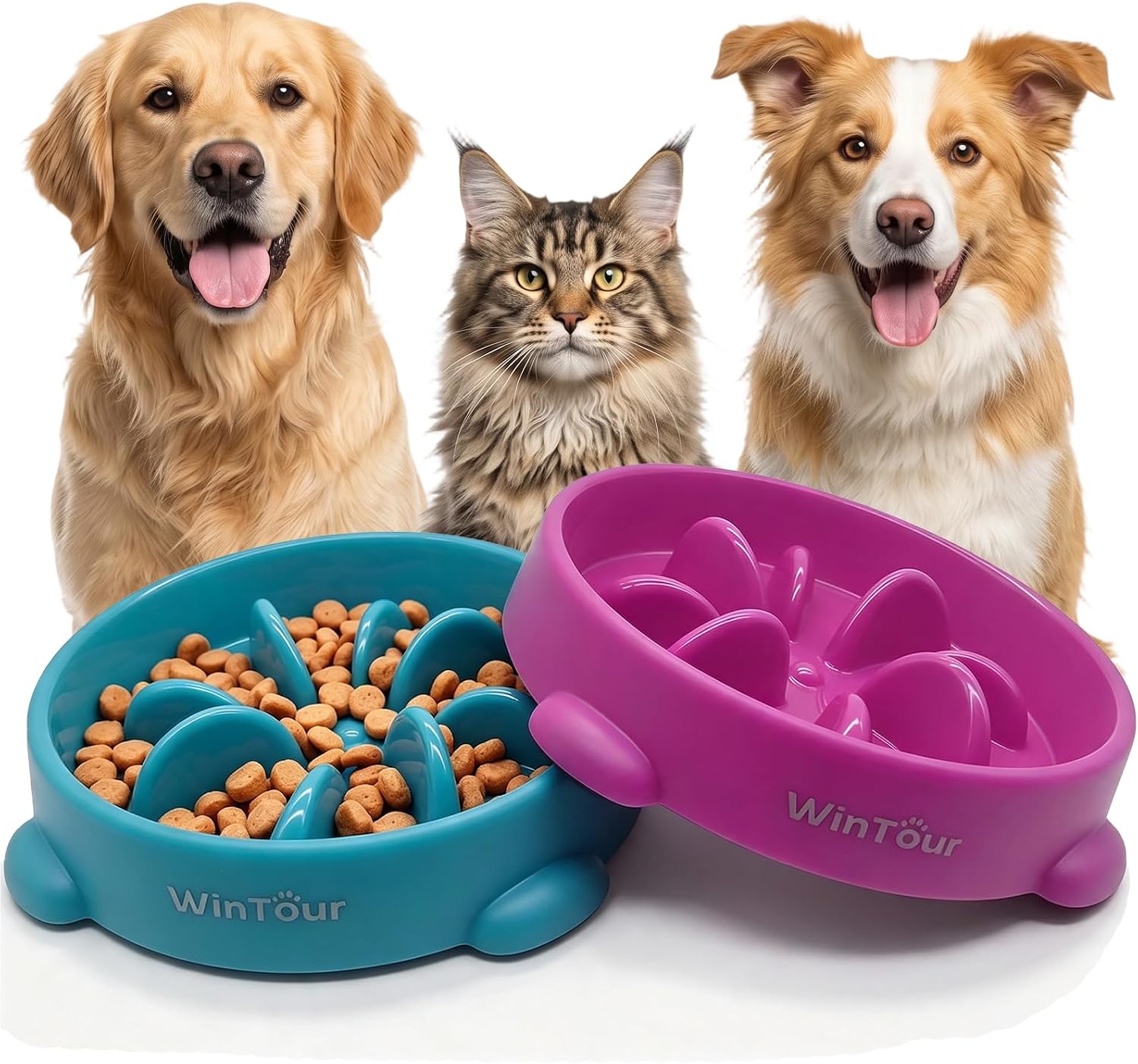
WinTour 2 Pack Slow Feeder Dog Bowls, BPA Free, Medium & Small Dog Bowls
Two bowls in one pack is the obvious argument, and it is a real one: one bowl is in the wash while the other is on the floor, which is the difference between sticking with a slow feeder and giving up on it by Thursday. The listing also calls out BPA free plastic, which is the minimum I want in a bowl that gets licked clean twice a day.
The sizes matter more than the count. The pack covers a medium and a small bowl, so measure your dog's normal portion before you commit. A slow feeder only works when the dog has to pick around the ridges for every mouthful. Give a medium dog a bowl that is too big and it will find the open lanes and eat just as fast as before.
Check current Amazon price. For a first attempt at slowing a dog down, this is the cheapest experiment on the page, and if your dog hates it you have lost very little.
Flaws but not dealbreakers: Plastic holds onto oils and smells over time, and a determined chewer can eventually work a ridge loose. If your dog has already destroyed a bowl, skip to the ceramic pick below.
Anyone feeding one dog two meals a day who wants a low risk first try should start here.
Our pick: Havniva Ceramic Slow Feeder Dog Bowls, 8.3 in Slow Feeder for Medium Breed
Our pick
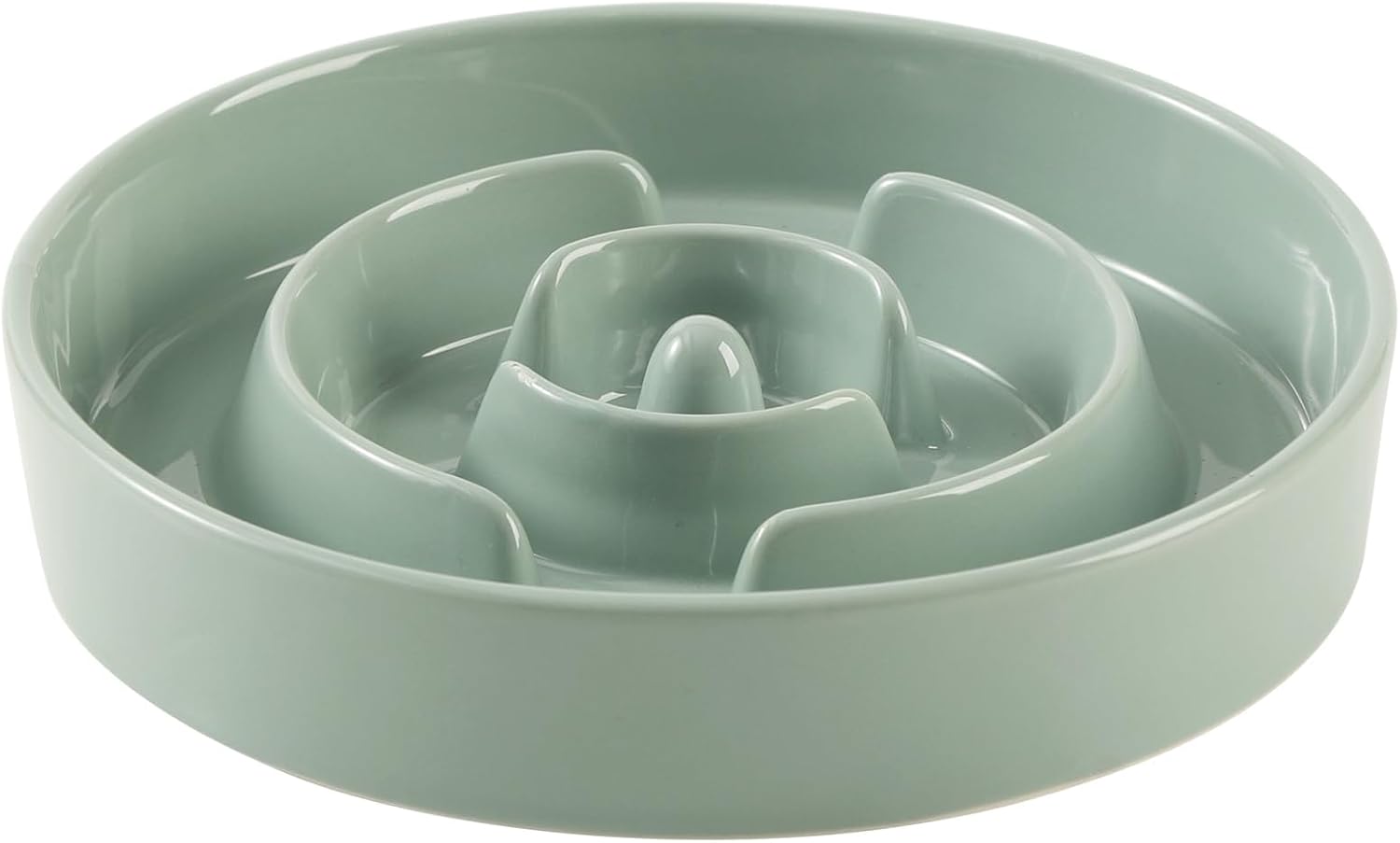
Havniva Ceramic Slow Feeder Dog Bowls, 8.3 in Slow Feeder for Medium Breed
Ceramic is the upgrade that pays off in a boring way: the bowl is heavy enough that a dog cannot push it across the kitchen, which means the non slip question largely solves itself. The 8.3 inch size is aimed at medium breeds, and that number is worth checking against your dog's muzzle and your dog's portion, because a medium bowl fed to a large dog is a fast bowl again.
The second ceramic advantage is that it does not hold onto the smell of kibble the way plastic does. Rinse it, run it through the dishwasher if the listing confirms it is dishwasher safe, and it comes back neutral. The trade off is weight and breakage. You will not be tossing this into a travel bag, and a ceramic bowl that hits tile does not survive.
Check current Amazon price. If your dog eats two cups a meal and has already learned to flip a light bowl, this is the one I would buy.
Flaws but not dealbreakers: Ceramic chips. Inspect the rim every few weeks and replace the bowl if a sharp edge shows up.
Anyone with a medium breed that eats as if the food is about to be taken away should look here first.
The second station: Petmate Replendish Gravity Dog Feeder, 5lbs, Microban Antimicrobial Base
The second station
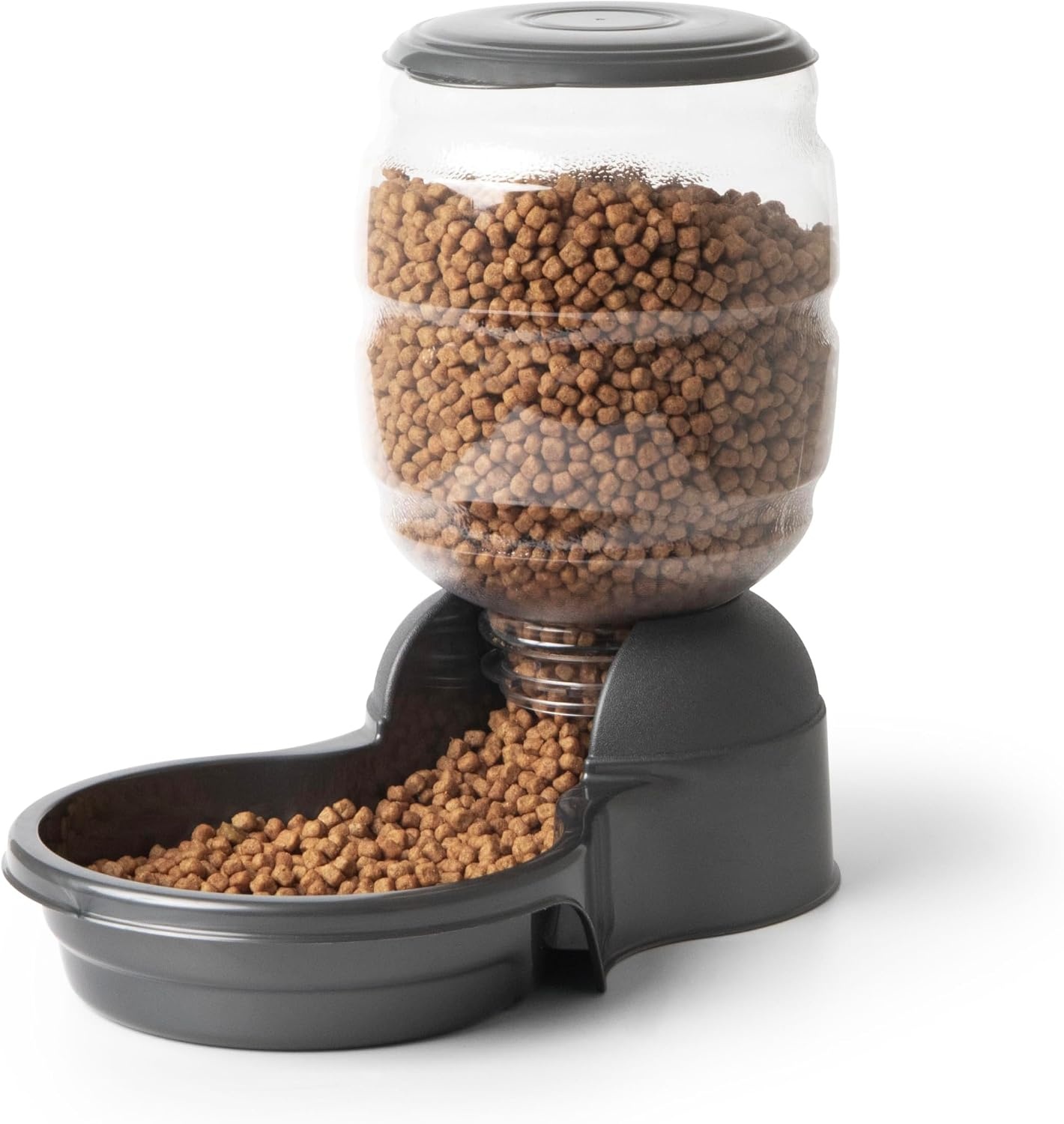
Petmate Replendish Gravity Dog Feeder, 5lbs, Microban Antimicrobial Base
This is not a slow feeder and it will not slow your dog down. Leaving a gravity feeder down for a bolter makes the problem worse, because the dog can eat whenever it likes and still bolt every visit. What this one is for is the rest of the household: a second station for the dog that does not bolt, a reserve for the days you are late home, or a water station with enough water capacity that a gulper is not draining a small bowl and asking for more.
The antimicrobial base is the feature worth mentioning in a shared household, and the 5 lb hopper holds enough that you are not refilling it every night. Look for an airtight seal where the hopper meets the base, keep the whole thing out of the bolter's reach, and clean the base weekly.
Check current Amazon price. Buy it for logistics, not for training.
Flaws but not dealbreakers: A gravity feeder is a management tool, not a solution. Put it down for the fast eater and you have removed the only structure left in the meal.
Multi dog homes, people who work long shifts, and anyone who wants a water reserve should consider it.
The eight-step routine to stop a dog bolting its food at home
Now the part you came for. None of this needs equipment beyond a bowl, a measuring cup, and two weeks of patience.
Step one: Measure the meal. Weigh or scoop the portion so you know the volume you are working with, then match it against bowl capacity. A slow feeder only works when the food has to travel around the ridges. If your dog gets two cups and the bowl holds six, the ridges are scenery and the dog eats from the open middle.
Step two: Switch the bowl. Choose a slow feeder with deep slow feed ridges and a mouth wide enough for the muzzle but not so wide that the dog can take a full bite down the centre. Put it down, walk away, and time the meal with your phone. If it still finishes in seconds, the ridges are too shallow.
Step three: Split the day. Two meals become three, and if your dog is a serious bolter, three become four smaller ones. Same total food, more pauses. Smaller meals are easier on a stomach that is used to being flooded, and they cut the amount of air swallowed in one sitting.
Step four: Set the height. A bowl on the floor is fine for most dogs, but feeding height matters for tall dogs and for older dogs with stiff necks. Aim for a head position that keeps the throat straight and comfortable, roughly level with the chest in a large dog. If you raise the bowl, keep the slow feeder inside it so the height does not undo the work.
Step five: Stop the bowl moving. A sliding bowl gets chased, and a chased bowl gets flipped. A non slip base or a rubber mat under the bowl keeps the meal in one place and keeps your dog working at the food instead of at the furniture.
Step six: Separate the water. Bolters often gulp water the same way and bring it back up. Keep water in a different spot, offer it after the meal rather than during it, and if your dog drains a bowl in one long drink, that is the same problem in a different container. A few inches at a time beats a full bowl.
Step seven: Turn part of the ration into work. When the bowl alone is not enough, hand feed a third of the meal, scatter it across a towel, or toss one piece at a time during a training session. Kibble that has to be found is kibble that cannot be swallowed whole, and this is also the step that fixes the begging that follows a fast meal.
Step eight: Track it and know when to call the vet. Keep the routine identical for two weeks before you judge it. If your dog is still bolting, still bringing food back up, or shows a swollen belly, unproductive retching, or restlessness after eating, stop adjusting the bowl and call your vet. Deep chested breeds do not get a second chance on that one.
The competition and why it lost
Several things that get recommended for fast eaters did not make this list, and the reasons are specific.
Puzzle feeders and snuffle mats are excellent enrichment, and I like both, but they are not a bowl. They work for one meal a day at most, they need floor space and supervision, and a hungry dog that has already learned to bolt will often attack a snuffle mat rather than work through it. Treat them as a step seven tool, not a replacement for step two.
Plain stainless steel bowls are the easiest thing in the world to clean and they do nothing about speed. A wide stainless bowl with a full portion in it is the fastest setup in the house. If you already own one, keep it for water.
Automatic feeders solve scheduling, not speed. They drop a portion at a set time, which helps if you are splitting meals across a long work day, but the dog still eats that portion in one visit to the bowl. The same goes for a water fountain: a filter cartridge and a larger reservoir keep water fresh and the bowl full, which is a different problem from a dog that inhales dinner.
Raised feeders are worth it for large and senior dogs on comfort grounds, and our guide to puzzle feeders and enrichment covers the slower eating games that are not bowls, but height alone will not slow a bolter. Combine the two and you get somewhere.
What this all costs
The gear on this page is the cheap part of the problem. A slow feeder is a one time purchase that either works or does not, and you will know inside two weeks. Check current Amazon price on each of the three above and you are looking at a small fixed outlay rather than a subscription or a machine that eats replacement parts.
The expensive part is the emergency. Bloat is one of the few things in dog ownership where minutes matter, and a single out of hours vet visit costs far more than every bowl in this article combined. That is the argument for spending the effort now instead of after the first scare.
The rest of the cost is time. Eight steps, most of them free, held steady for a couple of weeks. Everything above exists to prevent a dog bolting its food at home, not to sell you the most complicated bowl on the market. If the bowl does half the work and the routine does the other half, the routine is the half that keeps working when you travel, when you change food, and when a second dog joins the house.
The maths is easy. Buy a bowl that makes eating awkward, split the meals, keep the water separate, and do not negotiate with the dog about any of it. That is the whole job. Your dog was built to eat. Let it take its time.