Most dogs do not start out hating the leash. They start out bored by it. A walk that stalls every 30 feet for a sniff, a handler who lets the same slack loop dangle at nose height, and a puppy in the middle of a teething window add up to a leash that comes home looking like floss. If you want to stop a dog chewing its leash, treat it as a training problem first and a gear problem second, because a tougher leash only changes which part of the walk gets ruined.
The good news is that leash chewing is one of the few dog habits where the environment does most of the work. Take away the slack, keep the walk moving, and hand the dog something legal to put in its mouth, and most of the behavior fades inside a week or two. The bad news is that the standard six-foot leash with a single handle and no plan is the perfect tool for the exact behavior you are trying to stop.
Below is the gear I would put on a leash-chewing dog, and the eight-step routine that goes with it. This is how to stop a dog chewing its leash without a shock collar, a spray bottle, or a fight at the end of the block.
Why you should trust me
I have walked dogs that would rather carry the leash than follow it: adolescent shepherds, terriers with a personal grudge against nylon, and one Lab who could strip the stitching off a handle in a single block. What I trust in this guide is not a slogan. It is a short list of criteria I keep coming back to after enough ruined walks: how fast you can shorten the leash under load, whether the hardware swivels or binds, whether the webbing survives teeth, and whether the handle still feels fine with a wet glove on.
I also know what does not work. I have watched people spend real money on a chew-proof chain leash and still get dragged past a squirrel, because the problem was never the webbing. It was the slack. If you want to know how to prevent a dog chewing its leash, the honest answer is that you fix the slack before you fix the gear.
How I picked and how I tested
Every leash in this guide got judged on the same four things.
- Hardware: metal or alloy buckles over plastic, and a swivel that actually rotates instead of binding after one turn.
- Webbing: tight nylon weave, thick enough that teeth cannot separate the strands, with reflective stitching for early morning walks.
- Handle design: a second padded handle near the clip, so you can take the leash length from six feet down to a few inches without wrapping the line around your hand.
- Harness compatibility: a leash that clips to a front clip on a chest strap stays out of the dog's mouth far better than one that clips to a collar ring.
I did not need a lab for this. Leash chewing is a behavior problem with a mechanical component, so the test that matters is whether a piece of gear lets you keep slack out of the dog's reach while the walk keeps moving. I looked at hardware, webbing, and handle geometry, and I left out anything that adds bulk to the walk without solving that problem.
That is also why you will not find a GPS collar here. A collar with a gps range measured in miles and a battery life measured in days is a great tool for a dog that bolts, and a useless one for a dog that chews. The same goes for a boot sizing chart, a grippy traction sole, and a cooling fabric vest: excellent gear for hot pavement and long hikes, and nothing to do with this habit.
The gear that helps stop a dog chewing its leash
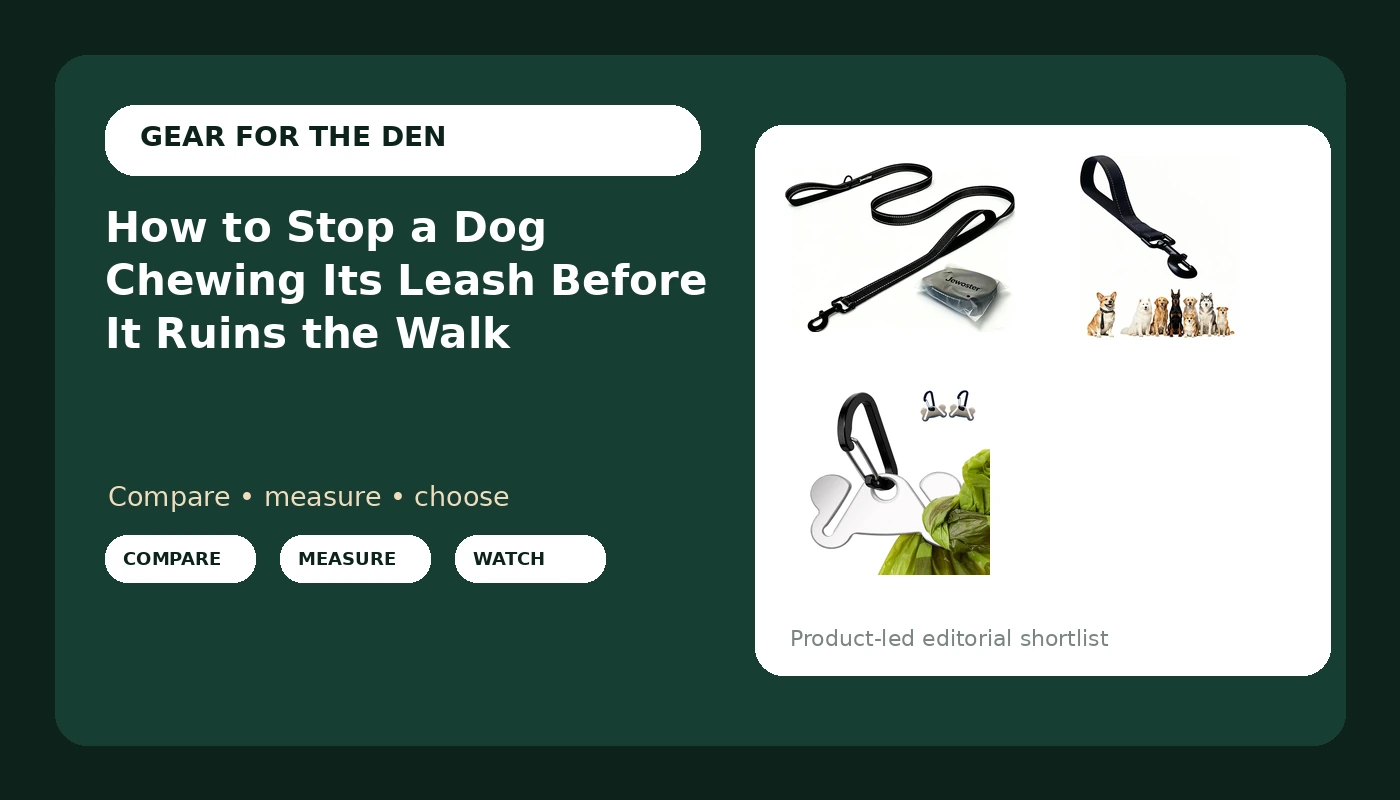
Three pieces do most of the work. One long leash for normal walking, one short leash for the moments your dog starts to mouth the line, and a cheap clip-on holder so your hands stay free to manage the leash instead of a bag.
Our pick: Heavy Duty Dog Leash – 2 Handles by Padded Traffic Handle for Extra Control, 6foot Long – Perfect for Medium to Large Dogs (6 ft, Black)
Our pick
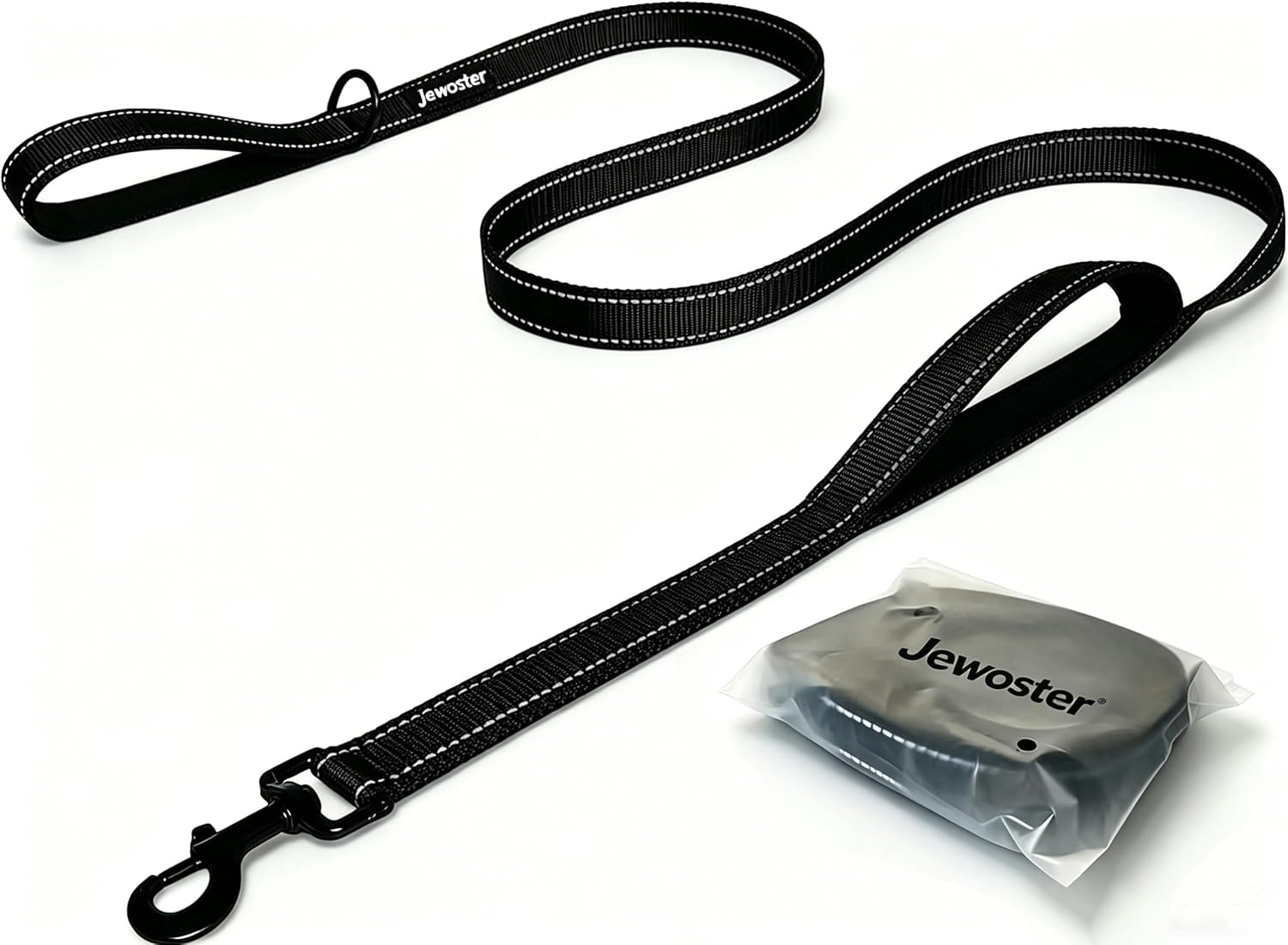
Heavy Duty Dog Leash – 2 Handles by Padded Traffic Handle for Extra Control, 6foot Long – Perfect for Medium to Large Dogs (6 ft, Black)
This is the leash I would hand to someone who is losing the fight. The two-handle layout is the whole point. The padded traffic handle sits a short distance below the main handle, so when your dog drops its head and starts working on the line, you grab the lower handle and the leash length collapses from six feet to a few inches. No wrapping, no fumbling, no slack left for the dog to reach.
Check current Amazon price before you order.
The six-foot length is the right default for a medium or large dog: long enough for a sniffy walk, short enough that you can take up slack in one motion. The padding matters more than it sounds. A chewing dog tends to lunge and twist at the same time, and bare nylon under a twisting load is how you end up with a rope burn across your palm in October.
Flaws but not dealbreakers: Two handles add a little bulk, and the second loop of webbing is interesting to some dogs at first. If your dog is a determined chewer, start with the short leash below and graduate to this one.
Budget pick: Short Dog Leash with Padded Handle, Heavy Duty Nylon, Reflective, 360° Rotating Alloy Buckle, Black, 12 Inch, for Medium and Large Dogs
Budget pick
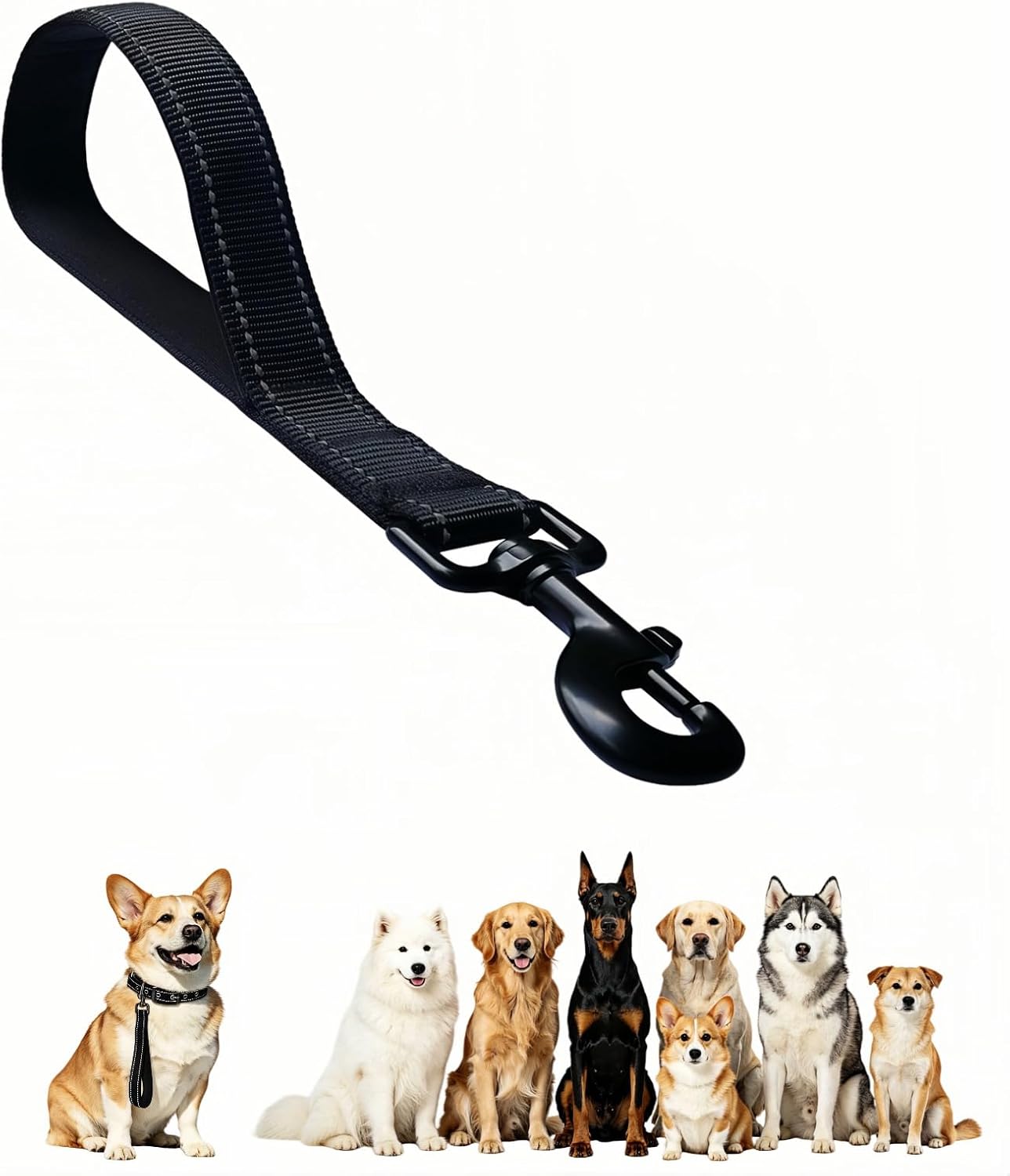
Short Dog Leash with Padded Handle, Heavy Duty Nylon, Reflective, 360° Rotating Alloy Buckle, Black, 12 Inch, for Medium and Large Dogs
A 12-inch leash sounds useless until you have watched a dog chew through a six-foot one. There is almost nothing here to chew. The dog walks beside you under close control, the leash length never gives it a loop to grab, and the padded handle keeps your grip comfortable while you work on the behavior. The rotating alloy buckle keeps the line from twisting when your dog circles, which is the moment most leash chewing starts: the dog turns, the leash binds, and the bound webbing becomes a toy.
Check current Amazon price. At this size it is one of the cheapest training changes you can make.
Reflective stitching runs the length of the webbing, which matters if you walk before sunrise. The nylon is heavy duty, and the alloy buckle is the part I care about most. Plastic snaps fail under a hard lunge, and a failed snap means a loose dog on a road.
Flaws but not dealbreakers: Twelve inches is a close-control leash, not a walking leash. Use it for training reps and for the first ten minutes of a walk, then switch to the longer leash once your dog settles.
Cheap add-on: 2PCS Dog Poop Bag Holder Leash Dogs Waste Bag Clip Dispenser Metal Carrier
Cheap add-on
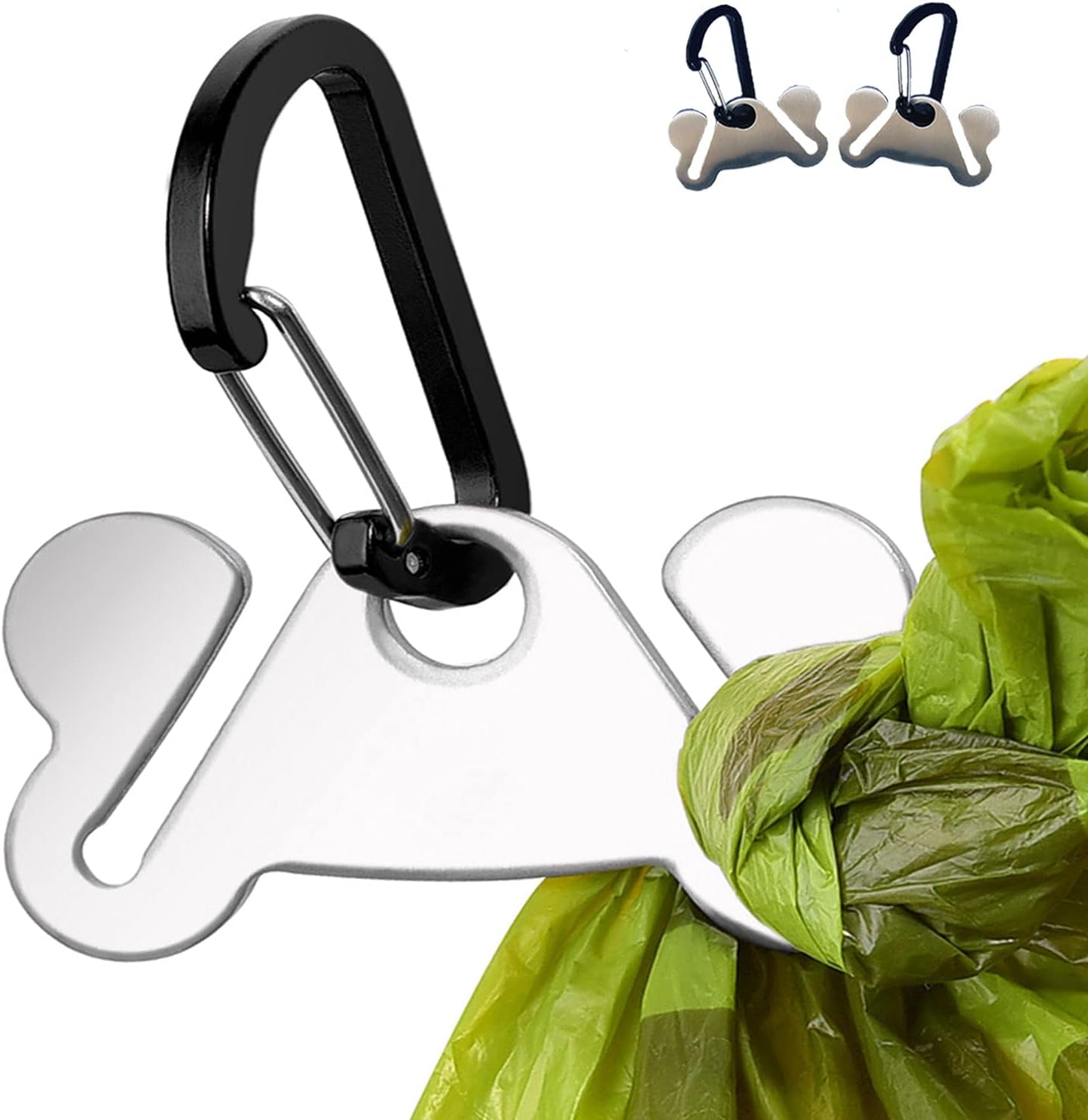
2PCS Dog Poop Bag Holder Leash Dogs Waste Bag Clip Dispenser Metal Carrier
This is the least glamorous item in the guide and the one that quietly helps the most. A metal carrier that clips to the leash handle keeps a bag within reach, so you are not digging in a pocket with one hand while the other hand holds a leash that a dog is trying to eat. Two hands on the problem is the entire strategy of this article.
Check current Amazon price. The clip is metal rather than the plastic clip that snaps off in a cold snap, and the dispenser takes standard rolls.
Flaws but not dealbreakers: It is a bag holder, not a training tool. If your dog is already mouthing the leash, a dispenser hanging at knee height is one more thing to notice. Clip it high, up near the handle.
How to stop a dog chewing its leash: the eight steps
Now the routine. Do the steps in order, and do not skip ahead to step six.
Step one: Name the trigger. Leash chewing is almost never random. Watch for the moment it starts: a stalled walk, a passing dog, a turn where the leash binds, or the first five minutes while your dog is still amped up. If it happens at the same point on every walk, you have a pattern, and a pattern is easier to break than a mood.
Step two: Take up the slack. This is the single highest-value change in the whole guide. A loose loop of webbing is an invitation. Slide your hand to the traffic handle or switch to the short leash and keep the line straight from your hand to the clip. Your dog should never have a loop to grab.
Step three: Keep the walk moving. Most leash chewing happens when the walk stops. If your dog plants and starts working on the line, walk. Change direction, pick up the pace, cross the street. A dog that is moving is a dog that is not chewing.
Step four: Give the dog something legal to carry. A ball, a tug toy, or even a bag can satisfy the mouthing urge without rewarding the leash. Hand it over before the chewing starts, not after, so the toy reads as part of the walk rather than a prize for grabbing the line.
Step five: Teach a drop cue. Say "drop" or "give," hold a treat at your dog's nose, and pay the second the leash leaves its mouth. Practice in the hallway where nothing is exciting, then on the sidewalk. You want the cue to be worth more than the webbing.
Step six: Redirect to an incompatible behavior. A dog cannot chew and touch a target at the same time. Ask for a hand touch, a sit, or a few steps of a loose heel, then pay. Every rep is a rep where the leash was not the most interesting thing on the block.
Step seven: Check the harness. A leash clipped to a collar ring bounces right at the dog's chin, which is exactly where a mouthy dog wants it. A front clip on a chest strap keeps the line low and off to the side. If you are shopping for one, start with a no-pull harness built for a front clip.
Step eight: Proof it in short sessions. Five minutes of focused walking beats an hour of managing a tired, over-aroused dog. End every session while your dog is still walking well, and keep the gear the same so the rules do not change from one day to the next.
If the behavior is still there after two weeks of consistent reps, or if your dog is drawing blood on itself or on you, bring in a trainer who uses positive reinforcement. Leash chewing is a normal behavior with a normal fix, and it is not a dominance problem.
The competition and why it lost
Retractable leashes are the first thing people buy for a leash chewer and the worst thing they can buy. A retractable puts a thin cord under constant tension right at the dog's chest, and a cord is more fun to grab than webbing and far more dangerous when it wraps a leg. Skip it.
Chain leashes solve the wrong problem. They survive teeth, but they are heavy, they rattle, and they do nothing about the slack that caused the chewing in the first place. The same logic applies to a no-pull harness with a single back clip: good tool, wrong job here, and the front clip version is the one you want.
GPS collars and activity trackers are their own category. A gps range measured in miles and a battery life measured in days are specs for a dog that slips a collar in the woods, not for a dog that eats its leash in the driveway.
Boots are the same story. A boot sizing chart, a traction sole, and a cooling fabric for summer pavement deserve their own guide. None of it touches this behavior, which is why none of it is in the list above.
Chew toys are the one category worth adding, and I am deliberately not naming a specific one. Match the toy to your dog's chewing style, keep it novel, and rotate it. A toy that lives on the floor stops being interesting by Thursday.
What this all costs
Two leashes and a bag clip. That is the entire shopping list, and the current numbers live on the listings, so check current Amazon price on each one rather than trusting a figure printed in an article.
The math is simple. A six-foot two-handle leash covers normal walks. A 12-inch leash covers training reps and the moments your dog starts to mouth the line. A metal bag clip keeps both hands free. Compare that to the alternative: replacing a chewed leash every few weeks, or paying for a training class you could have skipped with a shorter leash and a consistent routine.
Cost per day, spread across a year, is a rounding error, and it drops to nothing once the behavior stops and you stop replacing gear. The expensive part of leash chewing is not the leash. It is the walk you stop taking because you dread it.
One last thing. Do not buy a chew-proof leash as a substitute for training. Buy it as insurance while the training takes hold. The dog that learns to walk on a loose line will not care what the leash is made of, and that is the version of this problem you want: no chewing, no replacing, no fights at the end of the block.