Most senior dog beds are not pillows. They are foam platforms with a cover stretched over them, and the foam is the expensive part. Wash an orthopedic dog bed cover in hot water and tumble it dry on high, and you will shrink the liner, cook the waterproof membrane, and leave your dog lying on a lumpy slab that no longer does anything for sore hips.
I have washed covers for a 95-pound shepherd mix and a rotating cast of foster seniors since 2019, and I ruined two beds before I settled on a routine. One cover went through a hot dryer and came out short. The other went into a top-loading machine with an agitator that shredded a waterproof liner into confetti.
Here is how to wash an orthopedic dog bed cover so the foam core, the zipper, and the non slip backing all survive the cycle.
Why you should trust me
I have kept large senior dogs for about a decade, including a shepherd mix who needed hip support for years before she needed a ramp, and covers in this house get washed on a three-week rotation whether they look dirty or not. Two beds did not survive the learning curve: one cover shrank in a hot dryer, and one waterproof liner cracked after a hot wash with a heavy dose of detergent. Since then I have stuck to the rules below and have not lost a cover.
No lab coat here. Just a drying rack, a mesh laundry bag, a bottle of enzyme cleaner, and no fabric softener in the house. What follows is a decade of how to wash an orthopedic dog bed cover without buying a new bed every spring.
How I picked and how I tested
For this guide I picked beds whose covers actually come off. That sounds like a low bar until you shop for a large orthopedic bed: plenty of cheap ones sew the cover straight to the foam, and a sewn-in cover means the only cleaning you can do is surface scrubbing, which never gets an accident out of a foam core. A removable, machine washable cover is the feature that keeps a bed in service for years.
My wider shortlist of best orthopedic dog beds for senior dogs goes deeper on foam density and hip support. The three beds here are the ones whose covers I would trust in a machine.
Every cover got the same treatment: cold water, gentle cycle, mild detergent, no softener, then air dried on a rack. I checked three things after each wash. Zipper: skipped teeth or a stuck pull means the cover is on borrowed time. Liner: a waterproof layer cracks first at the fold lines, so that is where I look. Base: a non slip backing that peels or curls is what makes a bed slide across hardwood when a 90-pound dog pushes up out of it.
I also timed the drying, because a cover that needs a day and a half off the bed is a cover your dog will spend a day and a half sleeping beside on the floor. The order of operations when you wash an orthopedic dog bed cover matters more than the detergent you choose.
Three beds that make it easy to wash an orthopedic dog bed cover
Each of these has a cover that unzips, a liner that tolerates cold water, and a base that grips the floor. The roles below are about laundry, not about which bed suits every dog.
Budget pick: LEXTRO Washable Orthopedic Dog Bed, Waterproof Couch for Large Senior Dogs
Budget pick
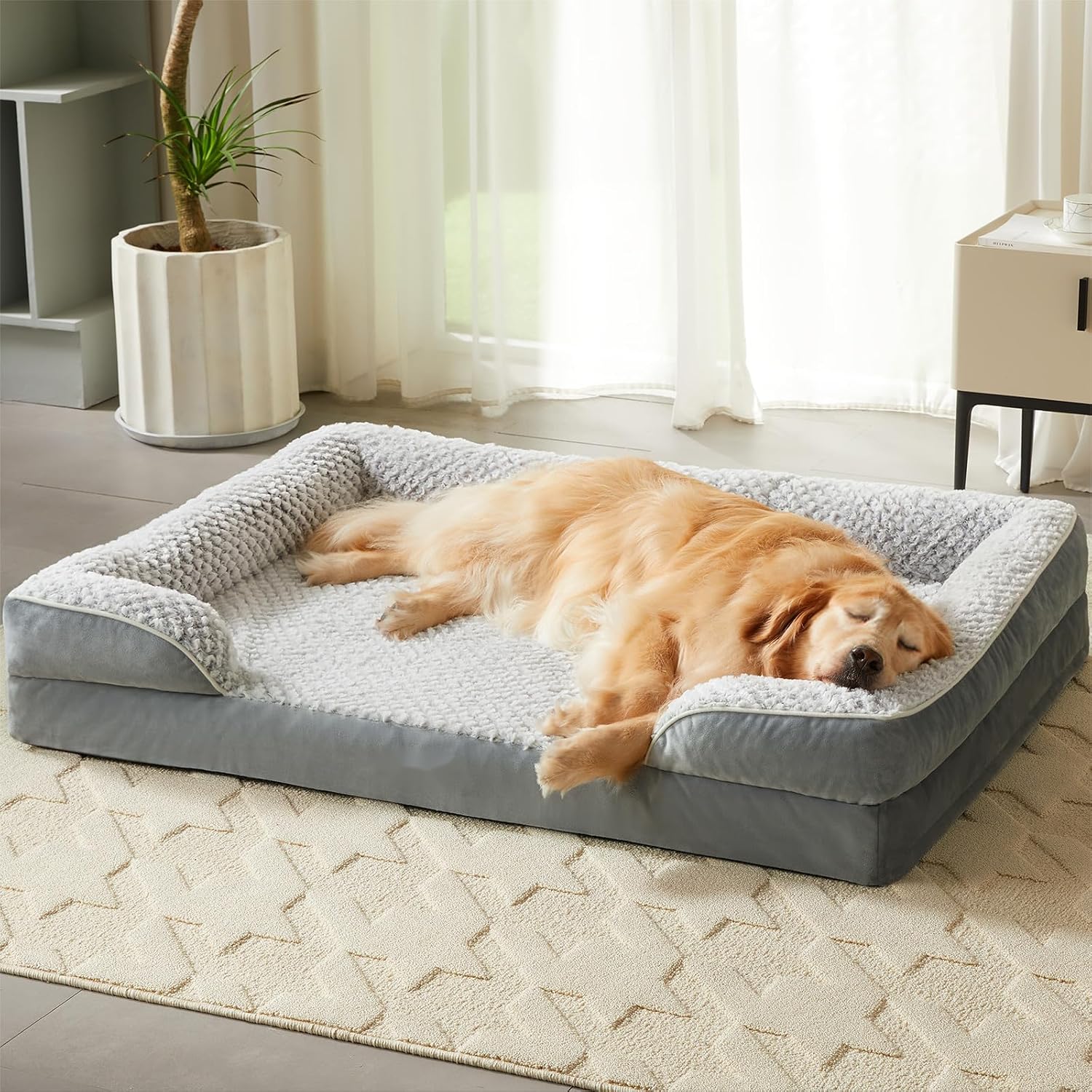
LEXTRO Washable Orthopedic Dog Bed, Waterproof Couch for Large Senior Dogs
Check current Amazon price. The LEXTRO is the one I hand to people who have already replaced a bed once this year and do not want to do it again. The cover is the whole point: it is built as a washable cover over a waterproof couch, so an accident stops at the fabric instead of soaking into the foam core where it turns into a smell you cannot get out.
For a large senior dog, that waterproof layer is the difference between a twenty-minute laundry job and throwing the bed away. The couch shape gives a dog something to lean against when it pushes up, which helps on the days when joint mobility is worse than usual.
Wash an orthopedic dog bed cover on this bed in cold water and the waterproof couch layer keeps doing its job. Treat the liner gently, because a waterproof membrane is the first thing to fail when the water runs too hot.
Flaws but not dealbreakers: The couch shape takes up more floor than a flat mat. Measure your spot before you order, not after.
Runner-up: EOBUSKOR Waterproof Short Plush Orthopedic Sofa Dog Bed for Large Dogs
Runner-up
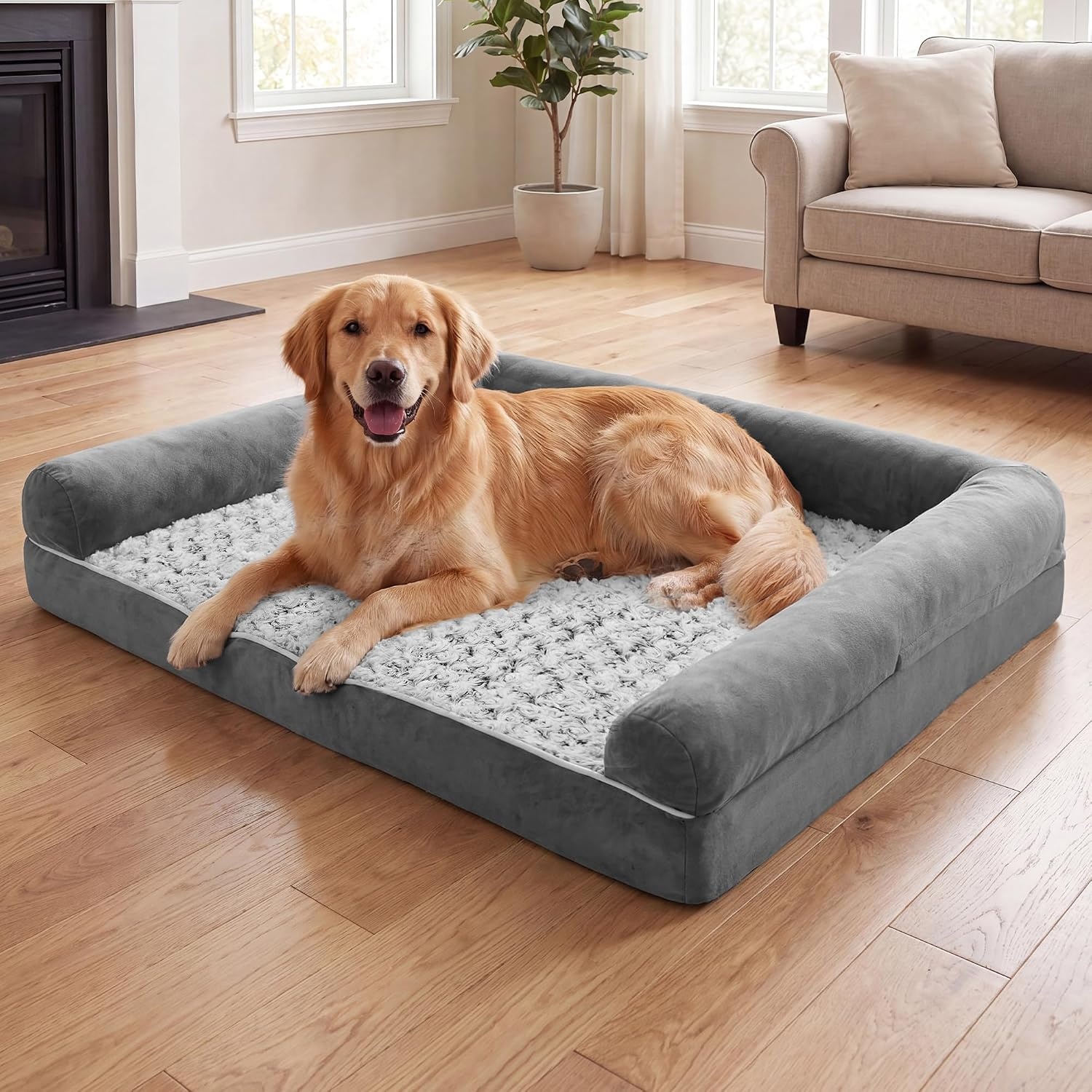
EOBUSKOR Waterproof Short Plush Orthopedic Sofa Dog Bed for Large Dogs
Check current Amazon price. The EOBUSKOR is the bed for a dog that sleeps hot or a house that runs warm. Short plush is a lower pile fabric than the fuzzy fleece on a lot of orthopedic beds, and lower pile means less surface area holding dander, hair, and the oils that make a cover smell like a dog even when it looks clean.
The waterproof layer sits between the plush and the foam, which is the arrangement you want: the soft part can go in the machine without soaking the part that provides hip support. Because it is a sofa bed, there is a bolster to lean into, and the cover comes off in one piece, so it goes into the drum as a single load rather than as three puzzle pieces.
Flaws but not dealbreakers: Short plush shows light shedding more than a patterned fabric does, so you will wash this one more often than you expect.
Upgrade pick: NOFKYNOXA Orthopedic XL Dog Bed for Large Dogs Up to 110lbs,47"x37" Grey
Upgrade pick
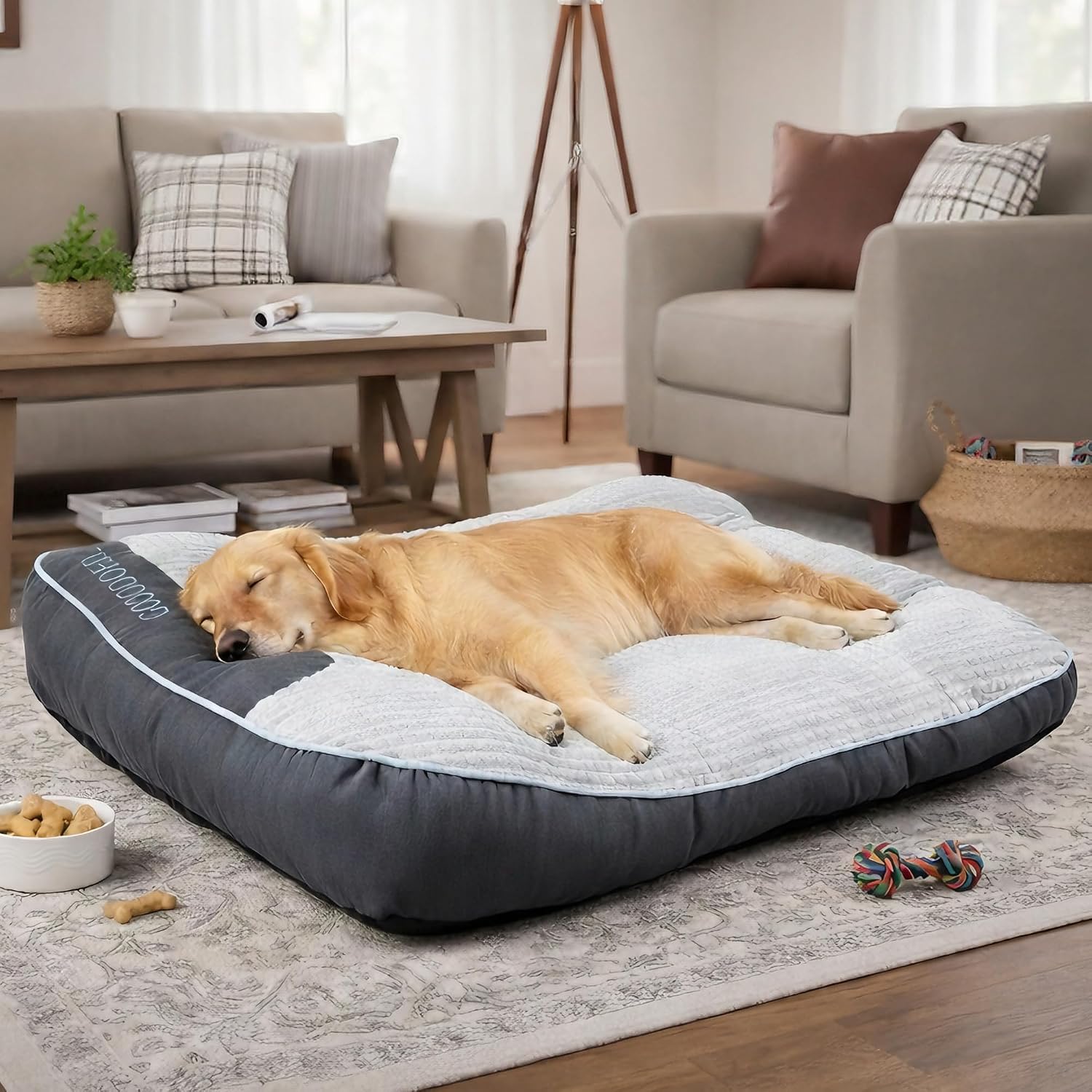
NOFKYNOXA Orthopedic XL Dog Bed for Large Dogs Up to 110lbs,47"x37" Grey
Check current Amazon price. The NOFKYNOXA is the largest bed here and the one I would choose for a dog at the top of the weight range, since it is rated for dogs up to 110 pounds on a 47 by 37 inch platform. Weight capacity is the number most people ignore, and it is the number that decides whether the foam flattens into a pancake in a year.
A bigger sleeping surface also gives a senior dog room to stretch out and shift position at night without hanging a hip off the edge, which is what wakes them up. The grey fabric is a practical choice for laundry: it hides the grey-brown tint a foam-side stain leaves behind, and it does not show water spots while it dries on the rack.
Flaws but not dealbreakers: It is a big piece of furniture. If your dog needs help getting onto it, solve that with a ramp or a low step and check the ramp angle before you buy anything.
The actual wash routine
This works on any cover that unzips and any tag that does not say dry clean only. Skip a step and the cover may survive, but the foam core is what you are really protecting.
Step one: Read the care tag and unzip the cover before anything else. If the tag says dry clean only, believe it and spot clean instead, because dry cleaning solvent can soften the coating on a waterproof liner. Zip the cover closed before it goes in the machine so the teeth do not catch on the fabric, then turn it inside out so the plush side or the coated side is protected. This is also when you check whether the foam core has a removable liner of its own. Most do not, and that is the piece you will be spot cleaning by hand.
Step two: Vacuum both parts. Run a vacuum with a brush attachment over the cover, both sides, then over the foam core. Hair, dander, and grit are what turn a wash load into a paste that works its way into the foam. Two minutes with the vacuum saves you a rinse cycle and keeps the machine from smelling like a kennel for the next three loads.
Step three: Deal with the accident before the detergent. An enzyme cleaner, diluted per the bottle, in cold water, blotted from the outside in. Do not scrub, because scrubbing pushes the stain deeper into the fibers and, if the liner has already failed, straight into the foam. Let the enzyme sit for ten minutes. If the smell has reached the foam core, spot clean it with the same dilution and a barely damp cloth, then air dry it completely before the cover goes back on.
Step four: Load it the right way. A front loader on a gentle or delicate cycle with cold water is the ideal wash an orthopedic dog bed cover can get. If you have a top loader with a central agitator, put the cover in a mesh laundry bag or a clean pillowcase and tie it shut, or the agitator will twist the liner at the fold lines and crack the waterproof layer. One cover is the whole load, so no machine needs extra lift capacity to handle it, and nothing else goes in with it, because lint transfer onto wet plush is a nightmare to fix.
Step five: Use less detergent than you think, and skip the extras. A mild, fragrance-free detergent at half the recommended dose is plenty for a cover that gets washed every few weeks. No bleach, no fabric softener, no dryer sheets. Softener coats the fibers and kills the wicking on the plush side, and it leaves a residue that holds odor. If your machine has a soak option, ten minutes is enough. A longer soak does nothing for a cover and just gives the zipper more time to corrode.
Step six: Run a second rinse. Detergent residue is the number one reason a cover smells clean coming out of the machine and sour two days later. Set the machine for an extra rinse, or run a rinse and spin cycle with no detergent after the wash. This matters most on waterproof covers, where the coating traps soap against the fabric.
Step seven: Dry the cover, never the foam core. Air dry the cover on a rack, out of direct sun, away from a radiator. If you must use a machine, use low heat and pull the cover out while it is still slightly damp. Heat is what shrinks a liner, cracks a waterproof membrane, and dulls a non slip backing. The foam core does not go in the dryer at all, not on low, not on air fluff. Heat breaks down the cell structure that gives the bed its foam density, and once that happens the hip support is gone. Spot clean the core, blot it, and let it air dry somewhere with moving air for a full day.
Step eight: Reassemble and check your work. Before the cover goes back on, run a hand along the zipper and the seams and check the non slip backing for peeling. Then put the bed back in the same spot. Seniors navigate by habit, and a bed that moved three feet while it dried is a bed they may refuse to use. If your dog needs help getting on and off, that is a separate problem from laundry: bed height and ramp angle matter more there than anything you do in the laundry room.
The competition and why it lost
A few things come up every time this topic does, and none of them belong in this guide.
Beds with sewn-in covers lose immediately. If the cover does not unzip, you are not washing it, you are sponging it, and the foam core is where the smell lives.
A cooling gel pad laid on top of an orthopedic bed is a reasonable idea for a dog that runs hot, but it adds a layer between your dog and the foam and it is one more thing to wash. It does nothing for hip support.
A raised cot with a mesh sleeping surface is genuinely good for a dog that overheats and it hoses off in the yard, but it offers no pressure relief for a senior with joint mobility problems. Different tool, different dog.
Memory foam toppers and crib mattress pads are the do-it-yourself version of this. They work, they are cheap, and they slide around unless you build a cover with a non slip backing, which is most of the work anyway.
Finally, the top-loading washer with a central agitator. It is not a bad machine, it is the wrong machine for a waterproof liner, and it is the one that cost me a cover. Use a mesh bag or use a front loader at the laundromat.
What this all costs
Washing is the cheapest maintenance you will ever do on a dog bed. A load costs you detergent, water, and electricity, which is a few cents in most of the country, plus drying time, which is free if you own a rack and have a spare afternoon.
The expensive version of this is the correct wash an orthopedic dog bed cover routine run too late: a hot wash and a hot dry that shrinks the liner and flattens the foam, which means you buy a whole new bed instead of washing the one you have. The three beds in this guide all have covers that come off, and a replacement cover, when you can find one, costs far less than the bed. Check current Amazon price on the beds and do the math on how many washes it takes to pay for one.
What you should actually budget for is small: an enzyme cleaner for accidents, a mesh laundry bag if you own a top loader, and a drying rack. All three together cost less than a single mid-range bed, and they will outlast three of them.
Budget time, too, not just money. A senior dog's bed is part of a routine. Every hour the cover spends in the laundry is an hour your dog spends on a cold floor, which is the exact thing the bed exists to prevent. Wash in the morning, dry by the afternoon, and have it back in place before dinner.
That is the job. The foam was built to hold up your dog's hips for years. A cold wash and a drying rack are how you keep it doing that.