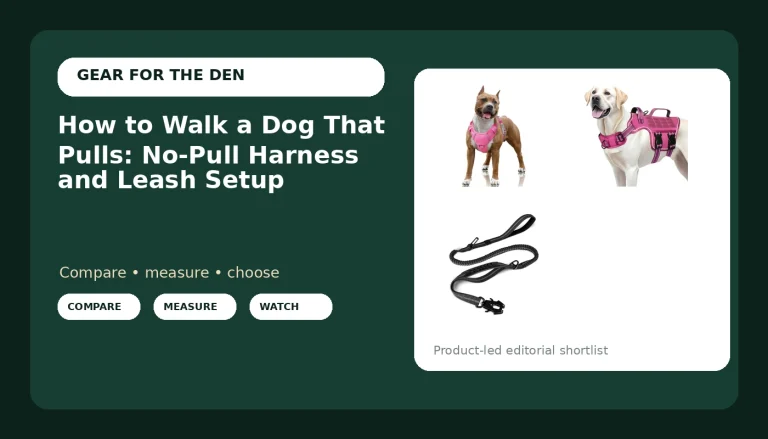
Most people who search for a no pull harness vs dog booties comparison already know what both products are. They are standing in a hallway with a leash in one hand and a dog pulling toward the door, trying to work out which purchase actually fixes the walk they are having. The short answer is that these two pieces of gear sit at opposite ends of the dog. A harness manages the front half of the animal: the chest strap, the front clip, and how much leash length you hand over. Booties manage the paws: the traction sole, the boot sizing, and whether hot pavement, salted sidewalks, or crusted snow are going to end the walk early.
The difference between no pull harness and dog booties is not a question of one being better than the other, because the two solve different problems. A harness changes how your dog's forward momentum reaches your arm. A bootie changes what your dog's paw touches. If your dog drags you down the block, no bootie on the market will slow that down. If your dog lifts a paw on hot asphalt or refuses to move in the snow, no harness will fix it. The useful version of this comparison is not which one to buy, but which one to buy first.
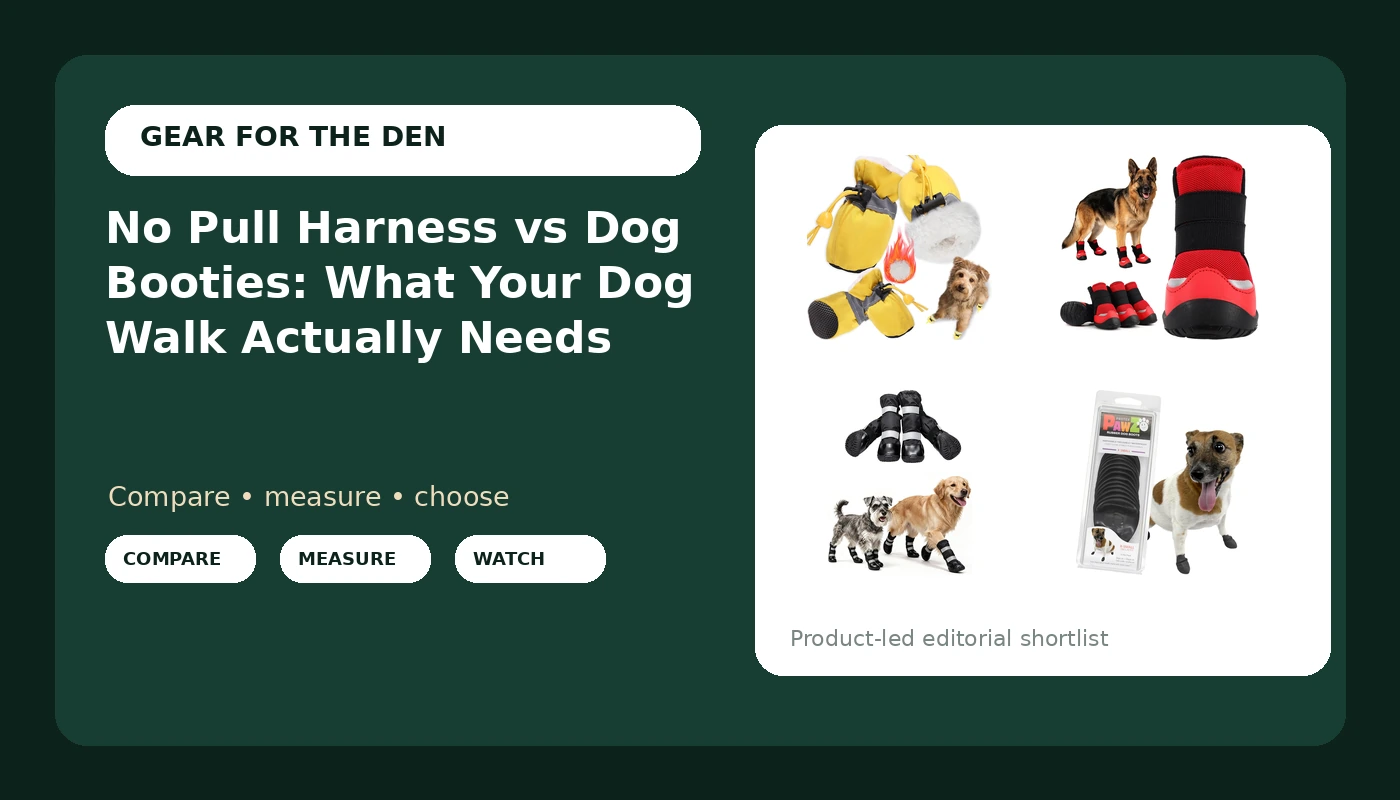
My verdict for most readers: if pulling is the problem, buy the harness first and the boots second. If you came for paw protection specifically, the Furrtripsy set is the most capable all-terrain option, the PETLESO set is the best tall-shaft pick for large dogs in wet weather, the TEOZZO set is the budget entry for small and medium dogs in cold, and the PawZ rubber boots are the pack of spares to keep in the car for mud.
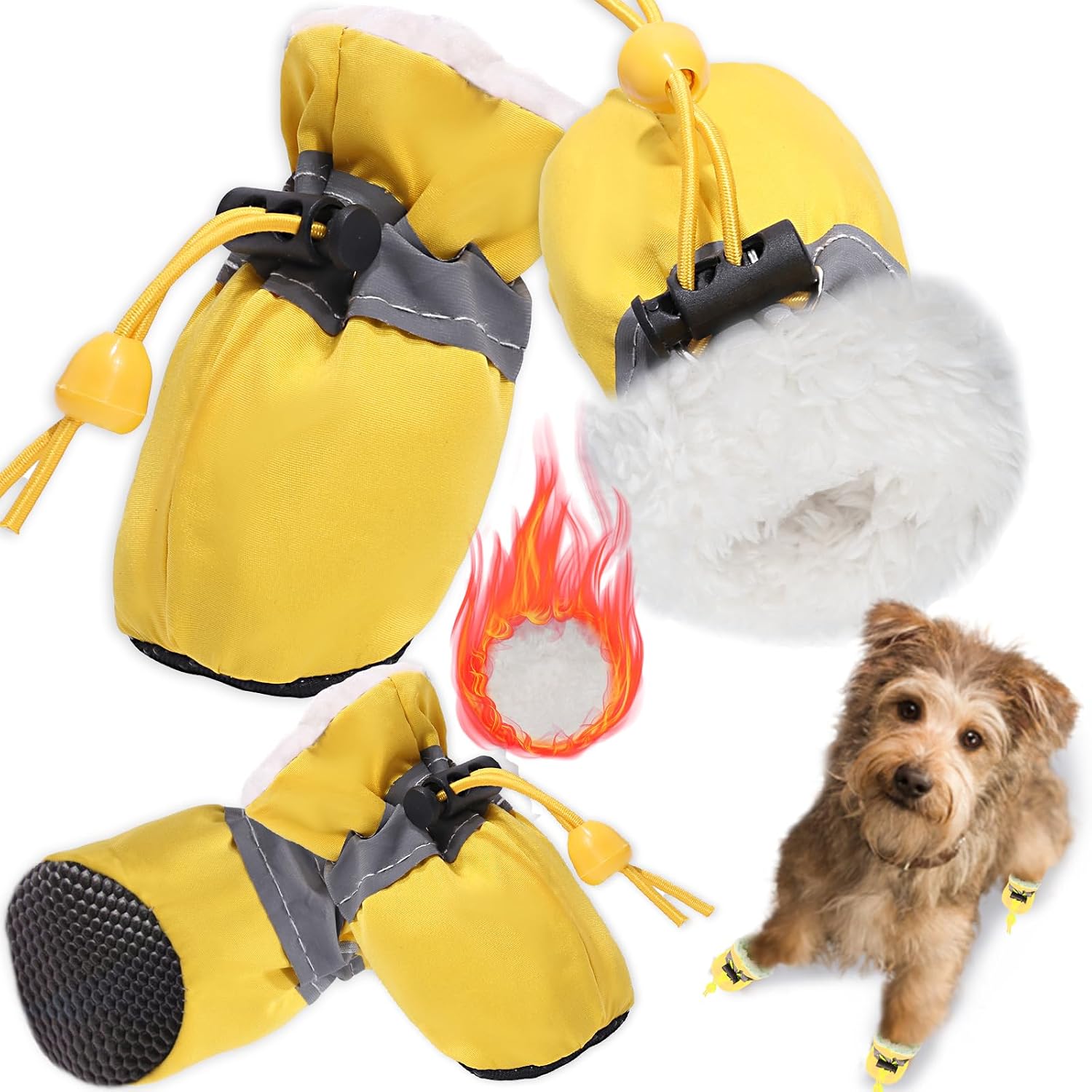
TEOZZO Dog Shoes for Winter, 4 PCs Yellow, Size 3 (1.37 in width)
Warm winter booties aimed at small and medium dogs, with a reflective strip for dark walks
Only four pieces and a single narrow width, so one lost boot leaves the set short
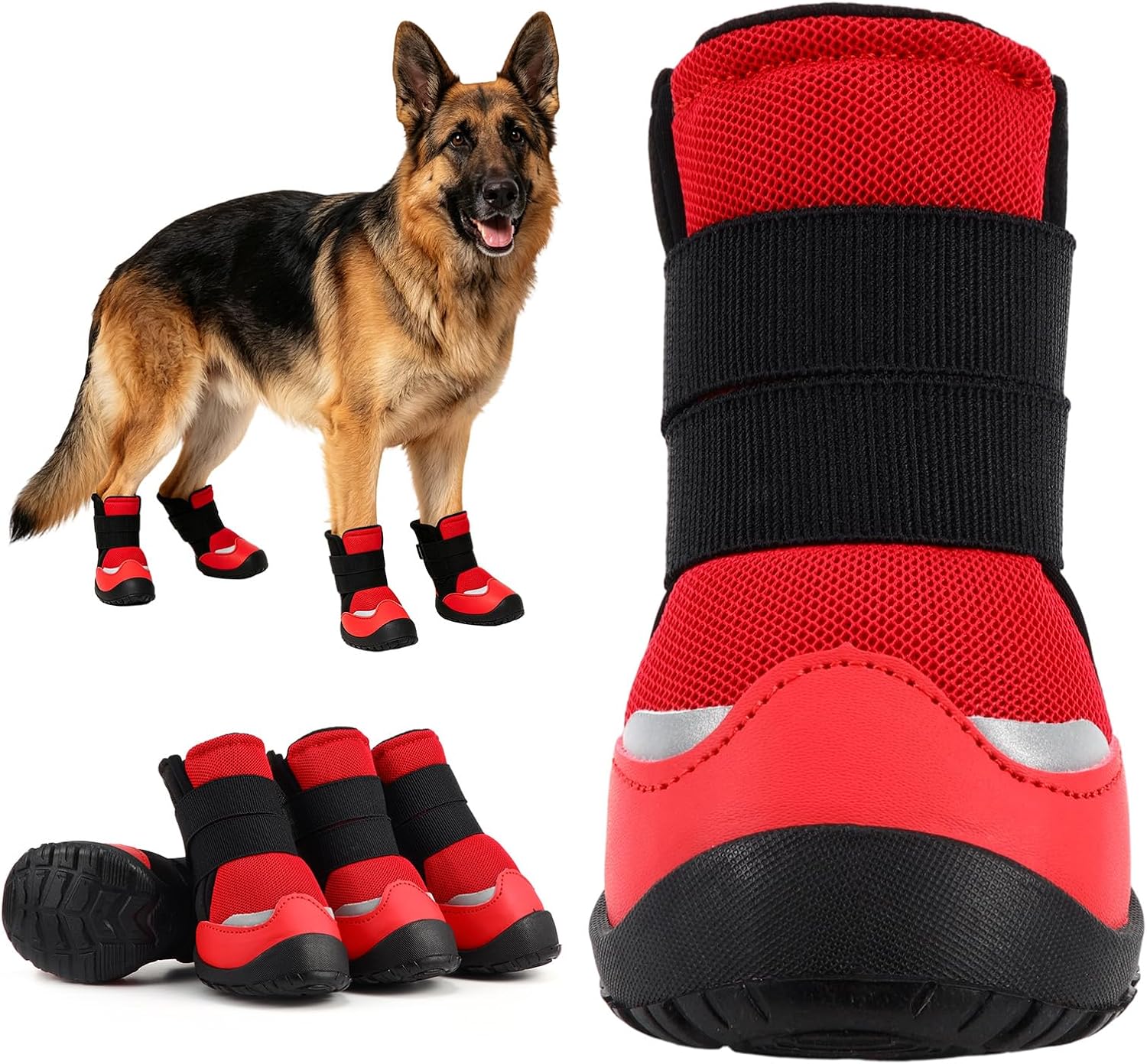
Furrtripsy Dog Boots, Rugged Anti-Slip Sole, Red, #10
The broadest terrain coverage here: hot pavement, snow, and hiking, with adjustable straps
The priciest of the four, and straps have to be re-checked as the walk goes on
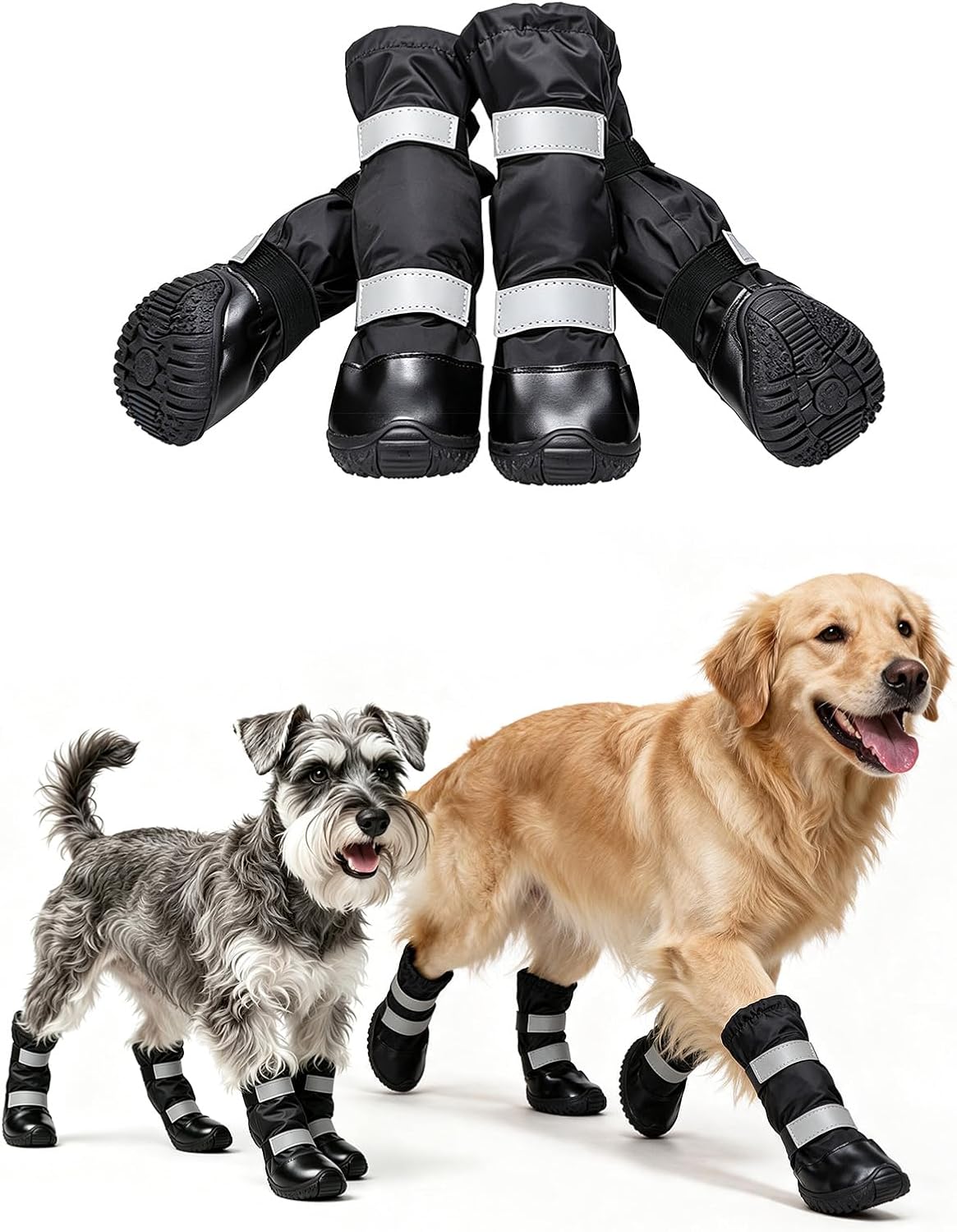
PETLESO Dog Boots for Large Dogs, 4 PCS Black XL (#5)
Tall shaft, waterproof, anti-slip, reflective strips, sized for big paws in snow, rain, and mud
Four pieces only, and the tall warm shaft is the wrong choice for summer pavement
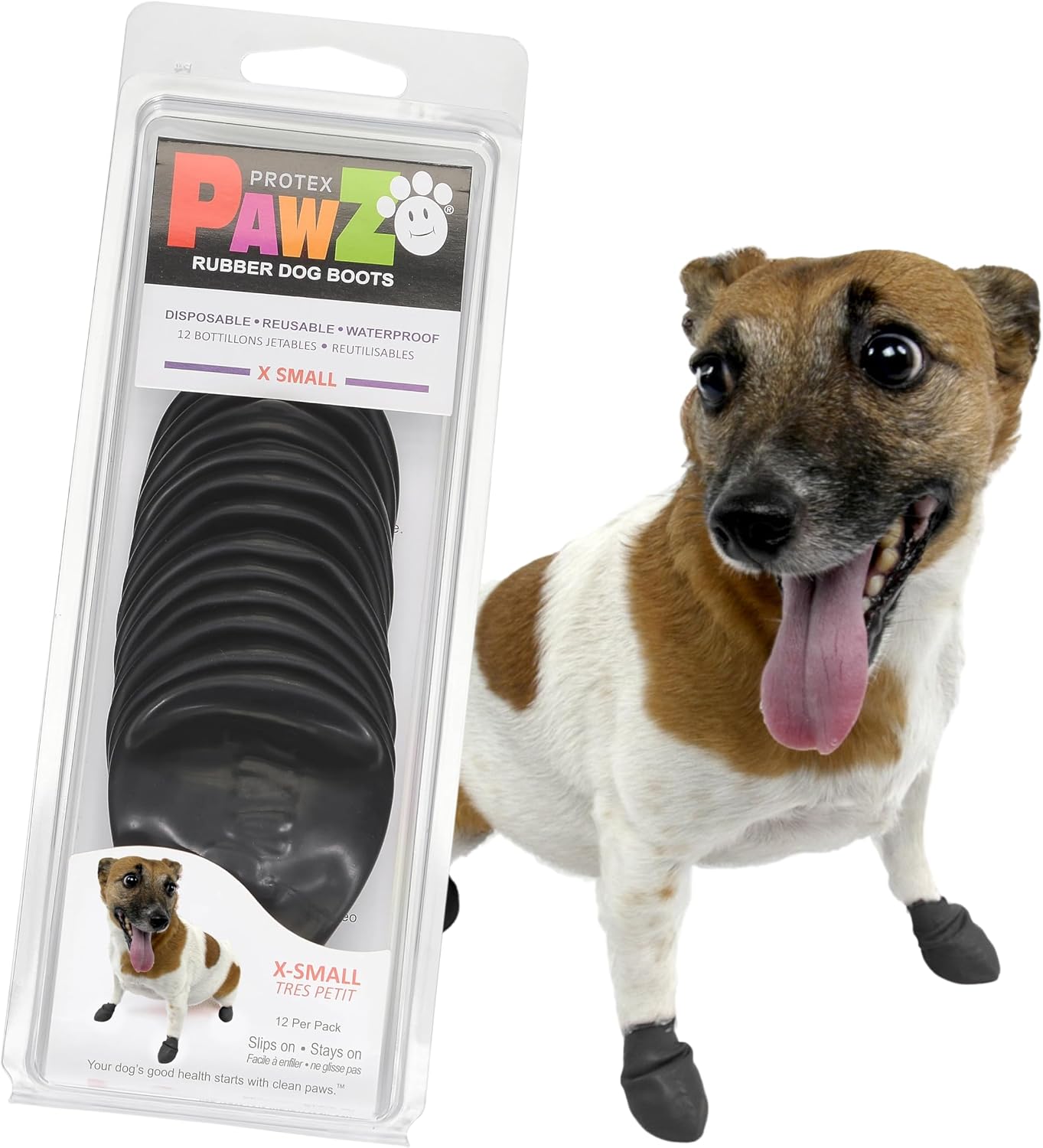
PawZ Rubber Dog Boots, Waterproof Non-Slip, 12 Pack
Twelve waterproof boots means spares, easy rinsing, and a low cost per boot for mud season
No straps and no lining, so the fit is entirely down to the stretch of the rubber
Prices and availability may change.
What a no pull harness vs dog booties comparison should cover
These two products get compared because they appear in the same search results and the same shopping cart, not because they compete. One is a control tool. The other is a protection tool.
A no pull harness is designed to reduce the force a dog can put into the leash. The common designs route the leash to a front clip on the chest, which turns the dog slightly when it surges forward instead of letting it lean into the pull. Fit matters more than the design. A chest strap that sits too low or too loose lets a determined dog back out of the harness entirely, which is worse than pulling. If you go that route, measure the girth behind the front legs and read the sizing notes.
Booties do a completely different job. They put a barrier between the paw and the ground, which matters on hot pavement, on ice melt, on salted sidewalks, and on snow that balls up between the pads. The specs that matter are the traction sole, the boot sizing, and the closure: adjustable straps, a tall shaft, or a stretch rubber pull-on. None of that has anything to do with pulling.
Where the two overlap is the walk itself. A dog that pulls hard enough to choke is a dog whose owner will not notice a boot rubbing. A dog that is limping on hot asphalt is a dog that will pull harder to get home. The gear is separate. The walk is one event.
It is also fair to say that booties are the lower-stakes experiment of the two. A four-pack can be tested on a single walk and set aside if your dog hates it. A harness is the more consequential purchase, because a bad one changes how your dog moves on every walk you take together.
Boot sizing: the measurement that decides everything
Almost every bootie complaint traces back to sizing. Measure the widest part of the paw while the dog is standing on it, then measure from the back of the pad to the tip of the longest nail. Write both numbers down. If the size chart gives a width, compare that to your number rather than to your dog's weight or breed.
The TEOZZO set, for example, lists Size 3 at 1.37 inches of width, which tells you more than "small and medium dogs" ever will. The PETLESO set is an XL, listed as #5 in its range, and it is built for large dogs. The Furrtripsy set is a #10, aimed at medium and large dogs. The PawZ rubber boots come as a 12 pack, and rubber sizing depends on a snug stretch fit rather than a strap.
Two practical rules. Trim nails and re-measure before ordering, because a long nail changes the effective length. Then decide whether you are buying four boots or twelve. A four-pack is the right answer for a dog that wears boots on winter walks and nothing else. A twelve-pack is the right answer for mud, wet grass, a dog that loses one boot per season, or a household with more than one dog. Losing one boot out of four can make the set useless. Losing one out of twelve means you open the trunk and grab a spare.
Worth knowing as well: boot sizing charts are not standardized between brands, so the same paw can be a different number in two different sets. Measure, check the specific chart, and keep the packaging until the first walk is done.
Traction sole, waterproofing, and terrain
The traction sole is the part of the boot that touches the world, and these four listings describe three different approaches to it.
The Furrtripsy boots are built around a rugged anti-slip sole and are sold for hot pavement, snow, and hiking. That is the broadest terrain claim in this group, and the sole is the reason.
The PawZ rubber boots are waterproof and non-slip by construction, which makes them the natural pick for wet mud and slush. Rubber is also the easiest material to rinse, which matters more than most people expect after a week of wet walks.
The PETLESO boots are described as anti-slip and waterproof with a tall shaft, the shape that keeps snow, rain, and mud from coming in over the top. Tall booties are the better choice for deep snow and for a dog that walks through puddles instead of around them.
The TEOZZO boots are winter boots first: warm, with a reflective strip, aimed at small and medium dogs in cold weather. Warmth is the priority there, not maximum grip on a rocky trail.
One caution about hot weather. Boots protect paws from hot surfaces by blocking contact, but they are not a cooling product. If you walk in high heat, a cooling fabric bandana or vest is a separate purchase, and it does not replace paw protection or a change in walk time. The same goes for technology: a tracker collar with limited battery life and a modest gps range is useful in off-leash areas, but it is a third purchase, not a substitute for either a harness or a set of boots. For more on hot weather walks, see hot pavement walk safety.
Fit and retention: straps, tall shafts, and pull-on rubber
Retention is where booties fail in the field, and each design trades convenience for security.
The Furrtripsy set uses adjustable straps, the most forgiving system of the four. You can tighten a strap after the boot is on, and you can loosen it if you see rubbing. The trade-off is that straps need to be re-checked, especially on the first few walks, because a strap that loosens mid-walk turns a boot into a projectile.
The PETLESO set uses a tall shaft, which stays on by covering more of the leg. Tall shafts hold well in mud and snow, but they also collect debris and they run warmer, which is exactly what you want in January and exactly what you do not want in July.
The PawZ rubber boots are pull-on, so retention comes from the stretch of the rubber itself. There are no straps to adjust and nothing to buckle, which makes them fast to put on, and it also means the fit is decided entirely by size. If the size is wrong, there is no adjustment to save it.
The TEOZZO boots sit at the simple end as well: a warm slip-on bootie with a reflective strip, sized by width. Reflective strips matter more than people give them credit for on dark winter walks, and both the TEOZZO and PETLESO sets include them.
Whichever you choose, introduce boots gradually. Ten minutes in the house, then a short walk, then a normal walk. Check for rubbing at the top edge and between the toes after each of those first outings.
The other half of the walk: chest strap, front clip, leash length
Because this roundup covers booties, the harness half has to be described rather than linked, but the mechanics are worth understanding, since they decide whether a harness helps at all.
A no pull harness works by changing the direction of the force. A front clip on the chest turns the dog toward you when it surges, which interrupts the straight-line pull. A back clip, by contrast, gives a dog a solid anchor to lean into, which is why some dogs pull harder in a back-clip harness than they do in a plain collar. The chest strap should sit across the sternum, clear of the throat, and it should be snug enough that you can slide two fingers under it and no more.
Leash length is the second variable. A short leash with a front clip keeps the dog close and makes the redirection constant. A long leash gives the dog room to build speed and defeats the purpose. A fixed-length leash for training walks, with a long line reserved for open areas, is the usual advice.
None of this is a knock on booties. It is simply the reason the two products get asked about in the same sentence: both are walk gear, and both fail for the same underlying reason, which is fit.
Which to buy first: dog booties vs no pull harness
This is the decision most people actually need, so here is the short version.
If your dog pulls hard enough to hurt your arm, your back, or its own throat, the harness comes first. Pulling is a safety problem on every single walk, and it is the problem that most often ends with an owner dreading the door. Measure the girth, choose a harness with a front clip and an adjustable chest strap, and spend a week on leash length and redirection before you add anything else.
If your dog has tender paws, if the pavement is hot enough to hurt your hand after five seconds, if the sidewalks are salted, or if your dog stops and lifts a paw in the snow, the booties come first. Paw damage is cumulative and painful, and it is the one problem in this comparison that can turn a short walk into an injury.
If you are genuinely torn between a no pull harness or dog booties for a dog that both pulls and has sore paws, do them in order rather than at once. Buy the harness, walk for a week, then measure the paw and order boots. Changing two pieces of gear in the same week makes it impossible to tell which one your dog objects to.
A no pull harness vs dog booties question also comes up with senior dogs and large dogs with arthritis. For those dogs, traction on slick floors and icy sidewalks can matter more than leash manners, and the boots move to the front of the list.
Matching each set to a dog
Four sets, four different jobs.
TEOZZO Dog Shoes for Winter are the budget entry and the small-dog pick. Four pieces, yellow, Size 3 at 1.37 inches of width, warm lining, reflective strip. If you have a puppy or a small breed and your winter problem is cold pavement rather than deep snow, this is the set to try first. The limitation is the count and the width range: four boots, one narrow size.
Furrtripsy Dog Boots are the all-terrain pick for medium and large dogs. The rugged anti-slip sole is sold for hot pavement, snow, and hiking, and the adjustable straps give you room to fine-tune the fit. If you want to buy one set and your walks cover pavement, trails, and everything between, this is the one. It is also the most expensive of the four, which is the honest trade-off.
PETLESO Dog Boots for Large Dogs are the wet-weather pick for big dogs. Four pieces, black, XL, tall shaft, waterproof, anti-slip, with reflective strips. The tall shaft is the feature that earns its place: it is what keeps snow, rain, and mud from coming in over the top on a long walk. In summer, the same shaft works against you.
PawZ Rubber Dog Boots are the utility pick. Twelve pieces, waterproof, non-slip, and simple to rinse. They are the set you keep in the car for mud season, the set that lets you replace a lost boot without buying a whole new pack, and the set to choose if your dog tolerates pull-on rubber better than straps.
What to check before you order
A short checklist.
Measure the paw width while the dog is standing, and measure the length from the back of the pad to the tip of the longest nail. Compare both numbers to the specific brand's chart, not to a general size label.
Decide the count. Four boots for seasonal wear, twelve for mud, spares, and multi-dog households.
Check for reflective strips if you walk in the dark, and match the closure type to your dog's patience. A dog that fights straps will do better with pull-on rubber. A dog that kicks off loose boots will do better with adjustable straps.
Confirm the return window before the first walk. Boots are like shoes: the size chart gets you close, and the walk tells you the truth.
Plan the break-in as well. Two minutes in the house, a few treats, then a short walk on a familiar route. Most dogs accept boots within a few outings when the first experience involves food and somewhere they already like going.
The bottom line on the no pull harness vs dog booties question is that the two are not rivals. Fix the pulling with a harness that has a front clip and a chest strap that actually fits, fix the paws with a bootie sized to a real measurement, and buy them a week apart so you can tell which one your dog has an opinion about.