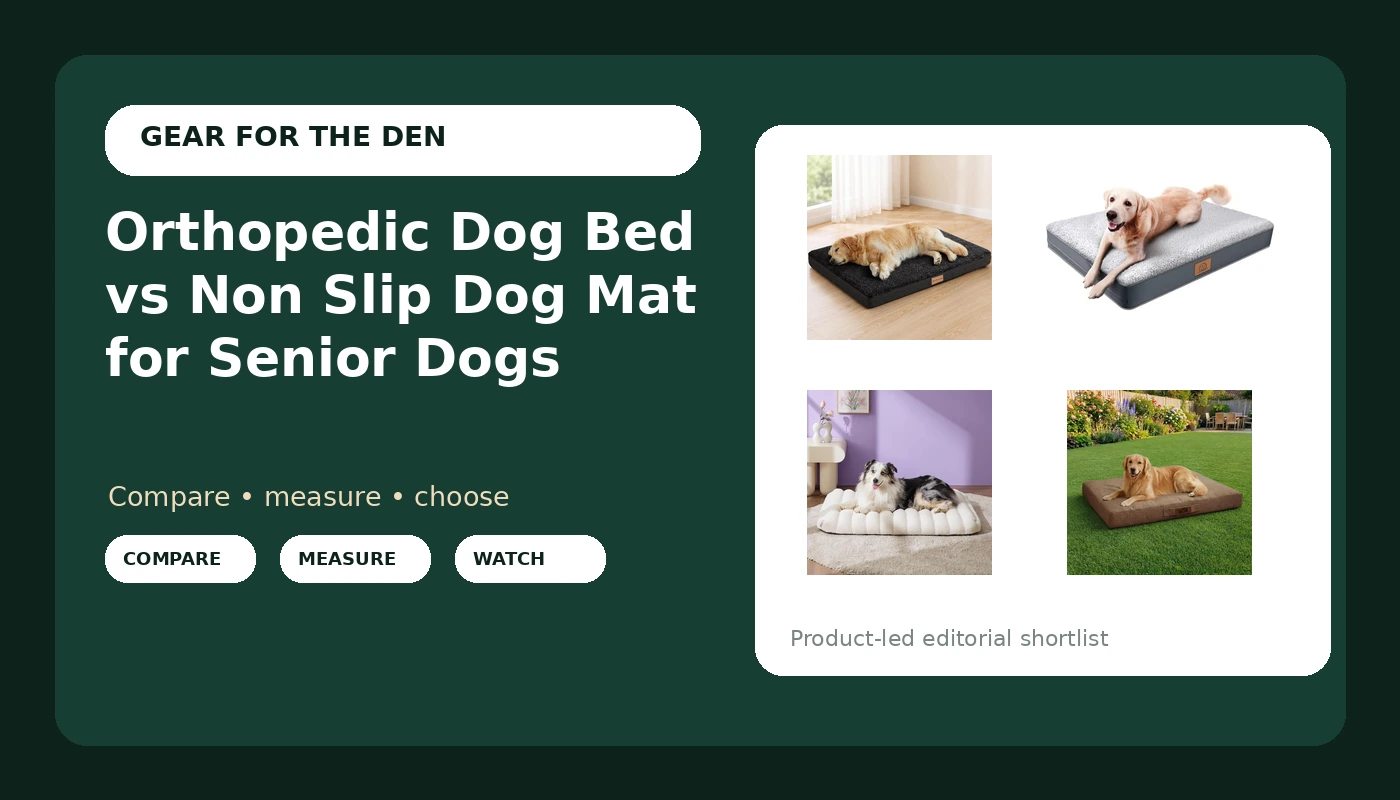
Most people shopping for an older dog end up framing the decision as an orthopedic dog bed vs non slip dog mat, and then get stuck, because in a listing photo the two products look nearly identical: a rectangle of foam inside a cover. The difference shows up in what your dog does with it. A bed is somewhere to spend eight hours overnight. A mat is somewhere to land, push up from, and stand while eating. If your senior dog has started slipping on hardwood, or needs a moment to gather itself after a nap, the format matters more than the brand name on the label. This comparison looks at four mats that sit on both sides of that line, and at which one suits which dog.
The short answer: if your dog sleeps on the floor and struggles to rise, buy the orthopedic bed. If your dog already has a bed and slips on hard flooring, buy the non slip mat.
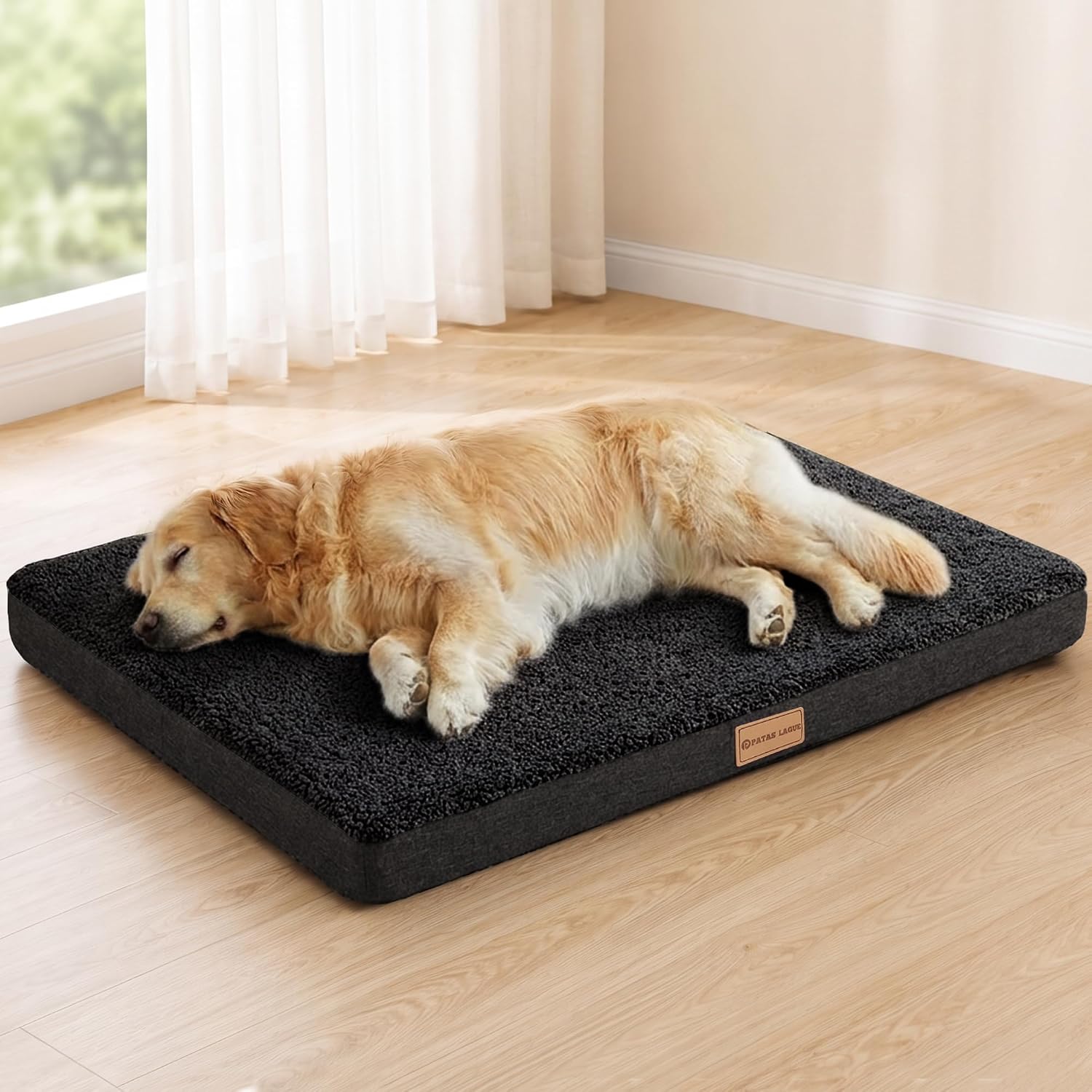
Patas Lague Orthopedic Large Dog Bed Washable Pet Sofa Mat 36''X24'' Black
Compact 36 by 24 inch sofa style mat that fits a tight room or a crate, with a washable cover
The smallest footprint of the four, so it is a stretch for a dog much past 70 pounds
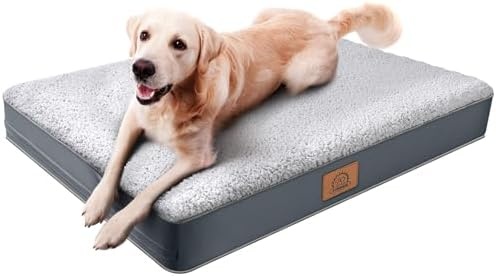
Sunheir Washable Orthopedic Large Dog Bed with Removable Cover, Pet Bed Mat
Large orthopedic mat with a removable, washable cover, so the foam core stays clean
No length given in the name, so you have to measure your dog before ordering
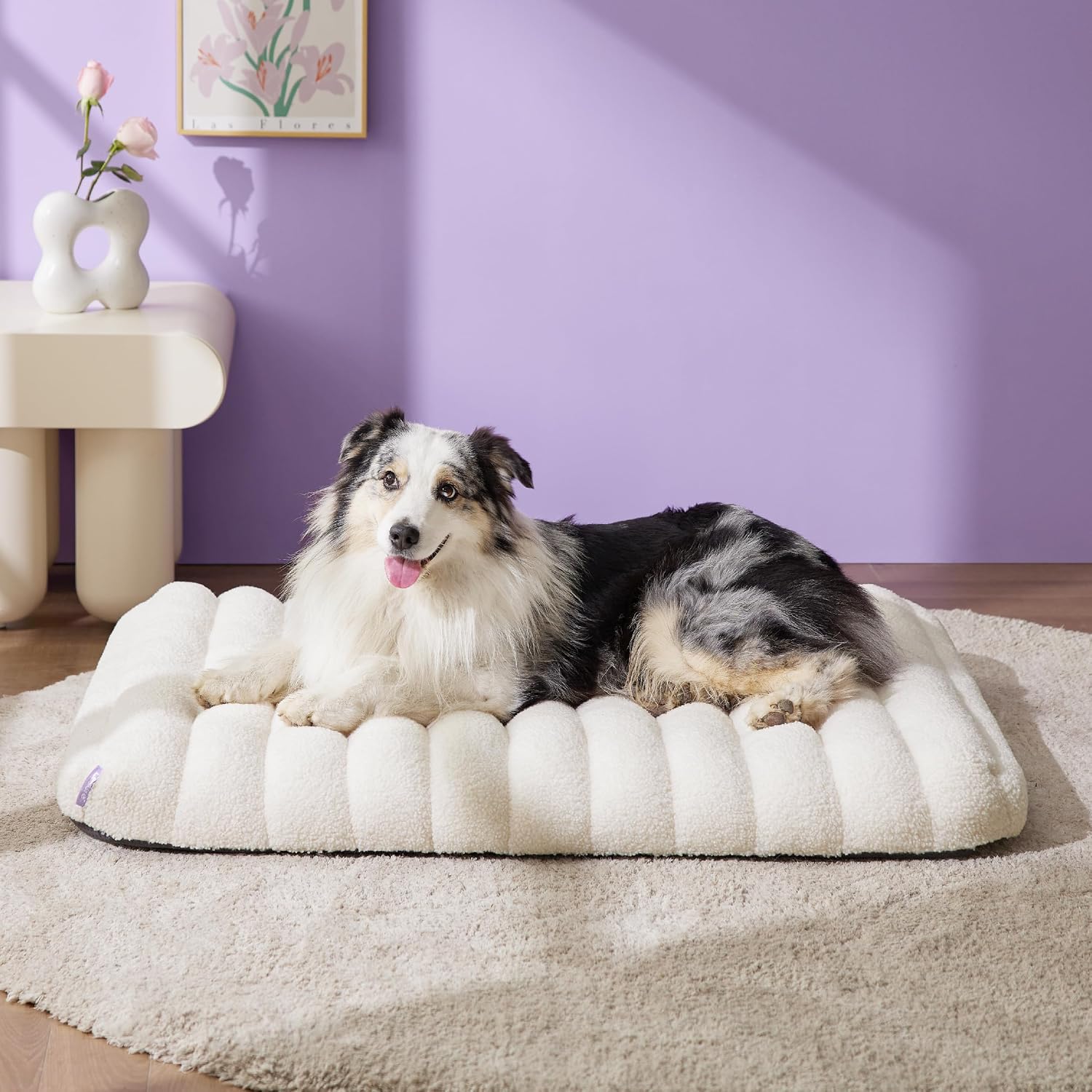
LE SURE Cute Orthopedic Dog Bed Large Sized Dog, Flat Pet Mat,36x27in Cream
Flat 36 by 27 inch mat, low enough to step onto easily and simple to tuck out of the way
Flat profile means no bolster, and the cream cover shows dirt quickly
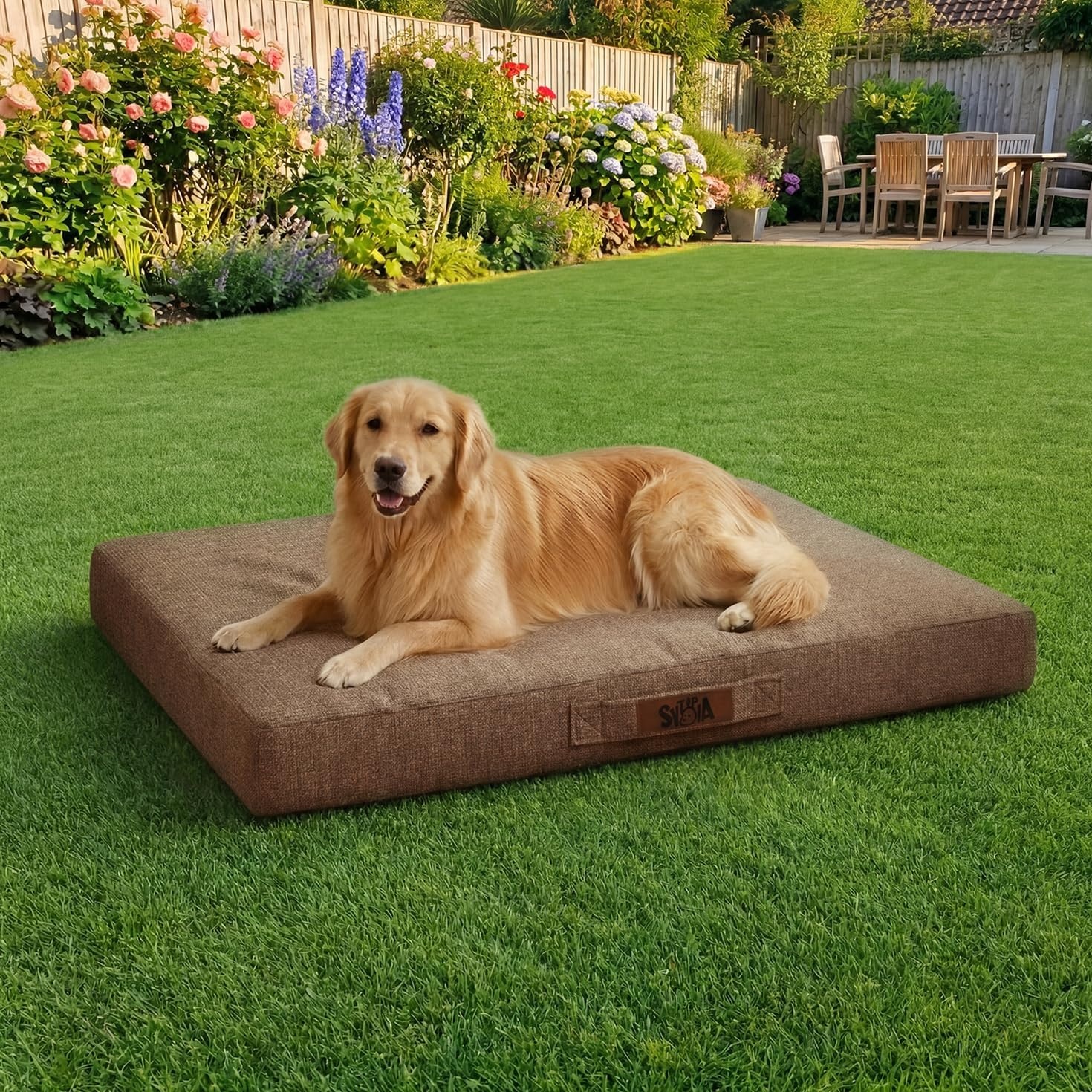
Sytopia 42 Inch Indestructible Dog Bed for Extra Large Dogs, Waterproof Chew Proof Orthopedic Pet Mat for Crate with Machinne Wshable Cover, Great for Indoor Outdoor Use, Brown
42 inch size for extra large dogs, waterproof and chew resistant, with a machine washable cover
The bulkiest of the four, and the build is wasted on a dog that never chews
Prices and availability may change.
How to judge a bed against a mat
Two questions settle most of it. First, how many hours a day does the dog spend on the thing? A dog that sleeps ten hours on the floor needs thickness, a raised edge to lean against, and a cover you can pull off and wash. A dog that uses a mat as a landing pad between naps needs grip and a low profile, nothing more.
Second, what does the dog do on the floor around it? Standing up from a lie-down, turning in a narrow hallway, hopping off the couch, waiting for a bowl to be filled. Those are traction problems. No amount of foam density fixes a slipping dog, and a thick bed placed on polished hardwood can slide out from under a heavy dog that pushes off it.
That is the trap with the whole orthopedic dog bed vs non slip dog mat question. The two products solve different problems, and most listings do not say so. That is why the honest answer to orthopedic dog bed or non slip dog mat is often both, in different rooms. Write the answers down if you have more than one dog, because the two products rarely split evenly across a household.
What an orthopedic bed is actually for
Orthopedic means one thing in dog bedding: a foam layer dense enough to hold a heavy body up off the floor rather than collapsing flat under it. Foam density is the number that decides whether a bed still has any loft after six months of a ninety pound dog flopping onto it, and it is the number most listings leave out. When a product page does not state density, judge by the cover: a removable, washable cover usually signals a foam core the maker expects to survive.
Hip support is the practical payoff. A senior dog with sore hips needs a surface that gives a little and then stops, so the joint is neither pressed against a hard floor nor sunk into a soft pillow. Weight capacity matters as much as thickness: a four inch bed rated for a small dog will bottom out under a Great Dane. Bed height is the other half of the equation. A six inch bed is comfortable to lie on and awkward to step onto for a dog with limited joint mobility, which is why so many owners pair a tall bed with a ramp or a set of stairs.
Crate use changes the math slightly. A mat that fits a crate tray is easier to keep clean than a bed with bolsters, and a senior dog that sleeps in a crate all night needs the same foam quality as one that sleeps on the bedroom floor.
For a dog that struggles to rise, joint mobility improves most when the bed is both supportive and reachable. If your dog cannot step up six inches, a lower profile mat on a rug may beat the plushest bed in the catalog.
Where a non slip mat does the work
A non slip dog mat is a traction product first and a comfort product second. The non slip backing is the whole point: a rubberized or textured underside that grips hardwood, tile, or laminate so the mat stays put when a dog scrambles to its feet. Without that backing, a mat is just a thin bed that slides.
It helps to stop framing this as non slip dog mat vs orthopedic dog bed, because the two are not competing for the same job. One is about standing, the other about lying down.
Placement decides how useful a mat is. The highest value spots are the ones where your dog already slips: the run up to the food bowl, the strip of floor beside the couch, the bottom of the stairs, and the patch where the dog lands after jumping off the bed. Two or three mats in those spots do more for a stiff dog than one large mat in the middle of the room. Rugs help, but a rug that slides is worse than no rug at all, and a mat with a proper backing stays where you put it.
The trade-off is cushioning. Most mats are thin, and thin means little hip support. A dog that spends the night on a mat sleeps close to the floor, which is fine for a young dog and rough on arthritic joints. Treat the mat as a mobility aid and the bed as furniture.
The difference between orthopedic dog bed and non slip dog mat
The difference between orthopedic dog bed and non slip dog mat comes down to what the product is doing at the moment your dog uses it. A bed holds weight for hours, so the specs that matter are foam density, thickness, and weight capacity. A mat holds position for a few seconds at a time, so the spec that matters most is the underside.
Second, footprint and cleanup. Beds are big, often 36 to 42 inches, and they take up floor space in a room you actually use. Mats are smaller and easier to move, which is why they end up in hallways and kitchens where a bed would be in the way.
Third, the dog's own behavior. Watch for two or three days before buying anything. A dog that circles and digs before lying down wants a bed with edges. A dog that stands and stares at the floor, or hesitates before crossing the kitchen, wants grip.
There is a version of this where one product does both jobs: an orthopedic mat with a non slip backing, which is what most of the products below actually are. That is a reasonable compromise, as long as you accept that a flat mat will not have the raised edge a dedicated bed offers.
How the orthopedic dog bed vs non slip dog mat choice plays out
All four of the beds below are mat format, which makes this a fair fight. Each one leans a different way.
The Patas Lague Orthopedic Large Dog Bed is a 36 by 24 inch black sofa mat with a washable cover. It is the most compact of the four, and the shape is a shallow sofa rather than a flat pad, so a dog that likes to rest its head has something to lean against. The size is the catch. 36 by 24 is a large bed for a medium dog, not a big one, and a ninety pound Labrador will hang off the end. Patas Lague Orthopedic Large Dog Bed
The Sunheir Washable Orthopedic Large Dog Bed is a large mat with a removable, washable cover, which is the configuration to look for if you want to keep the foam core clean without replacing the whole bed. The name does not state a length, so measure your dog nose to tail and compare before ordering. A removable cover is worth more than it sounds. Senior dogs have accidents, and a cover that goes into the washing machine is the difference between a twenty minute cleanup and a new bed. Sunheir Washable Orthopedic Large Dog Bed with Removable Cover
The LE SURE Cute Orthopedic Dog Bed is a 36 by 27 inch flat mat in cream. It is the flattest of the group, which makes it the easiest to step onto for a dog with limited joint mobility and the easiest to tuck against a wall or slide under a crate. The cream cover shows dirt sooner than black or brown, and the flat profile gives no bolster for a dog that likes to lean. LE SURE Cute Orthopedic Dog Bed
The Sytopia 42 Inch Indestructible Dog Bed is the outlier. At 42 inches it is the one here built for extra large dogs, with a waterproof and chew resistant cover that is machine washable, and a listing that mentions both indoor and crate use. If you have a giant breed, or a dog that has already destroyed two beds, this is the one that fits the job. It is also the bulkiest of the four and needs real floor space, so a dog that does not chew pays for durability it will never use. Sytopia 42 Inch Indestructible Dog Bed
Read as a set: the LE SURE for the stiff dog that needs a low step up, the Sunheir for the dog that has accidents, the Patas Lague for a medium dog in a tight room, and the Sytopia for a giant breed or a determined chewer.
What the spec sheet will not tell you
Almost no dog bed listing states foam density, and the ones that do state it in a way that is hard to compare across brands. Thickness is listed, and thickness is not the same thing. A four inch slab of low density foam compresses to nothing under a heavy dog within a month. A three inch slab of high density foam can hold up for years. When a listing gives you nothing to work with, reviews that mention sagging after a few months are your best evidence.
Same story with the non slip backing. Non slip is a marketing word, and it covers everything from a stitched rubberized panel to a handful of silicone dots. Look at the underside photos and check whether the grippy material runs the full length of the mat or just sits in the corners.
Weight capacity is the third missing spec in any orthopedic dog bed vs non slip dog mat listing. Manufacturers publish a size, not a limit, and a bed sold as large can mean anything from a fifty pound dog to a hundred and ten pound dog. When the listing is vague, size up. An oversized bed is a mild inconvenience. An undersized one is a returned order. If density matters to you, ask the seller directly, because a maker that knows its foam will answer.
Should you buy both?
For most senior dogs, yes. The bed is where the dog spends the night, and the mat covers the two or three spots where the floor is slippery. Buying only one leaves half the problem in place, and the half you leave is usually the one causing the slip.
If you have to pick one, pick based on the dog's day. A dog that already has a soft place to sleep but hesitates on the kitchen tile needs the mat. A dog that sleeps on a thin blanket on the floor and takes a long time to stand up needs the bed.
If your dog is also struggling with the car or the couch, the bed is only part of the setup. Ramp angle matters as much as cushioning when a dog is loading into a vehicle, and a support harness with a stated lift capacity can do more for a dog's confidence than any bed on this list.
What to check before ordering
Measure the dog, then measure the space. Length from chest to tail base, plus a few inches, is the minimum bed length. Width should let the dog lie flat on its side without curling. Then measure the floor you are willing to give up, because a 42 inch bed in a small living room is a permanent piece of furniture.
Check the cover. Removable and machine washable is the configuration that lasts, and it matters more with a senior dog than with a puppy. A washable cover is also the cheapest way to extend the life of a foam core, as covered in how to wash a dog bed cover.
Check the return window. Foam feel is subjective, and a bed that reads as firm in a listing photo can arrive soft. Ordering from a listing with a straightforward return policy costs you nothing if the density turns out to be wrong.
Finally, if your dog has lost mobility rather than simply slowed down, talk to your vet before buying gear. A bed helps a stiff dog. It does not replace a diagnosis.