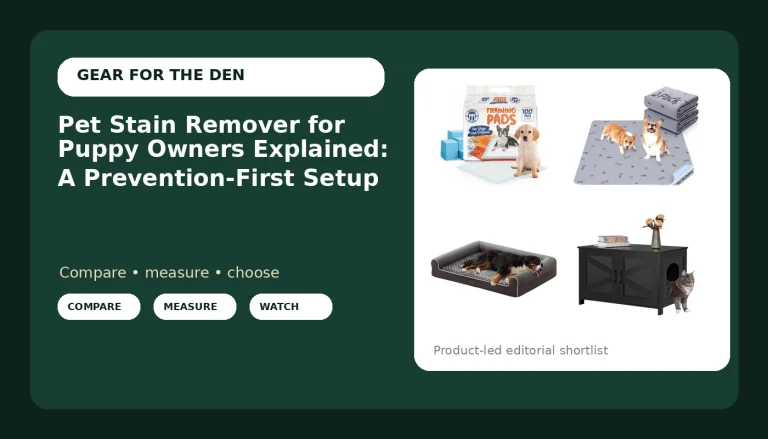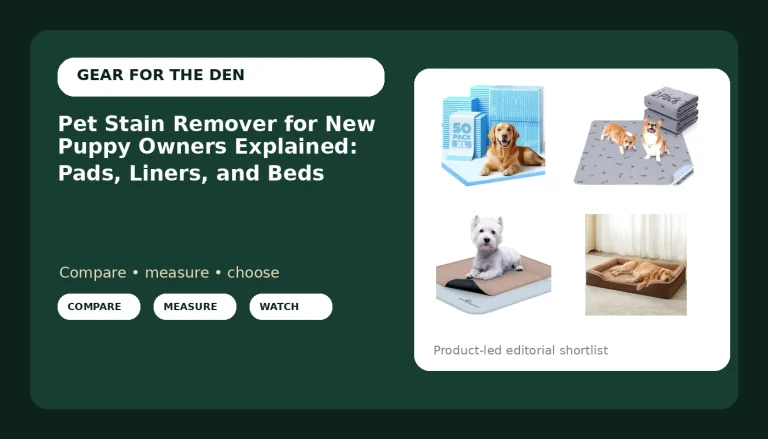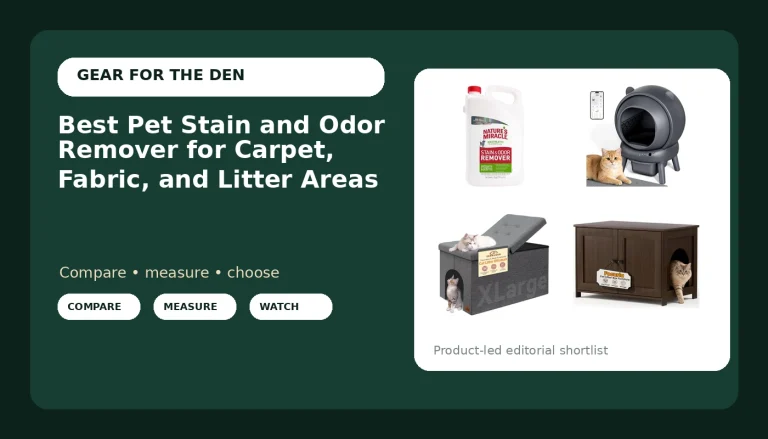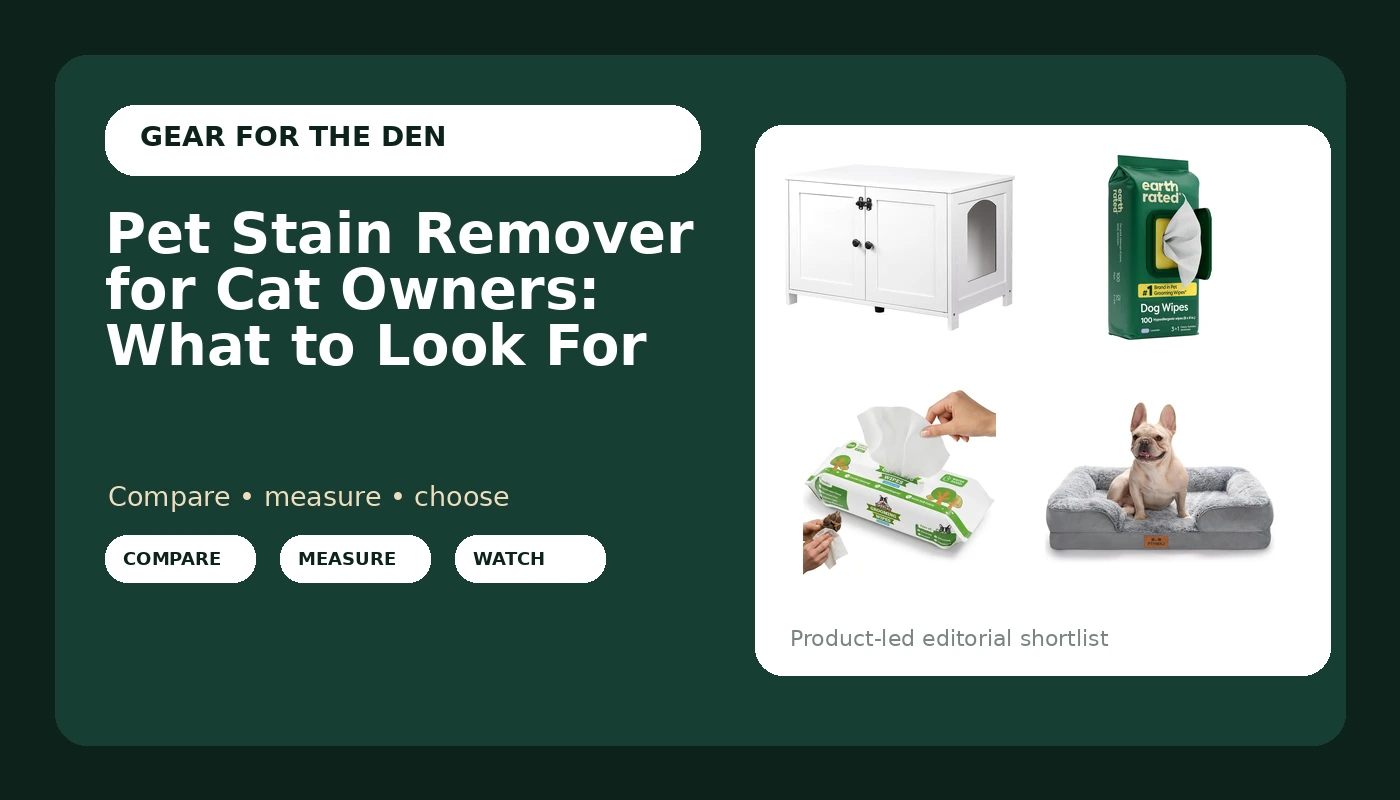
Cat messes are rarely a single problem. Urine soaks into carpet padding, spray reaches vertical surfaces, and litter tracks across the floor long after the box has been scooped. A pet stain remover for cat owners has to answer all three, which is why the useful question is not which bottle smells strongest but which combination of cleaning and containment stops the same spot from being re-marked. None of the four products below is a cleaner. They are the containment and wipe-down gear that keeps mess off carpet, upholstery, and foam in the first place, and that is the half of stain control most owners skip until they have treated the same corner three times.
Quick answer
Enzyme-based cleaners are the category built for urine, and they work by breaking down the uric acid crystals that keep a cat returning to the same spot. That is the pet stain remover for cat owners explained in plain terms: match the cleaner to the surface, give it the dwell time the label calls for, and cut the mess at the source with a litter enclosure, quick wipe-downs, and soft surfaces you can launder. Enzyme concentration and odor neutralizer performance matter far more than scent strength, and no wipe, mat, or enclosure replaces a cleaner that reaches the crystals sitting in carpet backing.
Four useful options
| Model | Best fit | What stands out |
|---|---|---|
| HOOBRO Litter Box Enclosure | Cat households where tracking and spray reach the floor | Wooden enclosure with a removable divider that doubles as an end table |
| Earth Rated Dog Wipes for Paws & Butt | Fast cleanup after box visits and walks | Deodorizing lavender wipes in a 100-count pack |
| Pogi's Dog Grooming Wipes for Paws & Butt | Homes that avoid added fragrance | Fragrance free wipes in a 100-count pack |
| PTHMKJ Orthopedic Dog Bed | Rooms where a soft surface shares space with cat gear | Memory foam couch bed, 30 inches long |
Containment first: HOOBRO Litter Box Enclosure
Containment is the least glamorous part of stain control and the part that saves the most work. A box that sits in the open lets cats kick litter and spray over the rim, and every granule that lands on carpet carries residue with it. An enclosure gives you one defined footprint to sweep or vacuum instead of a spray pattern that spreads a foot in every direction, and because the top works as a table, the box does not need a corner of its own. The trade-offs are real. You need a litter box that fits inside, the enclosure takes up floor space, and a hidden box is easier to forget, so daily scooping still matters. Nothing here treats urine that has already soaked into carpet.
Everyday wipe-down: Earth Rated Dog Wipes for Paws & Butt
Wipes solve the transfer problem rather than the stain itself. A cat that steps in a damp box, or a dog that walks through tracked litter, carries residue onto carpet, couch, and bed, and residue that sits for a day is much harder to lift than residue you wipe off in the first minute. Keeping a pack beside the box turns that wipe-down into a five-second habit. The lavender scent is the trade-off to weigh. It deodorizes the wipe and the surface it touches, but added fragrance can also cover the smell of a spot you have not found yet, and some cats avoid surfaces that carry perfume. Wipes are a surface tool. They do not neutralize urine that has already reached carpet or foam.
Fragrance free: Pogi's Dog Grooming Wipes for Paws & Butt
Fragrance free wipes are the better pick in two situations. The first is a household where someone has allergies or reacts to perfume, since a wipe that touches paws and rear ends up on hands, floors, and furniture. The second is a multi-cat home, where your nose is a diagnostic tool: if every surface smells like lavender, you cannot tell whether an odor neutralizer finished the job on a hidden spot. The trade-off runs the other way. You give up the deodorizing effect a scented wipe provides, so on a heavy tracking day you may use more wipes or follow up with a damp cloth. As with any wipe, dried urine still needs an enzyme cleaner.
Soft surfaces: PTHMKJ Orthopedic Dog Bed
Foam is the hardest surface in the house to clean, because liquid wicks inward and a surface wipe never reaches the layer underneath. A bed that sits in the same room as a litter box will see some exposure, so it is worth planning for before an accident rather than after. Check the listing for the manufacturer's care instructions on the cover, and put a waterproof liner under the bed so a spill stops at the liner instead of soaking into the foam core. A 30-inch bed is a compact footprint, which makes it easier to shift aside while you treat the floor beneath it. The cover and liner are the parts you will be laundering, so treat the care instructions as part of the purchase decision.
Prices and availability may change. Product images, names, and retailer links are matched to verified listings. No current price, rating, stock status, or measured result is stated here without current evidence.
What a pet stain remover for cat owners actually needs to do
Cat urine is not one substance. It carries urea, creatinine, hormones, and uric acid, and it is the uric acid that causes most of the trouble. As the liquid dries, uric acid forms crystals that bond to carpet fibers, upholstery, grout, and foam, and those crystals release odor again whenever humidity rises. A cat can smell them long after a human nose has stopped noticing, which is why an untreated spot becomes a favorite marking place.
That chemistry is why enzyme-based cleaners exist. The enzymes digest the proteins and the uric acid instead of covering them, and the residue they leave behind does not read as urine to a cat. Enzyme concentration and contact time decide whether that process reaches the crystals, because a cleaner that dries in two minutes never gets to the bottom of a carpet pile. Most labels call for keeping the area wet for a set period, and laying a damp towel over the spot helps it stay wet in a dry room.
Two mistakes cause most repeat failures. The first is heat: steam cleaning or hot water extraction before enzymes have had time to work can set proteins and lock the smell in. The second is mixing. Ammonia and bleach-based products should never be combined with an enzyme cleaner, and ammonia in particular reads as urine to a cat, so it can restart the marking cycle on a spot you just cleaned.
Carpet safe and fabric safe are not universal labels. A product that lifts urine from a synthetic carpet can leave a ring on wool or a water mark on velvet, and some upholstery cleaning codes restrict water-based cleaners entirely. Test on a hidden corner or under a cushion before you treat a visible area. If you are still setting up the box itself, our litter box setup guide for small spaces covers the placement questions that decide how much mess reaches the floor.
Matching the cleaner and the routine to the surface
Surfaces hold liquid differently, and that difference decides how you clean. Carpet stores urine in the backing and the pad below it, so a surface spray alone rarely solves the problem. Upholstery holds it in foam and batting. Hardwood and tile hold it in seams, grout, and the gap between baseboard and floor. The same bottle can be right for one of those and wrong for another, so read the surface guidance on the label before you buy rather than after.
Timing matters as much as chemistry. Fresh urine is a blotting job. Old urine is a re-wetting job, because the crystals have already bonded and need moisture and enzyme contact to break down. If a spot has been there long enough to dry and be re-marked, expect two or three treatments rather than one, with a full dry-down between them. Work through the same sequence every time:
- Blot fresh urine with a clean cloth, working from the outside of the puddle inward so you do not push it deeper into the fibers.
- Identify the surface and check the label for carpet safe or fabric safe language before anything touches the spot.
- Apply the enzyme cleaner at the dilution the label specifies, then keep the area wet for the full dwell time so enzyme concentration and contact time can do their work.
- Let the area dry completely, then check with your nose or a UV light, and repeat the treatment if the odor neutralizer did not fully resolve the smell.
- Protect the surface afterward: liner waterproofing under a bed, a mat under the litter box, and a pad sized to the footprint so liquid has somewhere to stop.
Practical guidance for keeping stains from coming back
Scoop the box daily. Most tracking starts with a box that holds more than the cat wants to stand on, and a cat that is unhappy with the box is a cat that goes somewhere else. If you use pads or mats, match pad size and pad absorbency to the box or bed footprint, because an oversized pad curls at the edges and leaves a channel straight to the floor. Where you have the choice, buy machine washable mats and covers, so routine cleanup is a laundry cycle instead of an afternoon with a brush. Keep a cleanup kit in one place: gloves, absorbent cloths, an enzyme cleaner, and a UV light, since minutes matter more than method on fresh urine. Finally, re-check treated spots on a humid day. Uric acid crystals release odor again when the air is damp, which is often the moment owners decide the cleaner never worked.
Which option should you choose?
Choose the HOOBRO Litter Box Enclosure when litter tracking and spray are the main source of mess and you want the box contained in a piece of furniture that earns its floor space. Choose the Earth Rated Dog Wipes for Paws & Butt when you want a deodorizing wipe for paws and rear after box visits and walks. Choose the Pogi's Dog Grooming Wipes for Paws & Butt when you would rather not add fragrance to a cleanup area, or when someone in the house reacts to perfume. Choose the PTHMKJ Orthopedic Dog Bed when you need a compact memory foam bed for a medium dog in a room that also holds cat gear.
One caveat applies to all four. None of them is a stain remover, so the correct pet stain remover for cat owners is still the one matched to the surface you are treating, and the ideal pet stain remover for cat owners routine pairs that cleaner with containment, quick wipe-downs, and protected soft surfaces. Details such as scent, size, and construction come from the manufacturer listings, and care instructions vary by product, so confirm the specifics before you buy.
The bottom line
Enzyme cleaners do the stain work, but they only hold up if mess stops arriving faster than you can treat it. Contain the box so litter and spray stay in one footprint, wipe paws and rear before residue travels, protect the soft surfaces a cat can reach, and treat urine while it is still wet. That combination is what makes a pet stain remover for cat owners work in a real house, rather than a bottle that gets used once and forgotten behind the laundry detergent.