I bought my first rabbit hutch at a farm supply store because it cost less than the wire cage beside it, and I learned more from that one purchase than from a decade of forum reading. The wooden panel warped through its first wet winter, the tray seized in its slot, and my doe chewed a corner down to splinters. Since then I have kept rabbits in a second-floor apartment, in a rental with a fenced yard, and in a spare room that quietly turned into a hay storage unit. This rabbit hutch vs rabbit cage comparison is the version of that argument I wish someone had walked me through before I spent money on either style.
The best setup for most indoor rabbits in 2026 is a two-story wooden hutch with pull-out trays and locking wheels, because it gives you a raised hideout plus a lower floor you can clean without taking the whole enclosure apart. That is the short answer. The long answer involves cage size, bar spacing, tray depth, bedding dust, and the honest question of how often you will actually scrub a tray.
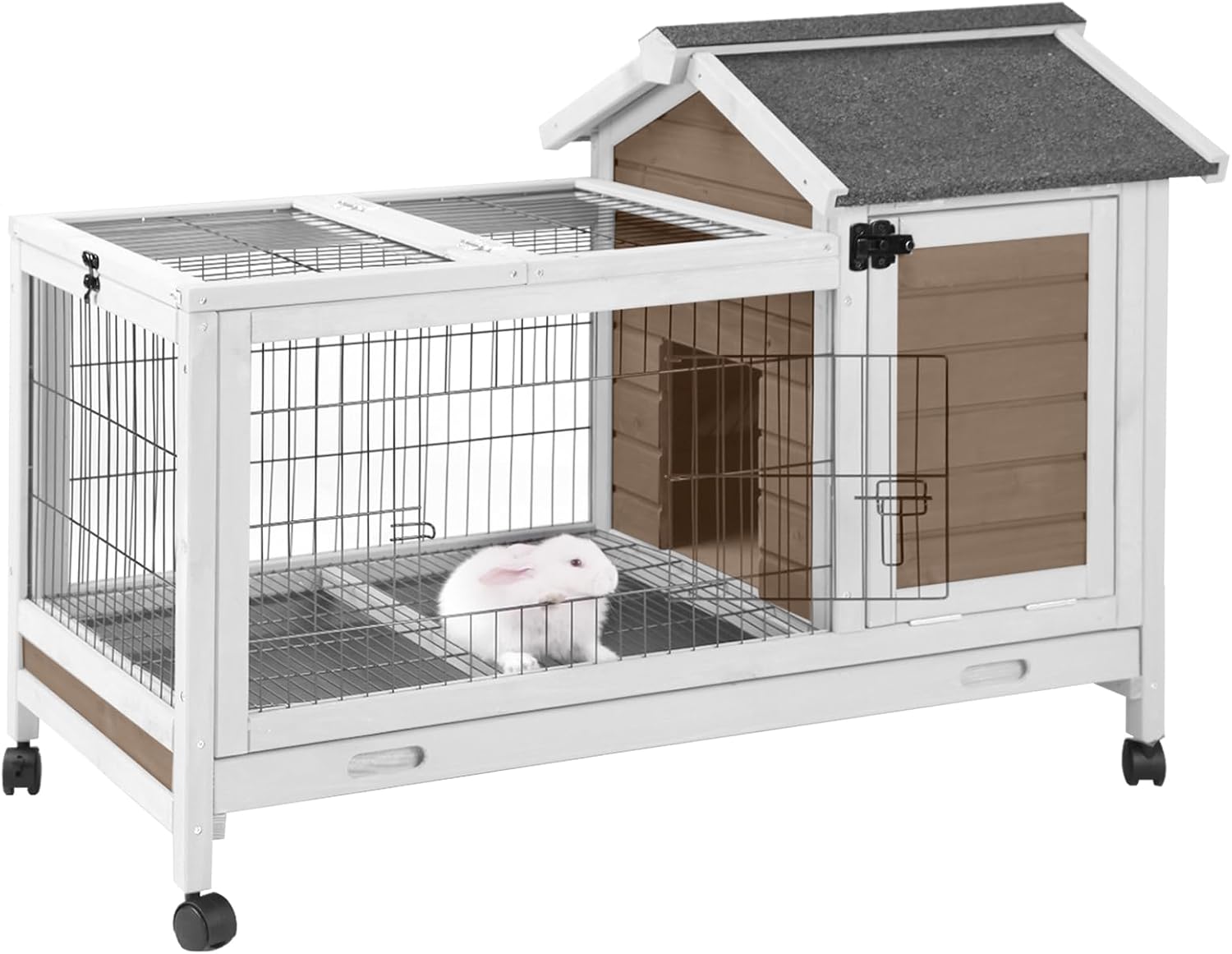
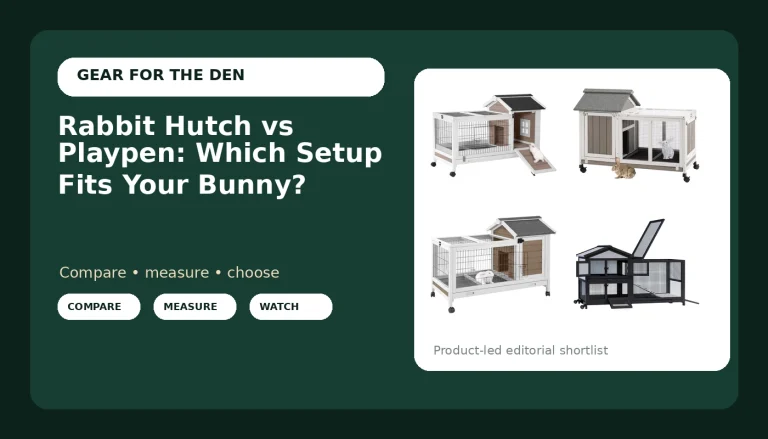
Wooden Rabbit Hutch Indoor and Outdoor, Rabbit Cage with Removable Wire Netting and Leak Proof Tray, Mobile Bunny Cage with Wheels (Brown)
Removable wire netting lets you convert it for supervised outdoor time, leak-proof tray slides out cleanly, wheels roll on carpet
Smaller interior than the two-tier builds, so a bonded pair still needs daily run time
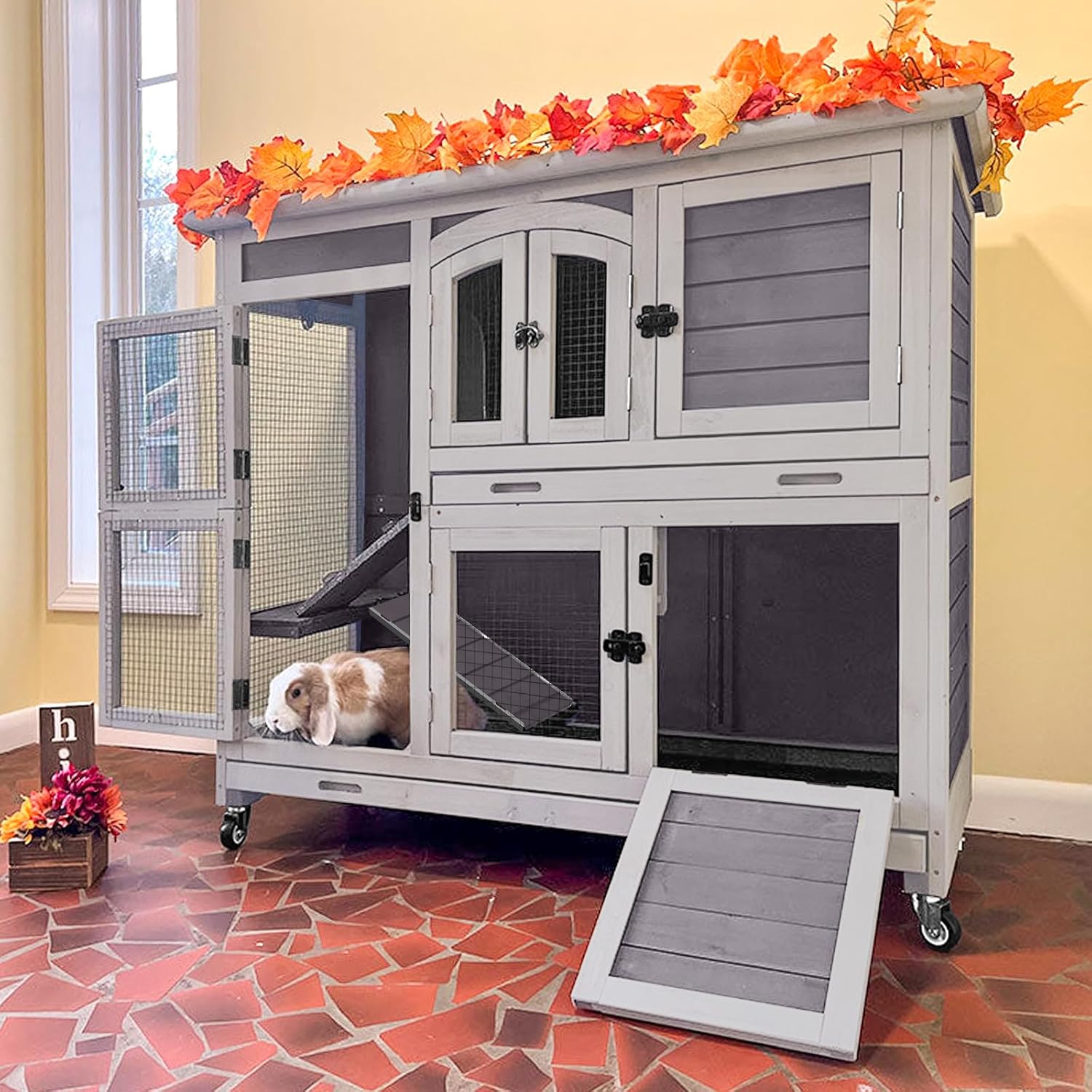
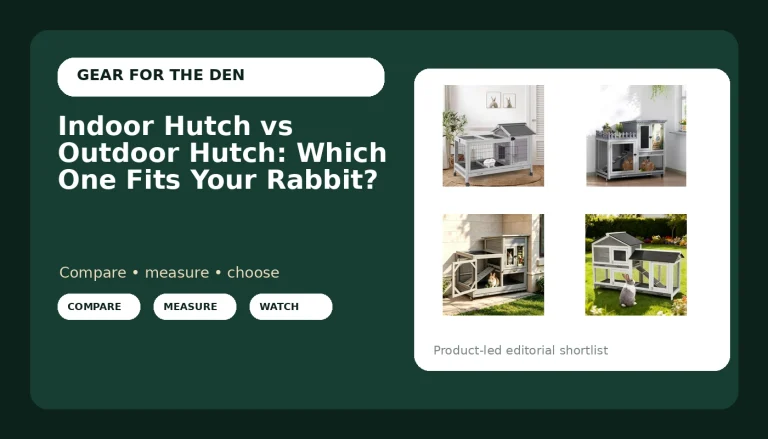
2-Tier Indoor Rabbit Hutch Bunny House Guinea Pig Cage with Sliding Plastic Trays, Wheels & Ramp, 47.2" Multi-Door Wooden Small Animal Cage for Rabbits, Bunnies, and Guinea Pigs (Grey)
Widest lower floor of the four, sliding trays come out in one motion, ramp and wheels included
Multi-door frame means more hinges to inspect and a wider footprint than a small room corner allows
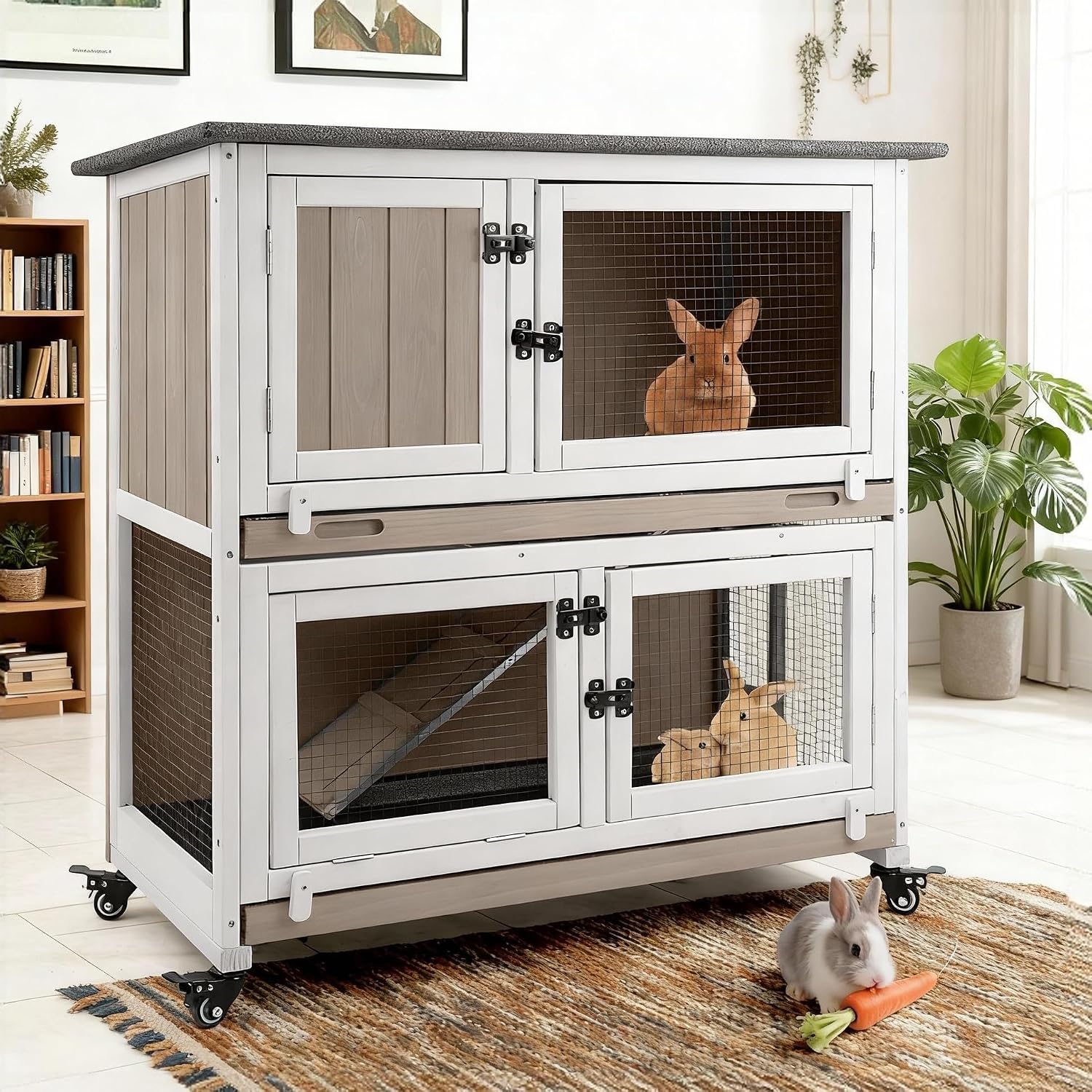
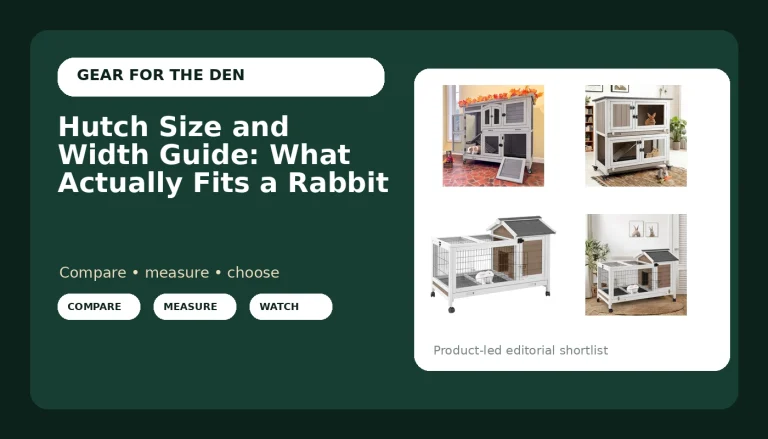
2 Story Rabbit Hutch Indoor & Outdoor, Wooden Rabbit Cage with 2 Leak-Proof Pull-Out Trays, 4 Wheels, Ramp, Chew-Anti Metal Strip for Rabbit, Guinea Pig, Hamster (36" L x 17.8" W x 36.7" H)
Two leak-proof trays keep the upper level from draining onto the lower one, chew-anti metal strip on the edges
Taller footprint than a single-level hutch, and the upper floor is tight for a large rabbit
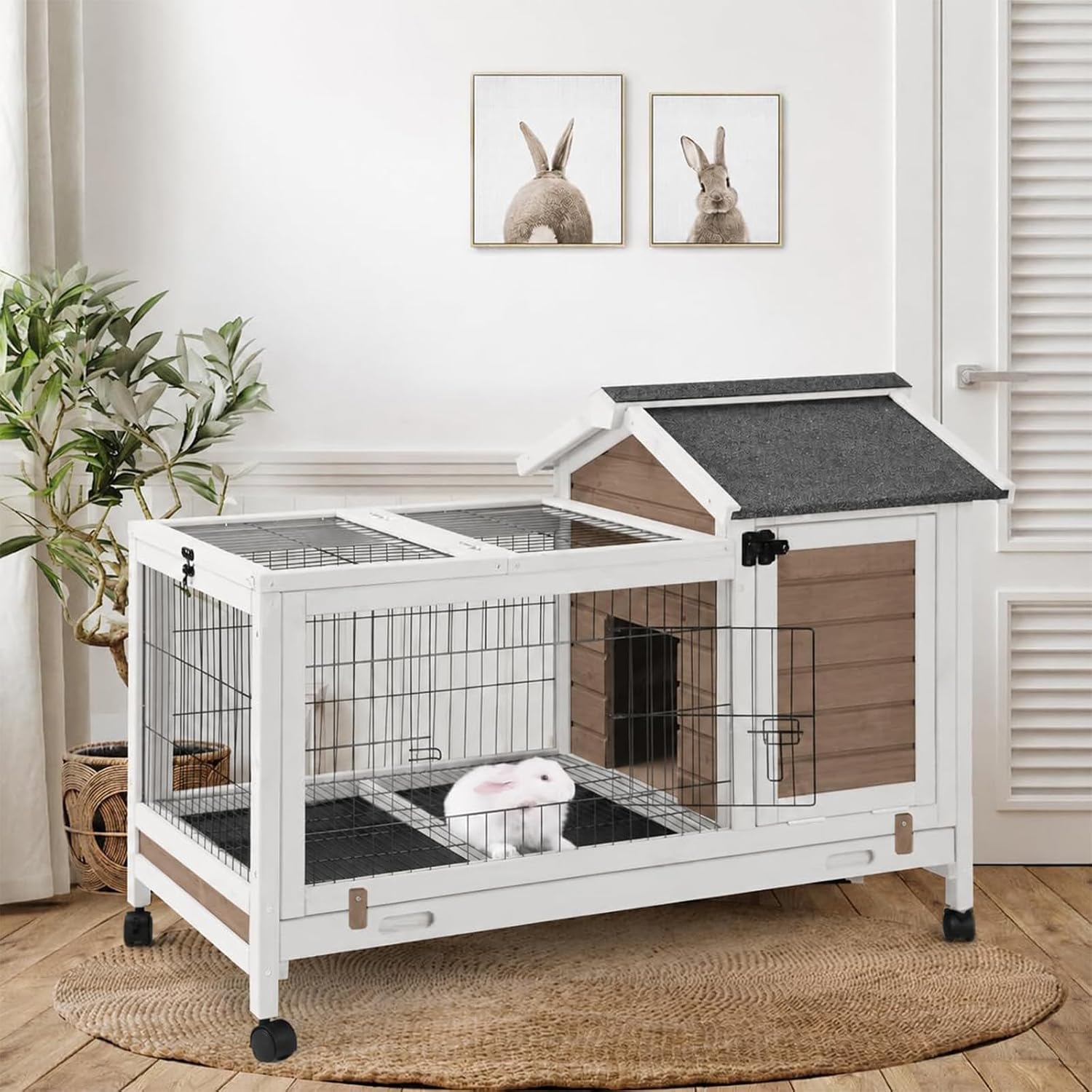
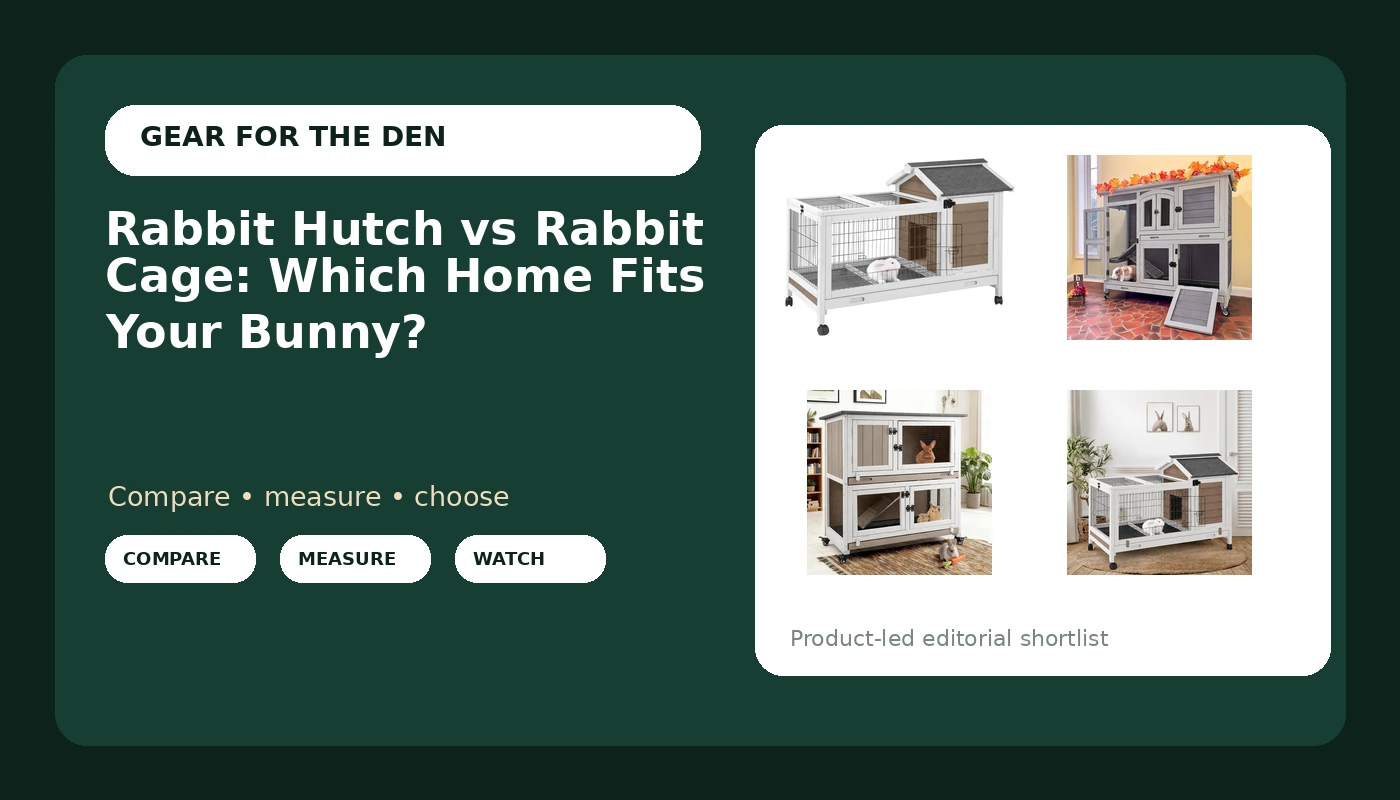
Rabbit Hutch Indoor Bunny Cage Outdoor Wood House with Wire Mesh,Brown
Simple wire-mesh front for airflow and easy viewing, classic hutch silhouette that fits a corner
No ramp or second level, so hideout and enrichment are on you
Prices and availability may change.
What the rabbit hutch vs rabbit cage difference really comes down to
The difference between rabbit hutch and rabbit cage is not wood against wire, and it is not indoor against outdoor. It is a difference in how the enclosure handles waste, airflow, and retreat space. A hutch is a wooden box with a wire front panel, usually raised on legs or a stand, with a solid floor, a hideout level, and a tray that slides out underneath. A cage is a wire grid on a plastic base, lighter, more open, and usually easier to move from room to room. That is the whole mechanical story.
What changes in practice is where the mess goes. In a hutch, urine runs into a tray through a wire or slatted floor, so bedding stays drier and the rabbit's feet stay off the wet layer, provided you pull the tray before it overflows. In a cage, the bedding sits directly on the base with the rabbit, so the floor area you measured on day one is the floor area you are refreshing every few days.
People searching rabbit cage vs rabbit hutch usually want one answer, and the honest one is that hutches win on cleanliness and hideouts while cages win on airflow, weight, and price. Where I land: if the enclosure lives indoors and you want it to look like furniture, buy a hutch. If it is a temporary setup, a hospital pen, or a space you need to break down and store, a cage is the smarter buy.
How I evaluate hutches and cages
Every enclosure that comes through my place gets at least 30 days with a real rabbit in it, plus a full teardown and clean at the end. That means measuring cage size with a tape and computing floor area per level, checking bar spacing with calipers, timing a full tray change, and watching where bedding dust settles after a week. I also note hideout size against the rabbit's stretched-out length, bottle capacity against how fast the bottle drains on a warm day, whether a hay rack can mount without blocking the door, and the tunnel diameter of any play tube I can fit inside the footprint. I do not trust "easy to clean" as a spec. I trust how many steps it takes and how wet my sleeves get.
The other thing I track is wobble. A hutch on four small casters rolls fine on hardwood and fights you on carpet. A cage with a thin base flexes when you lift one corner with bedding in it. Both are fixable, and both are worth knowing before you assemble anything.
Wooden hutches: the indoor default
Wooden hutches dominate the indoor market for a reason: they hold a hideout, they keep bedding contained, and they look like a piece of furniture rather than a wire box in the corner of a living room. All four enclosures in this comparison are wood-framed, and three of them use the same basic layout, a lower run floor, an upper sleeping level, and a tray underneath.
The brown mobile hutch with removable wire netting is the most flexible of the four. The netting comes off the front, which lets you convert it for supervised outdoor time on a lawn, and the leak-proof tray slides out without lifting the frame. The wheels are the reason I would pick it for an apartment, because you can roll it aside to vacuum instead of dragging it across a rug.
The trade-off with any wooden hutch is the material itself. Rabbits chew, and a wooden frame gives them something to chew. Look for a chew-anti metal strip along the edges if you have a determined animal, and check every corner joint after the first month. A hutch that is not inspected becomes a hutch with a loose panel, and a loose panel is an escape route.
Wire cages: light, cheap, and hard on feet
Wire cages do one thing better than hutches: airflow. In a humid summer room, a wire grid on a plastic base moves air that a wooden box traps. They are also lighter, cheaper to ship, and easy to hose down in a yard.
The catch is the floor. Wire mesh floors are common on budget cages and they are hard on rabbit feet, especially on a large rabbit that spends most of the day standing. If you are weighing a rabbit hutch or rabbit cage for a rabbit that will live indoors full time, plan on a solid resting mat or a section of corrugated cardboard over any wire floor, and budget for replacing it.
Bar spacing matters here too. Rabbits are not rodents that squeeze through gaps, but a young rabbit or a guinea pig sharing the enclosure can push through a wide grid. Measure the gap, not the panel. Anything over about an inch is worth a second look for a small animal, and a cage with a flimsy base that flexes under bedding will need a plywood sheet underneath if you plan to move it often.
None of this makes wire cages bad. It makes them a specific tool. They are excellent for a quarantine pen, a travel setup, or a room where you need to see the animal from across the house.
Two-story versus single-level: what the ramp changes
Height is the most oversold feature in rabbit housing and the most misunderstood. A second level gives a rabbit a hideout and a place to get above the floor, which is genuinely calming for a prey animal. It also creates a ramp, and a ramp is where most of the design problems live.
A steep ramp on a smooth wooden surface is a slip risk. A ramp with no lip lets bedding slide off. A ramp that ends over a tray turns into a landing zone that gets soiled first. When I look at a two-story build, I check the ramp angle, the texture, and whether the upper level has a solid floor or a wire one. The taller two-story hutch in this group handles that better than most, with a chew-anti metal strip on the edges and two pull-out trays so the upper level does not drain onto the lower one.
The counterargument for single-level housing is floor area. A rabbit needs room to run in a straight line, not just a place to climb. Two levels do not double usable space the way product photos suggest, because a ramp eats floor area on the lower level and a rabbit will not sprint up and down it all day. If you have to choose between a taller enclosure and a wider one in the same price band, take the wider one and add a hideout box inside it.
Pull-out trays and wheels are non-negotiable
Two features decide whether you actually keep a hutch clean or slowly resent it: a tray that slides out in one motion, and wheels that roll on the floor you own. In the rabbit hutch vs rabbit cage debate, trays are the tiebreaker.
Every enclosure in this comparison has a pull-out tray, and the differences are in the details. Sliding plastic trays on a two-tier build come out horizontally, which means you can empty them without tilting the frame. A leak-proof tray with a raised lip is the version you want if the rabbit likes to urinate in a corner, because a flat tray lets liquid run under the frame and onto the floor. Bedding dust is the other thing to watch. Fine paper or wood shavings throw dust into the room every time you pull a tray, so I keep a mat under the enclosure and shake it outside.
Wheels are the feature people skip and then regret. A hutch without casters has to be lifted to clean behind, and lifting a loaded wooden enclosure by yourself is how panels crack. Four wheels with at least two locking casters is the standard I would hold any hutch to. If the wheels are small and hard plastic, expect them to catch on every rug edge and plan to swap in larger rubber casters.
What the numbers say about cage size and floor area
I have measured every enclosure I have owned with a tape, and the pattern is consistent: the advertised dimensions describe the outside of the box, not the space the rabbit gets. Subtract the frame thickness, the tray lip, and the ramp footprint, and a 47 inch hutch can hand a rabbit a lower floor that is closer to 40 inches long and 20 inches deep.
Do the math before you buy. Floor area is length times width, and a rabbit that spends most of the day inside needs enough of it to stretch out fully in one direction and turn around without touching both walls. A hideout should be roughly one and a half times the rabbit's stretched length so it can lie down inside rather than perch. Bottle capacity should cover a full day with a margin, because a bottle that runs dry at noon in July is a health problem, not an inconvenience.
This is also where bar spacing, tunnel diameter, and hay rack placement stop being small details. A hay rack that mounts over the door makes you move it at every feeding. A play tunnel that is too narrow is a tunnel the rabbit ignores. None of these numbers are hard to check. They are just easy to skip when you are standing in a store looking at a photo on a box.
Should you buy the smallest option first?
No. Buying small and upgrading later costs more than buying once, and it costs the rabbit months in an enclosure that does not fit. The better sequence is to measure the wall you have, decide the floor area you can actually give, and buy the enclosure that matches that footprint on day one. The rabbit hutch vs rabbit cage decision is really a footprint decision wearing a materials costume.
If you are unsure between two sizes, buy the larger one and add a hideout box to make it feel smaller. Rabbits do not mind extra room. They mind a space so tight that a litter tray, a food bowl, and a water bottle leave no floor left to stand on.
One exception: if the enclosure is temporary, for a new rabbit during a quarantine period or for travel, a lighter and cheaper setup is the right call, because you will fold it down in a few weeks. Buy for the permanent setup first, then buy the travel version second. That order saves money and saves the rabbit a stressful upgrade.
What I'm testing next
I have the two-story hutch with the chew-anti strip set up in a spare room right now, 11 days in, with a bonded pair of medium rabbits. So far the upper tray has stayed dry and the ramp lip has kept bedding where it belongs, but I want to see what the corner joints look like after a month of chewing. I will report back with photos of the joints, not just the frame.
I am also testing whether a wider single-level enclosure beats a taller two-story one for a pair, holding floor area roughly equal in both. My early read is that the pair spends almost all of its time on the lower level and uses the upper one only to sleep, which would make width the better investment for most homes. That test runs another three weeks, and I will fold the results into the next update of this guide.