Every dog owner hits the same parking-lot moment: wet fur, sandy paws, and a back seat you would rather not explain to a passenger. The search that follows usually turns into a straight seat cover vs car hammock question, and the two products get sold side by side even though they solve slightly different problems. A seat cover drapes across the bench and protects the upholstery. A car hammock does the same job but anchors between the front and rear headrests, turning the rear footwell into a wall so your dog cannot slide forward or drop into the gap. The four products below sit at different points on that spectrum, and choosing between them comes down to how your dog rides, how much mess you are willing to clean, and whether the back seat needs a flat, load-bearing floor.
For most people, a waterproof hammock with a hammock anchor at all four headrests is the better buy than a plain bench cover, because it closes the footwell as well as protecting the upholstery. The catch is that hammocks vary enormously in how they handle weight and how well they stay anchored, and the cheapest ones sag into the very gap they were supposed to close.
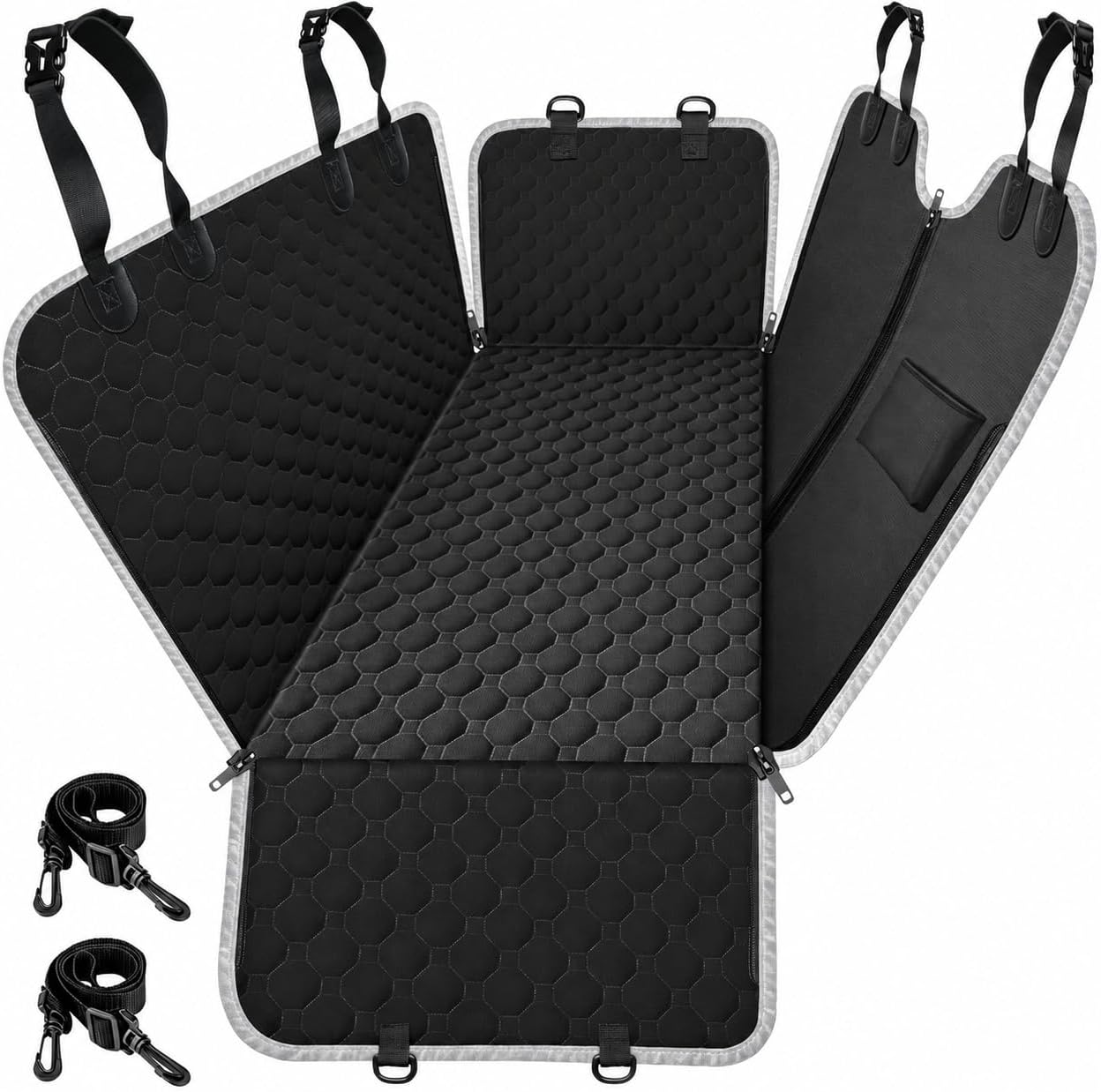
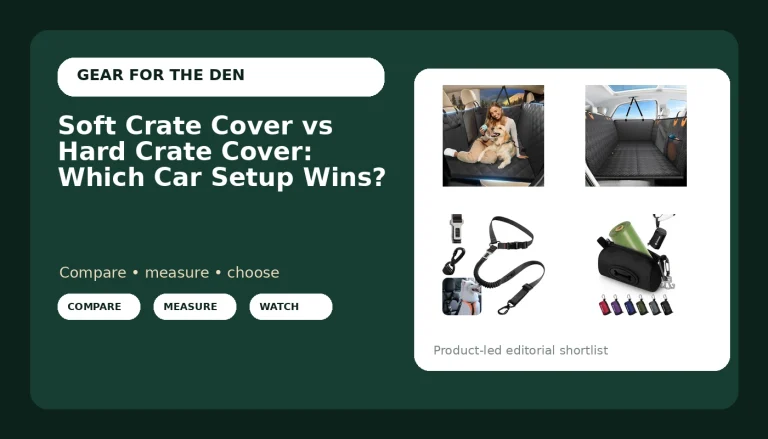
Mancro Dog Car Seat Cover for Back Seat, Waterproof Dog Hammock for Car
Lowest-cost way to try the format, and it works as a flat cover or a hung hammock
Soft panel only, so it is a fabric barrier rather than a flat platform
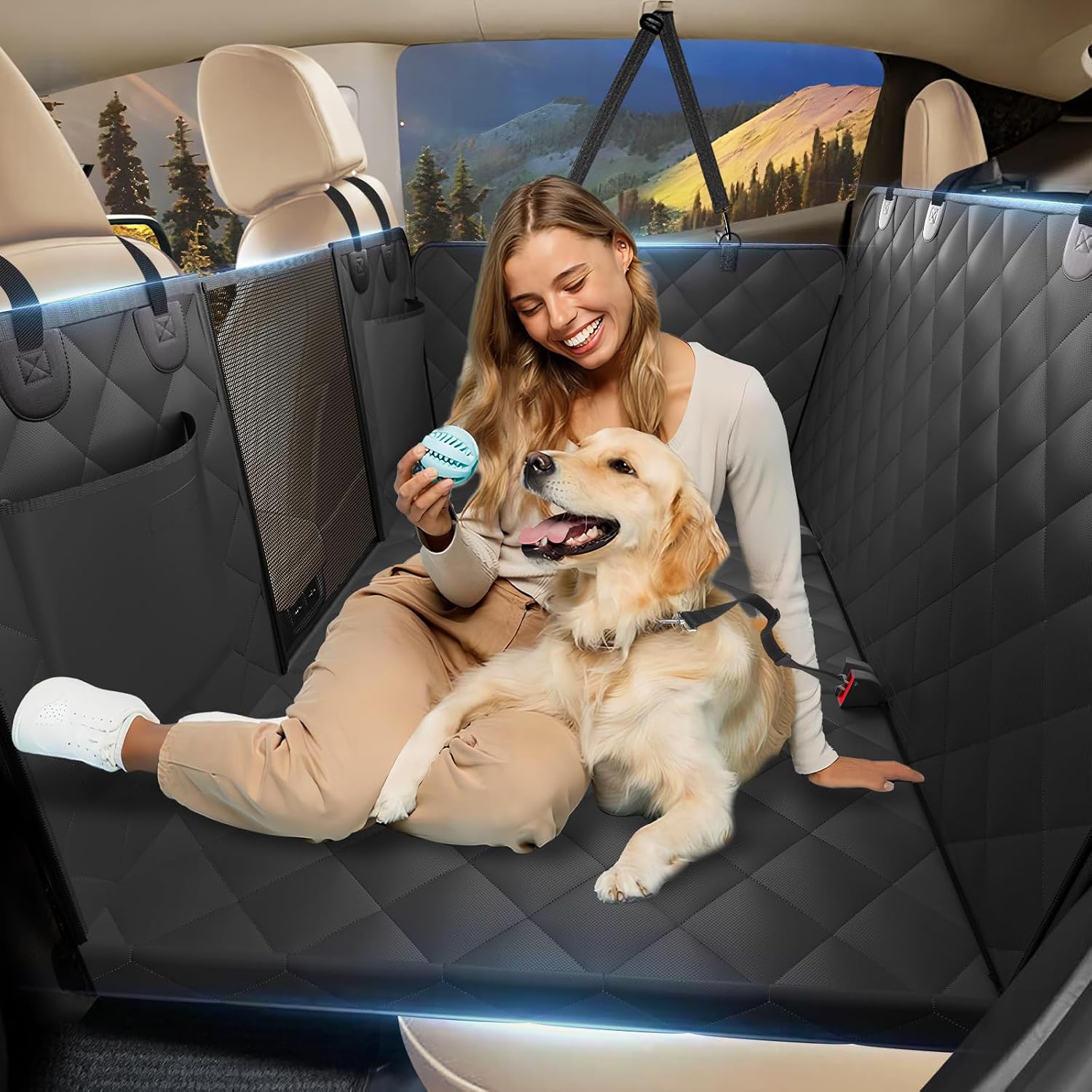
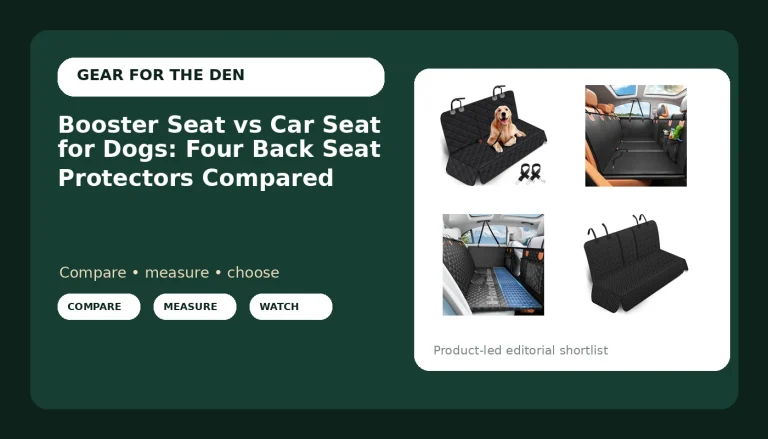
Btefd Back Seat Extender for Dogs, Hard Bottom Dog Hammock for Car & SUV
Built as an extender with a hard bottom, so it levels the footwell instead of sagging into it
Rigid base is bulkier to fold and store than a soft cover
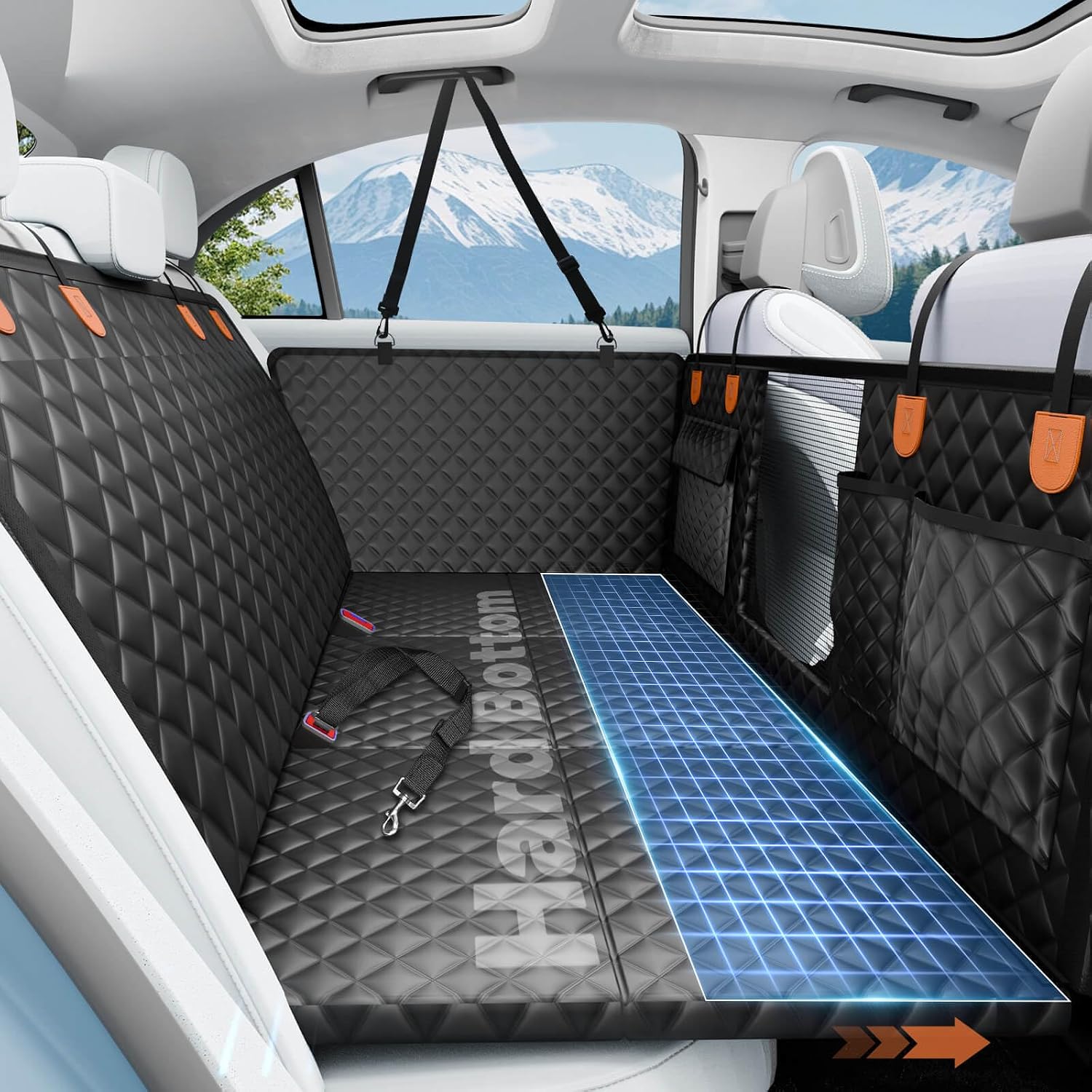
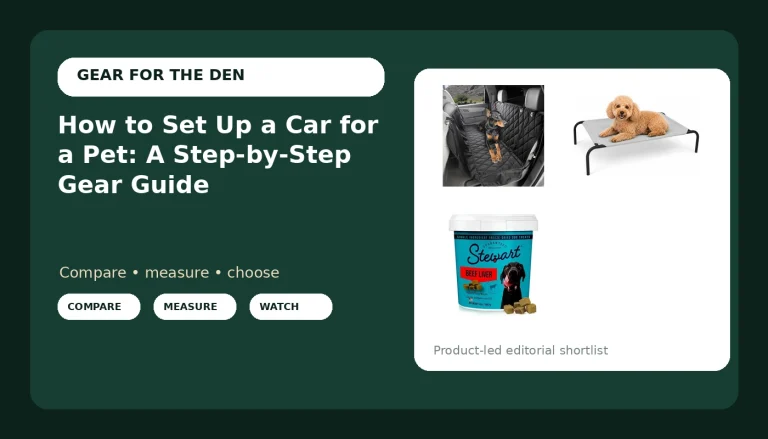
Dog Car Seat Cover for Back Seat, Hard Bottom Hammock Hold 400lbs For Cars
The heaviest-duty option here, with a hard bottom and a 400 lb weight limit in its own listing name
That much structure usually means a heavier package to install and remove
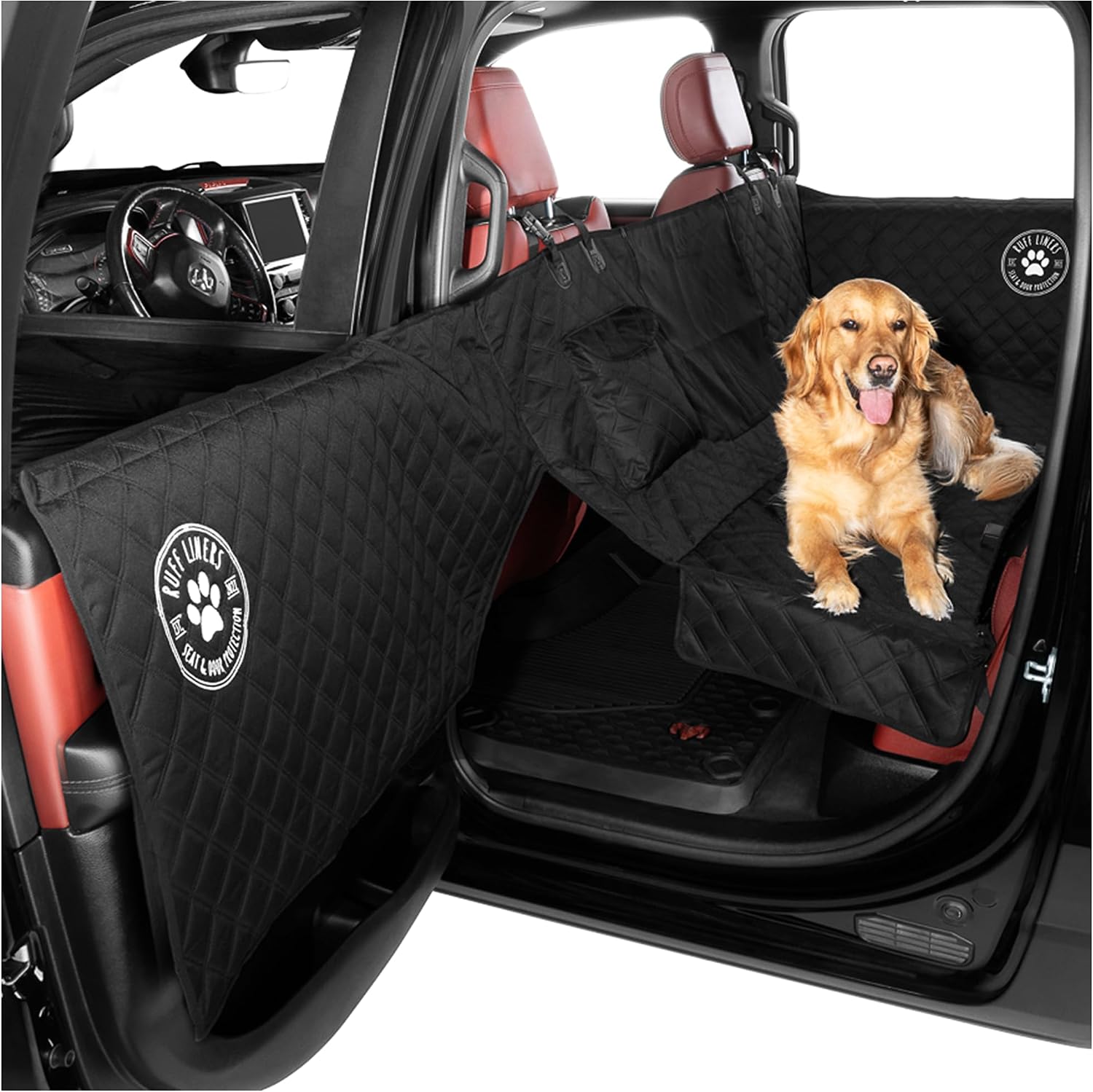
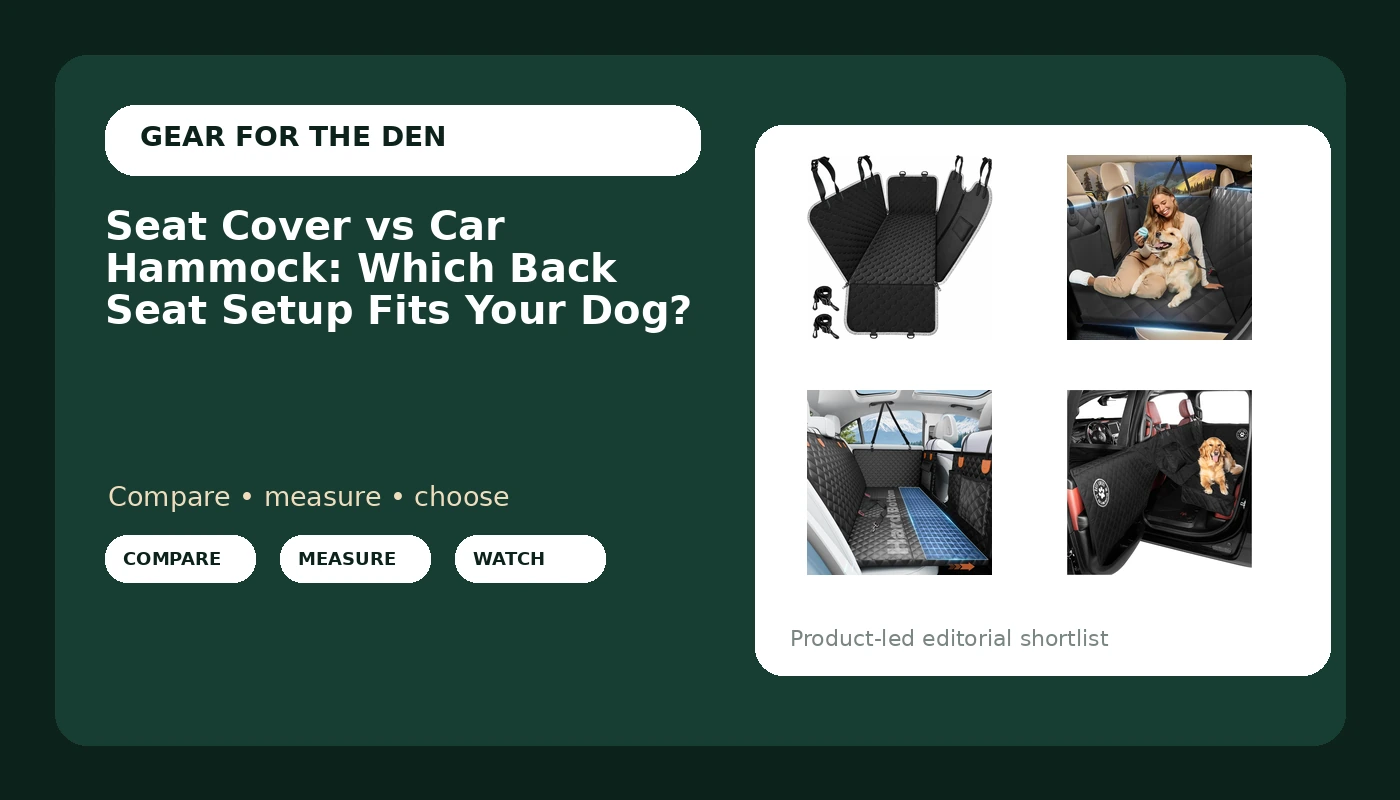
Ruff Liners Dog Hammock for Car, Waterproof – As Seen on Shark Tank
Waterproof hammock from the best-known name in this group, with national TV exposure behind it
Highest cost of the four, which is hard to justify for an occasional passenger
Prices and availability may change.
How seat cover vs car hammock actually differs
The difference between seat cover and car hammock comes down to geometry rather than fabric. Both start life as a quilted panel that covers the rear bench. A plain seat cover stops there: it protects the upholstery from hair, mud, claw scratches, and the occasional accident, and it attaches with a few straps around the rear headrests plus anchors pushed into the seat crease. A hammock takes that same panel and adds two straps running to the front seat headrests. The panel now hangs above the footwell instead of lying flat on the bench, which closes the gap between the front and rear seats.
That gap is the whole argument. A dog riding loose in the back can slide forward under braking and drop a paw into the footwell, which is how a lot of minor injuries and a lot of mid-drive rescues happen. A hammock turns the footwell into a wall. It also keeps a muddy dog from climbing into the front seat, which is why plenty of owners buy one in the first place.
Whether you call it a seat cover or car hammock, the panel itself is often the same waterproof fabric, and several products are sold as both. That is why the car hammock vs seat cover question is less about which category wins and more about which version of the same idea fits your vehicle and your dog's weight.
If you weigh the two on price alone, the flat cover usually wins, because it uses less material and fewer straps. The moment you add a hard bottom or a rigid frame, you are paying for structure rather than fabric, and the cost climbs accordingly. None of the four products here is expensive by pet-gear standards, but they are not interchangeable either.
Soft waterproof covers and hammocks: the entry tier
The Mancro Dog Car Seat Cover for Back Seat is the simplest product in this group and the one most owners should look at first if they have never used any back seat protection before. The name says waterproof and hammock in the same breath, which tells you what it is: a quilted panel with a waterproof backing that can be strapped flat across the bench or hung between the front and rear headrests.
That flexibility is the appeal. Run it flat and you have a conventional seat cover for a dog who sits still. Run the front straps up to the front headrests and you have a sling that keeps your dog out of the footwell. Nothing about it is structural, so it will not give a large dog a flat floor to stand on, and a heavy dog will push the fabric down into the gap over time.
What you get at this tier is protection, not architecture. Hair, mud, drool, and the occasional accident stay off the upholstery, and the whole thing shakes out or hoses off. For a sedan, a small dog, or an owner who wants to test whether a hammock suits their dog before spending more, this is the low-risk way in. For a 90-pound shepherd who shifts his weight in corners, it is not enough.
Hard-bottom hammocks: the extender tier
The Btefd Back Seat Extender and the hard-bottom hammock rated for 400 lbs both attack the same weakness: a fabric sling that sags. Both are described as hard bottom designs, and both are positioned as extenders rather than plain covers, which means the panel is meant to sit level over the footwell and act like an extension of the bench.
That changes what the product can do. A flat, supported surface gives a large dog room to lie down without hanging in a sling, gives a senior dog a stable platform to step onto, and gives a multi-dog household a surface that does not collapse in the middle when two dogs shift at once. The 400 lb figure in that product's name is the manufacturer's own weight limit claim, and it is aimed squarely at the large-dog and two-dog end of the market.
The trade-offs are weight and bulk. A hard bottom does not fold down as small as a soft cover, so it tends to live in the car rather than in a closet. It also raises the effective floor of the back seat slightly, which is worth checking against your dog's jumping comfort and your own headroom when you load groceries.
Between the two, the extender design and the heavy-duty hard bottom overlap heavily. If your dog is under 50 pounds and rides calmly, either is more structure than you need. If your dog is over 70 pounds, or if you regularly carry two, the hard bottom stops being a luxury and starts being the reason the setup works at all.
Fit, anchors, and back seat geometry
Before any of this matters, the product has to fit the car. Three measurements decide that: the width of your rear bench between the door panels, the spacing between your rear headrest posts, and whether your back seat has a center armrest or a 60/40 split that changes the shape of the bench.
Hammock anchor points are where most cheap setups fail. A hammock is only as good as its straps, and the straps need four solid attachment points: two rear headrests and two front headrests, or two rear headrests plus loops around the front seat bases. If your car has fixed rear headrests that do not adjust, or headrests molded into the seatback, check how the product attaches before you buy.
If you also travel with a crate, the carrier dimensions of the crate and the footprint of the hammock have to coexist. In a small crossover they usually will not, and you end up choosing one. Cabin size matters here too: a full-size SUV can take a hard-bottom extender and still leave room for a passenger, while a compact sedan may only have room for a soft cover.
One more geometry note for small dogs. Some owners pair a hammock with a booster so the dog can see out the window, and booster height determines whether that works with the hammock's front straps or fights them. Measure before you buy both.
Waterproofing, ventilation, and cleanup
Every product in this group is sold as waterproof, and waterproof is doing a lot of work in those listings. What it usually means is a coated or laminated backing that keeps liquid from soaking through to the upholstery, plus seams that may or may not be sealed. A puddle sits on top, you wipe it up, and the seat underneath stays dry. That is the realistic promise, and it is worth having.
Cleanup is where the differences show up in daily use. Hair is the real enemy, not water. A smooth, tightly woven surface releases hair with a rubber brush or a vacuum; a soft, fuzzy surface holds it. Look at the photos in the listing and ask which one you are getting.
Ventilation is the overlooked variable. A hammock that hangs tightly against the seat back traps air underneath, and in a hot climate that turns the whole setup into a greenhouse. A slightly loose sling, or one with a mesh panel, moves more air. If you travel with a dog in summer, that matters more than a few ounces of fabric weight.
A collapsible bowl and a water bottle live in the door pocket of any car that carries a dog regularly. The hammock protects the seat; the bowl keeps the dog from drinking out of a puddle at the rest stop.
What the listings do and do not tell you
The four products here are sold with a lot of confidence and very little standardized data. There is no equivalent of a crash test for back seat dog gear, so weight limits are the manufacturer's own numbers rather than an independent rating. Treat a 400 lb claim as a statement about the frame's capacity, not a guarantee about what happens in a collision.
What the listings do tell you is the format. Waterproof in the name means a coated panel. Hard bottom in the name means a rigid or semi-rigid base. Back seat extender in the name means the panel is meant to span the footwell rather than lie on the bench. Shark Tank in the name means a brand that has had national television exposure and prices accordingly.
Prices on all four move around with sales and coupons, so the number you see today is not the number you saw last month. Check current Amazon price on each listing before you commit, and compare them the same day rather than from memory.
The last thing a listing will not tell you is how your dog behaves in the car. A dog who curls up and sleeps will be fine with a soft cover. A dog who paces, braces, and leans into corners needs structure. That is a judgment about your dog, and no product page can make it for you.
Do you need a hard bottom at all?
This is the question that actually resolves the seat cover vs car hammock decision for most people, and the answer follows your dog's weight and age more than your car's price.
Under 30 pounds: a soft waterproof cover or hammock is enough. Small dogs do not push fabric into the footwell, and the lighter product is easier to install, remove, and store.
30 to 60 pounds: a hammock with a decent hammock anchor at all four points is the sweet spot. You get the footwell closed without paying for a rigid frame you do not need.
Over 60 pounds, or two dogs: hard bottom. This is where the extender designs earn their price. A large dog's weight concentrates on a small contact area, and a sling will stretch and sag under it within a few trips.
Senior dogs and dogs with mobility issues: hard bottom, for a different reason. A stable, level surface is easier to step onto than a sling that dips when weight lands on it, and it is easier to get off. That is a comfort argument, not a durability one.
If your dog rides twice a month for short trips, buy the inexpensive cover and put the savings toward a better harness. If your dog rides daily, the hard bottom pays for itself in the first muddy season.
What we're watching next
The back seat category is drifting toward modular systems: a base panel, a removable waterproof topper, and a bolster that turns the whole thing into a bed for long drives. That is a better answer than any single product for owners who road trip with a large dog, and we expect more of it.
Two adjacent categories are worth watching alongside this one. The first is travel gear for dogs who hike, where a backpack frame rated for a dog's weight is now common enough to compare directly against a soft carrier. The second is car ventilation for dogs left briefly in a parked vehicle, which is a different problem from a hammock and one that a cover does nothing to solve.
For now, the practical advice has not changed. Measure your bench, count your headrests, weigh your dog, and decide whether you need a barrier or a platform. The four products above cover the range from cheap protection to a hard-bottom platform, and any of them beats a towel and hope. That is the honest version of the seat cover vs car hammock answer.