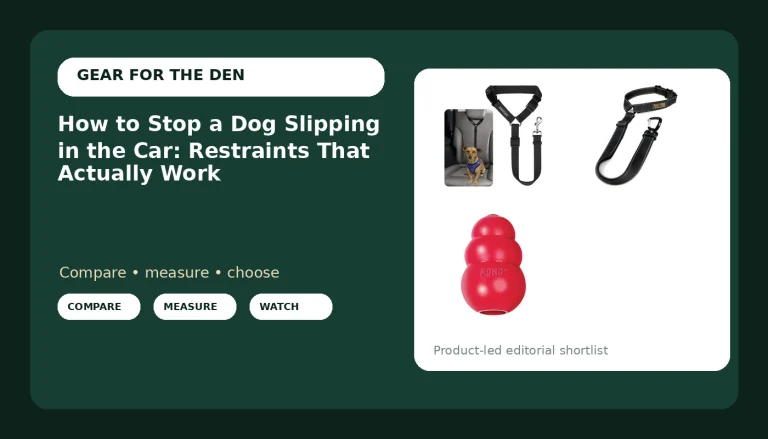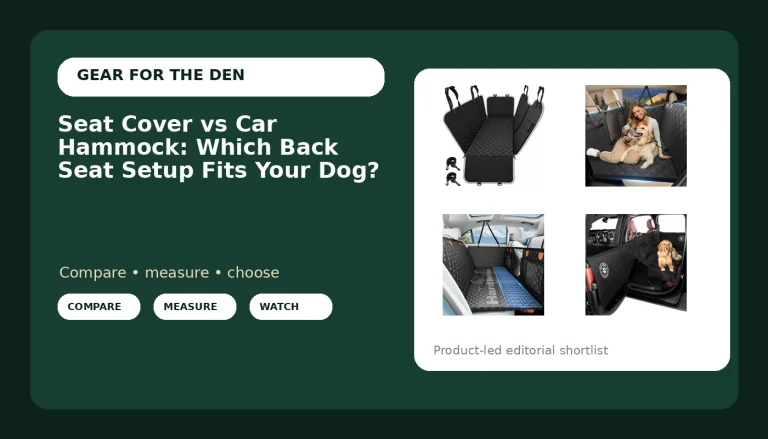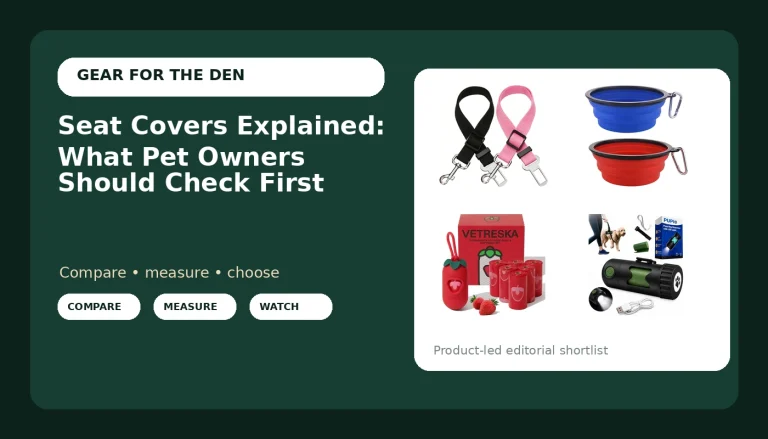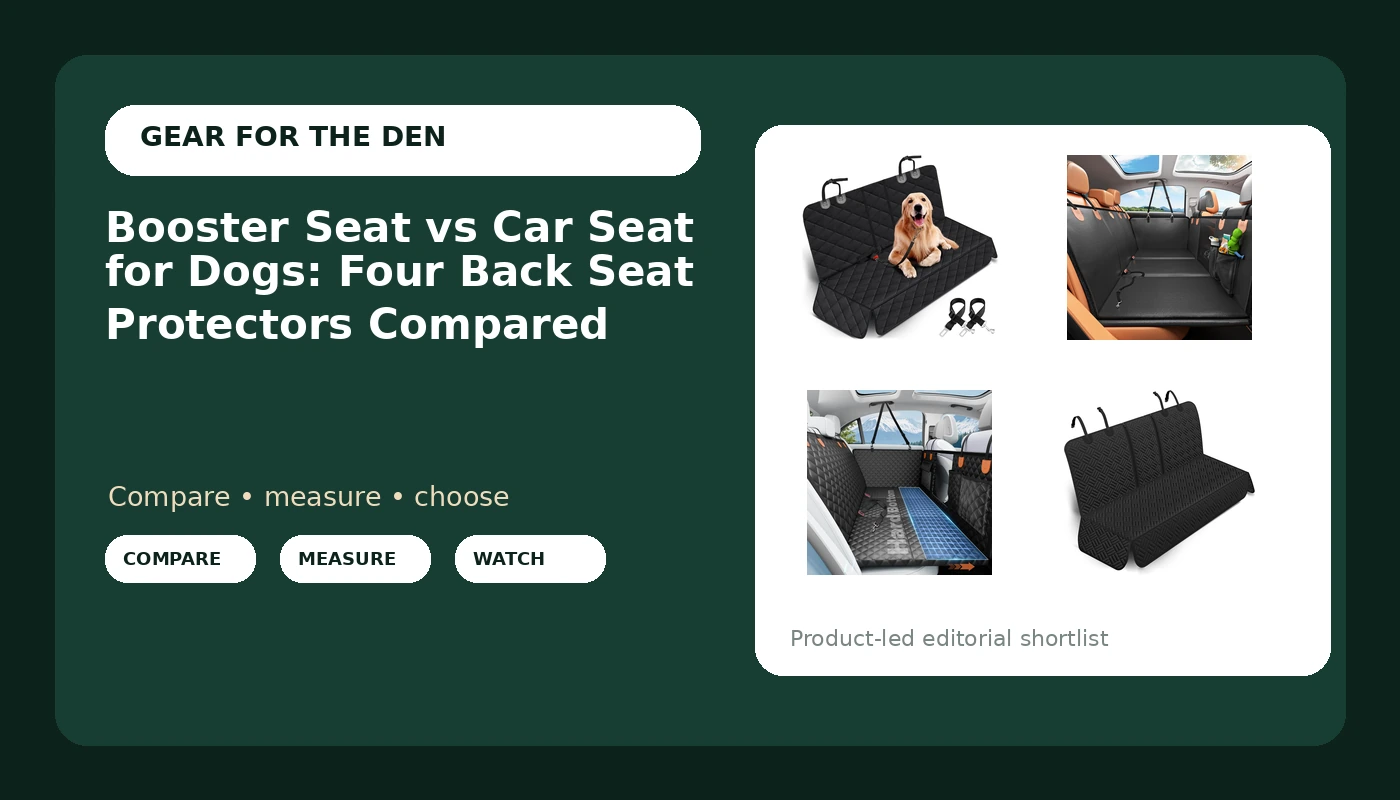
If you have ever typed booster seat vs car seat into a search bar while standing in a pet store aisle, you already know the trouble. The two phrases get used interchangeably online, and a good number of the listings you land on are neither one. In pet gear those words describe three different products. A booster seat raises a small dog so it can see out the window. A car seat or carrier holds a dog in place. A back seat cover protects the upholstery underneath everything else. This comparison sticks to the third category, because that is where most owners actually spend money, and because the four covers below span the full range from a thin fabric protector to a rigid platform that turns the back seat into a flat bench.
The best pick for most people is the hard-bottom hammock rated to hold 400 lbs, because it pairs hammock anchoring with a rigid base at a middle price. The PU leather seat extender is the better choice if you want a flat, wipe-clean platform and do not mind paying more. The two fabric covers are the right call for owners who mainly want to protect the seat and fold the cover away small.
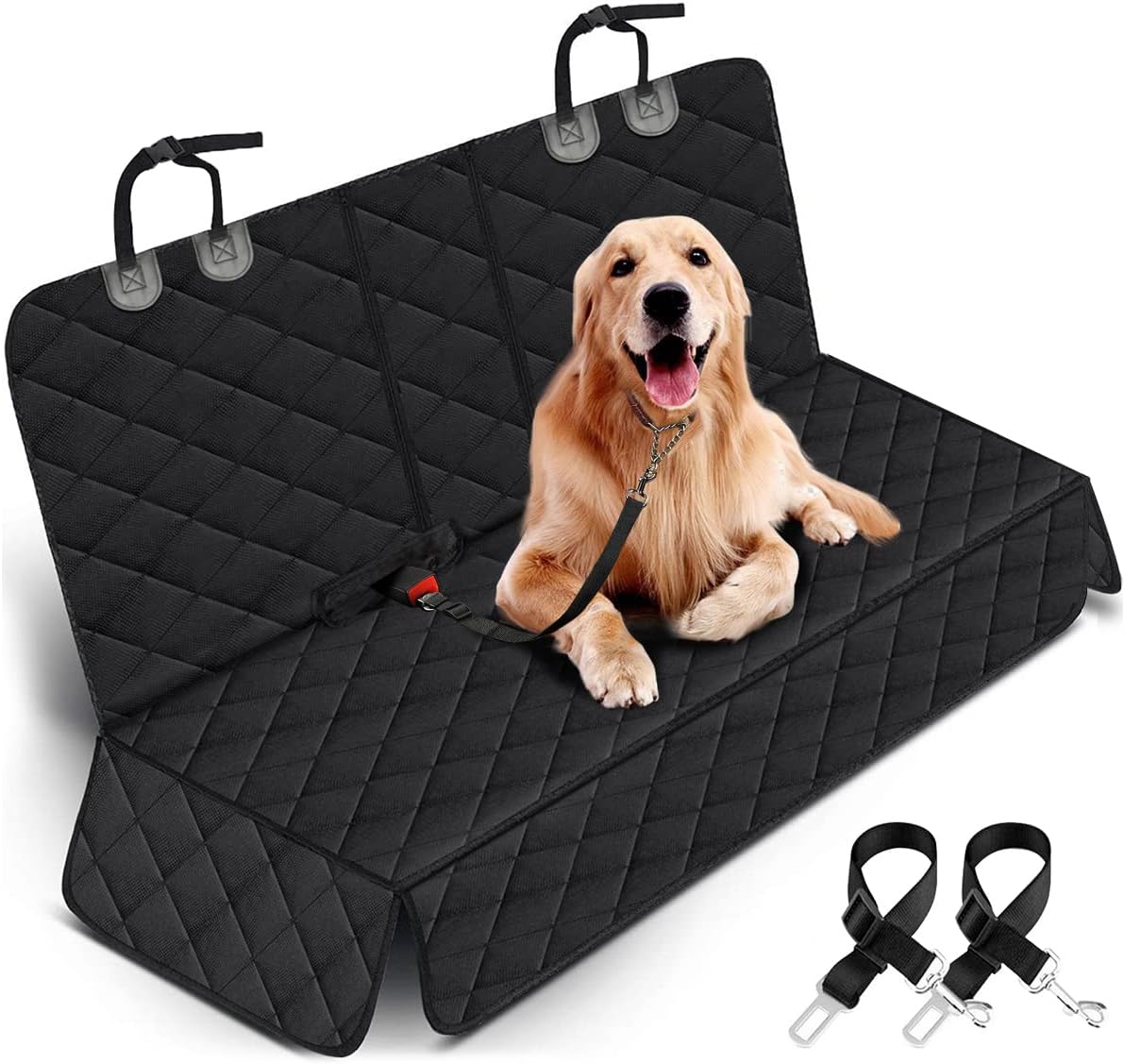
Yuntec Dog Car Seat Cover, Back Seat Cover for Dogs Pet Car Seat Protector
Cheapest way to keep hair and mud off the bench, and it folds into a small bag
No hard bottom, so it follows the seat and leaves the footwell gap open
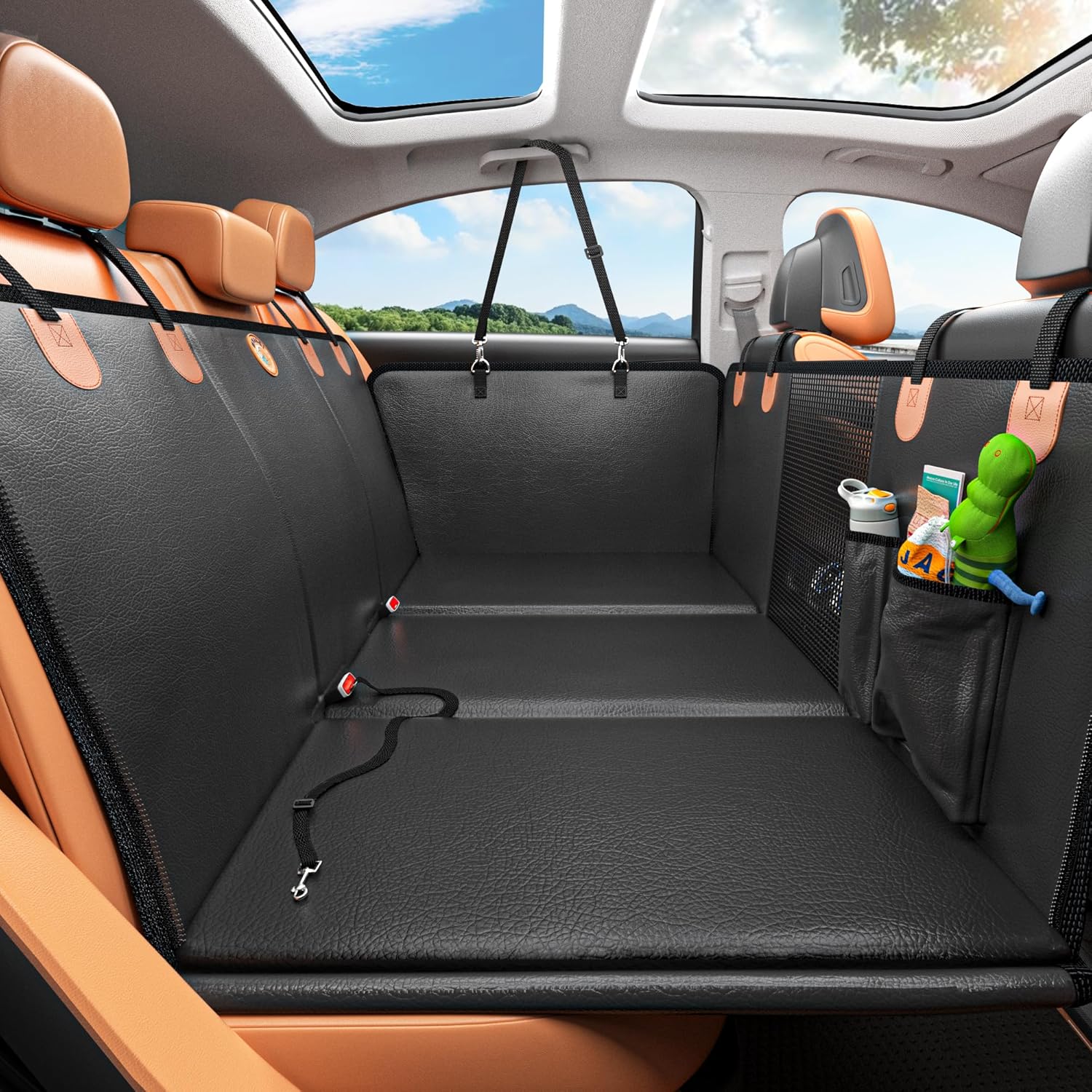
Hard Bottom Dog Car Seat Cover for Back Seat, PU Leather Dog Seat Extender
Rigid extender panel flattens the back seat, and PU leather wipes clean in seconds
The most expensive cover here, and a smooth surface gives claws less to grip
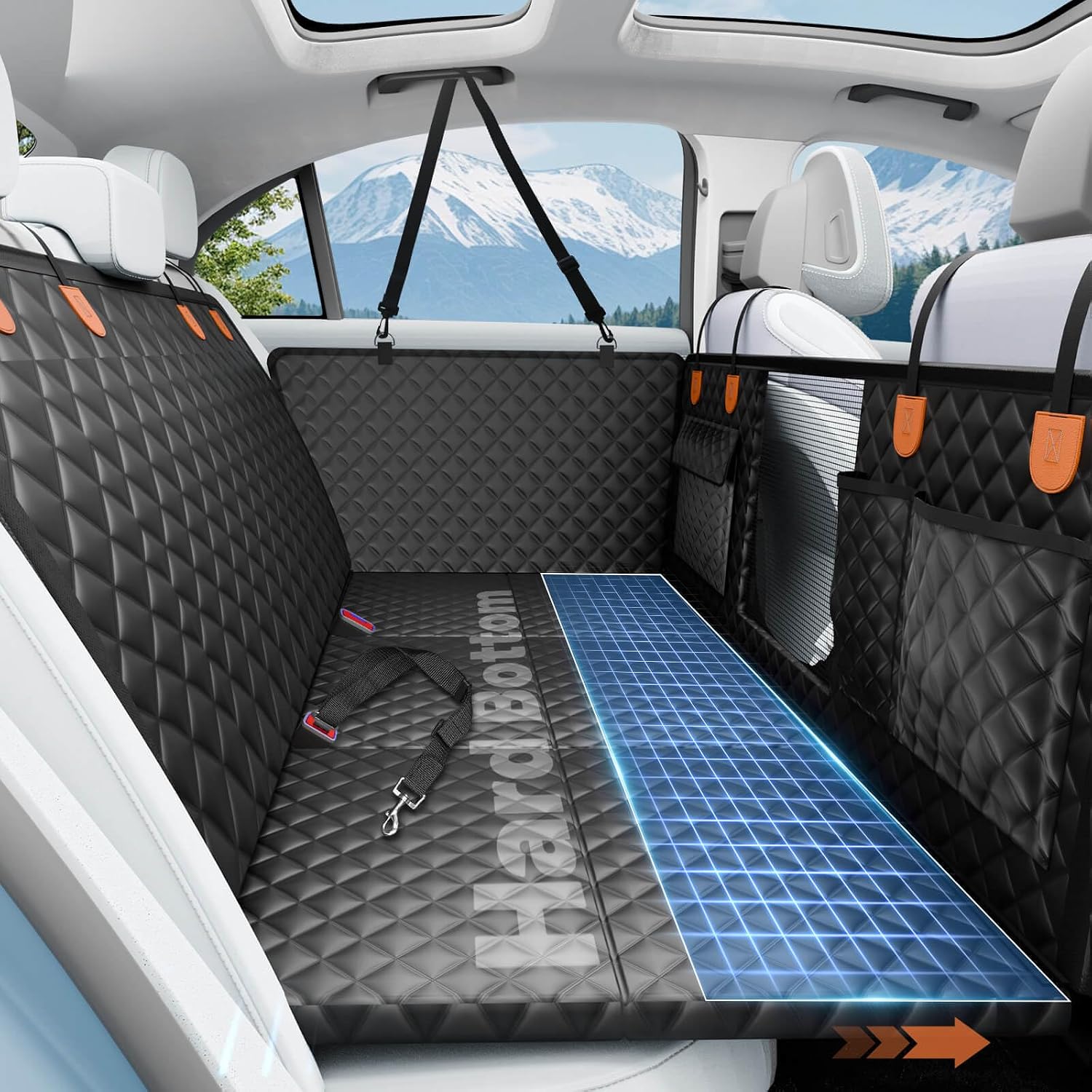
Dog Car Seat Cover for Back Seat, Hard Bottom Hammock Hold 400lbs For Cars
Hammock anchors plus a hard bottom, and the 400 lb rating suits large or multiple dogs
Bulky to fold and store, so it is meant to stay installed
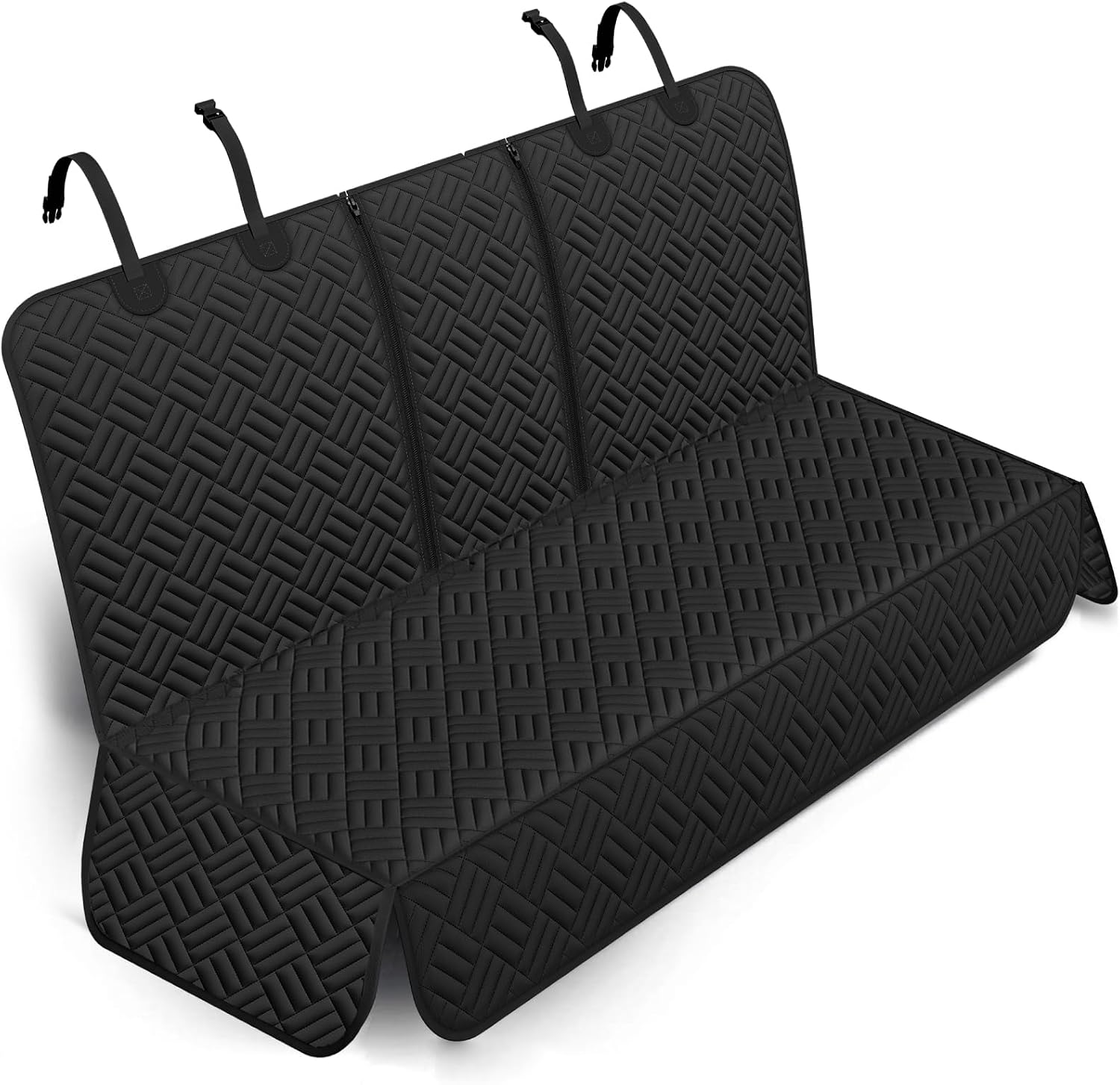
Brlako Dog Car Seat Cover for Back Seat, Waterproof 600D Oxford Protector
Waterproof 600D Oxford at the lowest price, and it sheds mud and water
Fabric only, with no panel and no weight rating
Prices and availability may change.
The booster seat vs car seat question, answered
Once you untangle the booster seat vs car seat vocabulary, the shopping list gets shorter. The car seat vs booster seat question is really two questions wearing one coat. Restraint is the first: does the product hold the dog in place, and is it built for that job? Elevation is the second: does the product raise the dog so it can see out the window? A booster is an elevation product. It is usually a small bucket with a raised rim and a tether loop, sized for dogs under roughly twenty pounds. It is not a crash-tested restraint, and it should not be treated as one.
A dog car seat is usually a carrier or a crate strapped or belted to the seat. That is the restraint side of the aisle. A back seat cover is neither. It is a protective layer, and the difference between booster seat and car seat language disappears once you understand that a cover is bought for the upholstery, not for the dog. If you are deciding between a booster seat or car seat for a small dog that travels every day, buy the restraint first and the cover second. If your dog is a sixty-pound shepherd that sheds a coat a week, skip both and go straight to a cover.
Hard-bottom covers: when a platform beats a hammock
Two of the four covers in this comparison have a hard bottom, and that single feature changes how the whole back seat works. A fabric cover drapes over the cushion and sags into the footwell the moment a dog steps on it. A hard-bottom cover puts a panel under the fabric, so the seat surface stays flat and the dog has something solid to stand on. If your dog paces, turns circles before lying down, or rides with a second dog, the panel is the difference between a stable platform and a hammock that swallows paws.
The PU leather seat extender is the most furniture-like option here. It uses a rigid base to close the gap between the seat cushion and the back of the front seats, which is why listings call it an extender: the flat area grows, and a large dog can stretch out instead of curling into the dip. The PU leather surface is the other selling point. Mud, drool, and shed hair wipe off with a damp cloth, and it does not hold odor the way woven fabric can. Two trade-offs come with it. It is the most expensive cover in this group, and a smooth leather surface gives claws less to grip than a textured fabric does, so a dog that scrambles getting in may slide until it settles.
The hard-bottom hammock rated to hold 400 lbs takes the opposite approach. It keeps the hammock shape, with anchor straps that loop over the front and rear headrests, and adds a hard bottom panel so the middle of the hammock does not collapse. The weight limit is the headline number: 400 lbs covers a pair of large dogs, a giant breed, or a dog plus a passenger's luggage. The hammock anchor also keeps the cover off the floor, which matters if your dog has a habit of climbing into the front seat. The cost of that structure is bulk. Hard panels do not fold into a neat square, so this is a cover you install and leave in place for the season rather than one you shake out and stuff in a trunk.
Fabric covers: the everyday default
The two fabric covers here are what most owners picture when they search for a back seat protector. Both drape over the seat, both tuck into the seat crease, and both fold into a bag when the dog is not riding. Neither has a rigid base.
The Yuntec cover is the simplest version of the idea: a quilted protector that covers the back bench and the back of the front seats, with openings for seat belts and a strap that runs around the headrests. It is the right pick for a dog that lies down for the whole drive, because a dog that lies down does not need a flat platform. It is also the one to buy if you need protection a few times a month and want something you can pull out, shake, and put away. The limitation is the one every fabric cover shares: no hard bottom means the cover follows the seat, and the footwell gap stays a gap.
The Brlako cover is the budget waterproof option, and 600D Oxford is the fabric to look for at this end of the market. The denier number describes the weave of the yarn: 600D Oxford is a thick, tightly woven polyester that sheds water and resists claw snags far better than the thin nylon used on cheap seat protectors. For a dog that swims, hikes through mud, or rides home wet from the river, that surface is the whole point. What it is not is a platform. There is no hard bottom, no extender panel, and no weight rating, because there is nothing structural to rate. Treat it as a waterproof sheet that happens to fit your back seat, and it does that job well.
Anchoring, fit, and the numbers that matter
Fit matters more than fabric for most buyers, and it is where returns come from. Start with the carrier dimensions of anything you plan to strap to the seat, then measure your own back seat: width at the cushion, depth from the seat back to the front edge, and the height of the seat back. Cabin size matters too, because a cover that extends the seat forward eats legroom for the back row in a compact car, while the same cover disappears into a full-size SUV.
Then look at anchor points. A hammock anchor needs headrest posts at both the front and rear positions. Some trucks and older wagons have no rear headrests, and a hammock without a rear anchor flops forward. The seat belt openings should line up with your buckles without stretching the fabric. If you plan to leave the cover installed, check that the doors still close over the edges and that the rear vents are not blocked, since ventilation to the back row matters for a dog in warm weather.
Weight limit is the last number to check. A 400 lb rating is generous, but the rating applies to a distributed load on a hard panel, not to a single point. A dog that stands on one paw in the middle of a fabric hammock will stretch it no matter what the listing says.
Booster height is worth measuring too if a booster is also in the plan. A booster that sits high enough to see out the window still has to fit under the roofline with the cover installed, and the two products compete for the same square of seat.
What the specs tell you
Listings for back seat covers use a small vocabulary, and once you know it you can compare four products in a couple of minutes.
Denier is the first term. 600D Oxford is the heavy end of the budget range, and anything described only as oxford fabric without a number is usually thinner. Waterproof is the second term, and it means different things at different prices: a laminated backing keeps liquid off the seat, while a coated surface sheds it until the coating wears.
Hard bottom is the third, and it is the one that decides how the seat feels underfoot. A cover with a hard bottom has a panel, usually a board or a molded sheet, sewn into the base. A cover without one is fabric, however thick. That is the whole difference between the Yuntec and Brlako covers and the two hard-bottom options.
The last term is the weight rating. A number like 400 lbs tells you the panel was built for large dogs. A cover with no rating is a cover, not a platform.
Notice what is missing from that list: there is no standard test, no crash rating, and no certification for pet seat covers. A cover is upholstery protection. If you want restraint, that is a different product with a different label.
Should you buy a cover before you buy a booster?
For most owners the order is simple. Buy the cover first if the dog is large, sheds, drools, or rides wet. Buy the restraint first if the dog is small and you want it held in place. The difference between booster seat and car seat shopping is that one product protects the car and the other protects the dog, and they are not substitutes for each other.
If you are building a travel kit, the cover is usually the first item and the small gear follows. A collapsible bowl takes up almost no room and turns a rest stop into a proper break. A backpack frame matters if you hike once you park, because a dog that rides in a hammock still needs somewhere to sit once you are on the trail. Neither item changes the cover decision, but both get bought in the same order.
One thing worth saying plainly: none of the covers here is a safety device, and none of them replaces a crate or a crash-tested harness. A hammock keeps a dog out of the front seat and off the floor, which is a real benefit on its own. It does not restrain a dog in a collision.
What to check before you order
Measure first, then decide. Width, depth, and seat back height rule out more covers than fabric choice does. Confirm you have four anchor points if you want a hammock, or two if a simple strap-around cover is enough. Decide whether you want a flat platform, which means a hard bottom and a higher price, or a protective layer you can fold into a bag.
For a large dog or two dogs, the hard-bottom hammock rated to 400 lbs is the safest structural bet, and it is the one to start with. For a small dog that mostly sleeps, the quilted Yuntec cover does the job for less. For a wet, muddy dog on a tight budget, the 600D Oxford cover is the practical answer. And if you want the seat to feel like a bench, the PU leather extender is the one that changes the geometry of the back seat rather than just covering it.
That is the short version of the booster seat vs car seat decision as it applies to covers, and it comes down to one question: does your dog need a flat place to stand, or a clean place to lie down?