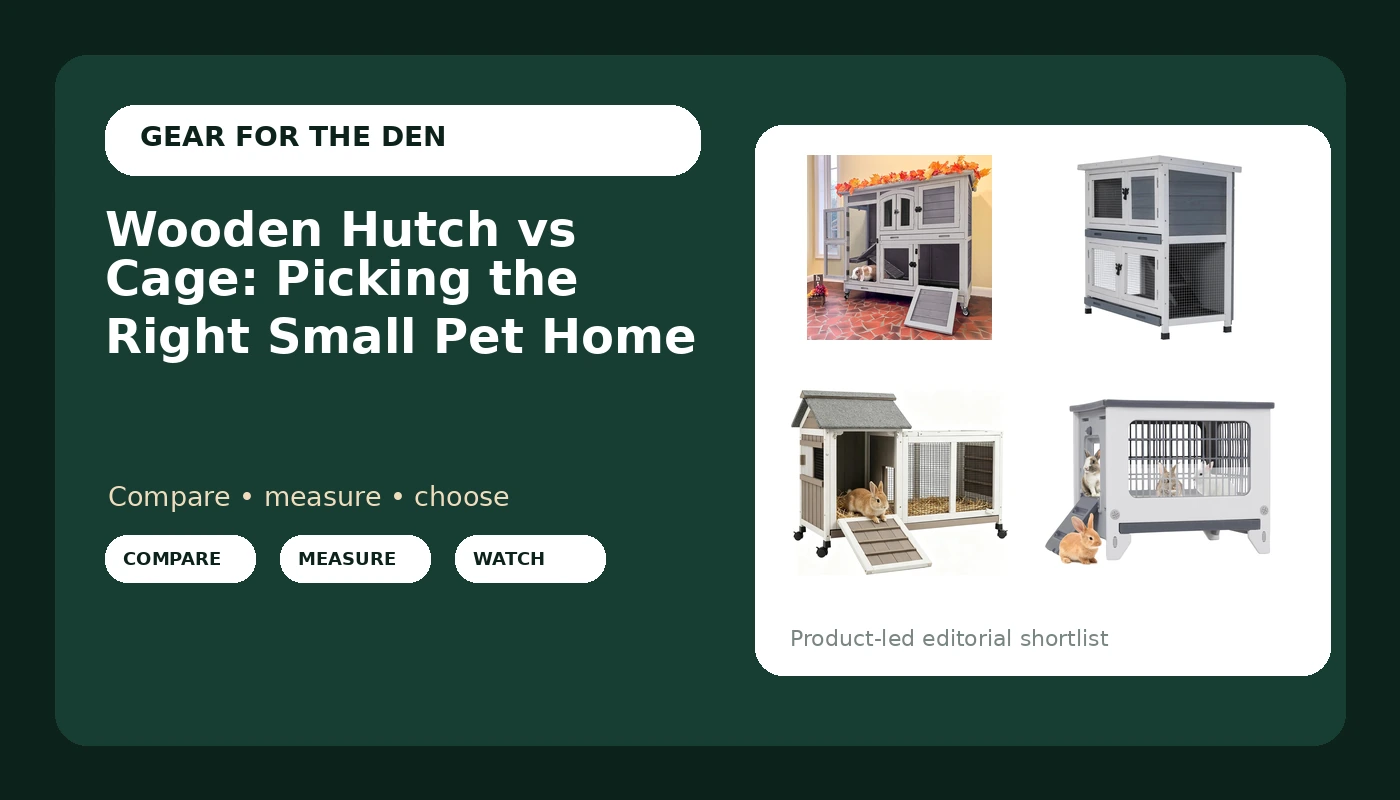
I have cleaned out both kinds of enclosure, and the wooden hutch vs cage question is never settled by how the product looks in a listing photo. A hutch that photographs beautifully can be miserable to scrub in February, and a plain wire cage with a deep tray can be the easiest home you ever maintain. This comparison covers four small pet homes built for rabbits, bunnies, and guinea pigs, and it explains which style suits which household.
The short version: wood gives you warmth, weather protection, and something that looks like garden furniture, while wire and plastic give you airflow, fast cleaning, and a home you can move on your own. Neither wins outright. What decides it is where the enclosure will sit, how much floor area you can give up, and how much time you want to spend on bedding.
The best pick of this group for a mostly indoor rabbit is the 2-Tier Indoor Rabbit Hutch with sliding plastic trays, wheels, and a ramp, because the tray system makes cleaning fast and the wheels let one person move the whole thing. If your rabbits live outside year round, the 2 Story Solid Wood Rabbit Hutch with a waterproof roof and a ventilation door is the safer structure.
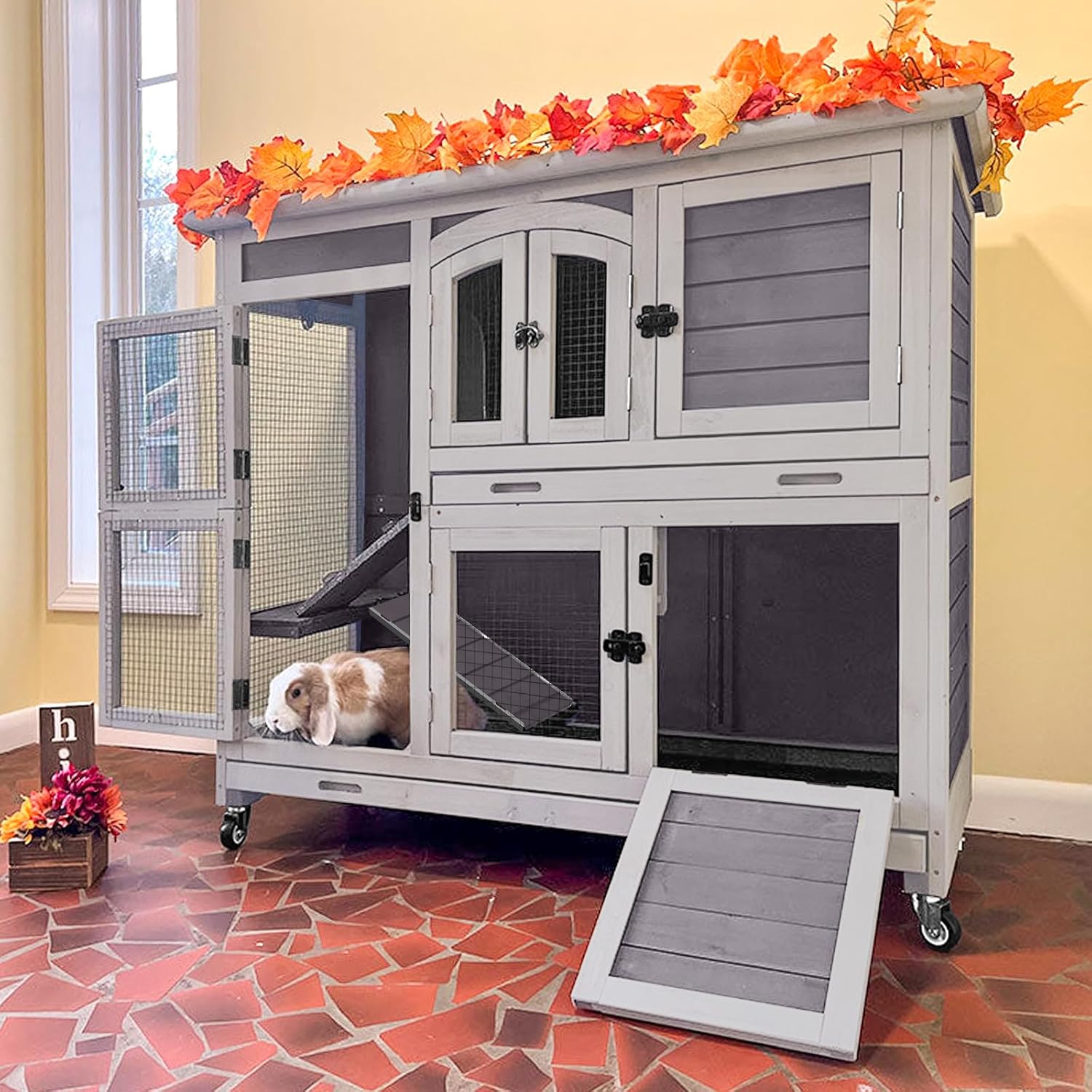
2-Tier Indoor Rabbit Hutch with Sliding Plastic Trays, Wheels and Ramp
Two tiers, sliding plastic trays, wheels and a ramp in one indoor frame, plus multiple doors for reaching every corner
The wooden frame wants to stay out of the rain, and the levels give bedding more places to collect
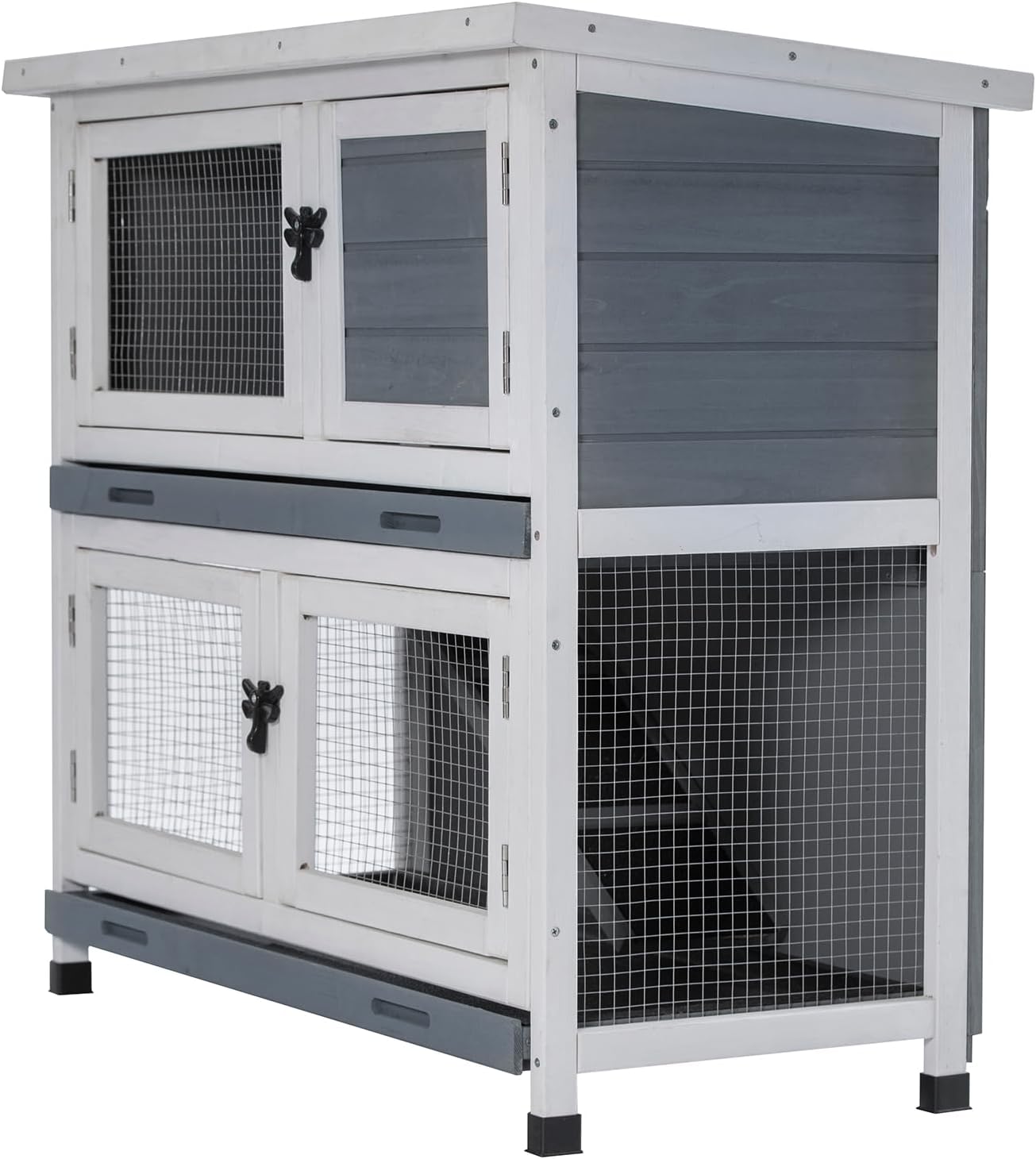
2 Story Solid Wood Rabbit Hutch with Two Large Main Rooms
Two large main rooms, a ventilation door, a removable tray and a waterproof roof make it the most weather ready wood hutch here
Solid wood is heavy, and the open main rooms give less sheltered floor than the tiered indoor model
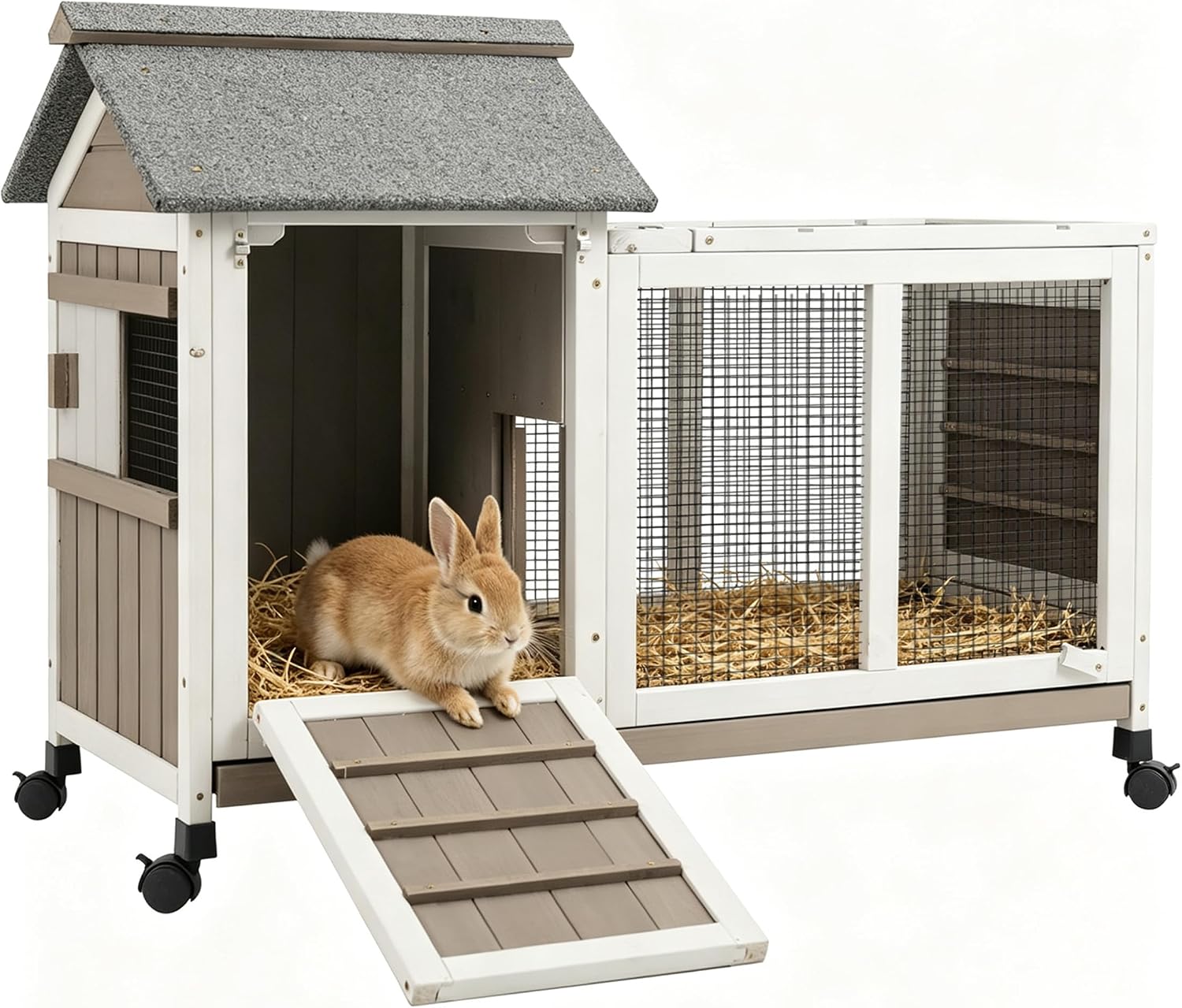
Gowoodhut Outdoor Rabbit Hutch 2-Story Indoor Bunny Cage with Run
The attached run adds ground level exercise space and the two story layout splits sleeping from activity
Run style hutches need a sheltered spot outdoors and the open run section offers little wind protection
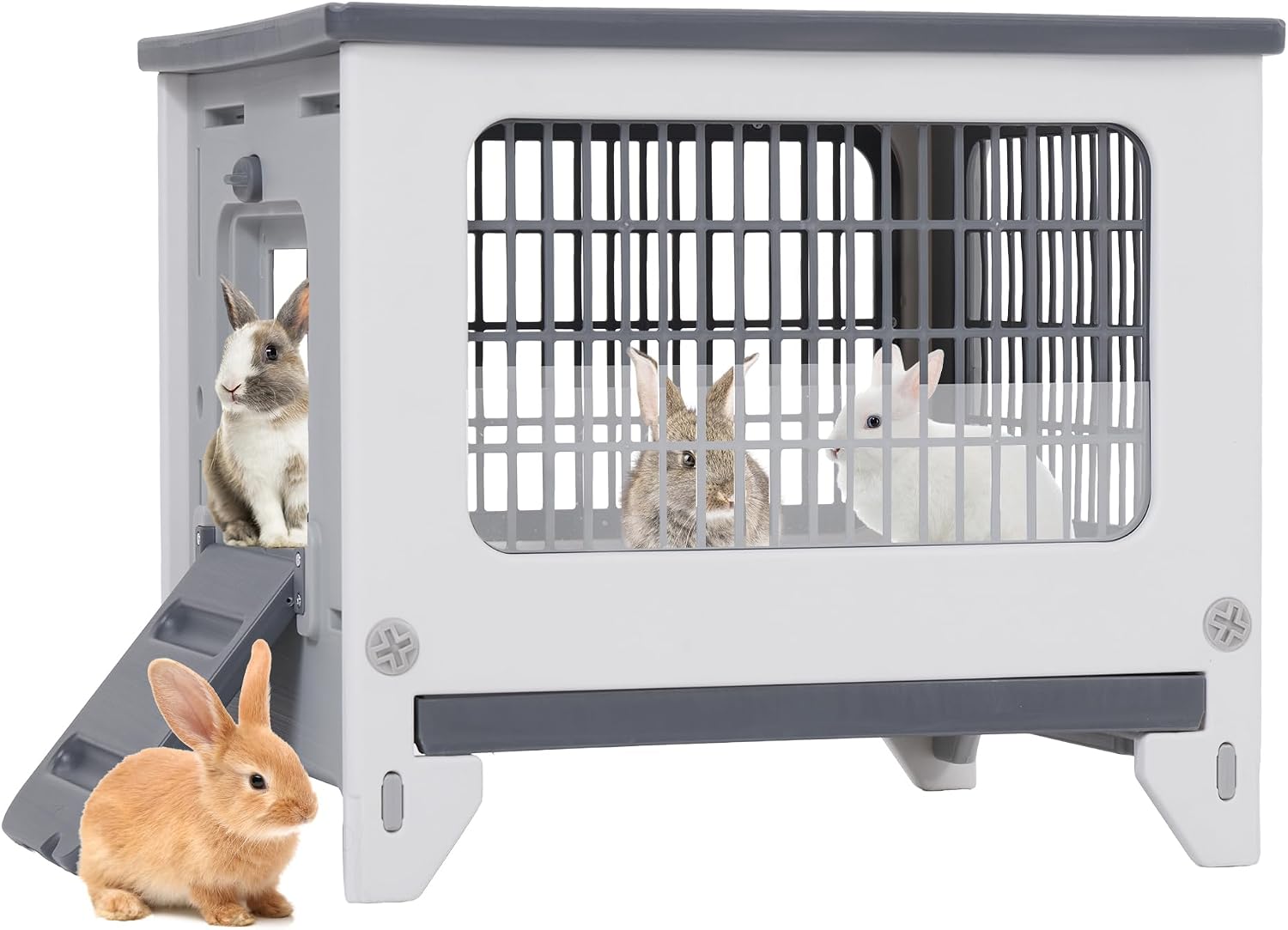
Rabbit Hutch Outdoor Indoor Plastic Waterproof Bunny Cage Enclosure
Plastic wipes clean, will not rot, and shrugs off rain, so it suits damp climates and quick hose downs
Plastic holds heat in summer and offers less insulation than wood when the temperature drops
Prices and availability may change.
How I judge a hutch, a cage, and an enclosure
I score every small pet home on the same six things, and none of them is how it looks in a product photo.
The first is floor area, which means the clear floor an animal can actually walk on once a hideout, a litter tray, a bowl, and a hay rack are inside. A hutch can look enormous on a listing and still leave a rabbit with a narrow strip of floor between objects.
The second is bar spacing or panel gap. A guinea pig will push through a gap that looks far too narrow, and a young rabbit is smaller than most owners remember.
The third is the waste system. A removable tray that slides out is worth more than any decorative roof, because it is the feature you touch every week for the life of the enclosure.
The fourth is ventilation. It matters most in summer and in any fully enclosed plastic design, where heat and ammonia build up together.
The fifth is chewability. Wood, thin plastic, and zip ties all lose to a determined rabbit eventually, so the question is which parts fail first and whether that failure creates an escape route.
The sixth is how easy the whole thing is to move. A hutch that never moves is a hutch you clean around instead of cleaning properly, and that habit is how a small pet home starts to smell.
I also read a listing the way a buyer should, in a fixed order: the tray, the door count, the roof material, then the gap width. Everything else, including the colour and the styling, is decoration. That framework sits behind every wooden hutch vs cage call I make.
What wooden hutch vs cage really comes down to
The practical difference between wooden hutch and cage setups comes down to air and moisture. Wood absorbs and releases humidity slowly, which is why a wooden hutch feels warmer in a cold snap and why it can smell sour if the bedding underneath never dries out. A wire cage with a solid plastic base does the opposite: air moves through it freely, moisture leaves with it, and the base wipes clean in a minute.
That single difference drives almost every other decision. If your rabbit lives in a shed or a garage, wood gives you insulation a bare cage cannot match. If your rabbit lives in a living room, a wire cage with a deep base keeps bedding dust and ammonia under control, and it lets you watch the animal without opening a door.
Cleaning time is the second half of the argument. A wooden hutch with a removable tray is manageable, but wood surfaces still need scrubbing and drying, and urine works into seams over time. A wire cage with a slide out tray is a two minute job. Over a year, that gap adds up to hours.
The third factor is chewing. Rabbits chew wood, and they chew more when they are bored. A wooden hutch is not a chew toy, but every corner, ramp, and door frame is fair game. Wire mesh and molded plastic hold up better, though a determined rabbit can still work on a plastic edge.
If you are weighing cage vs wooden hutch for a single indoor rabbit, the airflow point usually decides it, and the answer is a wire or plastic design with a deep base. If you are weighing the same choice for an outdoor pair in a wet climate, wood wins on shelter as long as the roof is sound.
Wooden hutches: warmth, chewing, and weather
Both solid wood models here are built for animals that spend real time outdoors, and they share the same strengths. Wood insulates, it blocks wind better than mesh, and it looks like a piece of garden furniture rather than a cage.
The 2 Story Solid Wood Rabbit Hutch with two large main rooms takes weatherproofing furthest. The waterproof roof and the ventilation door mean you can leave it outside through a run of wet days without the inside turning into a swamp, and the removable tray keeps the worst of the cleaning simple. Two large main rooms give you a natural split between a sleeping area and a day area, which is how rabbits use space when they are allowed to choose.
The Gowoodhut Outdoor Rabbit Hutch 2-Story with Run takes the opposite approach. Its value is the attached run, which adds ground level space where a rabbit can hop and graze instead of pacing a single box. For a pair of rabbits in a mild climate, that run is the difference between a hutch and a home. The trade-off is exposure, because a run section is open by design and needs a sheltered position plus a daily look.
The honest criticism of wooden hutches is maintenance. Wood needs drying, sealing, and eventual repair. A hutch that sits in damp shade rots at the base long before the frame fails anywhere else, and no waterproof roof fixes a floor that never dries. If you buy wood, buy a spot in the sun and a spare hour every few weeks.
Wire cages and plastic enclosures: airflow and easy cleaning
The 2-Tier Indoor Rabbit Hutch with sliding plastic trays, wheels, and a ramp sits between the two worlds. The frame is wood, but the waste handling is all plastic: two sliding trays that come out for rinsing, plus wheels that let one person roll the whole thing to a hose or a bin. For an indoor rabbit in an apartment, that combination is hard to beat. The ramp and the second tier add usable floor area without adding footprint, and the multiple doors mean you can reach a shy rabbit without dismantling anything.
The Plastic Waterproof Rabbit Hutch Enclosure goes fully synthetic. There is no wood to rot, no seam to soak, and no finish to renew. Hose it down, wipe it out, and it is ready for the next tenant. In a damp climate, or in a laundry room that already fights humidity, that is a genuine advantage.
The cost of plastic is climate control. Plastic holds heat, so an enclosure in direct summer sun becomes an oven unless it is shaded and well ventilated. It also offers less insulation than wood when the temperature drops. Panel gaps and bar spacing matter more in these designs, because molded panels rarely match the precision of welded wire, and a small guinea pig will find the weak point in a weekend.
One more note on cages generally: a wire cage is only as good as its base. A shallow base lets bedding and hay spill through the bars, and spilled hay is the start of most cage smell. Depth of base is the spec nobody advertises and everybody notices.
Sizing: floor area, hideout size, and bar spacing
Rabbits and guinea pigs are both sold in enclosures that are smaller than they should be, and the listed dimensions rarely tell you the usable floor area. Subtract the space taken by a hideout, a litter tray, a hay rack, and a water bottle, and you get the number that matters.
A useful rule for a single rabbit is a clear run of at least four good hops in one direction. For a guinea pig, the animal needs enough room to circle a hideout without turning sideways. If a cage size looks borderline on paper, it will feel cramped once bedding, bowls, and a tunnel are inside it.
Hideout size is the next check. A hideout should be small enough to feel secure and large enough that the animal can turn around inside it. Too big and the rabbit ignores it. Too small and it becomes a place the animal squeezes into once and then avoids.
Bar spacing and panel gaps decide whether the enclosure is safe, not just roomy. Mesh the weak points before the animal moves in, not after.
Finally, tunnel diameter matters for the enrichment you add later. A tunnel that is too narrow is a tunnel a rabbit uses once and abandons, usually at two in the morning, loudly, right next to your bed.
Daily details: hay rack, bottle capacity, and bedding dust
These are the small features that decide whether you still like the setup six months in.
A hay rack keeps hay off the floor, which keeps it out of the tray and out of the water bottle. It also slows feeding, which is closer to how a rabbit grazes. If a hutch has no rack, plan to add one.
Bottle capacity is really about how often you want to refill and how quickly you would notice a problem. A large bottle means fewer trips. A smaller bottle means the level drops visibly, which makes a stuck nozzle obvious sooner. Either way, check the nozzle daily, because a stuck ball bearing is the most common reason a rabbit stops drinking.
Bedding dust is the quiet problem. Shavings and paper bedding both throw dust into the air, and in an indoor cage with poor airflow that dust settles on everything, including the animal's lungs. A deep plastic base with a solid back contains it. An enclosed wooden sleeping box tends to hold it in, so empty the box completely rather than topping it up.
Placement matters as much as the parts. Keep the water bottle at the end of the enclosure furthest from the hay rack, so hay does not end up in the spout, and keep the litter tray under the hay rack, because that is where most rabbits choose to go anyway.
Which one fits your setup
Choose the 2-Tier Indoor Rabbit Hutch with sliding trays and wheels if your rabbits live inside, you want a movable enclosure, and cleaning speed is your priority. The trays and the wheels do the heavy lifting.
Choose the 2 Story Solid Wood Rabbit Hutch with two large main rooms if the hutch will sit outside in real weather, you want a waterproof roof and a ventilation door, and you accept that wood needs upkeep.
Choose the Gowoodhut Outdoor Rabbit Hutch 2-Story with Run if an attached run matters more to you than a sealed sleeping box, and your climate is mild enough to leave it in a sheltered spot.
Choose the Plastic Waterproof Rabbit Hutch Enclosure if damp air, hose down cleaning, and rot resistance matter more to you than insulation.
If you are still weighing wooden hutch or cage as a category rather than a product, go back to two questions: where will it sit, and how much time will you spend on bedding? A wooden hutch in a living room is usually the wrong answer, and a wire cage in an exposed garden is worse. The wooden hutch vs cage choice is really a choice about location, and once you name the location honestly, the material picks itself.
What I'm watching next
Two things are worth watching in small pet housing. The first is modular panel enclosures, which let you expand floor area as an animal grows instead of buying a second cage and stacking it awkwardly. The second is ventilation in plastic designs, because the current generation still runs hot in summer. When a plastic hutch arrives with a proper roof vent and a shaded panel, the wood versus plastic argument gets a lot shorter.
There is a third thread I keep coming back to: guinea pig specific sizing. Most hutches on the market are designed around rabbits, and a guinea pig has different needs, including a solid floor, a lower ramp angle, and a hideout it can circle. A hutch that is generous for a rabbit can still be wrong for a guinea pig, and I would like to see more listings state the clear floor area instead of the outer dimensions. Until they do, measure the inside yourself before you buy.