Every cage spec gets argued about online, but the number that actually decides whether a bird stays inside its cage is bird cage bar spacing, the distance between two adjacent vertical wires. Get it too wide and a budgie walks out through the front of a cage you paid good money for. Get it too narrow and you have handed a macaw a jail cell with a view. This bird cage bar spacing guide is the version of that conversation I keep having with people: the numbers by species, the exceptions that matter, and the perches that make a correctly spaced cage worth living in.
Bar spacing is only half of the fit. The other half is what the bird stands on. Perch diameter, cage height, food cup size, and the way a tray liner sits all get decided in the same trip to the store, because a cage that looks perfect on a spec sheet can still wreck a bird's feet or make you dread cleanup. If you are still choosing the cage itself, start with perch diameter and foot health and come back here for the gap.
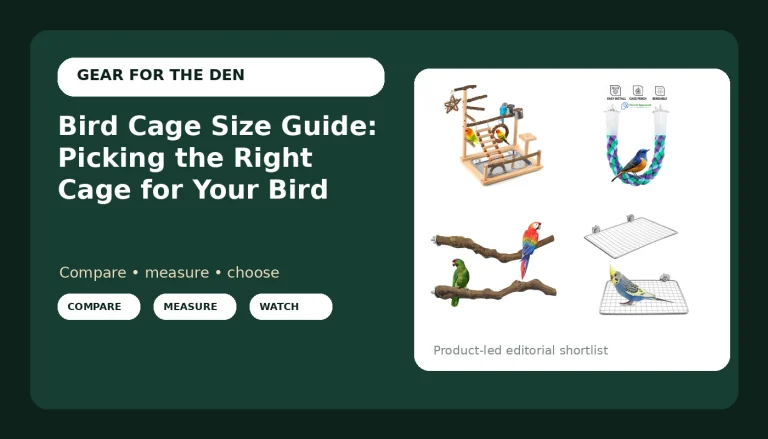
Best Overall: Mezchi 8 Pcs Bird Perch Stand Toy
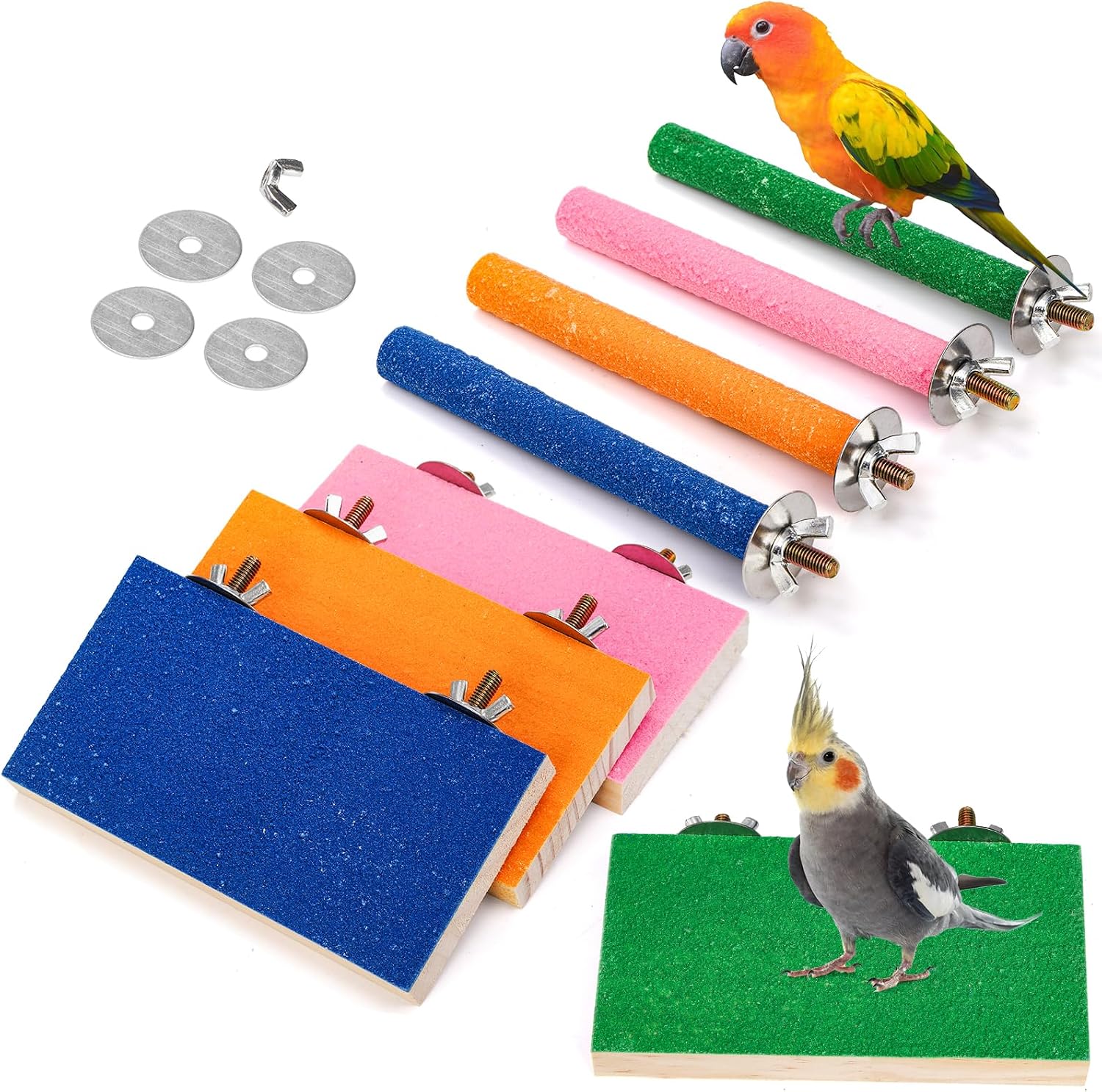
Once the spacing question is settled, the next problem is filling the cage. This set is where I would start: eight pieces of wood in different shapes and diameters, which means one order covers a flat platform, a grinding stick, and enough variation that the bird is not standing on the same dowel in the same spot all day.
That variation is not a gimmick. A bird that spends months on one perch diameter loads the same pressure points on the same part of the foot every hour of every day, and that is how sore hocks and bumblefoot begin. Rotating between a wider platform and narrower sticks spreads the load, and it gives the toes something different to grip, which is why perch diameter belongs in the same conversation as bar spacing.
The sizes suit budgies, parakeets, cockatiels, lorikeets, and conures, which lines up almost exactly with the cages those birds live in: the ones with a gap you can measure at roughly half an inch to three quarters. The wood is untreated, so a chewed corner is not a poison risk, though you should expect it to get chewed anyway. The rough grinding surfaces on the stick pieces do real work on beaks and nails between trims.
Two things to plan for. First, mounting: these attach to horizontal bars, and plenty of tall flight cages have panels that are vertical only, so walk around your cage before you order. If you are also adding a swing mount for a smaller bird, it needs the same kind of horizontal anchor. Second, the pieces are light, so a large macaw will treat the thinner sticks as kindling. For a small or medium bird, it is a lot of setup for very little money.
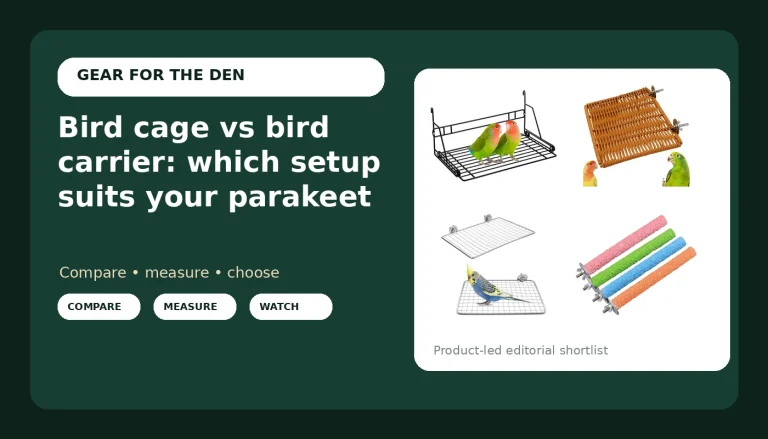
Best Value: Bird Perch Stand Portable Training Parrot Playstand
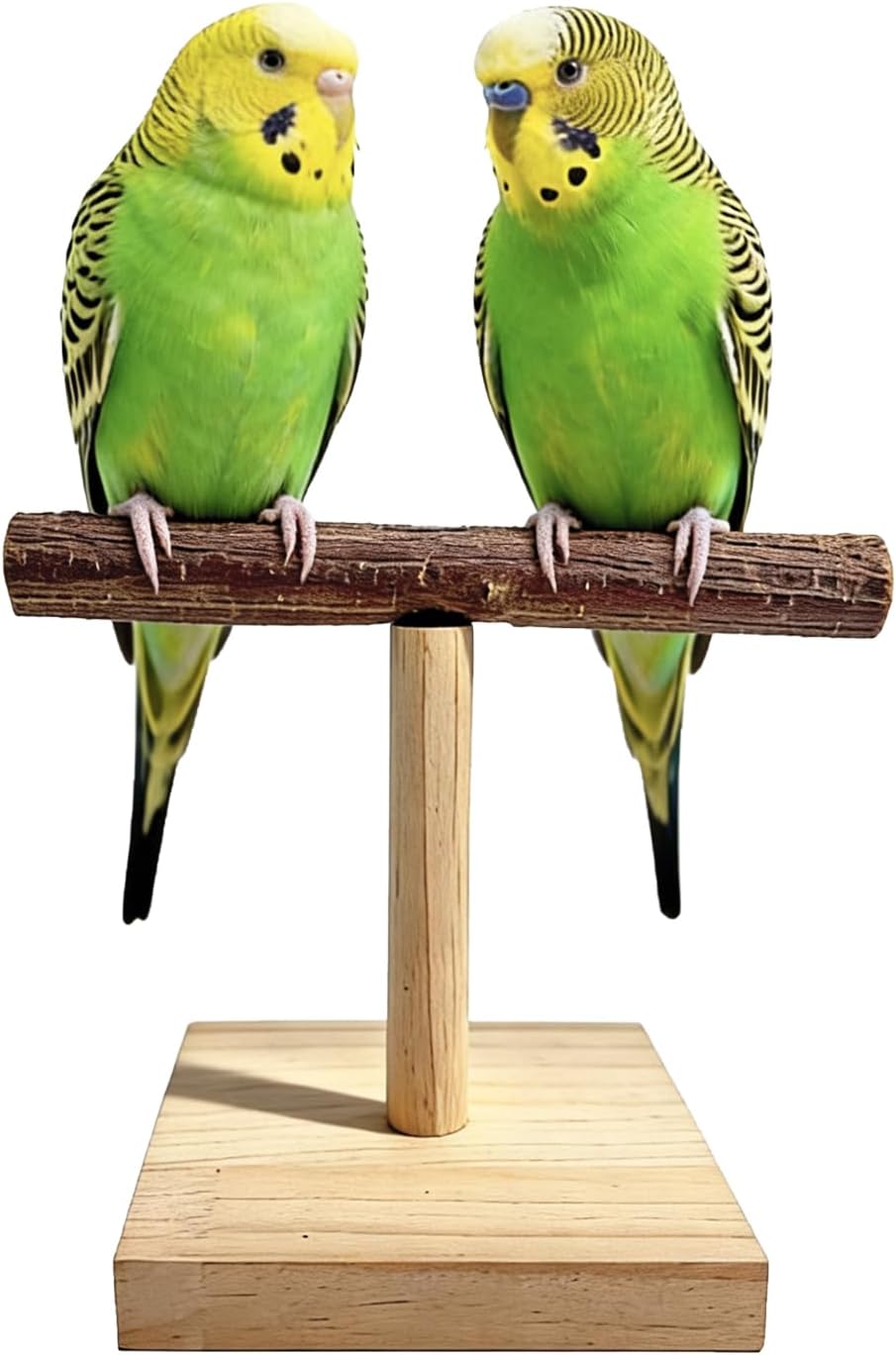
Not every perch belongs inside the cage. This playstand is the portable, inexpensive option: a training station for step-up practice, a place to park the bird while you scrub the cage bottom, and something light enough to carry into another room. For cockatiels, parakeets, finches, and small macaws, a stand outside the cage often does more for a bird's confidence than another toy clipped to the bars.
It is also the piece I point people toward when they are choosing between two cages with similar spacing and would rather put the savings into the setup. A stand gives the bird a perch at a height and angle that nothing inside the cage offers, which is the same reason perch rotation matters indoors.
Where it falls short: it is a perch, not a cage, so it does nothing about bar spacing, and it will not contain a bird that has decided to explore the bookshelf. There is no built-in food cup, so foraging difficulty is something you add yourself with a clip-on dish or a foraging toy. The dowels are thin, and a bird that shreds soft wood for sport will finish them off quickly. Carrier size matters too: measure the stand against your travel carrier before assuming it packs flat for a vet trip.
How I tested
The protocol is short enough to run on any cage in about five minutes, and it is the same one I use on every cage and perch I write about.
Measure the gap between wires in three places: near the top, at the middle, and just above the tray. Cage panels are welded, not printed, so gaps drift. The floor gap above the tray liner is usually the widest point on a budget cage, and it is the one a small bird finds first.
Then the head test. A bird's widest point is its skull, but it will happily try to push through any gap its beak fits into. If you can slide the tip of your little finger through a gap easily on a cage meant for a budgie, that cage is too open for a budgie.
Then the perch test. Curl your fingers around the perch the way a bird wraps its toes. You want a grip that closes roughly two thirds of the way around, so the toenails do not meet the wood and the foot is not splayed flat. A perch that is too narrow gives no grip; one that is too wide lets the bird slide.
Then the boring checks: food cup size, since a shallow cup means half the seed ends up on the tray liner every morning, and how the tray liner sits, because a liner that does not lie flat means scrubbing bars every week. Cage height and carrier size get measured for the same reason. Every perch stand in this guide was looked at through that checklist: material, chew resistance, mounting hardware, and whether the diameters really cover the species the listing names.
Analysis and test results
There is no single ideal bird cage bar spacing, because the correct bird cage bar spacing is the narrowest gap the bird cannot push its head through, and that changes with every species and every individual. The ranges below are the ones that hold up in practice, but the head test beats the chart every time.
What the failures look like is always the same. The bird pushes its head through a gap, the shoulders follow, and then the skull, which is wider than the neck, will not come back out. That is a vet visit at best. The second most common failure is the opposite: spacing so tight that a medium bird cannot see out properly, which makes a nervous bird worse, not safer.
Here is the part most buyers miss. Perch diameter matters more after the purchase than bar spacing does, because you cannot change welded bars and you can absolutely change perches. Natural wood branches of varying thickness beat uniform dowels, and a platform gives a bird one flat place to rest a tired foot. If your bird is older, or has a history of foot trouble, add the platform first and worry about the rest later.
Materials are the other variable. Plain kiln-dried wood is the safe default, since a bird is going to chew it. Sanded or mineral-coated perches have their place for nail and beak wear, but they should never be the only surface in the cage, because the grit is rough on the foot pad during long standing sessions. The same logic applies to cage height: birds use the top third of a cage far more than the bottom, so a tall cage with two perches at the top beats a wide cage with a perch at floor level.
Food cup size, tray liner fit, and carrier size decide how pleasant the whole setup is to live with. None of them affect safety the way spacing does, but they are the reason people quietly stop cleaning a cage properly at week six.
Ideal bird cage bar spacing reference table
These are the ranges I keep coming back to. Always measure the gap on the cage in front of you rather than trusting a listing description, and always run the head test on the bird you actually own.
| Gear or bird group | Bar spacing target | Perch diameter | Notes |
|---|---|---|---|
| Finches, canaries, budgerigars, parrotlets | 1/2 inch or less | 3/8 to 1/2 inch | The escape artists of the bird room; tightest gaps here |
| Lovebirds, lineolated parakeets | 1/2 inch | 1/2 to 3/4 inch | Chunkier than a budgie, same general cage class |
| Cockatiels, quakers, conures, lorikeets | 1/2 to 3/4 inch | 3/4 to 1 inch | The most common family cage size; measure, do not assume |
| Amazon parrots, African greys, eclectus | 3/4 to 1 inch | 1 to 1 1/2 inches | Bar strength starts to matter as much as the gap |
| Large cockatoos and macaws | 1 to 1 1/2 inches | 1 1/2 to 2 inches | Thin dowel perches are pointless at this size |
Mezchi 8 Pcs Bird Perch Stand Toy | Perch, not a cage | Mixed diameters | Best overall |
Bird Perch Stand Portable Training Parrot Playstand | Perch, not a cage | Small to medium | Best value |
A cage that passes the gap test can still fail the perch test, which is the part of the table worth taping inside a cabinet door. Spacing keeps the bird in. Diameter keeps the bird sound.
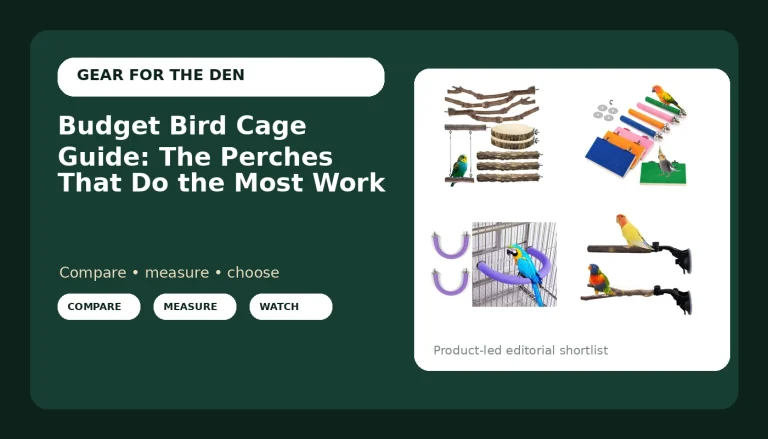
2 PCS Parrot Perch Stand with Suction Cup
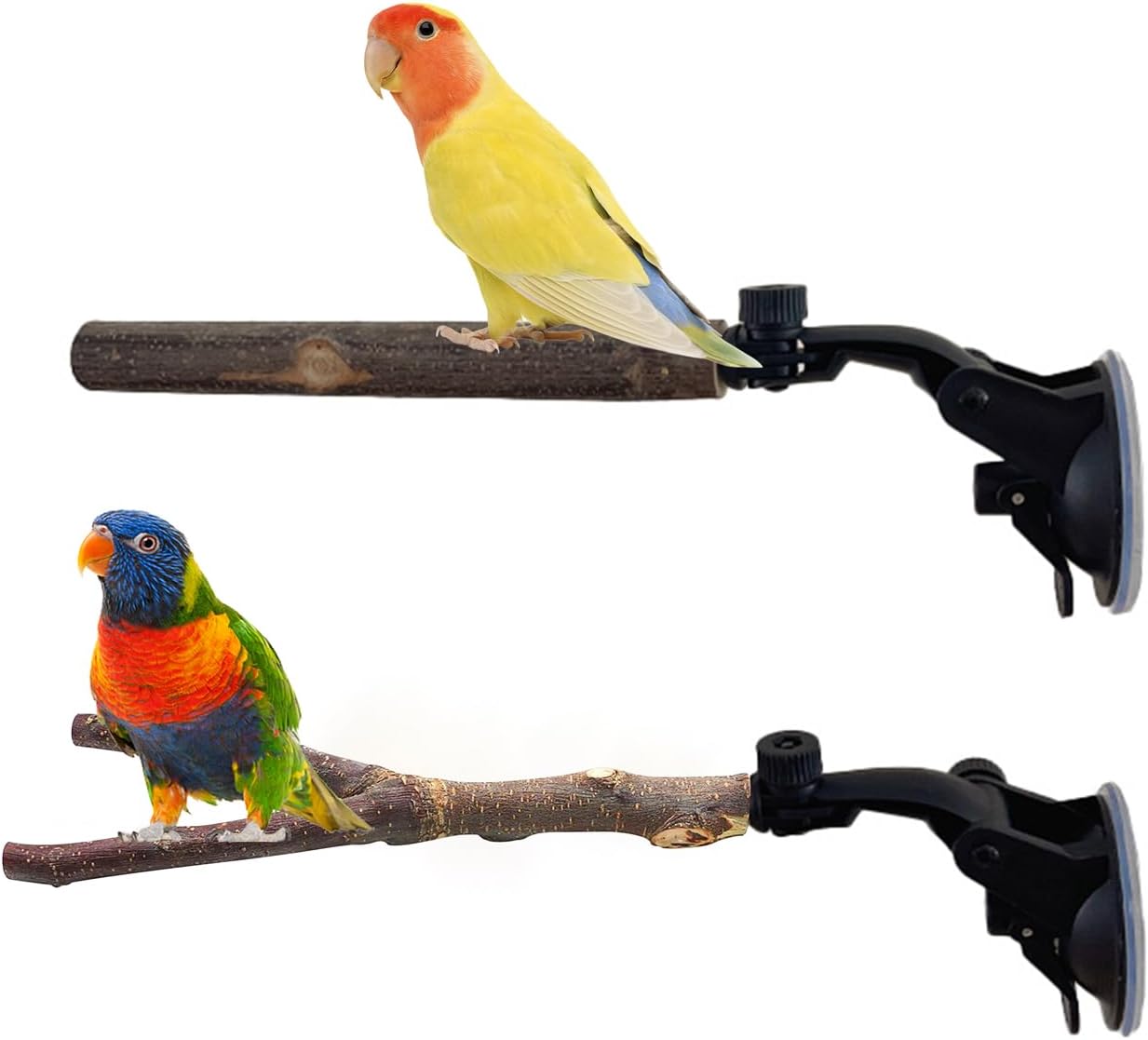
A suction cup perch solves a problem bar spacing cannot: it puts the bird next to you instead of inside a cage. Stick it on a window, a shower wall, or a tile backsplash and you get a place for a cockatoo, macaw, or parakeet to stand while you are doing something else, which is often the difference between a bird that tolerates handling and a bird that seeks it out.
The limits are practical. Suction holds on smooth, clean, non-porous surfaces and pops off on painted drywall or textured tile. Check the seal before you walk away, and re-press it whenever the surface cools after a shower. It is an out-of-cage perch, so it does nothing for bar spacing or for the bird's everyday footing, and it should be treated as a bonus station rather than a replacement for the perch setup inside the cage.
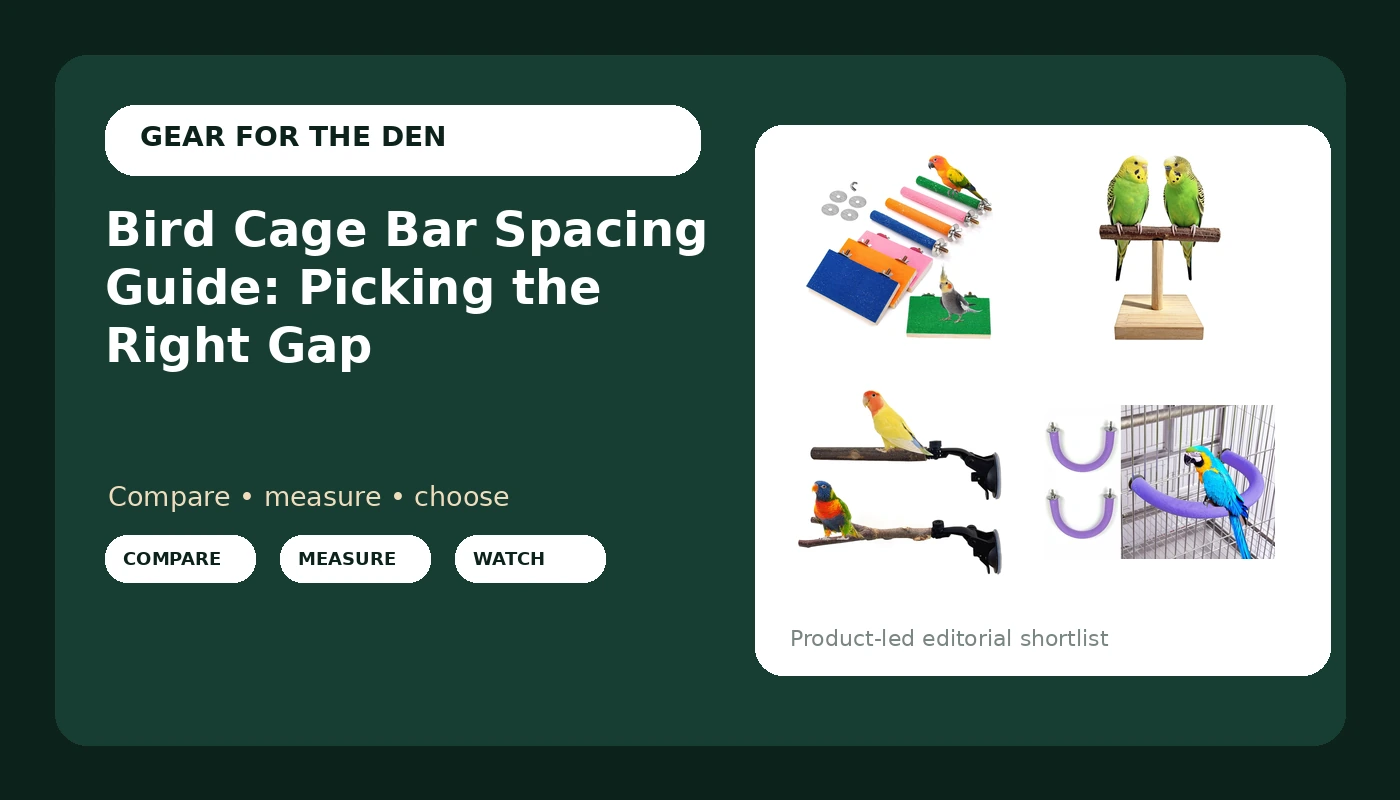
2Pcs 6.1Inch Purple U Shape Rough-surfaced Sands Stick Bird Perches
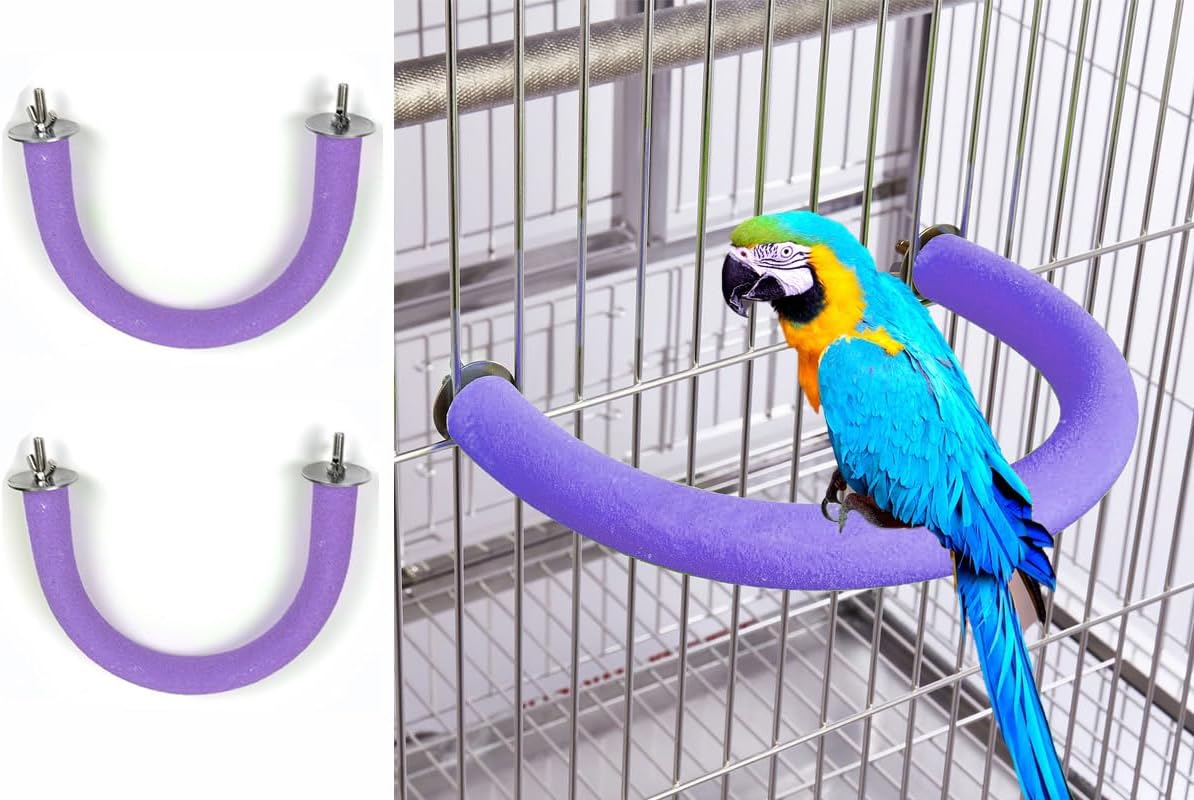
Sanded perches exist for one job: keeping nails and beaks from turning into hooks between trims. This pair is the U-shaped, rough-surfaced kind, sized for regular to large birds, and the curve gives the toes more angles to grip than a straight dowel ever will.
Use them the way they are meant to be used. One sanded perch in a cage full of smooth wood is plenty; a cage lined entirely with grit is a foot-pad problem waiting to happen, especially for an older bird that stands in one spot for hours. The U shape also makes a decent top-of-cage perch for a grey or an Amazon that spends most of the day out of the cage. It is a wear surface, not a lounge, so pair it with the mixed-diameter wood set above rather than replacing it.
Should you buy the Mezchi 8 Pcs Bird Perch Stand Toy?
Yes, if you have just sorted out the correct bar spacing and now need to make the inside of that cage worth living in. Eight pieces in mixed diameters let you rotate perches, which is the cheapest insurance against the foot problems that show up a year into ownership. The species range covers budgies through conures, the wood is safe to chew, and the grinding sticks mean fewer wrestling matches at nail-trim time.
Buy something else if you have a large macaw that destroys soft wood in an afternoon, or a cage with vertical-only panels and no horizontal bar to mount to. Check the bars before you order, not after.
Should you buy the Bird Perch Stand Portable Training Parrot Playstand?
Yes, if you want a second station outside the cage: a training perch, a place to park the bird during cleanup, a light stand you can move from room to room. It does the one thing a cage cannot, which is put the bird at your eye level while you work.
It is not a solution to spacing, and it will not hold a bird that wants to wander. There is no food cup, so foraging difficulty is on you, and the dowels are thin. If you need containment, buy a properly spaced cage first and this second. If you already have the cage, this is the cheapest way to double the bird's usable territory.