A budget bird cage is rarely where the money goes wrong. The cage itself is the one big purchase where an affordable bird cage can genuinely do the job, and the perches are where most first time owners under spend. I have set up cages for budgies, cockatiels, and one very loud conure, and the pattern never changes. The cage gets all the research, and the bird ends up standing on a single smooth dowel that came in the box. This budget bird cage guide is about fixing that, because the perch is the cheapest part of the setup and the part your bird touches every minute of the day.
If you are shopping for a low cost bird cage, the perches are the first thing to upgrade, not the last. A cheap cage with three different perch diameters in it beats an expensive cage with one plastic dowel, every single time. Everything below is a perch set rather than a cage, because that is where a small budget actually changes a bird's day: different diameters, different textures, and something for the feet to do while the bird settles into a new room.
Best Overall: CAMATET 8pcs Natural Bird Perches for Cage
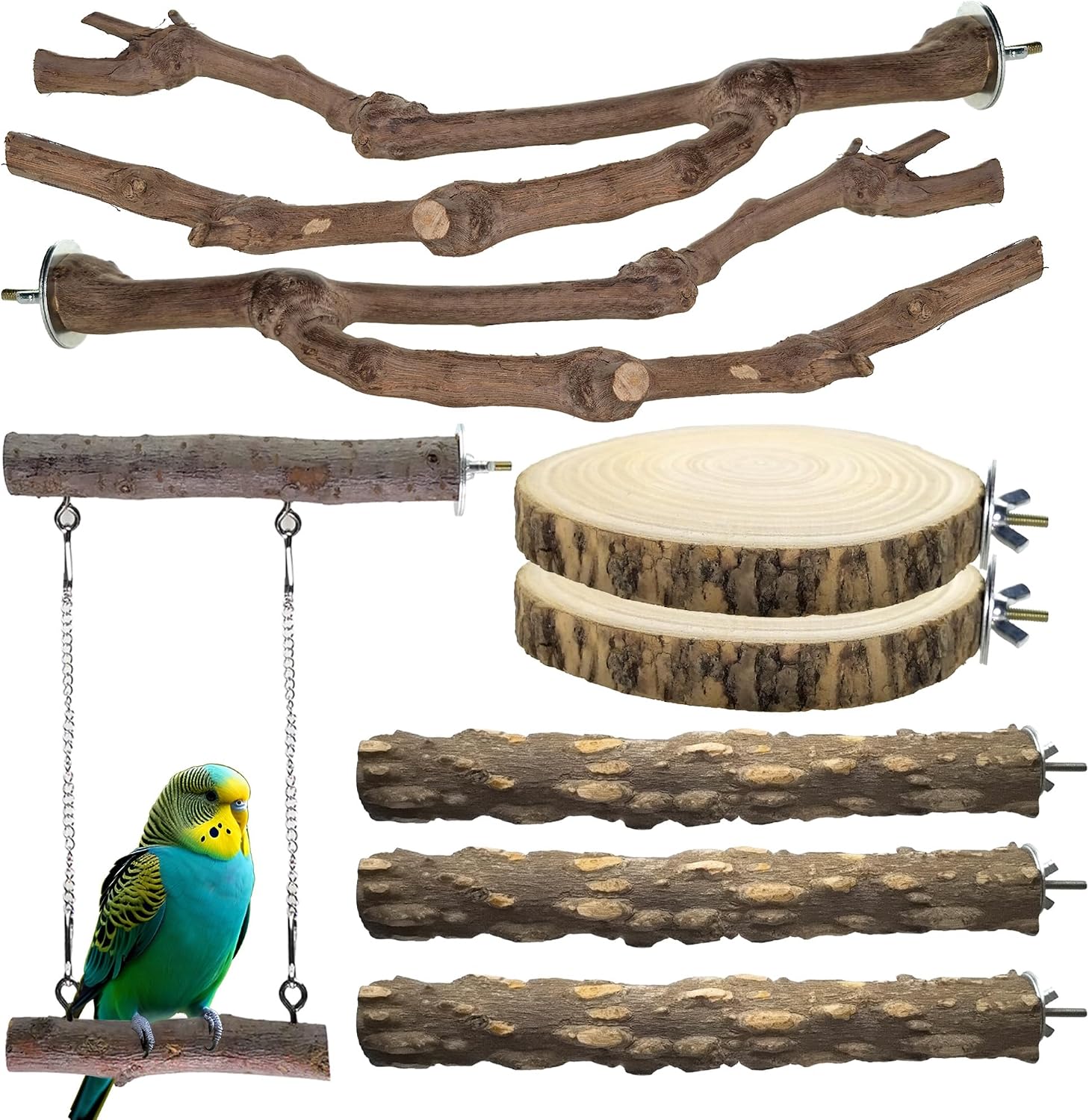
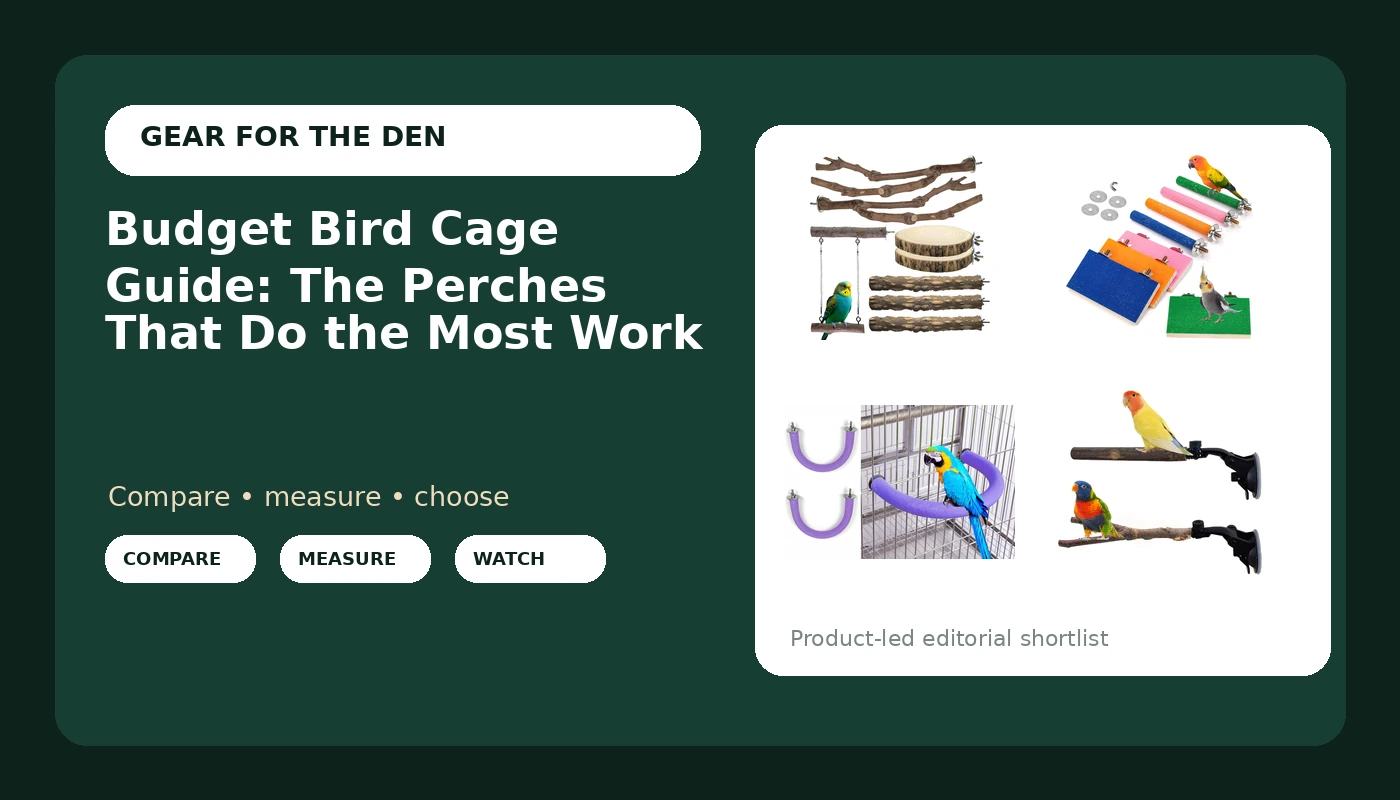
This is the set I would put in a new cage before anything else. Eight natural wood branches, sized for parakeets and cockatiels, and because the wood is not turned on a lathe, the thickness changes from piece to piece. That variation is the whole point. A bird that stands on the same diameter all day loads the same spot on the bottom of its foot, and that is how pressure sores start.
Eight pieces also means you can afford to be picky. Mount the two thickest branches up high where your bird sleeps, put a thinner one near the food cup, and set one at a slight angle so the toes have to work a little. A budget bird cage with eight branches in it gives you choices a single dowel never will, and you can rotate the set on cleaning day instead of scrubbing the same perch.
The mounts attach to the cage bars, so check your bar spacing before you order. Thin wire with wide gaps means the hardware can wobble, and a perch that shifts when a bird lands on it is worse than no perch at all. Wipe the wood with a damp cloth rather than soaking it, and expect budgies and cockatiels to chew the ends. Wood perches are a consumable, not a heirloom. Replace the chewed ones instead of pretending they are fine.
Best Value: Mezchi 8 Pcs Bird Perch Stand Toy
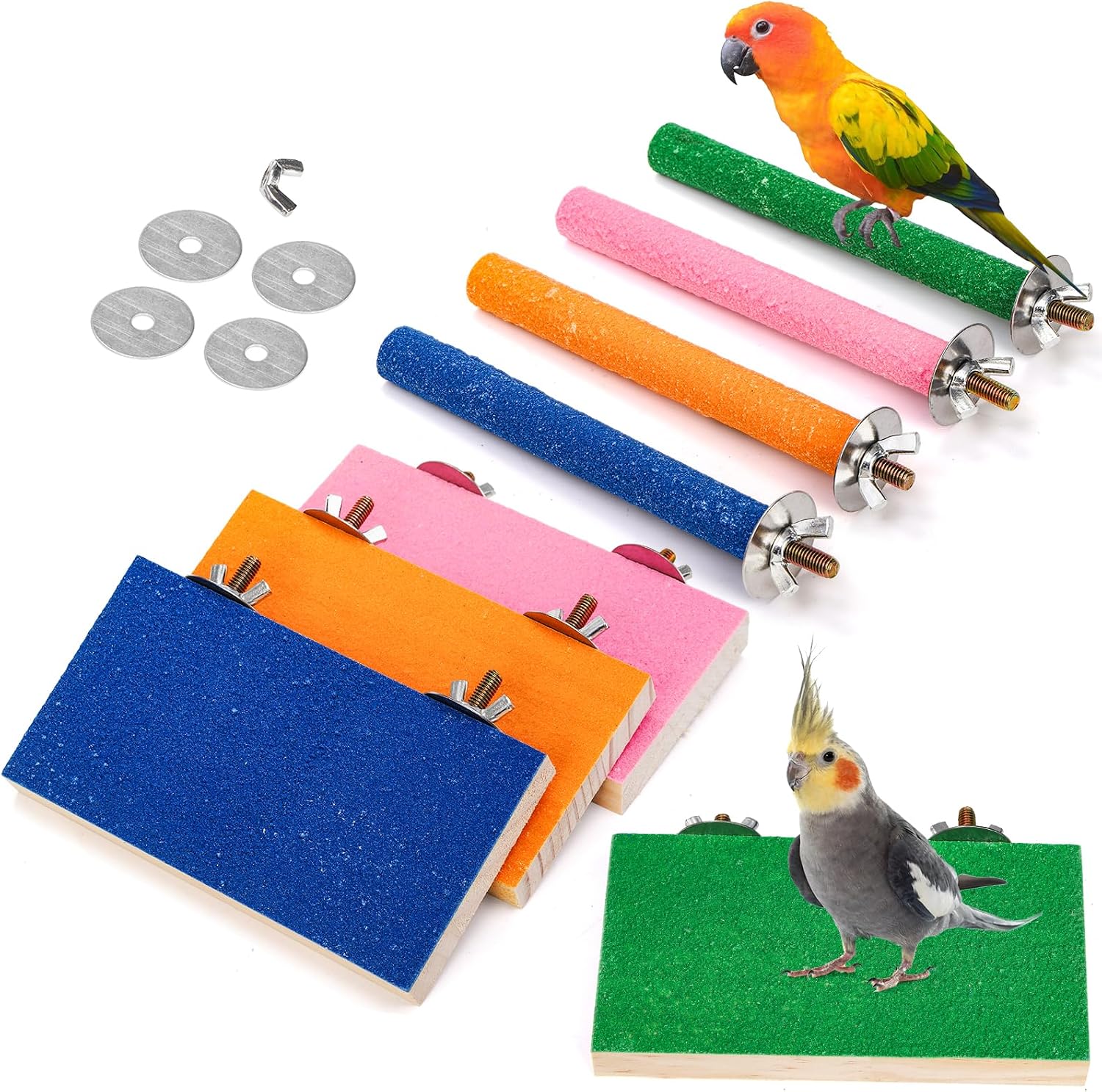
Colorful wood, eight pieces, and a mix of shapes rather than eight identical branches. You get flat platform pieces, a paw grinding stick, and branch sections, and the combination suits budgies, parakeets, cockatiels, lorikeets, and conures.
The platforms are the reason to pick this set over a bundle of plain branches. Most perches are round, and a bird that wants to rest a whole foot flat has nowhere to do it in a bare cage. A small platform gives that back, and a bird that has just come home from a long car ride will use it. The grinding stick adds a mildly abrasive surface, which helps if your bird's nails grow fast, but I would treat it as one perch in the rotation rather than the main event.
The color is dye, and dye on wood can bleed if it soaks. Wipe these rather than soaking them, and keep them out of the dishwasher. If you would rather have natural wood only, the CAMATET set is the better fit. If you want shapes and a little color in a cage that currently looks like a hospital ward, this is the one.
How I tested
Every perch set goes through the same routine. First the hardware: does the mount fit standard cage bars, does it tighten down, and does it hold when I push on the far end of the perch the way a landing bird would? Then the diameter range. I run a ruler along each piece and note the thin end and the thick end, because a set that is all one size only works for one size of bird.
Then the surface. Natural wood should feel like wood, not like sandpaper. A sanded perch should feel like fine grit, not like a nail file. I check for splinters, cracks, and loose bark, and I note whether the wood is sealed or left raw, since raw wood is easier to clean and easier to chew.
Then the boring part: cleaning. I wipe each perch with a bird safe cleaner and watch whether the color lifts, whether the wood swells, and whether the hardware rusts. A perch that needs a full scrub twice a week will not get one. If you want the full routine for the rest of the setup, my bird cage cleaning routine covers the tray and the cups.
Finally, the bird. A good perch lets the toes wrap most of the way around the wood without the front toe crossing over the back toe, and it lets the bird turn around without shuffling. If a bird avoids a perch for a week, the perch is usually the problem, not the bird.
Analysis and test results
Bar spacing comes first, because it decides whether a cheap cage is safe, and it has nothing to do with the price. The gap between the bars should be narrow enough that the widest part of your bird's head cannot pass through it. Perch hardware has to match that spacing, which is why I check the mount before I check anything else.
Cage height matters less than people assume for small birds, but where you place a perch inside that height matters a lot. Birds want to sleep as high as the cage allows, so the top perch should sit just low enough that a stretched neck clears the roof. Put it at one end rather than in the middle, so the bird has a corner to retreat to when the house gets loud.
Perch diameter is the variable that a budget bird cage setup usually gets wrong. A single dowel means a single pressure point, and pressure points are where bumblefoot starts. Two or three diameters in one cage, with at least one piece thick enough that the toes do not meet underneath, covers almost every small bird.
Sanded surfaces are useful in small doses and harmful in large ones. A rough perch helps wear nails down, but a bird that sits on an aggressive grit all day has no way to get off it. Use one as a secondary perch, never as the only one, and check the bottom of the foot every week for redness or a worn patch.
Suction mounts are only as good as the surface under them. Glass and tile hold. Painted drywall and textured plastic do not. A suction cup that has been licked, splashed, or left on a dirty window will let go, so press it, twist it, and test it with your hand before the bird gets on, every time.
Food cup size and placement matter more than most people expect. Mount a perch beside a cup, not directly above it, or you will be wiping droppings off the rim twice a day. A shallow cup is easier to clean and easier for a small bird to reach into, and it is worth swapping the plastic cups that come with a cheap cage for something you can actually scrub.
Tray liner position follows the same logic. Keep perches outside the drop zone when you can manage it, and change the liner daily rather than when it looks bad. Carrier size is the last thing to think about: a small perch mounted in the travel carrier gives a bird something to grip on the way to the vet, which is the difference between a stressed bird and a panicked one.
Foraging difficulty is the reason to hang toys from perches rather than clipping them to the bars. A perch gives you a place to hang a foraging cup at beak height, and you can start easy and make it harder as your bird figures it out. A swing mount works the same way, though I would hang a swing high and check the hardware monthly, since a swing that drops is a perch that fails.
The budget bird cage reference table
This is the table I keep when I set up a cage: which set goes where, and what to check before it goes in. Mount heights are relative to the cage, not absolute, because cage height varies from one model to the next. For the cage itself, start with my guide to picking a cage size.
| Perch set | Best for | Mount | Notes |
|---|---|---|---|
CAMATET 8pcs Natural Bird Perches for Cage | Parakeets, cockatiels, conures | Wood branches that bolt to the bars | Eight pieces, diameter varies from branch to branch. Check current Amazon price. |
Mezchi 8 Pcs Bird Perch Stand Toy | Budgies, parakeets, cockatiels, lorikeets, conure | Platform pieces and branch pieces | Flat platform for resting a whole foot. Check current Amazon price. |
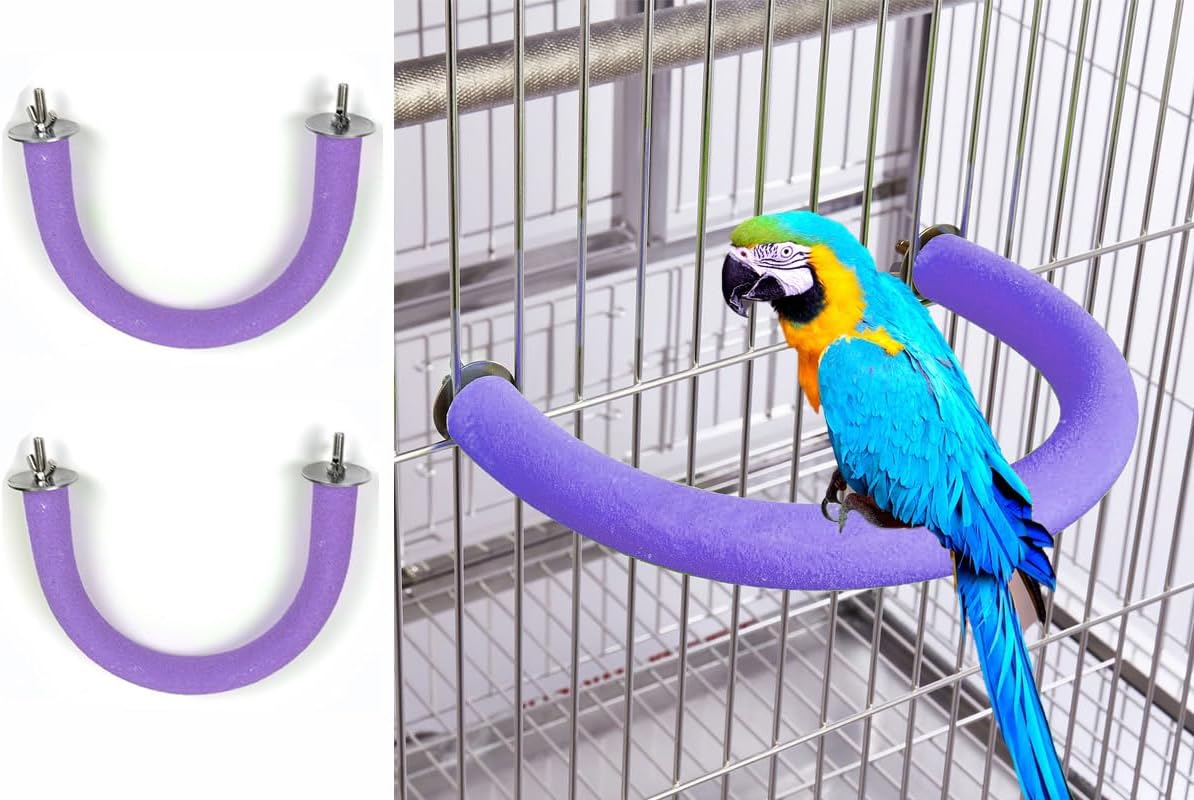 2Pcs 6.1Inch Purple U Shape Rough-surfaced Sands Stick Bird Perches | Regular to large birds, grey parrots, parakeets, macaw | U shaped sticks that clamp to the bars | Rough surface, use as a secondary perch. Check current Amazon price. |
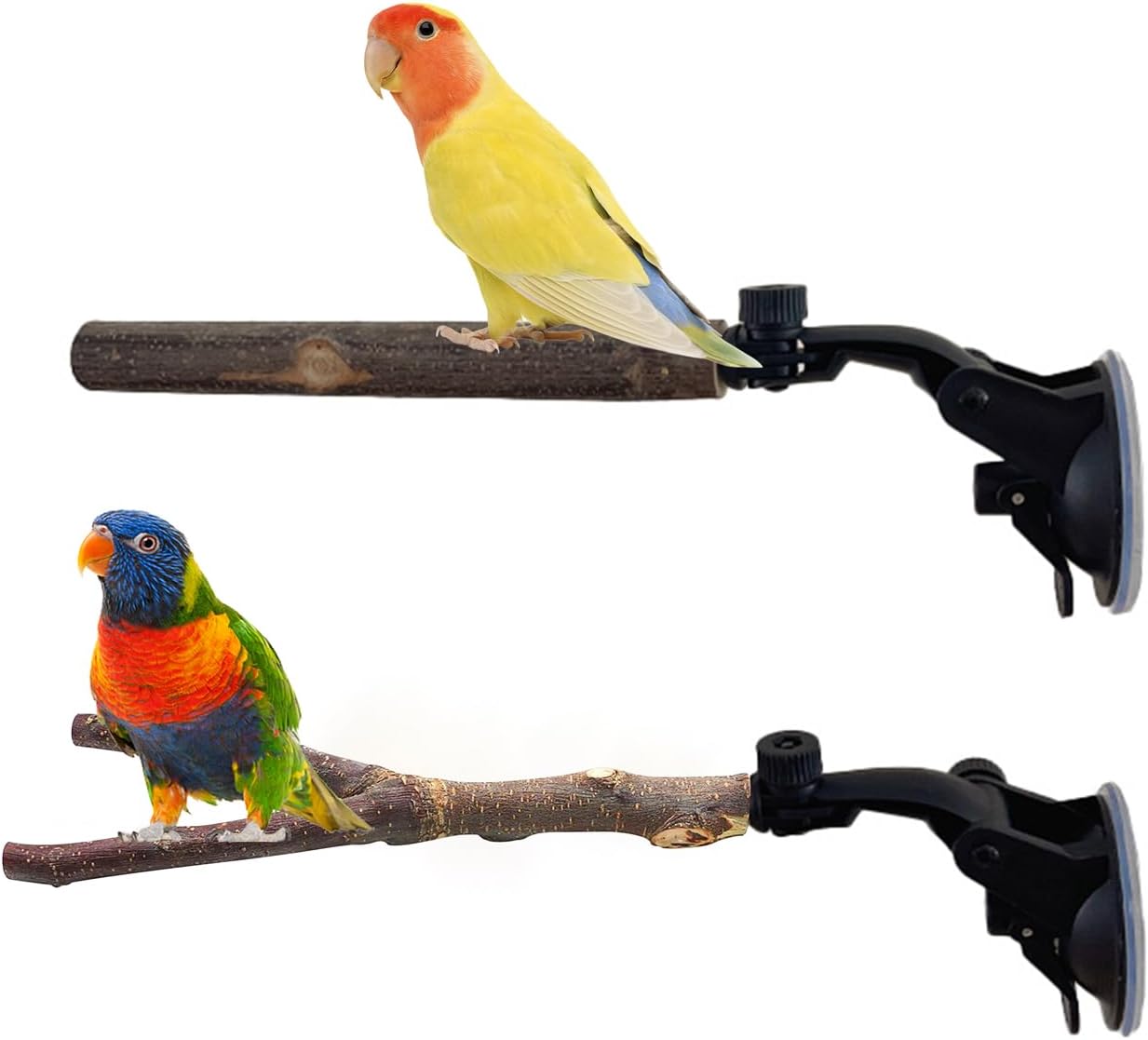 2 PCS Parrot Perch Stand with Suction Cup | Cockatoo, macaw, parakeet | Suction cup on glass or tile | Shower and window time, check the suction first. Check current Amazon price. |
| Cage bar spacing | Every bird | Not a product | Measure the gap before you buy the cage. |
| Tray liner | Every bird | Not a product | Change daily and keep perches out of the drop zone. |
The table has no price column on purpose, because these listings move around and a number written today is wrong next month. Click through and check the current Amazon price instead. What matters is the shape of the setup: two wood sets, one sanded set, one suction set, and a reminder that the cage itself has to be measured before any of it goes in.
2Pcs 6.1Inch Purple U Shape Rough-surfaced Sands Stick Bird Perches
These are the sanded sticks, and they do one job well: they give a bird a rough surface to grip on a regular basis. The U shape clamps onto the cage bars and stays put, and the set is aimed at regular to large birds, including grey parrots, parakeets, and macaws.
Use one as a secondary perch. Sanded surfaces help wear nails down, but the same grit that files a nail also rubs a foot pad, and a bird that spends all day on one has no way to step off. I would put this where a bird sits briefly, like a perch near the door of the cage, and keep the sleeping perch natural wood.
Suction-cup perches for window and shower time
This set lives outside the cage. Two perches with suction cups, for a shower wall, a window, or a tile wall, which means your bird can sit somewhere interesting while you get ready instead of screaming from the other room. Cockatoos, macaws, and parakeets can all use them.
The catch is the suction cup. It holds on clean, smooth glass and tile, and it lets go on anything dirty, wet, or textured. Press it, twist it, and pull on it with your hand before the bird gets on, and check it every time you use it. This is supervised gear, not a permanent perch, but a bird that showers with you is a bird that bathes without a fight.
Should you buy CAMATET 8pcs Natural Bird Perches for Cage?
Yes, if you keep small birds and you want one purchase to fix a bare cage. Eight natural branches give you diameter variety, a couple of spares to rotate on cleaning day, and enough pieces to outfit a parakeet or cockatiel cage without buying anything else. The wood will get chewed, the thin branches will need swapping out eventually, and the mounts need bar spacing that fits, but that is true of every wood perch at this level.
If you keep a larger bird, the branches will be too thin, and the sanded set above is the better match. For everyone else, this is the first thing I would add to a budget bird cage after the cage itself. Check current Amazon price, then compare it against what a single replacement dowel costs at the pet store.
Should you buy Mezchi 8 Pcs Bird Perch Stand Toy?
Yes, if your bird wants a flat spot or your cage needs some color. The platforms are the real feature, and the grinding stick is a useful extra rather than the reason to buy. Wipe the dye rather than soaking it, and rotate the pieces so no single surface gets all the traffic.
If you want natural wood and nothing else, buy the CAMATET set instead. If you are outfitting a cage for a budgie or a conure and you want the bird to have somewhere to sit flat, this set earns its place. Check current Amazon price and see whether the shapes are worth the small step up.