Most people who search for car ramp for dogs vs dog stairs for large dogs are not really shopping for a category. They are standing beside a bed or a tailgate with a dog who has started to hesitate, and they want to know which shape of help to buy. The category question is the easy part. The hard part is that a ramp and a set of stairs solve different problems, and a dog who refuses the wrong one will not explain why.
This guide is for households with senior dogs, large dogs, or both. It works through four sets of stairs that cover the furniture half of the decision, from a low three step set built for a bed around 15.7 inches to a five step set rated for beds up to 25 inches, and it explains where a purpose built car ramp still makes more sense. It also covers the measurements that decide the purchase, because a set of stairs that is two inches short of the mattress is a set of stairs your dog will not use. None of this replaces measuring your own furniture, your own vehicle, and your own dog.
The short answer: when the landing is a bed or a couch, stairs are usually the better buy, and when the landing is a car, a ramp wins. Plenty of households need one of each, and the four sets below cover the furniture side of that problem.
Dog Stairs for Small Dogs 16" H – Upgraded Non-Slip Dog Ramp for Couch
Sits at couch height for most sofas, and the non slip backing keeps the base planted when a dog pushes off
Named for small dogs, so a large dog needs the stated weight capacity checked before you order
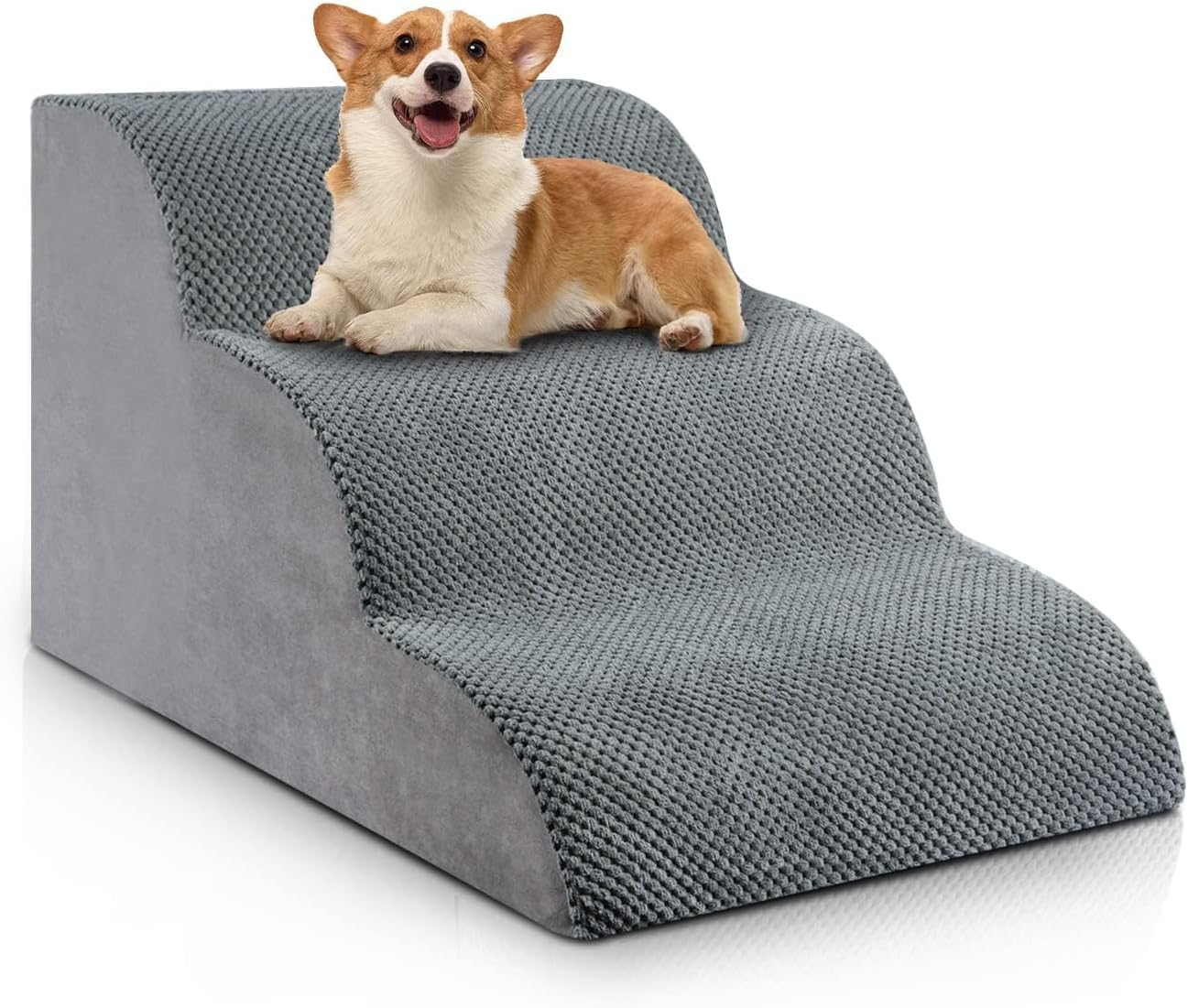
Chic Threads 3-Step Dog Stairs for Small Dogs, Dog Ramp for Bed 15.7" H
The lowest entry point and the simplest climb here, which suits a low bed or a deep couch
15.7 inches leaves nothing for a taller bed, and a compact footprint means less tread for a big paw
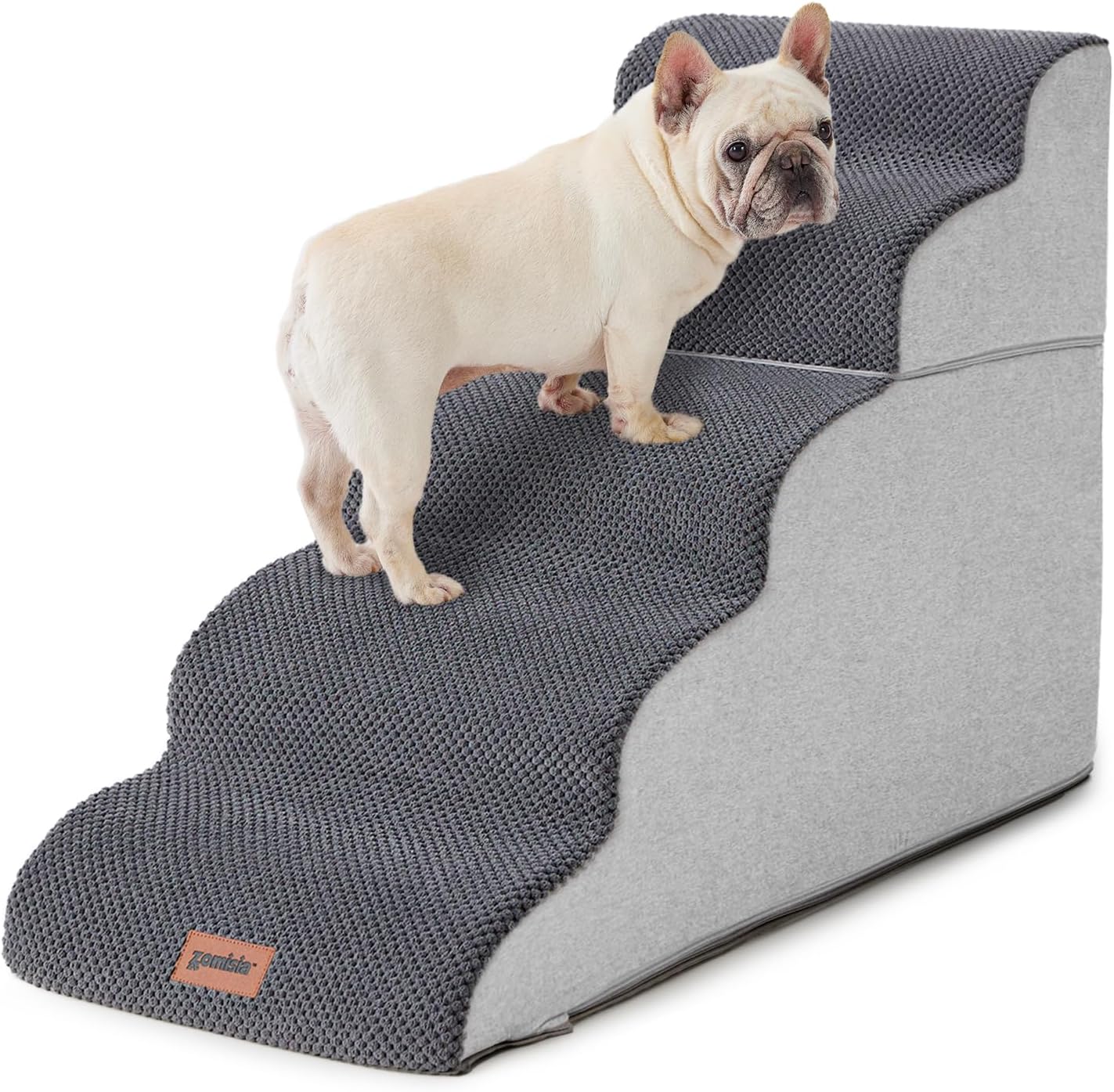
ZOMISIA Dog Stairs Ramp for High Beds Up to 25", 5 Step Pet Stairs Grey
The only set here rated for beds up to 25 inches, so it reaches what the others cannot
Five steps ask more of stiff hips than a gentle ramp at the same height, and grey fabric shows dirt
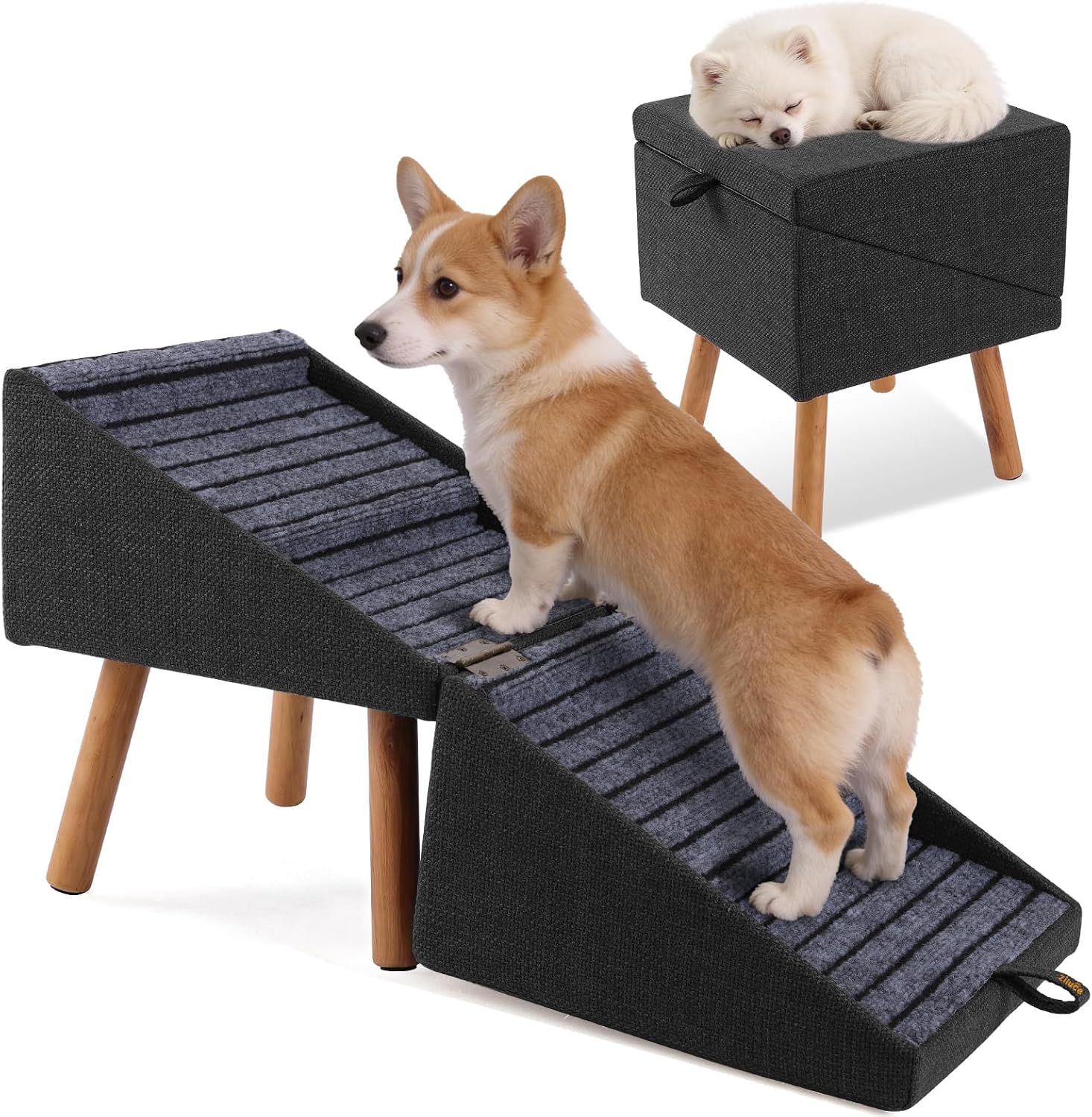
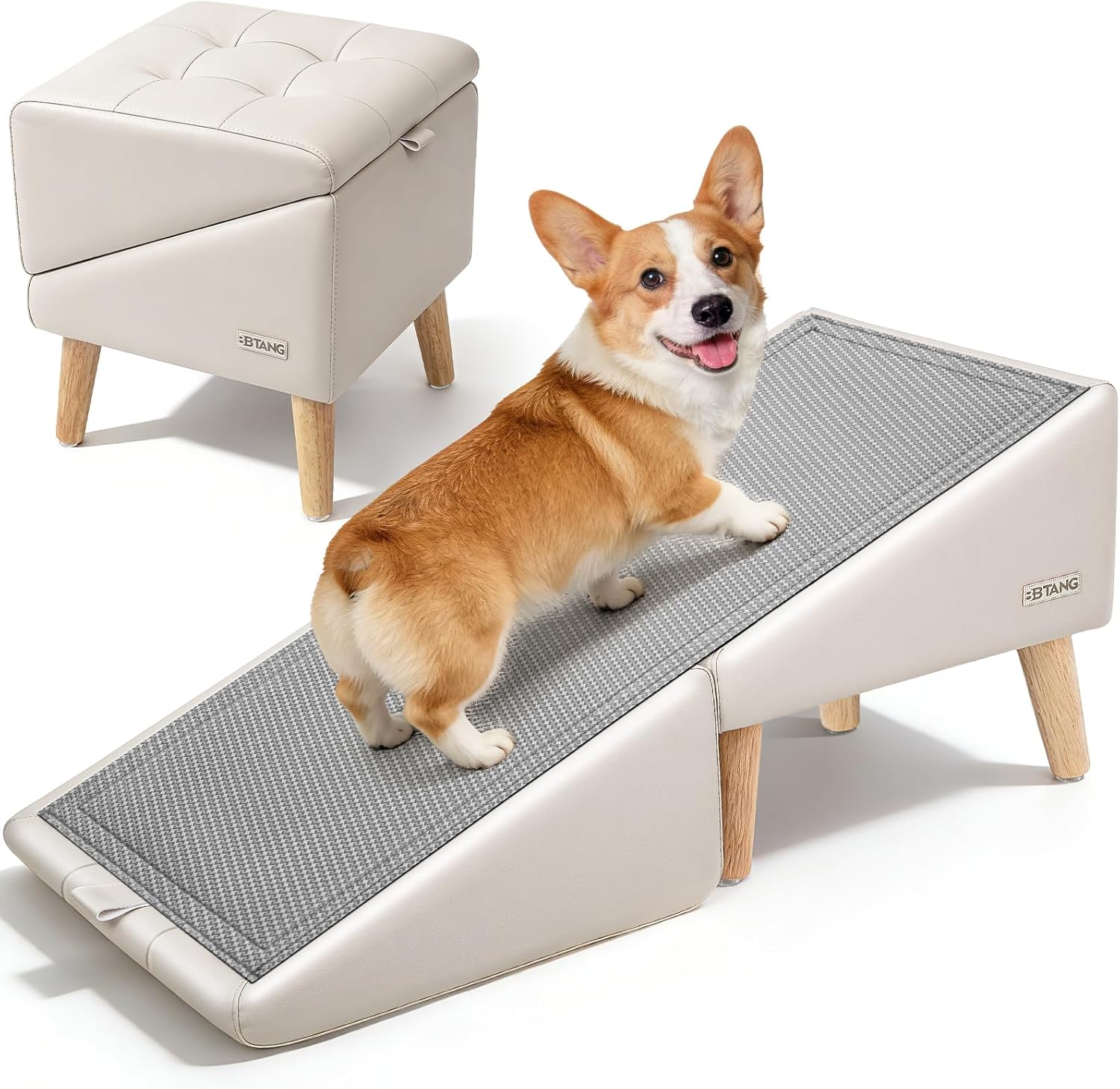
Dog Stairs for Small Dogs, 2-in-1 Dog Safety Ramp and Ottoman, 17.13" H
Doubles as an ottoman, so it earns its floor space instead of living in a closet
The highest price of the four, and 17.13 inches still will not reach a tall bed
Prices and availability may change.
What car ramp for dogs vs dog stairs for large dogs really comes down to
The difference between car ramp for dogs and dog stairs for large dogs is not quality. It is the shape of the climb. A ramp gives a dog one continuous slope with no separate rises to step over, which is why it tends to suit dogs with hip or joint trouble and dogs who have lost confidence in their back legs. Stairs give a dog a run of short, flat platforms, which suits dogs who dislike walking on a slope, dogs with vision trouble who want to feel a solid edge under every paw, and rooms where floor space is tight.
The second variable is storage. A ramp that is long enough to be gentle is also long enough to be awkward. It has to live somewhere: folded behind a seat, leaning in a closet, or permanently parked at the foot of the bed. Stairs at bed or couch height are compact enough to leave in place, and a set that doubles as an ottoman hides in plain sight.
The third variable is your dog's history. A dog who has used porch steps for years will usually accept indoor stairs within a day. A dog who has never walked a slope may need a week of treat luring before a ramp stops being a strange object in the hallway. Buy for the dog you have, not for the dog the listing shows trotting up a ramp in three seconds.
How to judge a ramp or a set of stairs
Ignore the marketing copy and collect four numbers instead. First, the height of the landing, measured at the spot where the dog actually gets on. Second, the depth of floor space you are willing to give up in front of it. Third, the weight capacity the listing states, which matters more for a large dog than for a small one because foam compresses under load. Fourth, the surface the product will sit on, because a non slip backing grips hard flooring and does very little on deep carpet.
Foam density is the spec most buyers skip. Denser foam holds its shape under a heavy dog instead of bottoming out, and it is the difference between a step that still feels like a step a year later and a step that has flattened into a slope with a seam in it. Step rise and tread depth matter for the same reason: a short rise with a wide tread is easy on stiff hips, and a tall rise with a narrow tread is a hop in disguise.
Framing the choice as dog stairs for large dogs vs car ramp for dogs is useful, but only after you have those numbers. Without them you are guessing at a height, and a guess is how people end up with stairs that stop two inches short of the mattress.
Car ramps: what they solve that stairs do not
A car ramp is the only sensible answer to a tailgate, a hatch, or a high cargo floor, because nobody leaves a set of stairs parked behind a vehicle. This is also why the framing of car ramp for dogs vs dog stairs for large dogs should start with the vehicle rather than the dog. The numbers that matter are the load height of the car, the ramp angle that results from the ramp's length, and the lift capacity, which is the weight the ramp is rated to hold while a dog is walking on it rather than the weight it can support standing still.
Angle is where cheap car ramps fail. A short ramp against a tall tailgate produces a steep climb that many senior dogs refuse once and then refuse forever. Side rails or a raised edge matter as much as traction for a dog who drifts sideways, and a textured deck beats a smooth one in the rain. Folding is a genuine convenience, but every hinge is a place where a paw or a dew claw can catch.
What a car ramp is not is a bed solution. Even a long one is too long to leave in a bedroom, and its deck is usually narrower than the tread of a set of stairs. That is the whole argument for owning both shapes rather than trying to make one product do two jobs.
Dog stairs: foam, frame, and step count
The Chic Threads 3-Step Dog Stairs for Small Dogs, Dog Ramp for Bed 15.7" H is the lowest, simplest option in this group. Three steps and a 15.7 inch top platform suit a low bed, a deep couch, or a dog who only needs a short lift, and it is the least expensive way into the category. Visit on Amazon
The Dog Stairs for Small Dogs 16" H – Upgraded Non-Slip Dog Ramp for Couch sits at almost the same height, and its headline feature is the non slip backing that keeps the base from sliding on hardwood or tile when a dog pushes off. If your dog launches rather than walks, that backing is doing more work than the foam is. Visit on Amazon
The ZOMISIA Dog Stairs Ramp for High Beds Up to 25", 5 Step Pet Stairs Grey is the one to look at when the bed is genuinely tall. It is rated for beds up to 25 inches, which none of the others here can match, and the five step layout spreads the climb across more contact points than a three step set does. Grey fabric is forgiving in a bedroom, though it will show muddy paw prints eventually. Visit on Amazon
The Dog Stairs for Small Dogs, 2-in-1 Dog Safety Ramp and Ottoman, 17.13" H is the one that solves a second problem. It works as stairs at 17.13 inches and as an ottoman when the dog is not using it, which matters in a small room where a dedicated pet product would otherwise be clutter. Visit on Amazon
One honest caveat applies to most of this list: three of the four are named for small dogs. The supplied listings do not give a weight capacity I can quote here, so if you have a heavy Labrador or a Great Dane, open the listing and read the stated weight capacity and the return policy before you order. A set that sinks under a big dog is worse than no set at all.
Bed height, ramp angle, and the numbers that matter
Measure the bed with the mattress, the topper, and the frame in place, at the side the dog uses. A set rated to 25 inches is overkill on a 17 inch bed, and a set rated to 15.7 inches is a hazard on a 24 inch one, because the top step turns into a jump down. The same logic applies to a car: measure the tailgate or cargo floor, then think about the ramp angle a ramp of that length will actually produce.
Ramp angle and step rise are the two specs that decide whether a dog with limited joint mobility will use the product at all. A shallow angle means a longer ramp, which means more storage and a bigger footprint in the room. A shorter set of stairs means less floor space but a steeper effective climb. There is no free version of this trade, and the honest move is to pick the side of it your dog can live with.
Bed height also changes how you position the product. Stairs want to sit square against the mattress with the top step flush, not buried in a comforter. A ramp wants its top edge resting on the mattress or the sill, not floating above it. Both want a flat, hard surface underneath, which is the one thing a thick rug will not give you.
Non slip backing and joint mobility
Traction is the difference between a product your dog uses and a product your dog avoids. A non slip backing under the base stops the whole unit from sliding, and a textured walking surface stops paws from slipping on the unit itself. For a senior dog with hip support needs, the trip down is the part that matters most, because a dog who trusts the descent will keep using the climb. If your dog hesitates at the top and then jumps anyway, the base is probably moving more than you think.
Joint mobility is a slow variable. A dog who is stiff in the morning will do better with a gentler angle and a wider tread, even when that means a bigger footprint in the bedroom. Covers that zip off and wash are a small feature with real value, because a greasy or muddy surface is a slippery one. And if your dog has already stopped jumping onto the bed on their own, that is the signal to buy, not a reason to wait another season.
Should you measure your car and your bed before you buy?
Yes, and measure the dog too. Four measurements cover almost every mistake: bed height at the point of entry, tailgate or cargo floor height, the floor space you can spare in front of each landing, and your dog's shoulder height and body length. A large dog on a narrow tread is a dog who will bail out sideways, and a ramp that is too narrow is worse than a ramp that is too short.
Then decide. If you are still weighing car ramp for dogs or dog stairs for large dogs after you have those numbers, buy the one that matches the landing you use most often, and plan to add the other shape later rather than forcing one product into two jobs.
Keep the box and the receipt. Some dogs take to a new climb in a day, some need two weeks of treats and patience, and a few never accept it at all. A generous return window is worth more than a feature you will never use.
What to check next
Before you order, check four things on the listing: the stated weight capacity, whether the cover zips off for washing, whether the foam is a single block or layered pieces, and the exact height of the top step against your own measurement. Then check the return policy, because the only test that counts is whether your dog walks up it.
If your dog is large and the listing does not state a weight capacity, treat that as a reason to keep looking rather than a reason to gamble. Foam density and weight capacity are the two specs that separate a set that lasts from a set that flattens by spring.
Finally, keep the two shapes straight in your head. A car ramp and a set of dog stairs are less competitors than two tools for two different landings, and the question of car ramp for dogs vs dog stairs for large dogs gets much easier once you stop expecting a single product to answer it.