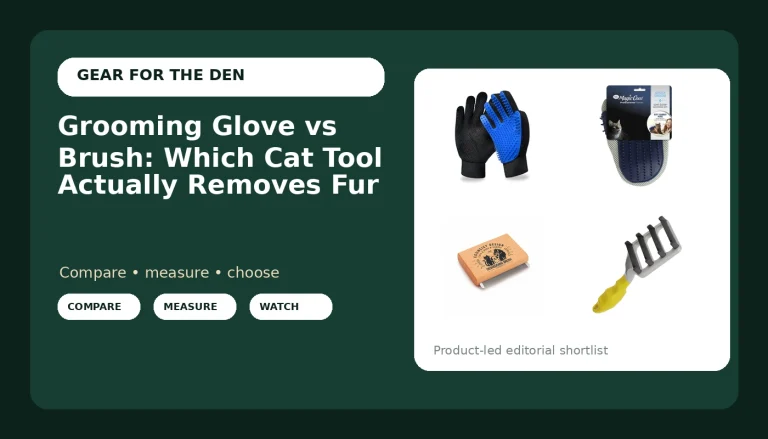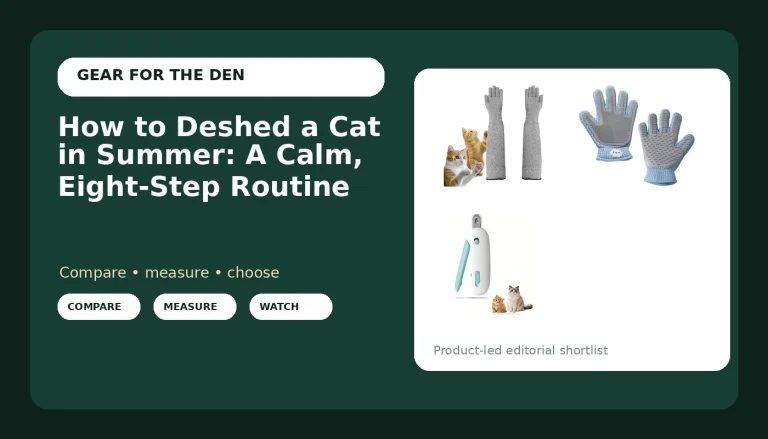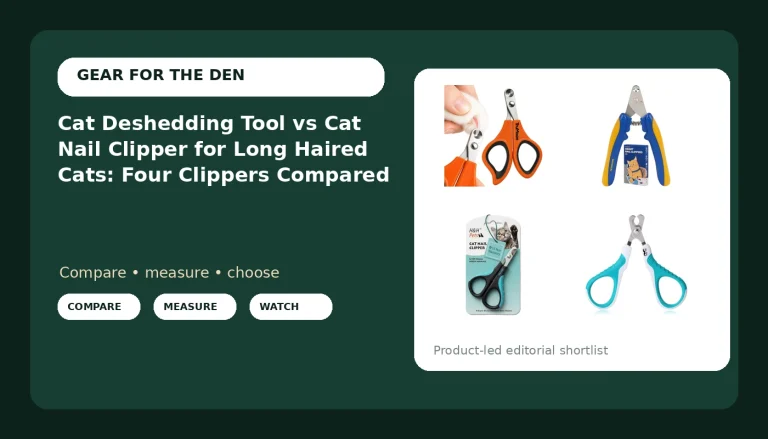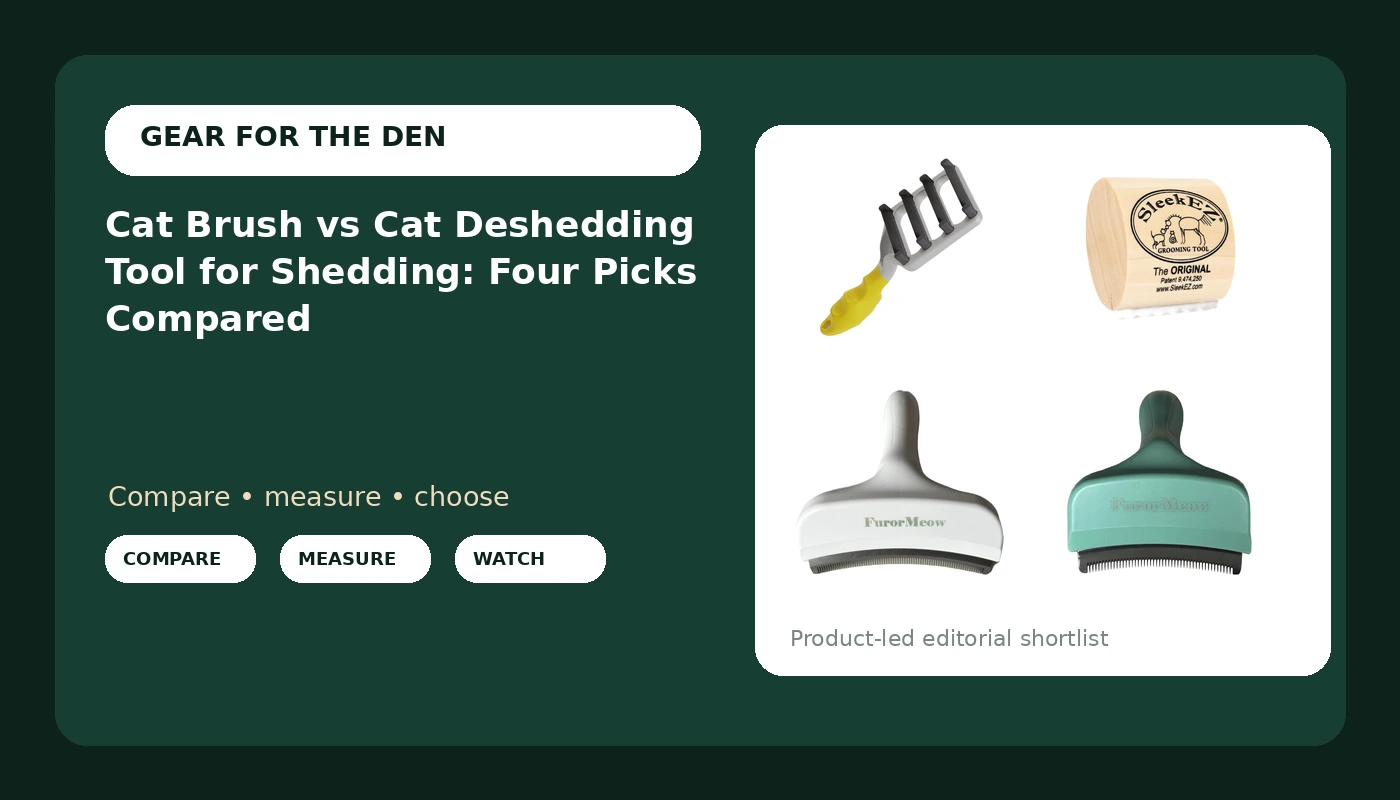
The cat brush vs cat deshedding tool for shedding question usually arrives in the same week as a black sweater and a lap full of fur. Both tools promise less hair on the sofa, but they do genuinely different jobs, and buying the wrong one for your cat's coat length is the quickest way to end up with a cat that hides whenever the grooming drawer opens.
The short answer for most homes: a bristle brush covers weekly upkeep, and a deshedding tool earns its place only when loose undercoat is still coming off in tufts. A brush is a surface tool. A deshedding tool is a depth tool. If you groom twice a week and the sofa stays reasonably clean, you already own enough brush. If you finish a session and your cat is still shedding clouds, you need the second category, matched to coat length rather than to whatever was on sale.
The difference between cat brush and cat deshedding tool for shedding comes down to depth. A brush moves hair that has already left the skin. A deshedding edge reaches into the undercoat and lifts the loose, dead layer out before it lands on your furniture.
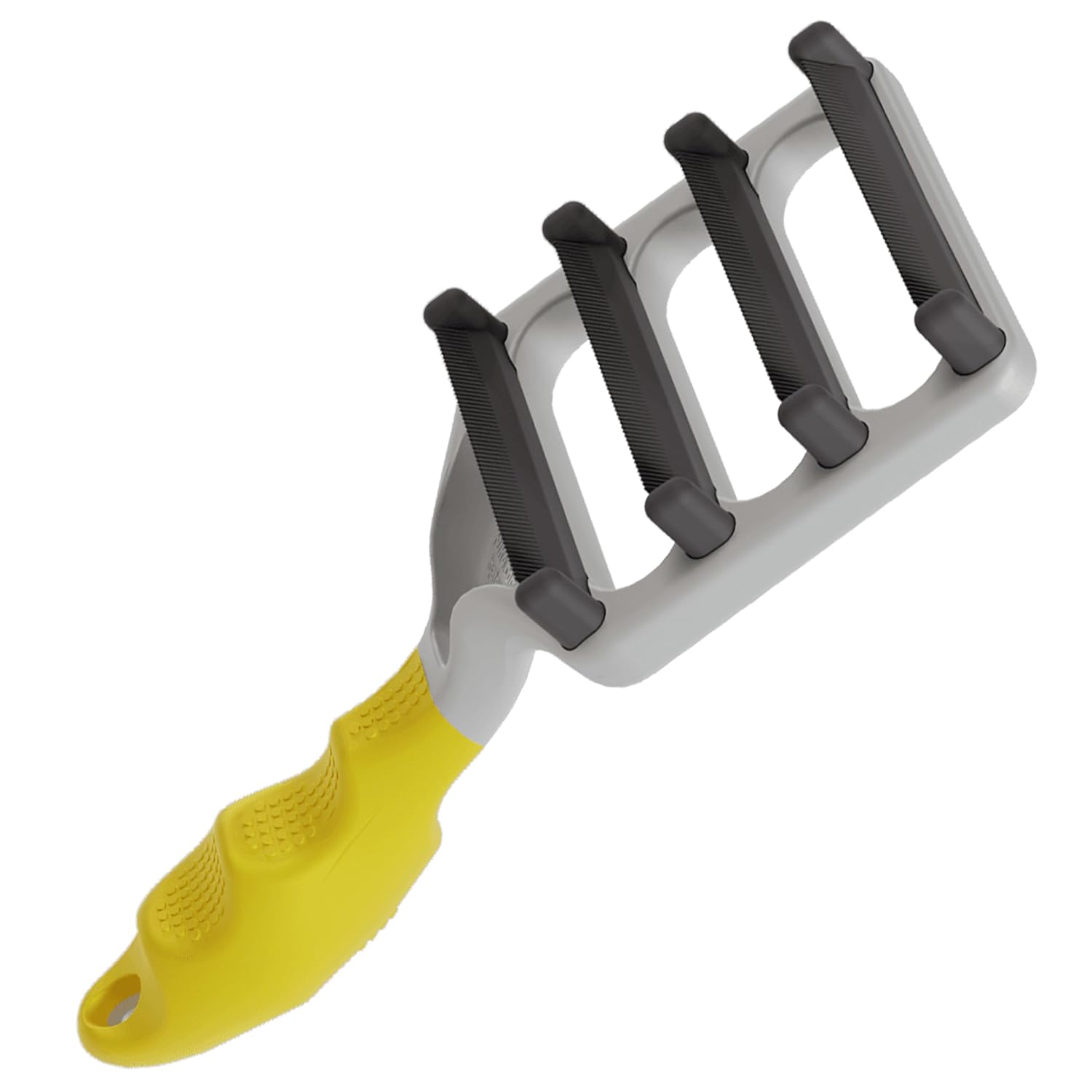
FUR4 deShedding Cat Brush for Short Hair Cats
Four carbon fiber edges cover more coat per stroke, and the short-hair focus matches the most common shedding complaint
It is built for short coats, so a dense double coat or a longhaired cat needs a different shape
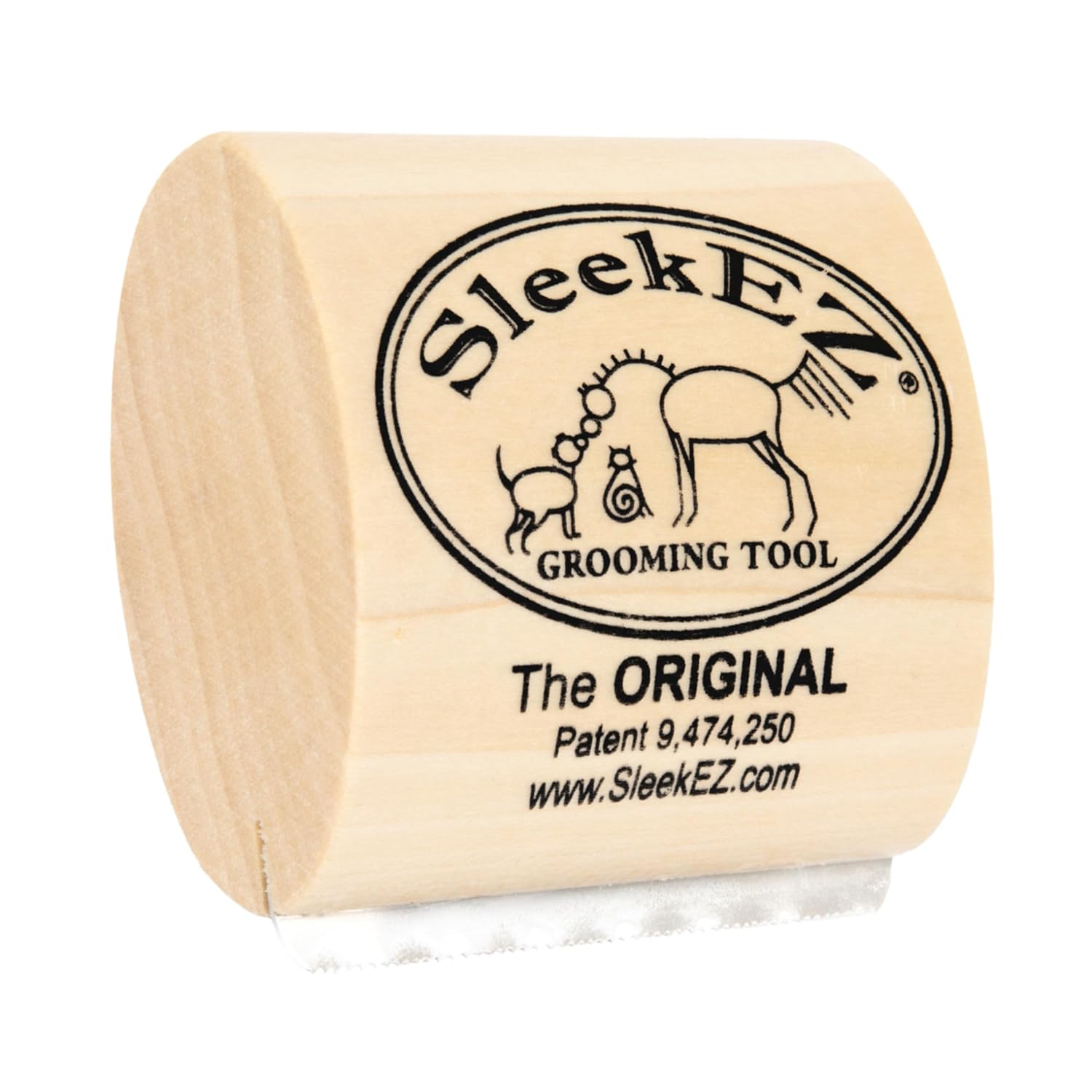
SleekEZ Cat Brush for Shedding
Patented design made in the USA and listed for short, medium and long coats, which makes it the most flexible single purchase here
A flat blade rewards a light hand and asks for short strokes rather than long sweeps
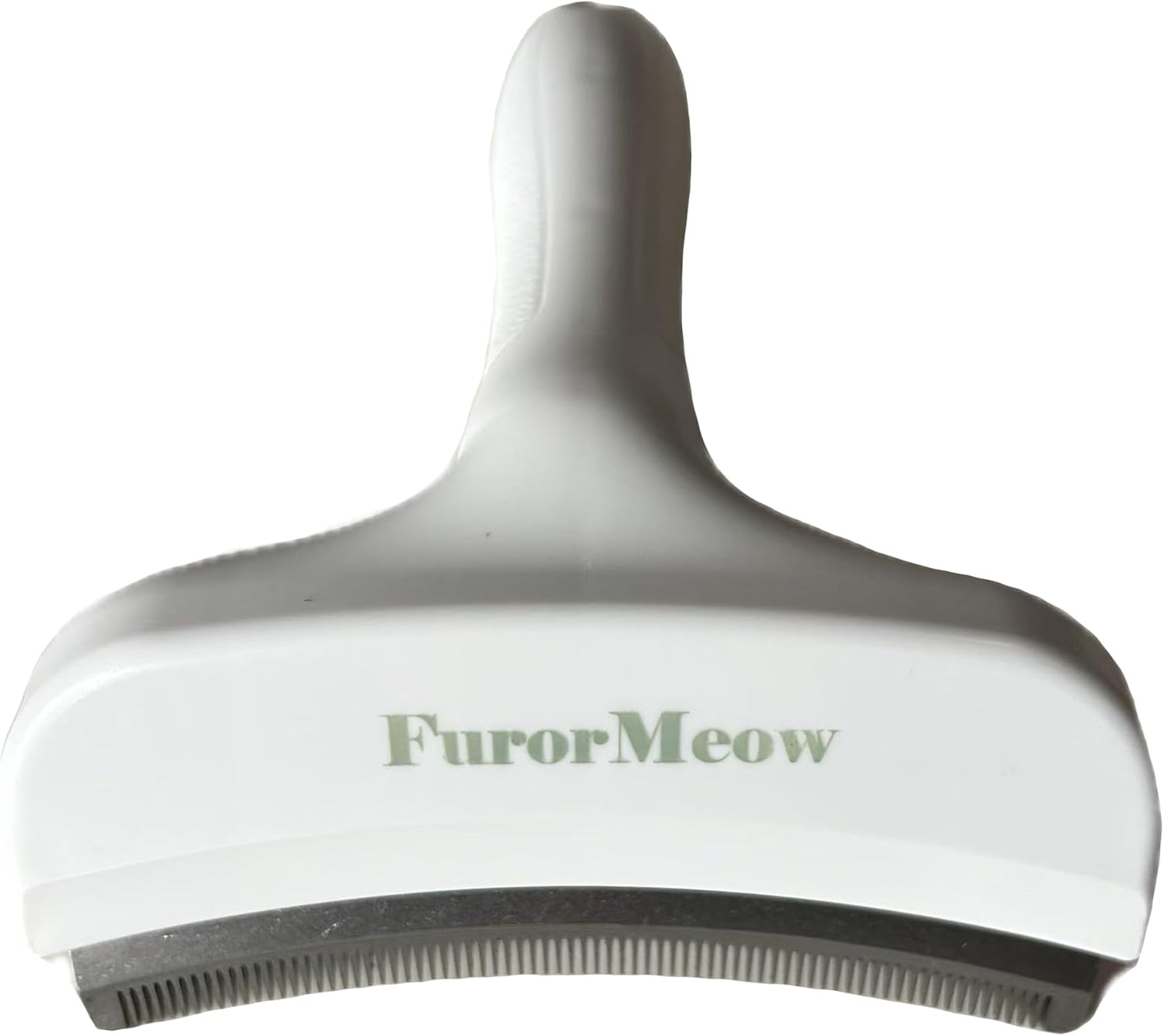
FurorMeow Pet Deshedding Tool with Curve Blade (White, Large)
Tight V-shaped teeth and a curve blade reach under a heavy undercoat, and the large head covers a big cat fast
The large head is a lot of tool for a small cat, and tight comb spacing means slower strokes
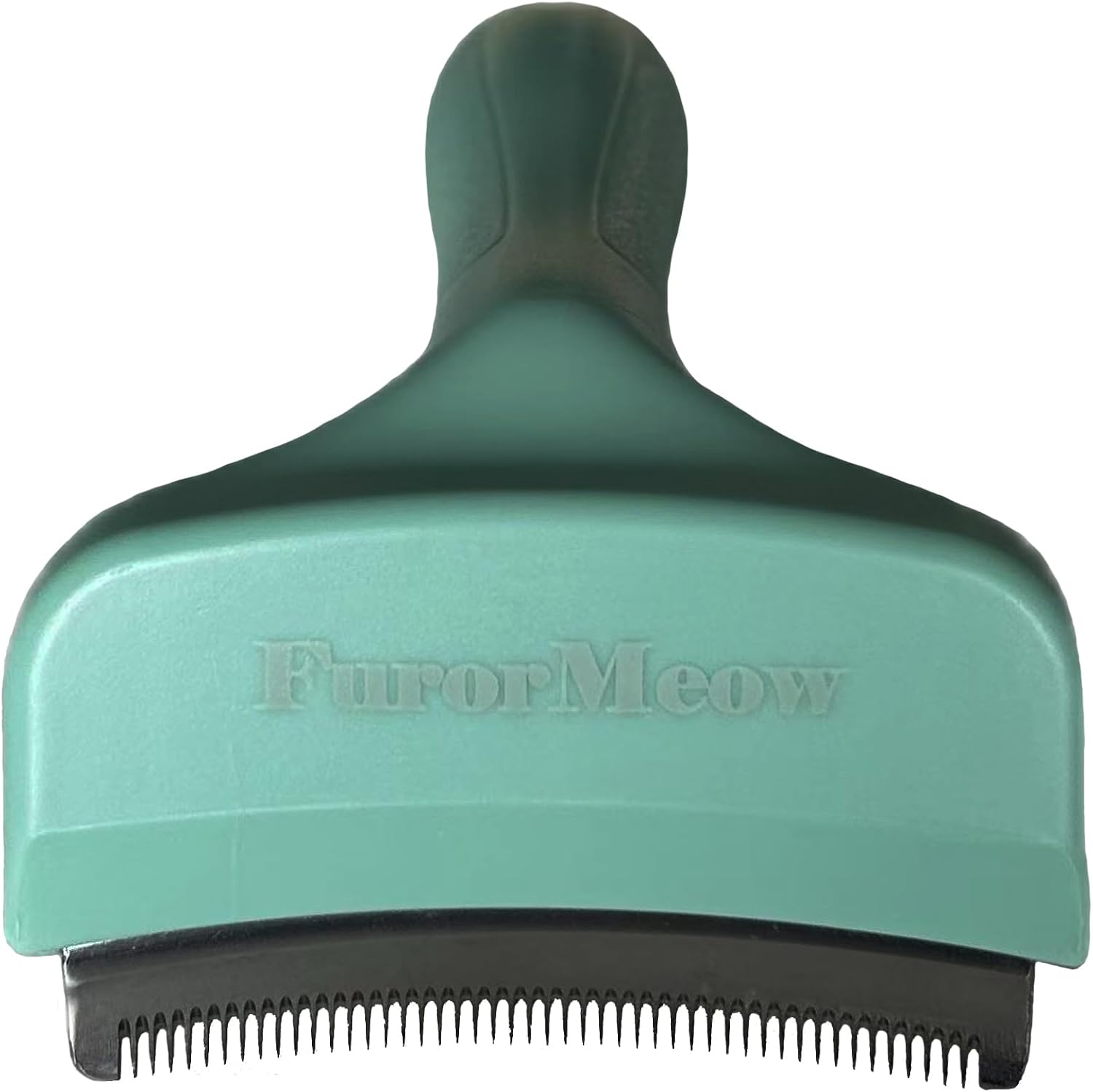
FurorMeow Pet Deshedding Tool with Curve Blade (Green, Small)
The smallest working width here, which suits petite cats, seniors and hands that tire quickly
A narrow head needs more passes to cover the same area, and impatient cats notice
Prices and availability may change.
How to compare a cat brush vs cat deshedding tool for shedding
Start with what each tool actually touches. A brush works the topcoat, and its bristle type decides how much it grabs. Soft natural bristles glide across the coat and collect loose surface hair. Firmer synthetic bristles and wire pins dig a little deeper and pull dander along with them. Neither reaches the undercoat on a dense double coat, which is why ten minutes of brushing a Siberian or a Maine Coon can leave you with a clean-looking cat and a sofa that still sheds.
A deshedding tool works below that line. Its deshedding edge, usually a row of fine teeth or a curved blade, rides under the topcoat and lifts the hair the cat has already released but not dropped. That is the hair that mats, that felts, and that ends up as tumbleweeds under the radiator.
Framed as cat deshedding tool for shedding vs cat brush, the comparison is really depth against surface. If your cat is short-haired, indoor and mostly produces a light dusting, a cat brush or cat deshedding tool for shedding is a choice you can make on comfort alone, because either will keep up. If your cat has a dense undercoat, a seasonal blowout, or a long coat that mats behind the front legs, the brush alone will not keep up.
The practical answer for most people is both, on different schedules. Brush two or three times a week for surface hair and for the handling that makes grooming easier over time. Bring out the deshedding edge once a week in shedding season, and skip it when the coat is thin, dry or irritated.
Bristle type, coat length, and comb spacing
Coat length decides more of this purchase than brand does. Short, single coats release hair that sits close to the skin, so a finer tool with a tighter working pattern does the job and a heavy blade is overkill. Medium coats need a tool that follows the body without scraping. Long coats need patience and a lighter hand, because a blade that grabs too much will pull at the coat instead of gliding through it.
Comb spacing is the spec most people ignore. Tight spacing catches more hair per pass and demands slower strokes. Wider spacing covers ground faster and leaves more behind. Neither is wrong, but tight spacing on a nervous cat is a recipe for a short session that ends in a swat.
The undercoat is the part that matters. A cat with a soft, dense undercoat will blow it twice a year in volume, and no amount of surface brushing clears it. A cat with a fine, single coat will never produce that kind of volume, and buying a heavy deshedding tool for that cat means paying for a problem you do not have.
Season matters as much as coat type. Most cats blow their undercoat in spring and again in autumn, and the tool that feels unnecessary in January can be the only thing that keeps up in April. If you buy a deshedding edge in the middle of a quiet stretch, you may decide it does nothing, which is usually a timing problem rather than a tool problem.
The double coat is its own trap. A cat with a dense undercoat looks enormous and sheds a fraction of what that undercoat actually produces, because most of the loose hair stays trapped in the coat until something pulls it out. That is why a cat can look well groomed and still leave a full outline on the sofa cushion. A deshedding edge gets ahead of that cycle, and a brush tidies up after it.
Age belongs in the same calculation. Senior cats often carry thinner coats and more sensitive skin, so the smallest, gentlest edge in a lineup is usually the right starting point rather than the widest.
The four tools in this comparison
All four sit in the same broad category and none of them is a bad tool. They differ in working width, in how aggressively the edge grabs, and in the coat each one was designed around.
FUR4 deShedding Cat Brush for Short Hair Cats
Four carbon fiber edges are the pitch here, and the shape makes sense for the coat it was built around. Short, single-coat cats shed hair that sits close to the skin, so a head with several working edges covers more of the body per stroke than a single row of teeth. That also keeps sessions short, which matters with a cat who has opinions about being brushed. Four edges also mean four passes of debris to clear when you finish, so keep a bin nearby. The short-hair focus is the limitation as much as the feature, because on a dense double coat or a longhaired cat this is not the tool that clears the undercoat.
SleekEZ Cat Brush for Shedding
The SleekEZ is the most flexible single purchase in the group, because it is listed for short, medium and long coats and it is made in the USA. That range means one tool can serve a household with a shorthair and a longhair without a second purchase. The blade style asks for short, light strokes in the direction of the coat rather than scrubbing in circles, and that suits cats who dislike a lot of handling. Treat the blade as a deshedding edge rather than a brush, and do not press. The trade-off of covering three coat lengths is that it is not specialized for any of them, so a cat with a very heavy undercoat will still want a tighter edge in season.
FurorMeow Pet Deshedding Tool with Curve Blade (White, Large)
Tight V-shaped teeth on a curve blade are built for volume, and the large version is aimed at bigger cats and at dogs, which tells you the working head is wide. Wide is good on a Maine Coon or a chunky domestic shorthair, and it means fewer passes over the same patch of coat. The trade-off is control. A big head with tight comb spacing needs slow, deliberate strokes, and a cat who is already twitchy about grooming will notice a large tool moving over the flanks. The curve follows the shape of the body better than a flat edge, which helps over shoulders and hips, but it also means keeping the tool moving in one direction instead of rocking it.
FurorMeow Pet Deshedding Tool with Curve Blade (Green, Small)
Same teeth and same curve blade as the large version, scaled down. The narrow working width suits petite cats, seniors, and anyone whose wrist tires before the cat loses patience. The cost is time, because a small head covers less per stroke, and a cat with a low tolerance for grooming will run out of cooperation first. It is also the easiest of the four to use around the face and front legs, where a wide head never quite fits. If your cat is small and you want to find out whether a curved deshedding edge suits them at all, this is the gentler place to start.
Trade-offs: what you give up with each approach
A deshedding tool is not a free upgrade. It removes more hair, and that is exactly why it can be used badly. Pressing harder does not pull more undercoat out, it scrapes skin. Long strokes across the belly, the armpits and the inside of the back legs are where nicks happen, and those are also the spots a cat defends most aggressively. Work in short strokes, stop when the tool drags instead of gliding, and give the coat a rest day.
Matting is the other thing worth naming. A deshedding tool does not remove mats, and running one over a mat pulls skin and teaches the cat to hate the tool. Break mats up with your fingers or a wide-tooth comb first, then deshed the healthy coat around them. If the coat is matted down to the skin, that is a groomer or vet job rather than a home session.
The second trade-off is expectation. Some people buy a deshedding tool expecting the shedding to stop. It will not. It reduces what lands on your furniture by removing the loose layer before it falls, and it does nothing about the hair still attached to a healthy coat. If your cat is suddenly shedding more than usual, that is a vet conversation, not a grooming tool conversation.
If a listing mentions a nail guard, that is a cover over the blade edge intended to keep a quick stroke near the paws from catching a claw. It is a useful detail on a tool you plan to use around a squirmy cat, and it is not a substitute for a calm, short session.
A brush gives up depth in exchange for safety and comfort. You can brush a cat in almost any direction, for as long as they tolerate it, and the worst outcome is a slightly annoyed cat. That is a real advantage for a first grooming tool, and it is why the brush stays in the routine even after a deshedding tool arrives.
Grooming gloves, roller adhesive, and the rest of the kit
Not every cat accepts a tool. For those cats, a grooming glove with the right glove fit does the same surface work while feeling like petting, and a glove that actually fits your hand is the difference between a tool you use and one that slides around. Gloves are slower and pick up less hair than a brush, but a cat that runs from a brush will often sit still for a glove, and that is worth more than efficiency.
A roller adhesive is not for the cat. It is for the couch, the car seat and the black sweater, and it handles whatever gets past everything else. Keep one wherever the cat sleeps.
One thing to skip: anything that promises to do the thinking for you. The tool does not decide how much coat comes off, your hand does. A lighter grip and a shorter session beat any attachment.
The rest of a sensible kit is short: a metal comb for checking for mats, nail clippers, and a bin for the hair you pull out. That is it. The cat brush vs cat deshedding tool for shedding decision is the only one that changes your routine. Everything else is support.
What to check before you buy
Match the tool to the coat before you match it to anything else. A short, single coat needs a fine, gentle edge and nothing more. A dense double coat needs a blade or a row of tight teeth that can reach the undercoat without scraping. A long coat needs a light hand and a tool that follows the body.
Check the working width against the cat, not against the photos. A wide head is faster on a big cat and intimidating on a small one. A narrow head is gentle on a small cat and slow on a big one. In a multi-cat household with different coat types, the flexible option that covers short, medium and long coats is usually a better single purchase than the most aggressive tool in the lineup.
Check how the tool is cleaned, because a deshedding edge packed with felted hair stops working and starts pulling. Check the handle, because a grip that fits your hand keeps your strokes light. And check your cat's reaction before you commit to a long session, since five calm minutes on day one buys you ten on day ten.
Decide your session length before you start. Two minutes on a cat who tolerates grooming beats ten minutes on a cat who does not, and the cat remembers the ten. Finish with a treat and put the tool away while the session is still going well, so the next one starts from a better place.
Answer the cat brush vs cat deshedding tool for shedding question with your own cat's coat in mind, and the choice gets simple: a brush for the routine, a deshedding tool for the season, and the smallest edge that does the job.