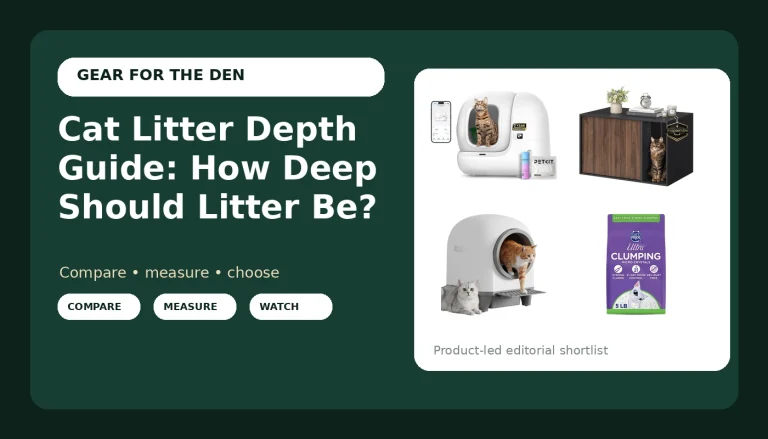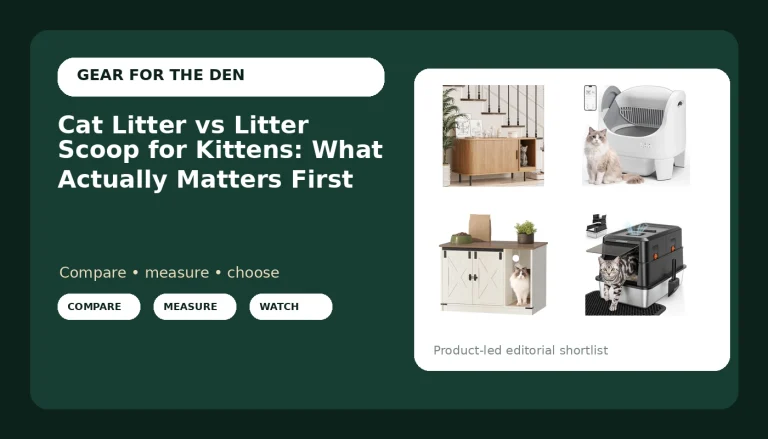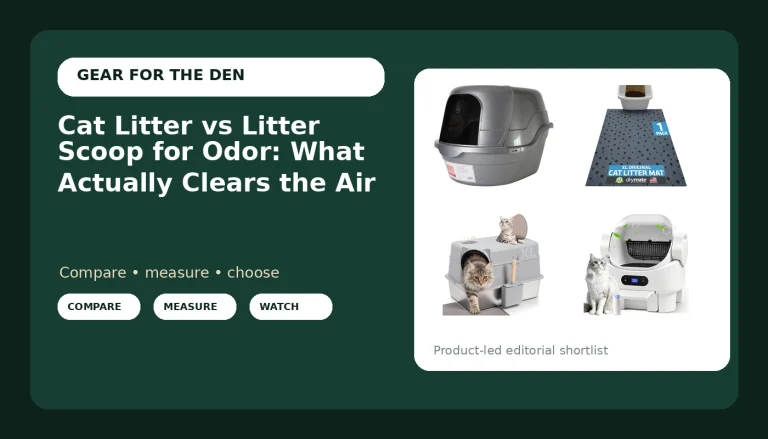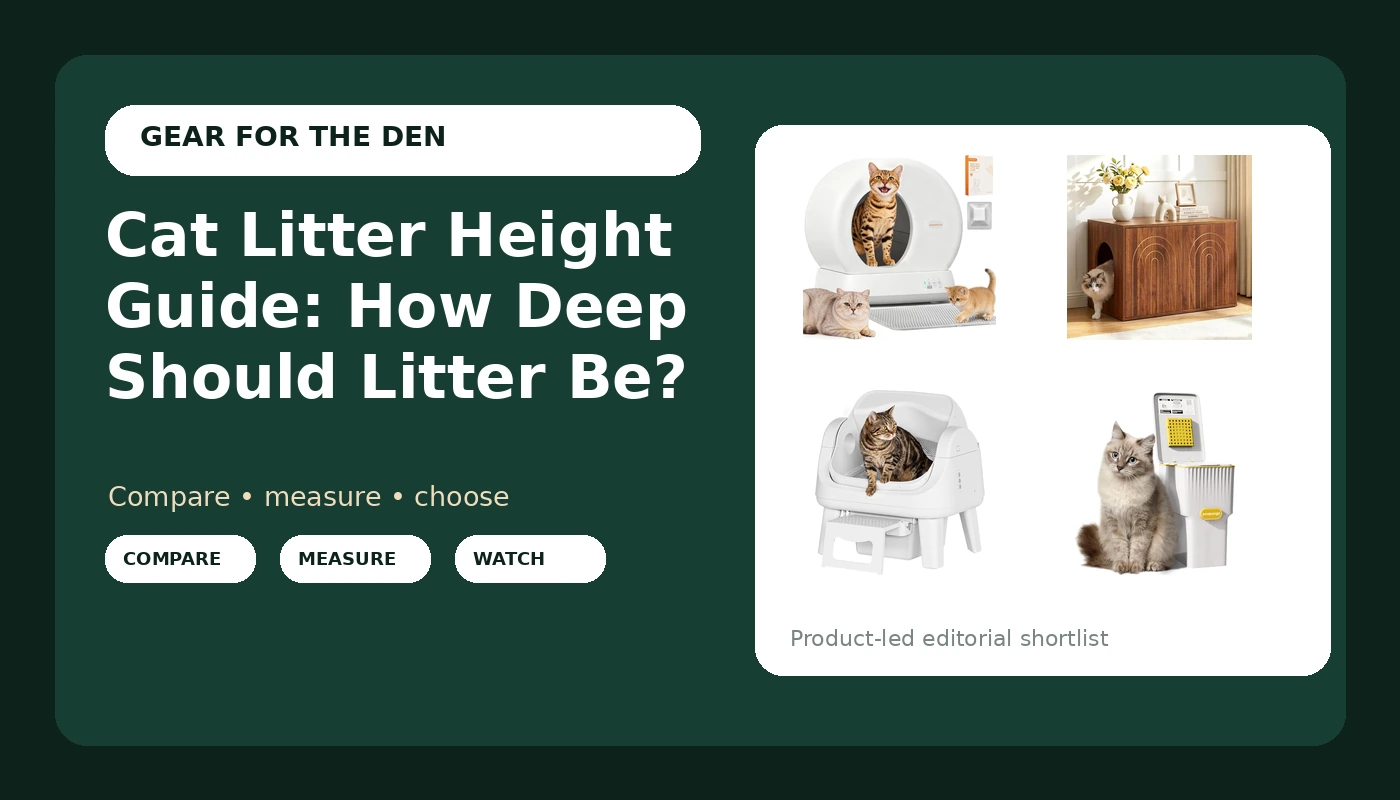
Cat litter height is the spec nobody prints on the box, and it is the one that decides whether your cat uses the box or the bath mat. Most cats want a bed two to three inches deep: deep enough to dig and bury, shallow enough that a scoop reaches the bottom without archaeology. Miss in either direction and you get litter kicked over the rim, clumps welded to the floor of the pan, or a cat that votes with its paws and never tells you why. The box gets the blame. The depth is usually the problem.
This cat litter height guide covers the four setups I would look at first, from a large self-cleaning box to a walnut cabinet that hides the whole thing. It also covers the part most buyers skip: how litter depth, entry height, and box size pull against each other, so fixing one usually means re-checking the other two. Line up all three and the rest of the litter routine, the scooping, the odor control, the mat by the door, gets easier.
Best Overall: Meowant Self Cleaning Cat Litter Box Safety Sensors, APP Control, Large Space
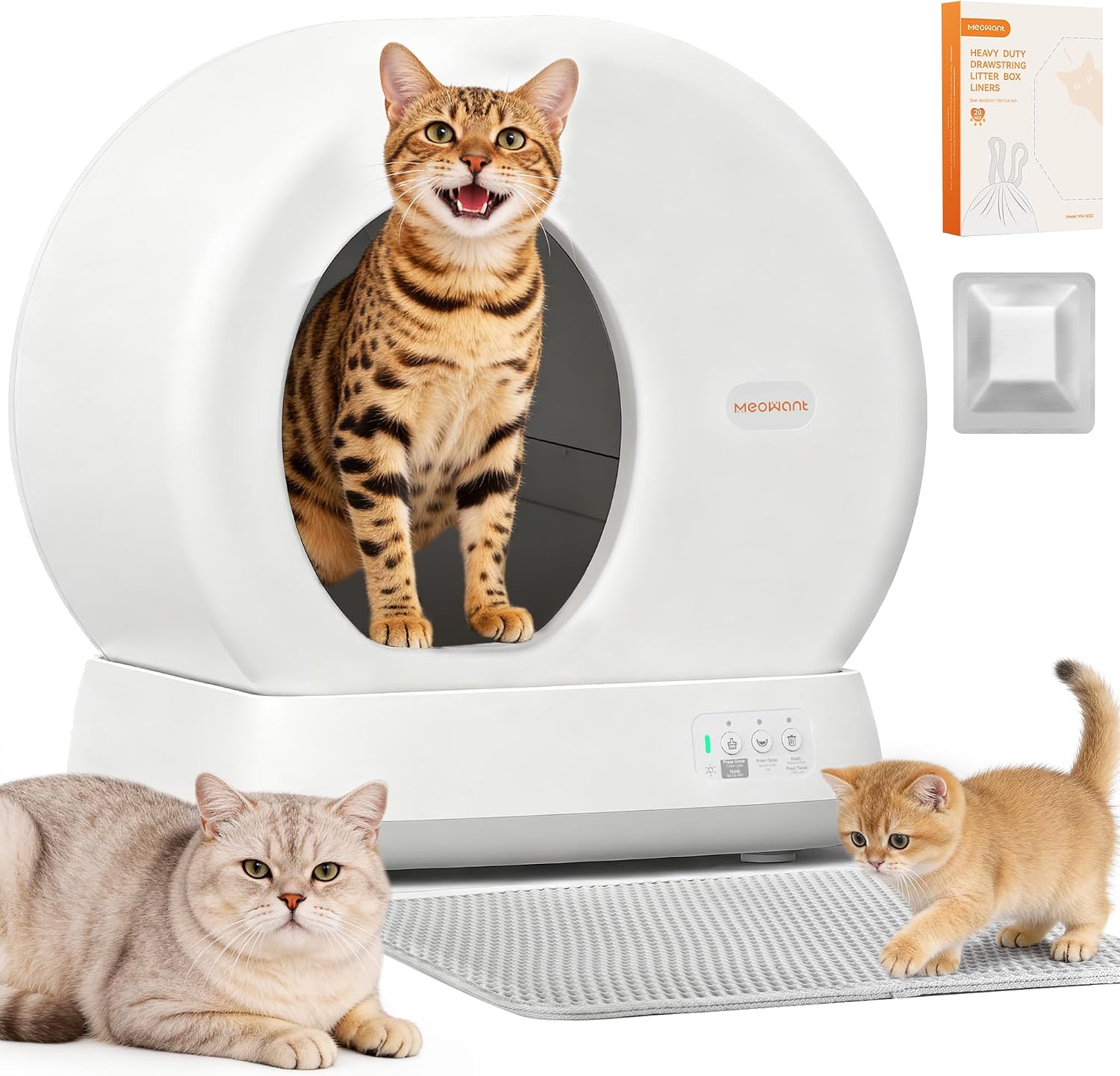
The argument for a large self-cleaning box is the litter bed, not the gadgetry. A wide pan holds a full two to three inches across the whole floor without crowding the cat into a corner, and a bed that deep is what lets a clump set cleanly instead of smearing into the plastic. Run a shallow bed in a small pan and every scoop becomes a scraping job, which is the moment most people decide they hate clumping litter.
This one pairs safety sensors with app control, which matters more than it sounds once the litter gets deep. A full bed changes what a sensor sees, so sensor range is the spec I would read twice on any automatic box, this one included. The app is the quieter win: a record of when the box cycled and a sense of how fast the waste drawer is filling, which is the closest thing to confirming your litter depth is right without digging around in it with your hand.
Large space also buys margin at the entry. A cat can step in, turn, and dig without standing where it just went, and that one detail prevents more mess than any mat on the market. In a two-cat house it does something else: a bigger pan with a deeper bed spreads the traffic, so the box is not cycling on top of a fresh deposit every ten minutes.
If you are coming from a basic pan, this is the biggest single jump on the list, and it is the one I would buy first if the budget only stretches once.
Best Value: Cat Litter Box Enclosure, 31.5" Hidden Litter Box Cabinet Furniture, Walnut
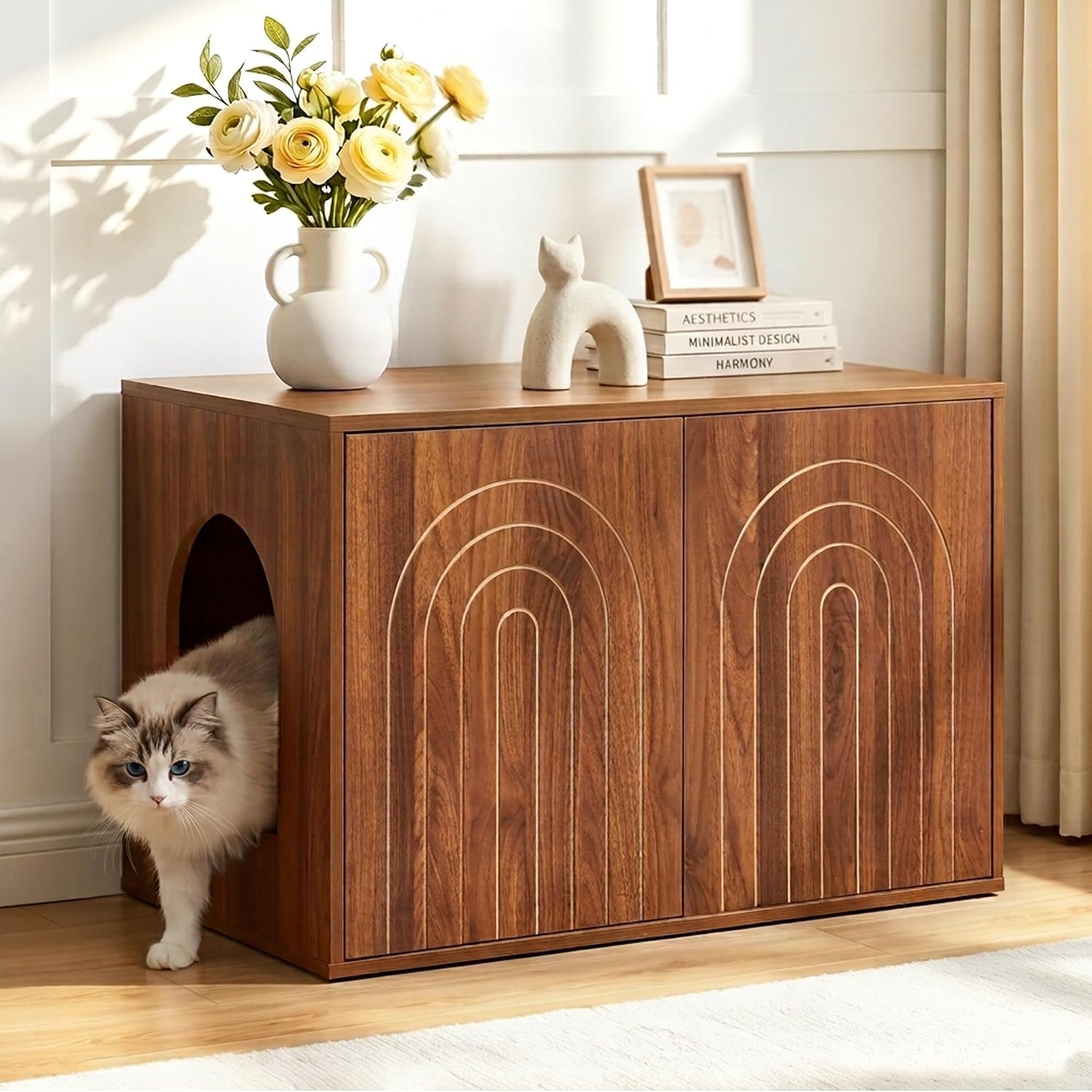
A cabinet does something a plain pan cannot: it fixes the vertical space above the litter. This 31.5-inch walnut enclosure gives you a defined interior, so you are choosing a litter depth that fits under a roof rather than one that fits in an open room. Aim for two inches, two and a half at most, and leave enough headroom for the cat to stand, turn, and dig without bumping the top. It is the only setup here where a very deep bed is a liability rather than a benefit.
Scatter control is the second reason it takes the value slot. A deep bed means more litter on paws, and a deep bed inside a cabinet means most of that scatter lands inside the cabinet instead of across your hallway. Pair it with a mat at the opening and the tracking stops at the door. Mat texture matters more than mat size here, because the cat has to step down onto it on the way out.
Entry height is the tradeoff. The opening in a cabinet panel usually sits higher than the lip of an open pan, so measure it before you commit if you have a senior cat, a kitten, or a cat with joint trouble. The walnut finish is the other half of the pitch: it reads as furniture, so the box can live in a room where guests actually sit.
Value here is not about the sticker. It is about how much of the litter problem one piece of furniture solves at once: hides the box, contains the scatter, and caps the litter depth so you stop overfilling.
How I tested
Here is the routine I run on any box before I trust it with a full bed of litter.
The depth line. Fill to two inches, mark the line with tape, then add half an inch at a time until the cat stops digging down to the plastic. Two to three inches is where most cats settle.
The scoop reach. A scoop should touch the bottom of the pan at normal depth without you pressing down. If you have to lean into it, the bed is too shallow and the clumps have bonded, or it is too deep for the scoop you own.
The entry check. Watch the step in. A cat that hops over the rim, or puts a paw on the rim first, is telling you the entry height is wrong for its size.
The scatter check. Note how far litter travels from the opening over a week. Mat texture and entry height are the two variables, and litter depth sets how much there is to travel in the first place.
The cycle check on automatic boxes. Whether a full litter bed triggers a cycle at the wrong moment. Sensor range is the whole game there, and a bed that is too deep is the usual culprit.
None of this needs special equipment. Tape, a scoop, and a week of paying attention will answer the cat litter height question for your cat better than any box's marketing copy.
Analysis and test results
Across these four setups, four patterns held.
Litter depth is capped by box size. A large pan supports a full three-inch bed. A small one does not, no matter how much litter you pour in, because the cat still needs floor to dig without standing in the deep end. Box size and litter depth are one decision, not two, and it is why the large self-cleaning box at the top of this list is the one that lets you run the deepest bed.
Clumping speed sets your floor for depth. Fast-clumping litter can get away with two inches because the clump sets before it reaches the plastic. Slower litter wants more depth as a buffer. If your clumps are breaking on the scoop, add half an inch before you switch brands, because depth is usually cheaper to change than litter.
Entry height beats litter depth for senior cats. There is no single ideal cat litter height that fits every cat, but there is a rule: an older cat will refuse a box over a two-inch lip long before it complains about a shallow bed. That is the one case where I would run a shallow bed and a low entry and accept a little more tracking. Kittens work the same way from the other direction, which is why a shallow pan with a low entry is the standard starting setup for a small cat.
Odor control is a volume problem. A deeper bed holds more used litter between scoopings, so the waste drawer and the disposal bin do more work. That is where the Cat Litter Trash Can with Triple Odor Lock earns its place: it keeps a three-inch bed from turning a spare room into a warning sign, and it is worth pairing with any of the three boxes above. Sensor range on the automatic boxes is the other thing that shifts with depth. A bed that is too deep is the most common cause of a cycle that fires at the wrong time.
Getting the correct cat litter height is mostly a matter of watching the scoop. Clumps that come out whole and land in the bin cleanly mean the depth is right. Clumps that shatter, or stick to the bottom, mean you are off by half an inch in one direction or the other.
The cat litter height reference table
This is the table I keep in mind when I set up a box. Depths are starting points for an average adult cat, not rules, and every one of them shifts for a senior, a kitten, or a cat that digs to the other side of the world.
| Setup | Role | Litter depth to start with | What to watch |
|---|---|---|---|
Meowant Self Cleaning Cat Litter Box | Primary automatic box | 2 to 3 in | Sensor range at full depth |
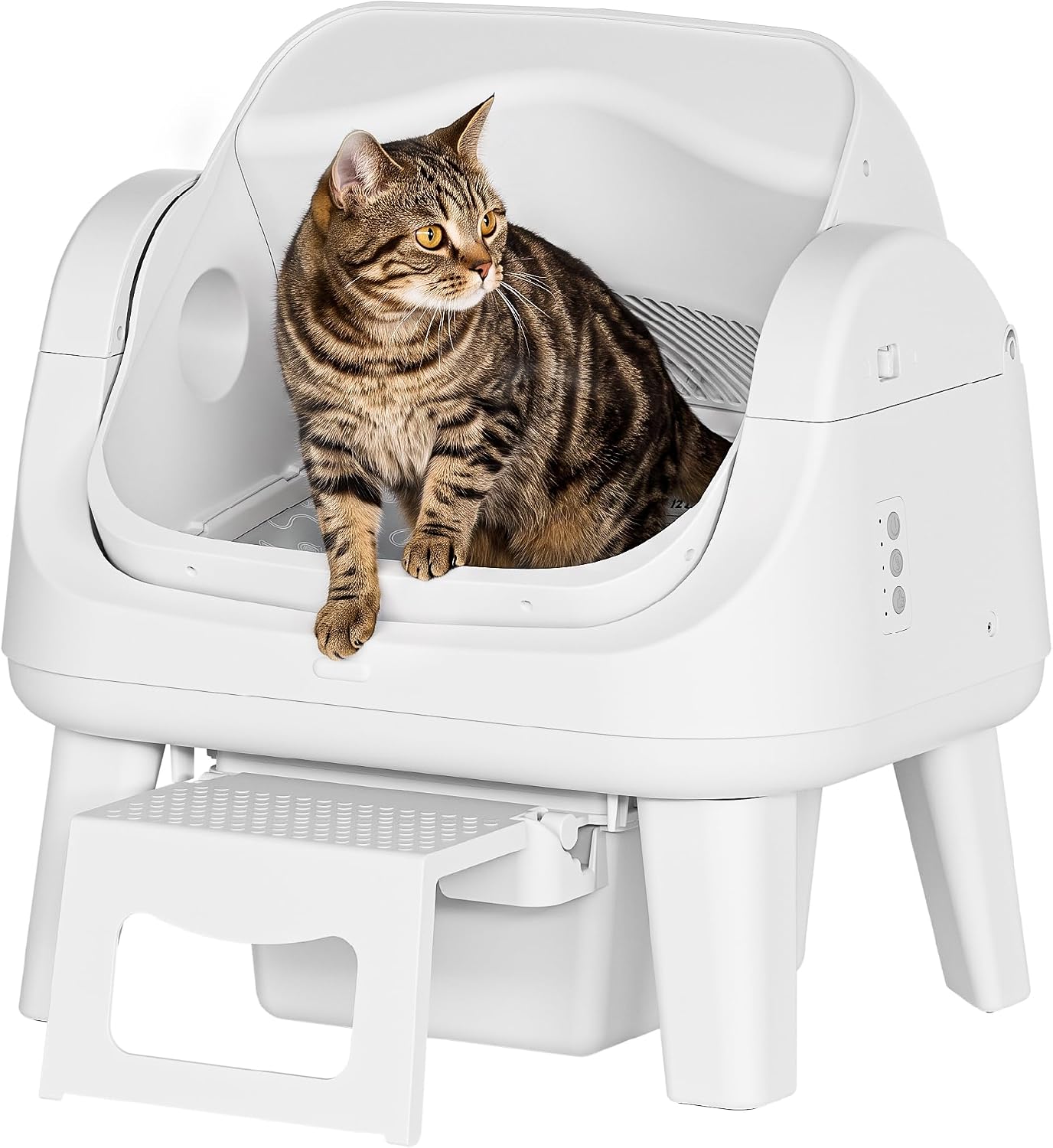 View on Amazon → Automatic Cat Litter Box, Open Top | Primary automatic box, simple controls | 2 to 3 in | Open top throws more scatter |
Cat Litter Box Enclosure, Walnut | Hidden box and furniture | 2 to 2.5 in | Interior headroom and entry height |
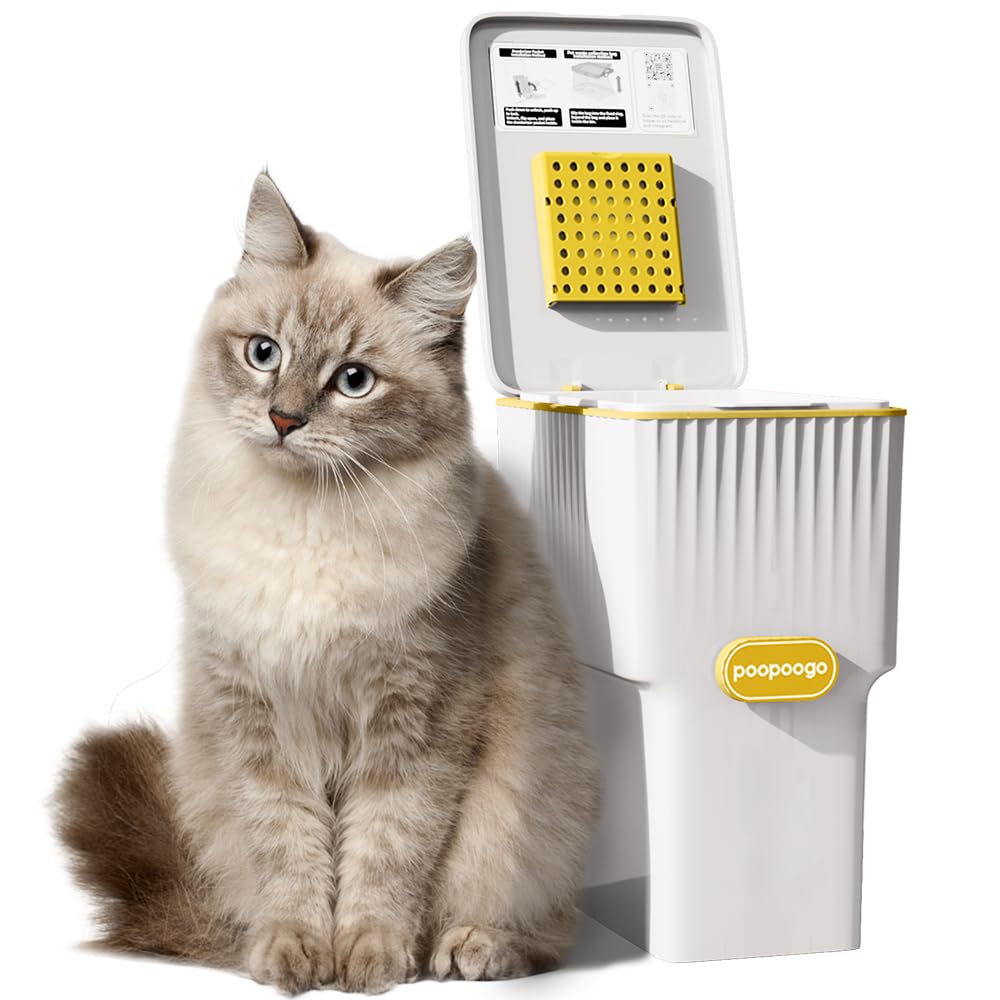 View on Amazon → Cat Litter Trash Can with Triple Odor Lock | Waste and odor control | Not applicable, holds waste | How fast a deep bed fills it |
The key is the depth line. Mark it once on the side of the pan with tape, and topping off becomes a two-second job instead of a guess.
Automatic Cat Litter Box, Open Top, 3 Buttons
An open-top automatic box is the easiest of the four to keep at the right litter depth, because you can see the bed without opening anything. Three buttons instead of an app menu means the cycle settings get set once and then forgotten, which suits a household where nobody wants to read a manual.
The tradeoff is scatter. With no wall above the litter line, a three-inch bed throws more over the side than a covered box does. Run this one at two inches and top off more often, or budget for a mat and a high-sided entry. It is also the box I would point a first-time automatic buyer toward, because there is nothing to pair with a phone and nothing to break in the pairing.
Entry height, mat texture, and the senior cat
Entry height is the number people forget, and it is the one that ends up mattering most. A box can have perfect litter depth and still sit unused because the step in is too high. For a senior cat, look for a low entry, a shallow bed, and a ramp if the box offers one.
Mat texture is the last thing between the box and your floor. A textured mat catches granules off the paws; a smooth one just moves them around. Put the mat at the opening, not beside it, and keep it wide enough that the cat cannot walk around it on the way out. Litter depth feeds this too: the deeper the bed, the more litter there is to carry, and the more the mat has to catch.
Should you buy the Meowant Self Cleaning Cat Litter Box?
Yes, if the box lives in a busy room and you want the litter bed handled for you. Large space plus safety sensors plus app control covers the three things that go wrong with automatic boxes: a pan too small for a proper bed, a sensor that trips at the wrong time, and no record of what the box is doing. Check current Amazon price.
The catch is that an automatic box is only as good as the litter depth you give it. Fill it shallow and you will be scraping the bottom. Fill it too deep and the sensors have more to sort out. Start at two inches, add half an inch, and stop when the scoop comes out clean.
Should you buy the Cat Litter Box Enclosure?
Yes, if the box has to live somewhere visible. It fixes the vertical space above the litter, contains scatter, and reads as furniture rather than as a litter box, which is the whole reason hidden boxes exist. Check current Amazon price.
Buy it with the entry height in mind. Measure the opening against your cat, especially if the cat is older or very small. If the step in is too high, no amount of good litter depth will save the setup.