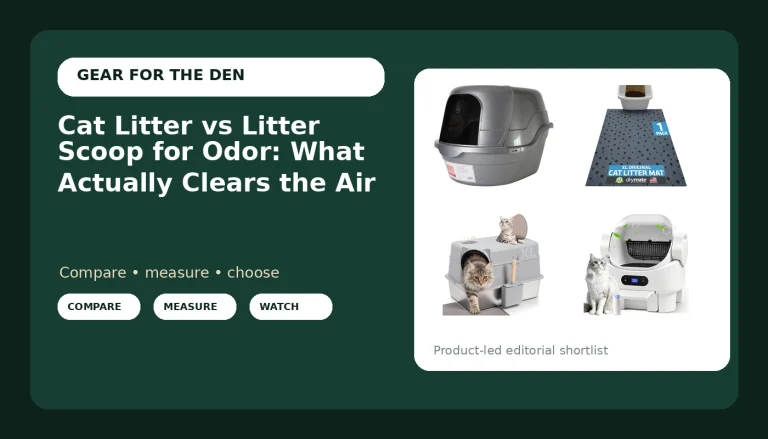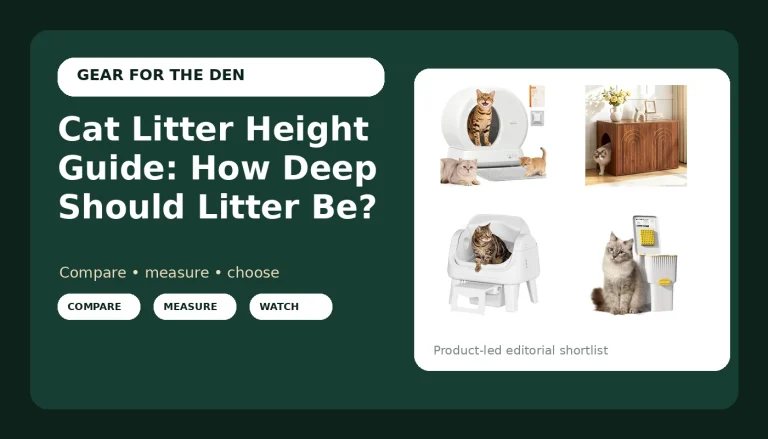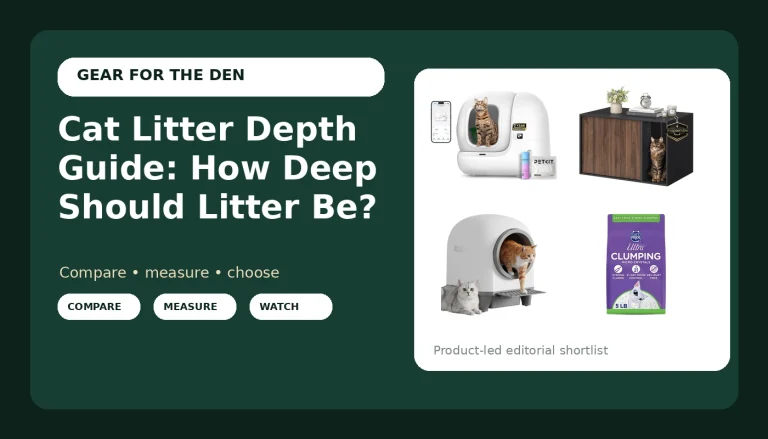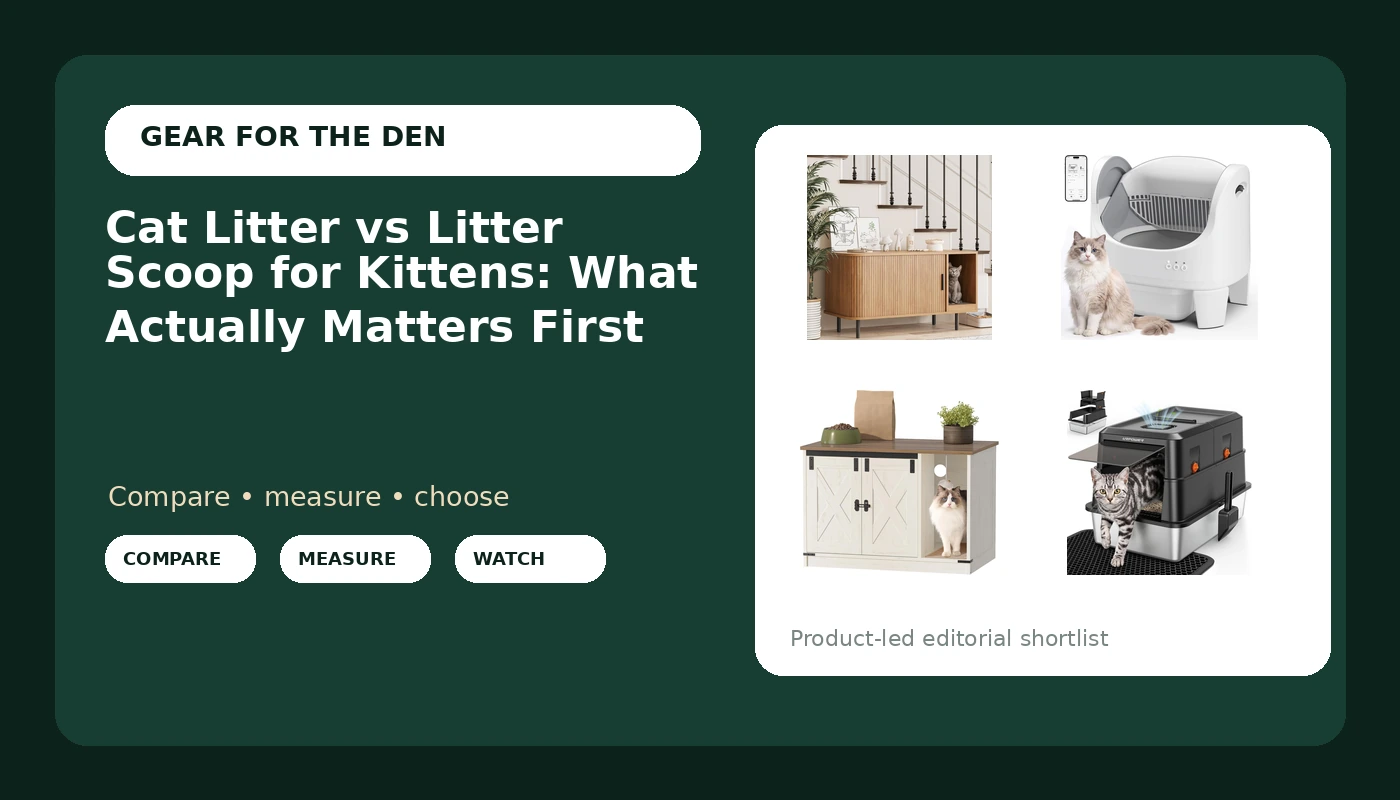
Most people shopping for a first kitten frame the purchase as cat litter vs litter scoop for kittens, as if the whole decision came down to what goes in the pan and what you use to clean it. That framing skips the item that decides whether a kitten uses the box at all: the box itself. A scoop is a cheap accessory you will replace or lose twice a year. The box is where your money, your floor, and your kitten's habits get settled, and it is the part most buyers rush.
For most kitten households, the best buy in this group is the URPOWER XL stainless steel box, because a large open pan with a flip-top lid is the easiest thing for a small cat to step into and the easiest thing for a person to keep clean. The two cabinets are the better answer when the box has to live in a room you also use, and the automatic box is the pick for anyone who is away from home for long stretches.
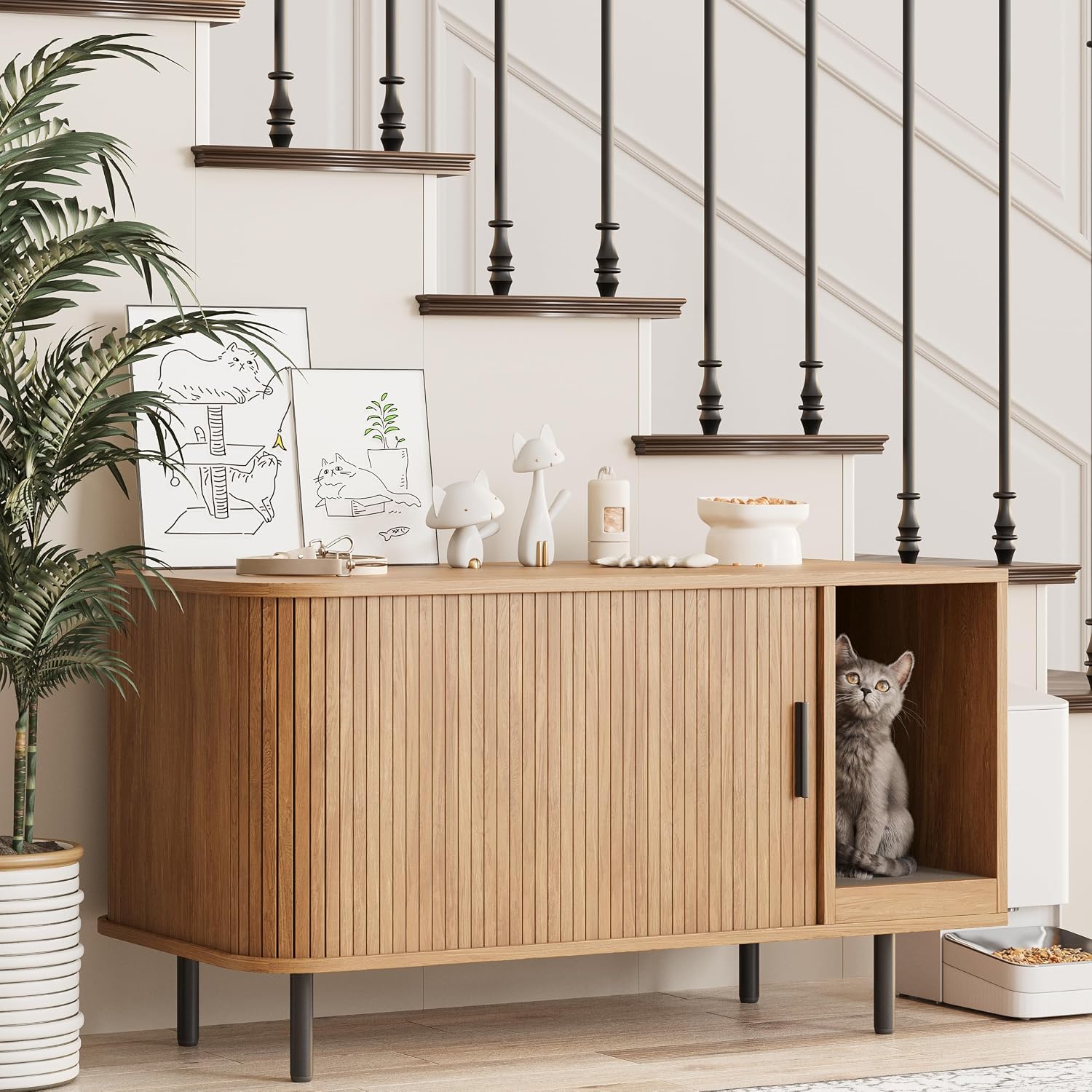
Halitaa 37.4" Cat Litter Box Enclosure with Scratch Pad, Sliding Door
Largest footprint here, sliding door keeps dogs and toddlers out, built-in scratch pad gives a kitten a legal place to claw
Tallest entry of the four, so a very young kitten needs a step or a door left open
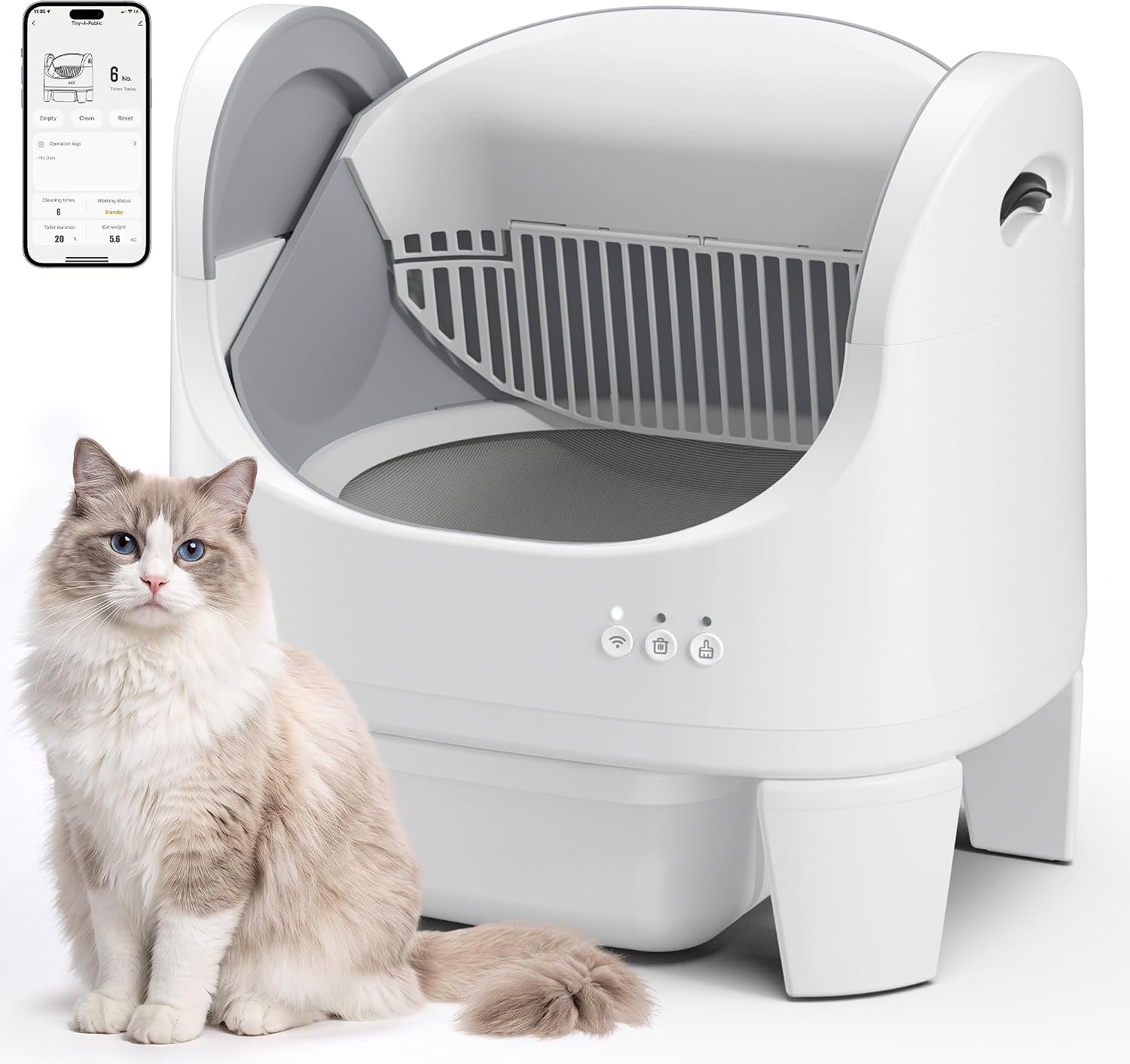
Automatic Cat Litter Box, Self Cleaning Open Top Box with App Control
Self-cleaning cycle plus app control keeps the box usable when you are away, open top keeps entry easy
Most parts that can fail, needs consumables, and a small kitten may not trip the sensors reliably
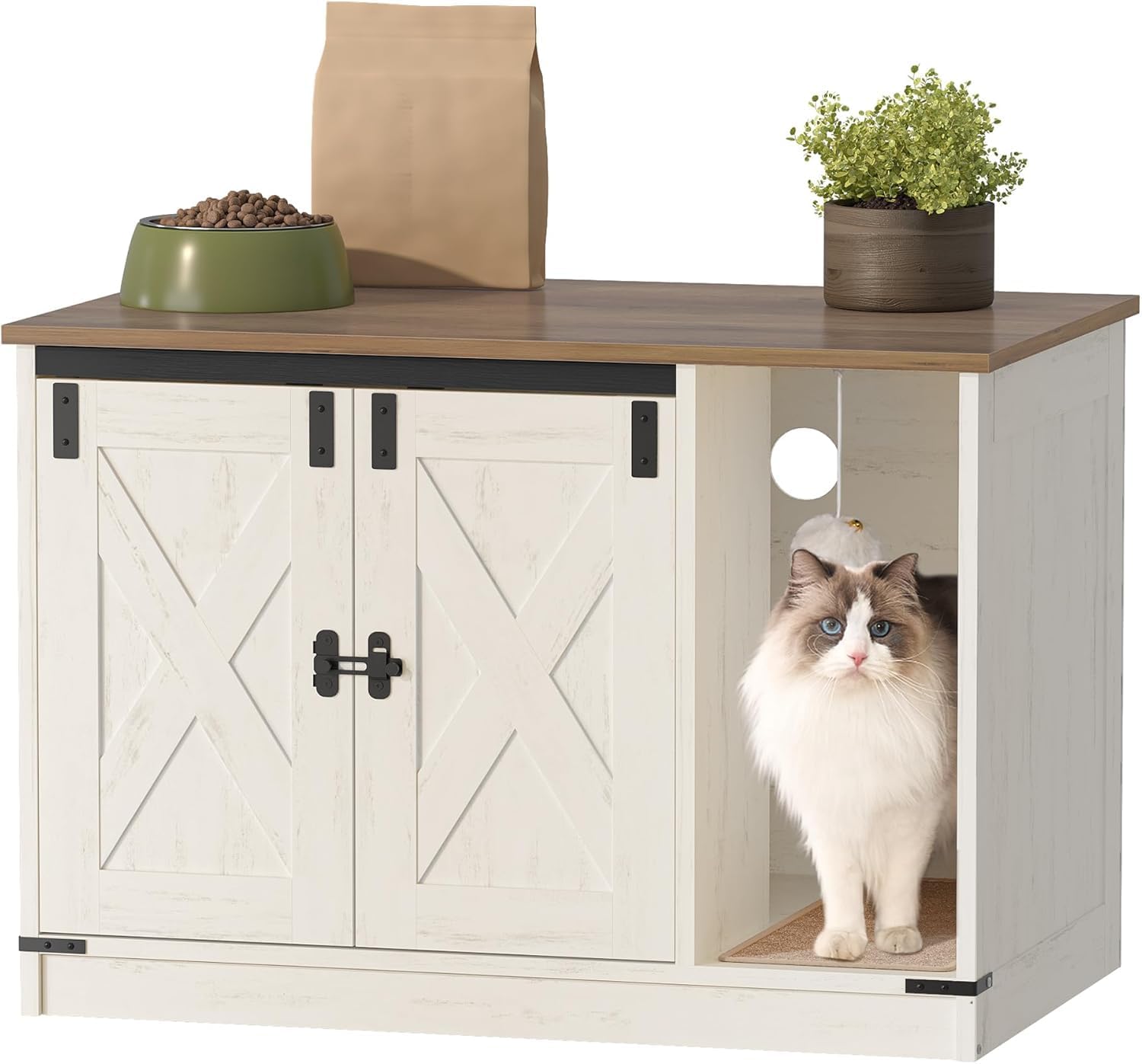
Hzuaneri Cat Litter Box Enclosure, Hidden Litter Box Cabinet Furniture
Lowest-cost route to concealment, doubles as a side table, hides the box in a shared room
A cabinet hides problems as well as the box, so a kitten with soft stool can go unnoticed
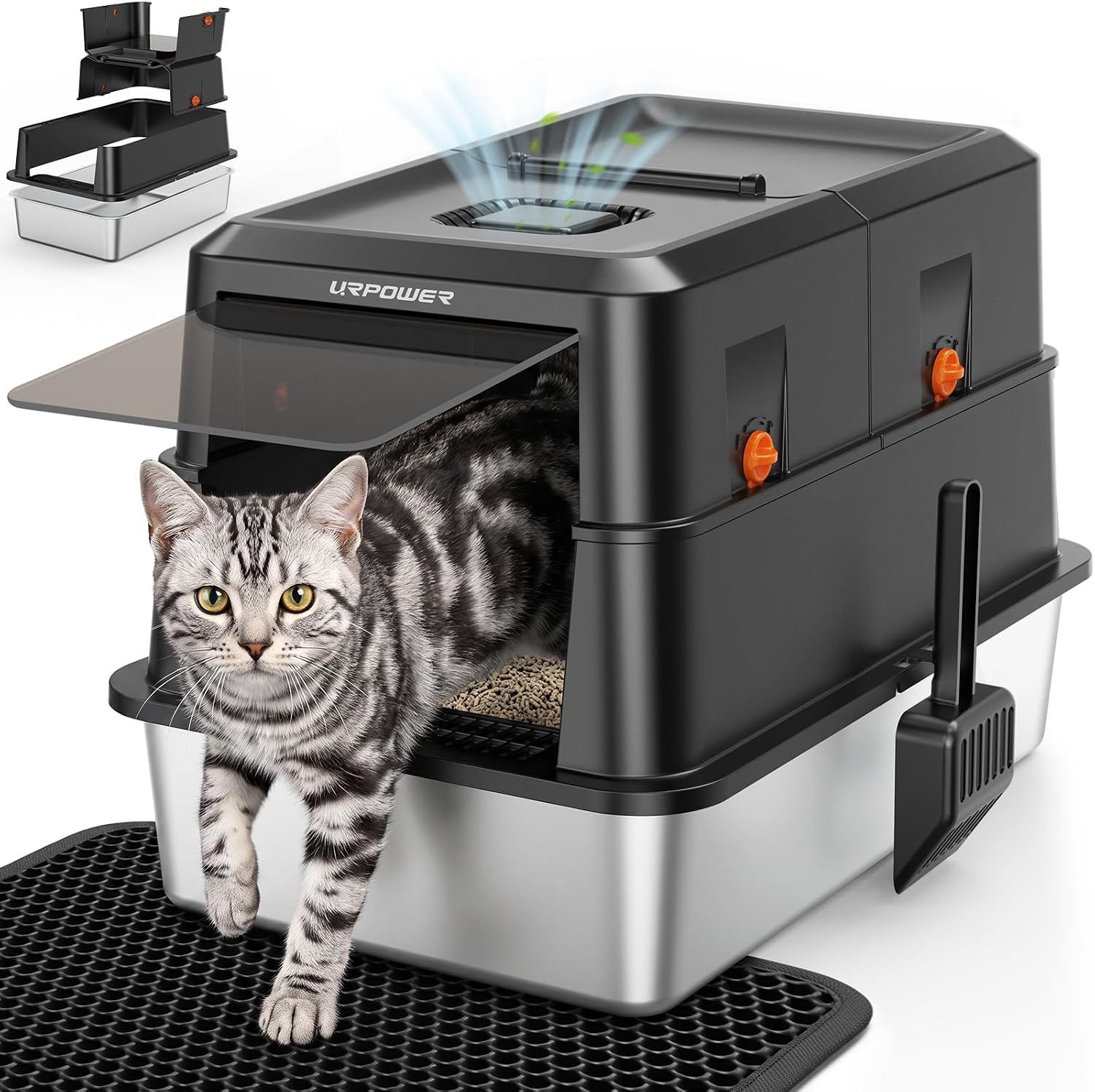
URPOWER XL Stainless Steel Cat Litter Box with 180° Flip-Top Lid
Extra-large open pan, stainless steel resists odor and scratching, flip-top lid speeds up full litter changes
Nothing hides the box, and an open pan tracks litter unless you add a mat
Prices and availability may change.
How these four boxes get judged
A kitten litter setup lives or dies on a short list of variables: box size, entry height, litter depth, clumping speed, odor control, mat texture, and, for automated units, waste drawer capacity and sensor range. Get the first two wrong and the rest is noise, because a kitten that finds the box awkward will find somewhere else. Get the last two wrong and you are maintaining a machine on top of cleaning a box.
Box size comes first. A kitten is an adult in under a year, so a pan that fits a four-pound kitten in March is cramped by Christmas. A larger footprint is almost always the safer buy, provided the entry works for the cat you have now.
Entry height is the spec that decides whether a young cat can use the box unsupervised. A pan with a low lip is trivially easy. A cabinet with a raised doorway, or an enclosure with a sliding panel, needs a step, a ramp, or a few months of patience.
Litter depth and clumping speed are litter decisions more than box decisions. An inch and a half to two inches of unscented clumping litter gives a kitten enough to dig in without burying the box. Faster clumping helps odor control because waste gets sealed before it spreads.
Mat texture handles what the box cannot: tracking. A textured mat at the exit catches more granules than a smooth tray, and it is the cheapest upgrade in the whole setup.
For automated boxes, the waste drawer and sensor range are the two things worth checking. A small kitten may not register on a sensor tuned for adult weight, which is a good reason to treat an automatic unit as a later purchase rather than a first one.
Cat litter vs litter scoop for kittens: what actually decides it
The phrase cat litter vs litter scoop for kittens bundles two separate purchases into one search, and neither one is the box. Litter is a consumable you will buy every few weeks. A scoop is a tool you keep for years and misplace twice. Looked at as litter scoop for kittens vs cat litter, it is not much of a contest, because the two items do different jobs and you need both.
The difference between cat litter and litter scoop for kittens shows up in what each one can fix. Litter affects odor control, clumping speed, tracking, and whether a kitten is willing to dig at all. A scoop affects how long cleaning takes and how much clean litter you throw away by accident. Neither one changes box size or entry height, which is where most first-time setups fail.
So if you are weighing cat litter or litter scoop for kittens as your first purchase, buy both, but put your attention and your budget into the box. A basic slotted scoop and a mid-priced bag of unscented clumping litter will beat an expensive scoop and scented litter sitting in a box your kitten refuses to enter.
Enclosed cabinets: hiding the box in plain sight
Two of the four products here are furniture. The Halitaa 37.4" Cat Litter Box Enclosure with Scratch Pad, Sliding Door and the Hzuaneri Cat Litter Box Enclosure, Hidden Litter Box Cabinet Furniture both do the same basic job: they turn a litter box into a piece of furniture so it can live in a room you actually use.
The Halitaa adds a scratch pad and a sliding door. That means a kitten gets a legal place to claw right beside the box, and a dog or a toddler gets a barrier. At 37.4 inches, the footprint is sized for a full-grown cat, so a kitten grows into it rather than out of it. The Hzuaneri takes the more traditional cabinet route and is the lower-cost way into concealment, with a surface you can set a lamp or a stack of books on.
The trade-off is the same for both. A cabinet hides more than the box, it hides the evidence. Soft stool, straining, or blood in the litter is far easier to notice in an open pan. Entry height is the other tax: a raised doorway is fine for an adult cat and a real obstacle for an eight-week-old kitten, so plan on a small step or leaving the door open until the kitten is bigger. Ventilation matters too, since an enclosed box with one small opening concentrates odor, which is the opposite of what most people expect when they buy furniture.
Open pans and automatic boxes: the simple and the smart
The URPOWER XL Stainless Steel Cat Litter Box with 180° Flip-Top Lid is the most straightforward answer to a kitten's needs. It is an extra-large open pan, which means the lowest possible entry height and the most airflow, and stainless steel does not hold onto odor or scratches the way plastic does. The flip-top lid matters more than it sounds: full litter changes stop being a wrestling match, and the lid is not a wall the kitten has to climb.
The Automatic Cat Litter Box, Self Cleaning Open Top Box with App Control attacks the problem from the other end. It runs a self-cleaning cycle, reports through an app, and keeps an open top so entry stays easy. The waste drawer is the part you empty instead of scooping, and sensor range is the part that decides whether it fires when it should. For a kitten, that sensor question is the whole argument for waiting: a small body may not trigger a cycle reliably, so this box works best as the household's adult-cat daily driver, with a simple open pan handling the kitten until it has grown.
A low entry height is non-negotiable
Of every spec in this comparison, entry height is the one that decides whether your kitten uses the box on day one. Kittens, senior cats, and small breeds all do better with a walk-in pan. If you already own a cabinet or an enclosure, you have three fixes: take the door off, leave it propped open, or add a step in front of it. Any of the three beats watching a kitten squat next to the box because the doorway is too high.
Litter depth is the second half of that. Start shallow, around an inch, so a young cat can stand and dig without sinking. Add depth as the kitten grows, and switch to a faster clumping litter once the box is being used consistently. Odor control follows use, not the other way around. A perfectly ventilated box that nobody uses still smells, and a plain open pan that gets used ten times a day stays manageable with daily scooping.
What the specs do and don't tell you
Box size is usually listed and usually honest. Entry height is rarely listed, and it is the number that matters most, which is why you should read the listing photos closely and look for the doorway in relation to a cat.
Mat texture is almost always a separate purchase, and it is the single easiest way to cut tracking. Clumping speed is a property of the litter, not the box, so do not let a box listing sell you on it. Sensor range on an automatic unit is the spec most likely to be flattering in marketing copy, and it is the one to verify against your cat's weight before you commit.
The waste drawer is the automatic box's real capacity limit. A large drawer means fewer emptyings, but it also means waste sits longer, so a mid-sized drawer emptied often beats a huge one emptied rarely.
Should you buy the box before the scoop?
Yes, and the order is box, litter, mat, scoop. The box sets the size and the entry height, and those are the two things you cannot fix later without buying again. Litter is a recurring cost you can experiment with cheaply. A mat is a small add-on that pays for itself in vacuuming. A scoop is a scoop.
If you are setting up a first kitten in a small apartment, the open stainless pan is the low-risk starting point. If the box has to sit in your living room, a cabinet enclosure earns its place. If you travel and already have adult cats, the automatic unit solves a problem the others cannot. None of those choices changes the answer to the search that started all this, which is that the box outranks both the litter and the scoop.
What I'm watching next
Stainless steel enclosures that combine the easy-clean surface of an open pan with the concealment of a cabinet are the obvious next step, and I expect more of them. I am also watching how automatic boxes handle small cats, since a reliable kitten mode would change the advice above. Until then, the safest first purchase is still the simplest one: a big pan, a low entry, and a scoop you can find when you need it.