Good cat scratching post care comes down to three things: where the post stands, what the scratching surface is made of, and whether the post moves when a cat throws its full weight at it. Cats scratch to mark territory, to stretch the muscles through the shoulders and spine, and to shed the dead outer sheath of the claw. They keep using whatever surface gives them the most satisfying resistance, and if that surface is your sofa arm, redirecting them takes more than a firm no.
This cat scratching post care guide compares four posts that solve the problem four different ways: a corner side table that hides the scratcher inside furniture, a low-cost starter post, a wall-mounted column for cats that like to climb, and a sisal bed for cats that scratch and then fall asleep on the same object. The specs that decide whether any of them work are anchor type, post diameter, platform height, shelf depth, and the material your cat will be shredding.
Best Overall: Oueand Cat Corner Side Table Scratcher
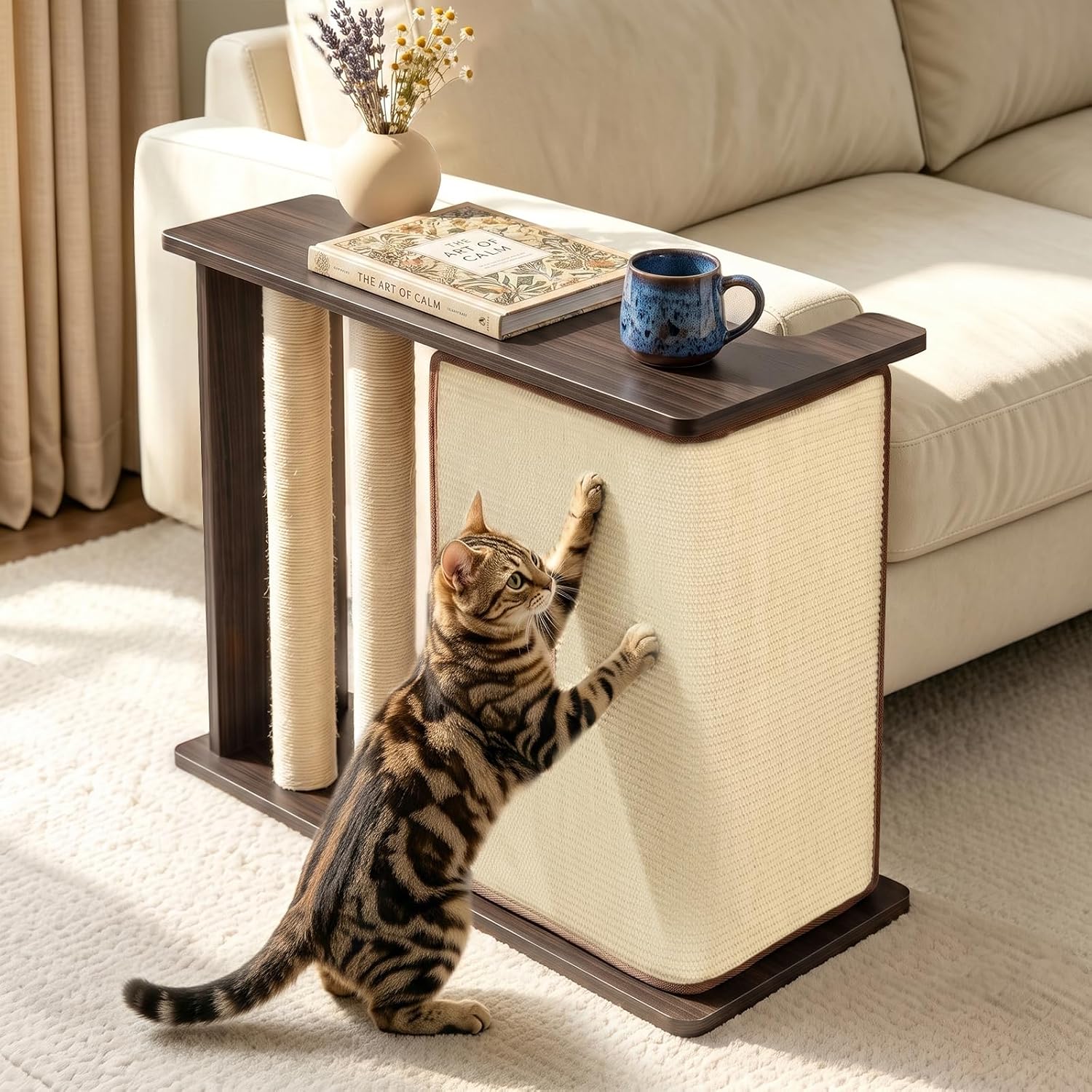
The case for this one is placement. Damage happens at the sofa arm, so the fix belongs at the sofa arm. The Oueand is a three-in-one piece: a side table on top, a scratching post on the side, and a protector for the arm it wraps over. It fits a left or right arm, so you can put it on the side your cat already attacks instead of trying to retrain a cat that has ignored the corner post for years.
The replaceable sisal pad is what makes it the long-term pick. Sisal is the surface most cats prefer because it frays slightly and catches the claw, and that same quality means it wears out. A pad you can swap keeps the frame useful after the wrap is shredded, which is the difference between replacing a part and replacing the whole thing. The wood frame is sturdy, the finish is odor-free, and the black walnut tone reads as furniture, which matters when the post lives in the room where you host people.
Check three things before buying. First, shelf depth: if the tabletop is too shallow to hold a lamp and a mug, you will resent it. Second, post diameter: a thicker column takes more abuse before it feels loose. Third, arm fit. At 23.5 inches it is table height, not a climbing structure, so a cat that wants to be up high still needs something else.
The ideal cat scratching post care routine for a piece like this is simple: replace the pad when the fraying starts, keep the frame tight, and never let it become the thing you stack mail on, because a post buried under clutter is a post the cat stops using.
Best Value: Amazon Basics Cat Scratching Post for Indoor Cats & Kittens
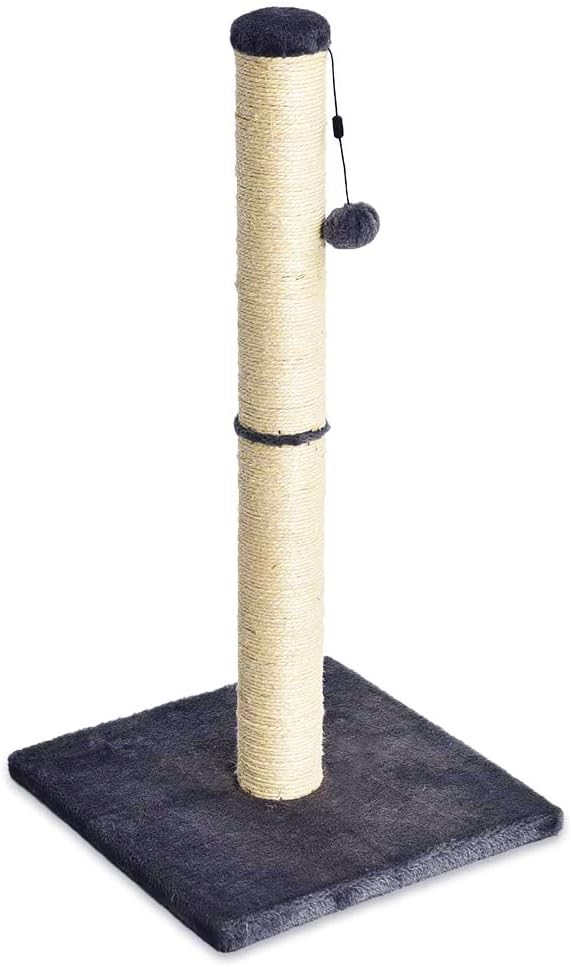
This is the post to buy when you do not know yet what your cat likes. It is a straightforward vertical post at 31.5 inches, sized for kittens and average adult cats, with a dangling ball toy that gives the cat a reason to stand up against the post in the first place. The toy is the underrated part. Play is what builds the habit, and a cat that bats a ball at the base of the post learns to put its claws there.
31.5 inches is a sensible first height. A cat needs to reach up and dig in with the front claws while its back feet stay planted. A post that is too short forces an awkward angle; a post that is tall and unanchored wobbles. This one sits in the middle of that range for most adult cats.
What you give up at this price is mass. A light post needs help, so put it in a corner or against a wall where the structure absorbs the movement. The wrap is rope over a post rather than a replaceable pad, so the whole unit gets replaced when the wrap goes bald. On a budget, cat scratching post care means accepting that trade and planning for a second post in the room the cat actually uses.
How I tested
Correct cat scratching post care starts with watching the cat before buying anything, and every post here went through the same checks.
The push test. I press a hand against the post at cat shoulder height, then again near the top. Anything that rocks, slides, or tips gets ruled out, because a cat will not commit its weight to a surface that gives. This is where anchor type matters more than any number on the listing: a wall-mounted column, a weighted base, a furniture wedge, and a freestanding post all fail differently, and only one of them fails quietly.
The reach test. Platform height and post diameter get judged together. The cat should be able to stand, reach up, and pull down with the front claws while the post stays put. Thin posts flex; fat posts do not.
The material test. Sisal rope, sisal pad, carpet, and cardboard wear at different rates and feel different under a claw. I look at how the wrap is finished at the ends, because that is where it unravels first, and whether the worn section can be replaced or rotated.
The placement test. Shelf depth, perch width, and hammock fabric decide whether a piece gets used for anything besides scratching. A post that also holds a lamp or a sleeping cat earns its floor space twice.
Then there is the long test, which is just living with the thing. A post that sheds fiber across the floor or looks like gym equipment in the middle of the living room gets moved to a spare room, and a post in a spare room does nothing for cat scratching post care.
Analysis and test results
Four posts, four answers to the same problem.
The Oueand wins on placement. The replaceable pad and the wood frame make it the only one of the four where the part that wears out is designed to be swapped, which is the difference between a long-term purchase and a two-year one. Its limits match its strengths: it is furniture, so it lives where furniture lives, and it is not a climbing structure.
The Amazon Basics post wins on cost of entry. It is the cheapest way to find out whether your cat prefers vertical scratching, and the dangling ball does real work. The compromise is mass and a wrap that cannot be replaced.
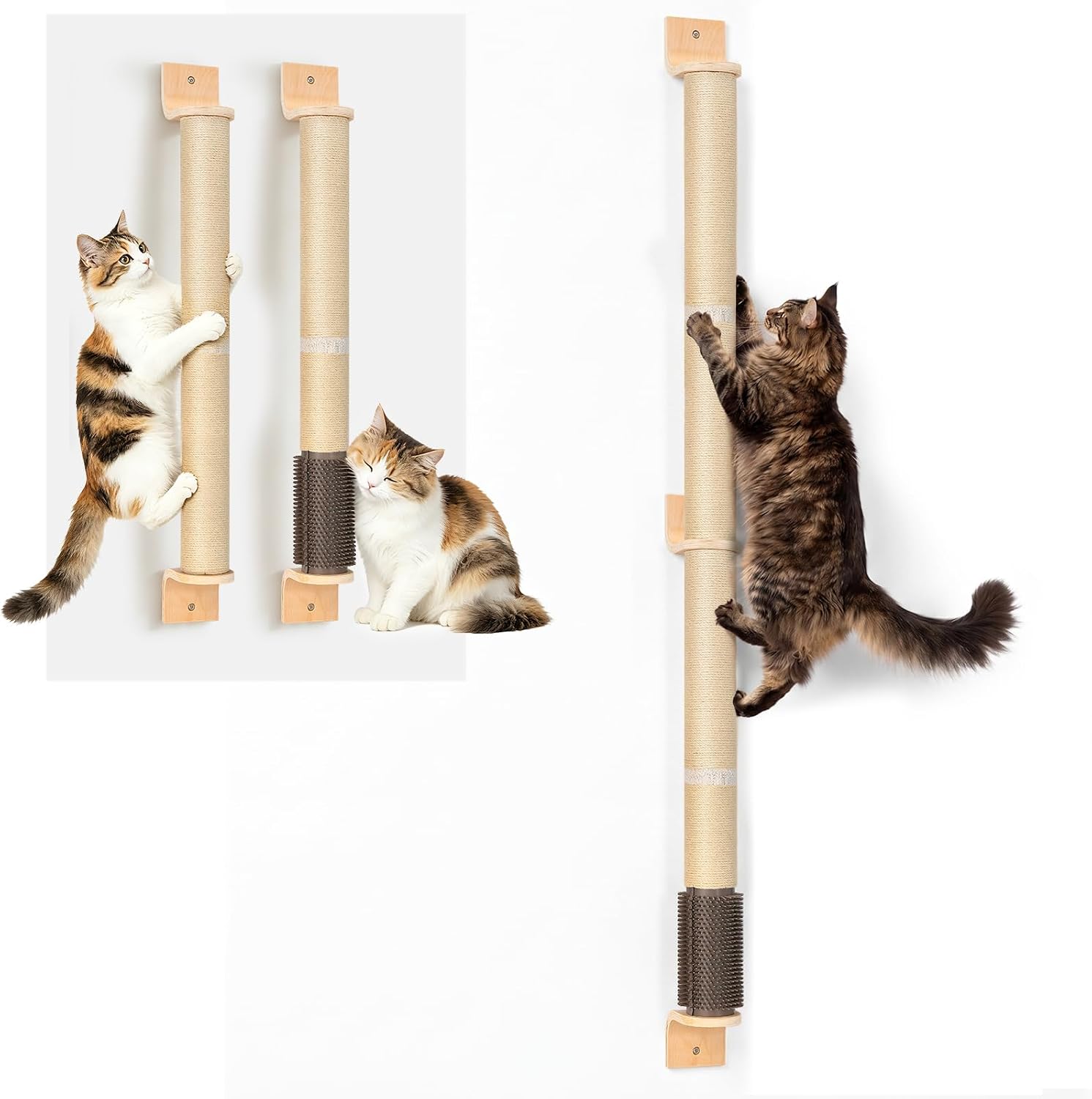
The Cozyipet wall-mounted post solves floor space and stability at the same time. A 60 inch column fixed to the wall does not rock and takes up no floor, and it gives a cat a full-length stretch instead of a half one. The catch is installation. You need studs or proper anchors, and you need to be willing to put holes in a wall.
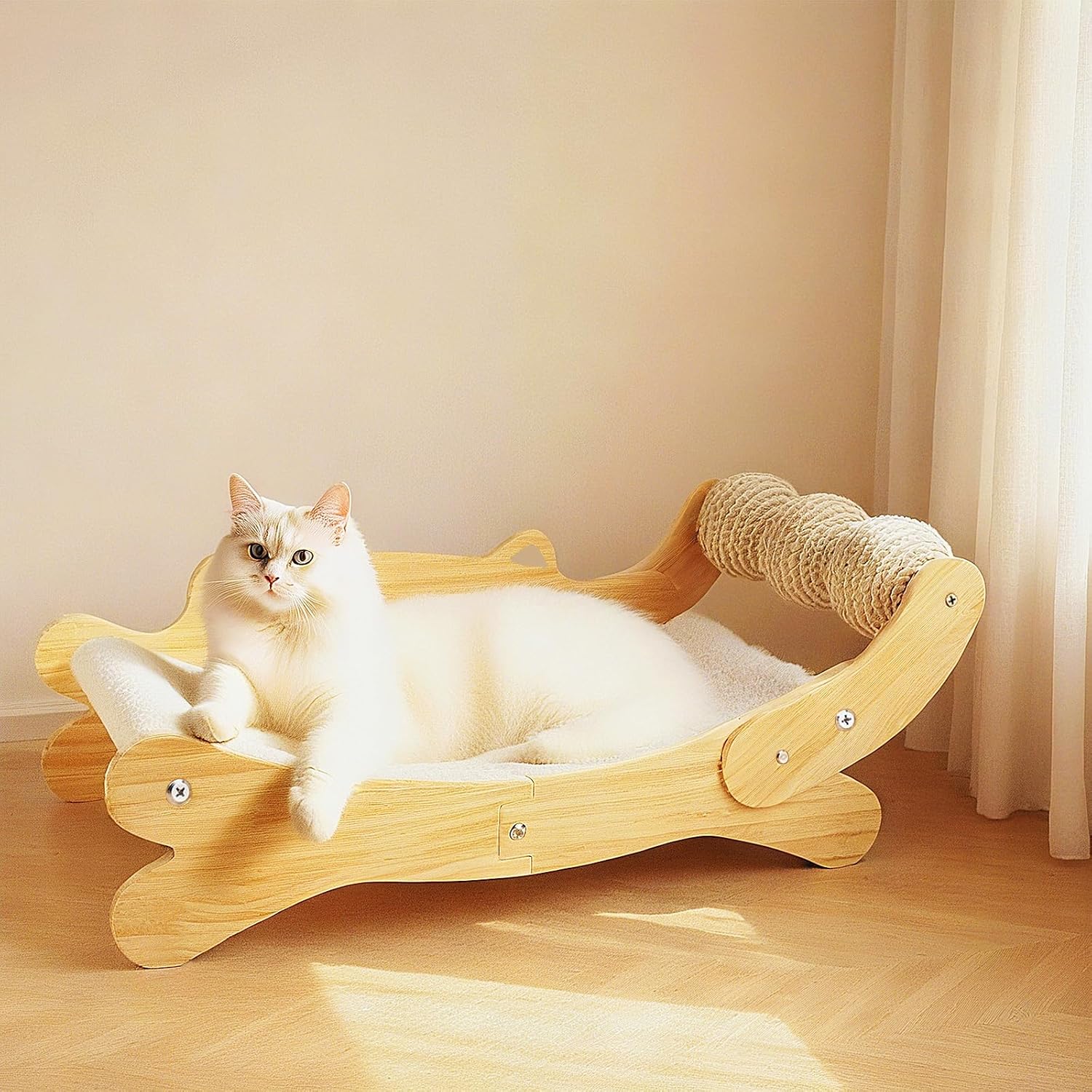
The ERGTFVN scratcher bed solves the cat that scratches and then sleeps on the same object. A sisal post with a hammock attached gets claimed as territory rather than visited, and heavy duty sisal on a natural wood frame is built for a large cat that leans hard.
Two patterns held across all four. Stability beats size: a short post that does not move gets used more than a tall post that does. And mounting matters more than material. Cats prefer sisal, but they will use rope or carpet if the surface is secure and positioned where they already scratch. That is cat scratching post placement in one sentence, and it decides more outcomes than any product spec.
Space planning is part of the decision too. A wall-mounted post travels flat if you move, while a freestanding tower competes with carrier size and everything else in the car.
The cat scratching post care reference table
This is the comparison I keep on hand when the question is which post belongs in which room. Heights and materials come from the listings; the notes are the practical differences.
| Product | Best for | Scratching surface | Mounting | Notes |
|---|---|---|---|---|
Oueand Cat Corner Side Table Scratcher | Sofa arm damage | Replaceable sisal pad | Wraps over a left or right sofa arm | 23.5 in tall; sturdy wood frame; doubles as a side table |
Amazon Basics Cat Scratching Post for Indoor Cats & Kittens | First post for a kitten | Rope wrap | Freestanding base | 31.5 in tall; dangling ball toy; benefits from a corner |
 Cozyipet Wall Mounted Cat Scratching Post 60 Inch Tall | Cats that climb | Sisal | Wall mounted | 60 in tall; zero floor space; needs studs or anchors |
 ERGTFVN Cat Scratcher Bed | Scratch, then sleep | Heavy duty sisal | Freestanding bed base | Natural wood; hammock for sleeping; stable for large cats |
Read the table by column, not by row. Mounting decides stability, stability decides whether the cat commits, and commitment is the whole game.
Cozyipet Wall Mounted Cat Scratching Post 60 Inch Tall
A 60 inch wall column is the answer for a cat that scratches the door frame and the corner of the hallway, because it puts a full-length stretch on the wall the cat already uses. It takes up no floor, which in a small apartment is the only free real estate you have, and it does not rock because the wall is doing the holding.
Installation is the entire product. You want studs, or anchors rated for a cat pulling down with its full body weight, and you want the bottom of the post low enough that the cat can reach up from a standing position. Put it too high and the cat has to jump to scratch, which most cats will not do on a regular basis.
Check your wall first: drywall, plaster, brick, and tile each need different hardware, and the anchor type is what keeps the post from becoming a hole in the wall. If you rent, factor in the patching when you leave.
ERGTFVN Cat Scratcher Bed
The ERGTFVN combines a heavy duty sisal scratching post with a hammock, which sounds like a gimmick until you watch a cat scratch and then flop onto the same object. A post that doubles as a bed gets claimed as territory. Claimed objects get used daily, and daily use is what saves the sofa.
Two specs matter more than the rest. Perch width and hammock fabric decide whether a large cat fits comfortably and whether the fabric stays cool in summer. The frame is natural wood and the base is built to be stable for large cats, so run the push test as soon as it arrives.
Placement is straightforward: near a window with sun, or beside the spot where the cat already naps. Keep it out of a hallway where people walk, because a bed in a traffic lane gets abandoned.
Should you buy the Oueand Cat Corner Side Table Scratcher?
Yes, if your cat has picked a sofa arm and you want one purchase to end the argument. The replaceable sisal pad is the reason it holds up, the wood frame is sturdy and odor-free, and because it fits either arm, you can put it exactly where the damage is. It also looks like furniture in black walnut, so it does not have to be hidden when guests come over.
Measure the arm before you buy, and be honest about the shelf. If the tabletop is too small to be useful, you will move the piece and the cat will go back to the sofa. And it is not a climbing post, so if your cat wants height, pair it with something tall.
Should you buy the Amazon Basics Cat Scratching Post?
Yes, for a kitten, a first post, or a second post in a room the cat already uses. At the entry price it is the cheapest way to learn your cat's preference, and the dangling ball toy gives a kitten a reason to walk over and put its claws on the post instead of the couch.
Just give it help. A light post in the middle of a room will slide, so corner it or brace it against a wall, and expect to replace the whole post when the rope wrap wears through rather than swapping a pad. That is the trade you make for the price, and it is a reasonable one for a first attempt.