Cat tree assembly is the part of buying a tower that never makes it onto the box. You order vertical space for a cat that has been climbing your bookshelves, and what arrives is a flat box of sisal posts, platform panels, and a hex key that rounds itself off by step four. Built right, the tower becomes the most-used piece of furniture in the room. Built wrong, you get a leaning structure that creaks every time something lands on the top perch, and a cat that feels movement under its feet will not go back up.
This cat tree assembly guide covers the four towers in this category, from a 19-inch perch for a kitten to a stackable cube tower for a multi-cat house, plus the checks that decide whether a build holds up. Order of operations matters less than people think. Platform height, post diameter, shelf depth, and anchor type decide almost everything. Get those four right and the rest is patience, a second cup of coffee, and a flashlight for the screw that rolls under the couch.
Best Overall: 6-Cube Stackable Cat Tree Tower
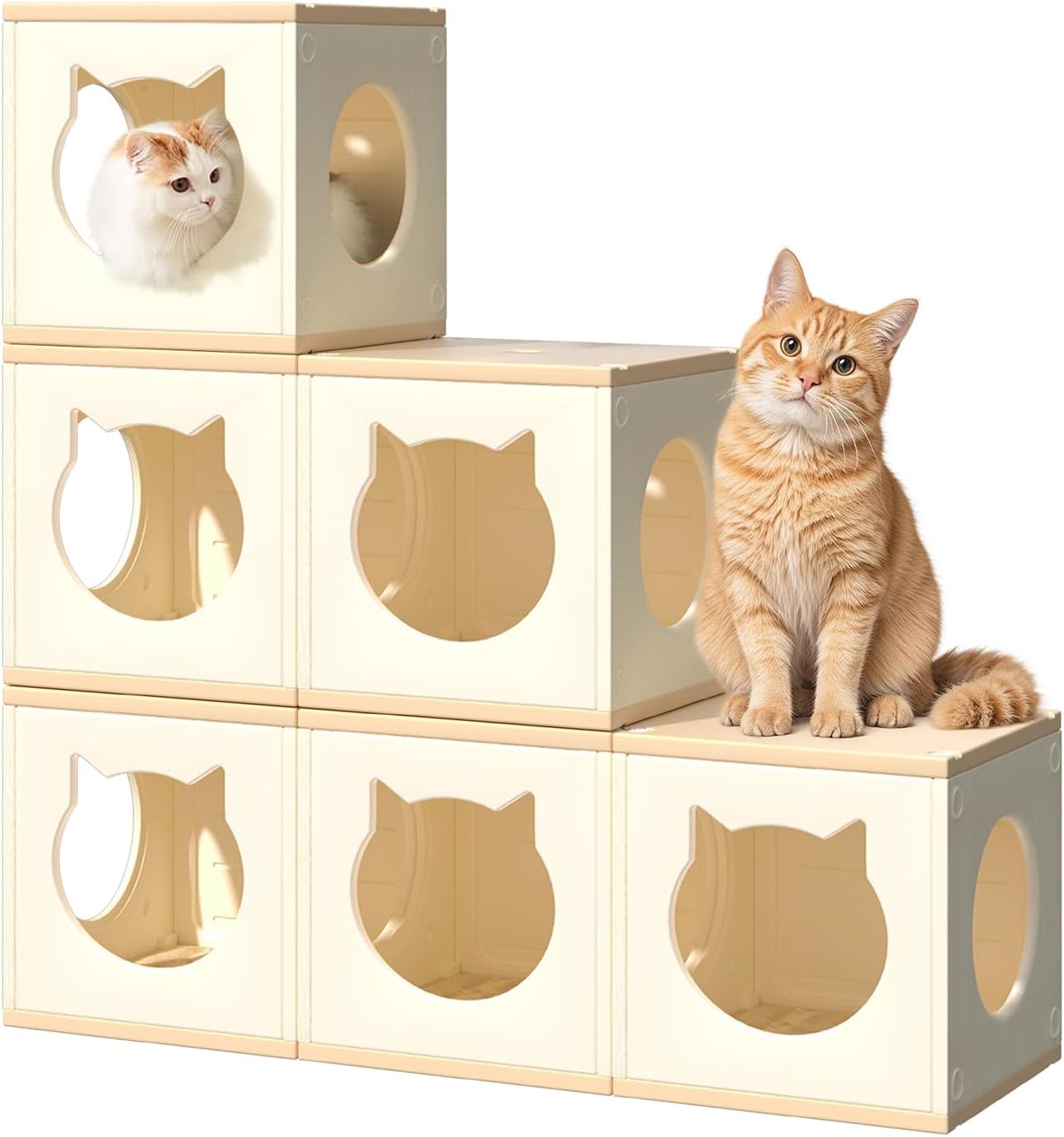
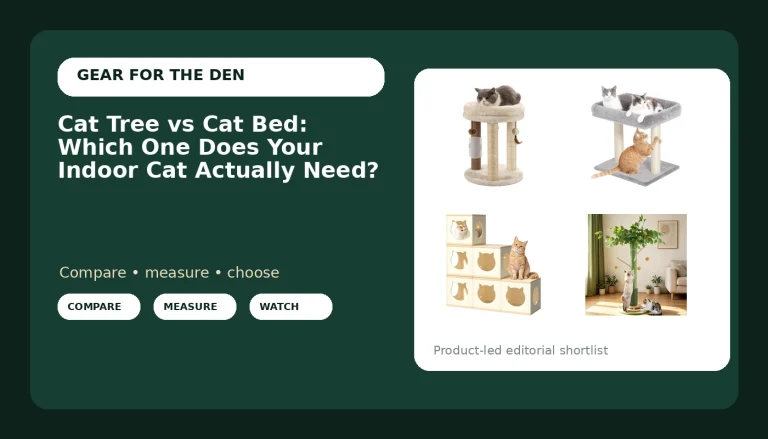
This is the tower I would put in a living room where the cat furniture has to pass as furniture. It is a stack of six cubes with a plastic tunnel running through it, so a cat gets a place to sit, a place to hide, and a tube to sprint through at three in the morning when the rest of the house is asleep.
Assembly is the part worth slowing down. The cubes go together panel by panel, and the mistake almost everyone makes is tightening the first cube all the way before the second one is lined up. Cam locks and bolts pull panels slightly out of square when you torque them one at a time. Snug everything first, check that each cube sits flat on the floor or on the cube below it, then go back around and finish tightening. That single habit is the difference between a stack that stands straight and a stack that leans into the wall.
The tunnel is the piece that has to be seated before you close the cube around it. If the opening ends up pinched, a cat will use it once and ignore it forever, and you have paid for a tube nobody crawls through.
Height is the tower's own warning. Stack all six cubes and you have a structure tall enough that a heavy cat landing on the top cube puts real load on the joints, so check the stated weight limit and use the anchor type that matches your wall. A furniture strap driven into a stud beats a free-standing tower every time. This is the one to buy if you want a single tower handling a whole household instead of three small ones scattered around the house. If you are still working out where it goes, how to place a cat tree in a small room is worth five minutes before you build.
Best Value: MECOOL 4in1 Small Cat Tree
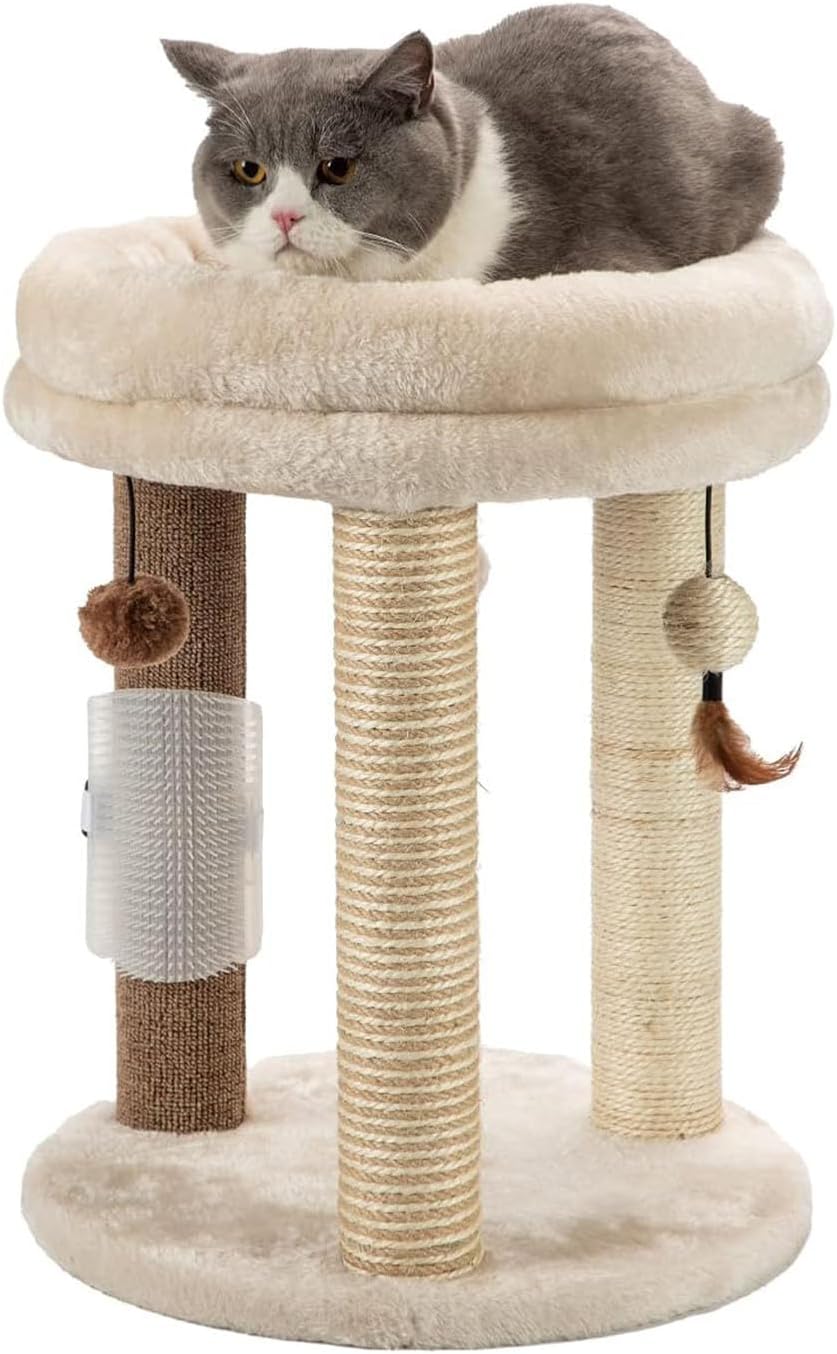
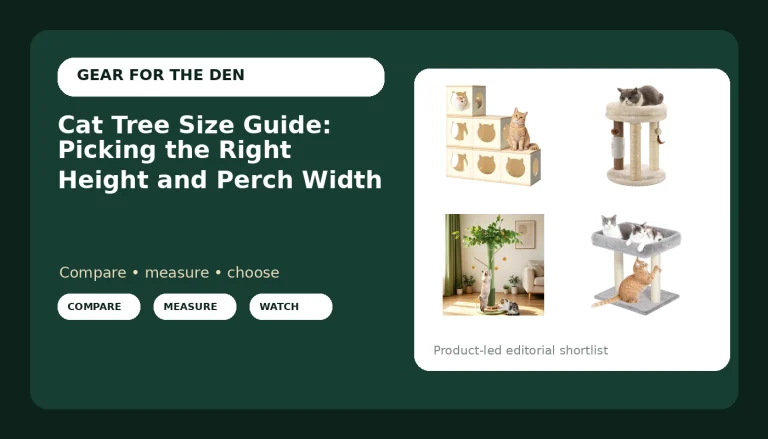
If you have one cat or a kitten and a corner that needs filling, this is the sensible buy. It packs a scratching post, a soft bed, a tower, and three hanging ball toys into one small footprint, and it adds a massage brush corner that cats either love or ignore completely. There is no middle ground on that brush.
The jute and sisal posts are the parts that matter. Run a hand down each post before assembly and check the wrap: a loose wrap near the top of a post is where the whole thing starts to unravel, and once it unravels you are looking at a bare cardboard tube. The hanging toys go on last, after the posts are tight, because threading a string through a post you are still turning is how you end up with a knot and a cat watching you lose an argument with a piece of elastic.
The bed platform is why this one earns the value slot. A small tree with a perch is a step stool. A small tree with a bed is a place a cat actually sleeps. Check the shelf depth of the bed before you commit the tree to a spot, because a cat that cannot curl up fully on it will pick the couch instead, every time.
How I tested
Every tree on this site goes through the same cat tree assembly checks, scored the same way, and none of them are exotic. They are the things you would notice yourself if you were not in a hurry.
The hardware count comes first. I lay out every screw, bolt, cam lock, and washer against the parts list before anything goes together, because a missing cam lock discovered at step six is a two-week delay on a project that should take one evening.
Then the square check. With the frame snug but not final-tight, I look at each platform from the side to see whether it sits level or tilts. Panels that fight back are misaligned, and forcing them cracks the laminate, which is the one failure you cannot fix with a screwdriver.
Third, the wobble check. Once the tower is complete, I put a hand on the top platform and push it sideways. A tree that moves as one unit is fine. A tree where the top platform moves and the base does not has a joint problem, and it only gets worse with a cat on it.
Fourth, the sisal wrap. I check every post for loose ends, gaps between wraps, and staples that stick out far enough to catch a claw.
Fifth, the anchor. Does the tree ship with a wall strap, and does that strap reach a stud where the tree is actually going to live?
Assembly time matters, but not the way people think. A forty-five-minute build that ends in a rock-solid tower is a better product than a ten-minute build that wobbles. Speed is a feature of the instructions, not of the tree.
Analysis and test results
The difference between a tower that survives a year and one that ends up at the curb is almost never the wood. It is the joints.
Post diameter is the first thing I look at. A thin post flexes under a cat's weight when the cat pushes off it, and flex works fasteners loose over months. A thicker sisal post holds its shape and takes a cat scratching at full stretch, which is the hardest load a tower ever sees.
Platform height and base footprint have to match each other. A 46-inch post on a base plate the size of a dinner plate is stable only if it is anchored or wedged into a corner. The ideal cat tree assembly puts the tallest element against a wall, with the base fully supported and nothing overhanging a rug edge where the pile compresses unevenly and the whole thing tilts a degree you will notice every day.
The correct cat tree assembly is boring to watch. Panels seat flush without force, hardware threads cleanly, and the last screw goes in without the tower shifting under your hand.
Perch width and shelf depth are the two numbers people skip and then complain about later. A perch narrower than the cat is a perch the cat uses once. A shelf too shallow for a full curl is a shelf the cat hangs off, and a hanging cat is a cat that eventually falls. The same logic runs through carrier size: the opening has to match the animal, not the other way around.
If your tree has a hammock, check the hammock fabric where it meets the frame before you hang it. That seam is the first thing to tear, and it tears with a cat inside it.
Anchor type is the last variable and the one with the biggest consequences. A strap into drywall with the included plastic plug is not the same as a strap into a stud. If the tree stands taller than your waist, anchor it.
Ratings and prices move around, so check current Amazon price on the listing before you commit to anything here.
The cat tree assembly reference table
This is the table I keep in my head for every build, sorted by tree. Sizes come straight from the listings; the checks are the ones that decide whether the tower stays where you put it.
| Product | Form | Size as listed | What to verify during assembly | Best for |
|---|---|---|---|---|
6-Cube Stackable Cat Tree Tower | Stackable cubes with a plastic tunnel | 6 cubes | Square each cube before final tightening, seat the tunnel before closing the cube around it, check the weight limit, anchor the stack | Multi-cat homes |
MECOOL 4in1 Small Cat Tree | Scratching post, tower, bed, and hanging toys | 4-in-1 | Check the sisal and jute wrap on every post, attach hanging toys last, check the shelf depth of the bed | One cat or a kitten |
 46" Tall Cat Scratching Post | Single tall sisal post | 46 in | Check post diameter where it meets the base, anchor the top or wedge it into a corner | Adult cats that scratch |
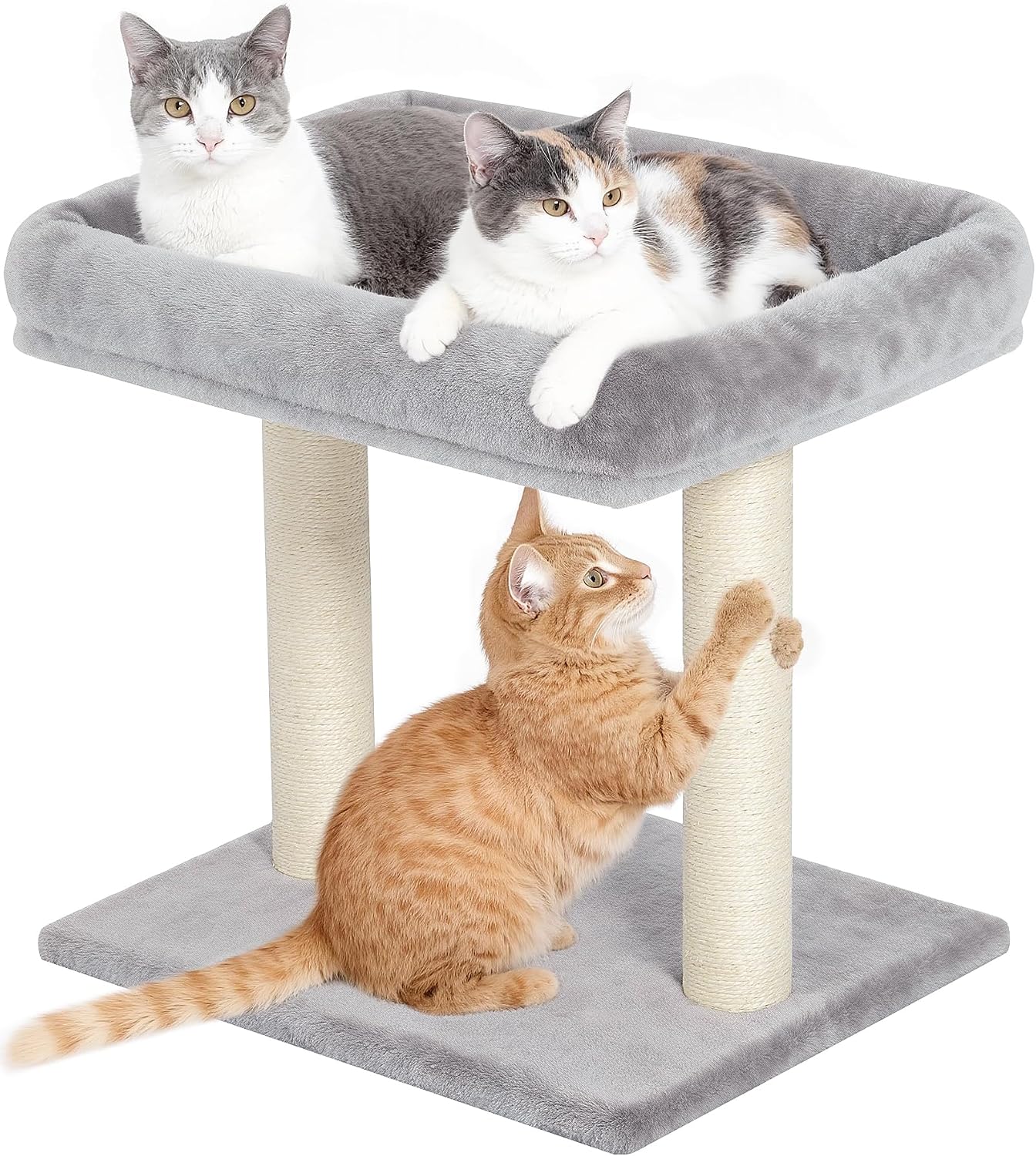 KinoTail 19" Small Cat Tree | Small perch tree with a scratching post | 19 in | Check perch width against your cat, make sure the base plate sits flat on a hard floor | Kittens and small rooms |
Where the 46-inch sisal post fits
The 46" Tall Cat Scratching Post is a single-purpose tower, and that makes its assembly the easiest of the four. Base plate, post, done. There are no platforms to square and no cubes to line up, so almost all of the risk sits in one joint: where the post meets the base.
That joint takes every bit of leverage a tall, narrow post can generate. Put a hand at the top of the finished post and push. If the post flexes but the base stays planted, that is normal. If the base lifts or skitters across the floor, the bolt is not seated and you need to back it out and start again.
This is the tree for the cat that has been destroying one particular arm of the couch. Park it next to the damage, anchor the top to the wall, and let the cat choose sisal. It is not a tree for a cat that wants to sleep up high, because there is nowhere up there to sleep.
Where the 19-inch perch tree fits
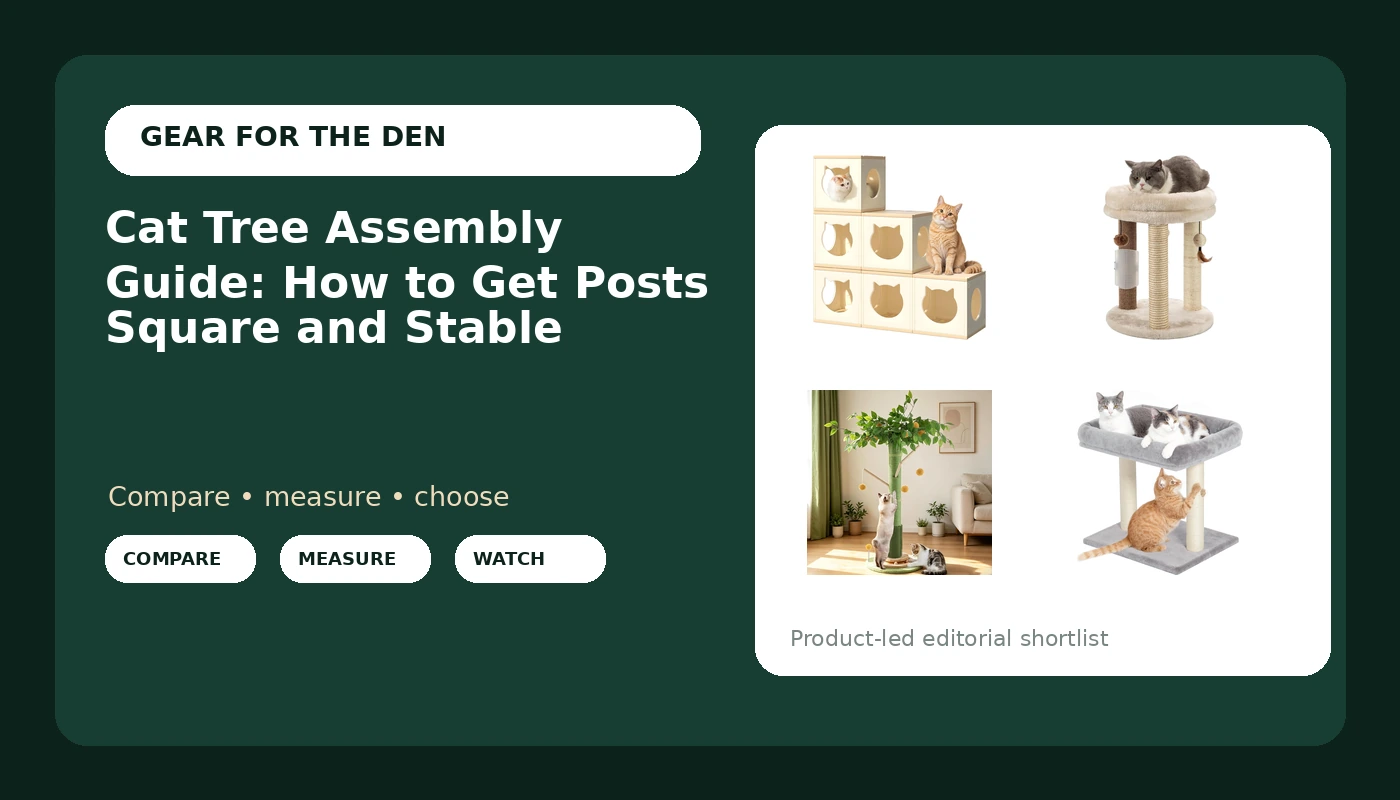
The KinoTail 19" Small Cat Tree is the starter build. One post, one perch, a handful of fasteners, and you are done before the coffee finishes brewing. What you are checking here is not structure but fit.
Perch width is the whole story on a tree this small. Measure your cat, not your hopes. A kitten will grow into it and a small adult cat will use it daily; a fifteen-pound cat launching off a 19-inch perch is going to test a base plate that was never designed for that landing.
Check that the base sits flat on a hard floor rather than sinking into carpet pile, and if the perch pad attaches with screws rather than hook-and-loop, get those screws snug before the cat ever sees the tree. This is also the tree I would buy as a second station near a window, because a cat that already has a tall tower still wants a low spot to watch the street.
Should you buy the 6-Cube Stackable Cat Tree Tower?
Yes, if you want one tower doing the work of three. Six cubes plus a tunnel gives a multi-cat house enough territory that the resident cats can each claim a level, and that alone is worth more than the wobble-free build you get from a cheaper single-perch tree.
Go in with an evening to spare. Snug everything, check each cube for square, seat the tunnel before you close the cube around it, then finish tightening and anchor the top of the stack into a wall. The failure mode is a six-cube tower that leans, and it leans because somebody rushed step three.
It takes real floor space, and a stack that tall in the middle of a room is a hazard. Against a wall, anchored, it is the best piece of cat furniture in this group by a wide margin.
Should you buy the MECOOL 4in1 Small Cat Tree?
Yes, for one cat or a kitten in a small space. The bed is the reason. Perch trees get used for a minute; a soft bed on a platform gets used for hours, and this one bundles that bed with a scratching post, a tower, and toys for a price that undercuts most single-purpose towers.
Build it in the right order: posts first, toys last, and check the wrap on each sisal and jute post before anything is tightened. A loose wrap found before assembly is a return. The same loose wrap found after assembly is a cat chewing on a bare tube.
Skip it if you have a large cat. This is a small tree built for small animals, and a big cat will outgrow the bed platform within a year.