Most cat furniture searches start with a photo of a cat curled inside a carpeted box and end with a shopper comparing two products that do not do the same job. The cat tree vs cat house question is not a brand argument or a price argument. It is a question about whether your cat wants to be up high with a view, or tucked inside something with walls and a roof. Those are different pieces of furniture, with different footprints, different stability needs, and different ways of failing.
The short answer for most indoor cats: buy a tree, not a house, unless your cat already hides under blankets, in closets, or behind the couch. A tree gives you vertical territory, a scratching surface, and a perch, which covers more of what a cat does in a day. A house gives you a den. If you live with a cat that wants a den, no amount of platform height will substitute for walls.
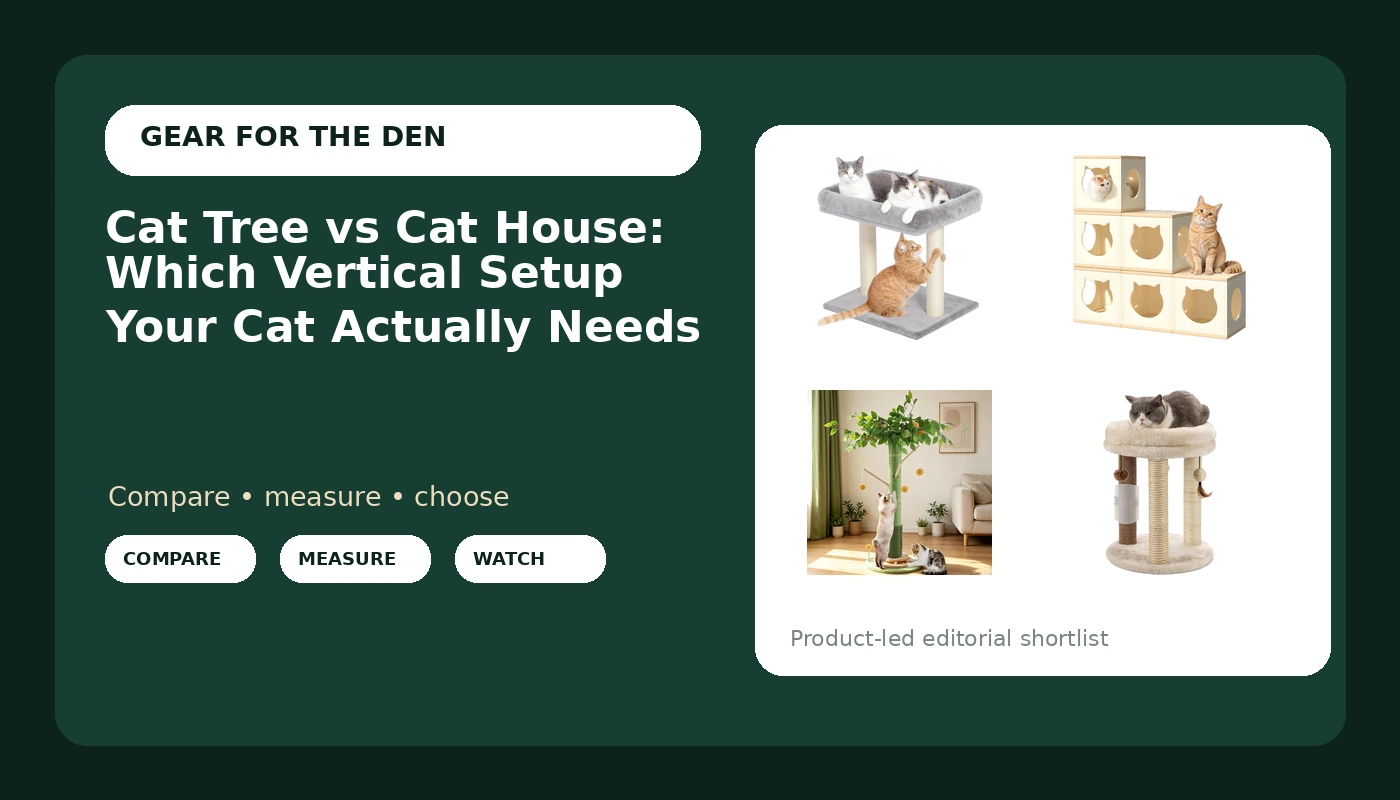
Four currently listed cat trees and towers sit at very different points on that spectrum. Here is how they compare on the things that decide whether a cat actually uses them.
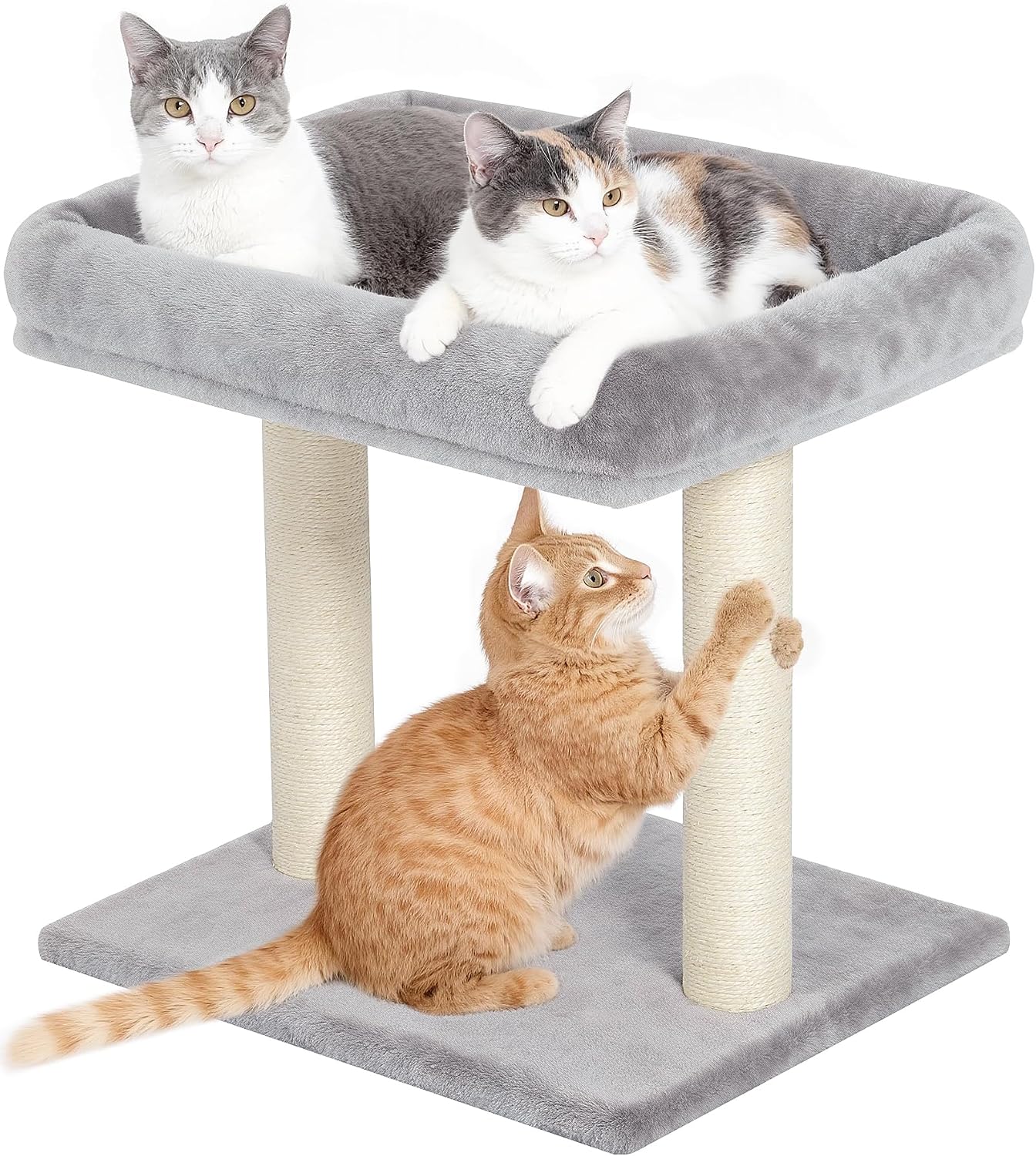
KinoTail 19" Small Cat Tree with Scratching Post and Perch
Low perch suits kittens and older cats, tiny footprint, easiest piece here to move room to room
One perch and one post, no den, limited scratching surface for a cat that shreds sisal
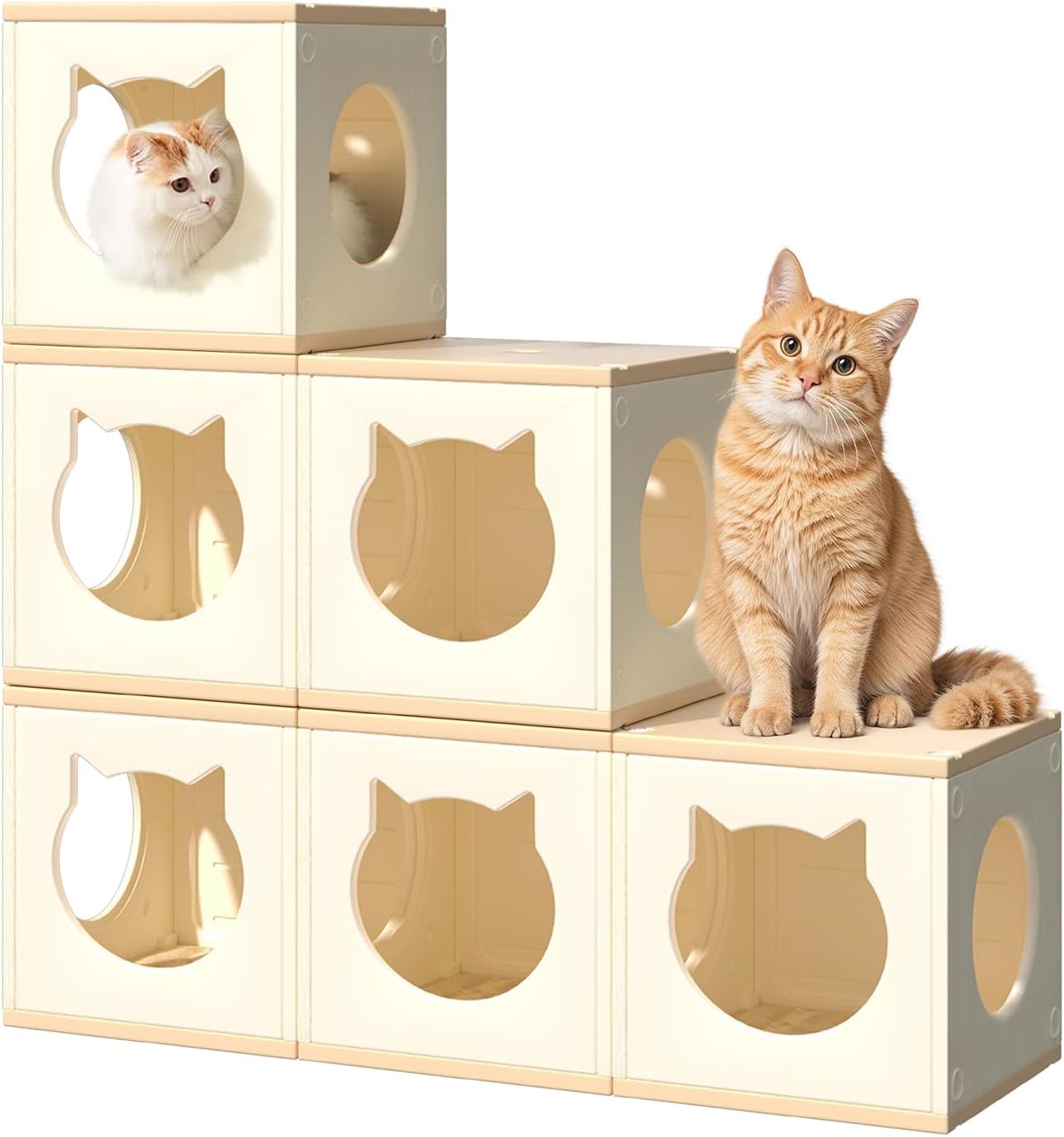
6-Cube Stackable Cat Tree Tower, Plastic Cat Tunnel
Modular cubes build height for one cat and a ground-level run for another, best fit for multi-cat homes
Plastic walls are not soft perches, big floor commitment, highest cost of the four
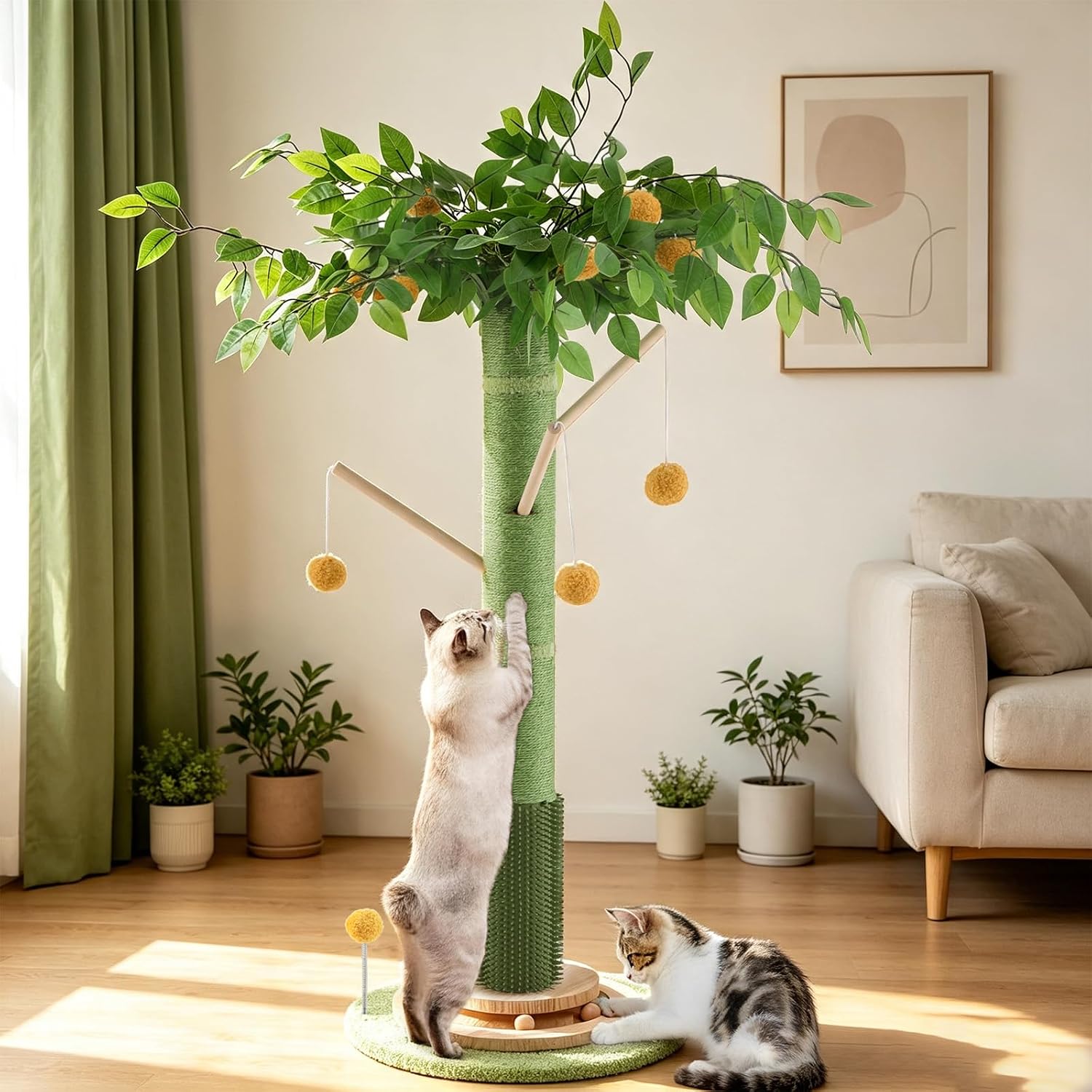
46" Tall Cat Scratching Post, Natural Sisal
Full-stretch scratching height for an adult cat, simple and stable, easy to tuck against a wall
No perch, no bed, no cubby, it is scratching infrastructure and nothing else
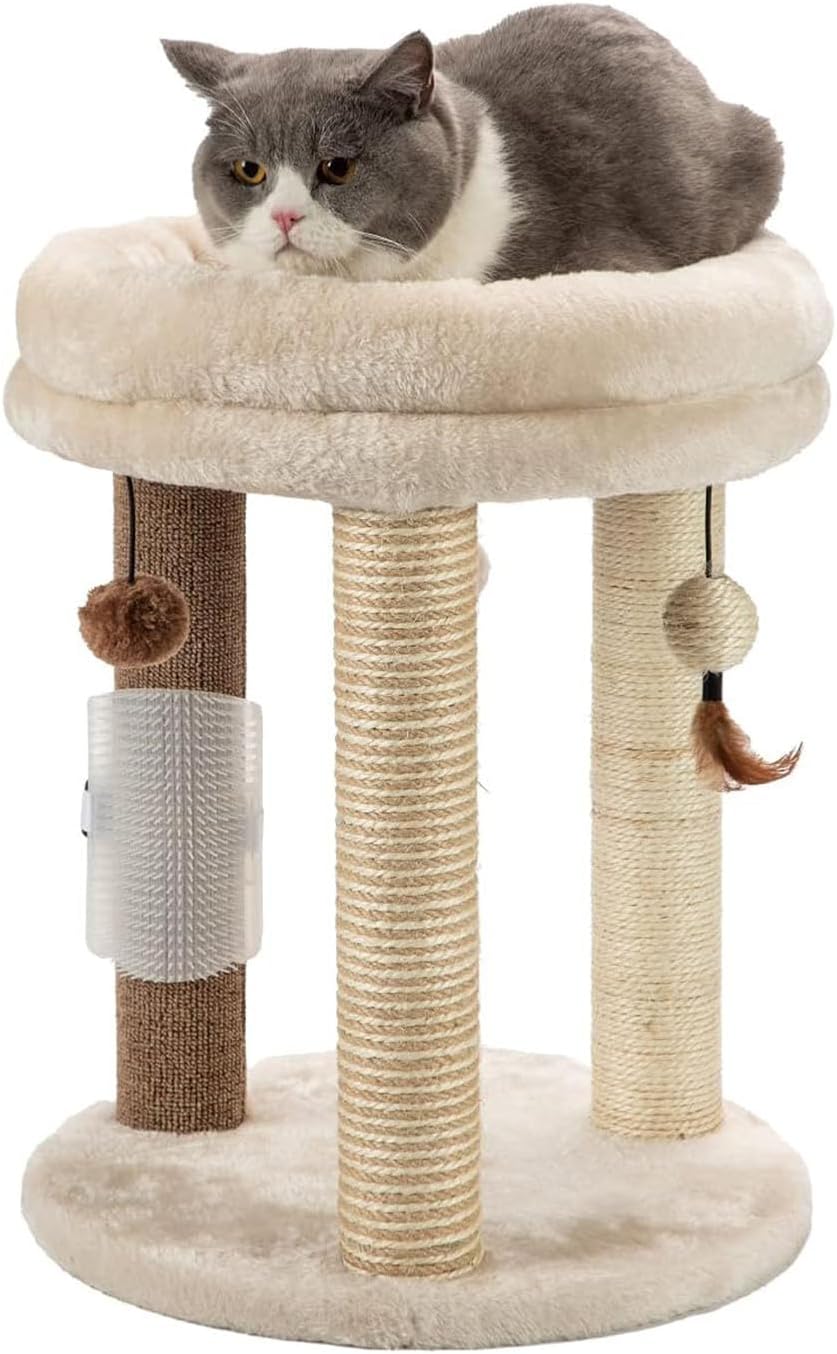
MECOOL 4in1 Small Cat Tree with Tower Soft Bed, Sisal and Jute Posts
Bed plus post in one small piece, mixed sisal and jute posts, good value for a single cat in one room
Compact footprint means a compact bed, and the hanging toys and brush are marketing, not structure
Prices and availability may change.
What the cat tree vs cat house question really asks
A cat tree is an open structure. It is posts, platforms, perches, maybe a hammock, arranged so a cat can climb, scratch, and sit above the room. A cat house is an enclosed structure: walls, a roof, a doorway, and a floor the cat can curl up on. The difference between cat tree and cat house comes down to open air versus enclosure, and cats use those two things for different reasons.
Climbing and perching are about control. A cat on a perch can watch the door, the hallway, and the other animals in the house without being touched. Scratching is about marking and claw maintenance, which is why post material and post height matter more than the shape of the platform above them. Hiding is about recovery. A cat that has been startled, or that shares a home with a toddler or a bossy second cat, wants a place where it cannot be seen at all.
Most products blur the line. Plenty of cat trees include a condo box or a covered cubby, and plenty of cat houses sit on a short platform with a post bolted to the side. That blending is why the cat tree vs cat house comparison gets confusing in listings. The useful question is not which category a product belongs to. It is which of the three jobs, climb, scratch, hide, the product does well, and whether your cat needs that job done at all.
How I compare these four cat trees
When I line up cat furniture listings side by side, I look at the structure before the accessories. Platform height tells you where the cat ends up, and whether the top perch is a real destination or just a step on the way to the bookcase. Post diameter and material tell you whether the post will survive a cat that scratches hard every day. Shelf depth and perch width tell you whether a cat can actually lie down, not just sit. Weight limit tells you what the hardware is rated for, which matters in a home where two animals eventually land on the same platform. Anchor type tells you whether the piece is meant to be strapped to a wall or left free standing.
Then I look at what the piece asks of your room. A tall column needs floor space and a wall behind it. A wide cube tower needs a corner. A small tree can go almost anywhere. Whether you are shopping for a cat tree or cat house, those questions do not change, because both categories fail in the same two ways: the cat will not use it, or the cat uses it and it moves.
The small tree route: KinoTail and MECOOL
The KinoTail 19" small cat tree is the entry point. The listing describes a scratching post with a perch, sized for indoor cats, and the 19 inch figure in the name is the honest headline: this is a low structure, not a climbing frame. That makes it a reasonable first tree for a kitten, a decent fit for an older cat that has stopped jumping to the top of the bookcase, and a sensible pick for a studio apartment where a tall column would eat the only free corner. What it is not is a full-service tree. One perch and one post means one cat, one resting spot, and a limited scratching surface.
The MECOOL 4in1 small cat tree takes the opposite approach and packs more functions into the same small footprint. The listing names a tower with a soft bed, sisal and jute posts, three hanging ball toys, and a massage brush. The bed is the part that matters most in this comparison, because a soft bed on a platform is the closest a small open tree gets to the den feeling of a house. The toys and the brush are the parts to treat with suspicion. Hanging balls are a nice touch that plenty of cats ignore, and a massage brush mounted on a post is a grooming gadget, not a reason to buy the tree.
If your cat is under a year old, or if you are furnishing one small room and want a single piece that covers scratching and sleeping, these two are the low-risk picks. If you have two cats, or a cat that already climbs the refrigerator, neither is enough structure.
The tall single post: a 46 inch sisal column
The 46" tall cat scratching post is the simplest product here and the one that solves the fewest problems at once. The listing describes a natural sisal post sized for adult cats, and the height is the whole point. A full stretch, from the floor to the top of the front paws, is how a cat maintains its claws and marks territory, and a post tall enough for the entire motion gets used daily. A short post catches the middle of the stretch and gets abandoned.
What you give up is everything else. There is no perch, no bed, no cubby, and no place for a cat to sleep. If your cat already has a favorite windowsill and you only need to stop the sofa from being shredded, a tall column is the most efficient purchase in this group. If your cat has nowhere to sit, this product will not create one. It is also the piece most likely to tip when it is bumped, so check whether the base is wide enough for your floor and whether the listing expects it to be anchored to a wall.
The cube tower: stackable cubes and a plastic tunnel
The 6-cube stackable cat tree tower is the modular option. Instead of a single post with platforms, it is a set of plastic cubes you assemble into whatever shape your room allows, with a tunnel section that gives a cat a run rather than a perch. That modularity is genuinely useful in a multi-cat home, because you can build height for one cat and a ground-level hiding run for another, then rebuild the whole thing when you move.
The trade-offs are real. Plastic cube walls are not upholstered perches, so a cat that likes to sink into fabric will not be as comfortable here. A stack of cubes takes more floor area than a single column, and it is the most expensive product in this group. It also lands closest to the cat house end of the spectrum, since a cube with one opening is functionally a small den, which is exactly why cats that hide tend to take to it.
The specs that decide whether a cat uses it
Platform height is the number most shoppers read first and the least useful on its own. A high platform only helps if the route up is climbable and the landing area is big enough to hit.
Post diameter matters because sisal wrapped around a thin dowel wears through fast, and because a post that flexes under a scratching cat gets abandoned. A thicker post costs more and lasts longer.
Shelf depth and perch width decide whether a cat can lie down or only sit. Cats sleep for most of the day, so a shallow shelf becomes a stepping stone instead of a bed.
Weight limit is the spec nobody reads until a shelf sags. In a two-cat home, assume two cats will end up on the same platform eventually, even if the listing pictures one.
Anchor type is the safety spec. Some trees ship with a wall strap and expect you to use it. Some are weighted to stand alone. Either is fine, as long as you know which one you bought.
Hammock fabric is the easiest place for a manufacturer to save money, and a thin, stretched hammock is a hammock cats avoid. If a listing shows one, look at how it attaches before you look at the pattern.
Carrier size is the odd spec out in a cat furniture comparison, but it belongs in the same shopping session. A cat that travels needs a carrier it can stand and turn in, and money spent on a house your cat ignores is money you do not have for the carrier it will actually use.
Cat house vs cat tree: when walls win
In three situations, a cat house vs cat tree argument ends with the house.
The first is a cat that hides. If your cat sleeps under the bed, behind the couch, or in the back of a closet, it is telling you it wants enclosure. A tree with a perch gives it a view. A house gives it a place to be unseen, which is what it is asking for.
The second is an older cat. Senior cats lose the confidence to jump, and a tall tree becomes furniture the cat walks around. A low house, or a house on a short platform, keeps the cat off a cold floor without demanding a leap.
The third is a multi-cat home with tension. When one cat guards the high perch, the other cat needs a resource that cannot be blocked, and an enclosed house with a single ground-level entrance is easier to defend and easier to retreat into than an open platform.
What a house does not do is scratching. Cats scratch on vertical surfaces, and a carpeted house wall is not a substitute for a post. If you go the house route, budget for a tall post as well, because the two pieces solve different problems and neither one covers the other.
What I would pick for which household
Small apartment, one adult cat that already has a windowsill: the 46" sisal post. Cheapest way to protect furniture, smallest footprint, no assembly drama.
Kitten or a senior cat, one room: the KinoTail 19" tree. Low perch, small footprint, easy to move.
One cat, small room, and you want scratching and sleeping in a single purchase: the MECOOL 4in1. The bed is the useful part, so ignore the gadgetry.
Two or more cats, or a cat that hides: the 6-cube stackable tower, built low with a tunnel run for the hider and height for the climber. Pair it with a tall post if the climber scratches hard.
Nobody in this group needs a cat house as their only purchase, but plenty of cats need one in addition to a tree. If your cat hides, buy the house and the post together and skip the tall tower.
The bottom line
The cat tree vs cat house decision is really a question about your specific cat, not about which product category is better. Trees are for climbing, scratching, and watching. Houses are for hiding and sleeping warm. Most indoor cats need the first, a meaningful minority need the second, and the cats that need both are usually the ones living in a busy house with kids, a dog, or another cat.
Buy the structure that matches the behavior you already see. A cat that sits on top of the fridge is telling you it wants platform height. A cat that sleeps in a laundry basket is telling you it wants walls. Spend your money on the version of that answer your cat has already given you, and skip the accessories.