Walk the bowl aisle of any pet store and the ceramic cat bowl vs melamine bowl question gets framed as a simple price fight. One is fired clay under a glaze, heavy in the hand, and often twice the cost. The other is molded resin, light enough to toss into a tote bag, and cheap enough to buy in a set of four. The material you pick changes how often you scrub the bowl, how loud it is when a cat shoves it across tile at 2 a.m., and whether the rim rubs the whiskers while your cat eats.
For most cats, a raised ceramic bowl is the better long term buy, and the tilted ceramic bowl in this comparison is the cheapest way to find out whether elevation helps your cat. The honest caveat is that material is only half of the decision. Elevation angle, bowl width, whisker clearance, and eating speed matter just as much, and a plain stainless bowl on the right stand beats a gorgeous ceramic bowl sitting flat on the floor.
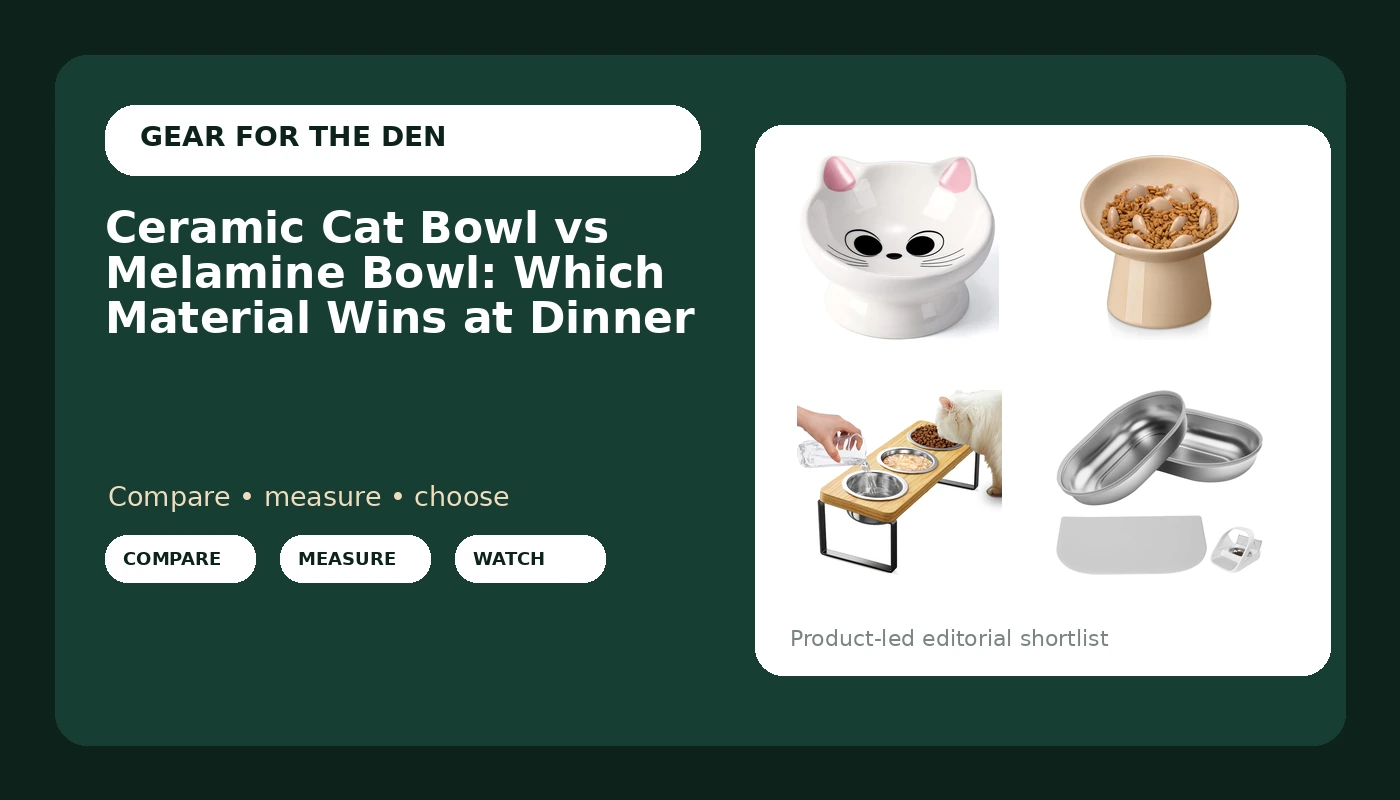
The four bowls below cover the realistic options: two ceramic, one stainless set on a stand, and one stainless replacement pair built for a microchip feeder. None of them is melamine, and that is deliberate. Once you see what each material does at the whisker line and at the sink, you can decide for yourself whether a melamine bowl's lower price is worth its shorter working life.
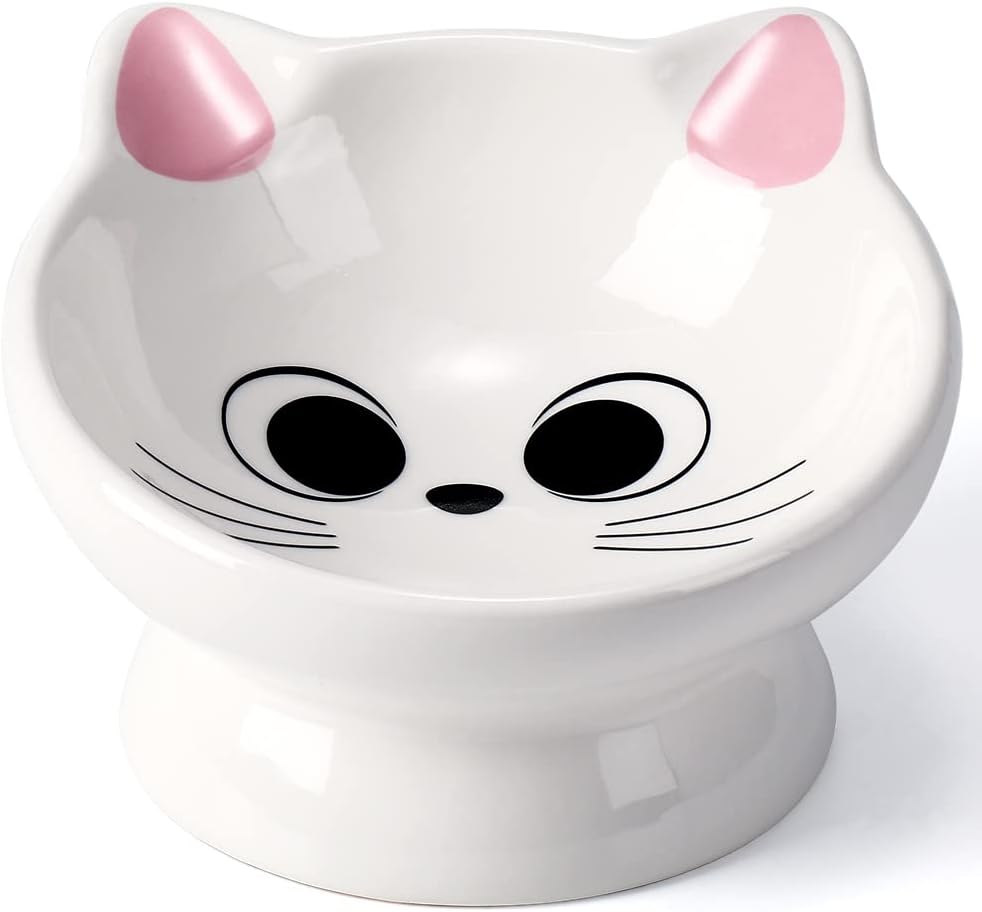
Raised Cat Food Bowl Ceramic 15° Tilted, Pink
Heaviest bowl in the group, so it stays planted; the 15 degree tilt is the steepest here and a glazed ceramic surface will not hold odor
One bowl only, no stand, and a dropped ceramic bowl chips; pink is the only colorway
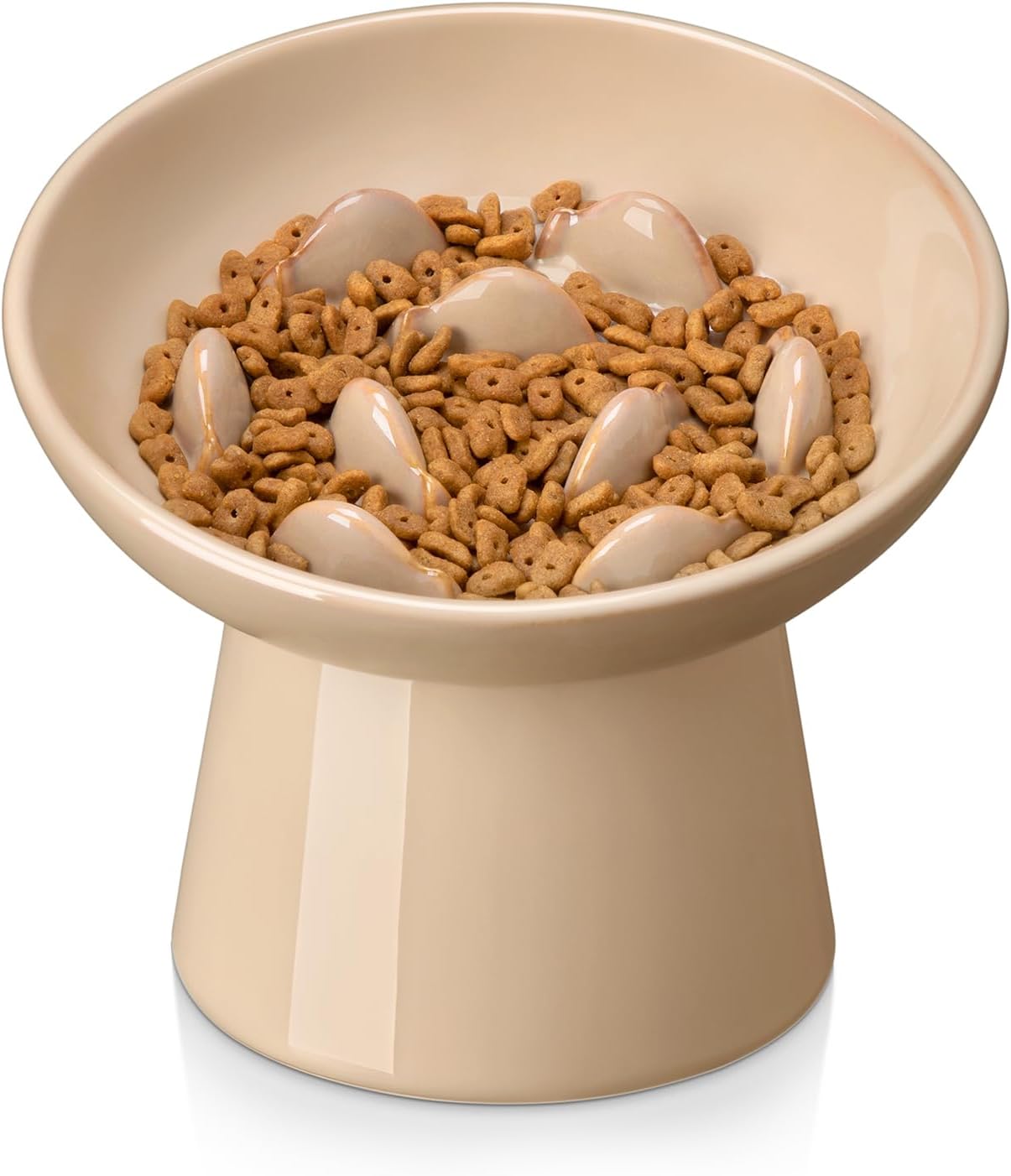
vancasso Ceramic Slow Feeder Cat Bowl, 6.25 Inch, Brown
Ceramic slow feeder that handles dry and wet food, elevated, and the ridges slow a fast eater without a plastic insert
The channels take longer to wash than a plain bowl, and a determined cat can learn to flip food out of them
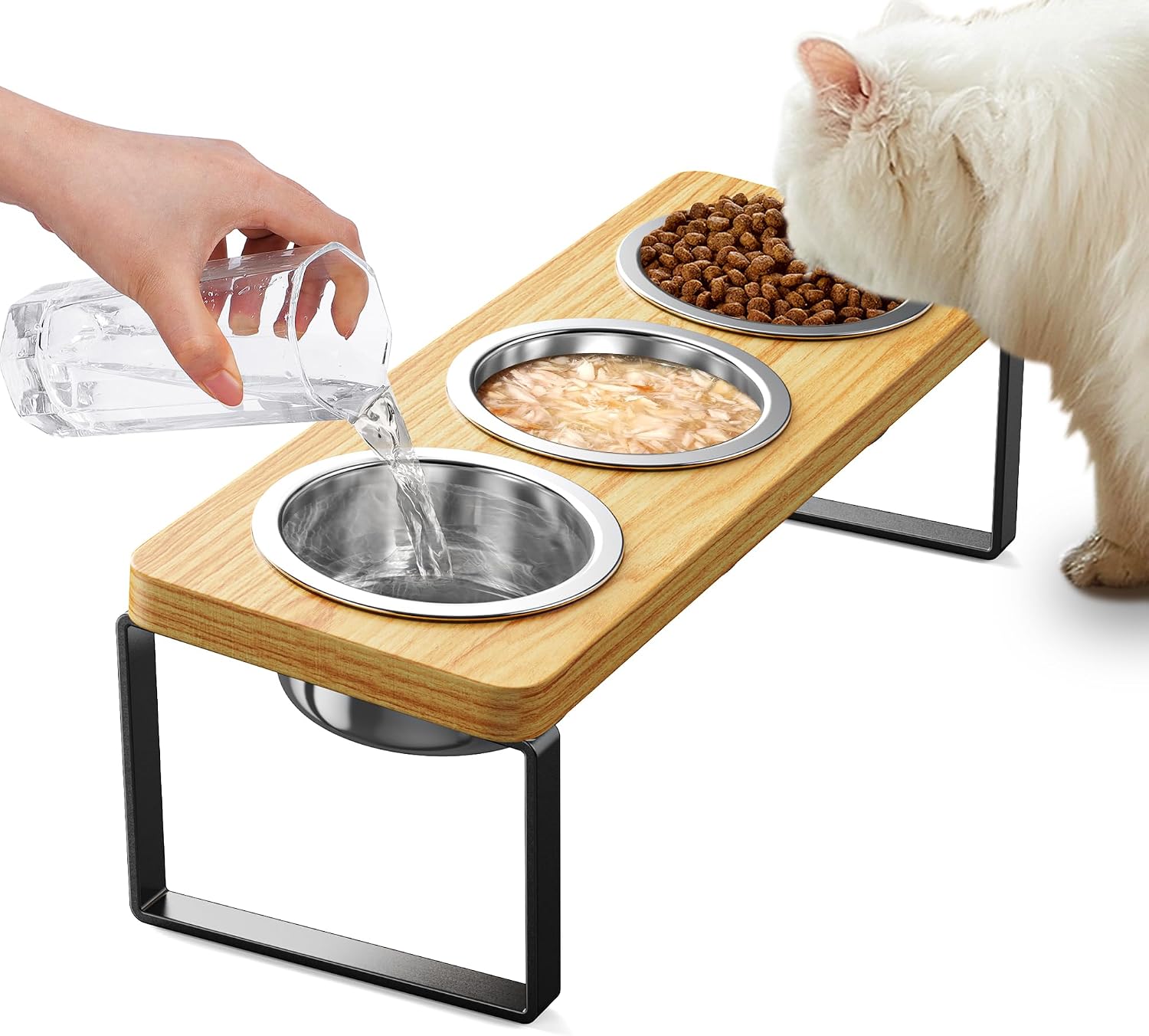
Elevated Cat Bowls with 3 Stainless Steel Bowls, 10° Tilted
Three stainless bowls on one stand, so food and water rotate without buying anything else; stainless resists odor and does not chip
The stand is lighter than a ceramic bowl and can slide on smooth floors, and the 10 degree tilt is gentler than the ceramic pick
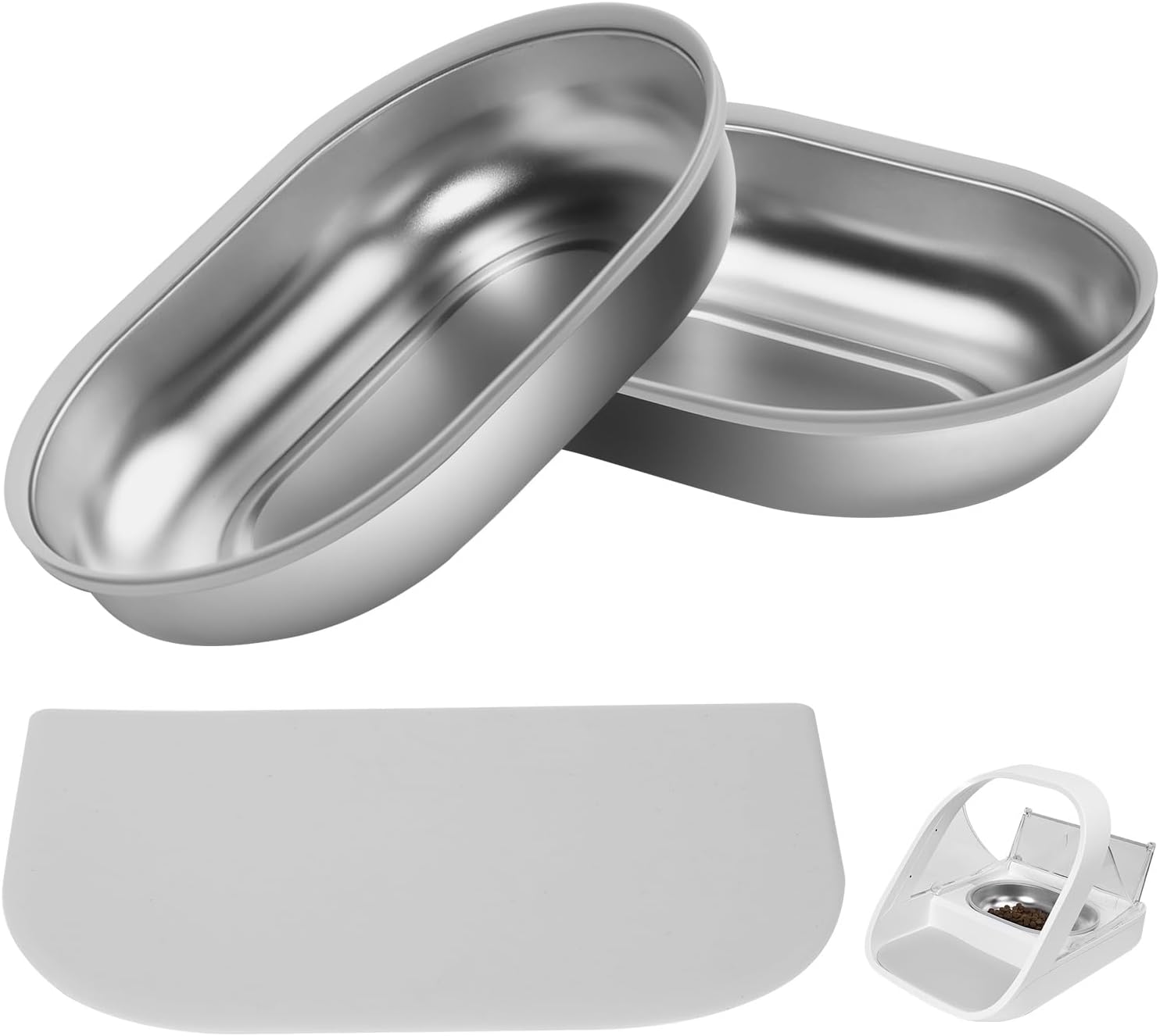
Stainless Steel Bowl for Automatic Microchip Cat Pet Feeder, 2 Pcs + Grey Mat
Two replacement bowls plus a mat, built to keep food fresh and reduce odor, and sized for a microchip feeder
Only useful if you already run that feeder; no tilt and no stand, so it does nothing for whisker clearance on its own
Prices and availability may change.
How to judge a cat bowl before you buy
Four numbers and one material do most of the work, and none of them are printed on the front of the box.
Bowl width comes first. A wide, shallow bowl lets the whiskers clear the rim. A narrow, deep bowl forces them to press against the sides, and that pressure is the mechanical cause of whisker fatigue. It is also why some cats drag kibble onto the floor and eat it there instead.
Whisker clearance is the second number. As a rough rule, look for an inner bowl width at least as wide as your cat's whisker spread. A 6 to 7 inch bowl suits most adult cats, and flat faced cats do better with the shallowest profile you can find.
Elevation angle is the third. A bowl raised a few inches and tilted between 10 and 15 degrees lets gravity help. Food settles toward the low edge, the neck stays straighter, and many cats regurgitate less. Every listing calls this anti vomiting. The tilt is the part that does the work, and the height is what takes pressure off the spine.
Portion size is the fourth. A bowl sized for a full day of dry food encourages grazing, which is fine for some cats and a real problem for others. If your cat inhales a meal in 90 seconds and then brings it back up, shape matters more than material.
Then there is the material itself, which is the part of the ceramic cat bowl vs melamine bowl debate that lasts longest, because material decides odor, staining, and how the bowl ages.
Why ceramic cat bowl vs melamine bowl comes down to three things
Any ceramic cat bowl vs melamine bowl comparison has to start with the surface, because that is what you actually feed the cat from.
Ceramic is clay fired at high temperature and finished with a glaze. The result is a hard, non porous surface that does not absorb food oils or hold odor, and the weight keeps the bowl planted on the floor. The downside shows up the first time it hits tile. Ceramic chips, and a chipped glaze gives food and bacteria a crack to live in.
Melamine is a molded resin, usually pressed into shape with a printed pattern on top. It is light, inexpensive, dishwasher friendly, and it does not shatter. The trade off is the surface. Melamine scratches, and a scratched surface collects fat and bacteria. That is why a melamine bowl that has gone cloudy after a year of hot cycles never smells fully clean again.
Stainless steel is the third option and the one that quietly wins most of these arguments. It is non porous like ceramic, light like melamine, and it does not chip. It shows water spots and it holds no color, but it is the material most veterinary clinics use, and that is not an accident.
So the difference between ceramic cat bowl and melamine bowl comes down to surface and weight rather than looks. Ceramic wins on odor resistance and stability. Melamine wins on price, weight, and surviving a drop.
Weight, noise, and travel
A ceramic bowl has mass, and mass is stability. A cat that paws at its food cannot slide a ceramic bowl across the kitchen the way it slides a melamine one. That matters more than it sounds, because a bowl that moves while the cat eats teaches the cat to eat fast and then check the floor.
Noise runs the other way. Melamine is quiet. Ceramic clinks against tile, and a ceramic bowl with a loose piece of kibble in it rings a little every time a tongue moves through it. If your cat eats at 3 a.m. in a bedroom, you will hear it.
Travel is where melamine earns its place. Nobody wants to pack a glazed bowl that weighs as much as a paperback into a weekend bag. A light bowl that can be rinsed in a hotel sink and dried with a towel is the right tool for a car trip or a camping crate.
Most people find the ceramic cat bowl vs melamine bowl question resolves itself once they split the job in two. Ceramic for the permanent spot in the kitchen, where stability and odor resistance matter every day. Melamine for the bag, where weight and survival matter most. Framed that way, the melamine bowl vs ceramic cat bowl comparison stops being a contest and becomes a division of labor.
The whisker line is where the money goes
Whiskers are sensory organs, not decoration. A bowl that presses them flat against the sides is uncomfortable enough that some cats refuse to eat from it, and that effect has nothing to do with whether the bowl is ceramic or melamine. It has to do with shape.
This is where ceramic bowls often win by accident. Ceramic is made in wide, shallow shapes because the material needs thickness to survive firing. Cheap melamine bowls are frequently tall and narrow, shaped more like a cup, because that shape uses less resin per unit. A tall melamine bowl with a 4 inch opening is the worst of both worlds for a whiskered cat.
The practical test takes ten seconds. Measure your cat's whisker spread roughly with your hands, then look for a bowl whose inner bowl width is at least that wide. Depth matters too. An inch to an inch and a half of food is plenty, and anything deeper just gives the whiskers more surface to brush.
Ceramic cat bowl or melamine bowl for a fast eater
If your cat bolts a meal and vomits twenty minutes later, material is not the problem, so ceramic cat bowl or melamine bowl is the wrong way to frame it. Speed is the problem.
This is where a ceramic slow feeder earns its price. The ridges and channels force the cat to work around obstacles, which turns a 60 second meal into a three minute one, and the weight of the ceramic body keeps a frustrated cat from flipping the bowl across the room. Slow feeders are also easier to find in ceramic than in melamine.
The tilt does related work. An elevated, tilted bowl keeps less food sitting low in the esophagus, which is the mechanical half of every anti vomiting claim. A 10 degree tilt is gentle and suits most cats. A 15 degree tilt is steeper and tends to help more with cats that regurgitate regularly.
The four bowls in this comparison
Raised Cat Food Bowl Ceramic 15° Tilted, pink. The simplest way to find out whether elevation helps your cat. The 15 degree tilt is the steepest angle here, the ceramic body is heavy enough to stay planted, and the listing covers adult cats, kittens, and small dogs. It is a single bowl with no stand, so you get the tilt without giving up floor space. Visit on Amazon
vancasso Ceramic Slow Feeder Cat Bowl, 6.25 inch. The slow feeder of the group, and the one to pick if your cat inhales meals. The 6.25 inch face is wide enough for most adult whisker spreads, it handles dry and wet food, and the ceramic body means the bowl does not walk across the floor while your cat works at it. Visit on Amazon
Elevated Cat Bowls with 3 Stainless Steel Bowls, 10 degree tilt. The value pick for a multi cat house. Three stainless bowls on one stand means food and water rotate without buying anything else, stainless resists odor and does not chip, and the 10 degree tilt is gentle enough for a cat that has never used an elevated bowl before. The stand is lighter than a ceramic bowl, so it can slide on smooth floors. Visit on Amazon
Stainless Steel Bowl for Automatic Microchip Cat Pet Feeder, 2 pieces plus a mat. The specialist. These are replacement bowls designed to keep food fresh and reduce odor inside a microchip feeder, and the grey mat catches the crumbs a feeder always produces. They do nothing for whisker clearance on their own, and they only make sense if you already run the feeder they fit. Visit on Amazon
Trade-offs worth accepting
Every material asks for something back.
Ceramic asks for careful handling. It chips on tile, it is heavy to pack, and the safest routine is a hand wash or a gentle dishwasher cycle rather than a hot heavy one. In exchange you get a bowl that does not hold odor and does not slide.
Melamine asks for replacement. The lower price is real, but the surface dulls and scratches, and once it does, no amount of scrubbing gets the smell of old fish out of it. Treat a melamine bowl as a one to two year item and it is a fine deal.
Stainless asks for nothing except acceptance of water spots and a slightly industrial look. It dents if you drop it on concrete, but it does not chip and it does not stain.
Elevated stands ask for floor space and a wipe underneath. Slow feeders ask for a longer wash. Neither is a deal breaker, but both are real costs of ownership.
What the specs do and do not tell you
The useful specs are material, inner bowl width, depth, and elevation angle. Those four predict almost everything about how a bowl behaves at dinner.
The marketing specs are worth less. Anti vomiting almost always means the bowl is elevated and tilted, which you can see in the photos. Dishwasher safe means different things at different temperatures. BPA free is a claim about a resin, not a measurement.
Microchip range is the one spec that matters and is easy to misread. On a microchip feeder, the range and the lid do the work, and the bowl is just the container. The replacement bowls here are about keeping food fresh and reducing odor inside the unit, not about reading a chip.
If you are shopping a fountain instead of a bowl, the numbers change entirely. Water capacity, pump noise, and filter type are the three that decide whether you will actually maintain the thing, and none of them apply to a bowl. The ceramic cat bowl vs melamine bowl decision rarely turns on a spec sheet. It turns on whether you will keep the bowl clean and on the floor.
Should you buy a slow feeder first?
It depends on the symptom, and the symptom is usually obvious.
If your cat eats fast and vomits soon after, buy the slow feeder first. Shape and speed are the fix, and a ceramic slow feeder costs less than most bags of food.
If your cat leaves a ring of food around the edge, drags kibble onto the floor, or refuses to eat from one particular bowl, buy width instead. A wide, shallow bowl in any material will help, and the raised ceramic bowl here is a reasonable first try.
If your cat eats normally, keeps its food down, and drinks well, spend nothing. A bowl is a bowl until it causes a problem, and the ceramic cat bowl vs melamine bowl argument is mostly academic for a cat that is already happy.
What we are watching next
Two things. First, ceramic bowls with removable stainless inserts, which would give the weight and odor resistance of ceramic with the easy cleaning of steel. The inserts exist but the fit is inconsistent across brands, and a loose insert rattles.
Second, wider shallow bowls. Most cat bowls are still sold in a narrow cup shape that suits a manufacturing line more than a whisker spread. A 7 inch shallow bowl is rare and should not be.
If either changes, this ceramic cat bowl vs melamine bowl comparison changes with it. Until then, the material matters less than the shape, and the shape matters less than whether the bowl gets washed.