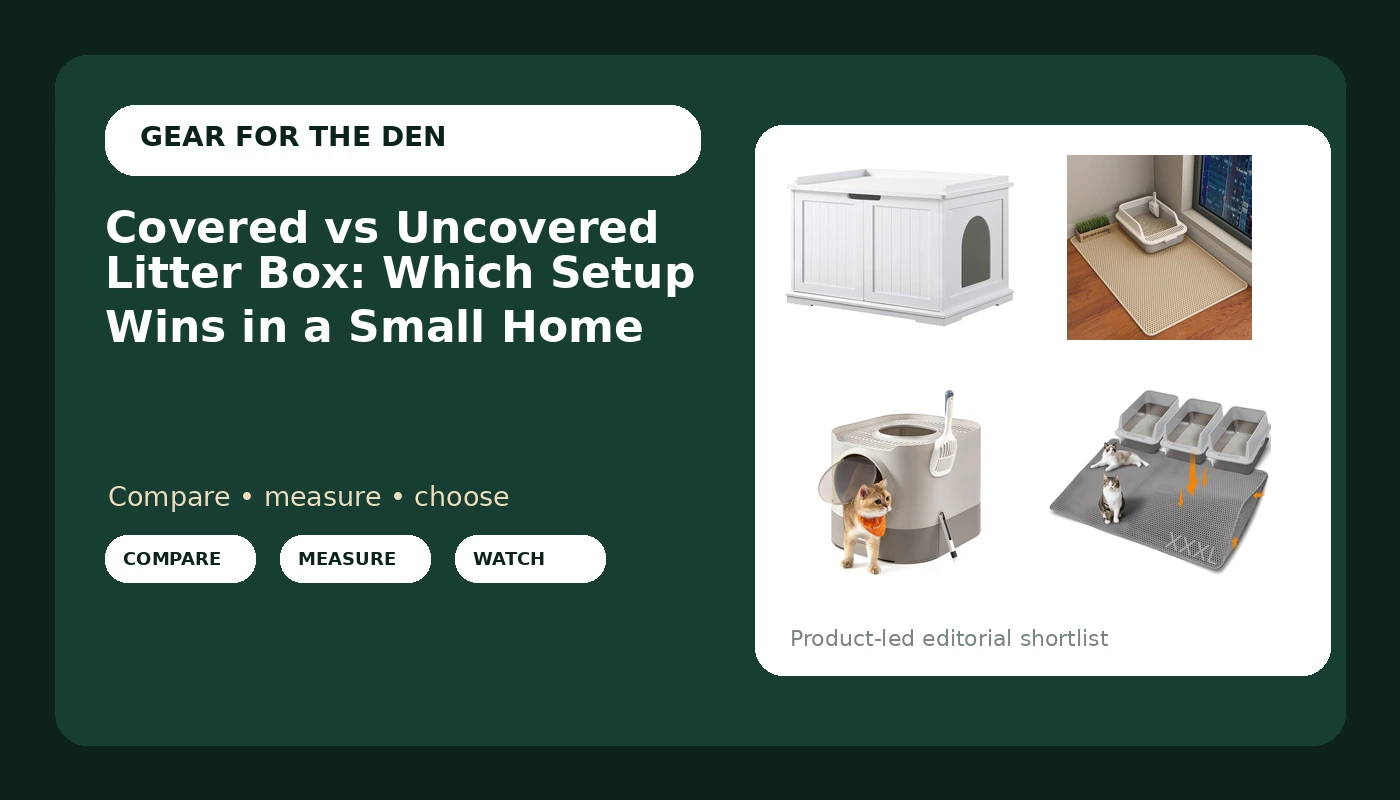
I have shared a small apartment with two cats for most of the last decade, and I have cycled through more litter setups than I want to admit. The covered vs uncovered litter box argument usually gets framed as a smell problem. Smell is part of it, but the decision also touches box size, entry height, litter depth, and how much tracked litter you sweep off the floor every evening. This guide compares four real products that cover both halves of the question: an enclosed box with a lid, a furniture enclosure that hides an open pan, and two mats that decide how much litter leaves the room.
For most homes, a large uncovered pan wins, and the cover earns its place only when the box shares a wall with a bedroom or a narrow hallway. The uncovered litter box vs covered question is really a question about air, and air is the variable most people never think about until the room smells like ammonia on a humid afternoon. A lid concentrates odor in one object you can carry outside. An open pan spreads the same odor thinner, which is easier on the nose and much harder to hide.
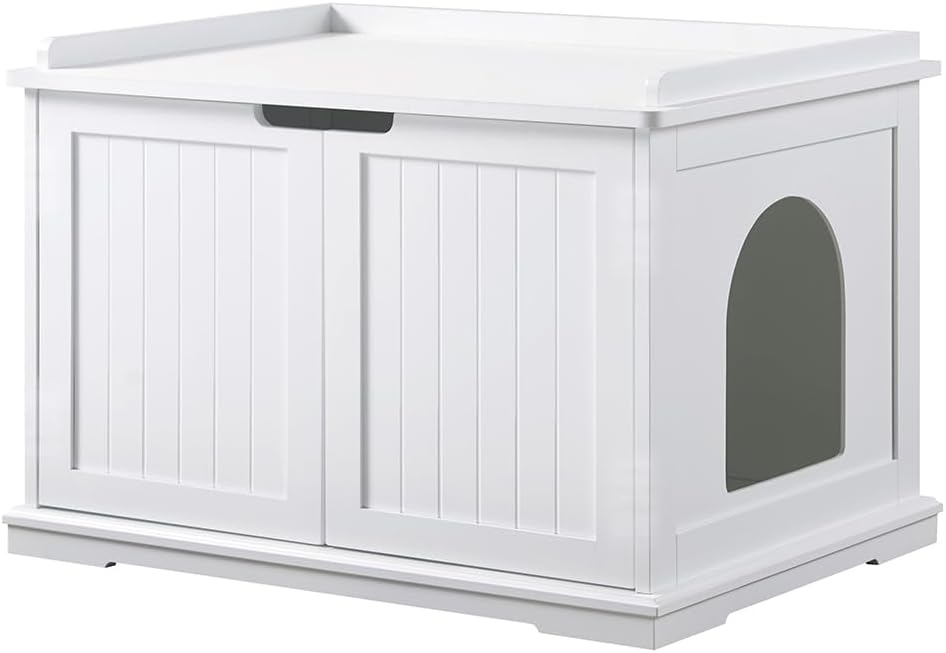
unipaws Cat Litter Box Enclosure Furniture, Hidden Litter Box Cover
Hides an open pan inside furniture, so you get airflow plus a usable tabletop
Interior space and door access have to fit both your cat and your scooping habit
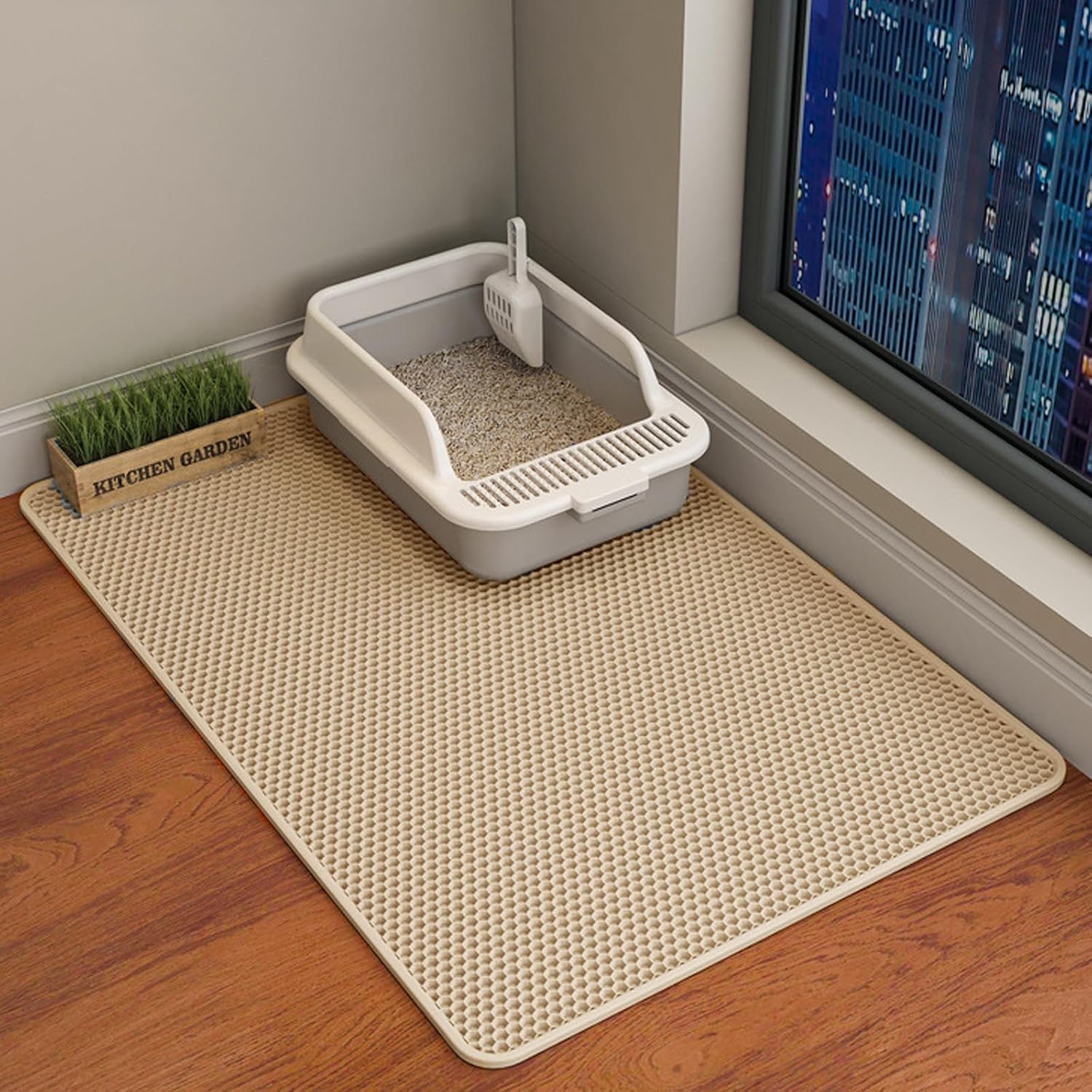
HCY&WLD Cat Litter Mat, Double Layer Cat Litter Box Mat (35×24 Inch, Khaki)
Double layer traps tracked granules, and the 35×24 inch size fits tight corners
Smaller coverage means a fast exit can still scatter litter past the edge
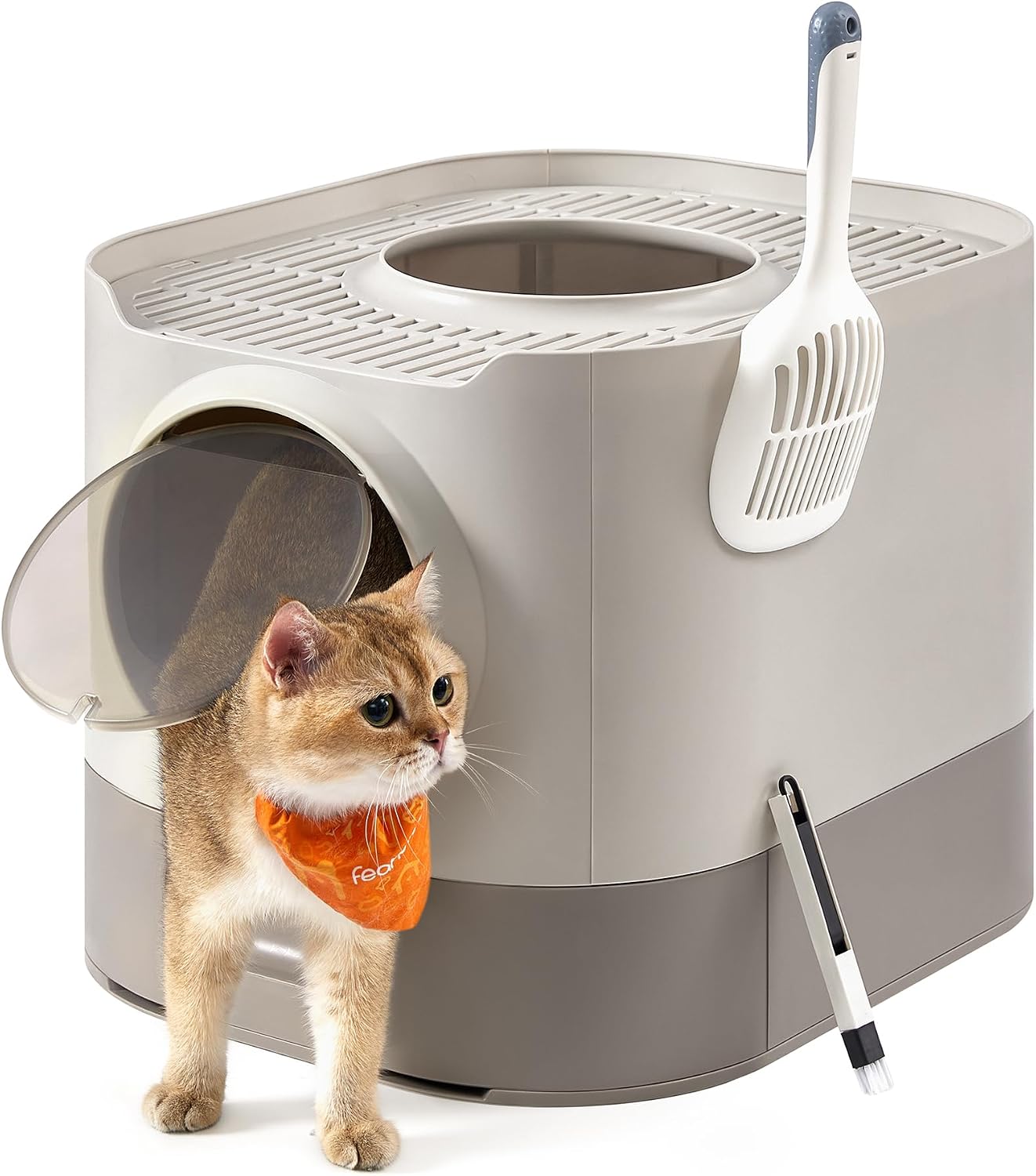
Feandrea Cat Litter Box with Lid, XL Enclosed, Slide-Out Tray, Scoop
Lid plus slide-out tray make daily cleaning quick, and a scoop comes with it
A closed lid traps odor when scooping slips, and the doorway is a tight fit for very large cats
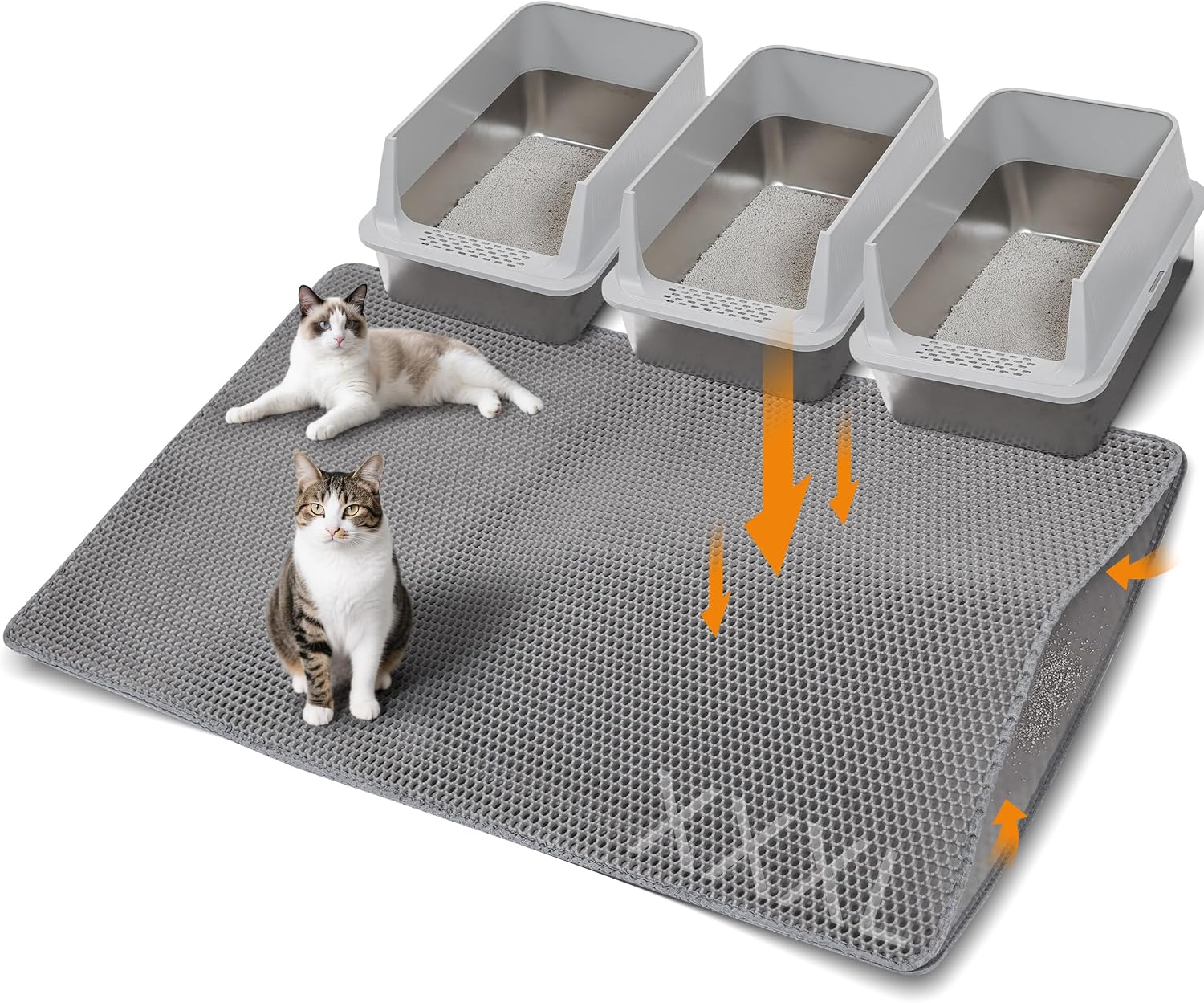
Anywish Cat Litter Mat 47"x33" Urine-Proof XL Litter Mat for Litter Box Mat
XL coverage under a wide exit, with a urine-proof backing that protects floors
Large footprint takes real floor space and is heavier to shake out
Prices and availability may change.
What the covered vs uncovered litter box decision actually changes
Covered boxes wrap the pan in a lid, walls, and a doorway. Uncovered boxes leave the pan open to the room. The practical difference between covered and uncovered litter box setups shows up in four places: airflow, visibility, entry height, and cleaning access.
Airflow is the one that decides most arguments. In a closed box, waste sits inside its own cloud of gas, so lifting the lid after two days delivers a concentrated hit. An open pan vents continuously, which means the room carries a low, steady smell instead of a sharp one. If your box lives in a bathroom with a running fan or a laundry room with a vent, the uncovered setup usually wins. If it lives in a hallway with no air movement, a covered box keeps the problem inside one object you can carry outside and hose down.
Visibility matters more than people expect. An open pan tells you things without asking: how big the clumps are, how much urine your cat produces, and how fast your litter is clumping. A lid hides all of that, and early warnings about a urinary problem are exactly the kind of thing you want to see rather than smell.
Entry height is where covered boxes quietly lose. Every covered box has a doorway, and that doorway is a step up and over for a cat. An open pan with a low lip asks for almost nothing.
Cleaning access decides whether you actually keep up. A slide-out tray or a waste drawer turns scooping into a thirty-second task. Lifting a lid, unclipping a door, and reaching into a dark interior turns it into a chore you postpone, and postponed chores are how covered boxes get their bad reputation.
How I judge a litter setup
I do not run litter boxes through a lab. My method is closer to what you would do at home: live with a setup for a few weeks, pay attention to the floor and the air, and notice which parts annoy you by day ten. That is how I form the opinions below.
The criteria I use are the ones that keep showing up: box size, entry height, litter depth, odor control, mat texture, waste drawer or tray access, and, on any automated unit, sensor range. A self-cleaning box whose sensor range fires while a cat is still half inside is worse than no automation at all. None of these criteria favor covered boxes or uncovered boxes on their own. They favor a setup that matches your cat, your room, and your willingness to scoop.
Covered boxes: the Feandrea XL enclosed option
The Feandrea Cat Litter Box with Lid is the most straightforward enclosed option in this group. It is an XL enclosed body with a lid, a slide-out tray, and a scoop included in the box. The tray is the feature I care about most, because it separates the daily task from the weekly task. You slide the tray out, scoop, and slide it back, without unclipping anything or reaching into a dark interior.
The lid is what earns the box a place in a hallway or a shared wall. It is also the risk. A covered box holds odor rather than venting it, so the margin for skipping a day is thinner than it is with an open pan. If your cat is on the large side, check the doorway against your cat's actual width before you commit, because a tight entry is the fastest way to get a cat who eliminates on the mat instead. Visit on Amazon
Furniture enclosures: the unipaws hidden box
The unipaws Cat Litter Box Enclosure Furniture takes a different route. Instead of covering the pan, it hides an open pan inside a piece of furniture with a hidden litter box cover panel. You get the airflow of an uncovered setup and the looks of a side table, which is the compromise that makes an open pan acceptable in a living room.
Two things decide whether that compromise works. The first is box size: the interior has to hold a pan your cat can turn around in, because a cat in a small pan will hang over the edge and miss. The second is access. An enclosure only stays clean if you will open it every day, so a door or removable panel that swings easily matters more than a stylish finish. If the panel is fiddly, you will treat the enclosure like a covered box with extra steps, and the odor will follow. Visit on Amazon
Mats decide how much litter leaves the room
Whether you pick a covered or uncovered litter box, the mat underneath does more for your floor than the box itself. Cats launch out of a box, and litter rides on their paws.
The HCY&WLD Cat Litter Mat is the smaller of the two, at 35×24 inches in khaki. Its double layer design traps granules between two surfaces instead of letting them roll across the floor, and the size is friendly to a bathroom corner or the gap beside a vanity. The trade is coverage. A cat that exits at speed can clear a smaller mat in a single bound, which is how litter ends up in a hallway three rooms away.
The Anywish Cat Litter Mat is the XL option at 47×33 inches, with a urine-proof backing. That backing is the feature that saves hardwood and laminate, because a cat who hangs over the edge of a pan will eventually miss the pan and hit the mat instead. The XL footprint catches litter from a wide exit, and it also means the mat is heavy to lift and shake. Mat texture matters here too. Some cats refuse to walk on a rough surface and will step around the mat entirely, which defeats the whole point of buying one. Visit on Amazon Visit on Amazon
Odor control, litter depth, and clumping speed
Odor control is a system, not a box. Three variables do most of the work, and the covered vs uncovered litter box choice is only one of them.
Litter depth is the first. Too shallow, and urine reaches the bottom of the pan and spreads sideways. Too deep, and cats dig to the point where litter flies over the side. Most cats do well with a consistent, even layer that gives them something to dig in without burying the scoop.
Clumping speed is the second. A litter that clumps fast turns urine into a solid you can remove in one piece. A slow clumping litter leaves a wet patch that you smear around instead of lifting out, and in a covered box that patch sits and concentrates. If you use a lid, fast clumping litter is not a luxury.
Scooping frequency is the third, and it beats both of the others. A covered box scooped twice a day smells better than an open pan scooped twice a week. The lid changes where the odor goes, not how much of it there is.
Entry height and the senior cat problem
Entry height is the reason I stopped recommending covered boxes for every household. A doorway is a threshold, and thresholds are hard on cats who cannot jump cleanly anymore: seniors, arthritic cats, cats recovering from surgery, and kittens who are still small enough to need a low step.
A large cat has a related problem. A cat at the top of the healthy weight range needs a bigger pan than most people buy, and a covered box with a narrow door and a high lip gives that cat nowhere to stand. The result is a cat who hangs over the edge, and a mat that catches what the box does not.
The fix is not complicated. If your cat is older or bigger, start with a low-entry uncovered pan, or an enclosure with a wide cut-out and a pan that fills the interior. Measure your cat against the opening before you buy anything with a door on it.
Covered vs uncovered litter box: the trade-offs I would not ignore
Here is the honest short list, in the order I would weigh it.
- A lid buys you containment. It does not buy you less odor, only odor in a smaller space.
- An open pan buys you airflow and visibility. It gives up the ability to hide the box in a hallway.
- A furniture enclosure is the middle path. It hides an open pan and keeps the airflow, but it demands daily access and a pan that actually fits.
- A mat is not optional in either setup. The best box with no mat still means litter on the floor.
- Box size beats every other feature. A cat who cannot turn around in the pan will find somewhere else to go.
- Entry height is the tiebreaker for senior cats and large cats, and it usually points to uncovered.
The practical difference between covered and uncovered litter box setups is smaller than the internet suggests once you add a good mat and a scooping schedule. The lid is a room problem solver. The pan size, the litter depth, and the cleaning routine are the cat problem solvers, and those matter more.
What I'm testing next
Two things are on my list. The first is a self-cleaning box, mostly to see whether the sensor range is tuned well enough to avoid firing mid-visit, because that is the failure mode that scares cats off automated boxes for good. The second is a low-entry uncovered pan for a fourteen-pound senior who has started treating thresholds like obstacles. That review will be short and blunt.
If you are still deciding, start with the box your cat has to use, not the box your room wants to show. Then buy the mat that covers the floor where your cat actually lands.
For most homes, the uncovered pan with an XL urine-proof mat is the setup that stays clean and stays odor-free with normal scooping. Reach for a covered box when the box has to live against a shared wall, and reach for the unipaws enclosure when the box has to live in a room guests actually see.