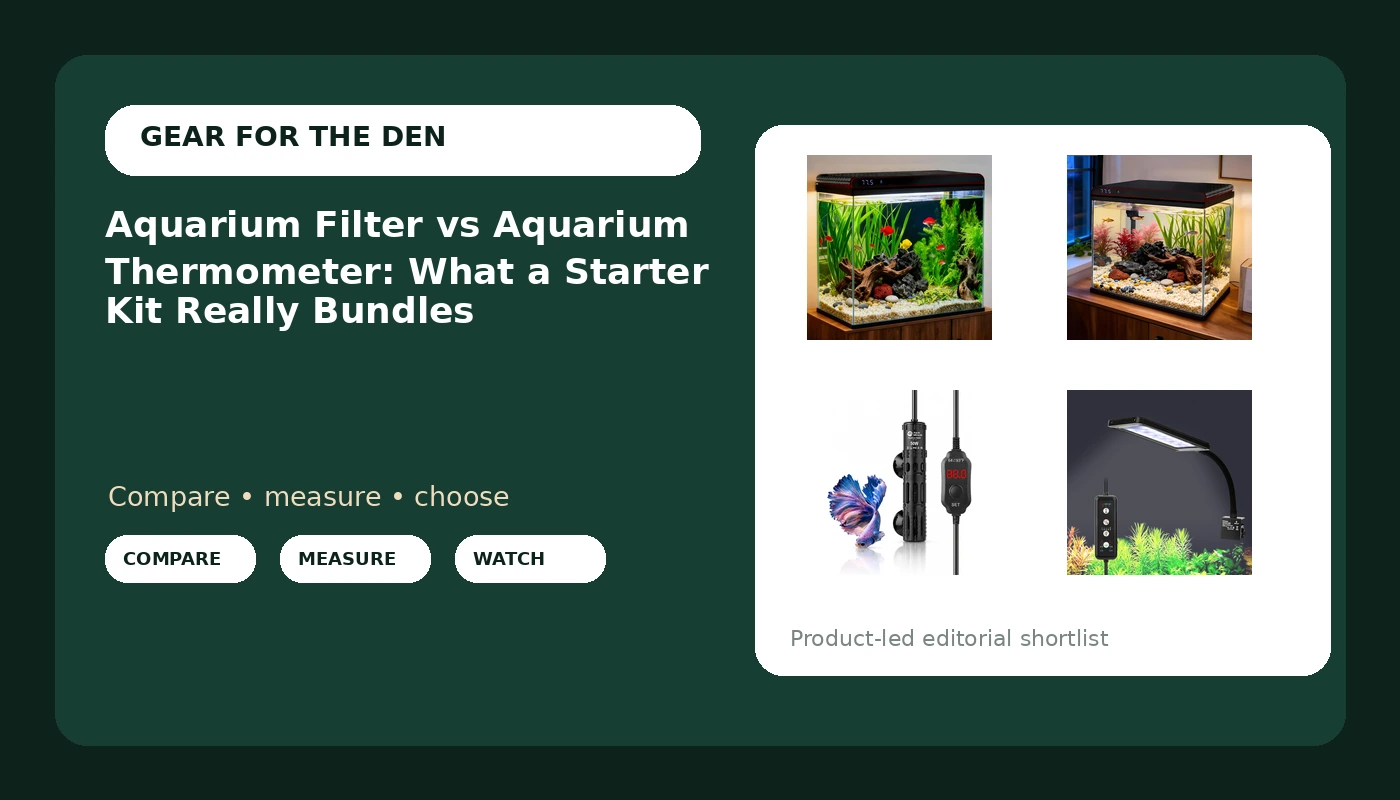
The aquarium filter vs aquarium thermometer question sounds like a trick, and in a way it is. One of those devices treats the water in the tank; the other only reports how warm that water is. But when you are setting up a first aquarium, the two questions collide, because the starter kits below bundle a filter pump, an LED light, and temperature monitoring into one box, while the standalone heater and the clip-on light are the pieces most people buy afterward. If you are deciding whether your first dollars should go toward an aquarium filter or aquarium thermometer, this comparison is the shortcut I would want before ordering anything.
The short answer for most first tanks: buy the kit that bundles filtration and temperature monitoring, then add a heater with dry-run protection if the room drops below the low 70s. A filter and a thermometer answer two different questions, and neither covers for the other. The rest of this comparison breaks down what each device actually does, where the kits already cover you, and what the standalone gear adds.
Here is how the four products stack up.
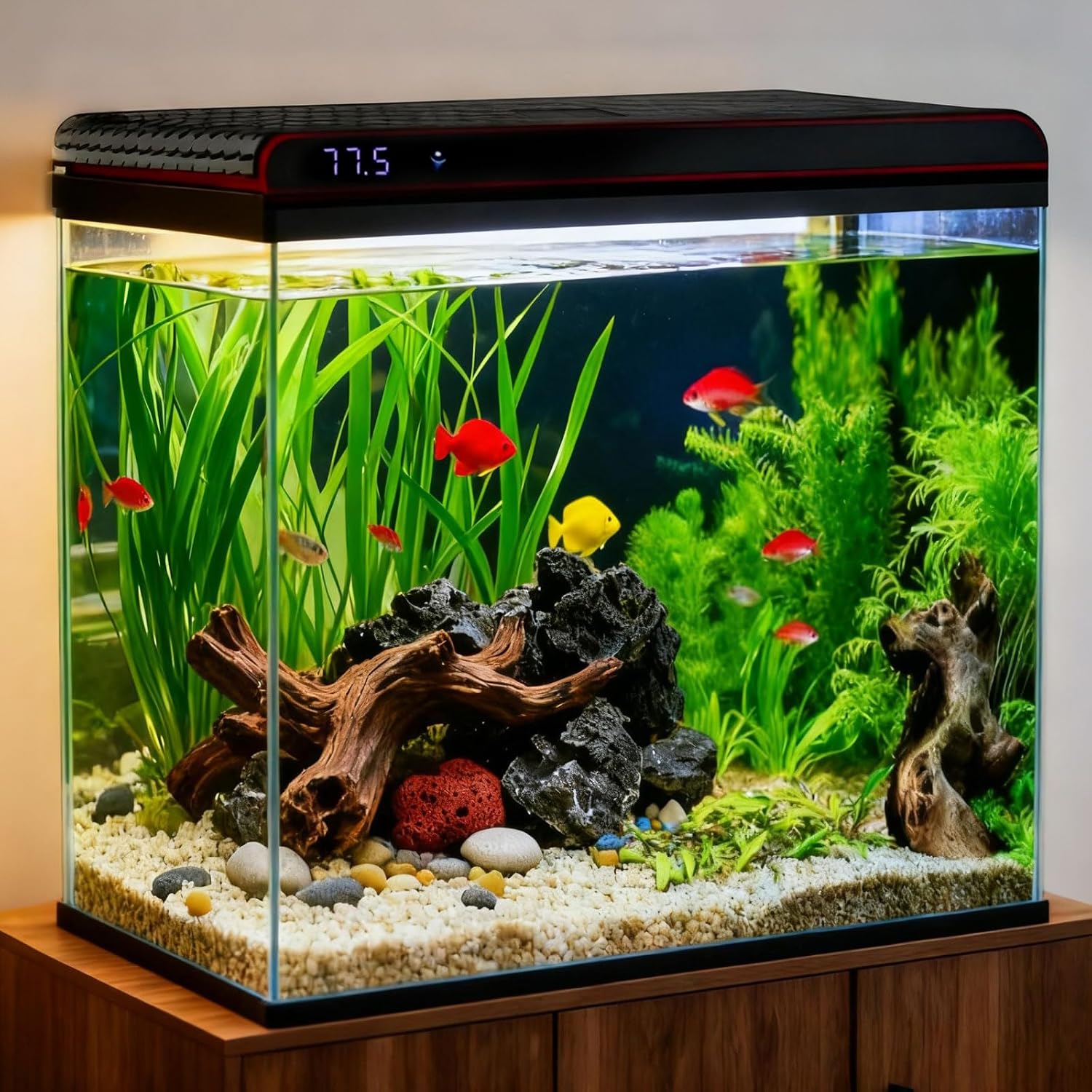
Coospider 20 Gallon Glass Fish Tank
Largest tank volume here, so temperature and water chemistry move slowly; bundles a quiet filter pump, 3-color LED lights, and temperature monitoring
No heater included, and the bundled light is display-grade rather than a plant light
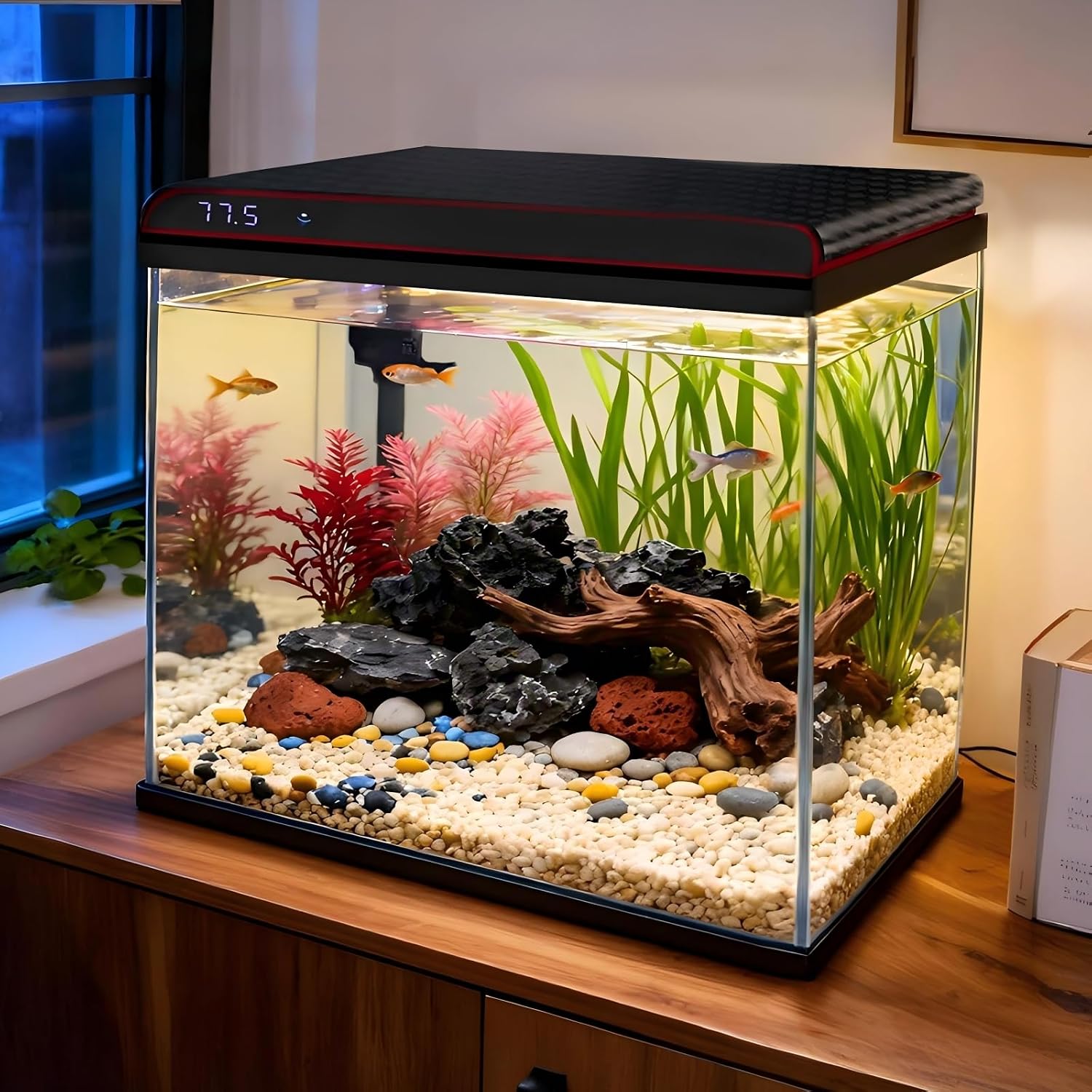
Coospider 10 Gallon Glass Fish Tank
Small footprint that fits a desk or a kid's room, with the same pump, light, and temperature monitoring bundle
Less water means less slack: waste and temperature both swing faster
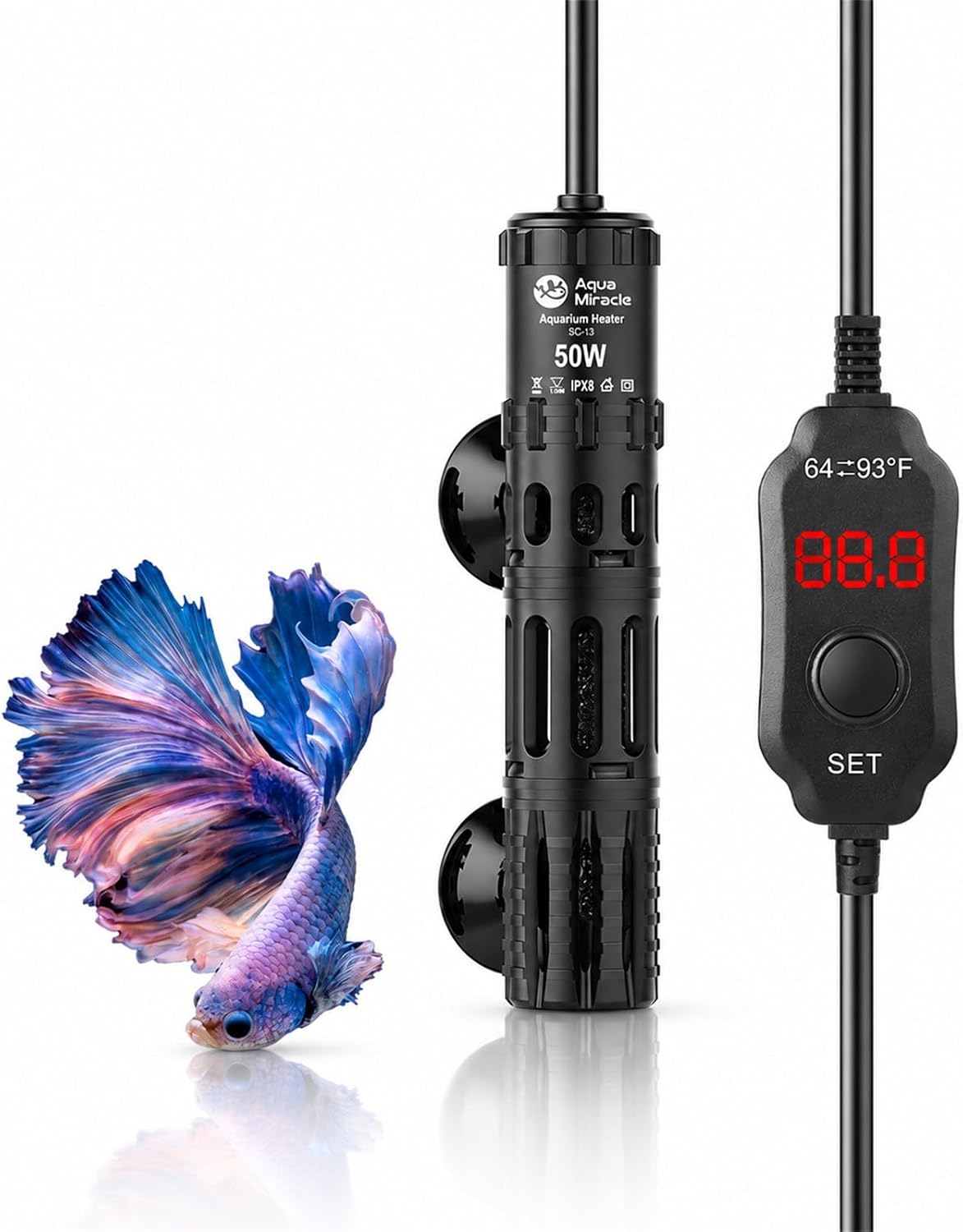
AquaMiracle Aquarium Heater
Adds real heating with dry-run auto power-off and overheat protection, the two failure modes that actually matter
Heats only; you still need the kit's monitoring or a separate thermometer to verify the thermostat range
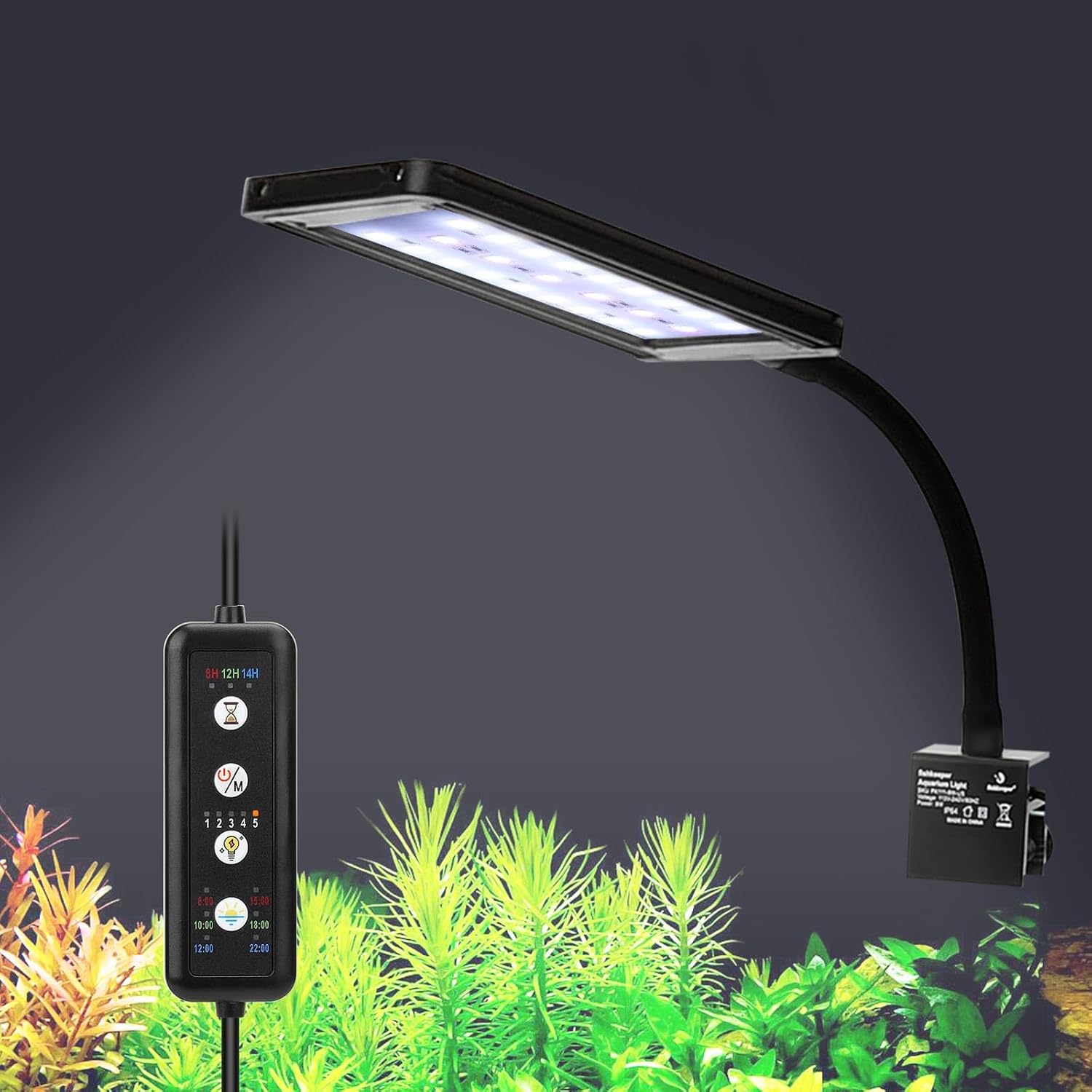
fishkeeper Clip On Aquarium Light
Clip-on mount, built-in timer, and 24/7 mode make the light schedule consistent without cutting a hood
Light only; it does nothing for filtration or temperature
Prices and availability may change.
What the aquarium filter vs aquarium thermometer question really means
A filter does work. Water is pulled through media, and that media handles three jobs at once. The mechanical filtration stage traps debris and uneaten food. Chemical media, usually carbon, pulls dissolved compounds and odors out of the water. Biological media hosts the nitrifying bacteria that convert ammonia to nitrite and then to nitrate. That third job is the reason filtration matters more than any other piece of hardware in a freshwater tank: the bacteria are the life support, and the pump is only the delivery system. A filter also moves water, which spreads heat and oxygen through the tank instead of letting both collect in one corner.
A thermometer does nothing to the water. It reports. That is not a knock on it, because reporting is exactly what you need when the goal is a stable temperature, and stability matters more to most fish than any single number. What a thermometer cannot do is warm the tank, and what a heater cannot do is confirm that it is working. The two are a pair: the heater changes the water, the thermometer verifies the result against the thermostat range you set.
That is why the aquarium filter vs aquarium thermometer framing is a little misleading. Filtration, heating, and temperature measurement are three separate jobs, and no single device does all three. Most starter kits cover filtration and measurement, which is why they advertise temperature monitoring rather than heating. If your room sits in the low 70s and the fish you want are comfortable there, the kit alone is enough. If your room runs cold, or you keep a species that wants the upper 70s, the heater is the missing piece, not a bigger filter.
The two starter kits: filtration, light, and temperature monitoring in one box
The Coospider 20 Gallon Glass Fish Tank, Aquarium Starter Kit is the biggest package in this comparison, and tank volume is the main reason to choose it. More water means the temperature and the chemistry move more slowly, so a small mistake stays a small mistake. The kit bundles a quiet filter pump, 3-color LED lights, and temperature monitoring, which together cover the filtration half of this comparison and the measurement half at the same time. It is also built as a simple self-cleaning setup, which in practice means water changes and media rinses are less of a chore. What it does not include is a heater.
The Coospider 10 Gallon Glass Fish Tank, Aquarium Starter Kit is the same bundle in a smaller footprint. It fits on a desk or a dresser, and it is the easier starter kit to place in a kid's room. The trade-off is real: 10 gallons of tank volume concentrates waste faster, so the filter's gallons per hour rating matters more here than it does in the 20 gallon, and temperature monitoring is only worth having if you act on what it tells you. Smaller tanks are less forgiving, not more.
One more note on the bundles: the filter pump is the part that decides how much maintenance the tank needs, so check that replacement media is easy to source before you commit. A quiet pump with odd-sized cartridges is a quiet pump you will be re-ordering from one seller forever. The 3-color LED lights in both kits are display-grade, which is fine for fish and low-light plants, and the temperature monitoring is the same idea: useful, basic, and worth upgrading only after you know what your room does across a week.
Either kit plus a heater covers every job this article compares. If you already own a tank and only need to add one thing, the heater and light sections below are where to look.
The standalone heater: wattage, thermostat range, and dry-run protection
The AquaMiracle Aquarium Heater Dry-Run Auto Power-Off & Overheat Protection is the piece that turns a starter kit into a complete setup. Two features in the name are the ones that matter most. Dry-run auto power-off cuts the element when it is not submerged, which is the failure mode that ruins heaters and, occasionally, tanks during a water change. Overheat protection is the backup for a thermostat that sticks.
Sizing comes down to wattage. The common starting point is 3 to 5 watts per gallon in a normal room, which puts a 10 gallon tank around 50 watts and a 20 gallon at 75 to 100. If the room runs cold, or the tank sits near a window, size up rather than down; a heater that runs at full power all day is working harder than it should. Check the thermostat range before you buy, because some heaters stop short of the low 80s and that rules out warm-water species.
What a heater cannot do is tell you what it is doing. Keep the kit's temperature monitoring in the loop, or add a standalone thermometer, and compare the reading against the thermostat range you set. That habit catches a failing heater before the fish do.
The clip-on light: kelvin rating, timers, and 24/7 mode
The fishkeeper Clip On Aquarium Light, 24/7 Mode Fish Tank Light with Timer is the upgrade most first tanks get last, and it changes how the tank looks more than how it runs. Clip-on mounting means no hood cutting and no permanent modification, which makes it the easiest piece of the four to move to a second tank later. The timer and the 24/7 mode handle the part of fishkeeping people underestimate: consistency. A tank that gets 12 hours of light on Saturday and four hours on Tuesday grows algae, and no filter fixes that.
Kelvin rating is the number worth reading on any aquarium light. Somewhere around 6,500K reads as daylight and supports plant growth; warmer ratings push the tank toward a yellow cast, and very cool ratings wash out reds and oranges in fish. The 3-color control on this unit is really a color-mix dial, so use the timer to fix the schedule and the color channels to fix the look.
Light does not touch filtration or temperature, and that is the honest limit of it. If your kit already ships with LED lights, this is a want, not a need.
The aquarium thermometer vs aquarium filter trade-off nobody explains
If you only have budget for one upgrade, the aquarium thermometer vs aquarium filter argument comes down to what is already in the box. Almost every starter kit includes some form of filter, so a filter upgrade is usually a refinement: better media, a stronger pump, more gallons per hour. Temperature measurement is different, because a kit that monitors temperature without a heater is giving you a reading with nothing to act on. That is the aquarium filter vs aquarium thermometer trade-off in one line.
The order I would spend in: filtration first, because ammonia kills faster than a two-degree swing. Then heating and temperature control together, since a heater without a thermometer is a guess and a thermometer without a heater is a warning you cannot respond to. Then light, then everything cosmetic.
There is also a redundancy argument. A filter has one job and no backup; if it stops overnight, the bacteria in the media start to suffer within hours, and the tank tells you about it days later. A thermometer is cheap insurance against a heater that quietly drifts. Neither replaces the other, which is why this comparison is not really a competition.
The other half of the trade-off is timing. Temperature problems are seasonal: a heater that is fine in July is the one that fails in January, and a thermometer is how you notice. Filtration problems are continuous and quiet, and the first sign is usually a test kit reading rather than a device alarm. Buying the filter first and the thermometer second is the right order for a tight budget, but both belong in the same month, not the same year.
What the difference between aquarium filter and aquarium thermometer means for a 10 or 20 gallon tank
The difference between aquarium filter and aquarium thermometer shows up most clearly when you pick a tank size. In a 10 gallon, everything happens faster. Waste concentrates in less water, temperature moves with the room, and a filter that is honestly rated in gallons per hour is doing more work than the same filter on a 20 gallon. The 10 gallon Coospider kit makes sense when space is the constraint, but it rewards closer attention.
In a 20 gallon, tank volume buys you slack. The filter still has to cycle the whole volume several times an hour, but a missed water change or a warm afternoon is less likely to become an emergency. The 20 gallon Coospider kit is the better pick for a first tank that has to survive a learning curve, and the fishkeeper clip-on light suits it because a wider tank needs a wider spread of light.
Substrate grain belongs in the same conversation. Fine gravel or sand gives more surface area for bacteria and suits bottom feeders; coarse gravel traps more debris and is easier to vacuum. Whichever you choose, the filter has to move water across it, which is why flow rate and substrate grain are a pair rather than two separate decisions.
What I would check before you buy
Four things, in this order.
Does the kit include a heater, or only temperature monitoring? Monitoring without heating is a sensor with no control.
What is the pump's gallons per hour rating relative to the tank volume? A filter that turns the tank over four to six times an hour is a reasonable target for a freshwater setup; much less than that and you are relying on water changes to do the filter's job.
What is the thermostat range on the heater? If it stops at 78F and your fish want 80F, the heater is wrong regardless of wattage.
What is the kelvin rating on the light? If the listing does not say, assume it is a display light first and a plant light second.
Everything else, including the clip-on mount, the 24/7 mode, and the self-cleaning layout, is convenience. Convenience is worth paying for, but only after the four questions above are answered.
What is next on the bench
The next comparison worth writing is sponge filters against hang-on-back filters, because that is the upgrade most 10 gallon owners end up making, and the answer depends on tank volume and how often you are willing to rinse media. After that, inline heaters and controllers, which are the honest fix for anyone who has watched a thermostat range drift and wondered how long it had been wrong.
For now, the summary stands: the aquarium filter vs aquarium thermometer question is really about covering three jobs, not choosing between two devices. Filtration and temperature monitoring come as a pair in these kits, heating is the piece you add, and light is the piece you upgrade. Pick the tank volume you can maintain, settle the filter and the temperature question first, and the rest of the hobby gets a lot less expensive.