The most common mistake I see in a new 10-gallon tank is not the filter, and it is not the cycle time. It is aquarium light height. People buy a decent LED, drop it flush onto the rim because that is where the bracket lands, and then spend a month wondering why the glass grows green fuzz while the plants stretch thin toward the surface. Height is the one variable most beginners never touch, and it is the easiest one to change.
Where the tank sits matters as much as the fixture. A 10-gallon on a desk gets lit by whatever lamp is already in the room, while a 10-gallon on the top tier of a three-tier stand is up in open air with nothing above it, which is exactly where a bar light wants to hang. The stands here are the ones I keep coming back to for a 10-gallon build, and the shelf spacing on each one quietly decides how much room you have between the waterline and the light. Get that distance wrong and you either cook the tank or leave it dim.
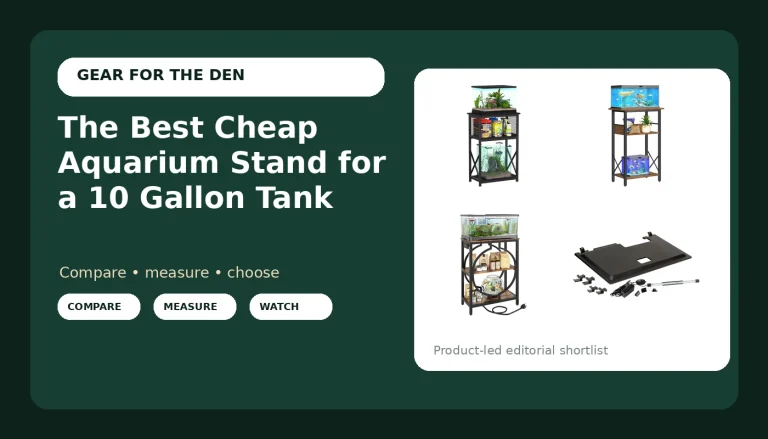
Best Overall: HavenlyYouth 10 Gallon Aquarium Stand with Power Outlet
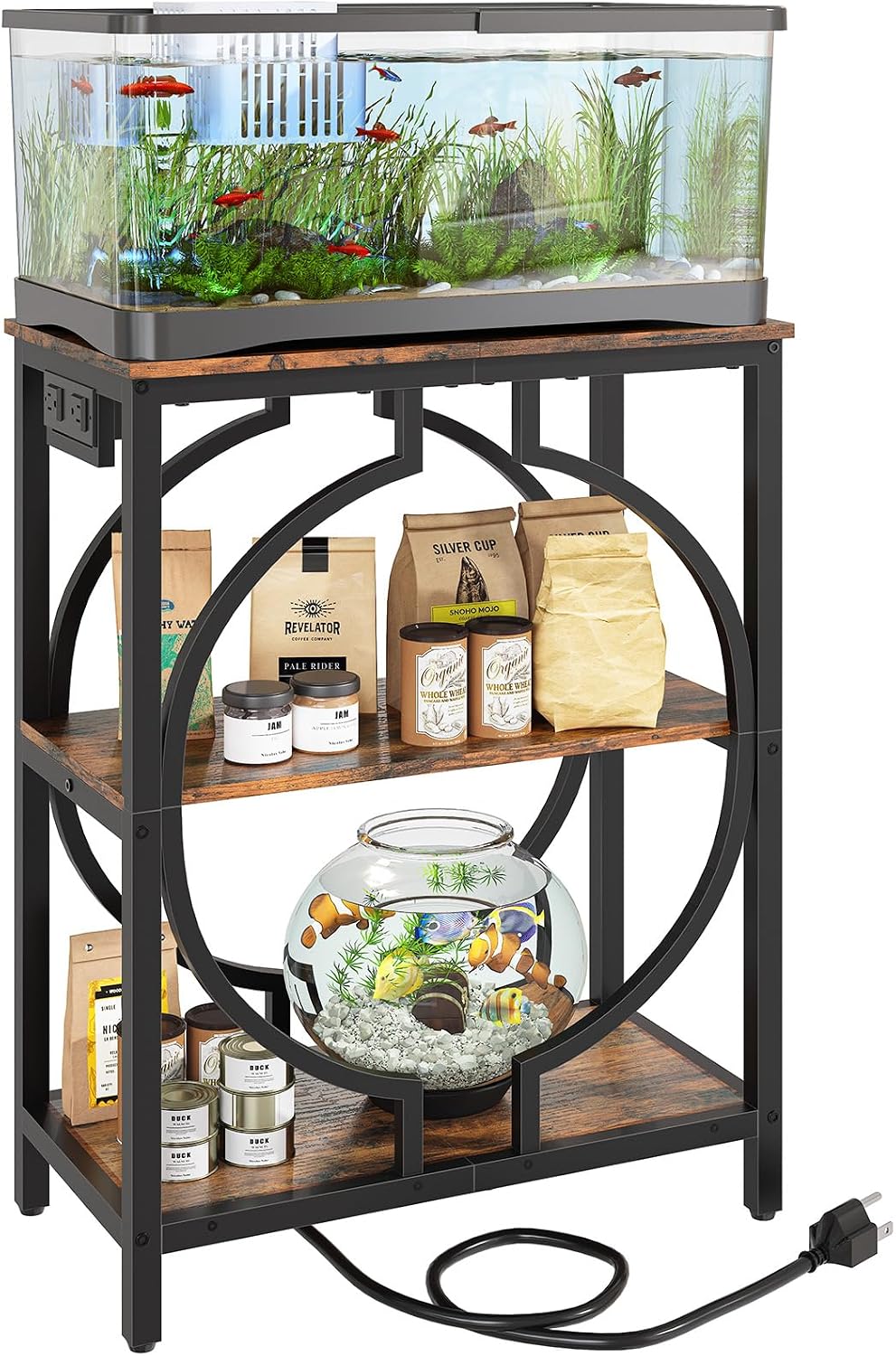
This is the stand I would order for a 10-gallon display tank, mostly because of one detail nobody thinks about until the tank is full: the power outlet built into the frame. A bar light, a small filter, and a heater all want a plug, and having them on the stand instead of on a wall strip across the room is the difference between a tidy build and a cord draped over the front glass.
The top tier is where the tank goes, and it puts the rim at a comfortable height for a bar light on L-brackets. I like that arrangement because you can set the fixture 8 to 10 inches above the waterline and still reach into the tank for a water change without ducking under the light.
The two lower shelves hold the equipment list that always ends up on the floor: filter media, a spare heater, a test kit, food, a towel. The footprint is 21.3 by 11.8 inches, so a 10-gallon fits with a little room around the rim, and 29 inches of height keeps the tank near eye level when you are sitting down.
Two things to check before you buy. First, stand load. A filled 10-gallon runs around 110 pounds once you add substrate and rock, so treat the tiers as a home for one tank and supplies, not a stack of buckets. Second, hood fit. The top shelf is open, so if you run a hood with a built-in light, measure it against the rim before you commit.
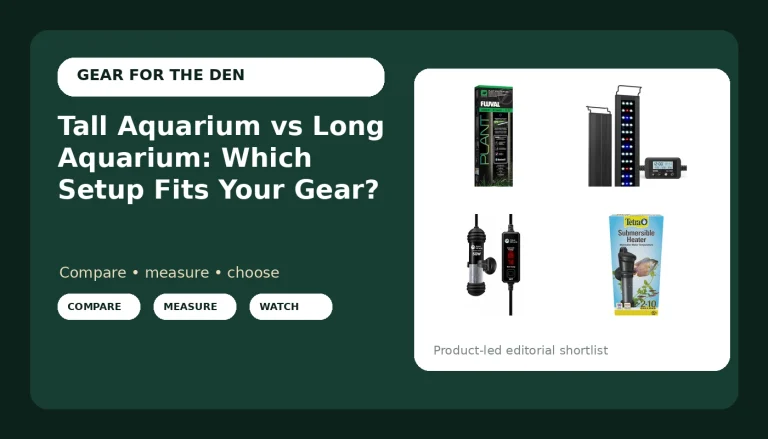
Best Value: HOOBRO 10 Gallon Aquarium Stand
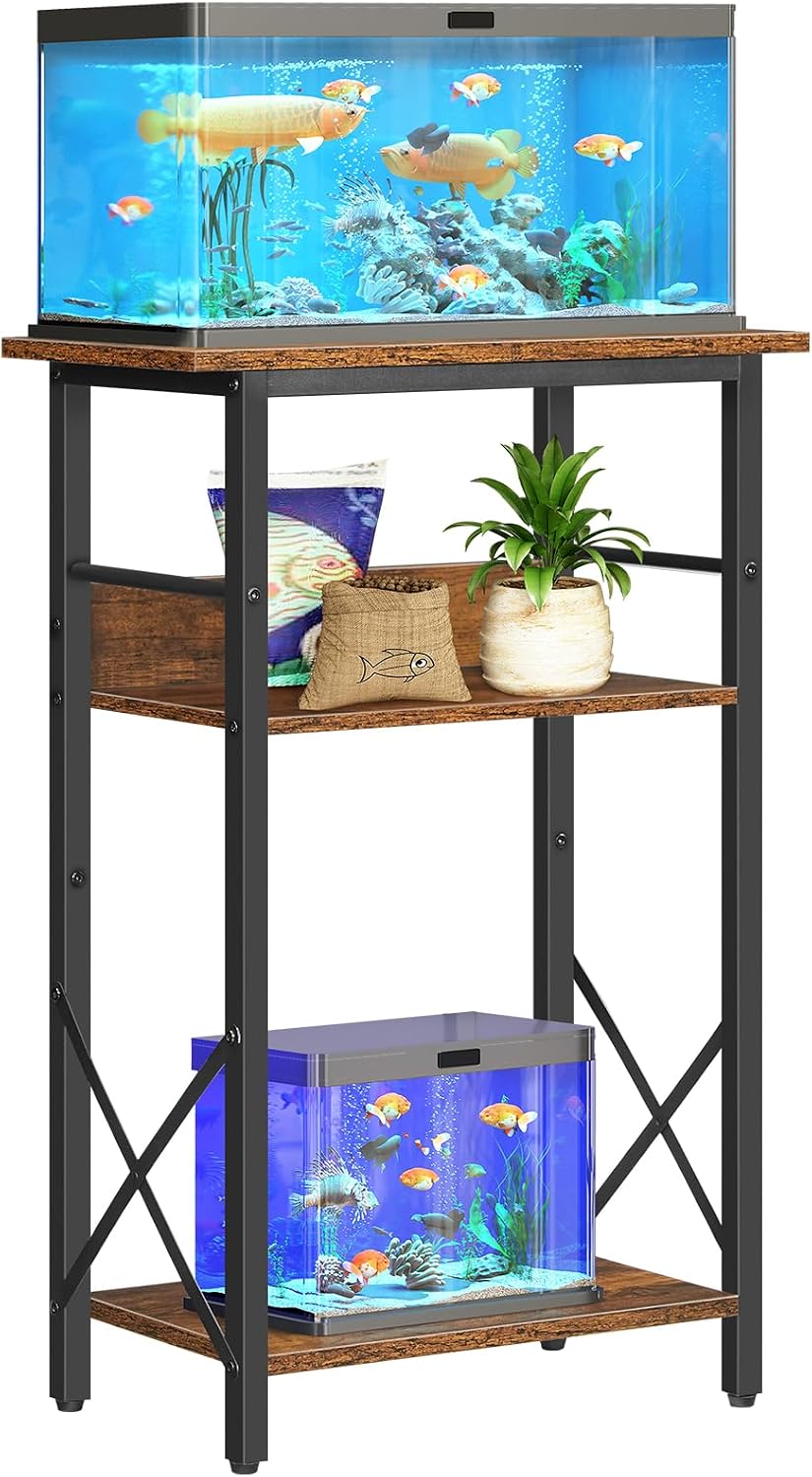
This is the stand I point people to when they want the job done without extras. Three tiers, storage on the bottom two, and a top shelf that puts a 10-gallon rim at the same working height as the stand above. Nothing about the frame pretends to be furniture. It is a black metal shelf that holds a tank, and for a lot of freshwater setups that is the whole assignment.
The one thing it does not have is an outlet on the frame, so plan a power strip and a cord clip. That is a small problem to solve, and it is the only real gap between this stand and the HavenlyYouth.
Set it up with a bar light on brackets 8 inches above the waterline and leave it there. The lower tier is a good spot for a quarantine jar or a bucket of conditioned water, though I would not put a second tank down there unless the frame is rated for it. Most three-tier stands of this size are rated for one tank plus gear, not two tanks.
If you are building a low-tech planted 10-gallon around a single LED strip, this is enough stand. If you want the outlet on the frame, the HavenlyYouth is the step up.
How I tested
I do not judge a stand by looking at it. I judge it by filling a 10-gallon and living with it, because a stand only fails in three ways: it wobbles, it sags, or it makes you hate your cord situation.
The wobble check is a level and a hand on the top rail with the tank full. If the frame rocks on a hard floor, the feet need shims before anything else happens. The sag check is a straightedge along the top rail after a week under load. A shelf that bows is a shelf that will eventually crack the bottom pane.
The height check is the one that matters for this article. I measure from the waterline, not the rim, because substrate depth changes where the water actually sits. A 10-gallon with two inches of gravel has a waterline two inches higher than a bare-bottom tank, and that shifts your light height by the same amount.
Then I mount a fixture and walk the cord run: does the light cord reach the stand outlet, does the heater cord reach without pulling, does anything drape across the front glass. I also check hood fit, because a hood changes the light height more than any bracket does.
Analysis and test results
Distance is the whole game. Light falls off fast with height, so a fixture 4 inches above the waterline hits the substrate with far more intensity than the same fixture at 10 inches. That is why a light that bleaches plants on a rimless desktop tank can look dim on a stand-mounted build.
The useful range for a 10-gallon freshwater tank with a modest LED is 6 to 10 inches above the waterline. Under 4 inches you are usually fighting algae on the glass and on the tops of leaves. Past 12 inches, a low-power strip stops reaching the substrate and carpet plants stall. This is why aquarium light height is the first variable I adjust, not the last.
Stand height decides where you land in that range. All three stands here put the tank at roughly 29 to 31 inches of total height, which is close enough that the difference in light height comes from the bracket, not the frame. What the stands change is everything around the light: where the cords go, how much shelf space you have for the equipment list, and whether the tank sits at eye level or at knee level.
Two other variables move the waterline, and both are easy to forget. Substrate depth raises it, so a deep gravel bed means your fixture is effectively closer to the plants than the tape measure says. Filter media and a hang-on-back filter do not change the height, but the return flow pushes the surface around, and surface agitation scatters light. Heater wattage belongs in the same conversation, because a 50-watt heater is the right size for a 10-gallon of tank volume, and it should sit low near the filter intake, well below the light, where its cord does not cross the fixture bracket.
Finally, cycle time. A new tank spends weeks with cloudy water and unstable parameters, and light height is the last thing you should tune during that window. Get the tank cycled, then move the light an inch at a time and watch the plants for a week between changes.
The aquarium light height reference chart
This aquarium light height guide uses the same starting numbers I keep taped inside the stand door. Heights are measured from the waterline to the bottom of the fixture, not from the rim. Move an inch at a time and give the plants a week to answer.
| Tank setup | Fixture | Height above waterline | Notes |
|---|---|---|---|
Three-tier stand, top tier | Bar light on brackets | 8-10 in | Outlet on the frame |
Three-tier stand, top tier | Bar light or clip-on | 8-10 in | No outlet, add a strip |
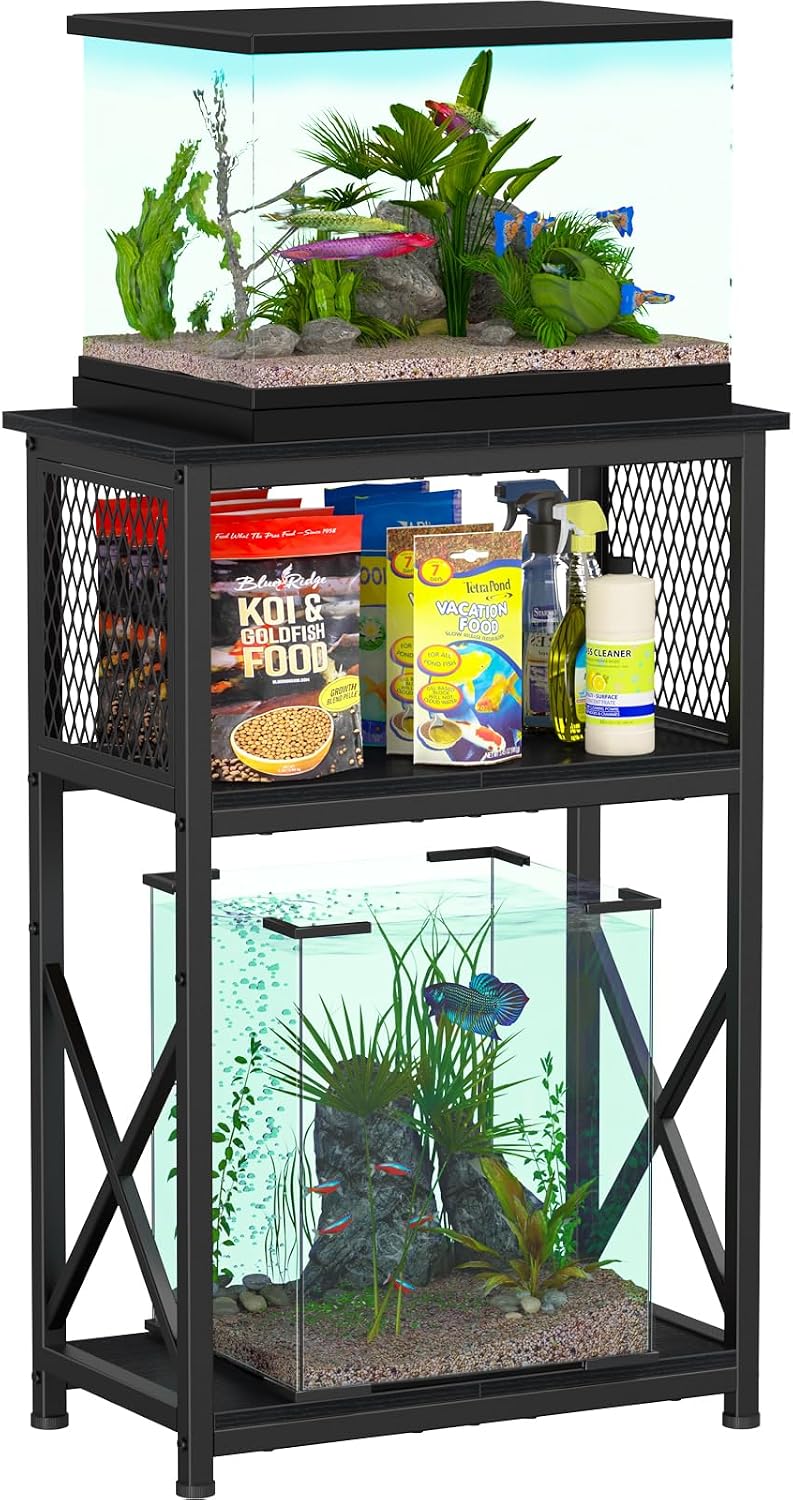 View on Amazon → Three-tier stand, top tier | Bar light on brackets | 8-10 in | 30.91 in tall, light sits high |
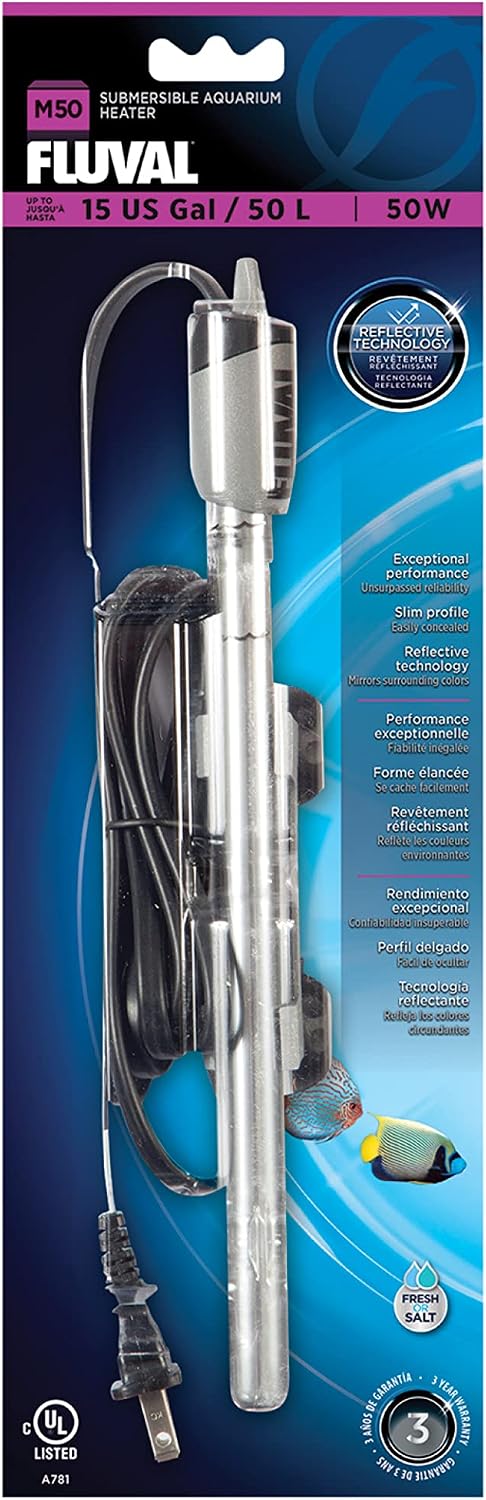 View on Amazon → Heater, not a light | Not a fixture | Mount low, near the filter | 50 W suits a 10-gallon |
| Rimless 10-gallon on a desk | Clip-on LED | 4-6 in | Clamp the rim, not the glass |
| 10-gallon with a hood | Hood LED | Flush to the rim | hood fit sets the number |
| Planted 10-gallon, medium light | LED strip | 6-8 in | Watch substrate depth |
| Shallow 10-gallon, high light | LED strip | 12-14 in | Raise it if algae shows |
The rows people get wrong are the last two. A shallow tank and a deep one want completely different numbers from the same fixture, and the hood row is where most algae problems start.
How stand height changes your aquarium light height
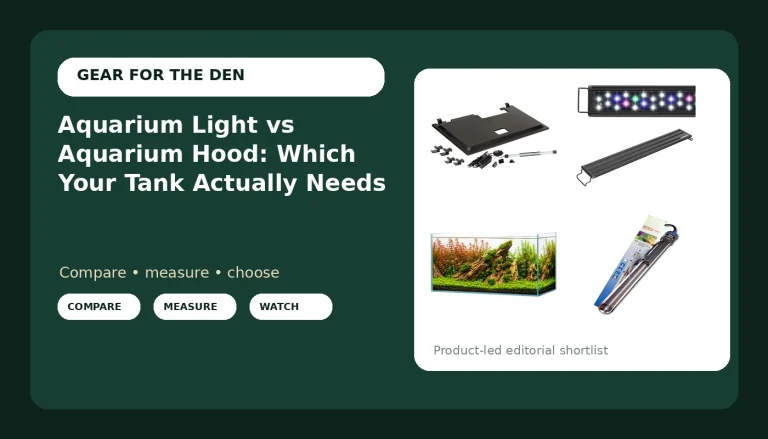
The top tier of a three-tier stand is a gift for lighting, because it gets the tank out of the shadow of the room and into open air. On the HavenlyYouth and the Snughome, the top shelf sits near 30 inches, which is tall enough that a bar light on brackets clears the rim without the fixture dropping inside the tank. The HOOBRO lands at a similar height, so the light geometry is nearly the same.
What changes is access. A taller stand means you can work in the tank standing up. A shorter one, or a tank on the floor, means you are bending over the light every time you trim a plant or siphon the substrate, and you will start leaving the fixture loose so you can move it out of the way. That is how light height drifts and nobody notices until the algae shows up.
If you run two tanks on one stand, set the lower tank's light first. The lower tier is closer to the floor and to any window light, so it needs the fixture pulled up more than the top tank does.
Desk light or task light? Mounting a small fixture on a three-tier stand
Not every 10-gallon needs an aquarium-specific fixture. Plenty of people start with a desk light on a flexible arm, and it works if you respect two numbers: the aquarium desk light height, meaning how far the head sits above the waterline, and the spread of the beam.
A desk light clamped to the top rail of a three-tier stand usually lands 10 to 14 inches above the water, which is fine for a low-light tank with java fern and anubias and useless for a carpet. If you want to use one, pick a head that can angle down and shorten the arm so the fixture drops to about 8 inches.
The aquarium task light height works the same way, except task lights tend to be narrower and brighter. A narrow beam at 8 inches gives you a hot spot in the middle and a dark ring at the edges. Aim the head slightly off center or raise it an inch and the footprint evens out.
Whichever you use, tie the cord to the stand frame so a bumped arm does not drop the fixture into the tank. A plain desk light with no clamp is the one thing I would not hang over open water.
Should you buy the HavenlyYouth 10 Gallon Aquarium Stand with Power Outlet?
Yes, if the light or heater you plan to run needs power at the tank. The outlet on the frame is the feature that sold me, and it solves the cord problem every 10-gallon build eventually has. The top tier gives you 8 to 10 inches of clearance for a bar light without custom bracket work, and the two lower shelves swallow the equipment list that would otherwise live on the floor.
It is not the plainest option in this group, and the open top means a hood with a built-in light sits on the tank rim and nothing else, so check hood fit before you buy. The rustic brown finish reads as furniture rather than as a wire rack, and 29 inches of height is right for a tank you look at from a chair.
If you are setting up a 10-gallon in a home office or a den, this is the one I would order.
Should you buy the HOOBRO 10 Gallon Aquarium Stand?
Buy it if you want the height and the storage without paying for an outlet. It holds a 10-gallon at the same working height as the more expensive stands, and the three tiers give you somewhere to put filter media, food, and a spare heater. The frame is simple and it does not pretend otherwise.
Skip it if your light cord will not reach a wall outlet without a trip hazard, or if you want the stand to double as furniture. There is no power strip on the frame and the finish is basic black.
For a first 10-gallon, a low-tech planted tank, or a tank in a kid's room where the light runs on a timer across the room, it is the sensible buy. Set the fixture 8 inches above the waterline and leave it alone.