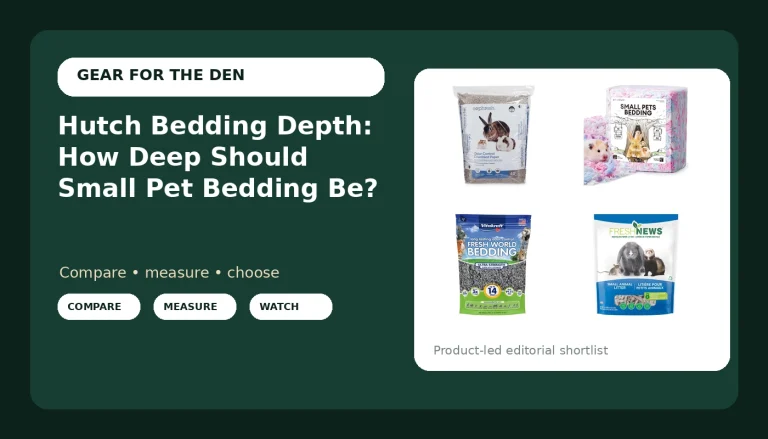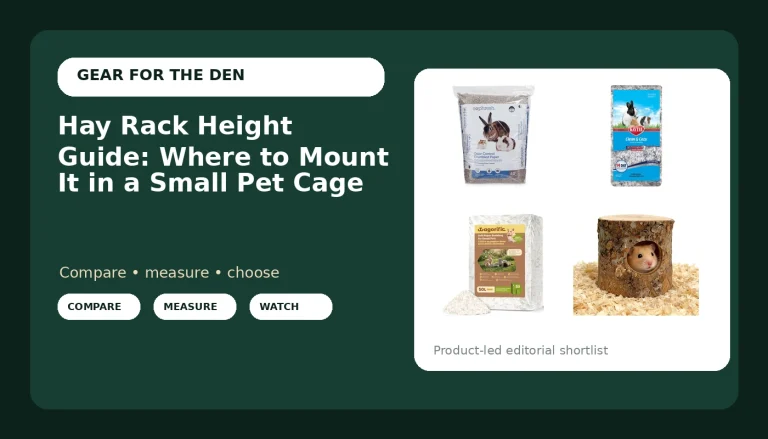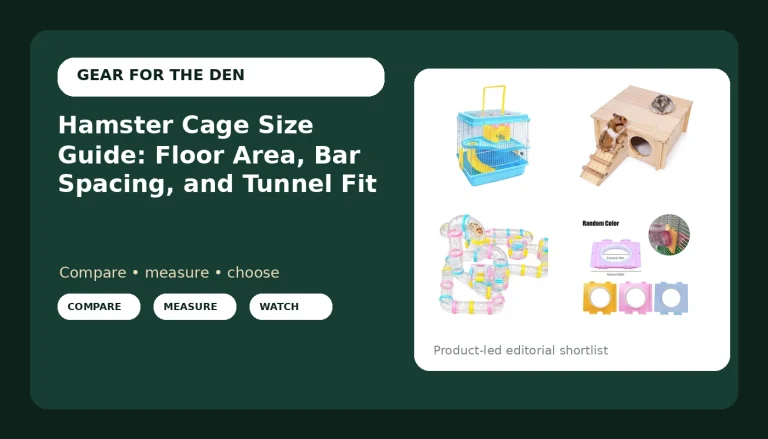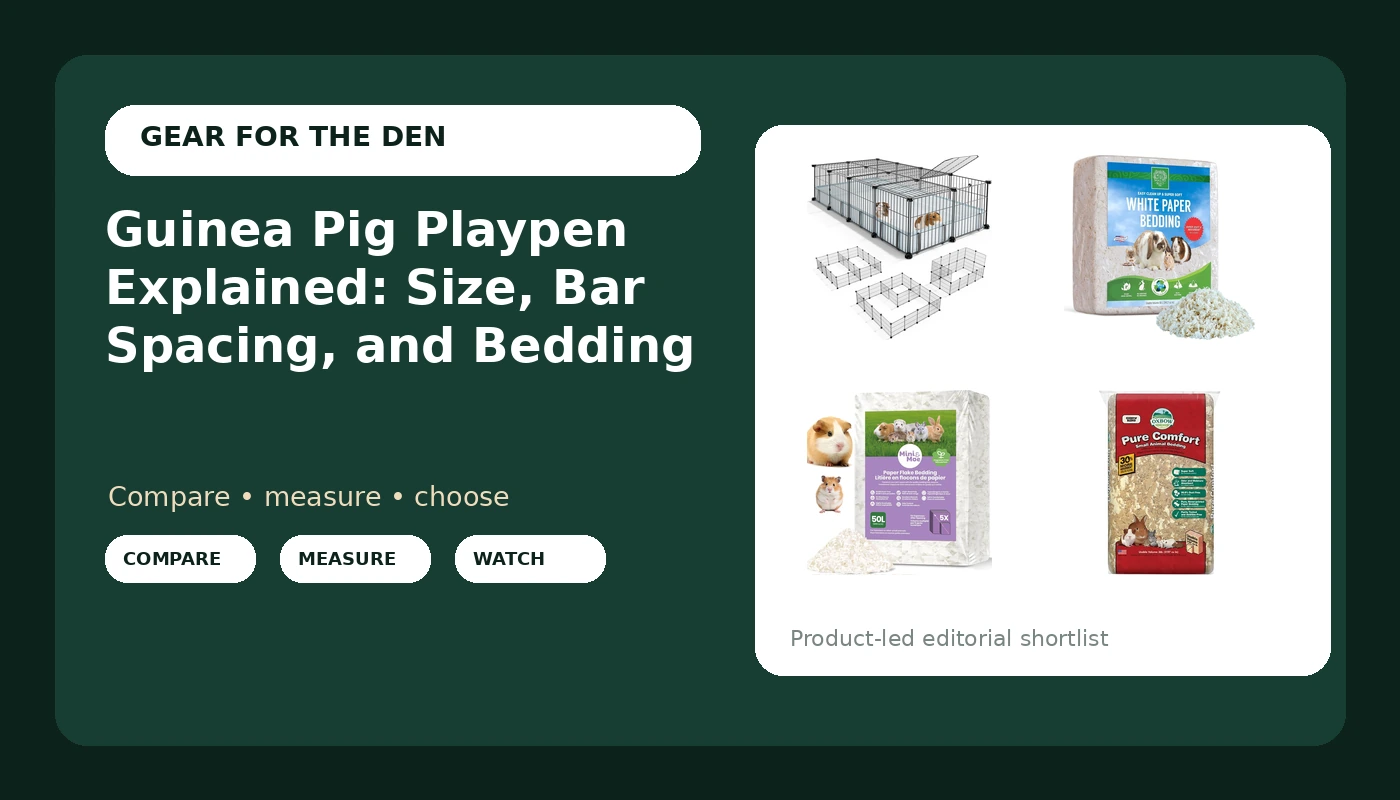
A guinea pig playpen explained in practical terms comes down to four numbers: floor area, bar spacing, panel height, and how much bedding dust the enclosure throws into the room. Hit those and a playpen becomes a genuine extension of the cage, a place where a pair of guinea pigs can run laps, popcorn, and graze on hay while you clean the main enclosure. Miss them and you own an expensive wire fence that either lets a determined sow squeeze between the bars or coats the shelf behind it in paper dust.
This guide covers what actually matters when you set up a guinea pig playpen indoors, how bedding choice changes the whole enclosure, and which of the four products below suits which kind of household.
Quick answer
A guinea pig playpen works when each pig gets a long run of continuous floor area, bar spacing is narrow enough that heads and hips cannot pass through, panels stand tall enough that a pig cannot climb out, and the floor is covered with bedding that controls odor without throwing dust. Modular panels are the practical way to reach those numbers indoors, because you can reshape the enclosure as pigs grow or as furniture moves. A playpen supplements a cage rather than replacing it, and it needs the same hideout, water bottle, and hay rack the main cage has.
4 useful options
| Model | Best fit | What stands out |
|---|---|---|
| Guinea Pig Cages for 2 with Floor Mat, 20 Panels Guinea Pigs Playpen 47" | Building the enclosure itself | 20 panels plus a floor mat in one box |
| Small Pet Select White Paper Bedding, Guinea Pig, Odor Control, 56 L | Households that want one large odor-control bag | 56 L of white paper bedding |
| Hamster Bedding 50L Guinea Pig Paper Bedding Odor Control 99% Dust-Free | Dust-sensitive rooms and allergy-prone owners | 50 L bag marketed around dust control |
| Oxbow Small Animal Bedding, Hamster, Guinea Pig, Rabbit, Blend, USA, 36 L | Mixed-species homes and everyday topping up | 36 L USA blend for routine changes |
The enclosure: Guinea Pig Cages for 2 with Floor Mat, 20 Panels Guinea Pigs Playpen 47"
The trade-off with panels is that you have to think about geometry rather than just unboxing something. Count the panels against the wall you plan to use: a 20-panel set used as a freestanding rectangle gives a smaller footprint than the same panels used as three sides against a wall. Bar spacing matters more than the marketing copy on the box, because a young guinea pig can push head-first through a gap that looks harmless. Walk the assembled pen and look for any place where two panels meet with a wider opening. The mat is a real benefit on carpet, but it still needs sweeping and washing, so plan where it will dry.
The odor-control bedding: Small Pet Select White Paper Bedding, Guinea Pig, Odor Control, 56 L
Volume is where bedding decisions get expensive. A playpen with a floor mat has a defined surface to cover, and a defined surface is easy to budget for: measure the mat, decide how deep you want the layer, and the bag size tells you how many full changes you get. Larger bags usually cost less per liter, but they need somewhere dry to live, and paper bedding that takes on damp air in a garage or basement loses the loft that makes it comfortable. If your pen is temporary and gets folded away each evening, a big bag is a liability; if the pen is semi-permanent, it is the sensible buy.
The dust-conscious bedding: Hamster Bedding 50L Guinea Pig Paper Bedding Odor Control 99% Dust-Free
Treat any dust claim as a starting point, not a guarantee. Pour a handful into a dry bucket and watch it in daylight before you commit the whole bag to the pen: what looks clean in a dim utility room can read very differently next to a window. If someone in the house has asthma or a paper allergy, that test is worth doing with the bag outside. Dust control also depends on how deep you spread the bedding. A thin layer lets paws and traffic break the fibers down into airborne fragments quickly, while a deeper layer stays intact longer and gives you more to scoop out during spot cleaning.
The everyday blend: Oxbow Small Animal Bedding, Hamster, Guinea Pig, Rabbit, Blend, USA, 36 L
Smaller bags make more sense than they first appear. If your playpen is used for supervised sessions rather than as a permanent second home, you are topping up a thin layer and spot cleaning rather than replacing the whole bed weekly, and a 36 L bag stretches further than the arithmetic suggests. A blend also gives you a texture change if your pigs have been sitting on the same paper bedding for months. The catch is that a blend is not formulated for one species, so if a pig is sensitive to dust or has skin issues, the more targeted paper options above are the safer first experiment.
Prices and availability may change. Product images, names, and retailer links are matched to verified listings. No current price, rating, stock status, or measured result is stated here without current evidence.
What an ideal guinea pig playpen setup needs
The first thing to plan is floor area, because everything else follows from it. Welfare guidance commonly cited by guinea pig rescues puts the minimum cage footprint for a single pig at roughly 7.5 square feet, with a pair needing considerably more, and a playpen should meet or beat the cage it supplements. A long rectangle beats a square of the same area, because guinea pigs run in straight lines and need a clear stretch to build speed.
Next, cage size and bar spacing. Panels sold as small-pet pens vary, and the gap between bars is the number that decides whether the pen is safe for a juvenile pig. Look for spacing narrow enough that a pig cannot push its head through, and check every joint after assembly, since panels can sit slightly apart where the connectors are loose. Panel height matters for the same reason: guinea pigs climb more than new owners expect, and a pen that is low enough to lean over is also low enough to hop.
Inside the pen, hideout size, hay rack placement, and bottle capacity do the real work. A hideout should have at least two exits so one pig cannot be trapped by another, and it should be big enough that the largest pig can turn around inside it. A hay rack keeps hay off the bedding and out of the urine, which is the single easiest way to reduce smell. Water bottle capacity should cover a full session without running dry, and the bottle needs to be mounted at a height the pigs can reach without stretching.
Bedding dust, odor, and the floor under it
Bedding choice is where a playpen either stays pleasant or becomes a chore. Paper bedding is popular because it is soft, absorbent, and low on the list of things that irritate guinea pig respiratory systems, but the dust in a bag varies by brand and by how long it sat in a warehouse. A blend behaves differently again, usually with a mix of textures that some pigs prefer to dig in.
Odor control is mostly a function of depth and frequency, not branding. A shallow layer over a floor mat saturates fast, and once the mat underneath is wet, no amount of fresh bedding on top fixes the smell. Spread deeper than you think you need, scoop the wet patches daily, and change the whole bed on a schedule rather than waiting for the smell to announce itself.
The floor beneath the bedding deserves a mention too. A mat keeps urine off carpet and stops panels from sliding, but it also traps moisture if bedding is thin. If the pen sits on hard flooring, expect to wipe the mat itself, not just change the bedding on top of it. Tunnel diameter is worth checking at the same time: a tunnel that is too narrow for a full-grown pig becomes a stuck-pig risk, so buy for the adult size rather than the size of the pig you have now.
- Measure the floor area you can commit, then work out how many panels that needs before you buy a pen.
- Check bar spacing and every panel joint on the assembled pen, and test them again after a week of use.
- Pick bedding depth first, then choose the bag size that covers your mat for a sensible number of changes.
- Add two-exit hideouts, a hay rack, and a water bottle at the right height before the pigs go in.
- Set a spot-cleaning routine and a full-change routine, and write them down so the schedule survives a busy week.
Practical guidance for a pen that actually gets used
- Assemble the pen where the pigs will live before you introduce them, so you are not rebuilding it around a nervous animal.
- Put the hideout, hay rack, and bottle at opposite ends of the pen to encourage movement rather than a single corner of activity.
- Keep a spare bag of bedding on hand for the first month, when you will underestimate how much a pen absorbs.
- Check panel connectors and zip ties weekly, since a pen that gets folded and unfolded loosens over time.
- Watch the first few sessions closely and note where pigs test the walls, then reinforce that spot before it becomes an escape route.
Which option should you choose?
Choose the Guinea Pig Cages for 2 with Floor Mat, 20 Panels Guinea Pigs Playpen 47" when you are starting from nothing and need the enclosure itself, since the panel count and included mat cover both the structure and the floor protection in one purchase. Choose the Small Pet Select White Paper Bedding, Guinea Pig, Odor Control, 56 L when the pen will live in a shared room and you want the largest paper bedding bag here to keep odor and refill trips down. Choose the Hamster Bedding 50L Guinea Pig Paper Bedding Odor Control 99% Dust-Free when bedding dust is the thing that has been putting you off an indoor pen, and you want a mid-sized bag built around that concern. Choose the Oxbow Small Animal Bedding, Hamster, Guinea Pig, Rabbit, Blend, USA, 36 L when several small animals share the household supplies or when you only need a smaller volume to top up.
Two caveats are worth holding onto. The correct guinea pig playpen for one home is not automatically the correct guinea pig playpen for another, because room shape, floor surface, and the number of pigs all change the maths. And the only distinctions stated above come from the listings themselves, such as panel count, bag volume, and manufacturer claims. Nothing here is a measured test result, a rating, or a durability verdict, so treat the product details as a starting point and confirm the current specifications on the listing before you buy.
The bottom line
A guinea pig playpen is a floor area problem before it is a product problem. Work out the space you can give, check bar spacing and panel height against the smallest pig in the house, cover the floor deeply enough that the mat underneath stays dry, and furnish the pen with two-exit hideouts, a hay rack, and a reachable bottle. The twenty-panel pen with a floor mat handles the structure, the white paper bedding in the largest bag handles odor in a shared room, the dust-focused paper bedding suits an allergy-conscious household, and the smaller USA blend is the sensible top-up bag for mixed-species homes. Get the space and the depth right and the playpen becomes the part of the setup your pigs use most.