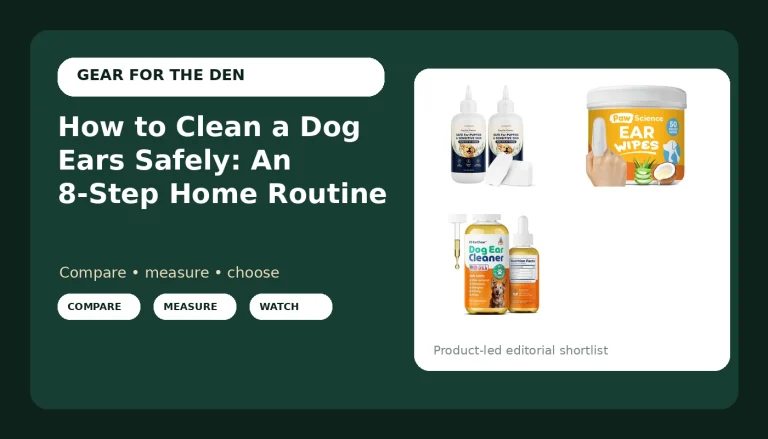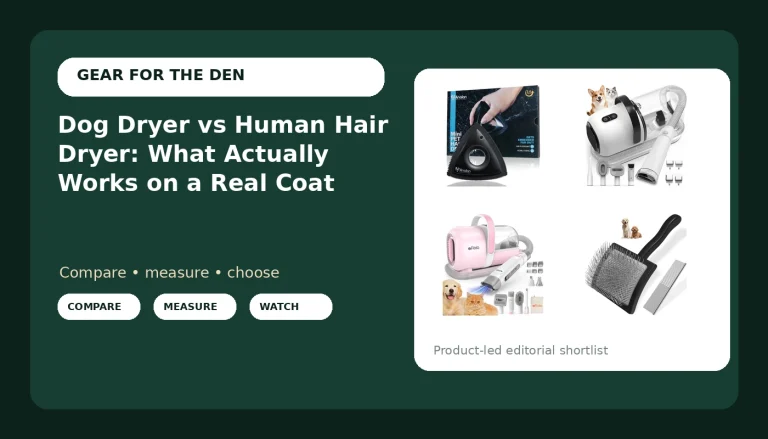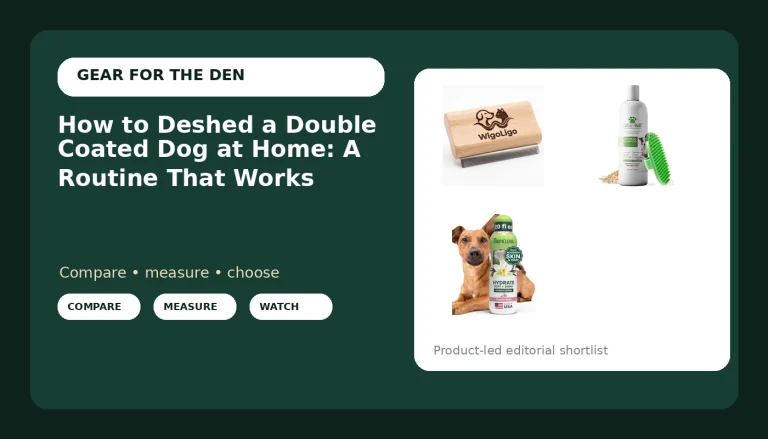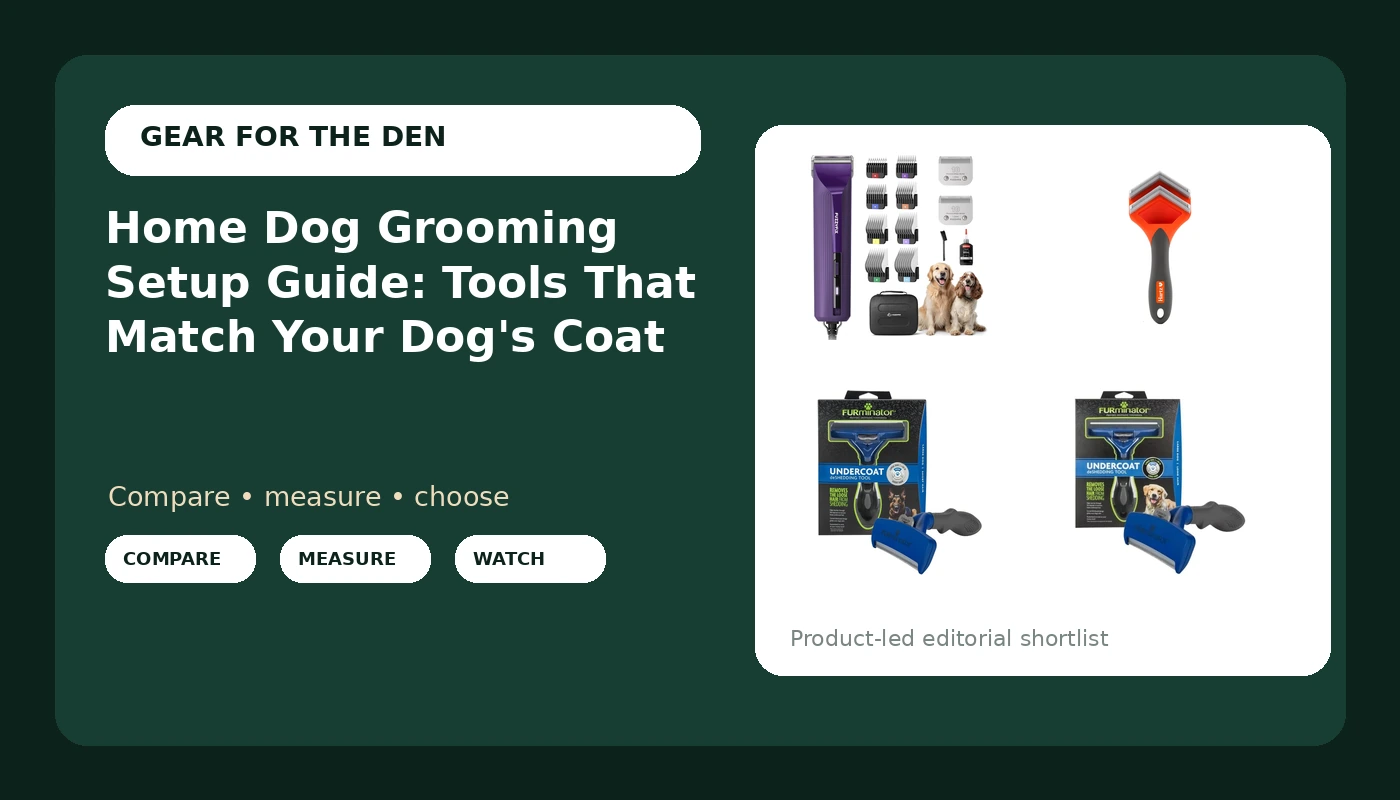
A home dog grooming setup is not a shopping list. It is a match between three things: your dog's coat type, the tools that actually reach the undercoat, and how long you are willing to stand in a bathtub. This home dog grooming setup guide is built around the four tools that live in my own bin, and around the mistakes I made before I understood any of that.
I groom two dogs at home. One is a short-haired lab mix who sheds all twelve months of the year. The other is a long-haired shepherd mix who produces what I can only describe as weather. I am not a professional groomer. I am a person with a linoleum floor, a shop vac by the door, and strong opinions about which tool is worth holding for twenty minutes. That is the standard every product below has to clear.
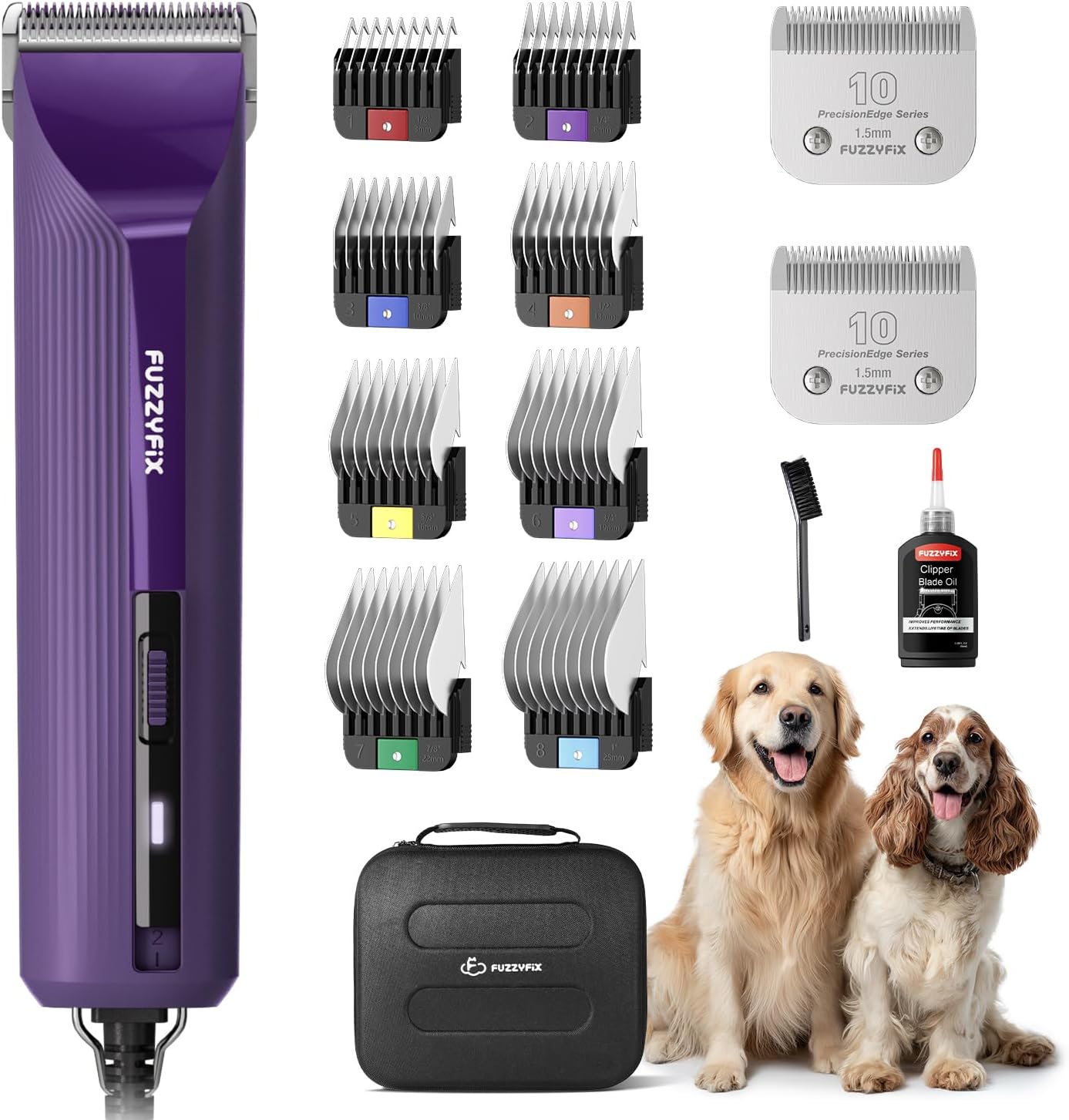
Best Overall: FuzzyFix AmpFix Professional Dog/Pet Grooming Clippers 2-Speed Heavy-Duty
Check current Amazon price. Visit on Amazon
If you buy one thing that is not a brush, make it clippers. Brushes manage shedding. Clippers solve the problems brushes cannot reach: the mats behind the ears, the sanitary trim, the paw pads, and the summer coat that never thins out on its own. The FuzzyFix AmpFix is the tool that turns a two-hour wrestling match into a twenty-minute job.
The two-speed switch is the feature I use most. The low setting is for faces and feet, where a fast blade catches skin and turns a calm dog into a dog that hides under the bed. The high setting does the heavy lifting on body coats and on the thick stuff around the neck. Heavy-duty is the right word for it. This is not a trimmer that stalls halfway through a mat.
Motor noise is the thing nobody warns you about. It is the number one reason dogs panic around clippers, and it has nothing to do with the blade. This machine runs steady rather than shrill, and because it is a two-speed tool you can start on the quiet setting and let the dog get used to the sound before you ever touch coat.
Use a blade guard while you learn. A blade guard is cheap insurance against the one bad pass that makes a dog hate clippers for the rest of its life, and it lets you practice the motion without worrying about depth. Take it off once your hands know where the flat of the blade sits.
The grip handle matters more than it sounds. You hold clippers upside down, sideways, and one-handed while your other hand keeps a squirmy leg still. A grip that does not roll in your palm is the difference between a clean paw pad and a nick.
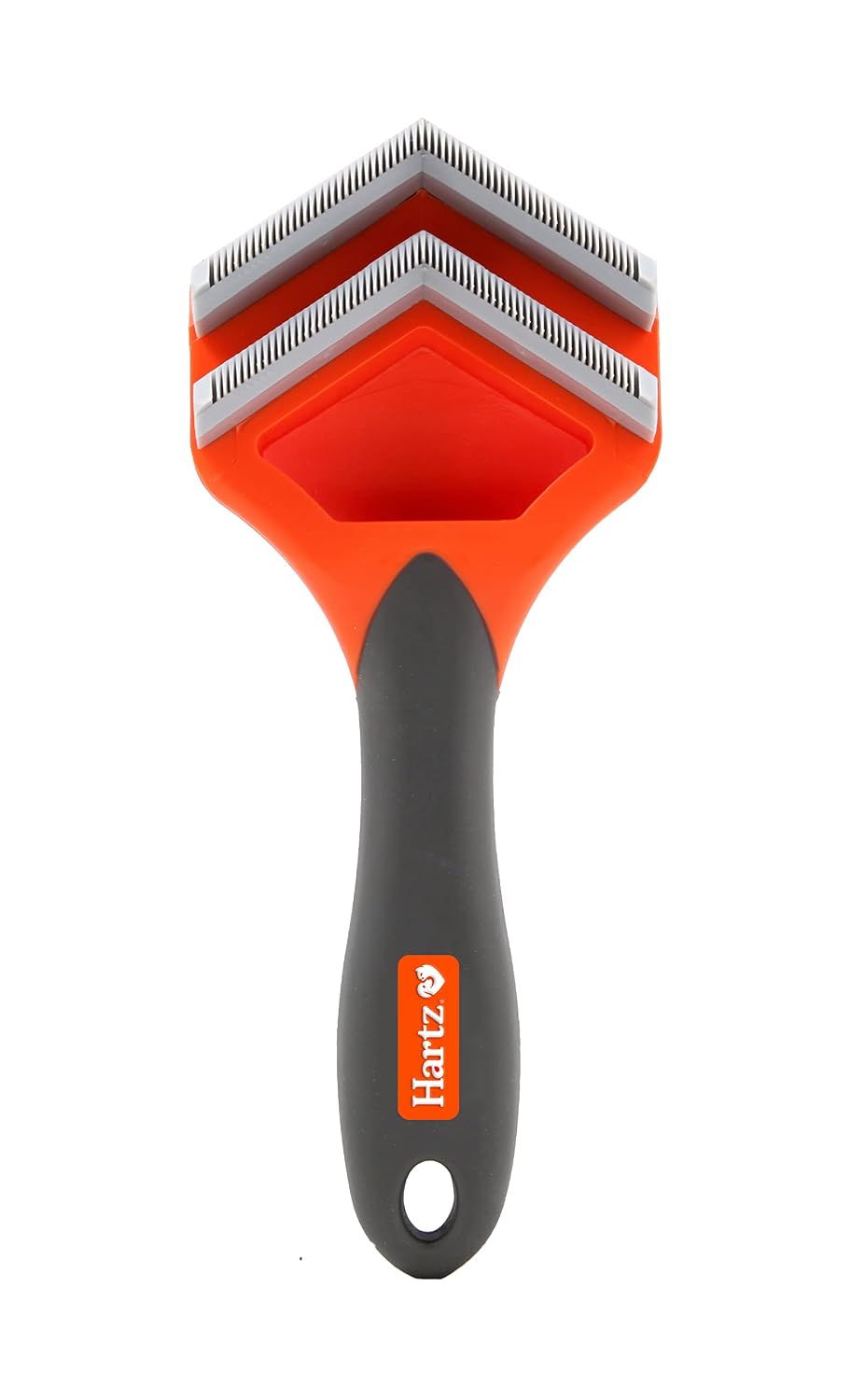
Best Value: Hartz Groomer's Best Fur Fetcher De-Shedder Dog Brush,Black
Check current Amazon price. Visit on Amazon
This is the tool I tell people to buy first, and it costs less than lunch. The Fur Fetcher is a de-shedding brush, not a slicker and not a pin brush. The bristle type is the whole point: the teeth are spaced and angled to lift dead hair off the topcoat and drag loose undercoat with it, without scraping skin.
On a short-haired dog, this is often the only brush you need. I keep it by the back door and run it over the lab mix for three minutes after every walk. It fills up fast. Emptying it is the tell. If you get a full pad of grey fluff every time, the tool is doing its job. If you get nothing, you are brushing a clean dog or brushing in the wrong direction.
The honest limits: it will not cut through a mat, and on a long double coat it is a first pass rather than a finish. It also does nothing for a coat that has already packed into felt. For that you need clippers or a groomer. But as a daily driver and a starter tool, this is what I would hand a first-time owner before I handed them anything with a motor.
One more thing about this brush. It is small enough to keep in a car door pocket, which matters more than it sounds if your dog rides with you. A two-minute pass in a parking lot beats a twenty-minute session at home, and the tool you have with you is the tool that actually gets used.
How I tested
I did not test these in a lab, and I am suspicious of anyone who says they did. I tested them the way you will: on two dogs, in a bathroom, over several months, with a shop vac parked outside the door and a towel on the floor.
The criteria were simple. Does the tool reach the undercoat, or does it just polish the top? Does it pull skin, and does the dog tell me so by leaving the room? Can I use it one-handed while the other hand keeps a leg still? Does it survive being dropped, rinsed, and shoved back in the bin?
For the clippers the questions were different. Does the motor noise spook the dog before the blade touches anything? Does the blade run warm enough to need a break? Does the grip handle stay put when my hands are wet? I ran the FuzzyFix on both dogs, on faces, feet, and body coat, and I paid more attention to how quickly the dogs settled than to how quickly the work went.
I also did the boring part. I emptied the brush after every session and looked at what came out, because the hair in the bin tells you more about a tool than the marketing copy does. Fine fluff means you are pulling dead undercoat. Nothing means the tool is skating. Clumps of live hair with skin attached mean you are pressing too hard and you should stop.
The last test is the one that matters. Which of these tools do I still reach for when nobody is watching and nobody is paying me? That is the short list below.
Analysis and test results
Two things separate a tool that works from a tool that sits in the drawer.
The first is coat type. A tool that is excellent on a lab is close to useless on a shepherd, and the reverse is just as true. Short coats shed loose hair that sits on top and comes off with almost anything that has teeth. Long double coats shed an undercoat that packs down near the skin, and a surface brush glides right over the top of it. That is why one brand sells two versions of what looks like the same de-shedding tool, and why buying the wrong version is the most common mistake I see.
The second is how the tool feels to the dog. Motor noise, vibration, and the drag of teeth against skin all register long before the coat is finished. A dog that tolerates grooming is a dog you can actually finish. A dog that hates it means you stop at the first sign of trouble and the undercoat stays exactly where it was.
On the tools themselves: the Hartz Fur Fetcher is the best value in the bin by a wide margin. It is the one I use most often and the one that costs the least. The FuzzyFix clippers are the most capable tool I own and the one with the steepest learning curve. The two FURminator tools are specialists. Each is built for one coat type, and neither is a substitute for the other.
Bathing is the part of a home setup people skip. If you wash your dog at home, pay attention to oatmeal concentration in the shampoo, because a harsh shampoo strips the coat and leaves you brushing dry hair that snaps instead of shedding cleanly. Airflow matters just as much. A high-velocity dryer does more for a double coat than any brush, because it blows loose undercoat out before it can mat. I do not own one yet. Until I do, the de-shedding tools are doing that job the slow way, and the right grooming tools are the ones that make it bearable.
The home dog grooming setup by coat type
This is the table I run through in my head when someone asks me what to buy. Match the tool to the coat, not to the price tag and not to the review count. There are only four tools here because four is enough. Every extra brush in the bin is another decision you have to make while a wet dog drips on the floor.
| Tool | Coat type | What it does | Where it fits | Price |
|---|---|---|---|---|
Hartz Groomer's Best Fur Fetcher De-Shedder Dog Brush | Short, smooth, wiry | Lifts loose topcoat and dead hair | Daily, three minutes after a walk | Check current Amazon price |
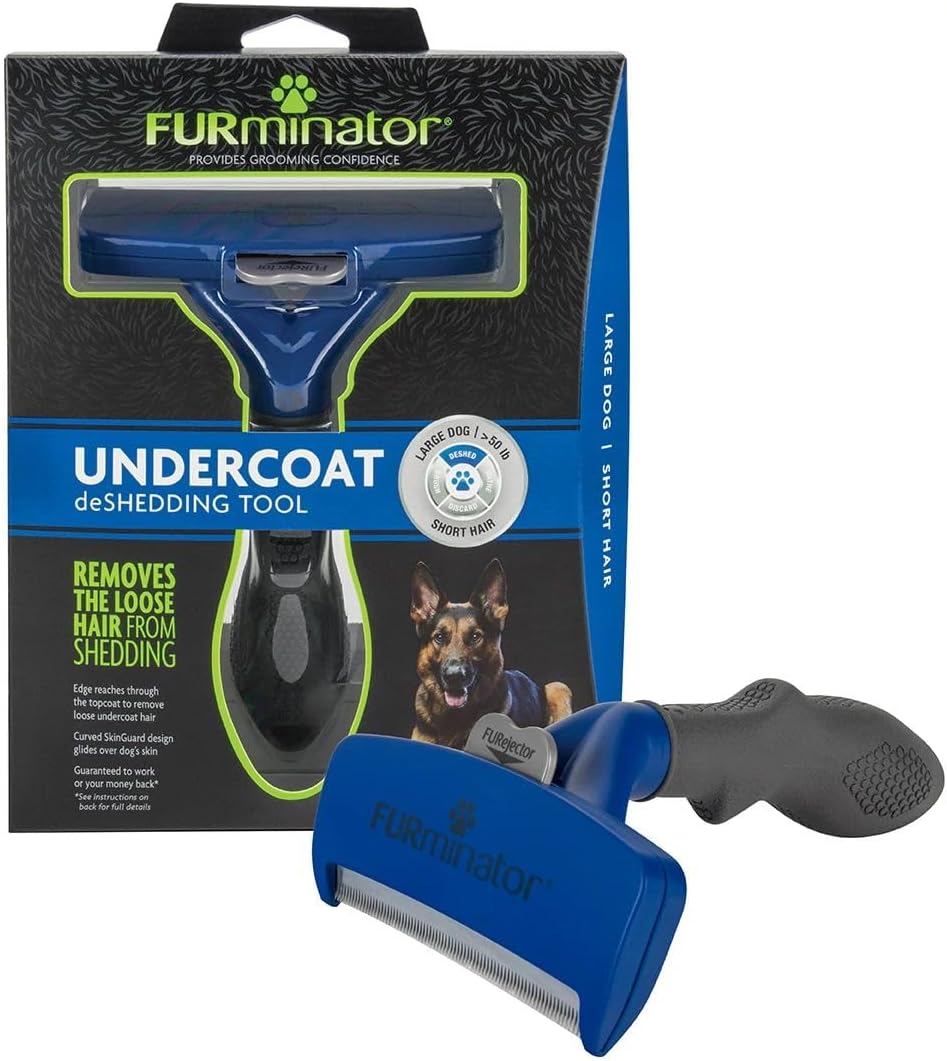 FURminator Large Dog Undercoat deShedding Tool for Short Hair | Short double coat | Reaches undercoat beneath a dense topcoat | Weekly, twice weekly in shedding season | View on Amazon → |
 FURminator Large Dog Undercoat deShedding Tool for Long Hair | Long double coat | Pulls packed undercoat out of a long coat | Weekly, plus a bath and a blowout | View on Amazon → |
FuzzyFix AmpFix Professional Dog/Pet Grooming Clippers 2-Speed Heavy-Duty | Any coat that mats, plus faces and paws | Removes mats, trims sanitary areas, sets coat length | Monthly, or whenever the coat wins | Check current Amazon price |
The key is the undercoat. Brush until the tool stops pulling hair, then stop. Over-brushing a double coat with a de-shedding tool is how you end up with a bald patch and a dog that flinches when you pick up a brush. Two or three passes per zone is the whole job.
FURminator long hair vs short hair
These two tools look almost identical in a listing and they are not interchangeable. The short-hair version has a finer, denser edge meant to get under a coat that sits close to the body. The long-hair version has a wider-spaced edge that gets through the top layer of a long coat without snagging it and yanking.
If you buy the wrong one, you will know inside a minute. The short-hair tool on a long coat skates across the top and pulls nothing. The long-hair tool on a short coat scrapes instead of glides, and the dog will tell you before you figure it out. Buy for the coat in front of you, not the coat you plan to have in three years.
What I leave out of the bin
Slicker brushes, pin brushes, and anything with plastic nubs that calls itself a de-shedder. On a short coat they are decoration. On a long coat they polish the top layer and leave the undercoat exactly where it was. A rubber curry is fine for lathering shampoo and that is about it. If a tool cannot reach the undercoat on a double-coated dog, it does not earn drawer space. If you want a second opinion, ask your groomer what they use on your dog's coat and buy that. It is almost always one of the four tools above.
Should you buy the FuzzyFix AmpFix Professional Dog/Pet Grooming Clippers?
Yes, if your dog mats, if you want to skip a groomer visit between appointments, or if you have a long coat that needs real maintenance instead of a tidy-up. It is the most expensive tool here and the one that changes what you can do at home.
The learning curve is real. Start on the low speed, keep a blade guard on until you trust your hands, and do short passes. Motor noise will tell you how your dog feels about the whole idea long before the blade does. If your dog has a short, smooth coat that never mats, you can skip this one. If your dog is a shepherd mix in July, you cannot.
Should you buy the Hartz Groomer's Best Fur Fetcher De-Shedder Dog Brush?
Yes, and it is the one I would buy first. It is cheap, it works on the coat most people actually own, and it is gentle enough to use every day. It will not fix a mat and it will not thin a packed undercoat, but it will keep a short-haired dog from turning your couch into a fur rug.
If you have a double-coated dog, buy this and one of the FURminator tools together. Use the Hartz for daily upkeep and the FURminator for the weekly deep pass. That pairing is the ideal home dog grooming setup for most homes, and it costs less than a single groomer visit. Once that is working, the correct home dog grooming setup is really just a question of adding clippers when your dog's coat demands it.