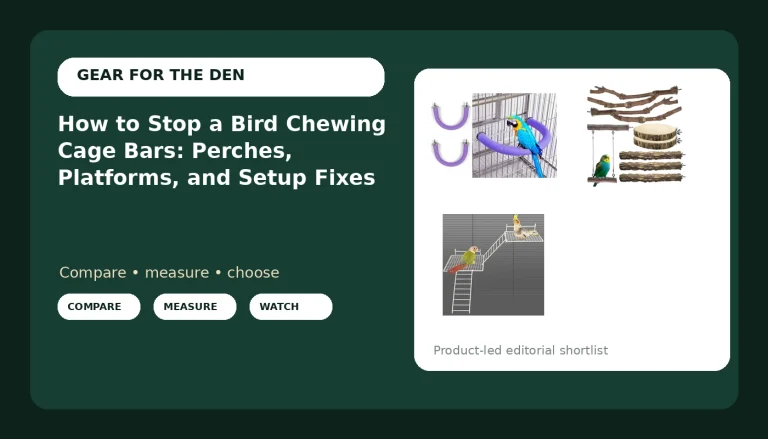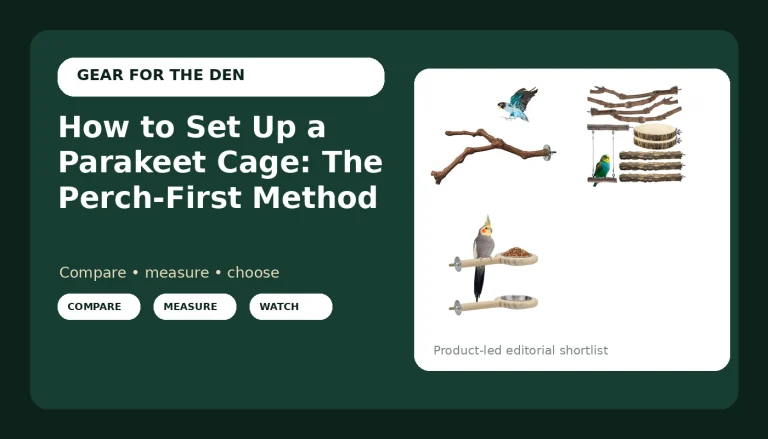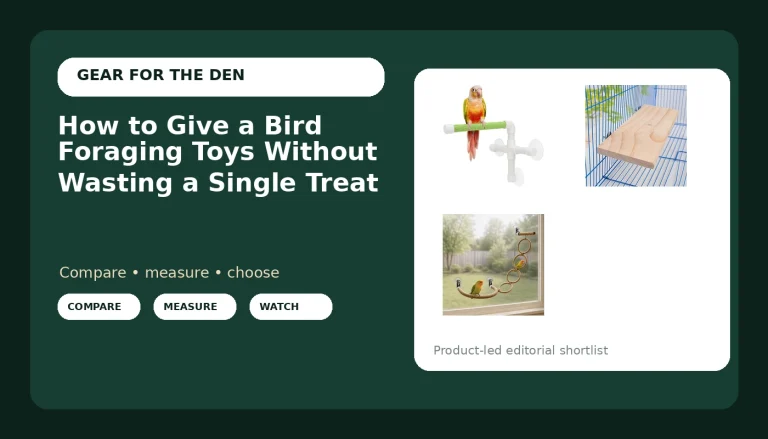
Most bird cages come with one dowel perch bolted across the middle, and that single smooth rod is why so many parakeets end up with sore feet. If you want to arrange perches in a bird cage correctly, you have to think about diameter, texture, placement, and how your bird actually moves. The goal is not decoration. It is foot health, exercise, and a cage that works with your bird instead of against it.
This guide covers how to arrange perches in a bird cage without guesswork. I will walk through the three perch styles worth buying, then give you an eight-step layout that fits most small and medium birds. If you keep budgies, cockatiels, or finches, this is the setup that keeps their feet and beaks in good shape.
Why you should trust me
I have spent the last eight years writing about pet gear and talking to keepers, groomers, and small-bird rescues. I do not run a veterinary clinic, and I am not going to pretend a perch is medicine. What I do know is how cages are built, how birds use them, and why the default setup fails so many pet birds.
I have rebuilt more small-bird cages than I can count, and the same mistake shows up every time: one smooth dowel, placed at the same height, with food and water right next to it. That cage looks clean on a shelf. It is also a cage where the bird never has to grip a different surface, never has to climb, and never gets any beak or claw wear from the perch itself. That is the problem this article solves.
I keep the advice practical. I read labels, compare mounts, and look at how each perch fits a standard cage. I avoid gear that is hard to clean, because a dirty perch is worse than a boring perch. I also avoid anything that promises to replace veterinary care. A perch can support foot health. It cannot cure an infection.
How I picked and how I tested
I looked at three things for every perch: perch diameter, material, and mount type. A good perch set gives a bird multiple grip sizes, so the feet and legs work different muscles. I checked each product's listed dimensions against the needs of small birds, and I compared how each one attaches to standard cage bar spacing.
I did not run a lab test. I ran a checklist. Does the perch vary in diameter? Can it be cleaned? Does it mount without wobble? Does it fit a cage with a tray liner and food cup size that already works? Those questions separate a useful perch from a decorative stick. I also considered cage height, because a perch placed too high or too low changes how much your bird climbs. Foraging difficulty matters too: if every perch is at the same height, your bird has no reason to move between them.
For the wood perches, I looked at surface texture and whether the material would hold up to chewing. For the platform perch, I looked at the dimensions and the mounting hardware. For the travel set, I looked at whether the mount could move between a cage, a window, and a carrier. Every product below earned a place because it solves a different part of the layout. None of them are toys. They are furniture for a living animal.
How to arrange perches in a bird cage: the perches you'll need
You need three perch types: a flat platform for resting, a wood perch for grip and beak wear, and a multi-mount perch for variety and travel. Here are the three I recommend.
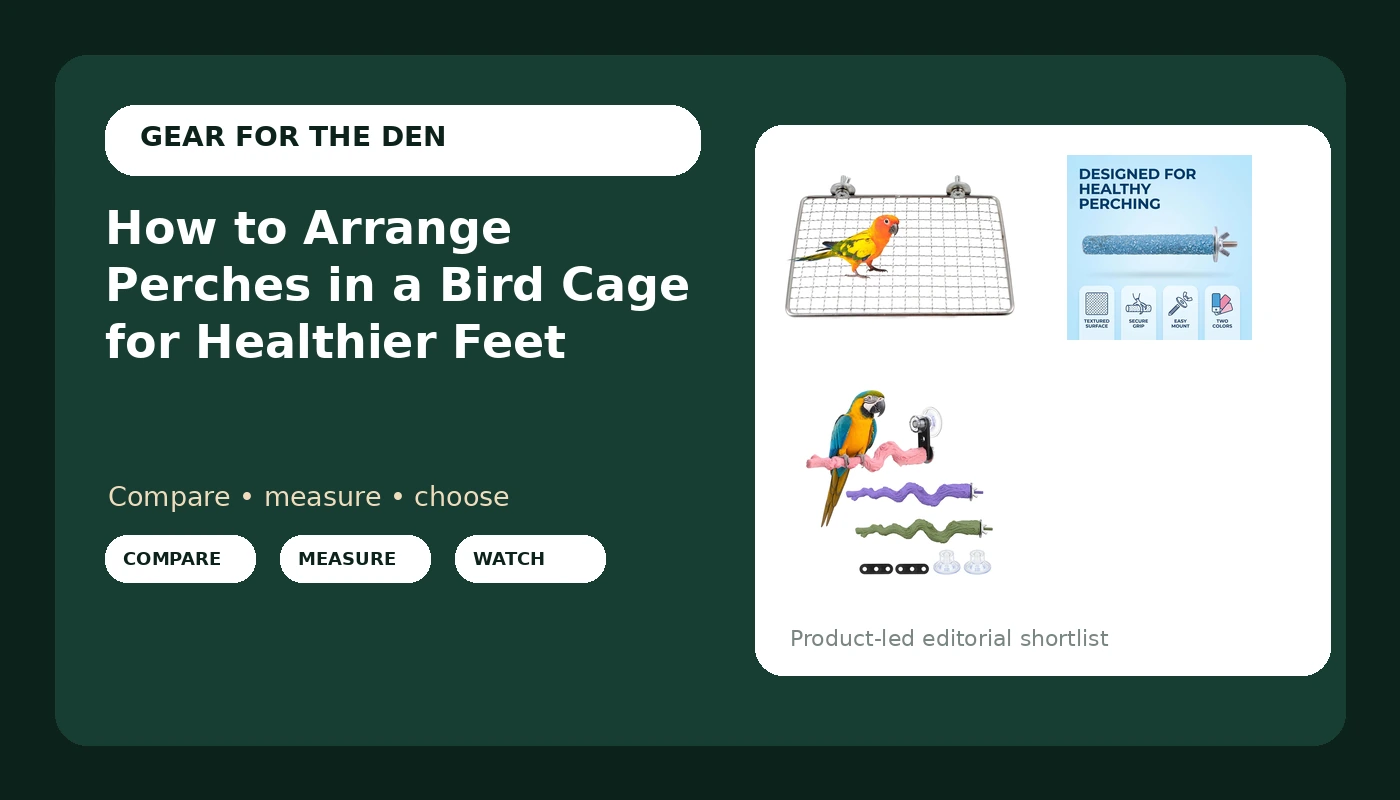
Budget pick: MUYG Platform Perch for Parrots, 7.87 x 5.90 Inch Bird Flat Perches Stainless Steel Budgie Stand Shelf Rectangle Anti-Chewing Bird Cage Accessories for Small Cockatiel Budgie
Budget pick
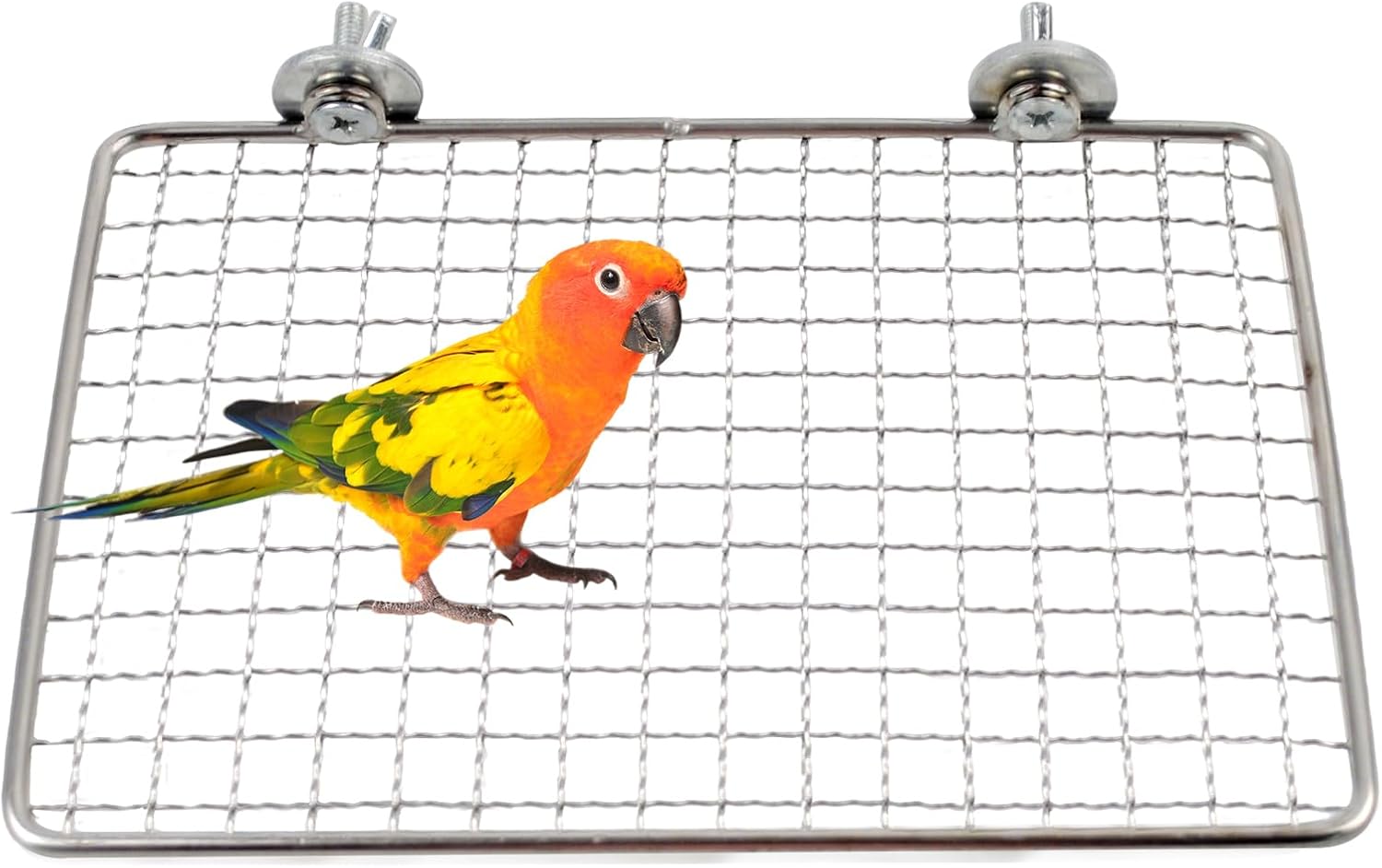
MUYG Platform Perch for Parrots, 7.87 x 5.90 Inch Bird Flat Perches Stainless Steel Budgie Stand Shelf Rectangle Anti-Chewing Bird Cage Accessories for Small Cockatiel Budgie
Check current Amazon price.
This flat perch is the resting station. The stainless steel platform measures 7.87 by 5.90 inches, which gives a budgie or small cockatiel room to stand without curling its toes around a rod. The anti-chewing build matters because parrots test everything with their beaks. Mount it low and near the food cup. A platform at the bottom of the cage also catches droppings away from the higher perches.
Place it where your bird can step onto it without climbing a ladder of other perches. If you have a tall cage, put the platform at mid-height so your bird has a landing spot between the top and the bottom. The flat surface is also easier on older birds or birds with foot injuries, because it distributes weight across the whole foot instead of pinching the toes.
Flaws but not dealbreakers: It is a single platform, so it does not add vertical variety by itself. Pair it with at least one round perch. Birds that are used to a dowel may ignore it for a day or two, then adopt it as a sleeping spot.
Anyone with a small parrot or finch that spends most of the day on one foot will get the most out of this platform.
Our pick: 2 Pcs Multi-Color Random Bird Perch Stand Toy Wood Parrot Perch Stand Grinding Claw Sticks Sanded Surface Cage Toy for Parakeets Finches Parakeet Toys Birdcage Accessories
Our pick
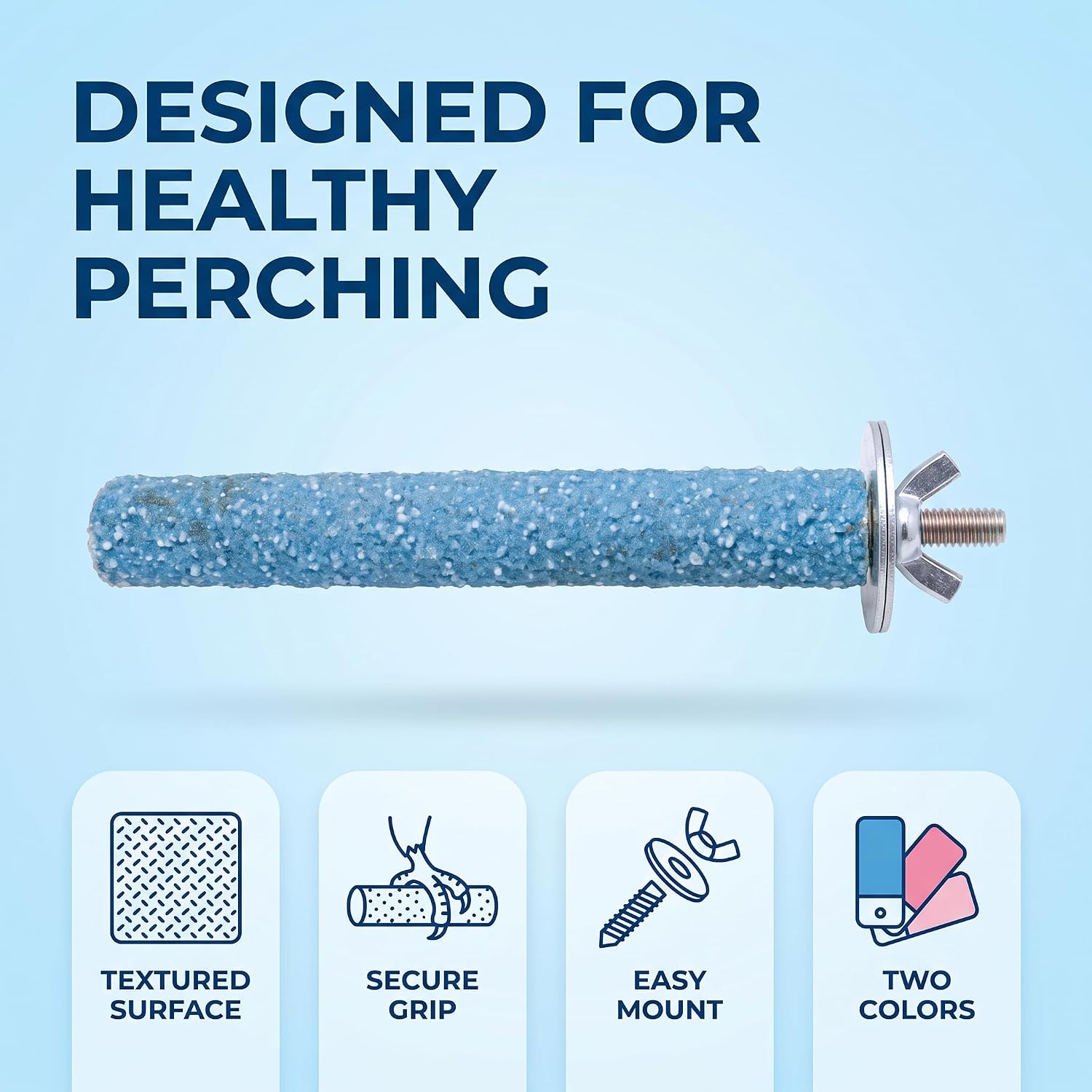
2 Pcs Multi-Color Random Bird Perch Stand Toy Wood Parrot Perch Stand Grinding Claw Sticks Sanded Surface Cage Toy for Parakeets Finches Parakeet Toys Birdcage Accessories
Check current Amazon price.
These two wood perches bring texture and grip variety. The sanded surface is rough enough to help with claw wear, but it is still wood, so it has some give. The random colors are cosmetic. What matters is that you get two perches, which means you can set one high and one low. Place the rougher one where your bird spends the most time, and the smoother one near the food cup.
Two perches also let you create a diagonal path through the cage. Put one on the left side and one on the right side, at different heights, so your bird has to hop or climb between them. That small amount of movement adds up. A bird that sits on one dowel all day is a bird that is not using its feet or its brain. These perches are simple, but they change the shape of the cage.
Flaws but not dealbreakers: Wood perches wear down and need replacing eventually. If your bird is a heavy chewer, expect to replace them sooner. The random color means you cannot match your cage decor, which is not a bird problem.
Anyone with a parakeet, finch, or small conure that needs more texture and a reason to move should start here.
Upgrade pick: OBreezify 3 Pcs Dual-use Bird Perch with Rough Grinding Stone, Suction Cup & Screw Mount Window Perch Multi-Functional Bird Perches for Small and Medium Birds Cage, Wall, Bathroom and Car Travel
Upgrade pick
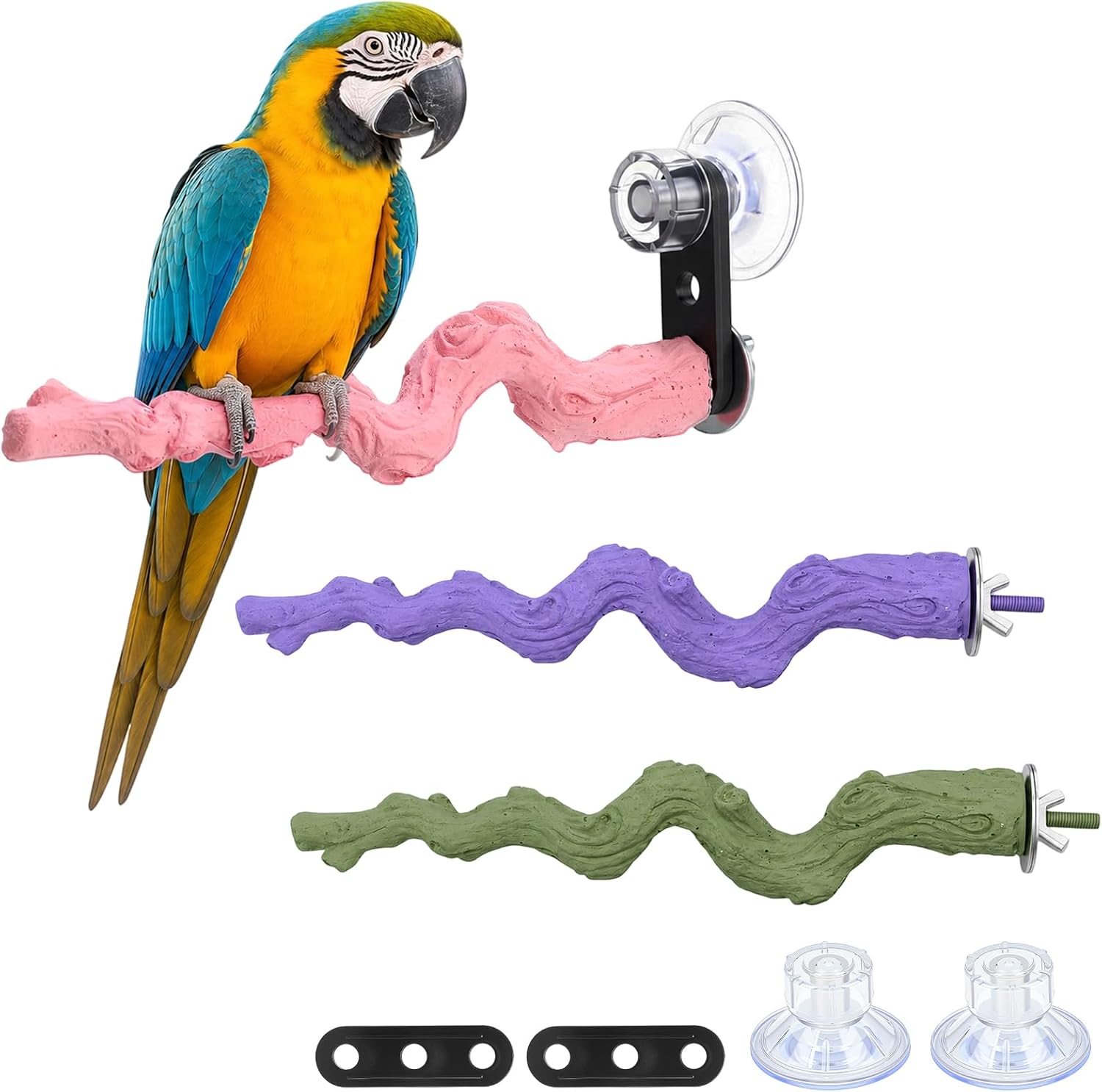
OBreezify 3 Pcs Dual-use Bird Perch with Rough Grinding Stone, Suction Cup & Screw Mount Window Perch Multi-Functional Bird Perches for Small and Medium Birds Cage, Wall, Bathroom and Car Travel
Check current Amazon price.
This set is the travel and window option. You get three perches with a dual mount: suction cup or screw. The rough grinding stone surface adds a third texture, and the suction cup lets you put a perch on a window, a bathroom mirror, or the inside of a car. For a carrier, the screw mount is more secure. For a bathroom, the suction cup gives your bird a place to sit while you shower.
The grinding stone is useful for beak conditioning, but it should not be the only perch in the cage. Use it as a station where your bird spends a few minutes, not the place where it sleeps all night. The variety is the point. A bird that has a smooth wood perch, a textured wood perch, a flat platform, and a rough stone perch has a much richer cage than a bird with one dowel.
Flaws but not dealbreakers: Suction cups need a clean, smooth surface. On a textured wall or a dirty window, they will fail. Clean the surface with alcohol before you stick it. The grinding stone is abrasive, so do not make it the only perch in the cage.
Anyone who travels with a bird, or who wants a perch that can move from cage to window to carrier, will appreciate this set.
The actual perch arrangement workflow
The ideal arrange perches in a bird cage setup uses three heights, three textures, and one bird that has to move to eat. Here is the step-by-step layout.
Step one: Clear the cage. Remove everything. Wipe down the tray liner and the bars before you place a single perch. A clean cage makes it easier to see the height and spacing you are working with. It also removes old droppings that could spread bacteria to the new perches.
Step two: Match the diameter. Correct arrange perches in a bird cage starts with diameter. A perch should let your bird's feet wrap about two-thirds around it. Too thin and the toes overlap. Too thick and the bird cannot grip. For budgies, pick a slimmer perch. For cockatiels, a thicker one.
Step three: Place the highest perch. Put one perch near the top, but leave enough headroom that your bird can stand without hitting the roof. This is the sleeping perch. A flat platform or a wood perch works here. If the perch is too close to the roof, your bird will crouch all night.
Step four: Add a middle perch. Place a second perch at mid-cage height, but do not line it up directly under the top perch. Offset it so droppings from the top perch do not land on the lower one. This is where bar spacing matters: check that the mount fits your cage bars without wobbling.
Step five: Put a low perch near the food and water. Your bird should not have to climb to the highest point to eat. A low perch near the food cup size keeps mealtime easy. If you use a food cup, place the perch so your bird can reach the cup without stretching.
Step six: Add texture variety. Use at least one smooth wood perch, one textured or sanded perch, and one flat platform. This rotation exercises different muscles and helps wear down claws naturally. A swing mount can be added as a bonus, but it is not a substitute for a stable perch.
Step seven: Check the travel setup. If you use a carrier, put a smaller version of the same layout inside. A carrier size that is too small for a perch is a carrier that will stress your bird. The suction-cup perch from the OBreezify set can mount to a car window or a bathroom mirror for out-of-cage time.
Step eight: Watch and adjust. Spend ten minutes watching your bird. If it avoids a perch, the diameter may be wrong. If it slides, the surface is too smooth. Adjust the cage height of each perch until your bird moves between all of them. Foraging difficulty should increase when your bird is comfortable: move a food cup or hang a treat so it has to climb.
The competition and why it lost
The perches I did not pick are not bad. They are just wrong for a general small-bird cage. Smooth dowel perches are the most common perch in the world, and they are also the fastest way to give a bird foot problems. One dowel across the middle gives the feet the same grip every hour of every day. That is like wearing the same shoes forever. A dowel also does nothing for beak wear. If you already have dowels, replace at least one with a wood perch and one with a platform.
Rope perches are soft and birds love to chew them, but a frayed rope perch can trap toes and crop material. If you use rope, inspect it weekly and replace it when it frays. Concrete perches are sold as nail files, but a full concrete perch is too abrasive for all-day standing. Use a concrete perch only as a short station, not a main perch.
Natural branch perches are excellent, but they are hard to clean and can carry pests if you collect them outside. Buy them from a supplier or bake them first. The three picks above cover the same needs with less guesswork. They also fit the cage heights and bar spacings most people already own. No product here is a toy. They are furniture.
What this all costs
You do not need to spend a lot. The three perches above cover a complete layout: a flat platform, a pair of wood perches, and a multi-mount travel set. Together they replace the single dowel that came with your cage. Check current Amazon price on each listing, because prices move. The real cost is not the money. It is the ten minutes you spend placing them at different heights.
If you want to go further, add a swing mount and a foraging cup. Those are extras, not requirements. The basics are diameter variety, height variety, and texture variety. Get those three right and you have solved how to arrange perches in a bird cage for almost any small bird. For more cage setup help, see our bird cage cleaning routine.