The automatic litter box vs cat litter deodorizer question usually arrives at the same moment: the box has been scooped, the litter has been changed, and the hallway still smells faintly of ammonia. One camp says buy a machine that rakes or rotates the waste away on its own. The other camp says a machine is an expensive plastic tub and a tub of deodorizer does the same work for less money and less fuss. Both camps are partly right, and the part each one gets wrong is exactly why people end up disappointed with both.
Here is the framing that helps. Odor in a cat household comes from two places: waste sitting in the box, and the ammonia that waste leaves behind in the litter and the air around it. An automatic box attacks the first source by getting clumps out of the litter quickly. A deodorizer attacks the second by neutralizing what remains after the scoop. Fix only one and the other keeps the smell alive.
For most homes the right answer is an automatic box first and a deodorizer second, not one instead of the other. A machine that runs a cleaning cycle on a schedule cuts the time waste spends in open air, and that timing is the biggest single lever on odor control. A deodorizer is the finishing layer that handles litter depth, mat texture, and the tracked granules no machine can reach.
That is the comparison in miniature. What follows is four specific boxes, what each one is genuinely good at, and where a deodorizer still earns its place beside any of them.
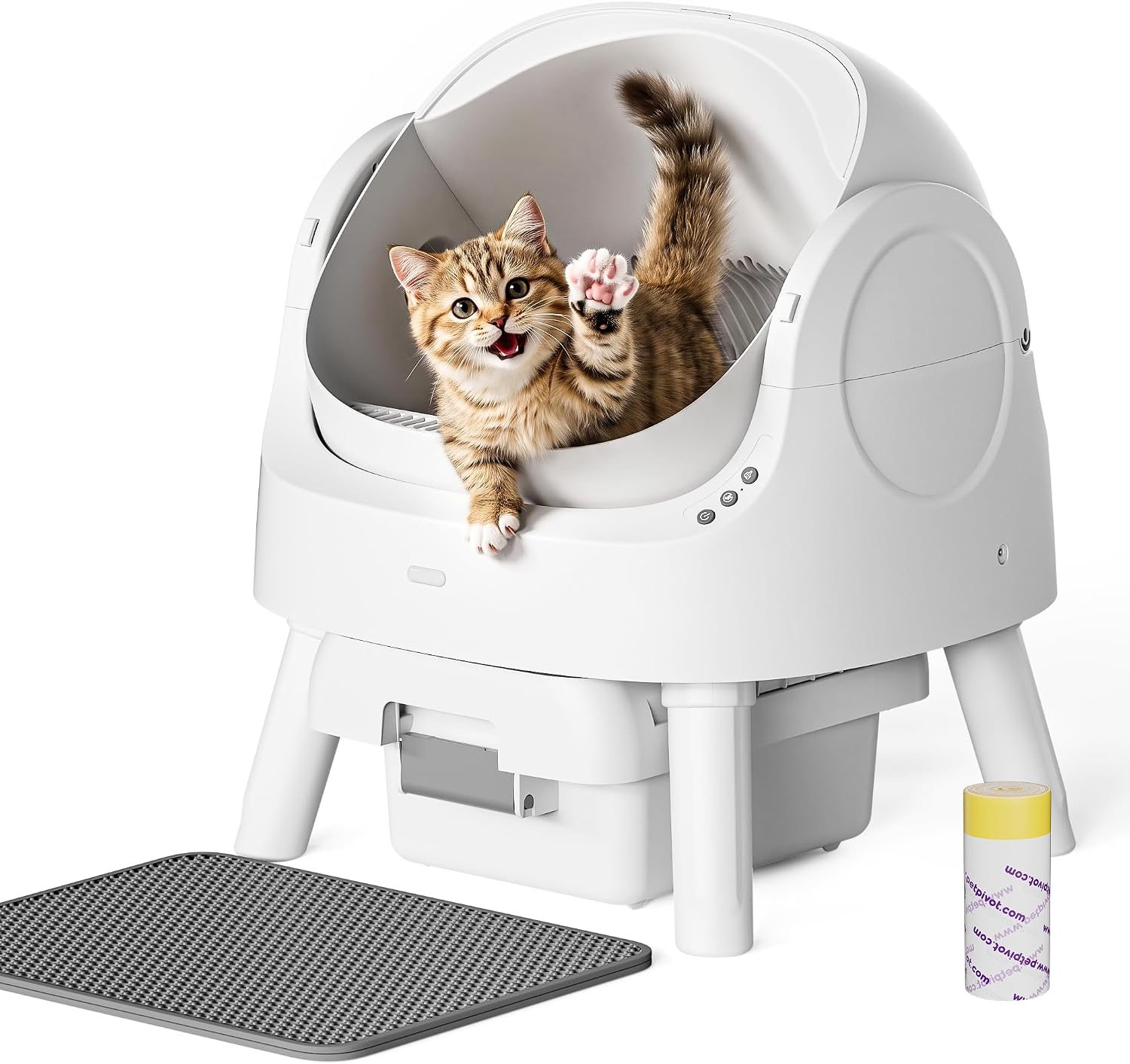
Self Cleaning Litter Box, Self Cleaning Cat Litter Box, Open-Top Design
Easiest introduction for a nervous cat, no hood or door to negotiate, simplest mechanism of the three machines
Nothing contains the odor, so the cleaning cycle and the litter do all the work
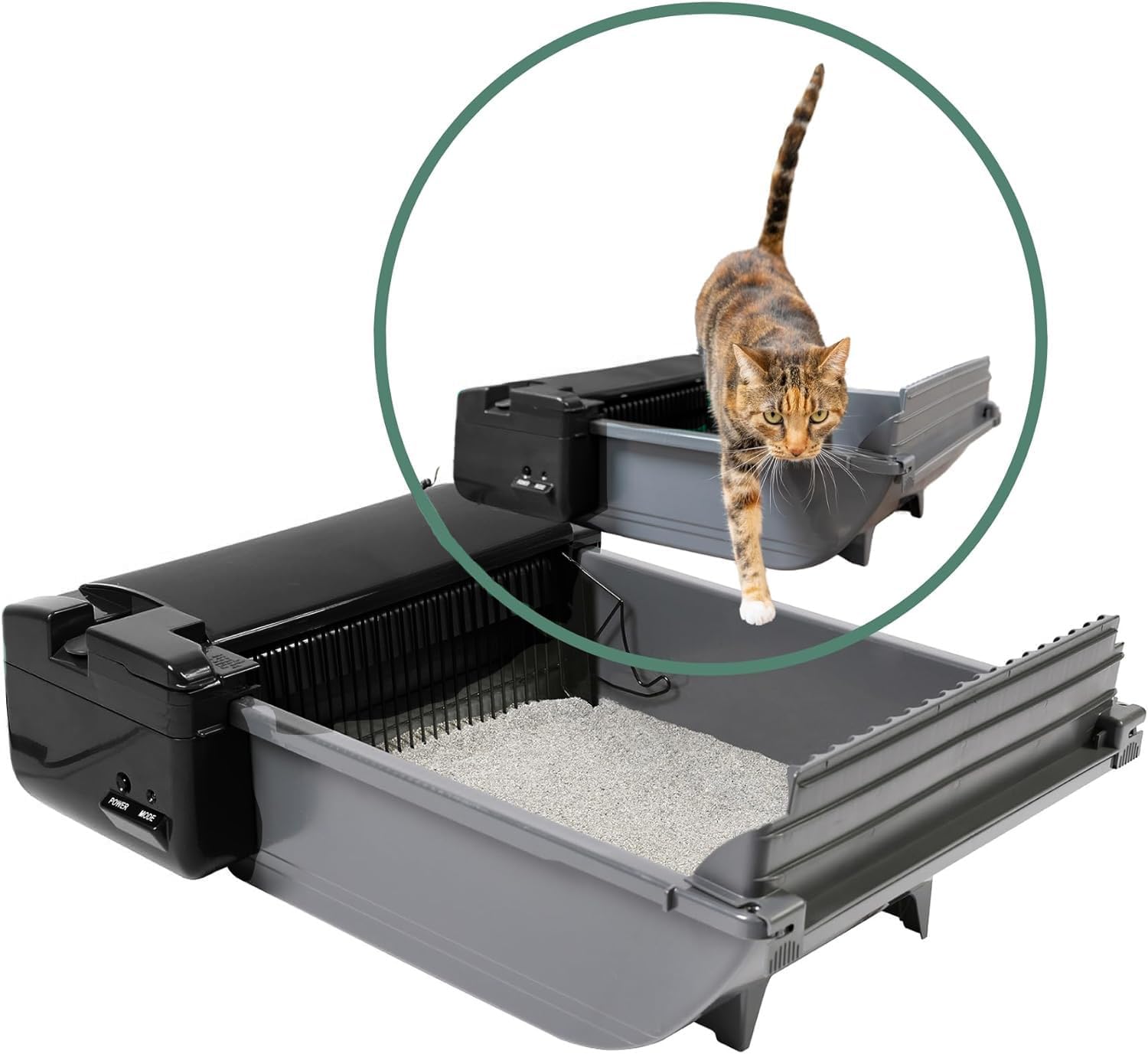
Pet Zone Smart Scoop Semi Automatic Self Cleaning Cat Litter Box, 6 Bags
Semi automatic rake cycle with six bags included, so the waste routine is decided from day one
A rake travels the whole box, so cycles tend to run slower and litter depth has to stay in range
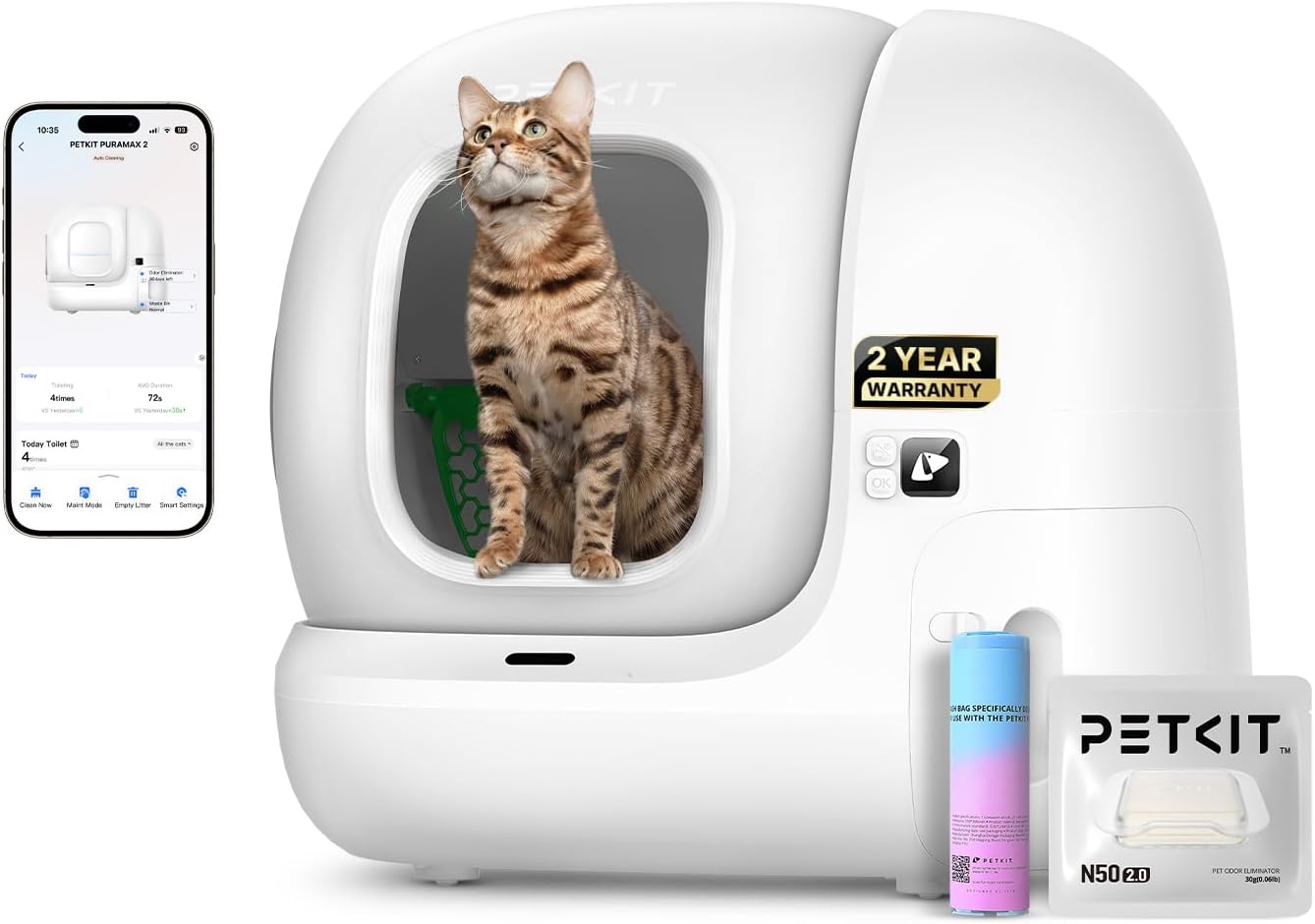
PETKIT PuraMax 2 Odor Free Automatic Cat Litter Box, with 2-Year Coverage
Enclosed body and sealed waste drawer put odor control in hardware instead of additives
Enclosed designs raise the entry height and ask more of a cat that dislikes covered boxes
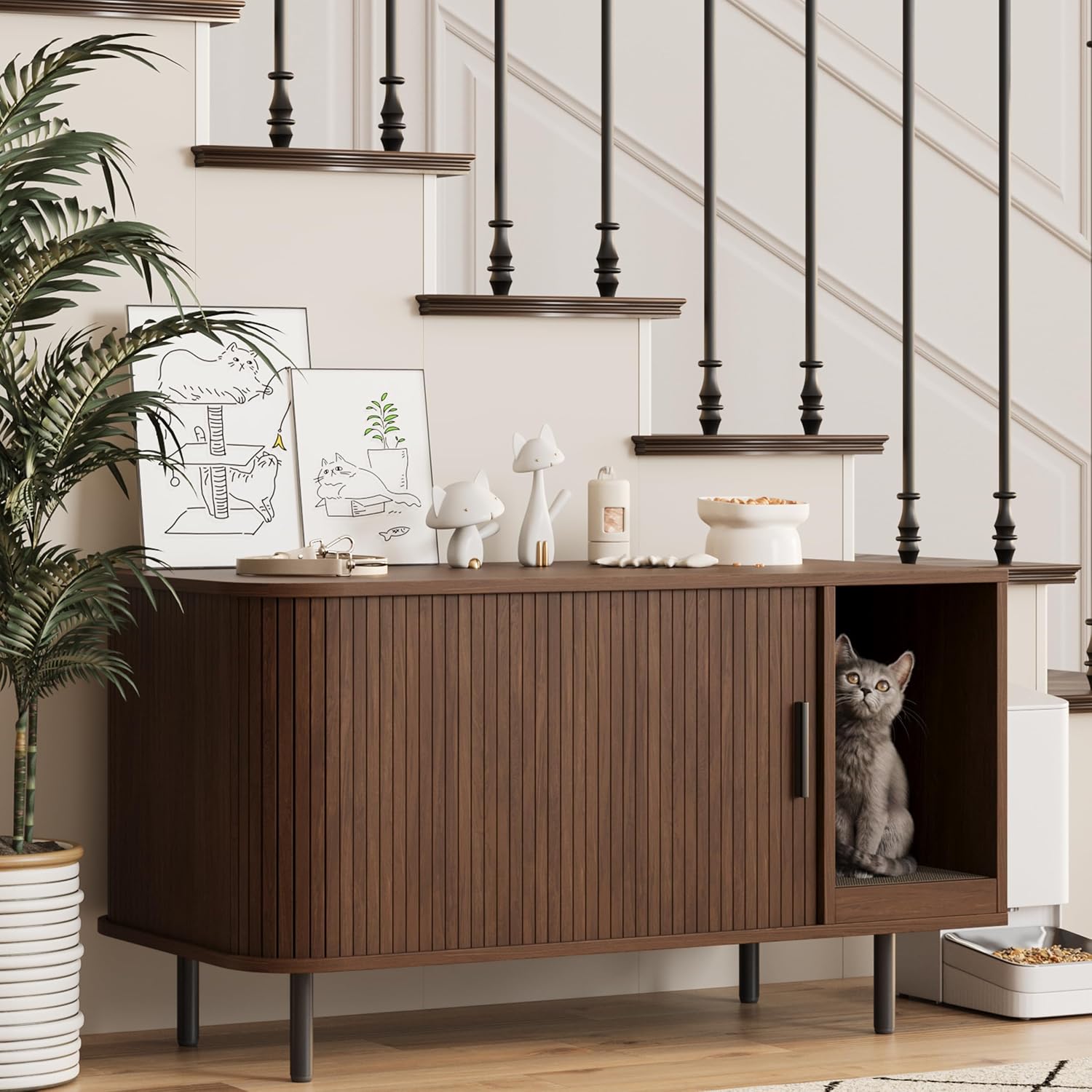
Halitaa 37.4" Cat Litter Box Enclosure with Scratch Pad, Sliding Door
Furniture grade enclosure with a built in scratch pad and sliding door that hides the box and its mess
Not automatic at all, so every scoop is still yours and a deodorizer stops being optional
Prices and availability may change.
What this comparison is based on
Every box here is judged on the same short list: box size, entry height, the litter depth the design expects, how the waste drawer gets emptied, and how much of the odor control job the machine does by itself. Sensor range matters too, because a self-cleaning cycle that triggers while a cat is still inside is worse than no automation at all. Those criteria come from how each unit is built and what its listing says it includes, not from a lab bench, and they are the same criteria that decide whether your cat will use the thing.
A deodorizer is judged differently. The ones that work change the chemistry of the litter or the air, usually with baking soda, activated carbon, or an enzymatic blend. The ones that do not work add perfume on top of ammonia, which reads to a human nose as clean-ish for about an hour and to a cat nose as a warning sign. A cat with a sensitive nose may avoid a heavily scented box altogether, which is the opposite of what you wanted.
One more criterion runs through everything below: clumping speed. Fast-clumping litter is what makes either approach work, because a clump that forms in seconds is a clump a machine can lift cleanly and a scoop can remove in one pass. Slow litter smears, and smeared waste is where the smell starts.
How an automatic litter box vs cat litter deodorizer differs in practice
The practical difference between automatic litter box and cat litter deodorizer is timing. An automatic unit changes how long waste sits in the litter. A deodorizer changes what the air smells like after the waste is gone. Neither one covers the other's job, which is why the two get compared as rivals when they are really two stages of the same routine.
On the machine side, the cleaning cycle is the whole point. A rake design drags a comb through the litter on a timer, pushing clumps toward a waste drawer. A rotating drum turns the whole box so clumps fall through a screen into a sealed compartment. Both need a sensor range that can tell a cat from a clump, and both need the litter depth to sit inside a narrow band. Too shallow and the rake scrapes plastic. Too deep and it drags clean litter into the drawer along with the waste, filling the drawer with nothing useful.
On the deodorizer side, the work happens in the litter itself or in the air above it. Litter additives mix in with the granules and break down the ammonia compounds that cause the sharp smell. Carbon filters and box mounted units pull odor out of the air around the box. Neither one removes a clump, so if waste is sitting in the box for a day, a deodorizer is fighting a losing battle against a source it cannot reach.
Read the other way, cat litter deodorizer vs automatic litter box is a question about where you want to spend your effort. The machine costs more up front and takes maintenance in the form of bags, liners, and the occasional jam. The deodorizer costs less and takes a small amount of attention every day. Whichever way you frame it, a machine with no deodorizer smells better than a deodorizer with no scooping, but not by as much as the marketing suggests.
One thing worth saying plainly: a deodorizer cannot fix a box that is too small, and it cannot fix a home with too few boxes. The usual guidance is one box per cat plus one, and no additive gets around that arithmetic. Placement and airflow do more for odor than any single product on this page.
The four boxes in this comparison
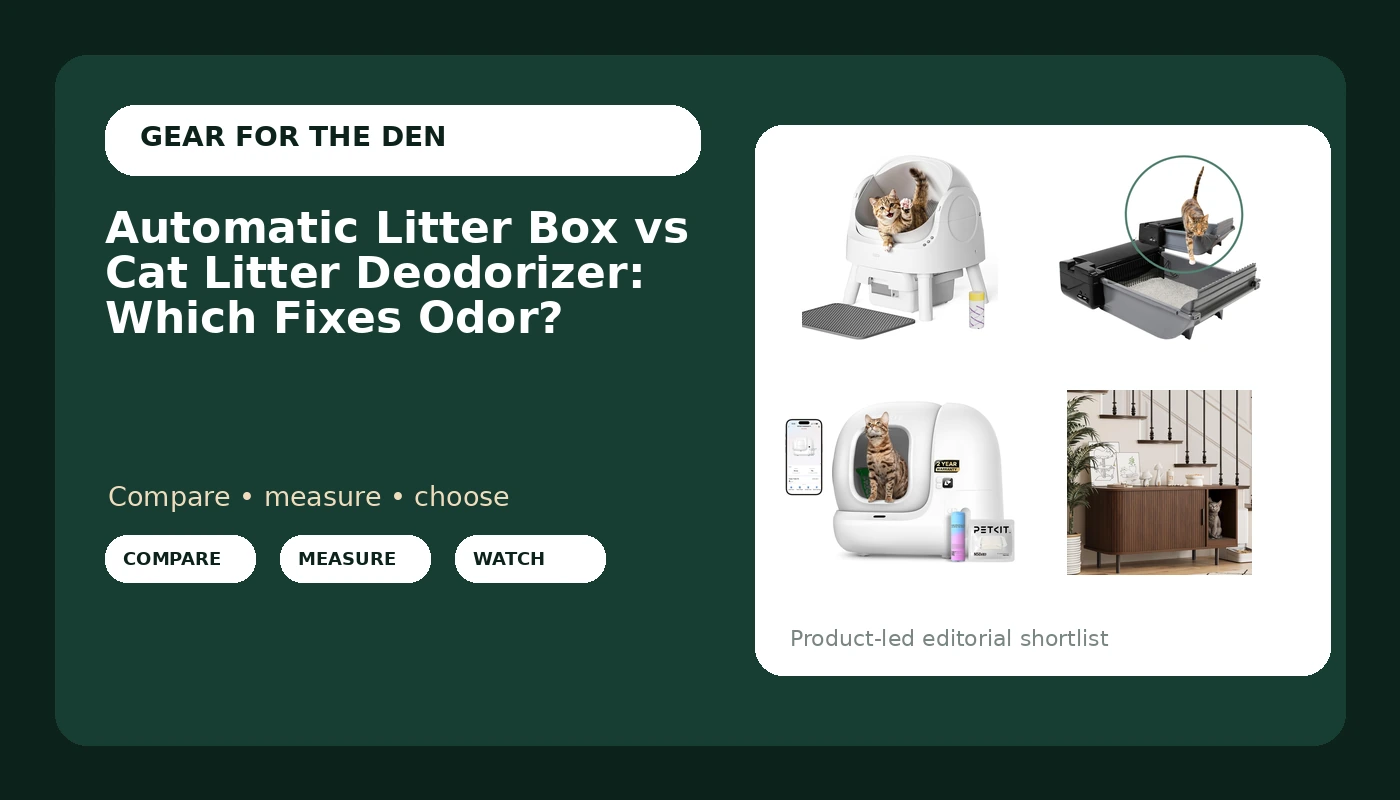
Four units, three of them self-cleaning and one of them a piece of furniture that hides a manual box. Each one solves odor in a different way.
Self Cleaning Litter Box, Self Cleaning Cat Litter Box, Open-Top Design. This is the simplest of the three machines. There is no hood and no door, so there is nothing for a hesitant cat to negotiate on the way in, and an open-top design usually means a lower entry than a hooded box. Check the entry height against your cat anyway, especially if you have a senior. The trade-off is honest: with no enclosure, nothing holds odor in, so the cleaning cycle and the litter do all the work. Add a deodorizer and fast-clumping litter and it holds its own in a normal apartment. Skip both and you will smell the box from the next room. Visit on Amazon
Pet Zone Smart Scoop Semi Automatic Self Cleaning Cat Litter Box, 6 Bags. The word semi is doing real work here. This one rakes through the litter on a cycle rather than sealing waste away in a drum, and it ships with six bags, so the waste routine is decided for you from day one. A rake has to travel the length of the box, which tends to make the cycle slower than a drum that simply rotates, and rake designs are fussier about litter depth. Keep the bed of litter level and inside the range the unit expects and it runs quietly for months. Visit on Amazon
PETKIT PuraMax 2 Odor Free Automatic Cat Litter Box, with 2-Year Coverage. This is the containment play. Waste ends up in a sealed drawer inside an enclosed body, which is the closest thing here to odor control handled by hardware instead of additives, and the two-year coverage behind it is a signal that the brand expects the mechanism to last. Enclosed designs ask more of the cat: entry height and interior room matter more when there is a wall around the box, and some cats refuse a covered box outright. Visit on Amazon
Halitaa 37.4" Cat Litter Box Enclosure with Scratch Pad, Sliding Door. Not a machine, and that is the point. This is a furniture grade enclosure that hides a manual box behind a sliding door, with a scratch pad built into the side so the cat gets a legitimate surface instead of your sofa. It solves the visual problem and part of the odor problem by containing airflow and keeping the box out of the room's main sightline. Every scoop is still yours, which is exactly the situation where a deodorizer stops being optional. Visit on Amazon
Odor control, box size, and entry height
Box size is the specification people skip, and it is the one that decides whether the machine gets used. A self-cleaning unit needs room for the cat to turn around inside it, because a cat that cannot turn will often go beside the box instead. Measure your cat from nose to tail base and buy a box that clears it comfortably, then check that the footprint fits the space you actually have.
Entry height is the second spec, and it matters more than the marketing photos suggest. A high entry keeps litter in, but it also keeps arthritic cats out. A low entry is easy on the cat and messy for you. The middle ground is a low entry with a high wall around it, or a ramp, which is the compromise most multi-cat homes end up with.
Litter depth is where automatic boxes live or die. Every self-cleaning unit has a range it was designed around, and running outside that range is the most common cause of jams, missed clumps, and litter thrown into the waste drawer. If you switch litters, check the depth again, because a finer grain settles differently than a coarse one.
Sensor range deserves a mention of its own. A machine that detects a cat reliably will not cycle under a paw or a tail, and it will not leave a clump sitting because it misread the box as occupied. If reviews for a unit complain about cycles stopping mid-way, that is usually a sensor story rather than a motor story.
Then there is odor control in the air, which is the deodorizer's half of the job. Carbon handles the airborne compounds. Baking soda and enzymatic additives handle what is already in the litter. A mat with a rough, waffle-style texture catches the granules that would otherwise be walked onto the carpet, and those granules are a real source of smell that no machine can address.
The trade-offs that decide it
Automatic boxes fail in three predictable ways. The mechanism jams, usually because of litter depth or a clump that formed too slowly. The waste drawer fills faster than you expect in a multi-cat home, and a full drawer is a smell source with a lid on it. And the cat refuses the box, which is the failure that matters most, because a machine your cat will not use is a very expensive decoration.
Deodorizers fail in two ways. They mask instead of neutralize, which means the smell returns as soon as the perfume fades. Or they add a scent strong enough that the cat starts avoiding the box, which turns one problem into two. If you have ever watched a cat sniff a freshly scented box, step in, and step straight back out, you already know which failure is worse.
There is also a maintenance trade-off that rarely gets mentioned. A machine trades daily scooping for weekly emptying, plus occasional deep cleaning of the drum or the rake. A manual box with a deodorizer trades nothing up front for a small chore every day. Neither is free, and the honest question is which chore you will actually keep doing at eleven at night on a Tuesday.
The last trade-off is the cost of being wrong. If a deodorizer does not work, you are out the price of a tub and you try another one. If an automatic box does not work for your cat, you are out a lot more, and you still need a backup pan while you sort it out. That asymmetry is why a plain box plus a deodorizer is a legitimate starting point rather than a compromise.
Which setup fits your home
If you are choosing an automatic litter box or cat litter deodorizer for a single cat in a small apartment, start with the machine. One cat produces a manageable volume of waste, so a machine that runs a couple of cycles a day keeps the box ahead of the smell, and the waste drawer will not fill faster than you can empty it. Add a deodorizer for the litter and a textured mat for the tracked granules, and you have a setup that handles both sources of odor.
For a multi-cat home, the math changes. Two or three cats produce waste faster than most machines can clear it, and the waste drawer becomes the bottleneck. In that house a deodorizer is not optional, and the enclosure becomes attractive because it contains the smell of a box that is working hard all day. Some multi-cat homes run one machine and one manual box in an enclosure, which spreads the load and gives a shy cat somewhere quieter to go.
For a senior cat, a cat with mobility issues, or a cat that has refused a covered box before, entry height decides everything. The open-top machine and the enclosure with the sliding door are the two options here that do not ask the cat to climb into a tunnel. In those homes the deodorizer carries more of the odor control load, because the box that gets used is the box that stays.
The bottom line
The automatic litter box vs cat litter deodorizer decision gets much easier once you stop treating them as rivals. One removes waste, the other handles what the waste leaves behind, and the homes that smell best usually run both. If you can only do one thing this month, buy the machine, because timing beats perfume every time. If your cat will not tolerate a machine, buy the best manual box you can fit, put it in the enclosure, and pair it with a deodorizer you can stand to smell. That house will be fine too.
Check the litter depth, check the entry height, and give the cat a week to adjust before you decide anything. A box that gets used beats a box with better specs, every single time.