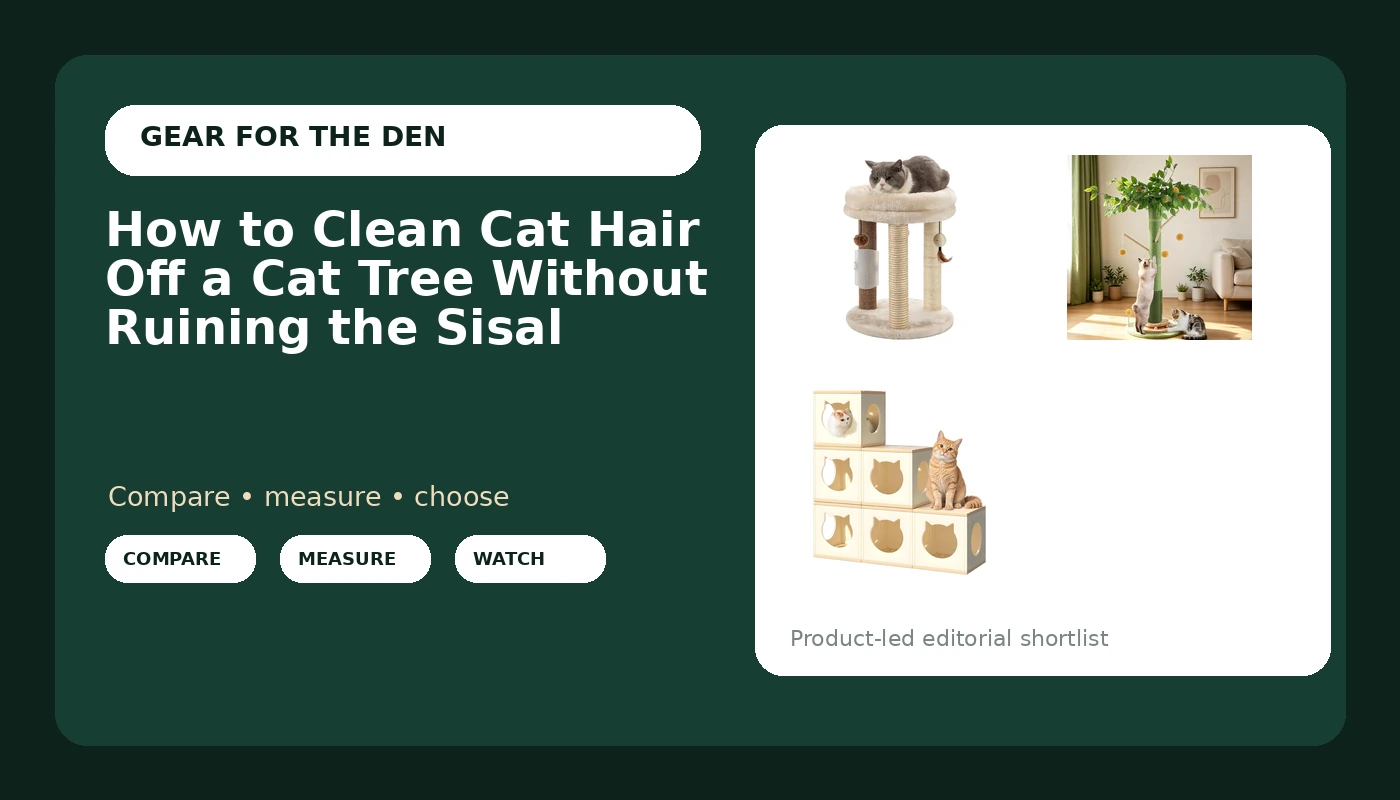
Cat hair does not sit on a cat tree. It weaves into it. Sisal rope catches loose fur the way a comb catches tangles, carpet holds it flat against the base, and the plush on the platforms presses it down until a beige tower looks gray. If you have ever tried to clean cat hair off a cat tree with nothing but a vacuum, you know the result: a surface that looks better in dim light while a matted layer stays buried in the weave.
The fix is not more suction. It is the right order of operations. Lift the dry hair first, then work the surfaces a vacuum cannot reach, then deal with the fabric covers, and only then put the tower back together and tighten everything down. Done in that order, the job takes about twenty minutes and you can repeat it once a month.
This guide covers eight steps in sequence, plus the three trees I used to sort the method out, because the material mix on a tower decides which step matters most. Rope posts behave differently from plush platforms, and a hard plastic cube tower is a different job again.
Why you should trust me
I have lived with cats for a long time, including one long-haired cat who sheds in visible clumps and two shorthairs whose fur behaves more like dust. Cat trees are the piece of pet furniture I have cleaned more than any other, partly because they sit in the middle of the room and collect everything: fur, dander, tracked litter, and the occasional hairball.
I have made most of the mistakes worth making. I have soaked a sisal post and watched the wrap loosen. I have run a beater bar across a plush platform until the backing frayed. I have put a fabric cover through a hot dryer and pulled it out a size smaller. What follows is the routine I settled on after those mistakes, and the reason each step sits where it does.
How I picked and how I tested
The three trees below are not here because they are the best towers on the market. They are here because they cover the three material mixes you will actually be cleaning, and each one forces a different decision. I sorted them by the specs that decide whether a tower is easy to keep clean: platform height, post diameter, shelf depth, weight limit, anchor type, perch width, and whether the fabric parts come off.
Post diameter comes first. A thicker post with a tight sisal wrap is easier to brush than a thin post with loose coils, because you can get a brush into the gap between the wraps and pull the hair out in one direction. Shelf depth tells you how far you have to reach into a corner with a crevice tool. Perch width tells you whether a lint roller fits on the platform without hanging over the edge. Hammock fabric matters most of all, because a cover that unzips is the only part of a cat tree that can go into a washing machine.
Weight limit and anchor type matter for a reason people miss. You have to push on a tower to clean it. A tall tree with a light base will tip when you lean on the top platform, so a wall strap or a heavier base is what lets you scrub instead of dab. Carrier size is the one number on this list that does not apply here, since that belongs to travel crates.
I did not measure anything with instruments. I read the construction on each listing, checked what the maker says about assembly and anchoring, and matched every tree to the steps it can take.
Budget pick: MECOOL 4in1 Small Cat Tree,Scratching Post with Tower Soft Bed, Sisal Carpet Jute Posts with Three Hanging Ball Toys and Massage Brush for Indoor Cats
Budget pick
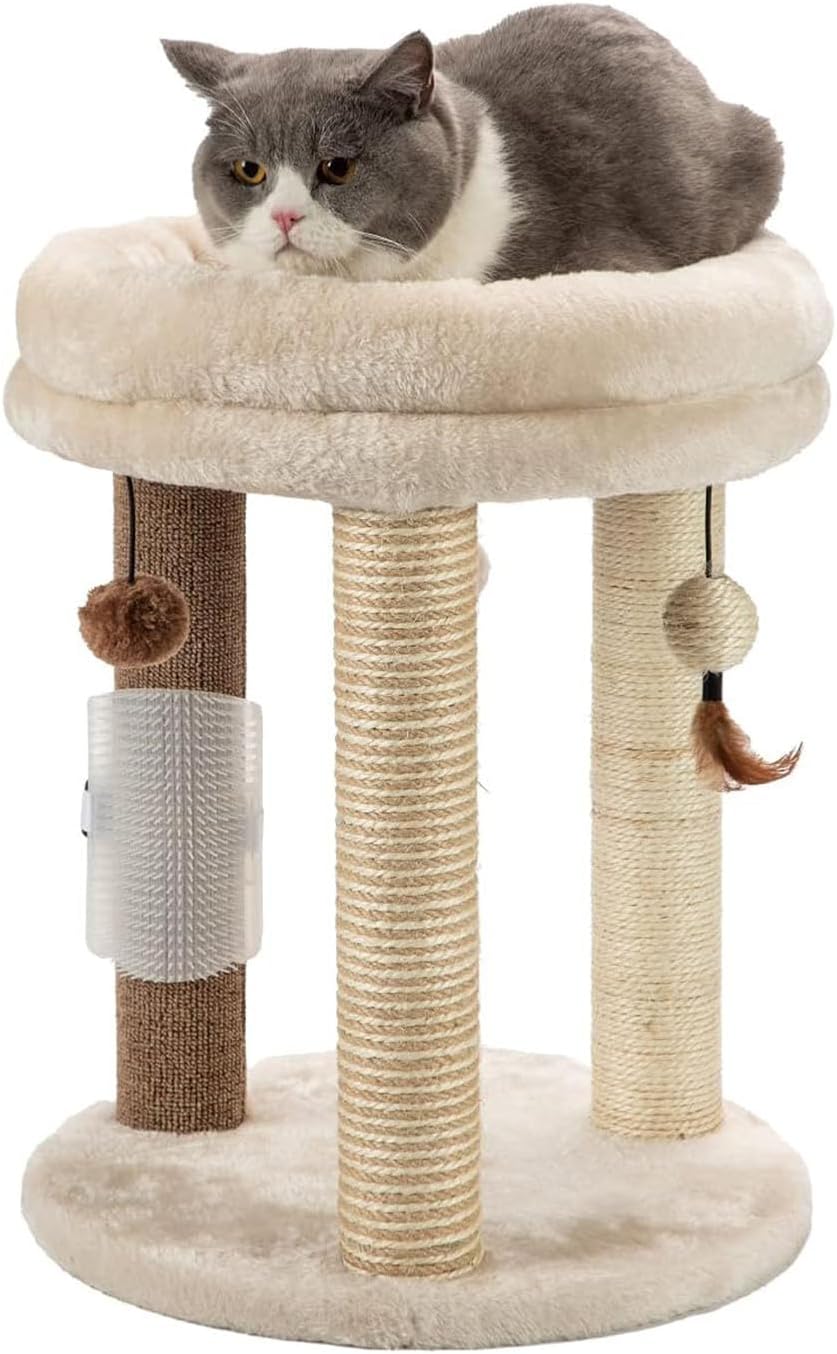
MECOOL 4in1 Small Cat Tree,Scratching Post with Tower Soft Bed, Sisal Carpet Jute Posts with Three Hanging Ball Toys and Massage Brush for Indoor Cats
This is the small-tower shape most apartments end up with: sisal and jute posts, a soft bed, a couple of small platforms, and hanging toys on elastic. Check current Amazon price. The cleaning story here is mixed materials in a small footprint, which is good news. The posts are thin enough that a rubber brush wraps around them in a single pass, and the whole tower is light enough to slide onto a towel so you are not chasing fur across the carpet.
The soft bed is the part to watch. If the cushion unzips, shake it outside, then wash it cold in a mesh bag and air dry it. If it is stitched in place, vacuum it with a brush attachment on low, then go over it with a damp rubber glove. The hanging toys collect hair in the strings, so roll a lint roller down the elastic and wipe the plastic massage brush with a damp cloth.
Flaws but not dealbreakers: The low platform height means the top perch sits close to the floor, and a big cat will outgrow it. The light build is also why it shifts when you push on it, so clean it against a wall or hold the base with one hand.
Anyone with a small apartment and one or two cats who wants a tower they can clean without a step stool will be fine here.
Our pick: 46" Tall Cat Scratching Post, Natural Sisal Cat Tree for Indoor Adult Cats
Our pick
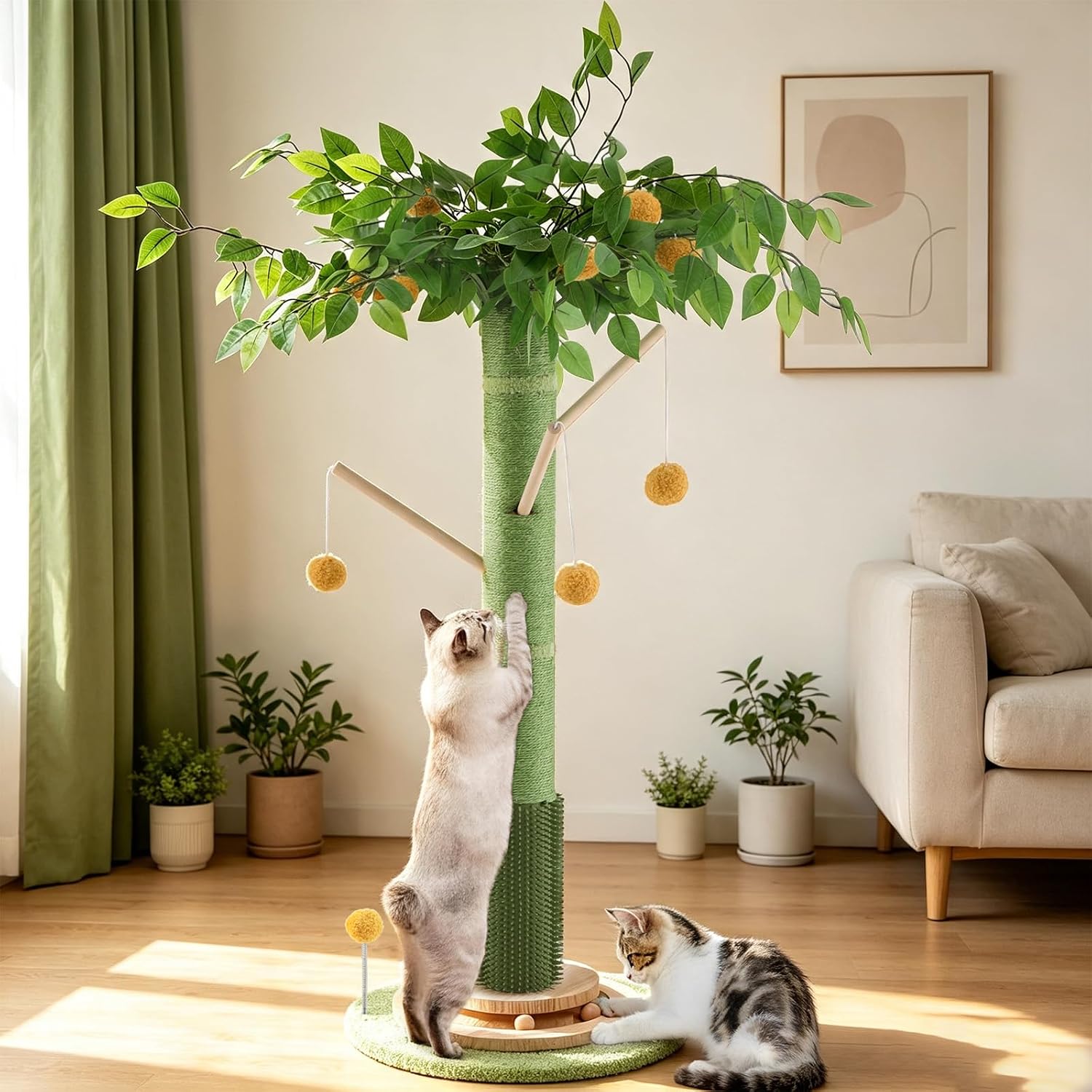
46" Tall Cat Scratching Post, Natural Sisal Cat Tree for Indoor Adult Cats
A tall single post is the hardest thing in this guide to clean at the top and the easiest to clean at the bottom. Check current Amazon price. Natural sisal wraps a post that stands 46 inches tall, which means the fur near the top has been pressed in by a cat launching off it, and the fur near the base has been sitting there for weeks.
The method is the same wrap-and-brush pass as any rope post, with one adjustment: work from the top down and let the loosened hair fall past the sections you have already finished. A post this tall is easier to do in three sections than in one long reach over your head.
Because it is a single post on a compact base, the anchor type is the number that matters. A tall post with a small footprint can rock when you lean into the top third, so check whether the base is weighted or whether the maker includes a wall strap, and steady the post with your free hand while you brush. The perch width up top is narrow, which is fine for a cat and awkward for a lint roller.
Flaws but not dealbreakers: One post means one place to scratch, so a two-cat household will still want a second surface. The narrow base is the trade you make for the small footprint.
Anyone with an adult cat who scratches vertically and wants a rope post a brush can actually wrap around should start here.
Upgrade pick: 6-Cube Stackable Cat Tree Tower, Plastic Cat Tunnel for Indoor Cats
Upgrade pick
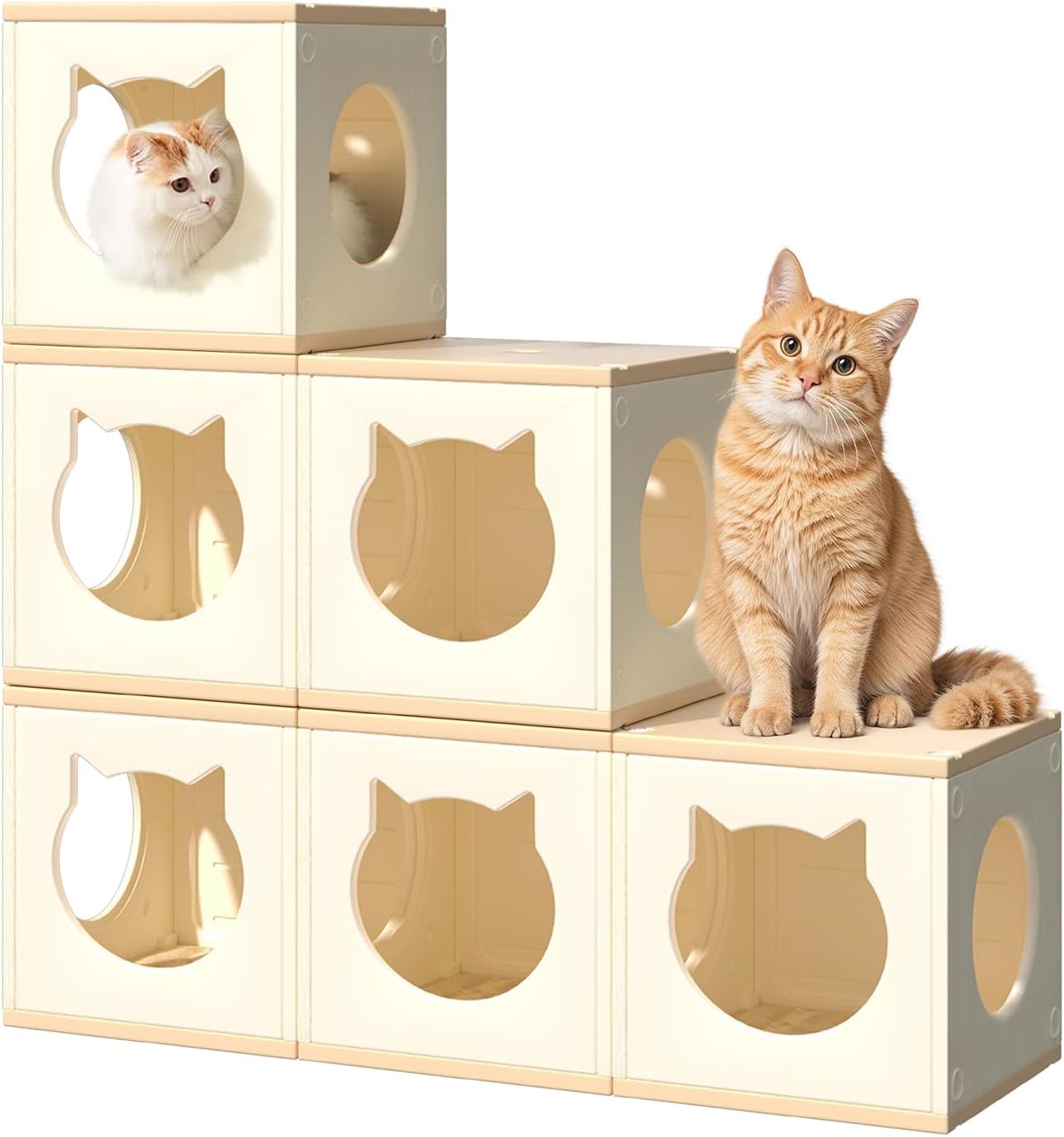
6-Cube Stackable Cat Tree Tower, Plastic Cat Tunnel for Indoor Cats
Hard plastic changes the job completely, and mostly for the better. Check current Amazon price. There is no rope to fray and no plush to mat, so the cube tower wipes clean with a cloth and mild soapy water. The catch is static. A tunnel holds a film of hair on the inside that you cannot see from the doorway, and it clings until you wipe it twice, once damp and once dry with a microfiber.
The cubes stack, which means the inside faces are the real work. Use a crevice tool along the seams and into the corners of each cube, and check the shelf depth inside each opening before you assume the vacuum will reach. On the deeper cubes it will not, which is why the cloth matters as much as the vacuum here.
The weight limit on a stackable tower is the spec to read carefully, because the higher you stack it, the more leverage a jumping cat puts on the joints. A heavier base and a wall anchor give you a tower you can lean on while you clean it. Wipe the plastic down after every full clean and dry it completely so no water sits in the seams.
Flaws but not dealbreakers: It takes up more floor than the other two and costs more, and the tunnel is the one spot where hair hides out of sight. Hard surfaces are also cold in winter, so most cats still want a cushion inside.
Anyone with multiple cats and a wall to anchor to will find this the easiest of the three to keep clean.
The actual workflow: how to clean cat hair off a cat tree
Here is how to clean cat hair off a cat tree in eight steps. Gather a rubber brush or a pair of rubber gloves, a lint roller, a vacuum with a brush attachment and a crevice tool, a microfiber cloth, mild dish soap, a mesh laundry bag, and a box of baking soda. Work outside or over a washable mat if you can.
Step one: Read the tower before you touch it. Walk around it and list the materials: sisal rope, jute, carpet, plush, hard plastic. Check the anchor type and whether the tower is strapped to the wall, and note the weight limit and platform height so you know which parts will take your weight when you lean in. If a bolt is loose, tighten it first. You are about to push and pull on this thing, and a tower that shifts mid-clean is how people crack a post.
Step two: Dry pass first. Hair releases from a dry surface far more easily than a damp one. Put on rubber gloves and sweep every rope post and plush platform with your flat palm, working in one direction. The rubber grabs the fur and rolls it into a rope you can peel off. Do the top platform first, then work downward so the loose hair falls past the parts you have already cleared.
Step three: Vacuum with the right attachment. Switch the vacuum to low suction and use the brush attachment on plush and carpet. Use the crevice tool along seams, into corners, and inside the cube openings. Do not drag a beater bar across sisal, because it frays the rope. Hold the hose still and let the brush lift the hair instead of scrubbing back and forth.
Step four: Work the rope. Sisal and jute hide hair in the gaps between coils. A stiff brush or a rubber brush, worked around the post in the direction of the wrap, pulls it out. Follow with a barely damp microfiber cloth. Barely damp matters: soaking the rope loosens the adhesive and the wrap starts to slip. On a thick post, do it in sections and rinse the cloth often.
Step five: Covers and hammock fabric. Anything with a zipper comes off. Shake it outside first, then wash cold on a gentle cycle in a mesh bag with a small amount of detergent and no fabric softener, which leaves a residue that attracts more hair. Air dry. Knowing how to wash cat hair off a cat tree is mostly about knowing which parts come off and which parts stay bolted on, because you cannot wash cat hair off a cat tree in one pass. The covers go in the machine; everything else gets done by hand.
Step six: Plastic cubes and tunnels. Hard plastic is the easy part, with one catch. Wipe the inside and outside with a cloth and mild soapy water, then rinse with a clean damp cloth and dry completely. Static holds a film of hair inside a tunnel, so wipe it twice, once damp and once dry with a microfiber. Never spray cleaner directly into a cube, because it runs into the seams and sits there.
Step seven: Odor and buried dander. Sprinkle baking soda over carpet and plush, let it sit fifteen minutes, then vacuum it out. That lifts the dander smell a plain vacuum leaves behind. If a cat has marked the base, use an enzyme cleaner on the spot, let it work, then rinse with a damp cloth and dry. Test any liquid on a hidden corner first. Never use bleach on sisal or jute, because it weakens the fiber and the color bleeds.
Step eight: Reassemble, tighten, and set a schedule. Put the covers back on, check every bolt and the anchor strap, and confirm the posts are seated. Then decide how often this happens: a rubber glove pass weekly, a full eight-step clean monthly, and a spot clean the day after any cat has been sick on it. A washable mat under the tower catches a surprising share of the fur and is easier to clean than the tower itself.
The competition and why it lost
The tools people buy first are usually the wrong ones. A robot vacuum is great for the floor and useless against a rope post, because the post has to be brushed, not swept. A sticky lint roller is fine for a plush platform and wasteful for a whole tower, since the sheets load up in a single pass over sisal. A carpet rake works on a carpeted base and does nothing for jute. An upholstery shampooer is the wrong tool here as well: the water it leaves behind in rope and in the seams of a cube is a bigger problem than the hair you removed.
None of those are bad products. They are just not the method. There is no single gadget that will clean cat hair off a cat tree in one pass, which is why the steps above are ordered the way they are. If you want to cut the hair off at the source, that belongs in our guide to grooming a long-haired cat, not here. The trees above are the ones this workflow was built around, and the same eight steps work on any tower with the same materials.
What this all costs
Everything in this workflow except the trees is cheap. A rubber brush, a lint roller, a mesh laundry bag, a box of baking soda, and a bottle of enzyme cleaner together cost less than one of the trees, and they last for months. The real money is in the tower, and the three above sit at very different points on that scale. Check current Amazon price on the small MECOOL tower, the tall sisal post, and the cube tower before you decide, because the material mix matters more than the number on the listing.
The time math is the part people forget. A weekly rubber glove pass is about three minutes. The full eight-step clean is twenty to thirty minutes once a month. That is roughly an hour a year on a tower you pay for once and keep for years. Compare that to replacing a tree every eighteen months because the plush is matted and the rope smells, and the cleaning routine becomes the cheapest thing in the room.
One last number worth keeping: a tower with a proper wall anchor and a weight limit that matches your cats is a tower you can clean without it moving. If yours rocks when you push on the top platform, fix that before you scrub anything, because the fall is the expensive part.