The automatic litter box vs standard litter box question usually arrives late at night, standing over a box that needs scooping while a cat supervises from the hallway. After years of living with cats in apartments and houses, I have learned that the mechanism matters far less than the fundamentals: box size, entry height, litter depth, and whether the whole setup is genuinely easy to keep clean. This comparison treats the automatic-versus-standard argument as what it is, a trade of money and complexity for convenience, and then looks at the four pieces of gear that make either setup actually work.
For a one or two cat home, the smartest money in 2026 goes to a big standard box you can clean in 30 seconds, and the EGMEHOAD XXXL stainless steel box is the one I would start with. An automatic box earns its price only when nobody in the house is willing to scoop daily.
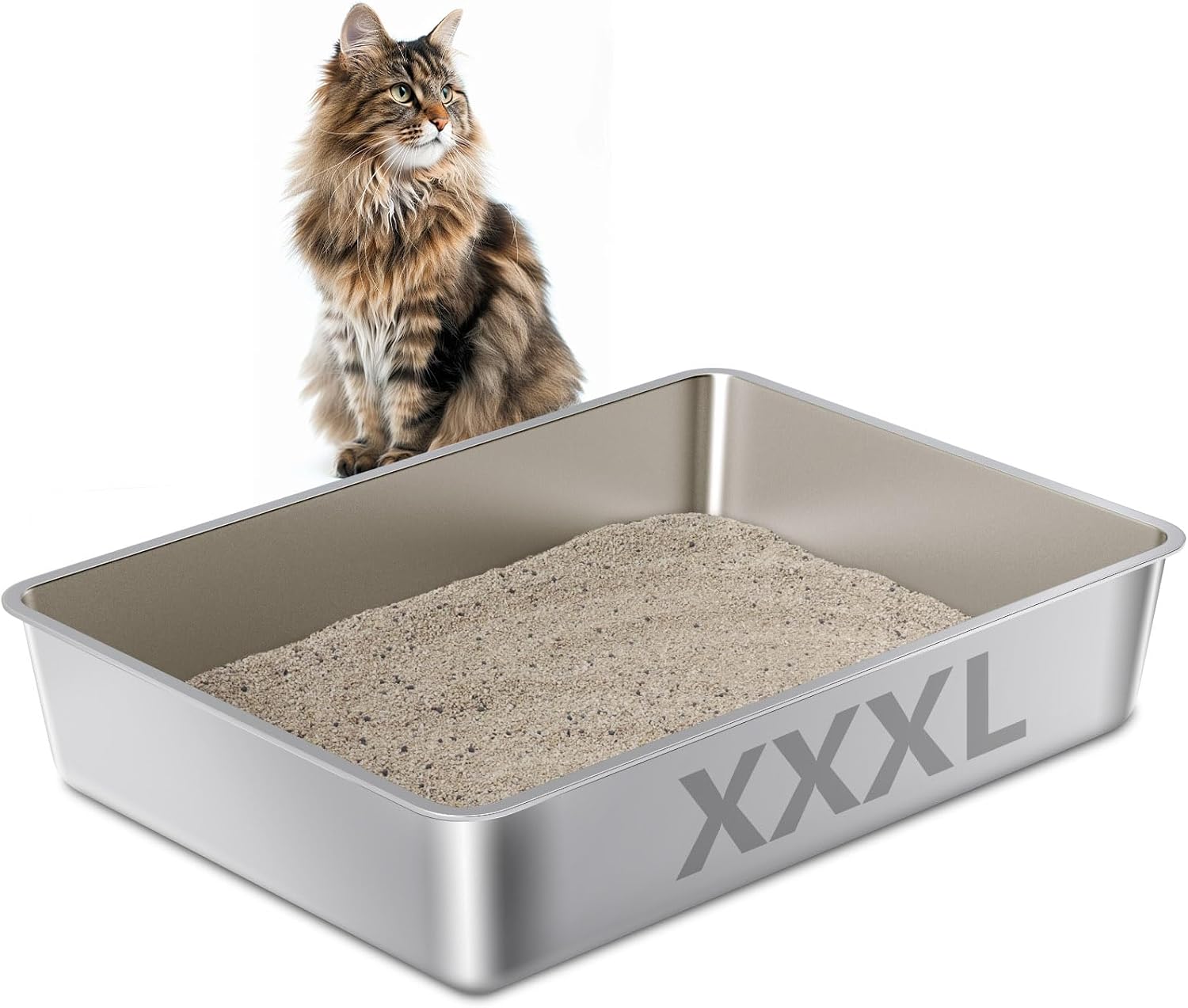
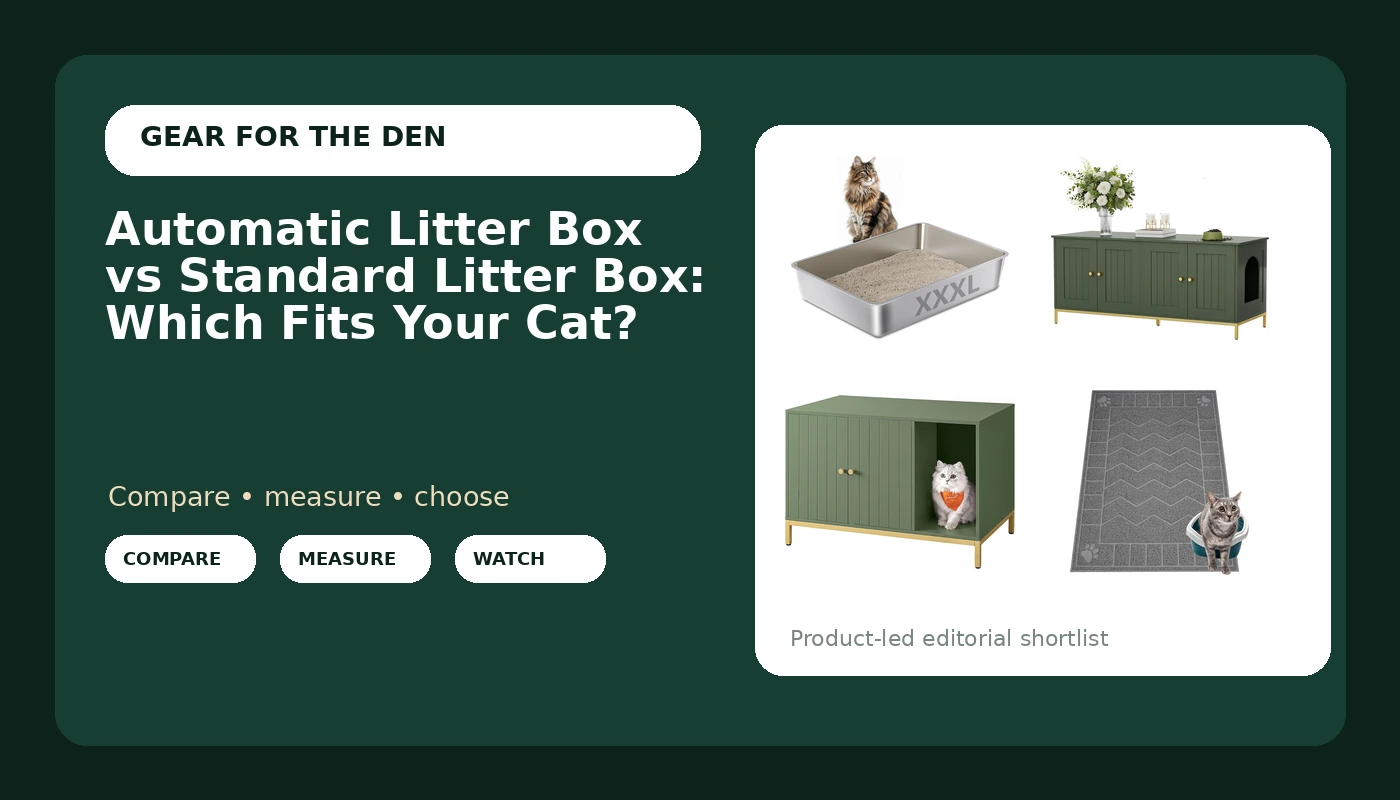
EGMEHOAD XXXL Stainless Steel Cat Litter Box
Extra large stainless steel pan that will not absorb odor, scrapes clean in seconds, and fits a big cat with room to turn
No lid, so a vigorous digger can still kick litter over the rim
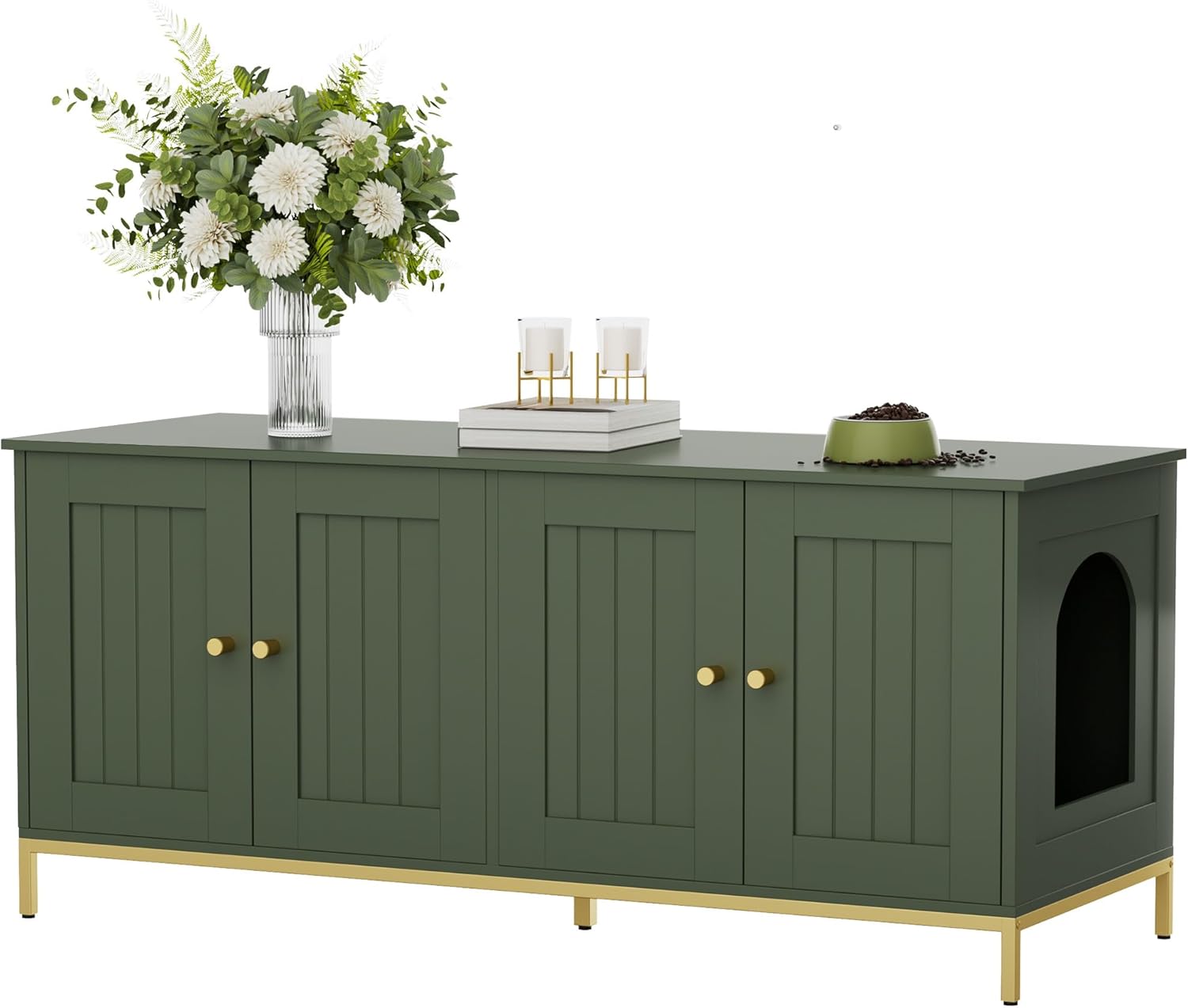
Homhedy 47.2" L Cat Litter Box Enclosure for 2 Cats
Long cabinet footprint sized for a multi-cat household, hides the box, and doubles as furniture in green and gold
Highest price here, and a closed cabinet holds odor in unless you stay on top of cleaning
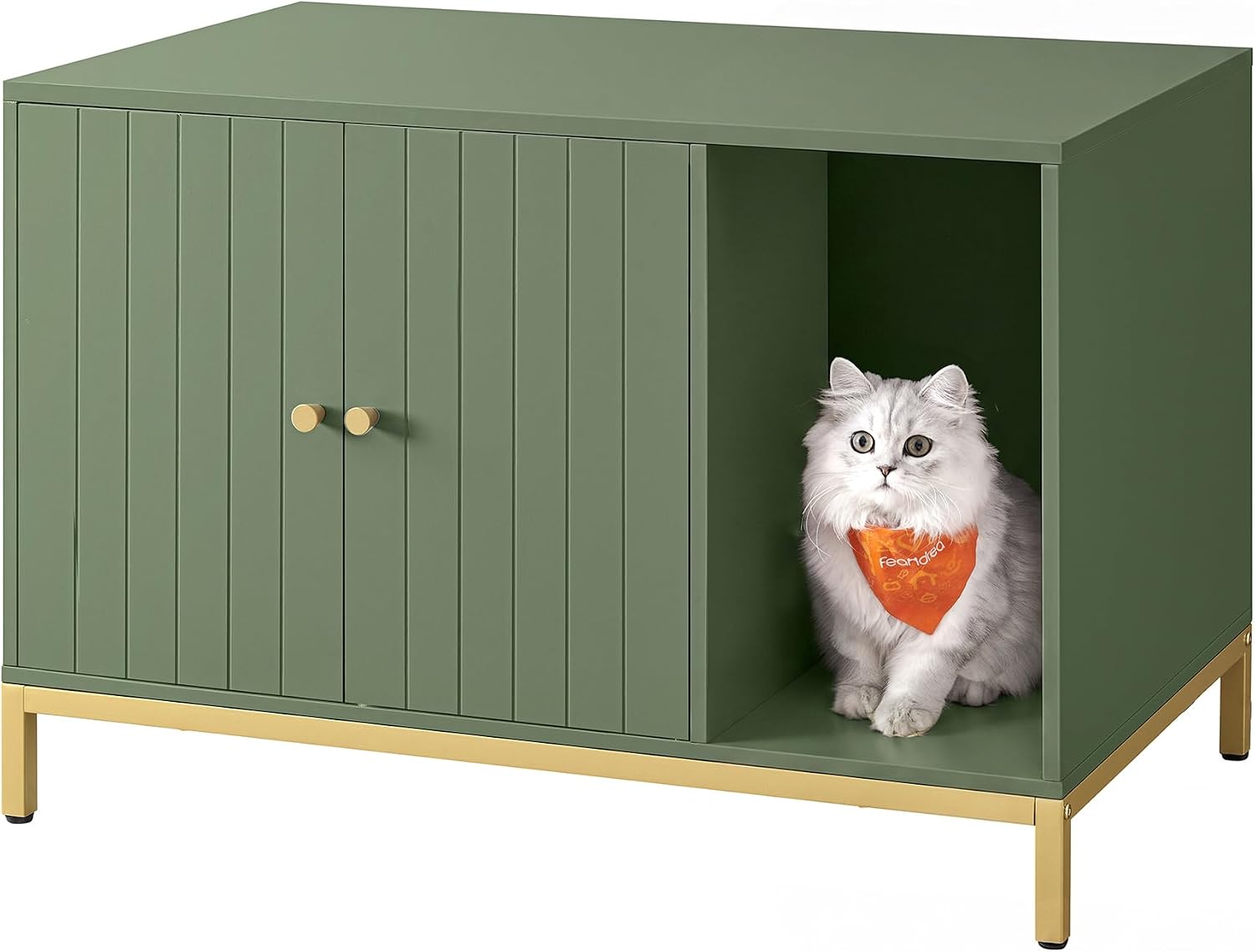
Feandrea Cat Litter Box Enclosure with Scratching Mat
Tall legs make the floor under the box easy to sweep, and the built-in scratching mat gives the cat a legal place to scratch
Smaller interior than the Homhedy, so it suits one cat better than two
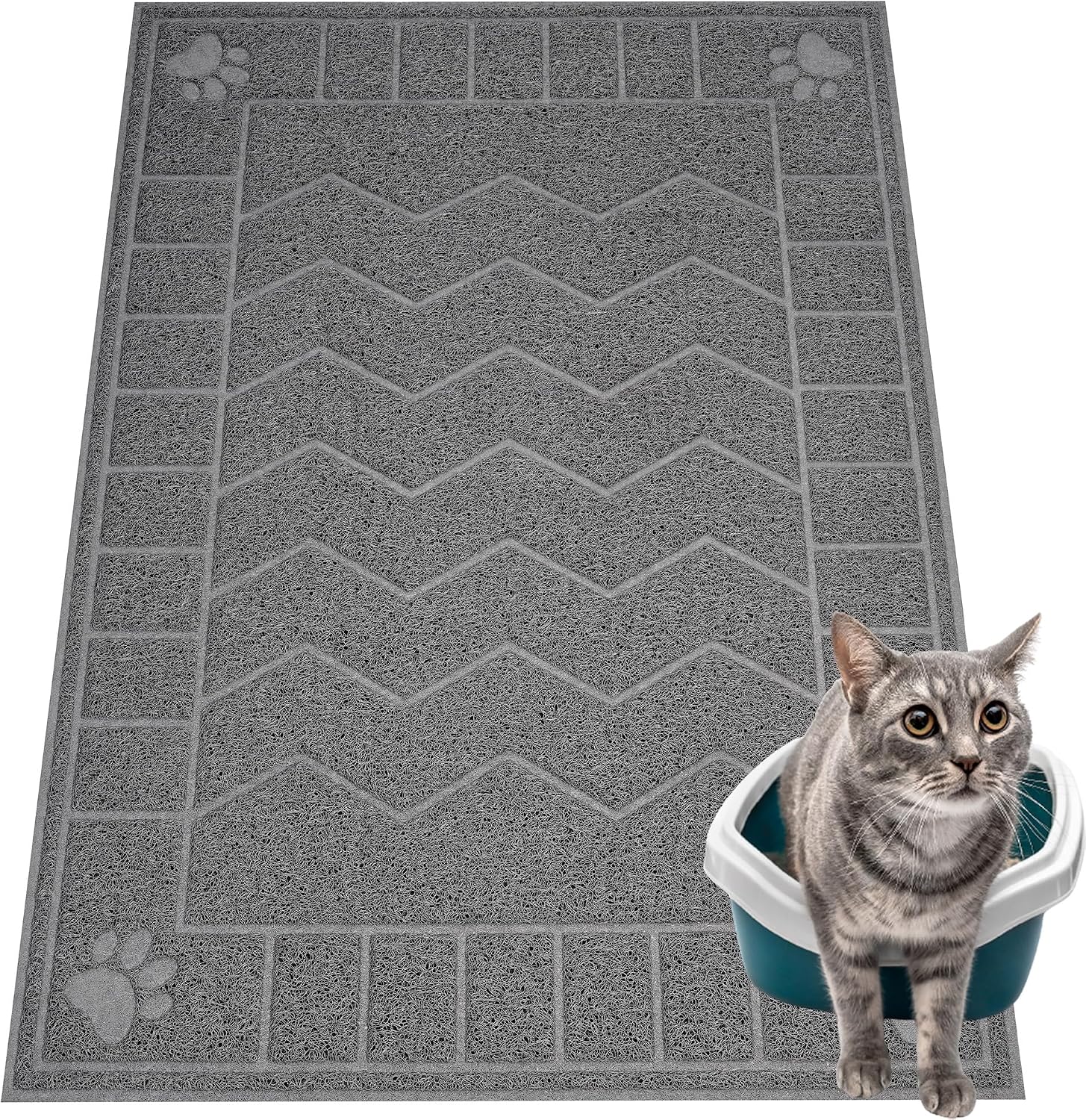
Motsamla Cat Litter Box Mat, 35" x 24"
Large waterproof trapping mat with a texture that knocks litter off paws before it reaches the carpet
Needs rinsing, and it is useless if you tuck it half under the box
Prices and availability may change.
The automatic litter box vs standard litter box question
An automatic box does the scooping for you. Depending on the design, a rake sifts clumps into a sealed waste drawer, or a drum rotates and drops them there. A sensor range watches for the cat, waits a set delay after the cat leaves, and then runs the cycle. That convenience comes with requirements: you have to use a clumping litter with a fast clumping speed, you have to keep litter depth topped up, and you have to empty and wash the waste drawer on a schedule. When the sensor gets confused, the box stops mid-cycle, and you find out about it the same way you find out about everything else, by smell.
A standard box asks more from you and less from everything else. You scoop once or twice a day, add litter when the level drops, and wash the whole thing every couple of weeks. There are no motors, no firmware, and no sensor to clean. A standard box also comes in sizes an automatic unit cannot match, which matters more than most buyers expect.
Put the standard litter box vs automatic litter box argument aside for a moment and think about what both designs share. Both need litter deep enough to bury waste, both need a box long enough for the cat to turn around, and both need a floor mat to catch what the paws carry out. Get those three things wrong and no amount of automation fixes it.
If you have one cat and a scooping habit, the difference between automatic litter box and standard litter box is mostly price and repair risk. If you have three cats and a job that keeps you out of the house for 12 hours, that difference flips, and the automatic unit starts looking like a bargain. Whether you choose an automatic litter box or standard litter box, the size and placement rules are identical. The automatic litter box vs standard litter box trade is really a trade of your money against your time.
Box size, entry height, and litter depth
Most boxes sold in pet stores are too small for an average adult cat, and that single fact causes more litter box problems than litter brand or box style. A cat needs to stand, turn, and dig without touching the sides. As a working rule, look for a box at least one and a half times the length of the cat from nose to base of tail, and wider than the cat is long.
That is where the EGMEHOAD XXXL stainless steel box earns its place. A stainless steel surface does not hold odor the way scratched plastic does, and it scrapes clean with a scoop in seconds, which matters because a box you dread cleaning is a box that gets cleaned less often. Litter depth is easier to manage too: two to three inches of clumping litter gives a cat enough material to dig and bury, and it gives the clumps enough mass to hold together when you lift them out.
Entry height is the spec people ignore until it becomes a problem. Kittens, senior cats, and cats with arthritis need a low entry or a ramp. A high walled box holds litter in, but if the cat has to jump to get inside, the cat may simply go somewhere else. Watch the cat use the box for a week before you decide the setup is finished, and adjust before you blame the cat.
Odor control and the waste drawer
Odor control is chemistry plus airflow plus how often waste leaves the house. An automatic box with a sealed waste drawer traps odor between cycles, which is a real advantage in a small apartment. That advantage disappears if the drawer sits for a week or if the litter depth is too shallow for clumps to form properly in the first place.
Scratched plastic is the quiet enemy here. Every scoop mark holds a little ammonia, and no amount of baking soda fixes a surface that has already absorbed it. Stainless steel and sealed finishes do not have that problem, which is why the metal box in this group is the one I would pick for a cat with a sensitive nose or a household where the box sits in a living space rather than a basement.
Clumping speed matters more with automatic boxes than with manual ones. A slow clumping litter reaches the rake or the drum while it is still soft, and you get smeared litter instead of a clean drop into the waste drawer. With a standard box, a slow clumping litter just means you wait a few minutes longer before scooping. That is a small difference in daily life and a large difference in how often an automatic unit has to be taken apart and washed.
Enclosures and multi-cat homes
Two of the products here are enclosures, which solve a different problem: where the box lives. The Homhedy 47.2 inch enclosure for two cats is built for exactly the household that is debating an automatic box in the first place, a multi-cat home where boxes need to be spread out and hidden. Two cats means two boxes in most homes, and a piece of furniture that holds a box and hides it beats a bare pan in the middle of the living room.
The Feandrea enclosure takes a different approach with tall legs and a scratching mat built in. The tall legs matter for cleaning, because you can slide a vacuum or a mop underneath, and the scratching mat gives the cat a legal place to scratch near the box. Cats often scratch the floor or the wall beside a box right after they go, so a mat in that spot absorbs some of that behavior.
Enclosures change the airflow, and airflow is part of odor control. A closed cabinet with a small door holds smell in. If you go the enclosure route, empty the box daily, wash the interior every couple of weeks, and consider leaving the door ajar. The furniture look is worth it, but only if the cleaning routine survives the furniture.
The mat is part of the system
A mat is the cheapest component here and the one most likely to be skipped. The Motsamla litter trapping mat at 35 by 24 inches is sized for the exit path of a large box, and the waterproof backing keeps urine and spilled water off the floor. Mat texture is the whole trick: a textured surface knocks litter off the paws, while a smooth mat just gives the cat a place to stand while it shakes litter onto the carpet anyway.
Place the mat so the cat has to walk across it to leave, rather than tucking half of it under the box. If the box has a high entry or the cat tends to launch out, give the mat more room on the landing side. When the mat fills with tracked litter, pour it back into the box instead of the trash, and rinse the mat when it starts to smell.
Which one should you buy
Choose a standard box first if you have one or two cats, someone is home daily, your budget is under the quoted price your cat has refused an automatic unit before, or you have a senior cat that needs a low entry. Choose an automatic box first if you have three or more cats, long workdays, regular travel, a household where the scooping chore causes arguments, and a cat that already accepts a covered box.
The automatic litter box vs standard litter box decision comes down to how many cats you feed and how often someone is actually home to notice a problem. Whatever you pick, buy the biggest box the space allows and put a mat under it. The EGMEHOAD XXXL stainless steel box plus the Motsamla mat covers the fundamentals for well under the price of an automatic unit. The Homhedy enclosure is the pick when the box has to live in a room guests see, and the Feandrea enclosure is the pick when you want the box off the floor with a scratching surface built in. Automatic units sit on top of that foundation, not in place of it.
What I would watch next
Sensor reliability is the thing to watch in automatic boxes. The category improves every year, and the units that disappoint are usually the ones where the sensor range is too short or the delay is too long for a cat that bolts out of the box. If you buy an automatic box, keep a cheap standard box set up in another room for the first month, and for any cat that is elderly, pregnant, or new to the house. A backup box costs very little and solves the problem before it starts.
The broader pattern is that owners who fix box size, entry height, litter depth, and the mat in front of the box stop thinking about litter boxes entirely. That is the goal, whether the scooping is done by your hand or by a motor.