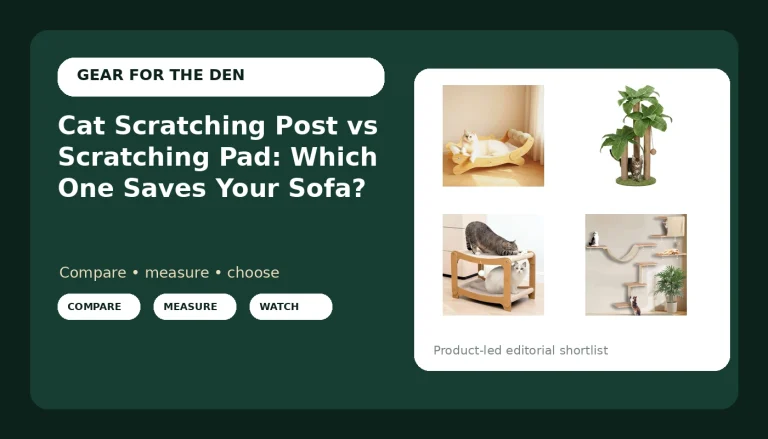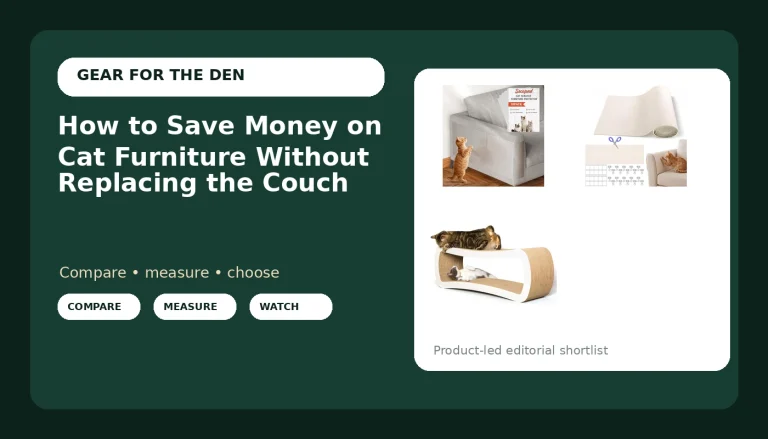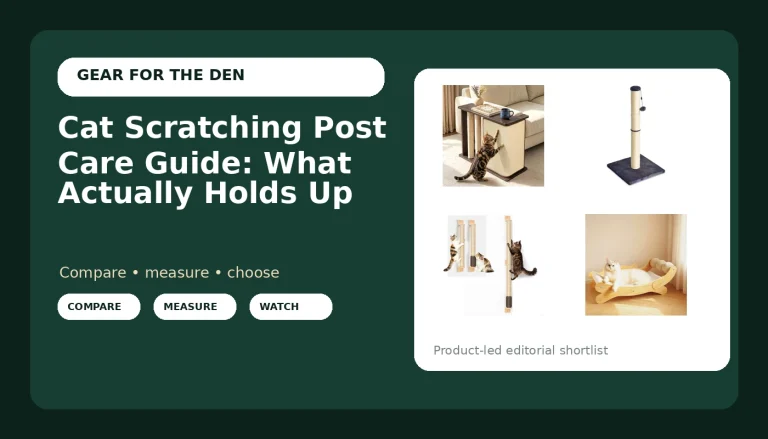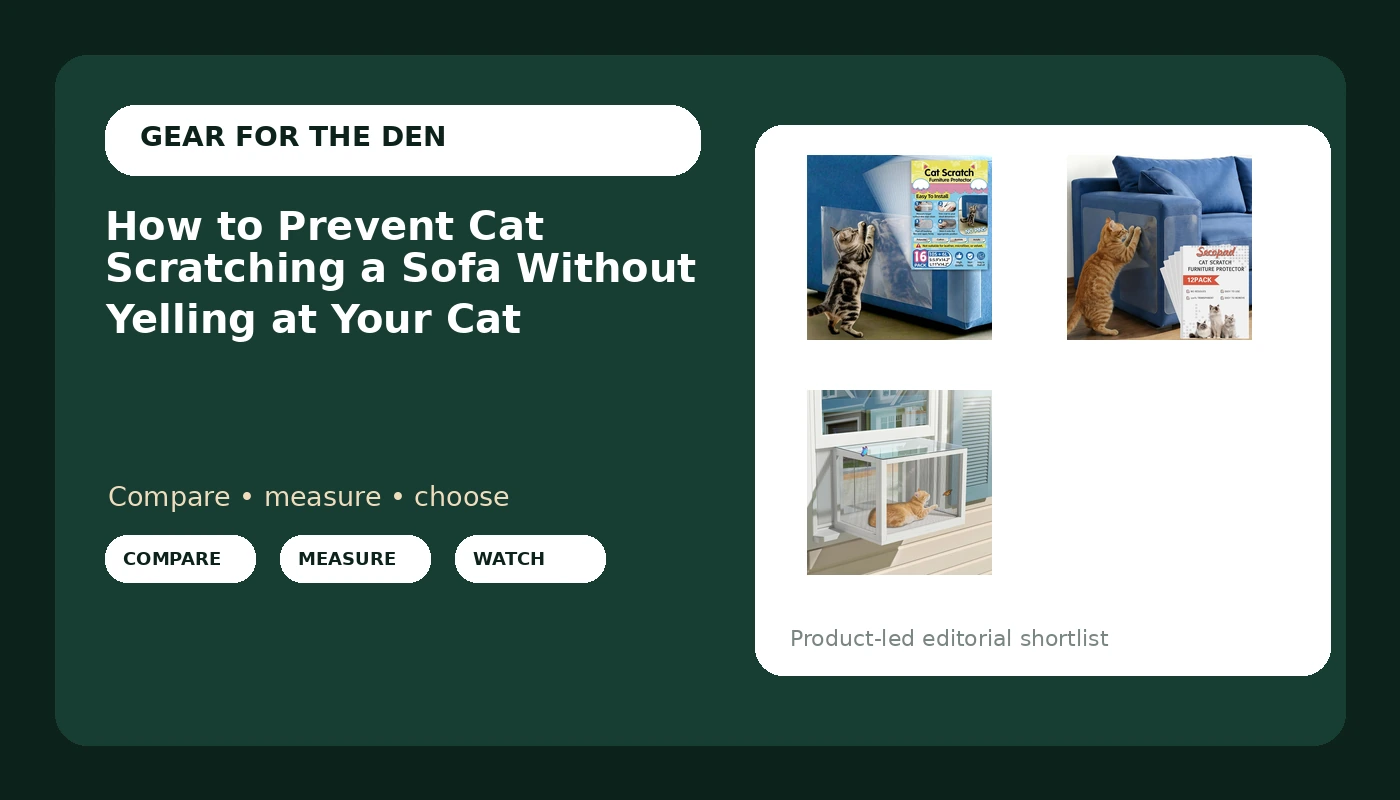
Your cat is not scratching the sofa to spite you. She is scratching it because the couch is, objectively, the best scratcher in the house: a long, stable, textured slab at exactly the height where her shoulders want to work. If you want to prevent cat scratching a sofa, you have to change that math. You do not lecture her, you do not squirt her, and you do not declaw her. You give her a better surface, you make the couch a worse one, and you put the whole thing where she already likes to stretch.
I have spent years covering cat gear, and the same pattern shows up in almost every email I get: the cat has a scratching post, the cat ignores the scratching post, and the couch arm is shredded. Nearly always the post is too short, too wobbly, or in the wrong room. The couch wins because the couch is better built for the job than the thing you bought to replace it.
This is the guide to how to prevent cat scratching a sofa that I wish I could hand to every new adopter. It covers three products and an eight step routine. It will not work in one afternoon, and it will not work if you only do half of it, but it does work, and it works without turning your living room into a plastic wrapped showroom.
Why you should trust me
I write the cat gear coverage here at Gear for the Den, which means I spend an unreasonable amount of time reading the fine print on scratchers, perches, and furniture protectors, and an equally unreasonable amount of time living with cats that test them. I have fostered cats, including one confident indoor cat who decided that one particular corner of one particular couch belonged to her. I have also watched that same cat walk away from the couch the week the setup finally matched what she was asking for.
What I do not do is pretend a product is magic. Adhesive film is not a behavior fix. A window perch is not a behavior fix. The behavior fix is a routine, and the products are what make the routine possible. If a pick here has a weakness, I say so, because a protector that lifts in a week costs you more than the money you spent on it.
How I picked and how I tested
The products below solve the two physical problems in this fight: covering the couch so scratching it stops feeling good, and giving the cat a better place to scratch and to sit.
For the protectors, I looked at adhesion on real upholstery, not on a smooth tabletop. Woven couch fabric, microfiber, and the bonded leather that shows every claw mark all behave differently, and a protector that lifts in a week is worse than none, because it teaches you that the whole approach does not work. I also looked at sheet size, residue, and how the film handles the curve of a couch arm, because a flat sheet on a curved arm is where most of these fail.
For the window box, I looked at the things that decide whether a cat actually uses it: the anchor type, the shelf depth the cat gets to lie on, the perch width across the platform, the weight limit the frame has to carry, and the platform height relative to the window sill. Those are the details that separate a perch a cat uses daily from a shelf you clean once a month. If you have ever bought a window perch that your cat ignored, it was almost certainly too narrow, too low, or too wobbly.
I did not run lab tests, and I am not going to quote numbers I did not measure. I compared construction, read the specifications, and matched each product to the job it is actually good at.
Gear that helps prevent cat scratching a sofa
Three products, three jobs. The film protectors buy you time on the couch and stop the damage while you work on the habit. The window box is the long game: a territory upgrade that gives an indoor cat something better to do than redecorate your furniture.
Budget pick: 16 Pack No Pins Self Adhesive Anti Cat Scratch Furniture Protector
Budget pick
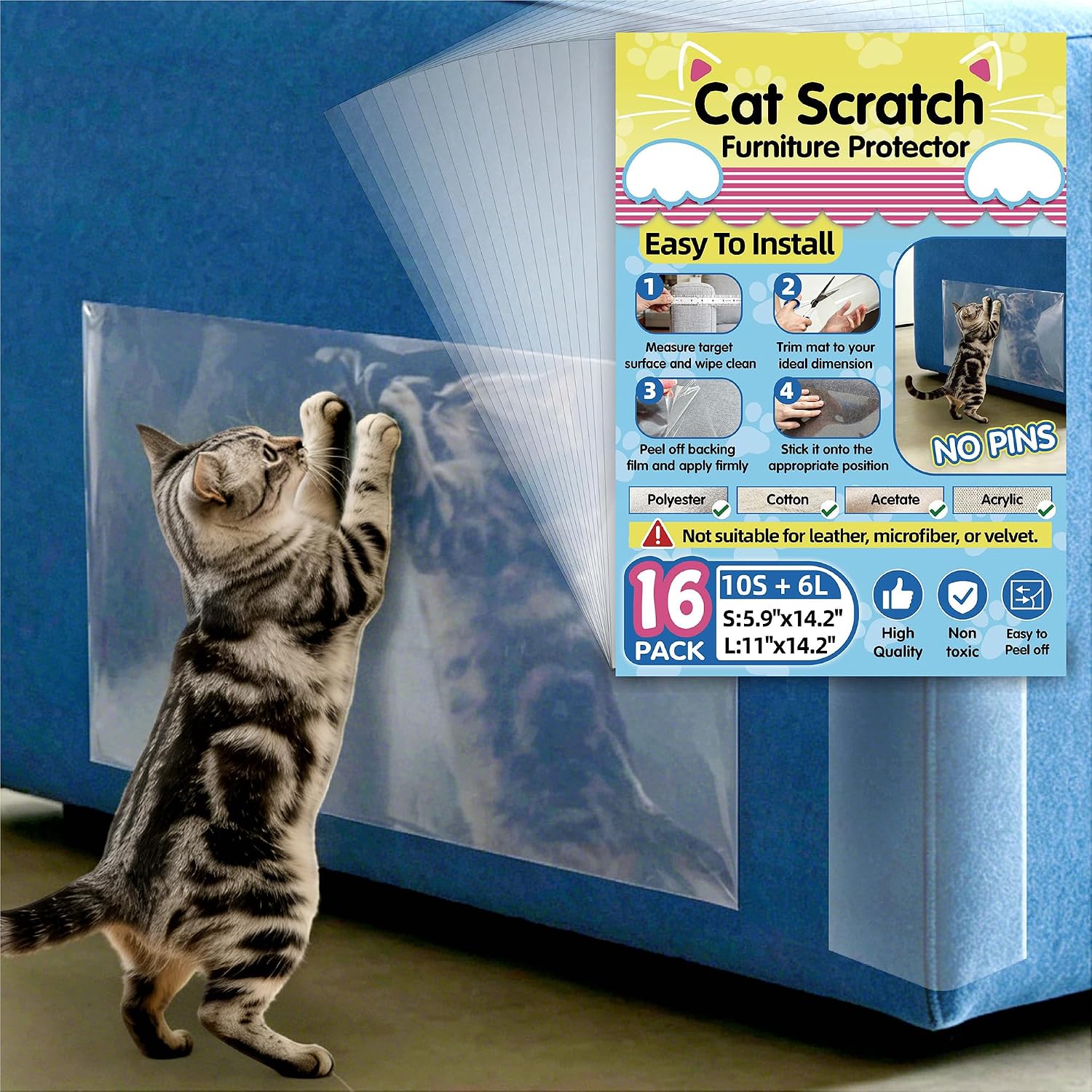
16 Pack No Pins Self Adhesive Anti Cat Scratch Furniture Protector
Check current Amazon price.
This is the throw it in the cart option, and for a lot of households it is the right first move. Sixteen self adhesive sheets, no pins, which matters more than it sounds. Pins mean holes in your upholstery, and holes in upholstery are permanent. Adhesive film is reversible, and reversible is what you want while you are still figuring out which corner of the couch is the hot spot.
The no pins design also makes it the easiest of the three to reposition in the first week. You will probably put a sheet in the wrong place, watch your cat scratch six inches to the left of it, and want to move it. With a pack this size you can, and you will still have sheets left over for the second couch arm.
Flaws but not dealbreakers: Adhesive film is a deterrent, not a solution. It stops the scratching from feeling good and it stops the damage, but it does nothing about the reason your cat chose the couch. Use it with the routine below, not instead of it. Test it on a hidden patch of fabric first, because any adhesive on any upholstery deserves that.
Our pick: Secopad 12 PCS Cat Scratch Furniture Protector, Couch Protector, 17IN
Our pick
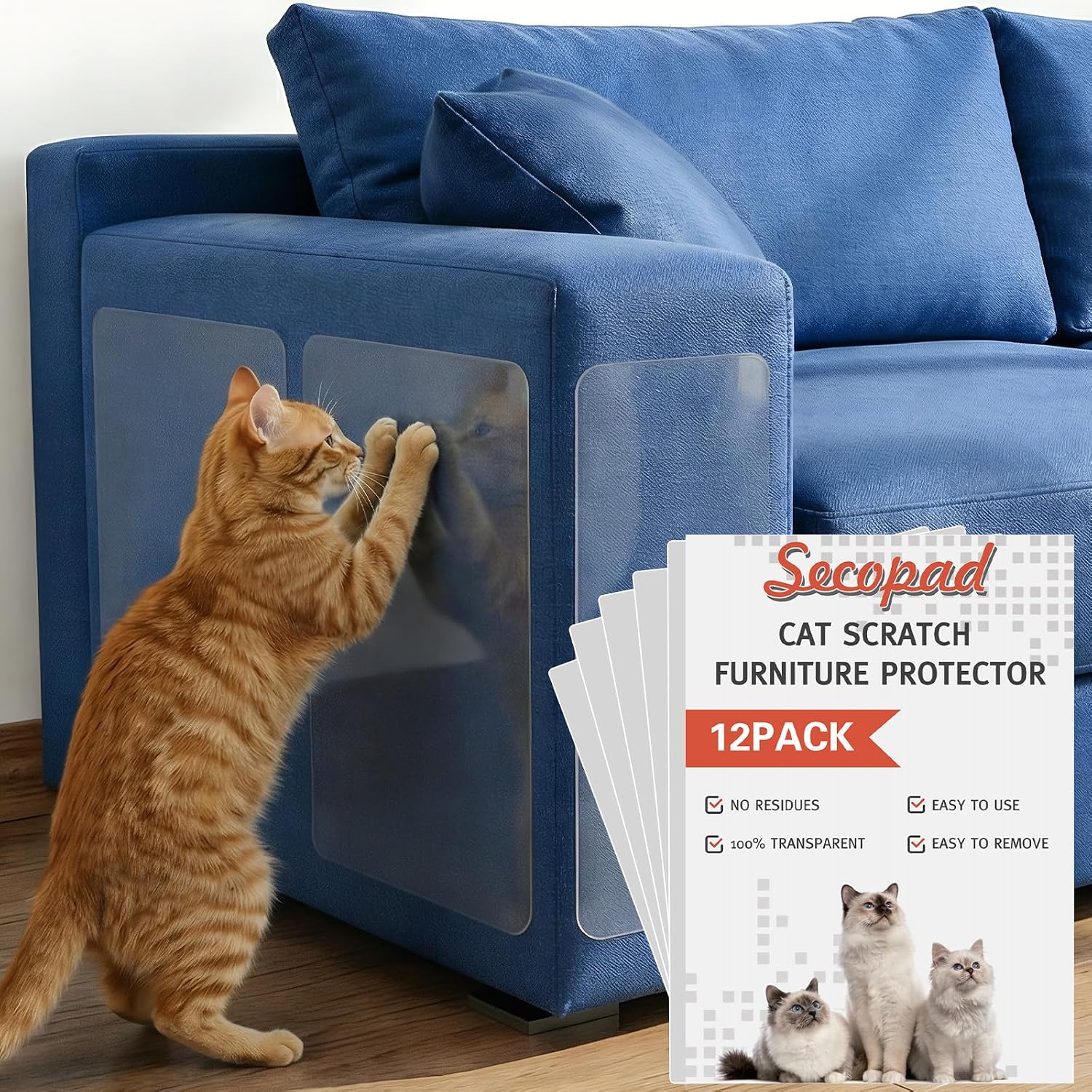
Secopad 12 PCS Cat Scratch Furniture Protector, Couch Protector, 17IN
Check current Amazon price.
The Secopad sheets are the ones I would put on a couch I actually like. Twelve pieces at seventeen inches each gives you more coverage per sheet than the budget pack, which means fewer seams and fewer edges for a determined cat to pick at. Fewer seams is the whole game with adhesive protection. Every seam is a place a claw can catch, and every place a claw catches is a place the film starts to lift.
The larger format is also easier to work around a couch arm. You want one sheet to wrap over the front edge and down the outside face where you can manage it, because a cat that scratches the top of the arm will also scratch the outside corner. Cutting a single sheet to do both beats overlapping two small ones.
A note on texture: clear film changes how the couch feels under a claw, which is the point, but it also changes how the couch looks. On a dark couch it reads as a slightly glossy patch. On a light couch it mostly disappears. That is a cosmetic trade, and it is a much cheaper trade than a reupholstery quote.
Flaws but not dealbreakers: It is still film. A cat who is bored, stressed, or short on territory will keep working at the edges. If you have more than one cat, buy two packs and cover both ends of the couch before you start the routine, because playing catch up with a cat who has already committed is harder than starting ahead.
Upgrade pick: GDLF Cat Window Box, Mosquito Proof Cat Window Catio, Min Height 20"
Upgrade pick
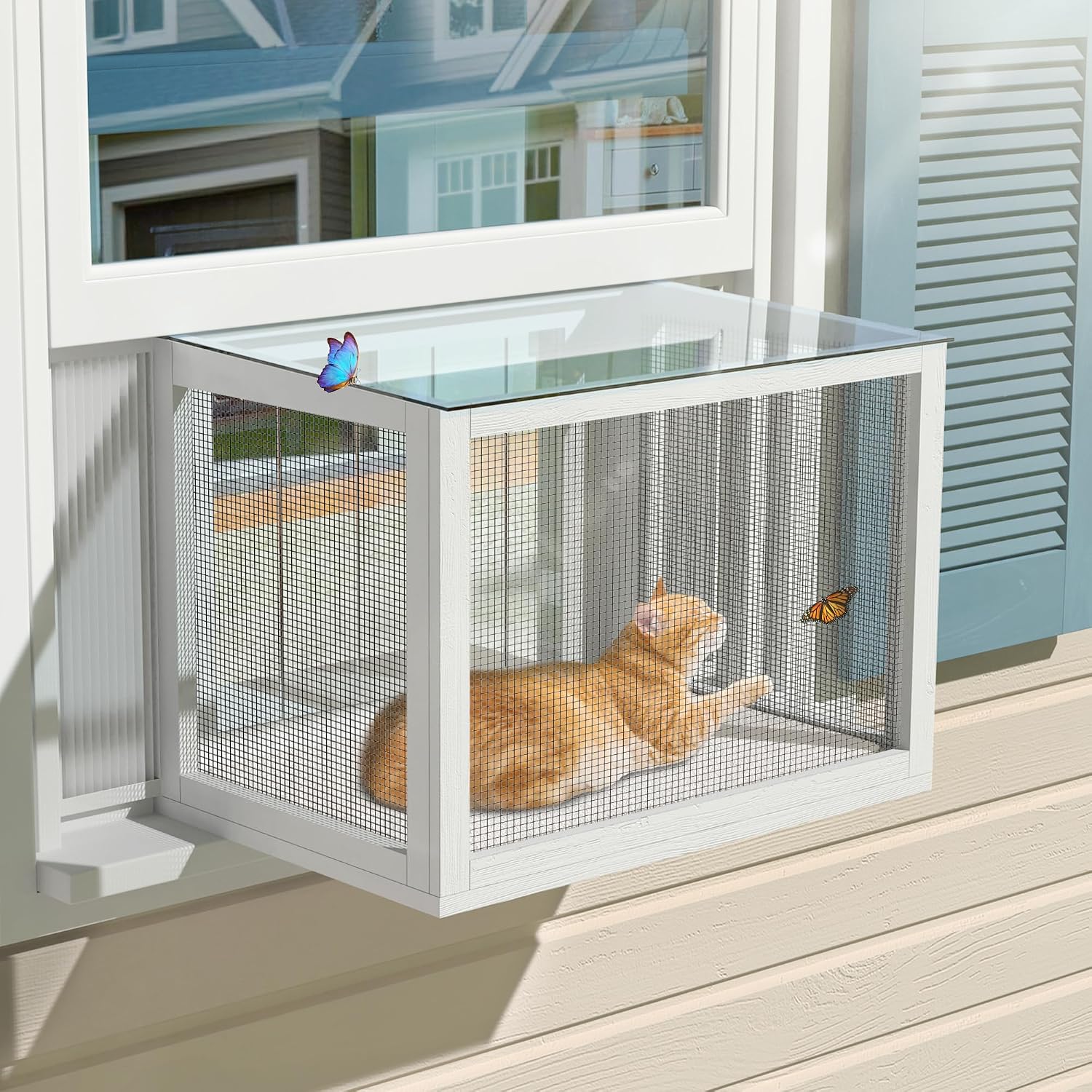
GDLF Cat Window Box, Mosquito Proof Cat Window Catio, Min Height 20"
Check current Amazon price.
This is the pick that actually changes the behavior. A window box gives an indoor cat a slice of outside: moving air, birds, street noise, sun. If the couch is where your cat goes because nothing better is happening, this is the something better. It is also the most effective distraction I know of for a cat who has decided that furniture is her hobby.
The name tells you the two things to check before you order. It is a window unit, so the anchor type matters: you want it seated in the frame the way the instructions describe, with the window closed down onto it, and you want to confirm that your sill and frame can carry the weight limit. The other number in the name, a minimum height of twenty inches, tells you the clearance the unit wants. Measure your window before you buy, not after.
Once it is up, platform height and perch width decide how much the cat uses it. A perch that is too narrow or set too low becomes a shelf she ignores. A perch at the right height, with enough shelf depth to stretch out, becomes the best seat in the house. Watch which window your cat already sits in and put the box there. If you would rather not mount a box, a window hammock with a tough hammock fabric does a similar job for less money, though it gives her less room to turn around.
Flaws but not dealbreakers: It is a window box, so it is seasonal in a lot of climates and it is useless on a window that does not open or does not get sun. It is also the biggest spend on this list. If you rent, check whether you are allowed to mount anything in the frame before you commit.
The step-by-step workflow
Now the part that actually changes the behavior. The products buy you the window; the routine is what makes it stick. Plan on four to six weeks, and plan on doing all eight steps, not the three you like best.
Step one: Find the hot spots. Walk the couch with your hand and look for the damage. Couch arms, the top back corners, and one specific end of the sofa are the usual suspects. Cats pick a spot and reuse it, so you are not protecting the whole couch, you are protecting two or three places.
Step two: Cover those spots. Apply the protector film to the hot spots first, wrapping the edges where you can. Do not cover the whole couch. A fully covered couch is a weird couch, and you will hate sitting on it, which means you will take the film off and lose the progress.
Step three: Build a better scratcher. This is where most people fail. A scratcher has to be tall enough that the cat can stretch to full height, stable enough that it does not wobble when she pulls, and covered in a material she likes. Post diameter matters: too thin and she cannot get a grip, too thick and her paws do not wrap. Sisal rope and corrugated cardboard are the two materials that work for most cats, and you may have to try both. If you are shopping for one, our guide to the best cat scratchers covers the shapes that hold up to a cat who means it.
Step four: Put the scratcher where the couch is. Not in the corner of the room, not in the basement, not in the room you think she should use. Put it within a foot or two of the damaged couch arm, angled the way the couch arm is angled. Once she uses it there for a few weeks, you can move it a few inches at a time toward where you actually want it.
Step five: Make the couch boring. Texture is the lever. A throw blanket over the arm changes the feel under her claws. Citrus and commercial deterrent sprays can help, but they fade and some cats ignore them completely, so treat them as a supporting actor. The film is doing the real work.
Step six: Add height and territory. Cats scratch to mark a space that feels like theirs, so give her more space. A tall cat tree, a wall shelf, or the window box all give her somewhere to be that is not the couch. In a multi cat house this matters double, because a cat with no high ground will defend the ground she has.
Step seven: Trim the claws and play hard. Keep the front claws blunt with regular trims, and give her a real play session with a wand toy every day for a couple of weeks. A tired cat scratches less. This is not a joke and it is not optional. Scratching is often energy with nowhere to go, and a ten minute hunt and catch session before bed does more than any spray.
Step eight: Be consistent and wait. Do not pull the film after three good days. Keep the routine for a month, then remove the film from one spot at a time, leaving the scratcher exactly where it is. If she goes back to the couch, put the film back and give it another two weeks. The correct prevent cat scratching a sofa result is boring: the couch stays intact, the scratcher gets used, and nobody had to yell.
One more thing. The ideal prevent cat scratching a sofa setup is the one your cat chooses, not the one you choose. Watch her. If she scratches horizontally on the seat cushion, she wants a horizontal scratcher, not a post. If she reaches up the arm, she wants a vertical post. Match the orientation and you are most of the way there.
The competition and why it lost
A few things that did not make the list, and why.
Nail caps are a real option and they work, but they are a maintenance item. You are gluing caps onto ten claws every few weeks, and if your cat hates having her paws handled, that is a fight you will lose twice a month. They also cover the symptom: the scratching urge does not go away, it just stops damaging things, which is fine, but it means you still have to do the territory work.
Deterrent sprays and citrus scents are the first thing most people try and the first thing most people abandon. They fade, they smell, and plenty of cats walk right past them. Use one as a layer, not as the plan.
A plain sisal post is the right idea in the wrong package if it is short and wobbly. The cheap carpeted posts at the pet store are often too short for a cat to stretch to full height, and they tip when she pulls. That is how a cat learns that the post is a bad scratcher and the couch is a good one.
Slipcovers and throws are a decent stopgap if you are renting or waiting on a reupholstery quote, but they shift, they need washing, and a determined cat will work the exposed frame anyway.
Double sided tape is the classic trick, and it works, but it is a mess on fabric and it leaves residue behind. The film protectors in this guide are the cleaner version of the same idea.
If you are also fighting litter box problems in a multi cat house, that is a different job, and we cover it in our multi-cat litter box setup guide.
What this all costs
The protectors are the smallest line item here and the window box is the largest. Neither is close to the cost of replacing a couch, and that is the comparison that matters. Check current Amazon price on each of the three before you buy, because these move around.
The real cost of this project is not money. It is the four to six weeks of consistency. The film protects the couch while the routine builds the habit, and the window box gives your cat a reason to leave the couch alone. Skip the routine and you have spent money on tape and a perch for a cat who still scratches the couch.
The math is simple: the couch you already own either survives or it does not. The protectors, the scratcher, and the play sessions are the cheapest path to the version where it survives. Do the eight steps once, keep the film on the hot spots until the habit is dead, and then take your living room back.
Your cat was never the problem. The setup was. Fix the setup.