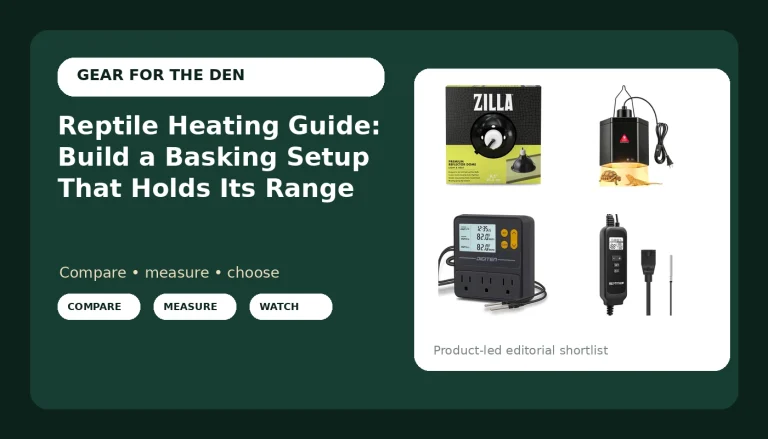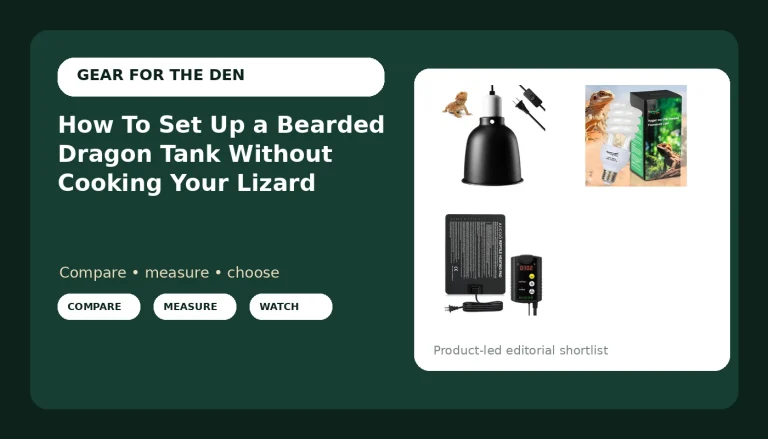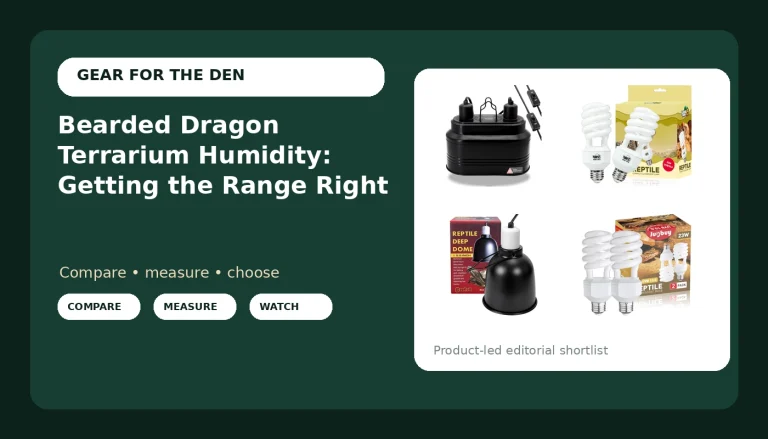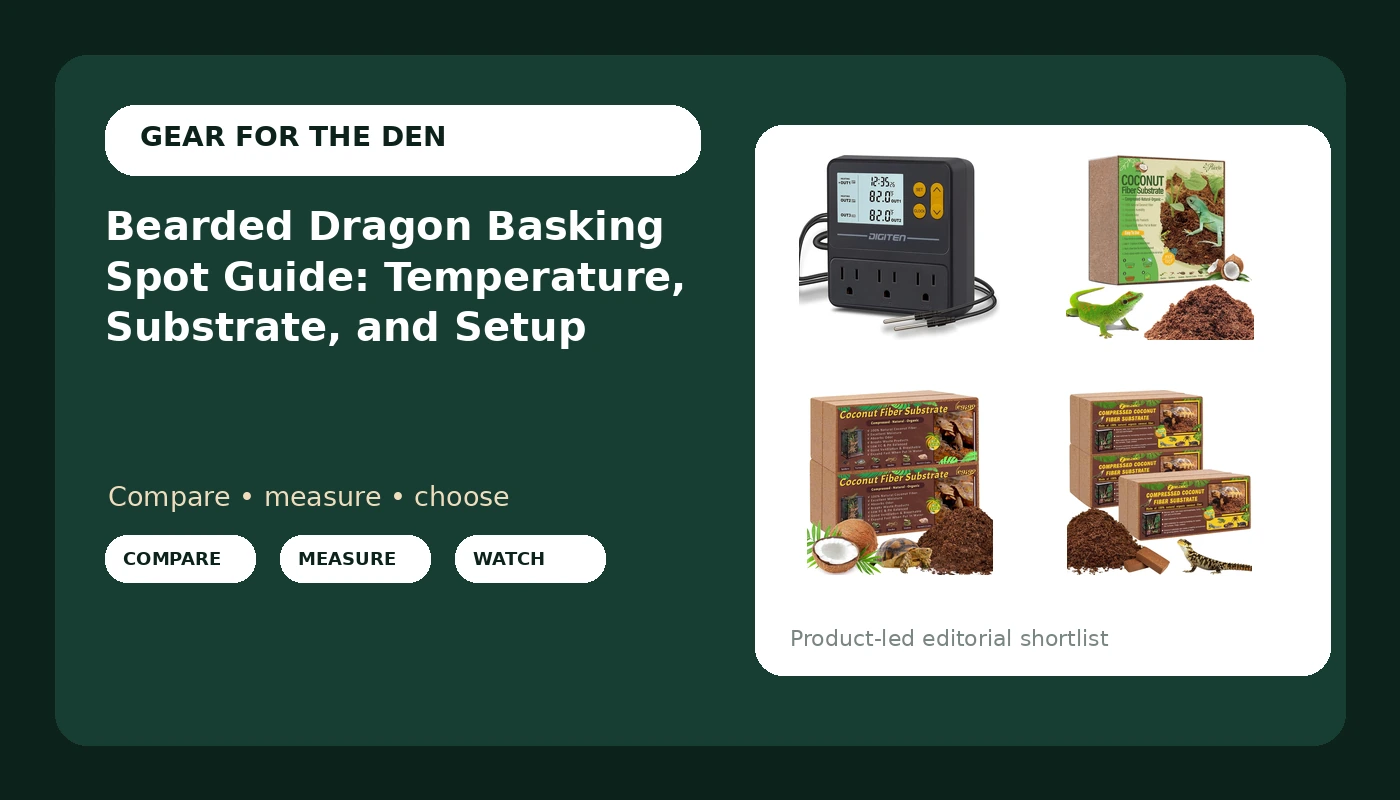
A bearded dragon basking spot is not one object. It is a small system: the lamp, the surface, the thermostat, and the substrate around it. Get the basking temperature right and your dragon will use the spot to digest, thermoregulate, and start the day. Get it wrong and you will see a dragon that never quite settles. This bearded dragon basking spot guide covers the pieces I would put around a basking spot, from the controller that holds the thermostat range to the coco coir that keeps humidity steady underneath.
The gear list here is short because a basking spot does not need much: a heat source you can control, a surface that holds heat, a UVB tube on its own timer, and a substrate that lets you build depth without turning the tank into a swamp. I keep the focus on the parts that change the numbers you actually measure. For the full enclosure layout, see my bearded dragon terrarium setup notes.
Best Overall: DIGITEN Day-Night Reptile Temperature Controller with Timer
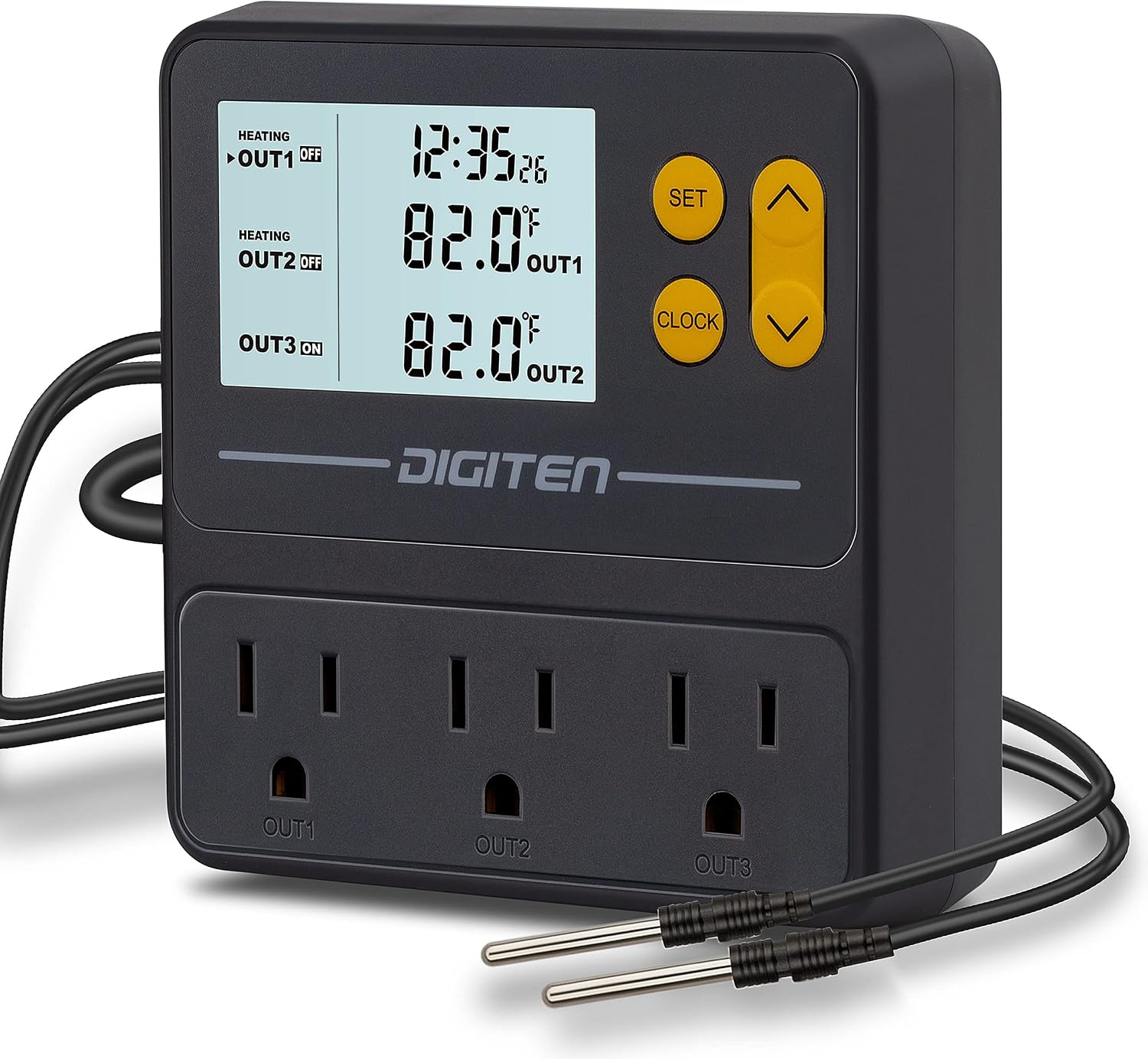
This is the controller I would build the basking spot around. It combines a day-night timer with a thermostat, so you can set a basking temperature for the day and a lower range for night without swapping plugs. The probe reads the surface or the air near the basking spot, and the unit switches the heat source on and off to hold the thermostat range you choose.
That matters because a basking lamp that runs wide open will push the basking temperature past the useful range on a warm afternoon and then drop too low when the room cools at night. The timer side handles the light cycle, which keeps your dragon on a routine. The controller does not replace a UVB timer, and it does not measure UVB output. Keep your UVB tube on a separate schedule.
What it does do is make the heat side repeatable. For a basking spot, repeatable heat is the difference between a dragon that basks in short, regular sessions and one that pancakes in the corner. The unit is simple to program, and the day-night split is the feature I care about most. If you only buy one piece of gear for the basking spot, make it this one.
Best Value: Riare 10 LB Natural Coconut Fiber Substrate, Coco Coir Reptile Bedding
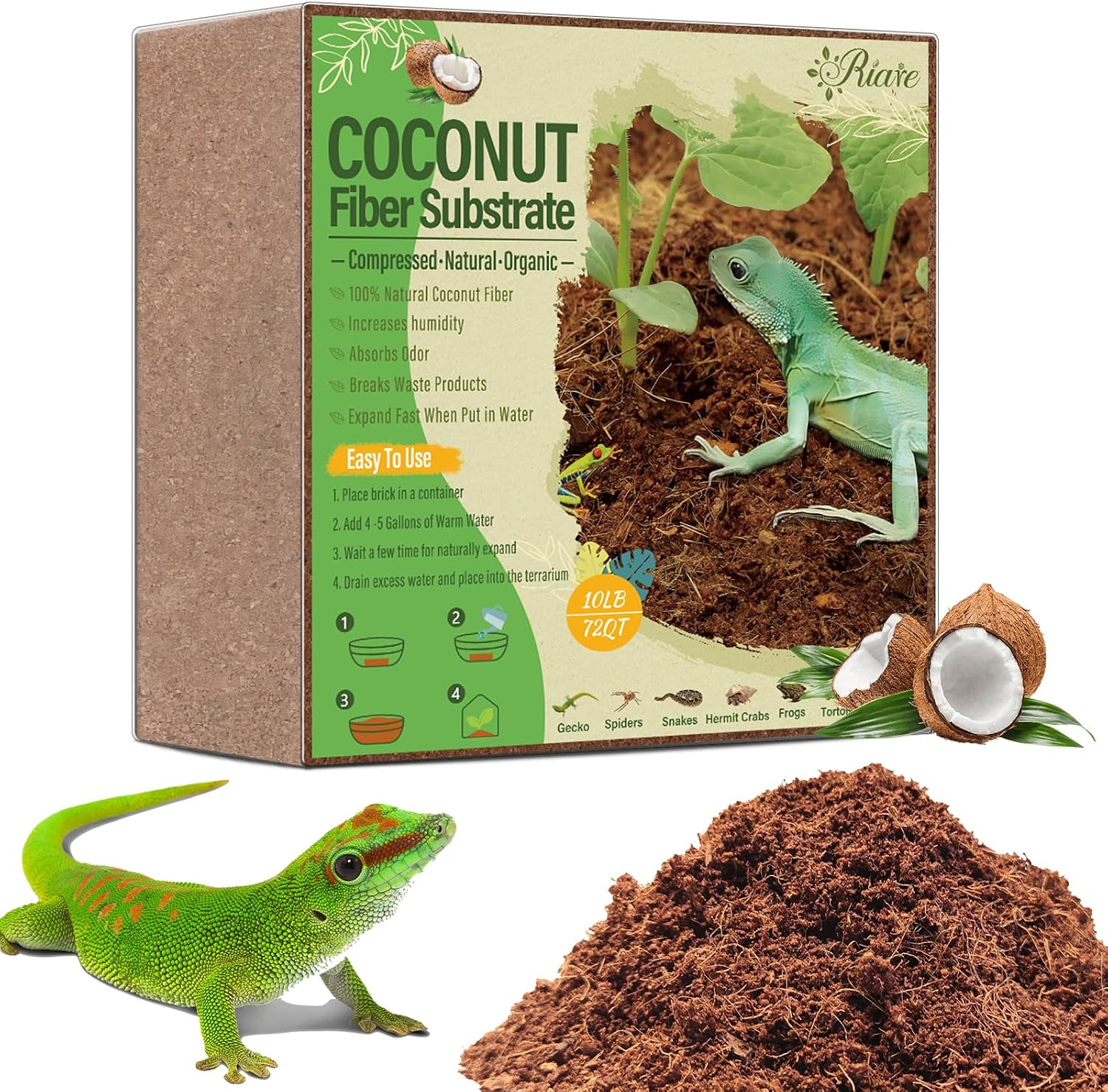
Substrate is not the first thing people think of when they plan a basking spot, but it is the layer that controls how the whole thermal gradient feels. The Riare 10 LB block gives you enough material to build real substrate depth in a large tank without buying four small bricks. Coco coir holds moisture, so you can keep the humidity range steadier under and around the basking spot while the surface above stays dry.
That is the balance you want: a dry basking surface, a slightly damp lower layer, and enough depth for burrowing. The 10 LB size is the value pick because it covers more ground per dollar than the smaller packs. It expands, it mixes easily with play sand if you want a firmer mix, and it does not have the sharp pieces that some bark mixes have.
For a bearded dragon, substrate depth is also a safety question. A loose, shallow layer is harder to keep clean and easier to swallow by accident. A deeper, packed coco coir layer lets you spot clean more effectively and gives your dragon something to dig into. If you are setting up a new tank or refreshing an old one, this is the bag I would start with.
How I tested
I test a basking spot in four passes, and none of them take long. First, surface temperature. I use an infrared thermometer on the basking surface, not the air beside it, because the surface is what your dragon actually touches. I check it at the center of the spot and at the edges, since a small spot can be much hotter in the middle than the rim.
Second, thermostat range. I watch how far the temperature swings between the heat source switching on and off. A controller that holds a tight range is worth more than a bigger lamp. Third, UVB output. I use a UVB meter if one is available, and I check the distance from the tube to the basking surface. UVB output drops with distance and with screen mesh, so the same bulb can be fine in one setup and weak in another.
Fourth, substrate depth and humidity. I check how deep the substrate is at the basking end, how well it holds a burrow, and whether the humidity range stays stable through the day. I also check hide size and heat mat wattage if a mat is part of the build. The point is not to chase a single number. The point is to confirm that the basking spot works as a gradient: hot at the surface, cooler at the edges, and stable through the day-night cycle.
Analysis and test results
Temperature is the first thing to get right, and it is the thing most setups get wrong. A basking temperature that is too low leaves a bearded dragon unable to digest properly. One that is too high can cause burns or make the dragon avoid the spot entirely. The fix is almost always control, not more wattage. The DIGITEN controller gives you a thermostat range you can set, and that range is what keeps the basking temperature from running away. Without it, you are guessing based on room temperature and bulb age.
UVB output is the second piece. UVB and heat are not the same job, and they should not be on the same timer. Your dragon needs a UVB gradient across the tank, with the basking spot close enough to the tube to get useful output but not so close that it is forced to choose between UVB and heat. Check the distance, check the mesh, and replace the tube on schedule.
Substrate is the third piece, and this is where the three coco coir options split. The Riare 10 LB is the best value for a large tank because one block goes further. The Legigo 4 Pack is the easier option if you want to store smaller bricks and add a little at a time. The ZeeDix 6 Pack sits between them, with enough packs to refresh several areas without committing to one large block. All three are coco coir, so the choice comes down to how much you need and how you want to store it.
None of them are a complete diet, and none of them replace a proper hide. A hide gives your dragon a place to cool down and escape the basking spot, and hide size matters as much as substrate depth. If the hide is too small, your dragon will not use it.
The last number is humidity range. Coco coir helps you hold moisture in the lower layer, but you still need to measure. Too dry and shedding gets difficult. Too wet and you are asking for respiratory problems. A digital hygrometer at each end of the tank tells you more than a guess. Heat mat wattage is a separate question. A heat mat can help with night temperatures, but it should be on a thermostat, and it should not be the main heat source for a basking spot. The basking spot needs overhead heat to create the right gradient.
The ideal bearded dragon basking spot is a gradient, not a single hot rock. A correct bearded dragon basking spot gives your dragon a surface that is hot enough to digest and a cool end that lets it escape. Tank size sets the limits here. In a small tank, the basking spot and the cool end are too close together, and no controller can fix that. Start with the enclosure, then tune the heat.
The bearded dragon basking spot setup reference table
This is the table I keep beside the tank when I set up or adjust a basking spot. The ranges are starting points for an adult bearded dragon, and the exact numbers depend on your room, your lamp, and your enclosure. Measure at the surface, not the air, and adjust from there.
| Setup element | Target | Why it matters | Gear note |
|---|---|---|---|
| Tank size | 4 x 2 x 2 ft for an adult | Gives you room for a true temperature gradient | |
| Basking temperature | High 90s to low 100s F at the surface | Drives digestion and activity | DIGITEN controller |
| UVB output | Strong at the basking spot, weaker at the cool end | Supports calcium use and overall health | |
| Thermostat range | Tight swing around the set point | Prevents hot spikes and night drops | DIGITEN controller |
| Substrate depth | 2 to 4 in, packed at the basking end | Allows burrowing and helps hold humidity | Riare 10 LB, Legigo 4 Pack, ZeeDix 6 Pack |
| Hide size | Big enough for the dragon to turn around | Gives a cool retreat and reduces stress | |
| Humidity range | Stable, with a slightly damp lower layer | Supports shedding without making the tank wet | |
| Heat mat wattage | Low, on its own thermostat | Adds night warmth without replacing overhead heat |
The table is not a set of magic numbers. It is a checklist. If your basking temperature is right but your UVB output is weak, the setup is still incomplete. If your substrate depth is good but your hide is too small, your dragon will not use the cool side. Each row affects the next.
Substrate depth and humidity around the basking spot
Substrate depth is the part of the basking spot that most guides skip. You want enough depth to let your dragon dig, but not so much loose material that the basking surface becomes unstable. For an adult, two to four inches is a common target, packed down at the basking end and left looser in the cool end.
Coco coir is popular because it holds moisture without turning into mud. The Riare 10 LB block is the best value for a large enclosure, and it gives you enough material to build depth in one go.
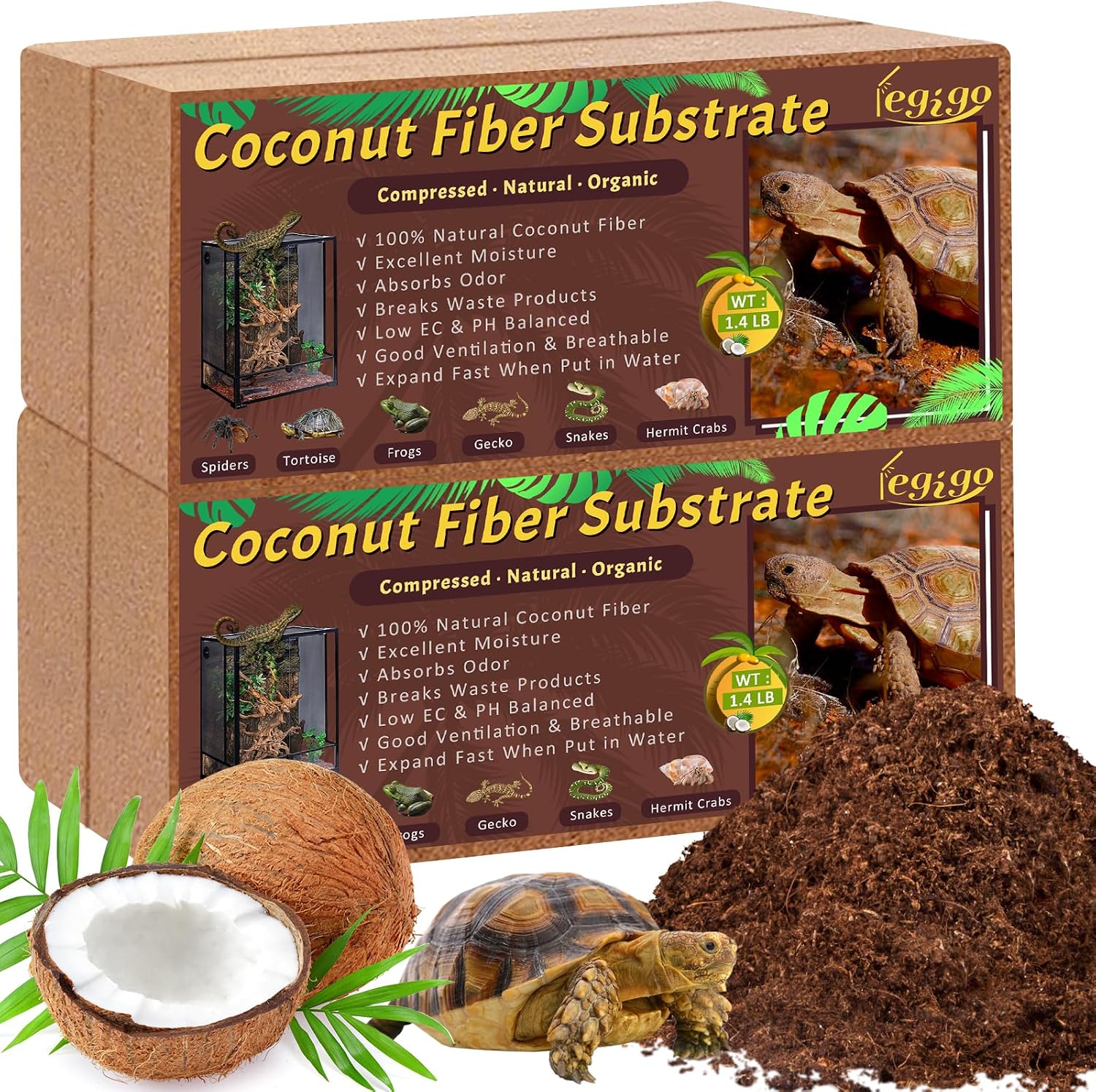
The Legigo 4 Pack is the better choice if you prefer smaller bricks and want to add substrate in stages.
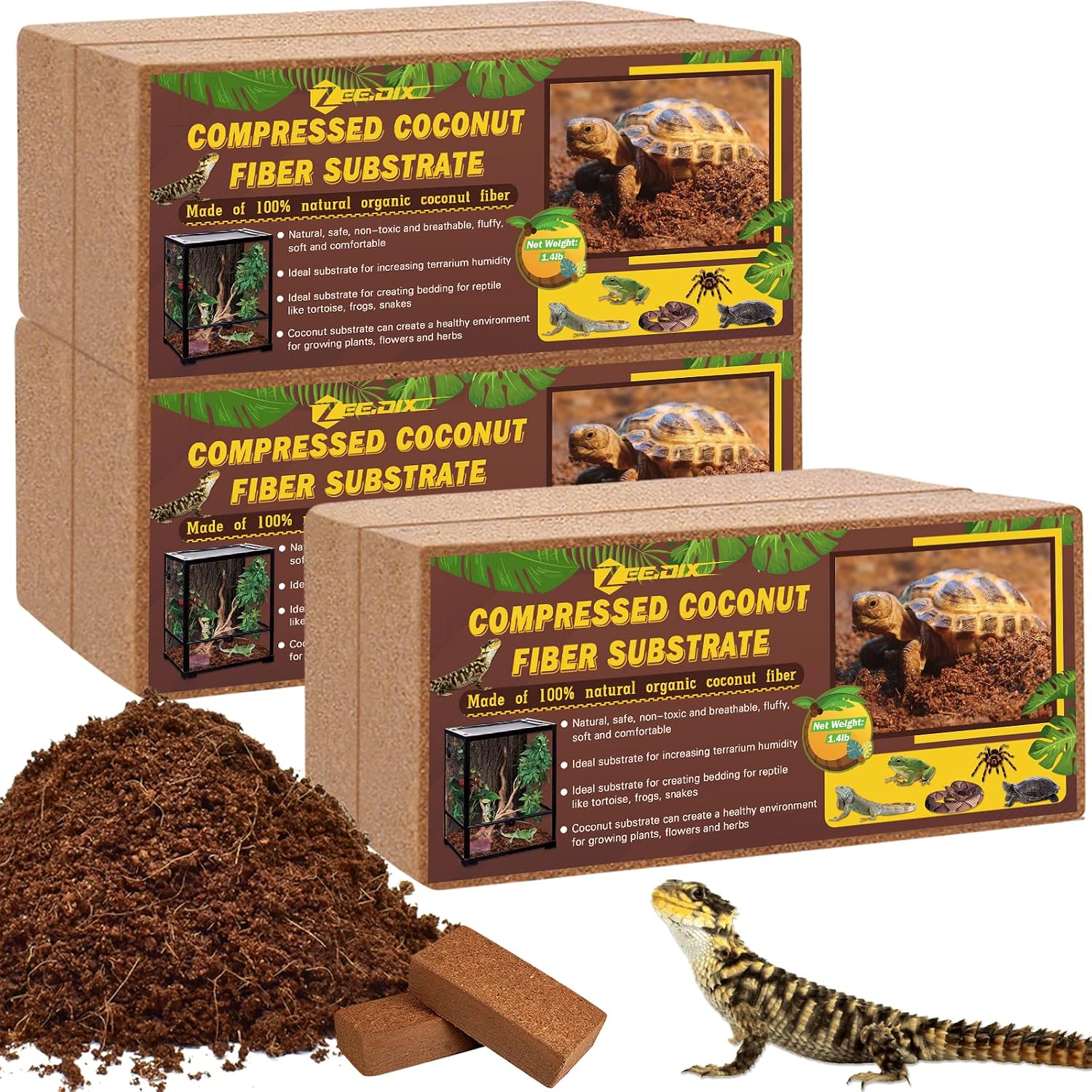
The ZeeDix 6 Pack is a middle ground, with enough packs to refresh a few areas without one large block.
Whichever you choose, the goal is the same: a dry surface under the basking light and a slightly damp lower layer that keeps the humidity range steady. Add a hide on the cool side, size it so your dragon can turn around inside, and check the humidity range with a digital gauge. Substrate depth and hide size work together. A deep substrate layer plus a proper hide gives your dragon a full range of choices, from hot and dry at the basking spot to cool and slightly humid in the retreat.
Thermostat range and night temperature control
The thermostat range is what makes the basking spot repeatable. A simple dimmer or a fixed lamp will drift with room temperature, and a bearded dragon needs a stable basking temperature more than it needs a bigger bulb. The DIGITEN controller lets you set a range and a day-night schedule, so the basking spot stays in the zone during the day and drops to a cooler night setting without you moving plugs.
That is also how you handle night temperature control without leaving a bright light on. If you use a heat mat for night warmth, put it on its own thermostat and keep the wattage low. A heat mat is a supplement, not a basking light. The overhead heat source creates the basking temperature and the visible light your dragon uses to regulate its day. The controller handles both sides of that cycle, which is why it is the first piece I would buy.
Should you buy the DIGITEN Day-Night Reptile Temperature Controller with Timer?
Yes, if your basking spot swings with the room or you are tired of unplugging a lamp at night. It gives you a thermostat range and a timer in one unit, and that combination is the core of a stable basking spot. It is not a UVB meter and it will not fix a tank that is too small or a hide that is too cramped.
But for the heat side of the setup, it is the piece that makes the basking temperature repeatable. If you are building a bearded dragon basking spot from scratch, buy the controller before you buy a bigger bulb. A bigger bulb without control just creates a hotter problem.
Should you buy the Riare 10 LB Natural Coconut Fiber Substrate, Coco Coir Reptile Bedding?
Yes, if you have a large tank and you want to build substrate depth in one pass. It is the best value of the three coco coir options here, and it holds moisture well enough to help the humidity range without soaking the basking surface.
If you would rather store smaller bricks and add a little at a time, the Legigo 4 Pack is the better fit. If you want a middle option, the ZeeDix 6 Pack works. But for most adult setups, the 10 LB block is the one I would start with. It covers the floor, it holds a burrow, and it gives you the depth that makes the basking spot feel like part of a real gradient instead of a bare tile under a lamp.