Most cars are built around people, and the back seat shows it: slick upholstery, a deep footwell, and nothing at all to stop a nervous animal from climbing into your lap at highway speed. If you want to set up a car for a pet in a way that survives a hard brake, you do not need a truckload of gear. You need a surface the pet can grip, a way to hold them in one zone, and a reason to stay there.
I have done this install in a sedan, a hatchback, and one very tired minivan, for my own dogs and for foster dogs that arrived with no car manners at all. The first attempt is always a blanket and hope. The second attempt is a setup that actually holds.
The fix is not a new vehicle. It is three items, twenty minutes in a driveway, and a routine you repeat every time you turn the key.
Why you should trust me
I write about travel and apartment gear here, and I have fitted cars for dogs that ride daily and for dogs that only see the inside of a vehicle on the way to the vet. The second group is the harder test. A car setup for a pet that works for a relaxed dog falls apart with a dog that is panting, pacing, and trying to climb into the front seat.
What I care about is the third drive, not the first. I look for straps that still hold tension after a week, covers that stay put when a dog spins before lying down, and gear a pet actually chooses to use once the car stops. A setup that shifts on a downhill stop is worse than no setup at all, because it teaches the pet that the floor is unstable, and that is a lesson you spend months undoing.
How I picked and how I tested
Every item in this guide had to earn a job. There is no single ideal car setup for a pet, because a Great Dane in a cargo area and a rabbit in a carrier have almost nothing in common, so I worked backward from the three jobs a car has to do: give the pet grip, keep the pet in a defined zone, and give you something worth trading for calm behavior.
For containment gear, the numbers that matter are carrier dimensions against your cargo floor, cabin size against the height of your seats, and a weight limit that matches your pet with room to spare. A carrier rated at 15 pounds is not a carrier for a 15-pound cat that braces against the door on every turn. Ventilation matters too, and it is the spec nobody reads: air moves through a wire crate far better than through a soft bag with one mesh panel.
For surfaces, I looked at how the piece attaches. A hammock anchor that loops over headrest posts is only as good as the posts themselves, and a booster height that puts a small dog's head above the door line is a different calculation than one that simply lifts them off a hard seat.
Fit is where most setups fail, so I checked each piece against the vehicles I have access to: a sedan with a narrow rear bench, a hatchback with a shallow cargo floor, and a minivan with captain's chairs. A cover sized for one bench hangs loose on another, and a cot that fits a hatchback floor can be too wide for a sedan trunk. Measure before you buy, not after.
I also watched how each item behaved with the rest of the car kit: a collapsible bowl, a leash, and a backpack frame all have to live somewhere in the same cabin while the pet is riding in it. Gear that only works when the trunk is empty is gear that stops working on the second trip.
The gear you need before you start
Three items cover the whole job. One protects the car and gives the pet footing, one gives them a place to settle once you stop, and one buys the calm behavior you are about to train.
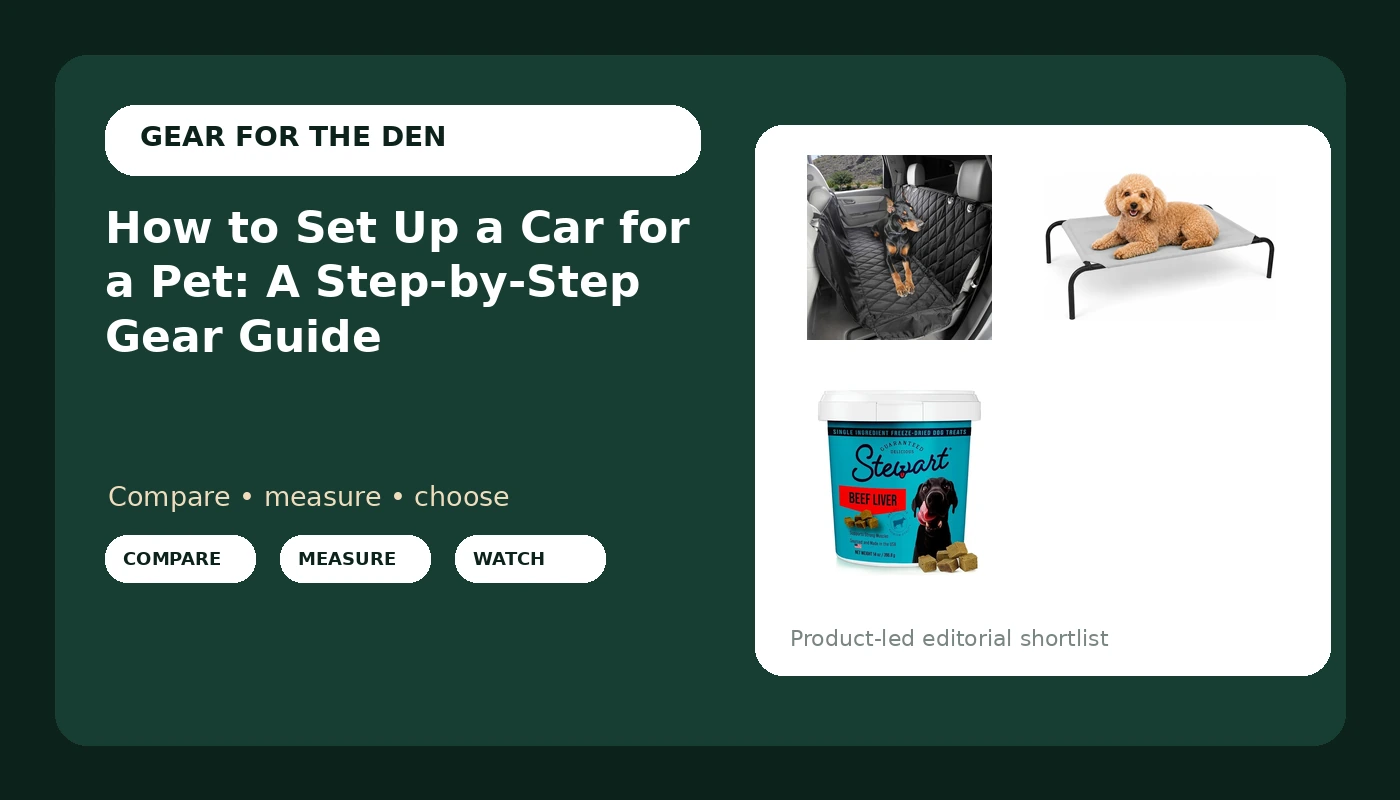
Our pick: 4Knines Heavy-Duty Rear Seat Cover for Dogs, Black
Our pick
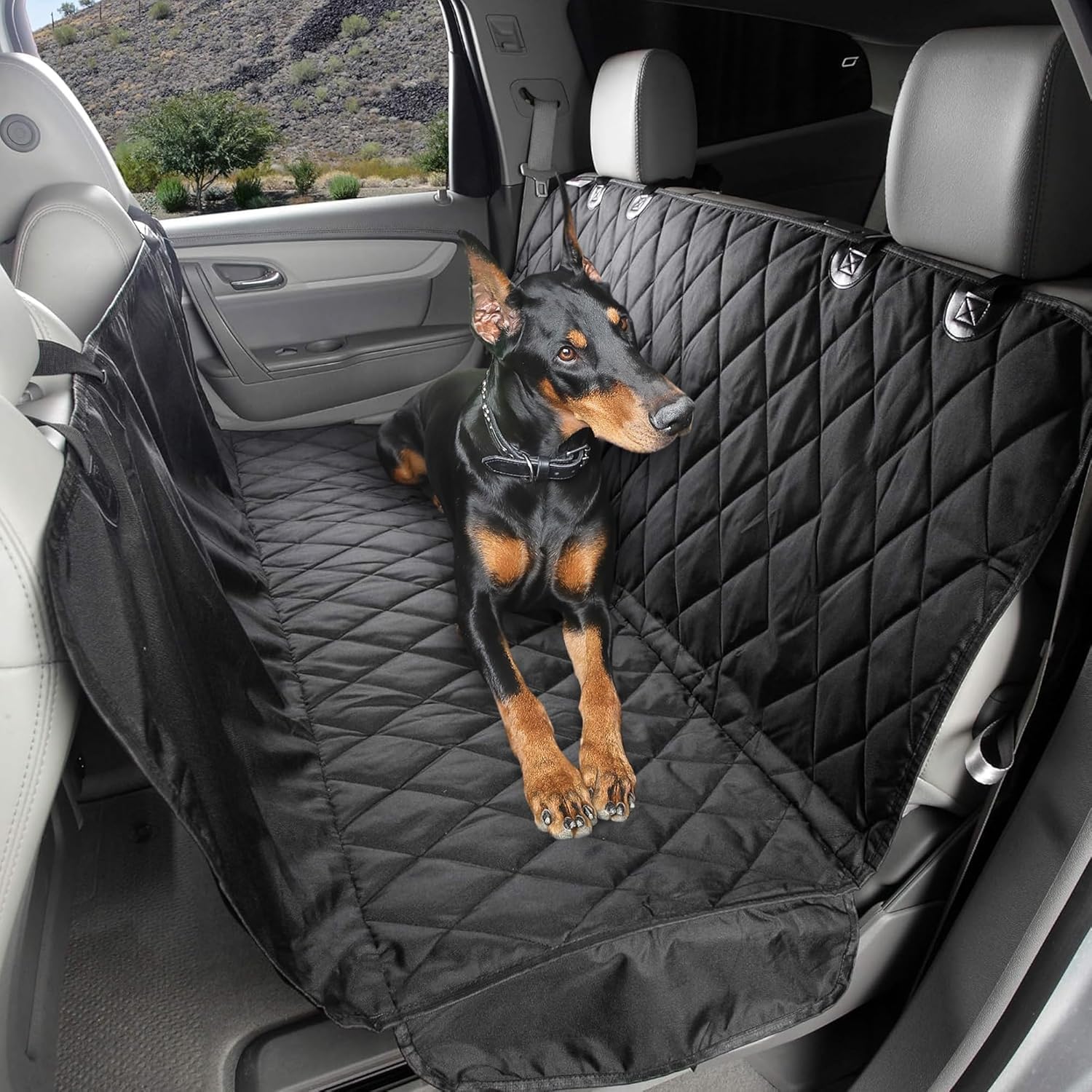
4Knines Heavy-Duty Rear Seat Cover for Dogs, Black
This is the piece that makes the rest of the setup work. It covers the rear bench and hangs down over the footwell, so a dog that steps forward lands on fabric instead of dropping into the gap between the seat and the floor. The straps run around the headrest posts, which is the anchor style that holds best on leather seats.
The reason this is the pick rather than a cheaper cover is the anchor system. Thin elastic loops stretch out after a month of a dog spinning before they lie down, and a cover that slides is worse than no cover, because it teaches the pet that the floor moves. Check current Amazon price.
Flaws but not dealbreakers: Covering the footwell turns the whole back seat into one zone, so a middle passenger is not happening while the cover is on. Retighten the straps after the first few drives, because new webbing stretches.
Anyone who drives a dog in the back seat of a sedan or SUV and wants the upholstery to survive the year should start here.
Budget pick: PHYEX Raised Pet Cot for Small Pets
Budget pick
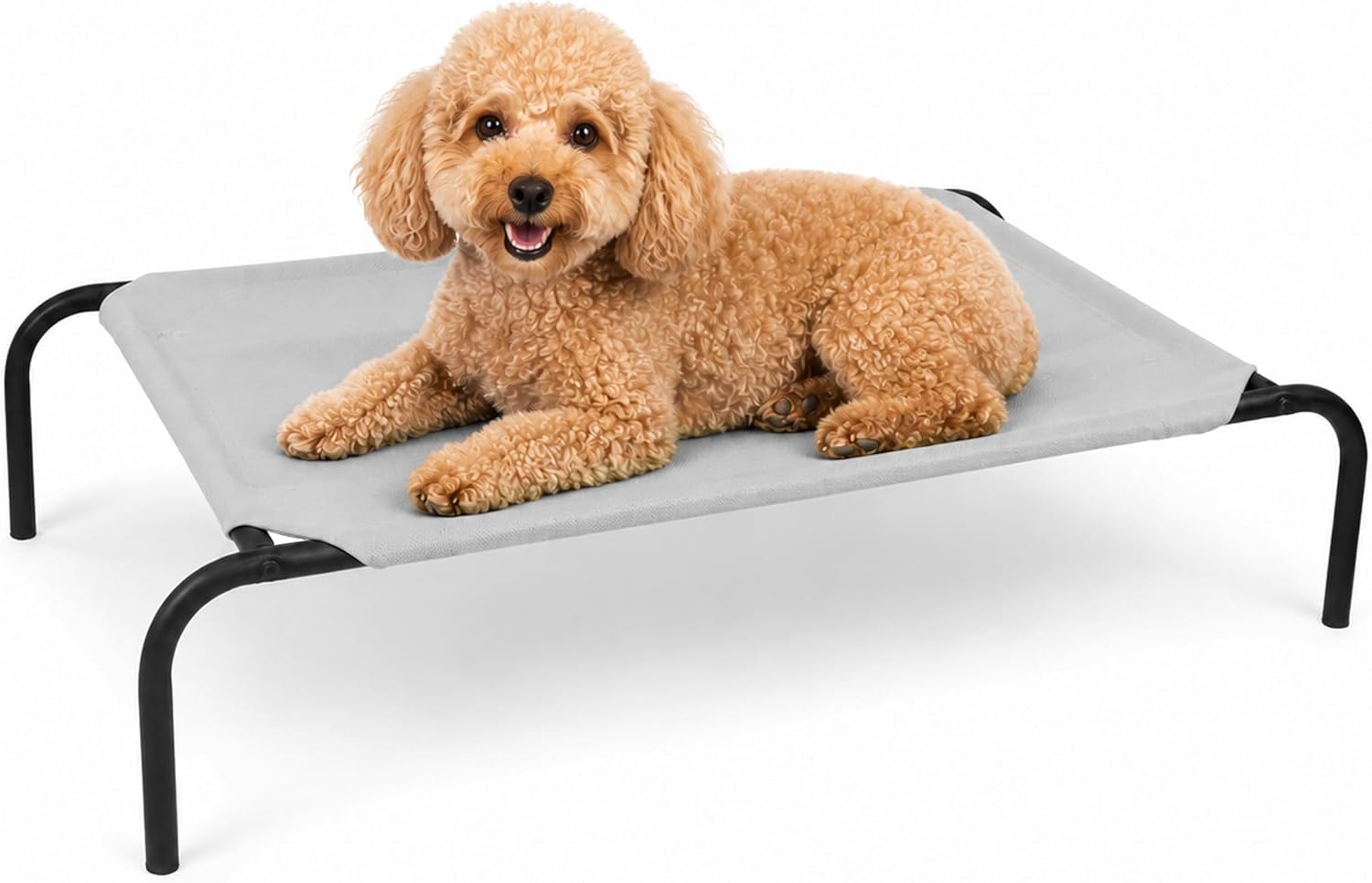
PHYEX Raised Pet Cot for Small Pets
A cot is not a restraint, and it does not belong in a moving car. What it does is give a small pet a familiar, elevated place to settle at the other end of the drive: the parking lot at the trailhead, a friend's patio, or a rest stop where the pavement is hot enough to matter.
Because the sleeping surface sits off the ground, the pet is up out of the dirt and away from the heat coming off asphalt, and the frame gives a small animal a defined spot instead of a strange floor to burrow into. If you have ever tried to get a cat or a small dog to relax in an unfamiliar parking lot, you know why a consistent resting spot is worth carrying. Check current Amazon price.
Flaws but not dealbreakers: It is bulky once assembled and does not fold into a glovebox. It also gives you no containment at all, so treat it as a destination item, not a travel restraint.
Anyone traveling with a small pet that needs a place to land once the engine is off will get the most out of this.
The reward: Stewart Freeze Dried Dog Treats, 100% Beef Liver, 14 oz Tub
The reward
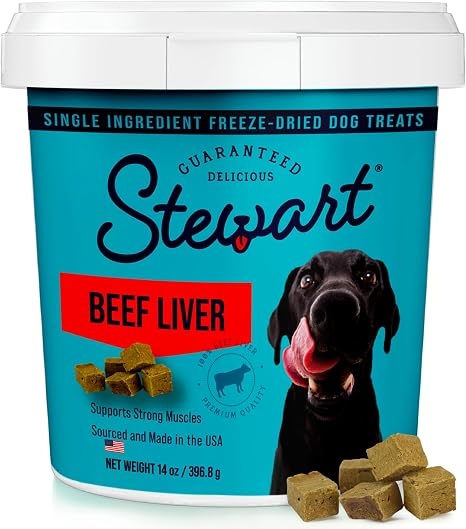
Stewart Freeze Dried Dog Treats, 100% Beef Liver, 14 oz Tub
Calm behavior in a car is trained, not installed, and training runs on rewards worth more than the environment. Freeze dried liver is the standard high-value reward for a reason: it is a single ingredient, it crumbles into training-sized pieces, and it smells strong enough to compete with a parking lot full of new scents.
Use it at three specific moments: loading, the first thirty seconds after the pet settles, and the instant you park. Do not hand it out constantly during the drive, because you want the pet to associate the reward with being still rather than with being excited. Check current Amazon price.
Flaws but not dealbreakers: Liver is rich, so keep the pieces small, especially for a pet that has never had it. The tub is bigger than a glovebox, so decant a portion into a smaller container and leave the rest at home.
Anyone counter-conditioning a pet that whines, drools, or paces on the way to the vet should keep this in the car.
How to set up a car for a pet: the eight-step workflow
This is how to set up a car for a pet in order, from the back seat forward. The sequence is the same whether you use a cover, a crate, or a carrier.
Step one: Clear the zone. Strip out everything the pet is not using. Floor mats, grocery bags, water bottles, and charging cables all become projectiles in a hard stop. Decide now whether the pet rides in the back seat, the cargo area, or a crate, because every step after this depends on that choice.
Step two: Find your anchor points. Look for the headrest posts, the cargo tie-downs, or the seat latch points you will actually use. A hammock anchor that loops over headrests is useless in a vehicle where the rear headrests have been removed, and a crate in a cargo area with no tie-downs needs another way to stay put.
Step three: Fit the cover or the crate. Pull the straps tight enough that you cannot slide the fabric or shift the crate with a firm push from your palm. Then drive around the block and check again, because new webbing and new buckles both stretch. Retighten after the first week, then leave the setup alone.
Step four: Set the height for a small pet. If your pet is small and the seat is deep, they will either perch on the edge or not see out at all. A level platform raises the resting surface so the pet can sit up and watch the road without climbing. Booster height is about the pet's eye line, not about making them look bigger in the window.
Step five: Sort out ventilation and temperature. Air moves through a wire crate far better than through a soft bag with one mesh panel, so leave space around whatever you use. Never leave a pet in a parked car in warm weather, even with the windows cracked, and put a sunshade on the glass if the car sits in the open.
Step six: Water, but not where it will spill. A bowl of water in a moving car ends up on the seat. Keep the water in a bottle, use a collapsible bowl at rest stops, and pack both away before you pull out. On a long drive, offer water every couple of hours rather than leaving it within reach.
Step seven: Load the same way every time. Same door, same order, same reward. Open the door, let the pet get in under their own power if they will, and reward the moment they settle. If they will not load, do not lift a struggling animal onto a covered seat. Go back to the driveway and practice loading with the engine off.
Step eight: Start with a five-minute drive. Drive around the block, park, reward, done. Repeat that for three or four days, then add distance. The goal is to end every trip while the pet is still calm, so the last thing they remember about the car is that nothing bad happened. Most pets that hate the car hate the vet at the end of the drive, not the drive itself. If the whining is severe, work through dog car anxiety training before you plan a long trip.
The competition and why it lost
Crates, harnesses, barriers, and booster seats all solve part of this problem. None of them solved the problem this guide is about, which is the everyday drive with a pet that has to be contained, comfortable, and calm.
A crash-tested seat belt harness is the right answer for a dog that rides in the front seat or in a seat with no cover, but the sizing has to be exact, the harness has to match the pet's weight limit, and a loose harness is worse than none. That is a full article on its own, and it lives in crash-tested dog harnesses.
A hard-sided crate or carrier is the best containment there is, but it eats the cargo area and you have to match carrier dimensions to the floor you actually have. A soft-sided carrier with a backpack frame is easier to carry and worse at ventilation.
A back seat barrier keeps a dog out of the front, which is the one thing it does, and it does nothing for the seat itself or for a dog that slips around on leather. A pet hammock is close to a cover but usually leaves the footwell open, which is exactly where small animals end up.
Booster seats are for small dogs and buckle into a seat belt, which makes them a restraint question rather than a surface question. Any of these can sit alongside the setup in this guide. None of them replaces it.
What this all costs
Three items is the whole list: a cover that stays in the car, a cot that lives in the trunk or by the door, and a tub of treats that gets smaller every week. Check current Amazon price on each one before you order, because all three move with the market.
The math that matters is not the total, it is the split between one-time and repeat. The cover and the cot are one-time purchases, and the cover is the one protecting something expensive: the upholstery and the resale value of the car. The treats are the only consumable, and a tub lasts through weeks of five-minute practice drives, which makes it the cheapest behavior work you will ever pay for.
If you only buy one item this month, buy the cover. It is the piece that protects the car and the piece that makes the pet comfortable enough to train, and the other two items still work with it.
Compare that with the alternative. A chewed seat belt, a scratched door panel, or a single incident caused by a dog in the driver's lap costs more than everything in this guide put together, and no insurance company is cheerful about paying for any of them.
The routine is free. Same door, same order, same reward, every trip, and a five-minute drive that ends while the pet is still calm. That is how to set up a car for a pet in a way that lasts past the first week, and it is the part no product can do for you.