Most dogs that end up loose on a sidewalk did not chew through anything. They backed up, dropped a shoulder, and slid out of a harness that looked fine on the kitchen floor. Learning how to stop a dog slipping out of a harness comes down to three things: where the straps sit, how much slack is left in them, and whether there is a second attachment point when the first one fails.
The good news is that almost none of this requires a new dog or a new trainer. It requires a harness that fits the ribcage, a chest strap that crosses the sternum instead of the throat, and a five-minute routine you repeat every time the harness goes on.
Why you should trust me
I have spent years fitting harnesses at weekend adoption events and shelter intake days, where the floors are slick, the dogs are stressed, and a slipped harness means a dog loose in a parking lot. I have adjusted straps on everything from a twelve-pound terrier mix to a hundred-pound shepherd, and the same failure shows up over and over: the girth sits too far back and the chest strap is loose enough for a shoulder to pass through.
I do not sell gear and I am not a trainer. What I do is check three things on every harness before it goes on a dog. Where does the girth land relative to the ribcage? Can the chest strap be snugged across the sternum? Is there a second point to clip into? A harness that fails any of those three is not escape-resistant, no matter what the packaging claims.
How I picked and how I tested
The three harnesses below are the ones that kept surviving the same checks. I looked at how much adjustment range each one offers, because a harness that only tightens so far will not fit a deep-chested dog. I looked at where the girth strap lands when the harness is snugged down, since that single measurement decides whether a dog can reverse out. I looked at the hardware, the padding, and how the whole thing behaves when it is wet and muddy.
Then I ran each one through the same two-minute routine I use on shelter dogs: put it on, tighten everything, offer a treat down near the floor, and watch the shoulders. A dog that can drop a shoulder and pull backward is a dog that is going to be naked on the sidewalk one day.
If you only read one part of this guide, read the workflow. The answer to how to prevent a dog slipping out of a harness is about eighty percent strap placement and twenty percent hardware, and the strap placement is free. If you are starting from scratch on sizing, how to measure a dog for a harness covers the tape-measure part in detail.
Gear that helps stop a dog slipping out of a harness
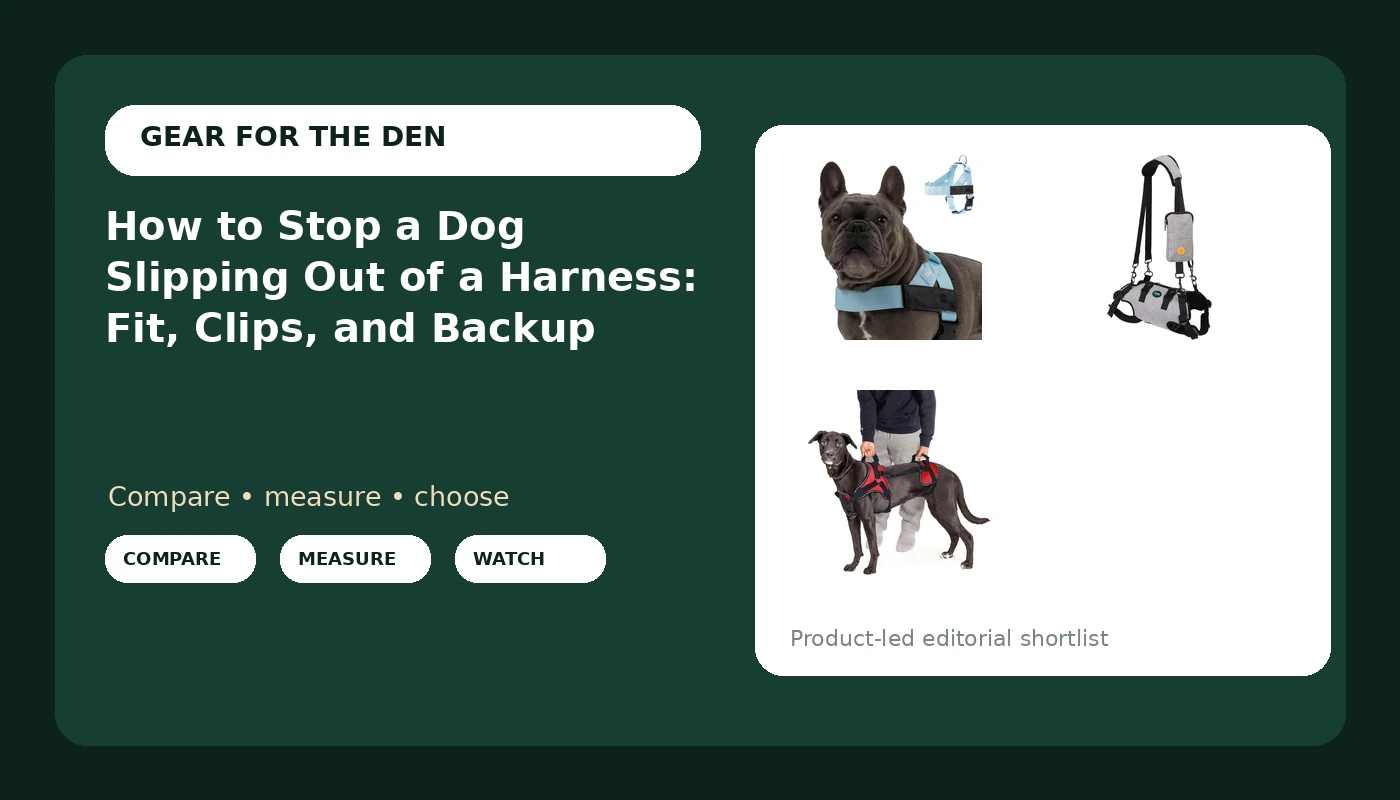
Three harnesses, three jobs. One is a daily walking harness for a medium dog that pulls and reverses. One is a support sling for a senior dog whose back end gives out. One is a full-body vest with a handle for lifting. They share one habit that turns any of them into a real answer to how to stop a dog slipping out of a harness: a backup clip on the collar.
Our pick for daily walks: Dog Friendly Co. Dog Harness for Medium Dogs (Sky Blue, Medium)
Our pick for daily walks
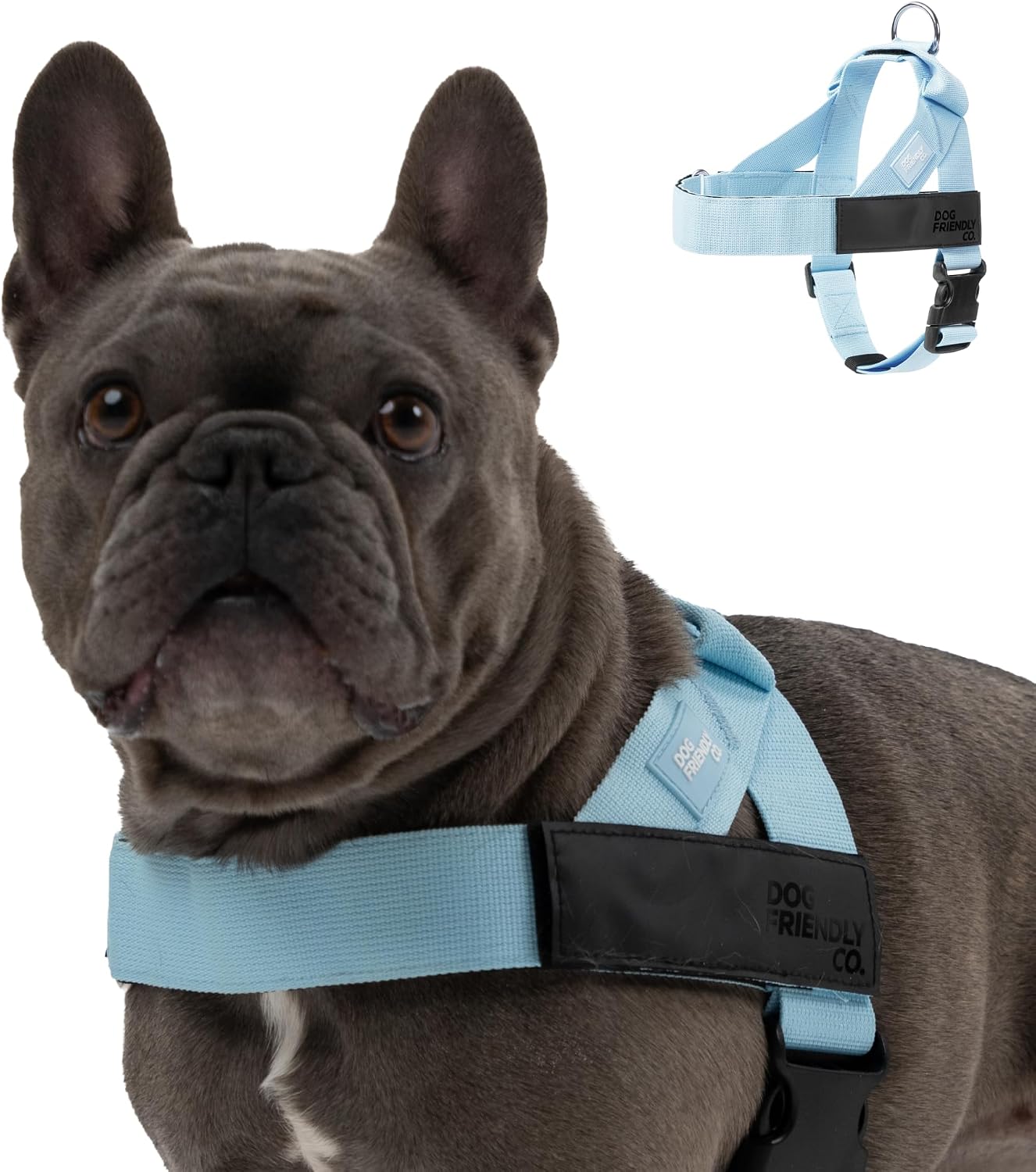
Dog Friendly Co. Dog Harness for Medium Dogs (Sky Blue, Medium)
This is the harness I would start with for a medium dog on an ordinary leash. It is sized medium and comes in sky blue, and that size is the first thing to verify. Put it on the dog, then check that the girth strap lands behind the ribcage rather than around the waist. If it slides backward when the dog pulls, it is either too loose or too long for that dog's build.
Check current Amazon price before you commit, then budget five minutes for the fit. Snug the chest strap so it crosses the sternum. If the harness has a front clip, use it for a dog that pulls, because a front attachment turns the dog back toward you instead of letting it lean into the leash. Use the back attachment for a dog that already walks politely. Either way, clip a backup loop to the collar for the first month, until you trust the fit.
Flaws but not dealbreakers: A harness in this class is only as good as its tightest setting. If your dog is between sizes, size down and let the straps out rather than sizing up and hoping.
Anyone with a medium dog and an ordinary walking routine will get years out of this one.
The support pick for a senior dog: Ownpets Aged Dog Support Harness, Sling for Spine Protection, S
The support pick for a senior dog
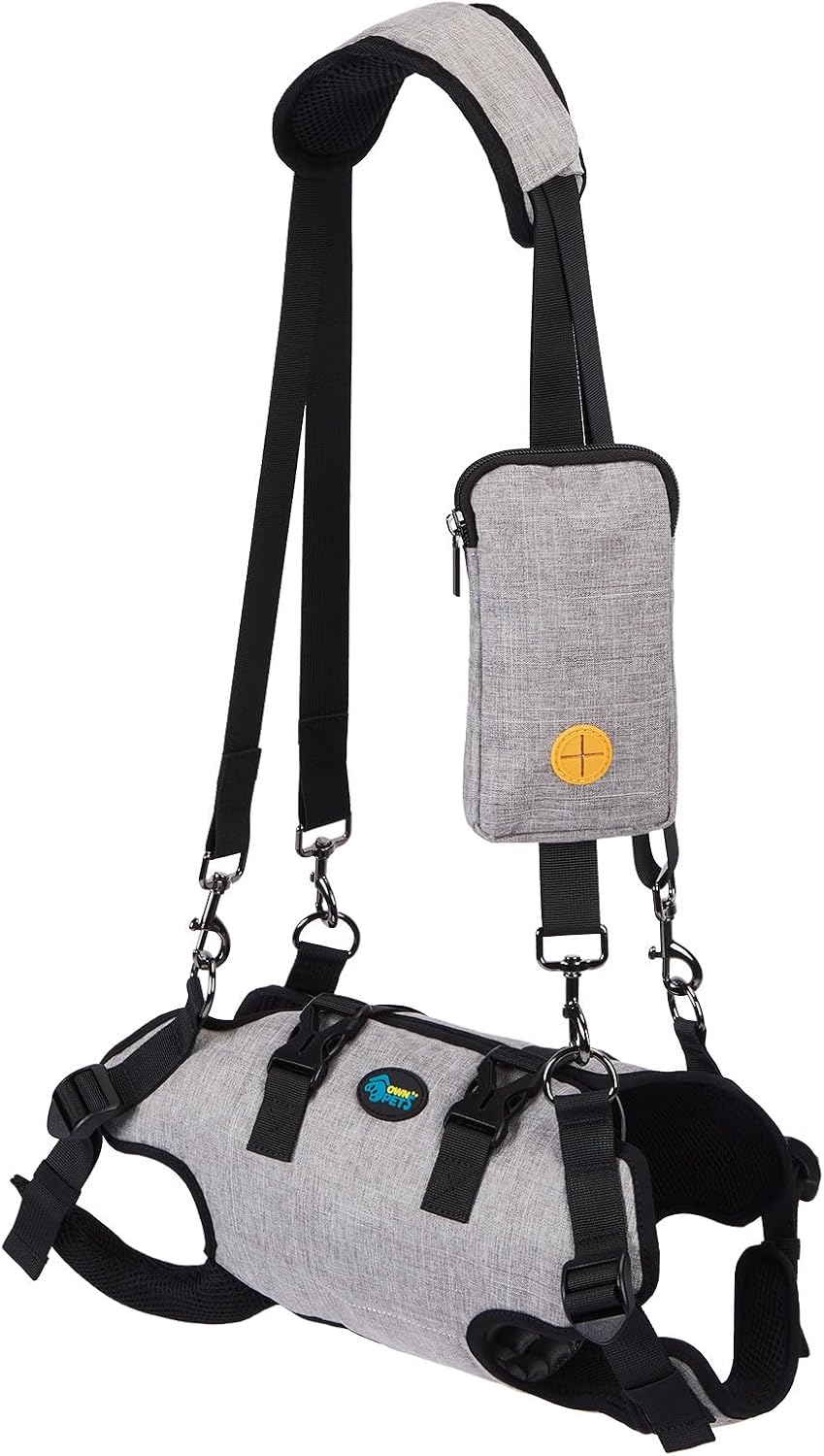
Ownpets Aged Dog Support Harness, Sling for Spine Protection, S
This one is not a walking harness and should not be used as the leash anchor. It is a support sling for an older dog whose back legs are unreliable, and it earns a place in the escape conversation for a simple reason: a dog that cannot stand steadily on a slick floor is a dog that panics, and a panicking dog backs out of straps.
Use it for the stairs, the car, and the last ten minutes of a walk when the hind end is done. The sling takes weight off the spine and gives you a handle, which means you are not pulling on a collar and the dog is not fighting you. Check current Amazon price, then size it to the dog's current weight rather than the weight it used to be. Pair it with one of the walking harnesses above so the leash still attaches to a system built for it.
Flaws but not dealbreakers: Support gear is a supplement, not a cure. If your senior dog is dragging a back foot, that is a vet conversation, not a gear conversation.
Anyone with an aging dog who still wants a daily walk will use this more than they expect.
The full-body option: Doggie Stylz Multi-Functional Full-Body Lifting Dog Harness Vest
The full-body option
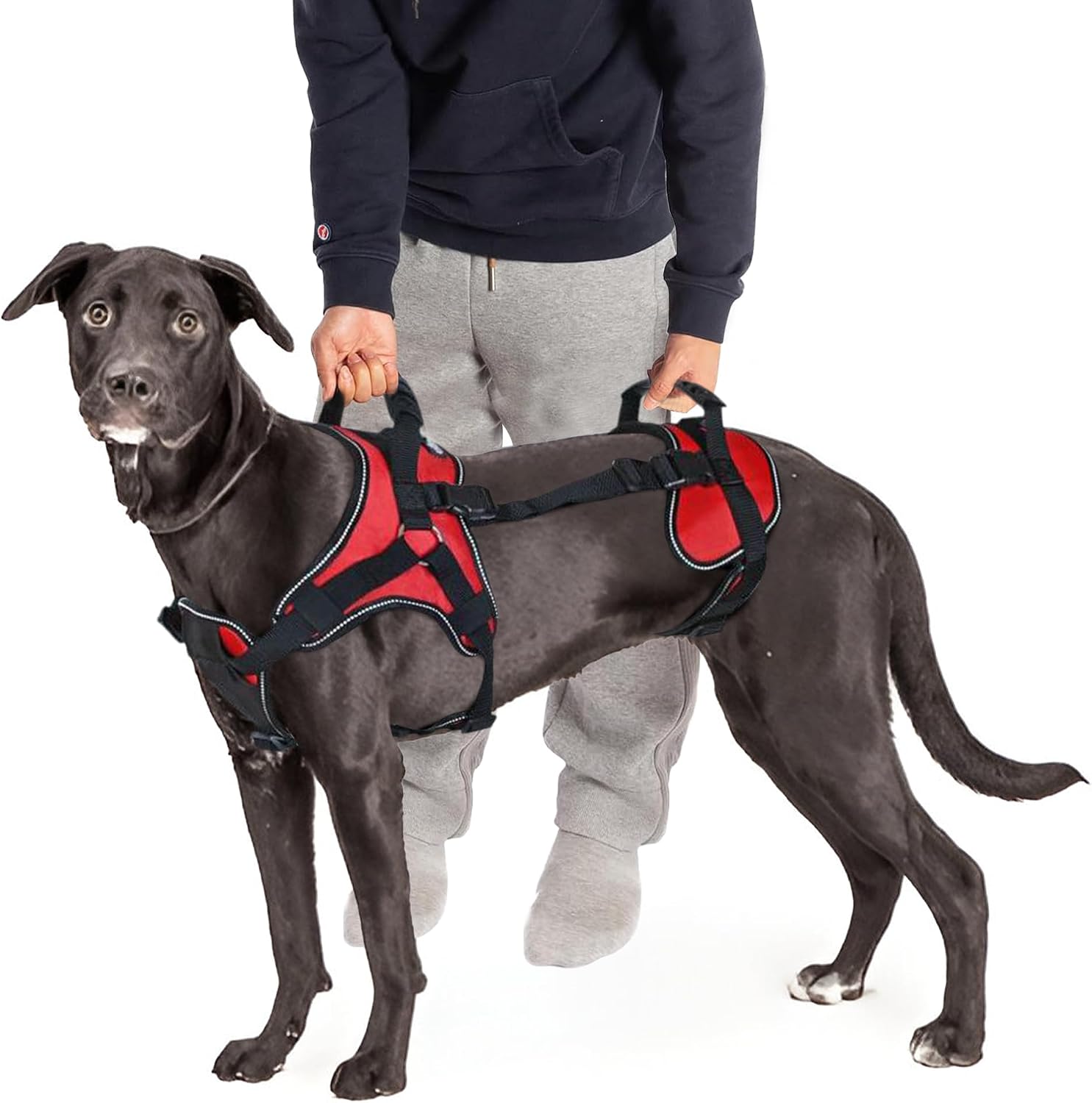
Doggie Stylz Multi-Functional Full-Body Lifting Dog Harness Vest
A full-body vest is the hardest shape to slip out of, because the dog has to defeat straps around the chest, the ribcage, and the body at the same time. That is why this is the one I point people toward when a dog has already escaped twice and the owner is out of patience.
It is also the pick when you need to do the lifting: into the car, up a short flight of stairs, over a fallen log. The handle does the work and your back does not. Check current Amazon price, then spend real time on the fit, because a lifting vest that is loose will shift under load and rub. The chest strap should sit high and snug, the girth should land behind the ribs, and there should be no gap you can slide a whole hand under at the shoulder.
Flaws but not dealbreakers: More straps means more time getting it on a wiggling dog. Practice in the living room before you try it in the rain.
Anyone with a dog that needs help moving, or a dog that has already proven it can escape, should start here.
The actual fit workflow
This works on any harness, including the three above. Do it once in the living room, then repeat the two-finger check every time you put the harness on.
Step one: Measure before you buy. Run a tape around the widest part of the ribcage, just behind the front legs, and around the base of the neck. Write both numbers down. Most bad fits start with a guess, and a harness bought one size too large will never tighten down far enough on a dog that reverses.
Step two: Land the girth behind the ribcage. The girth strap is the one that wraps the body. It should sit immediately behind the front legs, not halfway down the flank. Slide it back toward the waist and you have built a dog-sized escape hatch, because the ribcage is the widest part of the chest and everything behind it narrows.
Step three: Snug the chest strap across the sternum. The chest strap should cross the flat plate of the chest between the front legs, not ride up into the throat. A strap across the throat is both uncomfortable and useless against a backward pull, because the dog can rotate a shoulder underneath it.
Step four: Use two fingers, not a fist. Slide two fingers under every strap. If you can fit a whole hand, it is too loose. If you cannot fit two fingers, it is too tight and you will see rubbing within a week. Dogs lose weight in summer and grow coat in winter, so this check is never a one-time thing.
Step five: Run the escape test indoors. On a carpeted floor, clip a short leash, apply gentle backward pressure, and offer a treat down near the floor. Watch the shoulders. If the dog can drop a shoulder and start to back out, tighten the chest strap one more notch and try again. Do this before you trust the harness on a sidewalk.
Step six: Add a second attachment point. Clip the leash to the harness and connect the collar to the harness with a short backup strap or a second clip. This is the single most effective way to stop a dog slipping out of a harness, because the collar catches the dog even if the harness fails. It costs almost nothing and it has saved more dogs than any harness design.
Step seven: Fix your leash handling. Plenty of escapes are caused by leash tension, not by the harness. Keep the leash length short enough that the dog is not building speed before it hits the end. If your dog leans and pulls, use the front clip, which turns the dog back toward you. If it walks politely, the back clip is fine. Stop pulling backward when the dog braces, because that is the exact pressure that teaches a dog to reverse out.
Step eight: Handle surfaces and seasons. A dog slips out of a harness more often when it is already slipping on the ground. On tile, ice, and wet decking, a traction sole on the dog's feet changes the whole picture, and if you are buying winter boots, get the boot sizing right or they will come off in the first block. In summer, a cooling fabric bandana or a wet towel over the chest helps a hot dog stay calm. If your dog has an escape history, a GPS tag on the collar is worth the weight, so check the gps range and battery life before you rely on it.
The competition and why it lost
Step-in harnesses with a single clip on the back are the most common shape on the market and the easiest for a determined dog to defeat. There is one strap around the body and one attachment point, which means one place to fail.
Head halters are excellent for pulling and wrong for escape artists. A dog that is already backing out of straps will paw a nose loop off in seconds, and halters need a training ramp most owners never finish.
Martingale collars are a good backup strap and a poor primary walking tool. A dog that pulls hard on one is putting pressure straight on the throat, and a collar alone does not distribute load the way a chest strap does.
Retractable leashes lose because leash length is the variable people get wrong. A retractable gives a dog twenty feet to build speed before it hits the end, and the end is where the shoulder drop happens.
GPS trackers lose on their own for a different reason. They are recovery tools, not retention tools. One finds the dog after the harness has already failed.
Boots with a real traction sole and cooling fabric gear belong in the walking kit for other reasons: confidence on ice and heat safety in July. Neither one keeps a dog in a harness, which is why neither is the answer to how to prevent a dog slipping out of a harness.
Every one of these has a job. None of them replaces the two-finger check.
What this all costs
Check current Amazon price on each of the three listings, because the numbers move. What matters more is what you are paying for: adjustment hardware that holds, padding that does not bunch, and a shape that wraps the ribcage instead of the waist.
Spread over the years you will own it, any of these harnesses costs less per day than a bag of treats. The support sling is the one people hesitate over, and it is the one that pays for itself the first time you get a senior dog down a flight of stairs without a fall.
The part that is free is the part that matters most. Strap placement is what will prevent a dog slipping out of a harness, and it costs nothing but five minutes in the living room. A backup clip costs almost nothing and it is the difference between a scare and a lost dog, which is a vet bill, a microchip update, and a week of signs on telephone poles.
Do the fit once, repeat the two-finger check every walk, and keep the backup attached until you have a reason to trust the harness. That is the whole job: how to stop a dog slipping out of a harness is a five-minute habit, not a product.