A puppy does not come with a bladder schedule. The first month is a running negotiation between a six-pound animal and your carpet, and the people who win it treat house training as a system problem rather than a willpower problem. If you want to stop puppy accidents indoors, you need three things running at once: a schedule the puppy can predict, a surface where it is allowed to fail, and a cleanup routine that removes the smell instead of spreading it around.
Most owners get the first two roughly right and lose the war on the third. A dog's nose is far more sensitive than yours, which means the patch of carpet that smells clean to you still reads as a bathroom to the puppy. That is why accidents cluster in the same two or three spots week after week. You are not failing at supervision. You are leaving a marker behind, and the marker is what brings the puppy back.
Gear matters more here than most guides admit. A washable bed means an accident at 2 a.m. is one laundry load instead of a trip to the store. An enclosure around the cat box means the puppy never learns that the litter tray is a snack bar. A pad with real liner waterproofing means the puddle stops at the pad instead of wicking into the subfloor. The routine below does the work. The gear just keeps the routine from costing you a rug.
Why you should trust me
I write about pet gear for Gear for the Den, and the mail I get is rarely about the puppy. It is about carpet, odor, and a cat who has gone on strike because a puppy is camped outside her box. My background is in the unglamorous end of pet ownership: reading spec sheets, checking whether a cover actually unzips, and telling readers when a cheap item does the same job as an expensive one. I do not run a testing lab and I will not pretend otherwise. What I do is read the details that decide whether an item survives a puppy, and I say so when the answer is no.
Most of the questions I answer are really about how to prevent puppy accidents indoors from turning into a permanent habit, not about how to react to a single puddle. That distinction shapes everything below.
How I picked and how I tested
For this guide I judged the three items below by one question: what does this actually stop, and what does it cost you in maintenance?
- Enzyme concentration. Cleaning a puppy accident is chemistry. A cleaner has to break down uric acid crystals, not just wet the fibers. I look for a product that names the enzyme rather than one that says oxygen and hopes.
- Pad absorbency and pad size. A pad that holds less than a cup of liquid is a puddle with a border. Size matters more than thickness, because puppies miss the edges long before they miss the middle.
- Liner waterproofing. The backing is the whole point. A thin liner leaks through to the carpet in minutes.
- Machine washable covers. Anything that touches the floor or the bed has to survive a hot wash, and the cover has to come off without a fight.
- Carpet safe and fabric safe chemistry. No bleach on wool, no ammonia anywhere near a urine stain, no steam on a fresh spot.
- Odor neutralizer, not perfume. A product that covers the smell for your nose and leaves the marker for the dog is worse than nothing, because it convinces you the job is done.
I checked the two enclosures for the details that matter in a puppy house: does the door latch close flush, does the finish wipe clean, and is the interior long enough for a full size litter pan. I checked the bed for a removable cover and for fill that stays where it is put. The gear below will not prevent puppy accidents indoors on its own. The timer does most of the work, and none of this replaces taking the puppy outside on schedule.
The gear that helps you stop puppy accidents indoors
House training is mostly routine, but the gear decides how much of your evening goes into scrubbing. These three items cover the two messes a mop cannot reach: a bed that has to be washable, and a cat box that has to be off limits.
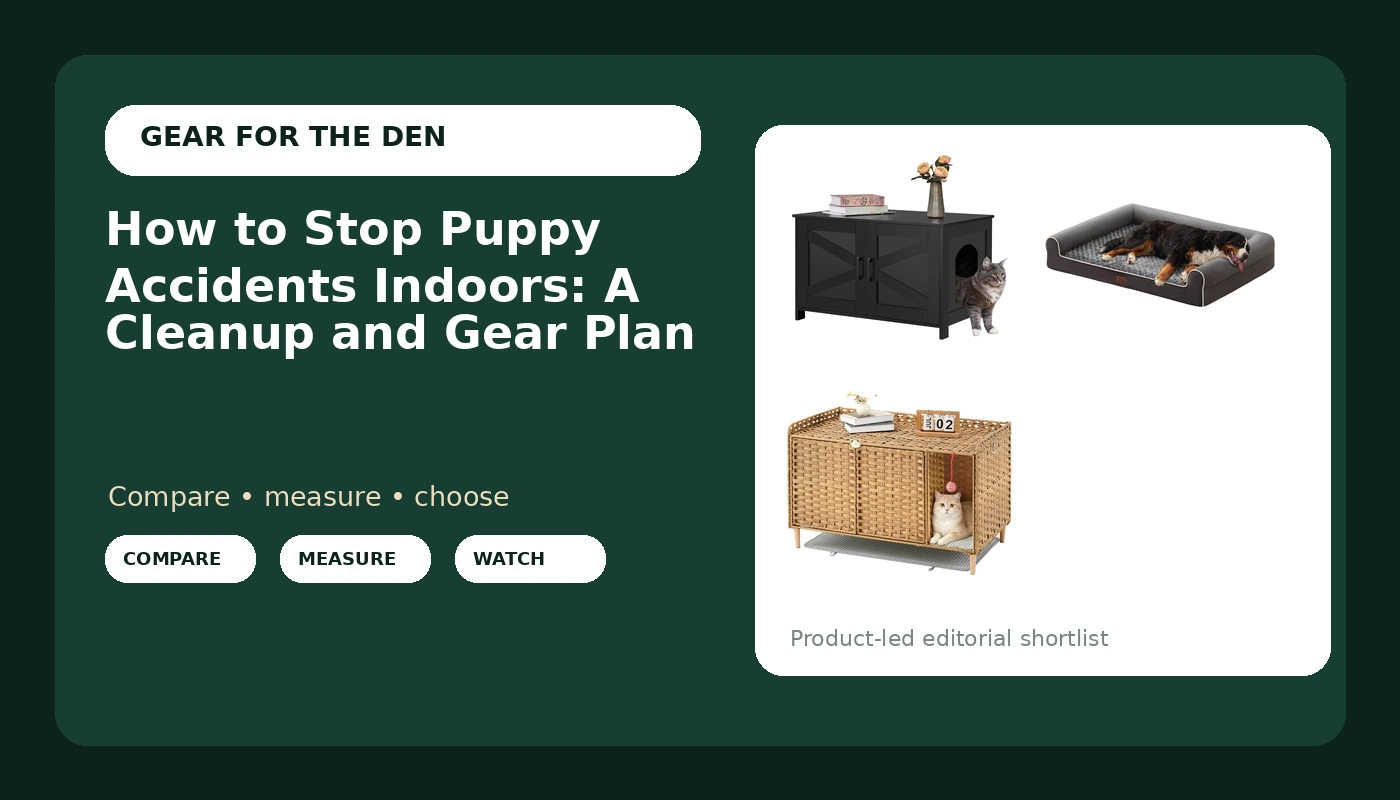
Budget pick: Homhedy 31.5" L Cat Litter Box Enclosure with Barn Door, Black
Budget pick
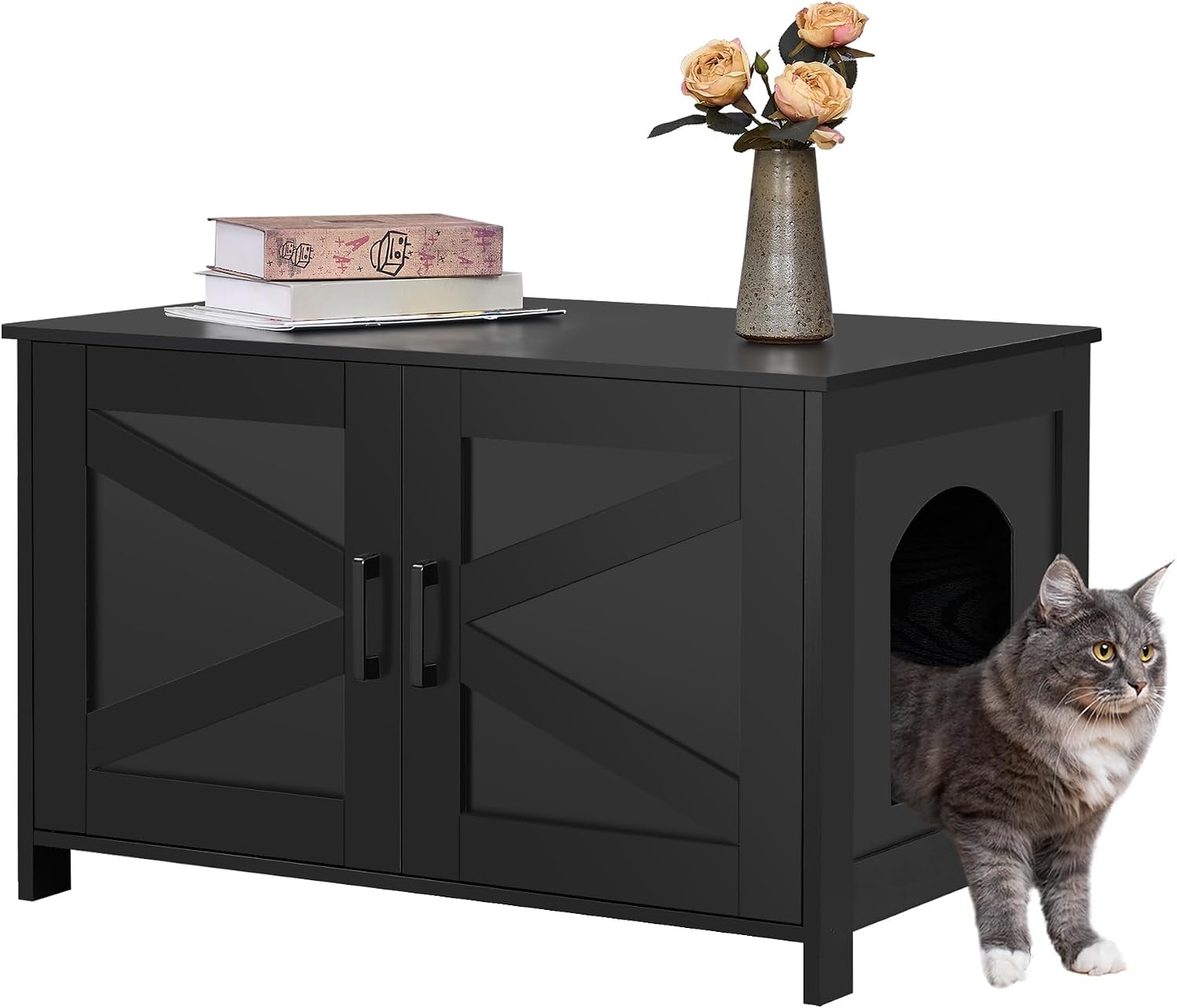
Homhedy 31.5" L Cat Litter Box Enclosure with Barn Door, Black
If your puppy has discovered the litter box, this is the least expensive way to end that relationship. The barn door style gives the cat a swinging entrance and gives the puppy a wall. At 31.5 inches long, the interior takes a standard pan with room for the cat to turn around, which matters, because a cat who has to squeeze will find another spot in the house and that accident is not the puppy's fault.
The black finish wipes down with a damp cloth, and the flat top holds a basket or a lamp so the piece does not read as pet furniture in the middle of a room. Check current Amazon price. The value here is not the furniture, it is the habit you never let form: a puppy that never gets a taste for cat waste never goes looking for it behind the couch.
Flaws but not dealbreakers: Assembly is a two-person job and the panels are lighter than they look. If you have a large adult dog rather than a puppy, the door will not stop a determined Labrador.
Households with one cat and one puppy, and a living room where the box has to stay invisible, get the most out of it. Pair it with a cat litter and odor routine and the box stops being a flashpoint.
Our pick: Warmrest Orthopedic Large Dog Bed,Washable Dog Couch for XL Senior Dogs
Our pick
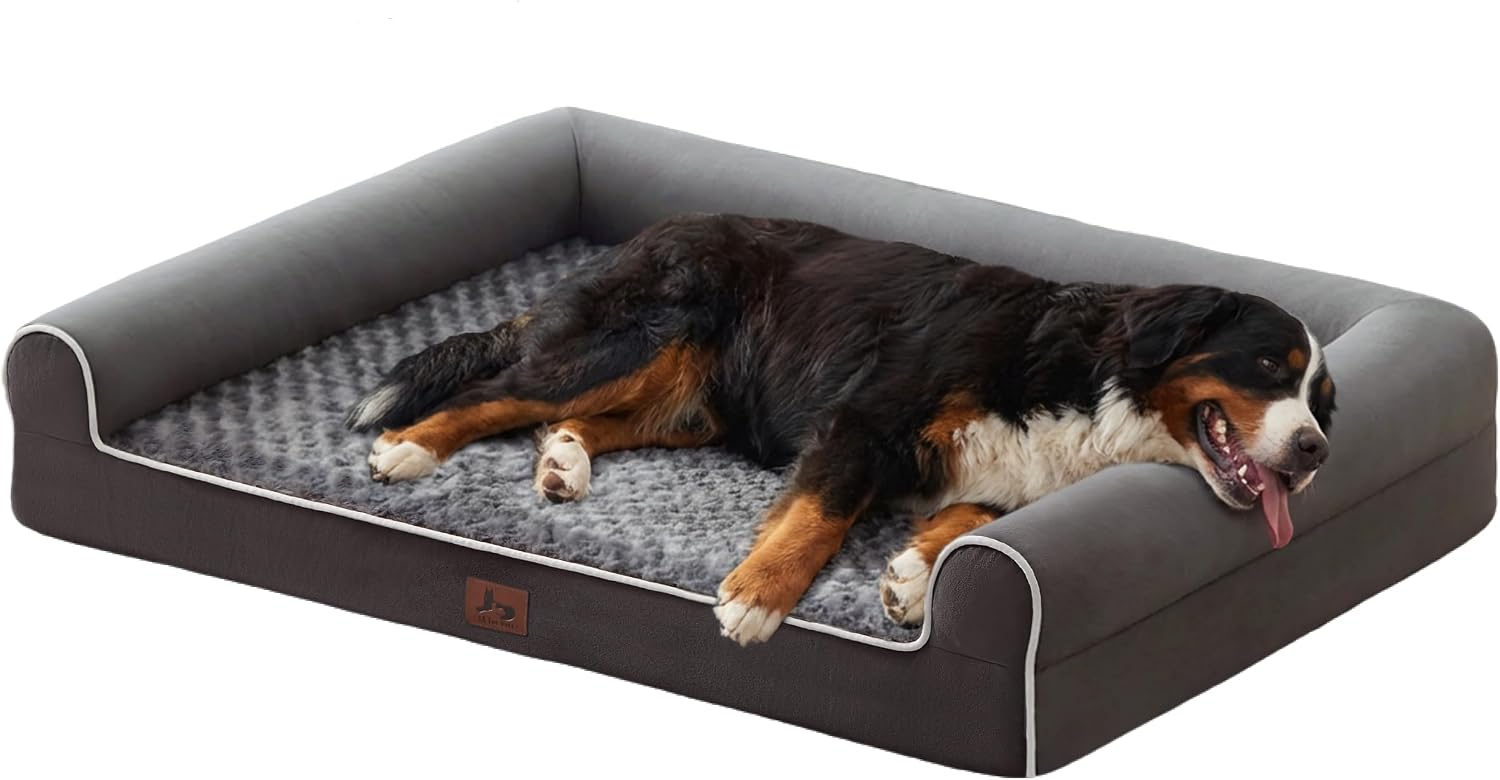
Warmrest Orthopedic Large Dog Bed,Washable Dog Couch for XL Senior Dogs
The word that earns this bed a place in a puppy article is washable. A puppy will pee on its own bed at least once, usually at 3 a.m., and the difference between a bed you can wash and a bed you cannot is the difference between a laundry load and a trip to the dumpster. The orthopedic fill is a bonus for the older dog in the house who needs somewhere to escape the puppy, and the XL footprint gives a big dog room to sprawl instead of taking over your couch.
Check current Amazon price. Look at the cover before anything else. If the zipper is buried under the fill, you will fight it every week, and a bed you avoid washing becomes the smell source that keeps the accidents coming. Wash on a schedule, not only after a disaster.
Flaws but not dealbreakers: An orthopedic bed is heavy when wet and the fill takes a full day to dry. Buy a spare cover or layer a cheap blanket on top so the bed is never out of service.
Anyone with a large or senior dog sharing a house with a puppy should start here. It is also the bed the puppy graduates into, which is why the size is worth paying for now.
Upgrade pick: SETVSON Cat Litter Box Enclosure Furniture,Cat Litter Box Furniture,Natural
Upgrade pick
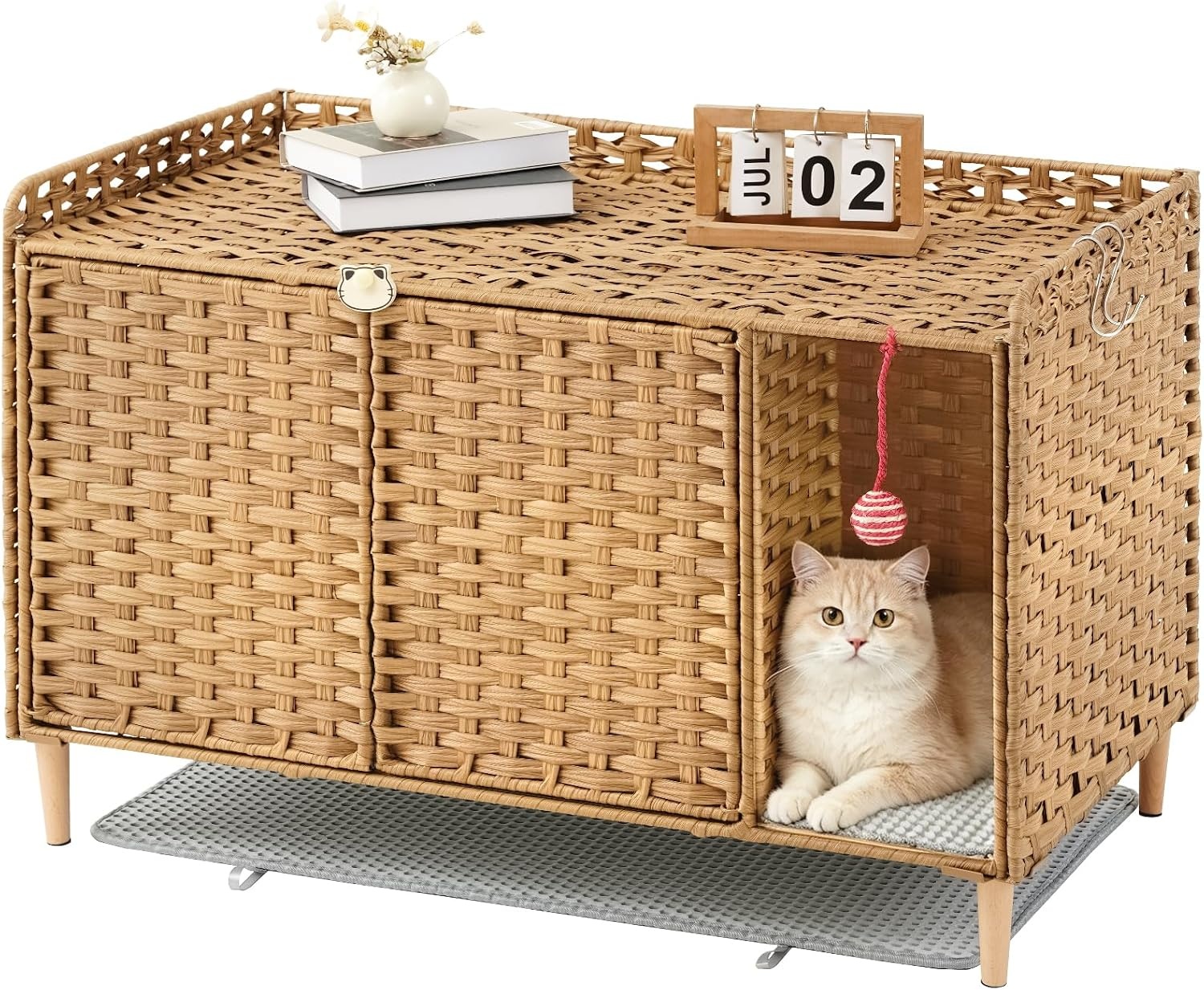
SETVSON Cat Litter Box Enclosure Furniture,Cat Litter Box Furniture,Natural
This is the one you buy when the box lives in a room guests actually see. The natural finish reads as a side table, the enclosed design cuts litter tracking across the floor, and the door keeps the puppy on the outside where it belongs. Tracking is the smaller problem compared with a puppy eating litter, but it is the one you will notice every day.
Check current Amazon price. Compare the interior dimensions against your pan before you order, because an enclosure that fits the pan but not the cat is an expensive box. If your cat is a senior or a large breed, measure the cat, not just the tray.
Flaws but not dealbreakers: Solid furniture wants a wipe-down rather than a hose-down, and the finish will show scratches from a bored puppy. Keep a chew toy in front of it for the first month.
Anyone who wants the box out of sight and out of the puppy's reach, and is willing to pay for furniture rather than plastic, should look here first.
The eight-step routine to stop puppy accidents indoors
Here is how to stop puppy accidents indoors, in the order that matters. The gear is optional for the first four steps and close to mandatory for the last four.
Step one: Fix the schedule before you buy anything. A young puppy can hold it for roughly one hour per month of age, plus one, and that number collapses after eating, drinking, playing, and waking up. Take the puppy out on a timer, not on a hunch. Set alarms for the first week and leave through the same door every time, so the door itself becomes the cue.
Step two: Give the puppy a legal place to fail. Pads are not a substitute for going outside. They are a backstop for the twenty minutes you cannot watch. Look at pad size first and pad absorbency second, because a pad shorter than the puppy's stretched-out body will be missed at the edges every time. Liner waterproofing is what separates a wet pad from a wet carpet, so press the backing with a thumb before you trust it.
Step three: Confine the space, not the puppy. A crate or an exercise pen gives the puppy a den and gives you a floor you can clean. The puppy should be able to stand, turn around, and lie flat. Too much room and the puppy will use the far corner as a bathroom. Too little and the crate becomes punishment. If you are still choosing one, this crate sizing guide covers the measurements.
Step four: Clean with enzymes, not with vinegar, and never with ammonia. Ammonia smells like urine to a dog and invites a repeat. Vinegar changes the surface pH and hides the smell from your nose without touching the uric acid crystals underneath. A cleaner with a real enzyme concentration breaks those crystals down. Soak the spot, give it ten minutes of dwell time, then blot.
Step five: Neutralize the odor, then dry the spot completely. Press a clean towel into the wet area with weight on top, then treat the padding with an odor neutralizer. If the spot still smells to you two days later, the urine reached the pad or the subfloor and you need to treat it again. A black light in a dark room will show you every old spot you missed, and there will be more than you think.
Step six: Wash everything on a schedule, not on a disaster. Bed covers, blankets, and washable trays go through the machine weekly. Use a fabric safe detergent and skip the softener, which leaves a coating that holds odor. Anything labeled machine washable should be washed once before you need it, so you learn how it comes out.
Step seven: Protect the carpet and the floor under it. A waterproof liner under the pad or the tray stops a bad aim from becoming a subfloor problem. Keep the chemistry carpet safe: no bleach on wool, no steam on a fresh stain, because heat sets the protein. Blot, treat, weigh it down, walk away.
Step eight: Take the cat box out of reach. Puppies eat cat litter and cat waste, and a cat will abandon a box that a puppy is guarding. An enclosure with a door the cat can pass and the puppy cannot ends both problems with one piece of furniture. Scoop daily, because a cat hunting for a clean spot will find your rug.
The competition and why it lost
A hooded litter pan costs less than an enclosure, but the hood does nothing to stop a determined puppy and it traps odor in a space the cat has to breathe. An open box with high sides gives the cat privacy from you and none from the dog. Both are fine in a house without a puppy and wrong in a house with one.
A plain plastic pad tray does the same job as a washable tray until the puppy chews the corners, and the cheap version cracks at the rim inside a season. A quilted bed with a cover that does not unzip is the most common mistake in a puppy house: it looks better than the washable option and it goes in the trash the first time it is soiled.
For cleaning, supermarket ammonia sprays and pet odor candles both lose to an enzyme cleaner. The sprays add the smell that tells the dog this is the bathroom. The candles cover the room for your guests and do nothing for the puppy's nose.
The oversized crate loses too. A crate three sizes too big for the puppy is not more humane, it is a bedroom with a bathroom in the corner. Size the crate to the dog you have now, then buy the next size when the dog grows into it.
What this all costs
Three items and one routine. The bed and the two enclosures each land near the cost of a single professional carpet cleaning, and unlike the cleaning, they keep working after the next accident. Check current Amazon price on each listing before you decide, because listings move and the comparison changes with them.
The ongoing cost is small: enzyme cleaner by the bottle, pads by the box, and one extra laundry load a week. The number that matters is the cost per accident prevented. A puppy that learns the routine in three weeks instead of three months saves you a carpet, a couch, and a cat who has stopped hiding under the bed.
The rest is free. The schedule costs nothing, the supervision costs nothing, and the eight steps cost nothing but attention. Buy the gear that makes the cleanup survivable, then spend your money on nothing else until the puppy is reliable.